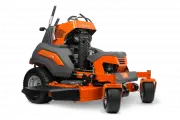
Page 2 - USA requirements; Introduction; Pre-delivery inspection and product
Contents Conformity certificates.............................................. 2Introduction............................................................... 2Safety........................................................................ 6Operation.........................................................
Page 6 - Product liability; Safety; Safety definitions
Move slowly rearward. Risk of falling. Keep distance to bystanders. Look out for ejecting objects and ricochets. Use protective gloves. Stop the engine and remove the ignition key before maintenance. Do not operate the product without deflector or grass catcher. Warning! Battery acid is corrosive, e...
Page 7 - Safety instructions regarding children; Safety instructions for operation; Safety instructions for operation on slopes
• Keep in mind that the operator will be held responsible for accidents that involve other persons or their property. • Only use the product in daylight or in other well-lit conditions. Keep the product at a safe distance from holes or other irregularities in the ground. Look out for other possible ...
Page 10 - Safety instructions for maintenance; Operation
• Discard replaced batteries. See Disposal on page 28. • Explosive gases can come from the battery. Do not smoke near the battery. Keep the battery away from open flames and sparks. Safety instructions for maintenance WARNING: Read the warning instructions that follow before you use the product. WAR...
Page 13 - To operate the product
5. Push in and turn the ignition key to the start position. Note: Do not keep the ignition key in the start position for more than 5 seconds at a time. If the engine does not start, wait 15 seconds before you try again. 6. When the engine starts, immediately release the ignition key to the run posit...
Page 15 - Maintenance; Maintenance schedule for the operator
2. Make a small turn (A) in the direction of the uncut area of grass. A B C 3. Pull the 2 control levers to the reverse position and move the product rearward (B). 4. Push the control levers forward. To make a small turn (C), pull harder on the control lever that is in the direction of the row you h...
Page 17 - To clean the product; To clean the engine and the muffler; To remove the covers; To remove and install the engine cover
Maintenance Daily maintenance Do mainte- nance at a minimum of 1 time each year Maintenance interval in hours Before After 50 250 500 Replace the engine oil. 6 O O Replace the engine oil filter. O O Replace the fuel filter. O O Replace the paper air filter. 7 O O Replace the hydraulic oil and the hy...
Page 18 - To connect the jumper cables; To remove and install the battery
2. Pull the handle to open the engine cover fully. 3. Tilt the engine cover slightly up and lift the rear edge up to remove the engine cover. 4. Install in the opposite sequence. To do a check of the parking brake 1. Park the product on a slope with a hard surface. Note: Do not park the product on a...
Page 25 - Troubleshooting; Troubleshooting schedule
Refer to Lubrication Interval Month ly Yearly Each 50 hours Each 250 hours Each 500 hours F Replace the oil filter. X X X X Always use good quality grease. Always use recommended oil, refer to Technical data on page 29. To lubricate the front wheels • Remove the dust cap (A). Grease the nipple (B) w...
Page 27 - Transportation, storage and disposal; Transportation
Problem Cause The product moves slowly, with irregular speed or not at all. The parking brake is engaged. The hydraulic release lever is engaged. The drive belt on the transmission is loose or damaged. There is air in the hydraulic system. The drive of the blades do not engage. The drive belt on the...
Page 28 - Disposal
WARNING: Remove grass, leaves and other flammable materials from the product to decrease the risk of fire. Let the product become cool before you put it in storage. • Clean the product, refer to To clean the product on page 17. • Remove unwanted materials from the cooling fan. • Repair paint damages...
Page 29 - Technical data
Technical data Technical data V548 Engine Brand / Model Kawasaki / FX751V Nominal engine output, hp / kW 12 24.5 / 18.3 Displacement, cm 3 852 Max. engine speed, rpm 3600 ± 100 Fuel, min. octane grade lead-free, max 10% Ethanol, max 15% MTBE 87 Tank volume, gallons / l 7.0 / 24.6 Oil Class SF, SG, S...
Page 30 - Battery charging times
V548 Productivity, acres/h / m 2 /h 3.87 / 15661.3 Tires Tire pressure, rear – front, PSI / kPa / bar 15 / 103 / 1 Front caster tires, in. 13 x 6.5 x 6 Rear tires, turf pneumatic, in. 22 x 9.5 x 12 Anti-scalp roller 3 adjustable Transmission Transmission Parker ™ 12cc Transmission oil Parker HT-1000...
Page 31 - Service
Service Service Do a yearly check at an authorized service center to make sure that the product functions safely and at its best during high season. The best time to do a servicing or overhaul of the product is low season.When you send an order for the spare parts, give information about the purchas...
Page 32 - Inspección previa a la entrega y
Contenido Certificados de conformidad................................... 32Introducción............................................................ 32Seguridad................................................................37Funcionamiento...................................................... 42Mant...
Page 37 - Responsabilidad del fabricante; Seguridad; Definiciones de seguridad
Muévase lentamente hacia atrás. Riesgo de caídas. Manténgase alejado de los transeúntes. Tenga cuidado con los objetos que puedan salir expulsados o rebotar. Use guantes protectores. Detenga el motor y retire la llave de encendido antes de realizar el mantenimiento. No opere el producto sin deflecto...
Page 38 - Instrucciones de seguridad para el; Instrucciones de seguridad para el uso en
• No lleve pasajeros y mantenga alejados a los observadores. • No haga funcionar el producto bajo la influencia del alcohol o las drogas. • Siga las recomendaciones del fabricante para los pesos de las ruedas o los contrapesos. • Aprenda a utilizar el producto y sus controles de forma segura y apren...
Page 40 - Seguridad de combustible
dispositivos protectores no están acoplados o están defectuosos. Para comprobar el bloqueo del encendido• Arranque y detenga el motor para revisar el bloqueo del encendido. Consulte Para arrancar el motor en la página 44 y Para detener el motor en la página 46. • Asegúrese de que el motor arranque c...
Page 42 - Funcionamiento
fuga, haga que un técnico capacitado repare inmediatamente el producto. ADVERTENCIA: Los gases de escape del motor contienen monóxido de carbono, un gas inodoro, tóxico y muy peligroso. No use el producto en espacios cerrados o sin suficiente flujo de aire. • Mantenga el producto en buen orden de tr...
Page 45 - Para hacer funcionar el producto
5. Empuje y gire la llave de encendido a la posición Start. Nota: No mantenga la llave de encendido en la posición Start durante más de 5 segundos cada vez. Si el motor no arranca, espere 15 segundos antes de volver a intentarlo. 6. Cuando el motor arranque, suelte inmediatamente la llave de encendi...
Page 47 - Para hacer un giro de 3 puntos; Mantenimiento; Introducción; Programa de mantenimiento para el
Para hacer un giro de 3 puntos Un giro correcto evitará daños en el césped. El objetivo es girar cuando avance o retroceda. No gire en un círculo estrecho con una rueda detenida.1. Corte una fila de césped.2. Haga un pequeño giro (A) en la dirección del área de césped sin cortar. A B C 3. Tire de la...
Page 49 - Para limpiar el producto
Mantenimiento Para llevar a cabo un mantenimiento diario Realice el mantenimien- to por lo me- nos 1 vez al año. Intervalo de mantenimiento en horas Antes Después 50 250 500 Examine el silenciador y la rejilla apagachispas. * * * * Arranque el motor y las cu- chillas, y revise si hay ruidos inusuale...
Page 51 - Para retirar los cables de puente; Para retirar e instalar la batería
1. Conecte un extremo del cable rojo al terminal POSITIVO (+) de la batería a la batería con poca carga (A). B A C D 2. Conecte el otro extremo del cable rojo al terminal POSITIVO (+) de la batería a la batería totalmente cargada (B). ADVERTENCIA: No haga cortocircuitos en los extremos del cable roj...
Page 58 - Solución de problemas; Programa de solución de problemas
Con- sulte Lubricación Intervalo Una vez al mes Anual mente Cada 50 ho- ras Cada 250 ho ras Cada 500 ho ras C Reemplace el filtro. X X Reemplace el aceite hidráulico. 23 X X Revise el nivel de aceite hidráulico. X D Lubrique la boquilla de engrase con una pistola de en- grase. X X X E Cambie el acei...
Page 61 - Transporte, almacenamiento y eliminación de residuos; Transporte
Transporte, almacenamiento y eliminación de residuos Transporte • El producto es pesado y puede causar lesiones por aplastamiento. Tenga cuidado cuando lo cargue o descargue de un vehículo o remolque. • Cargue el producto en reversa por las rampas autorizadas con un ángulo máximo de operación de 10°...
Page 62 - Datos técnicos
Datos técnicos Datos técnicos V548 Motor Marca/modelo Kawasaki / FX751V Potencia normal del motor, hp / kW 25 24,5 / 18,3 Cilindrada, cm 3 852 Máx. régimen del motor, rpm 3600 ± 100 Combustible, grado de octanos mínimo sin plomo, etanol al 10 % máx., 15 % MTBE máx. 87 Volumen del depósito, galones/l...
Page 63 - Tiempos de carga de la batería
V548 Productividad, acres/h / m 2 /h 3,87 / 15661,3 Neumáticos Presión de los neumáticos, traseros y delanteros, PSI / kPa / bar 15 / 103 / 1 Neumáticos de la ruedecilla delantera, in 13 x 6,5 x 6 Neumáticos traseros, neumático para césped, in 22 x 9,5 x 12 Ruedas de apoyo 3 ajustables Transmisión T...
Page 64 - Servicio
Servicio Servicio Realice una comprobación anual en un centro de servicios autorizado para asegurarse de que el producto funciona de forma segura y a su máximo potencial durante la temporada alta. El mejor momento para hacer mantenimiento o reparaciones a este producto es en la temporada baja.Cuando...