Page 3 - NOTICE; completed vehicle warranty registration form.
NOTICE Warranty information appears at the end of this manual. No other warranties, express or implied, are contained herein. Your authorized representative checked the vehicle before it was delivered to you and will provide you a copy of the completed vehicle warranty registration form. Husqvarna i...
Page 4 - FOREWORD
FOREWORD Thank you for choosing Husqvarna, a world leader in outdoor products. You have chosen the finest utility vehicle onthe market. Please protect your investment and ensure that your Husqvarna vehicle provides years of reliable, superiorperformance by reading and following the maintenance instr...
Page 5 - TABLE OF CONTENTS
TABLE OF CONTENTS Safety Decal and Feature Identification .................................................................................................................. 4 Practice Safety ................................................................................................................
Page 6 - Safety Decal and Feature Identification; SAFETY DECAL AND FEATURE IDENTIFICATION
Safety Decal and Feature Identification SAFETY DECAL AND FEATURE IDENTIFICATION The following pages contain safety decal and feature identification information. For detailed information on specificfeatures, read the appropriate section in this manual. Page 4 2008 HUV 4213-G and HUV 4213-GXP Owner’s ...
Page 9 - Practice Safety; PRACTICE SAFETY; PROPOSITION 65 – STATE OF CALIFORNIA
Practice Safety PRACTICE SAFETY 399 Figure 1 Practice Safety Safety signs like you see above may at first seem shocking, but their impact is mild compared with the realityof severe personal injury. Your safety and satisfaction are of the utmost importance to us. That is why before operating the vehi...
Page 10 - Safety Details; minor personal injury.
Safety Details SAFETY DETAILS WARNING • This owner’s manual should be read completely before attempting to drive or service the vehicle. Failure to follow the instructions in this manual could result in property damage, severe personalinjury, or death. It is important to note that some vital stateme...
Page 11 - General Warnings; GENERAL WARNINGS; See Safety Decal and Feature Identification on page 4.; Other specific safety statements appear throughout; DANGER
General Warnings 1 2 (Viewed from passenger side of vehicle) 1. Remove negative battery cable. 2. Remove positive battery cable. Connect battery cables in reverse order. 1 Figure 2 Battery Cable Removal GENERAL WARNINGS The following safety statements listed must be heeded whenever the vehicle is be...
Page 12 - Model Identification; WARNING; . There is also a second serial number decal mounted on
Model Identification WARNING • Follow the procedures exactly as stated in this manual, and heed all DANGER, WARNING, and CAUTION statements in this manual as well as those on the vehicle. • Do not leave children unattended on vehicle. • Prior to leaving the vehicle unattended or servicing the vehicl...
Page 13 - Controls and Indicators; CONTROLS AND INDICATORS; See General Warnings on page 9.; operating procedures.
Controls and Indicators SERIAL NUMBER HH0601-583947 7349 ST ATESVILLE RD.CHARLOTTE, NC 28269 47 Figure 3 Serial Number CONTROLS AND INDICATORS See General Warnings on page 9. WARNING • Before allowing anyone to drive the vehicle, make sure the driver is familiar with all controls and operating proce...
Page 14 - KEY SWITCH; FORWARD/REVERSE CONTROL; The Forward/Reverse handle is located on the seat support panel; See preceding WARNING and CAUTION.
Controls and Indicators KEY SWITCH The key switch is mounted on the instrument panel to the right of the steering column (Figure 4) . It has three positions: OFF, ON and START. To start the vehicle, place the Forward/Reverse handle in the NEUTRAL position and turn thekey past the ON position to the ...
Page 15 - ACCELERATOR PEDAL
Controls and Indicators F N R 159 Figure 5 Forward/Reverse Handle ACCELERATOR PEDAL The accelerator pedal is the pedal on the right, with the word GO molded into it (Figure 6) . With the engine running and the Forward/Reverse handle in the FORWARD or REVERSE position, vehicle speedwill increase as t...
Page 16 - BRAKE PEDAL; . To slow or stop the; PARK BRAKE; See following WARNING.; LOCKOUT CAM; Forward/Reverse handle is in the NEUTRAL position.; CHOKE
Controls and Indicators BRAKE PEDAL The brake pedal is the large pedal on the left with the word STOP molded into it (Figure 6) . To slow or stop the vehicle, press the brake pedal (Figure 7) . PARK BRAKE The park brake handle is located between the driver and passenger seats. To engage the park bra...
Page 17 - DIFFERENTIAL LOCK; • Disengage differential lock on paved surfaces.; LOW OIL WARNING LIGHT; See following CAUTION.; CAUTION
Controls and Indicators 162 Figure 9 Choke 163 Figure 10 Differential Lock DIFFERENTIAL LOCK WARNING • With the differential lock engaged, vehicle turning functions are greatly reduced. To prevent loss of vehicle control when differential lock is engaged, do not operate vehicle at speeds greater tha...
Page 18 - Seat Latch and Adjustment; FUEL GAUGE/HOUR METER; See Periodic Service Schedule on page 27.; HEADLIGHT CONTROL; discharge the battery.; LIGHT BAR CONTROL; SEAT LATCH AND ADJUSTMENT
Seat Latch and Adjustment 164 Figure 11 Low Oil Warning Light FUEL GAUGE/HOUR METER A fuel gauge and hour meter are housed together at the lower left corner of the instrument panel. The fuel gaugeoperates when the key switch is in the ON position, and allows the operator to monitor the fuel level in...
Page 19 - Pre-Operation and Daily Safety Checklist; PERFORMANCE INSPECTION
Pre-Operation and Daily Safety Checklist The bucket seats on all vehicles are adjustable and can be moved forward or backward to accommodate the driveror passenger. To adjust a seat: 1. Remove the seat from the vehicle. 2. Remove the four bolts and washers from the bottom of the seat mounting plate....
Page 20 - DRIVING INSTRUCTIONS
Driving Instructions Use the following checklist, in conjunction with the Pre-Operation and Daily Safety Checklist, as a guide to inspect thevehicle and check daily for proper operation. Any problems should be corrected by a Husqvarna distributor/dealer or atrained technician. • Forward/Reverse shif...
Page 21 - Driving Instructions; STARTING THE VEHICLE; Study and understand controls.
Driving Instructions WARNING – Be sure all passengers are capable of securing themselves in a vehicle before allowing them to ride in one. • Do not shift the Forward/Reverse handle while the vehicle is in motion. • Stop the vehicle before shifting the Forward/Reverse handle. Engine must be at idle b...
Page 22 - • Operator must control vehicle speed when going downhill.; STOPPING THE VEHICLE; See following WARNING and CAUTION.; PARKING AND LEAVING THE VEHICLE; See also Figure 24 on page 36.
Driving Instructions 9. Release park brake. 10. Keeping brake engaged, place the Forward/Reverse handle in desired position (F = forward or R = reverse). Engine must be at idle before moving the shift handle. A buzzer will sound as a warning when the vehicle is inthe REVERSE position. 11. Release br...
Page 23 - Bed Latch and Prop Rod; BED LATCH AND PROP ROD; in severe personal injury or death.; The bed latch; FRONT SHOCK ABSORBERS
Bed Latch and Prop Rod BED LATCH AND PROP ROD See General Warnings on page 9. DANGER • Use caution when working under bed. Be sure prop rod is secure. Otherwise the bed will fall, resulting in severe personal injury or death. WARNING • For vehicles with cargo beds, remove all cargo before raising th...
Page 24 - Loading and Unloading; LOADING AND UNLOADING
Loading and Unloading LOADING AND UNLOADING WARNING • Firmly engage park brake before loading vehicle. • Do not allow riders in the cargo bed. • Reduce vehicle load and speed when driving up or down slopes or on uneven terrain. • Do not exceed rated vehicle capacity. Rated capacity is for level surf...
Page 25 - Towing with the Vehicle; TOWING WITH THE VEHICLE
Towing with the Vehicle TOWING WITH THE VEHICLE WARNING • Do not tow a vehicle or trailer on public streets or highways. • Normal vehicle operating speed should be reduced when towing. • Extreme caution should be used when towing. • Do not allow riders in the vehicle or trailer being towed. • Avoid ...
Page 26 - Storage; STORAGE; PREPARING THE VEHICLE FOR EXTENDED STORAGE; Access the engine compartment.
Storage STORAGE See General Warnings on page 9. DANGER • Do not attempt to drain fuel when the engine is hot or while it is running. • Be sure to clean up any spilled gasoline before operating the vehicle. • Store fuel in an approved fuel container only. Store in a well-ventilated area away from spa...
Page 27 - See Vehicle Specifications on page 40.; RETURNING THE STORED VEHICLE TO SERVICE; General Warnings on page 9.
Storage 7. Disconnect the battery cables, negative (–) cable first. See WARNING “To avoid unintentionally starting...” in General Warnings on page 9. 8. Batteries should be clean and free of corrosion. Wash tops and terminals of batteries with a solution of bakingsoda and water (1 cup (237 mL) bakin...
Page 28 - MAINTENANCE; Periodic Lubrication Schedule; result in severe burns.
Maintenance 4.1. Remove plug from fuel tank vent. 4.2. Connect vent tube to fuel tank vent. 5. Connect battery cables, positive (+) cable first, and tighten terminals to 144 in-lb (16 N·m). Coat terminals withBattery Terminal Protector Spray (P/N 603 00 00-03). 6. Completely open the fuel shut-off v...
Page 29 - Periodic Service Schedule; • To help avoid unintentionally starting the vehicle:; PERIODIC SERVICE SCHEDULE
Periodic Service Schedule WARNING • To help avoid unintentionally starting the vehicle: – Disconnect battery cables, negative (–) cable first (Figure 2). – Disconnect the spark plug wire from the spark plug. • If wires are removed or replaced make sure wiring and wire harness are properly routed and...
Page 31 - PERIODIC LUBRICATION SCHEDULE
Periodic Lubrication Schedule PERIODIC LUBRICATION SCHEDULE PERIODIC LUBRICATION SCHEDULE REGULAR INTERVAL SERVICE LUBRICATION POINTS RECOMMENDED LUBRICANT Brake pedal shaft bearings 1 Dry Moly Lube (P/N 603 00 00-01) Accelerator push rod pivots, mounts, and shifter cable pivots 2 Dry Moly Lube (P/N...
Page 32 - Master Cylinder; MASTER CYLINDER; remove the seat to check the brake fluid level.; BRAKE FLUID
Master Cylinder MASTER CYLINDER 1 2 3 1. Full Level 2. Safe Level 3. Low Level 168 Figure 16 Brake Fluid Reservoir The master cylinder is located under the passenger seat toward the center of the vehicle (Figure 16) . Raise or remove the seat to check the brake fluid level. When checking the brake f...
Page 33 - Engine Oil; ENGINE OIL; ENGINE OIL LEVEL CHECK; See following; • Do not remove dipstick while engine is running.; ENGINE OIL AND FILTER CHANGE
Engine Oil ENGINE OIL Even though the low oil warning light on the instrument panel should illuminate if oil becomes low, the engine oil levelshould be checked monthly. The vehicle should be on a level surface when checking oil. Do not overfill with oil. ENGINE OIL LEVEL CHECK 1. Remove the oil leve...
Page 34 - Position a pan designed for oil changes under the front drain plug
Engine Oil WARNING • For vehicles with cargo beds, remove all cargo before raising the bed or servicing the vehicle. If the vehicle is equipped with a prop rod, ensure that it is securely engaged while bed is raised. Do notclose the bed until all persons are clear of cargo bed area. Keep hands clear...
Page 35 - See following NOTE; Number 2 grease (Dow Corning
Engine Oil 10. Remove the engine oil filter, turning it counterclockwise, allowing the residual oil in the filter port and filter to drain into the oil drain pan. See following NOTE NOTE: An oil drip guard can be used to prevent excess oil from dripping into the engine base place. Use an empty quart...
Page 36 - dipstick port; OIL VISCOSITY
Engine Oil 27 Figure 21 Coat Rubber Seal 172 Figure 22 Add Engine Oil 13. Tighten the oil filter by hand until tight. Do not use a band wrench or channel lock plier to tighten. 14. Lower the vehicle and remove the floor jack from under the rear of the vehicle. 15. Remove the dipstick and add engine ...
Page 37 - FUELING INSTRUCTIONS; • Turn the key switch to the OFF position before fueling.; Remove the passenger seat.; See preceding DANGER and CAUTION.; See Preparing the Vehicle for
Fueling Instructions NOTE: Using multi-grade oils (5W-20, 10W-30, and 10W-40) will increase oil consumption. Check oil level more frequently when using them. FUELING INSTRUCTIONS See General Warnings on page 9. DANGER • Turn the key switch to the OFF position before fueling. • Do not pour fuel into ...
Page 38 - Battery; BATTERY; carefully when working with batteries.; level should be checked semiannually.
Battery 1 4 5 3 2 1. Vent Tube 2. To Carburetor 3. Vent 4. Fuel Shut-off Valve 5. Fuel Tank 173 Figure 24 Fuel Tank BATTERY See General Warnings on page 9. DANGER • Battery – Explosive gases! Do not smoke. Keep sparks and flames away from the vehicle and service area. Ventilate when charging or oper...
Page 39 - See WARNING “For vehicles with cargo beds...” in General Warnings; Tilt the bed and ensure that the prop rod is properly engaged.; rubber gloves when working on or near batteries.
Battery 2. Access the engine compartment. See WARNING “For vehicles with cargo beds...” in General Warnings on page 9. 3. Tilt the bed and ensure that the prop rod is properly engaged. 4. Disconnect the battery cables, negative (–) cable first. See WARNING “To avoid unintentionally starting...” in G...
Page 40 - Cleaning the Vehicle; CLEANING THE VEHICLE; Dispose of waste water properly.; ACCESSORIES; ELECTRIC WINCH ACCESSORY
Cleaning the Vehicle CLEANING THE VEHICLE Each vehicle is equipped with an ABS/DR acrylic front body and an all-aluminum rear body. The HUV4213 has apowder-coated steel cargo bed. Use commercial automotive cleaning solutions with a sponge or soft cloth for normalcleaning. A garden hose at normal res...
Page 41 - Subsequent Owner Registration
Subsequent Owner Registration CAUTION • Use of the winch for an extended period of time could discharge the battery. Keep winch operations as short as possible, and drive the vehicle for several minutes after the winch operation to rechargethe battery. SUBSEQUENT OWNER REGISTRATION In the event a ve...
Page 42 - Vehicle Specifications; VEHICLE SPECIFICATIONS
Vehicle Specifications VEHICLE SPECIFICATIONS SPECIFICATIONS HUV4213-GXP HUV4213-G POWER SOURCE Engine: 4-cycle OHV, 400 cc, 13.0 maximum HP @3600 RPM (per SAE J 1940/1349), single-cylinder, air-cooled, with pressure lubrication system • Fuel system: Side-draft carburetor with float bowl, fixed jets...
Page 44 - Warranties; WARRANTIES; The engine assembly, unitized transaxle assembly (gasoline
Warranties WARRANTIES HUSQVARNA® LIMITED TWO YEAR WARRANTY FOR 2008 TRANSPORTATION ANDUTILITY VEHICLES 1. WARRANTY: Husqvarna, INC., ("Husqvarna") hereby warrants to the Original Retail Purchaser that its new 2008 ModelTransportation and Utility Vehicles purchased from Husqvarna or an author...
Page 45 - HOW TO MAKE A WARRANTY CLAIM:
Warranties 5. HOW TO MAKE A WARRANTY CLAIM: To make a warranty claim under this limited warranty, you must present the vehicle or defective component to anauthorized Husqvarna dealer. 6. DISCLAIMER: THIS LIMITED WARRANTY IS EXCLUSIVE. HUSQVARNA MAKES NO OTHER WARRANTY OF ANYKIND, EXPRESSED OR IMPLIE...
Page 46 - CALIFORNIA EMISSION CONTROL WARRANTY STATEMENT; YOUR WARRANTY RIGHTS AND OBLIGATIONS:
Warranties CALIFORNIA EMISSION CONTROL WARRANTY STATEMENT Your new Husqvarna ("Husqvarna") vehicle engine complies with both the U.S. EPA and State of California emissionregulations. However, the use of gasoline powered golf cars in areas of California that do not attain the federal ozonesta...
Page 47 - ITEMS COVERED BY THIS WARRANTY:
Warranties (5) Notwithstanding the provisions herein, warranty services or repairs will be provided at all of our distribution centersthat are franchised to service the subject engines or equipment. (6) The engine or equipment owner will not be charged for diagnostic labor that is directly associate...


 Husqvarna 115iHD55
User Manual
Husqvarna 115iHD55
User Manual
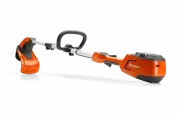 Husqvarna 115iL
User Manual
Husqvarna 115iL
User Manual
 Husqvarna 115iPT4
User Manual
Husqvarna 115iPT4
User Manual
 Husqvarna 120
User Manual
Husqvarna 120
User Manual
 Husqvarna 120iTK4-P
User Manual
Husqvarna 120iTK4-P
User Manual
 Husqvarna 120 Mark II
User Manual
Husqvarna 120 Mark II
User Manual
 Husqvarna 122C
User Manual
Husqvarna 122C
User Manual
 Husqvarna 122HD45
User Manual
Husqvarna 122HD45
User Manual
 Husqvarna 122L
Quick Guide
Husqvarna 122L
Quick Guide
 Husqvarna 122LK
User Manual
Husqvarna 122LK
User Manual
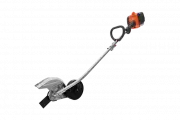 Husqvarna 122LKE
Quick Guide
Husqvarna 122LKE
Quick Guide
 Husqvarna 122LKH
Quick Guide
Husqvarna 122LKH
Quick Guide
 Husqvarna 122LKP
Quick Guide
Husqvarna 122LKP
Quick Guide
 Husqvarna 122RJ
Quick Guide
Husqvarna 122RJ
Quick Guide
 Husqvarna 125B
User Manual
Husqvarna 125B
User Manual