Page 2 - PRODUCT LABEL
2 Dear Customer, Thank you for having purchased and given your preference to our product. The safety precautions and recommendations reported below are for your own safety and that of others. Theywill also provide a means by which to make full use ofthe features offered by your appliance. Please kee...
Page 3 - USING THE OVEN FOR THE FIRST TIME
3 USING THE OVEN FOR THE FIRST TIME You are advised to carry out the following operations: ■ Furnish the interior of the oven. ■ Switch the empty oven ON at maximum temperature for about two hours to eliminate traces of grease and smell from the components. ■ Disconnect the appliance from the electr...
Page 4 - IMPORTANT PRECAUTIONS AND RECOMMENDATIONS; WARNING; WARNING: Taking care NOT to lift the oven by the door handle.
4 IMPORTANT PRECAUTIONS AND RECOMMENDATIONS After having unpacked the appliance, check to ensure that it is not damaged.In case of doubt, do not use it and consult your supplier or a professionally qualified technician.Packing elements (i.e. plastic bags, polystyrene foam, nails, packing straps, etc...
Page 5 - INSTALLATION; This appliance shall only be serviced by authorized personnel.; ELECTRICAL REQUIREMENTS; the power consumed by the appliance.
5 INSTALLATION CAUTION: ■ This appliance must be installed in accordance with these installationinstructions. ■ This appliance shall only be serviced by authorized personnel. ■ This appliance is to be installed only by an authorised person. ■ Incorrect installation, for which the manufacturer accept...
Page 6 - CLEARANCES; Overhead Clearances
CLEARANCES Installation clearances and protection of combustible surfaces shall comply with thecurrent local regulations eg. AG 601 (AS 5601) Gas Installations code.Installation shall comply with the dimension in Fig. 1a bearing in mind that. Overhead Clearances In no case shall the clearances betwe...
Page 7 - Figure 1a; max; GAS AND ELECTRIC CONNECTION; Figure 1b
7 750 mm 500 mm 50 mm AUTO 450 mm Cooker overall dimensions [mm] • height: min 900 - max 925• width: 900• depth: 600 Figure 1a max 290 mm Dotted lineshowing theposition of thecooker wheninstalled Area for GASand ELECTRICconnection GAS AND ELECTRIC CONNECTION Figure 1b
Page 8 - LEVELLING THE COOKER; Figure 4; FITTING THE ADJUSTABLE FEET; Figure 3
8 LEVELLING THE COOKER The cooker may be levelled by screwing the lower ends of the feet IN or OUT (fig. 4). Figure 4 Figure 2 FITTING THE ADJUSTABLE FEET The adjustable feet must be fitted to the base of the cooker before use. Rest the rear of the cooker an a piece of the polystyrene packaging expo...
Page 9 - Figure 6; MOVING THE COOKER
9 WARNING When moving cooker to its final posi-tion DO NOT DRAG (fig. 7). Lift feet clear of floor (fig. 5). Figure 6 Figure 7 Figure 5 WARNINGWhen raising cooker to upright position always ensure two people carry outthis manoeuvre to prevent damage to the adjustable feet (fig. 5). MOVING THE COOKER...
Page 10 - Figure 8b; Figure 8c
10 ANTI-TILT BRACKET Important! To restrain the appliance andprevent it tipping accidentally,fit a bracket to its rear to fix itsecurely to the wall. Make sureyou also fit the supplied lockpin to the anti-tilt bracket. To fit the anti-tilt bracket: 1. After you have located where the cooker is to be...
Page 11 - Figure 9; BACKGUARD
11 Figure 9 A C B BACKGUARD Before installing the cooker, assemble the backguard C (fig. 9). ■ The backguard C can be found packed at the rear of the cooker. ■ Before assembling remove any protective film/adhesive tape. ■ Remove the two spacers A and the screw B from the rear of the cooktop. ■ Assem...
Page 12 - not cross the cooker.; Gas connection for
12 GAS SUPPLY: ■ The connection must be executed by an authorised person according to the rele- vant standards. ■ Before connecting the appliance to the gas main, mount the brass conical adaptor onto the gas inlet pipe, upon which the gasket has been placed (figures 10-11). Conical adaptor and gaske...
Page 13 - IS NOT SUITABLE; for installation with a hose
13 1. After connecting the gas supply, check the piping and connections for leaks using a soap and water solution. The presence of bubbles indicates a leak, tighten orreplace connections as appropriate. Warning: Do not use any naked flame to check for leaks. 2. Adjust the test point pressure or supp...
Page 14 - CONVERSION PROCEDURE (to convert to Natural gas or to ULPG); REPLACING THE INJECTORS; To replace the injectors proceed as follows:; IMPORTANT
14 CONVERSION PROCEDURE (to convert to Natural gas or to ULPG) REPLACING THE INJECTORS This appliance is suitable for use with Natural gas or ULPG (check the “gas type” stickerattached to the appliance). A label stating the type of gas used after replacing theinjectors must be attached at the rear o...
Page 15 - MINIMUM BURNER SETTING ADJUSTMENT; Turn on the burner
15 MINIMUM BURNER SETTING ADJUSTMENT Check whether the flame spreads to all burner ports when the burner is lit with the gastap set to the minimum position. If some ports do not light, increase the minimum gasrate setting. Check whether the burner remains lit even when the gas tap is turned quickly ...
Page 16 - Natural gas
16 LUBRICATION OF THE GAS TAPS If the gas tap becomes stiff, it is necessary to dismantle it carefully and clean it withpetroleum spirit. Specialist high temperature resistant grease should be used tolubricate the tap before replacing.The operations must be carried out by an authorised person/servic...
Page 17 - USE and CARE; GREASE FILTER; When baking pastry etc. this filter should be removed.; SLIDING SHELVES; support all accessories and the dishwarmer safe.
17 USE and CARE CAUTION: ■ This appliance must be used only for the task it has explicitly been designed for, that is for domestic cooking of foodstuffs. Any other form of usage is to be con-sidered as inappropriate and therefore dangerous. ■ Do NOT place combustible materials or products on this ap...
Page 18 - Slide in the grease filter on the back of the oven as in Fig. 17.
18 Figure 18 USING THE OVEN FOR THE FIRST TIME ■ Slide off the sliding shelves and the catalytic liners to the oven wall as in Fig. 18. ■ Clean the inside of the oven with a cloth soaked in water and neutral detergent and dry thoroughly. ■ Slide in the catalytic liners and sliding shelves on the ove...
Page 20 - GAS HOB; GAS BURNERS
20 Figure 23 GAS HOB 2 3 2 1 4 GAS BURNERS Natural Gas ULPG MJ/h MJ/h 1. Auxiliary burner (A) 3.6 3.6 2. Semi-rapid burner (SR) 6.3 6.3 3. Fish burner (FB) 10.6 10.6 4. Triple ring burner (TC) 13.3 11.9
Page 21 - LIGHTING GAS BURNERS; FITTED WITH SAFETY VALVE DEVICE AND ELECTRONIC IGNITION
21 Figure 24 LIGHTING GAS BURNERS FITTED WITH SAFETY VALVE DEVICE AND ELECTRONIC IGNITION ■ Check that the electricity is switched on to allow spark igni-tion. ■ Make sure that all controls are turned to zero. ■ The gas flow to the burners is controlled by taps with a safetycutout device. If the bur...
Page 22 - DO NOT
22 CHOICE OF BURNER Burners Pan diameter Auxiliary * 12 - 14 cm Semi-rapid 16 - 24 cm Triple ring 26 - 28 cm Fish-burner from 12x30 to 18x40 cm Wok max 36 cm The burner must be chosen according to the diameter of the pans and energyrequired. For optimum efficiency uso a wok or pan no smaller than 23...
Page 23 - CORRECT USE OF TRIPLE-RING BURNER; To use the WOK, you must place the wok stand in the; CORRECT; position as; WRONG; GRATE FOR SMALL PANS
23 Figure 26a Figure 26b Figure 27 CORRECT USE OF TRIPLE-RING BURNER ■ The flat-bottomed pans are to be placed directly onto the pan-support. ■ To use the WOK, you must place the wok stand in the CORRECT position as shown in Fig. 26a-26b. IMPORTANT: The special grille for wok pans (fig. 26 b) MUST B...
Page 24 - CONTROL PANEL - Controls description; Oven thermostat indicator light; MULTIFUNCTION OVEN; Please note
24 CONTROL PANEL - Controls description 1. Oven switch knob2. Oven thermostat knob3. Front left burner control knob4. Rear left burner control knob5. Fish burner control knob6. Rear right burner control knob7. Front right burner control knob8. Rotisserie control knob9. Electronic programmer Pilot la...
Page 25 - OPERATING PRINCIPLES; Heating and cooking in the; a. by normal convection; The heat is produced by the upper and lower heating elements.; b. by forced convection; The food is grilled by the infra red grill element.; e. by radiant heat and ventilation; The food is defrosted by using the fan only function without heat.; GENERAL FEATURES
25 OPERATING PRINCIPLES Heating and cooking in the MULTI-FUNCTION oven are obtained in the following ways: a. by normal convection The heat is produced by the upper and lower heating elements. b. by forced convection The fan draws in air contained within the oven housing at the rear of the oven andf...
Page 27 - oven door closed; FAN GRILL; closed; FAN FORCED
27 DEFROST Only the oven fan comes on. Use with the thermostat knob set to “ ” - other temper- ature have no effect. The food is thawed by ventilation without heating. Ideal for: Quick thawing of frozen foods; one kg requires approximately 1 hour. Thawing times vary according to the quantity and typ...
Page 28 - COOKING ADVICE; STERILIZATION; the door and set the thermostat knob to position 135 °C.
28 MAINTAINING TEMPERATURE AFTER COOKING OR SLOWLY HEATING FOODS The upper element, the circular element and the fan come on. The heat is circulated by forced convection with greater intensity in the upper part. The temperature can be set to between 50 °C and 140 °C via the thermostat knob. Ideal fo...
Page 29 - Do not grill for longer than 30 minutes at any one time.; SIMULTANEOUS COOKING OF DIFFERENT FOODS; ROASTING
29 GRILLING AND COOKING AU GRATIN As the hot air completely covers the food to be cooked, grilling may be done withthe food on rack in the oven. The knob should be switched to position . The thermostat should be set to 200 °C and the oven pre-heated. The food should be placed on a rack in the oven f...
Page 30 - Grilling with the oven door closed.
30 ROTISSERIE (Fig. 31) This is used for spit roasting under thegrill and comprises: ■ an electric motor fitted to the rear of the oven ■ a stainless steel skewer provided with slide-out heatless handgripand two sets of adjustable forks ■ a skewer support to be fitted in the middle runner. The rotis...
Page 31 - RECOMMENDED COOKING TEMPERATURE
31 N.B. For fan ovens reduce the temperature by 10-20°C. For any dish taking one hour orover to cook, reduce the cooking time by 10minutes per hour. * Shelf positions have been counted from the top of the oven to the base.A fan oven creates more even temperaturethroughout, therefore the shelf positi...
Page 32 - ELECTRONIC PROGRAMMER; Description of the buttons:; Description of the lighted symbols:
32 ELECTRONIC PROGRAMMER The electronic programmer is a device which groups together the following functions: ■ 24 hours clock with illuminated display ■ Timer (up to 23 hours and 59 minutes) ■ Program for automatic oven cooking (main oven only) ■ Program for semi-automatic oven cooking (main oven o...
Page 33 - ELECTRONIC CLOCK; N o t e; ELECTRONIC TIMER; AUTO
33 ELECTRONIC CLOCK (fig. 33) The programmer is equipped with anelectronic clock with lighted numberswhich indicate hours and minutes. U p o n i m m e d i a t e c o n n e c t i o n o f t h eoven or after a blackout, three zeroeswill flash on the programmer panel. To set the hour it is necessary to p...
Page 36 - GENERAL ADVICE; ENAMELLED PARTS; Cleaning and Maintenance
36 GENERAL ADVICE ■ Before you begin cleaning, you must ensure that the appliance is switched off. ■ It is advisable to clean when the appliance is cold and especially when cleaning the enamelled parts. ■ Avoid leaving alkaline or acidic substances (lemon juice, vinegar, etc.) on the surfaces. ■ Avo...
Page 37 - Do not store flammable material in the oven.; Oven bulb replacement is not covered by your guarantee.
37 INSIDE OF OVEN ■ The oven should always be cleaned after use when it has cooled down. The cavity should be cleaned using a mild detergent solution and warm water.Suitable proprietary chemical cleaners may be used after first consulting with themanufacturers recommendations and testing a small sam...
Page 38 - BURNERS; CORRECTLY; and the cap; TRIPLE RING BURNER; and the ring
38 BURNERS They can be removed and washed only with soapywater. Detergents can be used but must not beabrasive or corrosive.Do not use abrasive sponges or pads.Do not put in dishwasher.After each cleaning, make sure that theburner-caps, as well as the burners, havebeen well wiped off and CORRECTLY P...
Page 39 - CORRECT POSITION OF THE FISH BURNER; This burner must be correctly positioned as shown in the figure 43.; Both the probe and ignition plug must be very carefully cleaned.
39 Figure 43 CORRECT POSITION OF THE FISH BURNER This burner must be correctly positioned as shown in the figure 43. Both the probe and ignition plug must be very carefully cleaned.
Page 40 - over tighten the screws.
40 STORAGE COMPARTMENT ■ The storage compartment is accessible through the pivoting panel. Attention: Do not store flammable material in the oven, or the storage com-partment. REMOVAL OF THE INNER GLASS DOOR PANEL ■ The inner glass door panel can easily be removed for cleaning by unscrewing the four...
Page 41 - The oven floor
41 L F OVEN TRAY The oven tray must be placed on its wire shelf support (fig. 46), then correctly insertinto the side runners as per Figure 47. For further instructions see page 19. OVEN FLOOR The oven floor F (fig. 47) can be easily removed to facilitate cleaning. Remember to replace the floor corr...
Page 42 - Please operate as follows:
42 DOOR ASSEMBLY ■ Grip the door (as indicated in fig- ure 48) and refit it in reverseorder of removal procedure. DISMANTLING THE DOOR Please operate as follows: ■ Open the door completely. ■ The swivel retainers of the rh and lh hinges (fig. 48a) arehooked onto the metal barabove them (fig. 48b). ■...
Page 43 - Service and Maintenance
43 If the ignition spark fails to ignite or does not light the gas, check the followingitems before calling our Customer Service Centre to obtain the nearest AuthorisedService Agent: ■ Burner is reassembled and located correctly. ■ Spark electrode and white ceramic are clean and dry. ■ 240 VAC power...
Page 44 - WIRING DIAGRAM; ELECTRIC DIAGRAM KEY
44 WIRING DIAGRAM ELECTRIC DIAGRAM KEY F1 Oven switch TM Thermostat LF Oven lamp F2 Rotisserie switch GIR Rotisserie CF Cooling fan PR Oven programmer C Top element G Grill element V Fan S Bottom element TM C G S V CIR S1 LF F1 N/7 1 1 a L/8 PR TL M N L PA A T 1 6 1a 6a 4 9 4a 9a 3 8 3a 8a 2 7 2a 7a...


 DeLonghi DE6038MD
User Manual
DeLonghi DE6038MD
User Manual
 DeLonghi DE608M
User Manual
DeLonghi DE608M
User Manual
 DeLonghi DE62MPB
User Manual
DeLonghi DE62MPB
User Manual
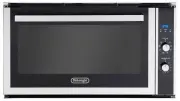 DeLonghi DE908M
User Manual
DeLonghi DE908M
User Manual
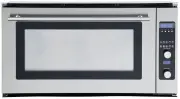 DeLonghi DE91PYROS
User Manual
DeLonghi DE91PYROS
User Manual
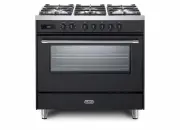 DeLonghi DEF1407A
User Manual
DeLonghi DEF1407A
User Manual
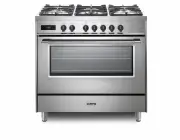 DeLonghi DEF1407S
User Manual
DeLonghi DEF1407S
User Manual
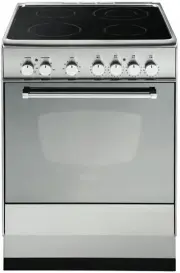 DeLonghi DEF605E
User Manual
DeLonghi DEF605E
User Manual
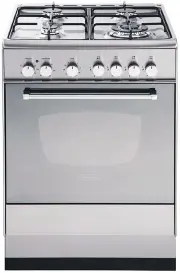 DeLonghi DEF605GW
User Manual
DeLonghi DEF605GW
User Manual
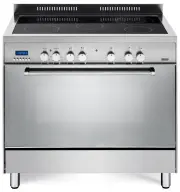 DeLonghi DEF905EX1
User Manual
DeLonghi DEF905EX1
User Manual
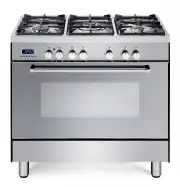 DeLonghi DEF905GW1X1
User Manual
DeLonghi DEF905GW1X1
User Manual
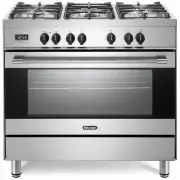 DeLonghi DEF908S
User Manual
DeLonghi DEF908S
User Manual
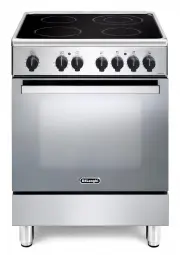 DeLonghi DEFL605E
User Manual
DeLonghi DEFL605E
User Manual
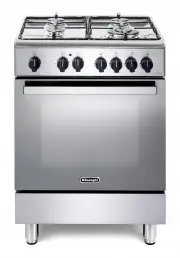 DeLonghi DEFL605G
User Manual
DeLonghi DEFL605G
User Manual
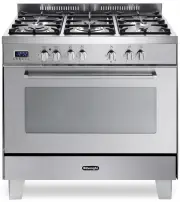 DeLonghi DEFP907S
User Manual
DeLonghi DEFP907S
User Manual
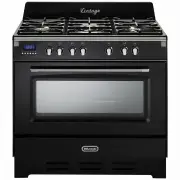 DeLonghi DEFV908BK
User Manual
DeLonghi DEFV908BK
User Manual
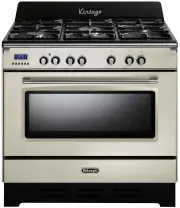 DeLonghi DEFV908CR
User Manual
DeLonghi DEFV908CR
User Manual
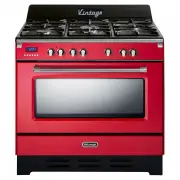 DeLonghi DEFV908R
User Manual
DeLonghi DEFV908R
User Manual
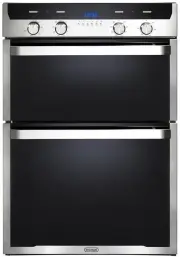 DeLonghi DEL6038D
User Manual
DeLonghi DEL6038D
User Manual
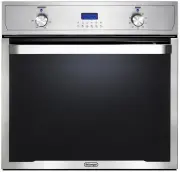 DeLonghi DEL604M
User Manual
DeLonghi DEL604M
User Manual