Page 2 - Instructions; General safety instructions
Instructions 4 1 Instructions 1.1 General safety instructions Risk of personal injury • During use the appliance and its accessible parts become very hot. Never touch the heating elements during use. • Protect your hands by wearing oven gloves when handling food inside the oven cavity. • Never try t...
Page 3 - Risk of damaging the appliance
Instructions 5 EN • Keep the oven door closed during cooking. • If you need to move food or at the end of cooking, open the door 5 cm for a few seconds, let the steam come out, then open it fully. • DO NOT USE OR STORE FLAMMABLE MATERIALS NEAR THE APPLIANCE. • NEVER USE AEROSOL CANS NEAR THE APPLIAN...
Page 5 - Installation
Instructions 7 EN Installation • THIS APPLIANCE MUST NOT BE INSTALLED IN BOATS OR CARAVANS. • The appliance must not be installed on a stand. • Position the appliance into the cabinet cutout with the help of a second person. • To prevent overheating, the appliance must not be installed behind a deco...
Page 6 - Appliance purpose; Power voltage
Instructions 8 1.2 Appliance purpose • This appliance is intended for cooking food in the home environment. Every other use is considered improper. • The appliance is not designed to operate with external timers or with remote-control systems. 1.3 Manufacturer liability The manufacturer declines all...
Page 7 - • Deliver the appliance to the; How to read the user manual; Danger of suffocation
Instructions 9 EN • Deliver the appliance to the appropriate recycling facility for electrical and electronic equipment waste, or deliver it back to the retailer when purchasing an equivalent product, on a one for one basis. Our appliances are packaged in non-polluting and recyclable materials.• Del...
Page 8 - Description; General Description
Description 10 2 Description 2.1 General Description 1 Control panel 2 Oven light 3 Seal 4 Door 5 Fan 6 Evaporation tray 7 Water supply tube 8 Rack support frames Frame shelf
Page 9 - Temperature knob
Description 11 EN 2.2 Control panel 1 Temperature knob This knob can be used to select:• The cooking temperature• The duration of a function• Programmed cooking• The current time• The switching on or off of the lamp inside the appliance. 2 Display Displays the current time, the function, the selecte...
Page 10 - Interior lighting; Advantages of steam cooking
Description 12 2.3 Other parts Interior lighting The appliance’s interior lighting comes on:• When the door is opened (on some models only) • When any function is selected• When no function is selected, or during a cooking function, turn the temperature knob briefly to the right towards the symbol t...
Page 11 - Available accessories; Perforated trays
Description 13 EN 2.5 Available accessories Perforated trays Useful when steaming fish and vegetables. Tray Useful when cooking cakes (with cooking times of less than 25 minutes or without steam), rice, beans and cereals. It is also essential for collecting liquids produced when steaming or defrosti...
Page 12 - Evaporation tray cover; Other cooking containers; • You can also use your own containers for
Description 14 Evaporation tray cover Useful for distributing the steam uniformly inside the oven. 2.6 Other cooking containers • You can also use your own containers for cooking as long as they are high temperature resistant. • It is recommended to use metal containers for steaming. Metal promotes ...
Page 13 - Use; Danger of burns
Use 15 EN 3 Use 3.1 Instructions High temperature inside the oven during use Danger of burns • Keep the oven door closed during cooking. • Protect your hands by wearing oven gloves when moving food inside the oven. • Open the appliance door carefully during or after cooking. • Take care because stea...
Page 14 - Using the accessories; Trays
Use 16 3.2 First use 1. Remove any protective film from the outside or inside of the appliance, including accessories. 2. Remove any labels (apart from the technical data plate) from the accessories and from the oven cavity. 3. Remove and wash all the appliance accessories (see 4 Cleaning and mainte...
Page 15 - Display
Use 17 EN 2+1 Configuration If you intend to use the perforated tray for steam cooking, it must be inserted on the second shelf whilst the tray must be inserted on the first shelf. In this way, it is possible to collect the liquids separately from the food that is being cooked (2+1 configuration, se...
Page 16 - Setting the time
Use 18 Setting the time On the first use, or after a power failure, will flash on the appliance’s display. To be able to start any cooking function, the current time must be set.1. Turn the temperature knob to set the time displayed (keep the knob turned to increase or decrease it more quickly). 2. ...
Page 17 - Steam cooking settings
Use 19 EN Each time the temperature knob is pressed during a function, the parameters will be cycled through in the following order. Timed cooking duration Temperature Programmed cooking time The value can be changed in any mode by turning the temperature knob to the left or right. Keep the knob tur...
Page 19 - Filling the reservoir
Use 21 EN Filling the reservoir 11. Fill the jug provided (or a container) with sufficient water for the cooking duration. 12. Open the oven door.13. Place the jug (or container) on the open door. 14. Extract the tube from its seat and immerse its end into the jug (or container) until it reaches the...
Page 20 - When finished, shake the tube in order
Use 22 16. When finished, shake the tube in order to remove any remaining water. 17. Return the tube to its original position, remove the jug (or container) and close the door. 18. Press the function knob to start steam cooking. The appliance will automatically draw the quantity of water necessary f...
Page 21 - Preheating stage
Use 23 EN Preheating stage Steaming is always preceded by a preheating stage, which allows the appliance to heat up to cooking temperature. The temperature reached flashes to indicate that this stage is in progress. When the preheating stage is over, the temperature level reached remains lit steadil...
Page 22 - Modifying programmed cooking
Use 24 Modifying programmed cooking 21. When the timed cooking and programmed cooking indicator lights are steady and the appliance waits for cooking to start, press the temperature knob. The timed cooking indicator light will start flashing. 22. Turn the temperature knob right or left to alter the ...
Page 23 - Removing residual water
Use 25 EN Removing residual water At the end of steam cooking, the water can be drained from the reservoir. 27. Hold the function knob down for a few seconds. The ‘empty reservoir’ screen appears on the display. 28. Stand to the side of the appliance and open the door ajar for a few seconds to allow...
Page 24 - Shake the tube to remove any residual
Use 26 When completed, the display will indicate that the residual water draining process has ended. 33. Shake the tube to remove any residual water. 34. Return the tube to its original position and remove the jug. 35. Remove the cover from the evaporation tray inside the oven cavity and dry it with...
Page 25 - Advice for steaming
Use 27 EN Advice for steaming • Pasta and rice: once a temperature of 100°C has been reached the cooking time will be the same as on a cooktop. Put the pasta or rice in a metal tray and cover with about a centimetre of water. For best results when cooking rice, place a lid on the container or cover ...
Page 26 - Peeling tomatoes and peppers:
Use 28 • Reheating foods: the steam function will not dry the foods and will improve moisture content. A previously prepared home-made meal, covered with aluminium foil requires about 10-12 minutes to cook. Ready meals require about double the amount of time indicated on the packaging. • Defrosting:...
Page 28 - Special functions; Proving
Use 30 3.6 Special functions Proving 1. Place the dough to prove inside the oven.2. Press and turn the function knob to select the proving function indicated by the and indicator lights. 3. Press the function knob to confirm the choice of function. 4. Turn the temperature knob to set the proving dur...
Page 29 - Defrost by time
Use 31 EN Defrost by time 1. Place the food to defrost inside the oven.2. Press and turn the function knob to select the defrost by time function indicated by the and indicator lights. 3. Press the function knob to confirm the choice of function. 4. Turn the temperature knob to set the defrost durat...
Page 30 - Automatic programs
Use 32 5. Turn the temperature knob to select the weight (in grams) of the food to defrost. 6. Press the function knob to confirm the parameters and start defrosting. 7. At the end will appear on the display. Pre-set parameters: *Defrosting times can vary according to the shape and size of the food ...
Page 31 - Automatic programs table
Use 33 EN Automatic programs table MEAT (01 - 04) FISH (05 - 10) Pr Subcategory Weight (g) Level Temp. (°C) Time (minutes) 01 Chicken breast 500 2+1 100 18 (150 g pieces) 02 Sausages 200 2+1 100 3 (whole) 03 Smocked ham hock 500 2+1 100 9 (approx. 1 cm thick slices) 04 Meat loaf 200 2+1 100 22 (appr...
Page 33 - Draining the reservoir manually
Use 35 EN Draining the reservoir manually 1. Place the jug provided (or container) on the open door. 2. Extract the tube from its seat and insert its end into the jug (or container). 3. Press the function knob to start draining the residual water into the jug (or container). When completed, the disp...
Page 34 - Filling the reservoir manually
Use 36 Filling the reservoir manually 1. Fill the jug provided (or a container) with sufficient water for the amount of steam cooking that you intend to perform. 2. Open the oven door.3. Place the jug (or container) on the open door. 4. Extract the tube from its seat and immerse its end into the jug...
Page 35 - Shake the tube to remove any residual
Use 37 EN When completed, the display will indicate that the reservoir filling process has ended. 6. Shake the tube to remove any residual water. 7. Return the tube to its original position, remove the jug (or container) and close the door. 8. Press the function knob to exit from the function. For t...
Page 36 - ON
Use 38 3.7 Secondary menu The appliance also has a drop-down secondary menu allowing the user to:• Activate or deactivate the Child Lock.• Activate or deactivate Showroom mode (which disables all the heating elements so that only the control panel works). • Activate or deactivate the timed light mod...
Page 37 - OFF
Use 39 EN Showroom mode (for exhibitors only) This mode allows the appliance to deactivate all heating elements, while keeping the control panel active. In order to use the appliance normally, set this mode to OFF . Timed light mode (Eco-light) For greater energy savings, the light is turned off aut...
Page 38 - Cleaning and maintenance; Cleaning the surfaces; Ordinary daily cleaning
Cleaning and maintenance 40 4 Cleaning and maintenance 4.1 Instructions 4.2 Cleaning the surfaces To keep the surfaces in good condition, they should be cleaned regularly after use. Let them cool first. Ordinary daily cleaning Always use only specific products that do not contain abrasives or chlori...
Page 39 - Cleaning the door; Removing the door
Cleaning and maintenance 41 EN 4.3 Cleaning the door Removing the door For easier cleaning, it is recommended to remove the door and to place it on a tea towel.To remove the door proceed as follows:1. Open the door completely and insert two pins into the holes on the hinges as indicated in the figur...
Page 40 - Removing the internal glass panels
Cleaning and maintenance 42 Removing the internal glass panels For easier cleaning, the internal glass panels of the door can be removed.1. Open the door.2. Remove the internal glass panel by pulling the rear part gently upwards, following the movement indicated by the arrows ( 1 ). 3. Then, pull th...
Page 41 - The rubber strips; Cleaning the inside of the oven
Cleaning and maintenance 43 EN 7. The rubber strips A, B and C of the intermediate glass unit must face towards the external glass panel. 8. Centre and insert the 4 pins into their seats in the oven door by applying slight pressure. 4.4 Cleaning the inside of the oven For the best oven upkeep, clean...
Page 42 - Removing rack/tray support frames
Cleaning and maintenance 44 Removing rack/tray support frames Removing the guide frames enables the sides to be cleaned more easily.To remove the guide frames:1. Unscrew the fastening pins of the frame: 2. Pull the frame towards the inside of the oven in order to release it from the fastening pins. ...
Page 44 - CLEAN
Cleaning and maintenance 46 At the end of the process, a buzzer will sound and the display will show a request to remove the liquid. 11. Place the jug provided (or container) on the open door. 12. Extract the tube from its seat and insert its end into the jug (or container). 13. Press the function k...
Page 45 - Descaling
Cleaning and maintenance 47 EN Descaling The following message will appear on the display from time to time to indicate that you should carry out the descaling procedure for the evaporation tray on the bottom of the oven. 1. Open the door completely.2. Pour about 250 ml of white vinegar into the eva...
Page 46 - Manual descaling
Cleaning and maintenance 48 Manual descaling If you decide to carry out descaling before being prompted to do so it is possible to perform the function manually.7. Press and turn the function knob to select the descaling function. 8. Carry out the procedure indicated in the chapter “Removing rack/tr...
Page 47 - Extraordinary maintenance; Replacing the internal light bulb
Cleaning and maintenance 49 EN 4.5 Extraordinary maintenance Replacing the internal light bulb 1. Completely remove all accessories from inside the oven. 2. Remove the rack/tray support frames.3. Remove the bulb cover using a tool (e.g. a screwdriver). 4. Slide the bulb out and remove it. 5. Replace...
Page 48 - Installation; Electrical connection; General information; Cable replacement
Installation 50 5 Installation 5.1 Electrical connection General information Check the grid characteristics against the data indicated on the plate.The identification plate bearing the technical data, serial number and brand name is visibly positioned on the appliance.Do not remove this plate for an...
Page 49 - Position of the power cable
Installation 51 EN 5.3 Positioning Position of the power cable (rear view) Front panel seal Glue the seal provided to the rear of the front panel to prevent water or other liquids from leaking in. Heavy appliance Crushing hazard • Position the appliance into the cabinet cutout with the help of a sec...
Page 50 - Fastening bushings
Installation 52 Fastening bushings Remove the bushing covers from the front of the oven. Mount the appliance into the recess.Secure the appliance to the piece of furniture using screws. Cover the bushings with the previously removed covers. Appliance overall dimensions (mm) (front view) (top view)


 Smeg A11X-7
User Manual
Smeg A11X-7
User Manual
 Smeg A11XPY-9
User Manual
Smeg A11XPY-9
User Manual
 Smeg A1PYID-7
User Manual
Smeg A1PYID-7
User Manual
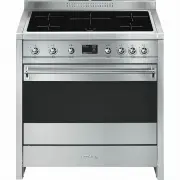 Smeg A1PYID-9
User Manual
Smeg A1PYID-9
User Manual
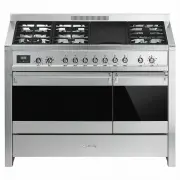 Smeg A3AU-81
User Manual
Smeg A3AU-81
User Manual
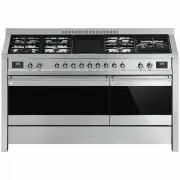 Smeg A5AU-81
User Manual
Smeg A5AU-81
User Manual
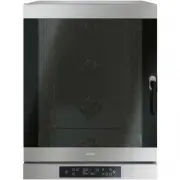 Smeg ALFA1035EH
User Manual
Smeg ALFA1035EH
User Manual
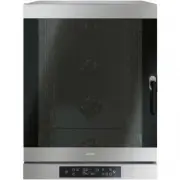 Smeg ALFA1035EHDS
User Manual
Smeg ALFA1035EHDS
User Manual
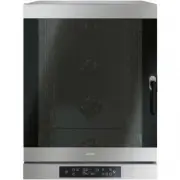 Smeg ALFA1035EHT
User Manual
Smeg ALFA1035EHT
User Manual
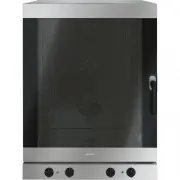 Smeg ALFA1035H
User Manual
Smeg ALFA1035H
User Manual
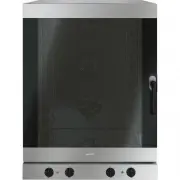 Smeg ALFA1035H-2
User Manual
Smeg ALFA1035H-2
User Manual
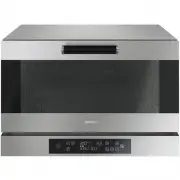 Smeg ALFA420EH
User Manual
Smeg ALFA420EH
User Manual
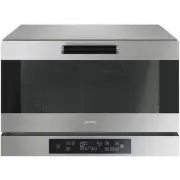 Smeg ALFA420EHDS
User Manual
Smeg ALFA420EHDS
User Manual
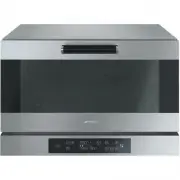 Smeg ALFA420EHT
User Manual
Smeg ALFA420EHT
User Manual
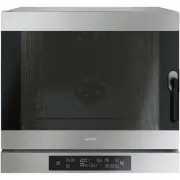 Smeg ALFA625EH
User Manual
Smeg ALFA625EH
User Manual
 Smeg ALFA625EHDS
User Manual
Smeg ALFA625EHDS
User Manual
 Smeg ALFA625EHT
User Manual
Smeg ALFA625EHT
User Manual
 Smeg ALFA625H
User Manual
Smeg ALFA625H
User Manual
 Smeg ALFA625H-2
User Manual
Smeg ALFA625H-2
User Manual
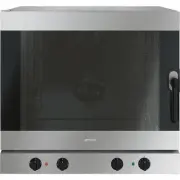 Smeg ALFA625HR-2
User Manual
Smeg ALFA625HR-2
User Manual