Page 2 - How to Use This Manual; This Manual; Symbols Used in This Manual
2 How to Use This Manual Thank you for purchasing a Canon projector.The WUX450 / WX520 Multimedia Projector (hereinafter referred to as “the projector”) is a high-performance projector that is capable of projecting a high-resolution computer screen and high-quality digital image on a large screen. T...
Page 4 - Projector Highlights; Minimal Space Needed for Installation; Edge Blending
4 Projector Highlights Minimal Space Needed for Installation Compact 337 x 134 x 370 mm / 13.3 x 5.3 x 14.6 in (W x H x D) body can be installed with minimal space requirements. ( P292 ) High-Resolution LCOS Projection Projection at 1920x1200 (WUXGA) for the WUX450 or 1440x900 (WXGA+) for the WX520,...
Page 5 - Quick Reference Guide
5 Quick Reference Guide This Quick Reference Guide will help you find functions that make full use of the projector and are useful for producing an attractive presentation, etc. Connecting to the Computer ( P134 - P136 ) Connecting to AV Equipment ( P137 - P139 ) Starting Projection ( P50 ) Selectin...
Page 6 - Table of Contents
6 Table of Contents How to Use This Manual......................................................................... 2Projector Highlights................................................................................ 4Quick Reference Guide ..............................................................
Page 16 - Safety Instructions
16 Safety Instructions Before installing and operating the projector, read this manual thoroughly.This projector provides many convenient features and functions. Operating the projector properly enables you to manage those features and maintain it in good condition for many years to come.Improper op...
Page 17 - Safety Precautions; CAUTION ON HANGING FROM THE
17 Safety Instructions Safe ty In str uc tions Safety Precautions WARNING:• THIS APPARATUS MUST BE GROUNDED.• TO REDUCE THE RISK OF FIRE OR ELECTRIC SHOCK, DO NOT EXPOSE THIS APPLIANCE TO RAIN OR MOISTURE. • This projector produces intense light from the projection lens. Do not stare directly into t...
Page 20 - AC Power Cord Requirement
Safety Instructions 20 AC Power Cord Requirement The AC Power Cord supplied with this projector meets the requirements for use in the country you purchased it. THE SOCKET-OUTLET SHOULD BE INSTALLED NEAR THE EQUIPMENT AND EASILY ACCESSIBLE. AC Power Cord for the United States and Canada: The AC Power...
Page 21 - Federal Communication Commission Notice; Canadian Radio Interference Regulations
21 Safety Instructions Safe ty In str uc tions Federal Communication Commission Notice Multimedia Projector, Model: WUX450 / WX520This device complies with Part 15 of the FCC Rules. Operation is subject to the following two conditions:(1) This device may not cause harmful interference, and(2) this d...
Page 23 - Precautions for Use
23 Safety Instructions Safe ty In str uc tions Precautions for Use As this section contains important safety-related information, be sure to read the following carefully beforehand in order to use your projector correctly and safely. If the following situations occur, turn the power off, remove the ...
Page 24 - Precautions for Installation
Safety Instructions 24 Precautions for Installation Pay attention to the following points regarding the power source, power plug and handling of the connector. Failure to do so may cause a fire, electric shock or personal injury. • Do not use any power source with a voltage other than the voltage in...
Page 26 - Precautions on the lamp
Safety Instructions 26 Precautions on the lamp Pay attention to the following points regarding installation and handling of the projector. • Do not place any heavy objects on top of the projector or sit / stand on it. Pay particular attention to prevent small children from doing so. The projector ma...
Page 27 - Precautions for the batteries of the remote
27 Safety Instructions Safe ty In str uc tions Precautions for the batteries of the remote control When handling the lamp, pay attention to the following points. • Be sure not to handle the lamp immediately after it has been used. Be sure to switch off the power and wait for approximately 1 hour for...
Page 28 - For Safe Use
28 For Safe Use Pay attention to the following points when carrying or transporting the projector. • This projector is a precision instrument. Do not knock it over or subject it to impacts. Doing so may cause a malfunction. • Do not reuse any packaging or shock-absorbent materials that were supplied...
Page 31 - Before Use
31 Table of Contents Safety Instructions Before Use Operati o n Projecting an Image Useful Functions Available During a Presentation Setting Functions from Menus Installation and M aintenance Installation Connecting to a Network Maintenance Ne tw or ked Multi-Pr ojection Networked Multi-Projection O...
Page 32 - Supplied Accessories; Attaching the Lens Cap
32 Supplied Accessories Check that the following accessories have been supplied with the projector. ■ Attaching the Lens Cap Align the lens cap notch with the zoom adjustment lever as shown and attach the cap. • Always remove the cap before projection. Accidentally leaving the cap on during projecti...
Page 33 - Preparing the Remote Control; Installing Remote Control Batteries
33 Befo re Use Preparing the Remote Control ■ Installing Remote Control Batteries • If buttons on the remote control are inoperative when you attempt to operate the projector, replace the batteries with new ones. • Do not drop the remote control or subject it to impact.• Do not spill any liquids on ...
Page 34 - Remote Control Operating Range
Preparing the Remote Control 34 ■ Remote Control Operating Range The remote control is an infrared type. Point it at the infrared remote receiver on the front or rear of the projector to operate it. • Use the remote control within a distance of approximately 8 m (26.3') from the projector. • Use the...
Page 36 - Part Names; Projector; Front Side
36 Part Names Projector ■ Front Side ■ Rear Side Terminals and connectors ( P42 ) Projection lens ( P43 ) Power cord connector ( P140 ) Side control ( P40 ) Air intake ventAir filter ( P195 ) • Do not block the air intake. Doing so may cause a malfunction. • Before projection, always remove the cap....
Page 37 - Bottom Side
37 Part Names Befo re Use ■ Bottom Side Mounting the Projector on the Ceiling You can mount the projector on the ceiling.The ceiling attachment (part No.: RS-CL12) is required in order to mount the projector on the ceiling. Depending on the installation environment, an extension pipe (part No.: RS-C...
Page 40 - Side Control
Part Names 40 Side Control LED indicators The projector status is shown by the LED indicators (off / on / flashing).For indicator status, refer to “LED Indicator Displays” ( P41 ). (1) POWER button ( P50 , P71 ) Turns the projector on or off. (2) INPUT button ( P52 ) Switches the input signal. (3) A...
Page 41 - LED Indicator Displays
41 Part Names Befo re Use • POWER ON (green) : Lights up or flashes under normal conditions when the power is on. • WARNING (red) : Lights up or flashes when an error occurs. • LAMP (orange) : Flashes when the time for replacing the lamp is near. When a lamp cover error occurs, the [WARNING] indicat...
Page 42 - Input Terminal
Part Names 42 Input Terminal (1) AUDIO OUT terminal (AUDIO OUT) ( P136 , P139 ) Outputs the audio to external AV equipment. This outputs the audio signal that corresponds to the projected image signal. (2) AUDIO IN terminal (AUDIO IN) ( P134 , P135 , P138 ) Receives the audio signal input for 2 kind...
Page 43 - Lens Shift Control; Projection Lens
43 Part Names Befo re Use Lens Shift Control (1) Vertical lens shift dial Slides the lens up or down for vertical image adjustment. (2) Horizontal lens shift dial Slides the lens left or right for horizontal image adjustment. For details on lens shift, refer to “Lens Shift Function” ( P131 ). Projec...
Page 44 - Open Source Software; Software under the GPL and LGPL
44 Open Source Software The product contains Open Source Software modules. For details, see “ThirdPartySoftware.pdf” (Third-Party Software License) in the OpenSourceSoftware folder in the LICENSE folder on the Setup CD-ROM. Each module’s license conditions are also available in the same folder. ■ So...
Page 47 - MULTIMEDIA PROJECTOR; Operation
Page 50 - Turn the Projector On; Changing Operations When Projector is Turned On; When the Projector Is Left Idle
50 Step 1 Turn the Projector On 1 Check the connection between the projector and the computer or AV equipment. ( P134 - P137 ) For instructions on connecting the power cord, refer to “Plugging the Projector In” ( P140 ). 2 Press the POWER button. The [POWER ON] indicator initially flashes green, aft...
Page 51 - Select an Input Signal; Types of Input Signals
51 Oper ation Pr ojectin g an Imag e Step 2 Select an Input Signal Select the input signal in the [Input] menu when you want to project a digital PC or AV equipment signal, or to switch between inputs when multiple computers or multiple sets of AV equipment are connected.Skip this step if you have n...
Page 52 - Step 2 Select an Input Signal; Selecting an Input Signal
Step 2 Select an Input Signal 52 Selecting an Input Signal 1 Press the INPUT button to display the window shown below. The currently active input signal is marked with a green circle and enclosed by a orange border.An input signal that is ready for projection is displayed in white. When no signal is...
Page 53 - Adjust the Image; Setting the Display Resolution of the Computer; Windows 8
53 Oper ation Pr ojectin g an Imag e Step 3 Adjust the Image Setting the Display Resolution of the Computer Based on the maximum resolution of the projector, set the display resolution of the computer to the resolution closest to the output signal resolution of the projector. ( P288 ) Maximum resolu...
Page 54 - Step 3 Adjust the Image; Mac OS X
Step 3 Adjust the Image 54 ■ Mac OS X 1 Open the Apple Menu and select [System Preferences]. 2 In the [System Preferences] window, click the [Displays] icon to display the Display window. 3 Select the [Display] tab and select the resolution closest to the maximum output signal resolution of the proj...
Page 55 - Auto PC Adjustment; Performing the Auto PC Function; Adjusting the Image Size
55 Step 3 Adjust the Image Oper ation Pr ojectin g an Imag e Auto PC Adjustment If the image display is shifted or there is flickering of the screen when [Analog PC-1] or [Analog PC-2] is selected, press the AUTO PC button to adjust the projector to the optimal condition.The adjustment results will ...
Page 56 - Adjusting the Image Position
Step 3 Adjust the Image 56 Adjusting the Image Position Turn the lens shift dials to adjust the projected image vertically or horizontally. Called “lens shift,” this adjusts the projected image into position by moving the lens up, down, left, or right. Adjusting the Focus To adjust the focus, turn t...
Page 57 - Select an Aspect Ratio (Screen Aspect) Matching the Screen
57 Oper ation Pr ojectin g an Imag e Step 4 Select an Aspect Ratio (Screen Aspect) Matching the Screen Select an optimum aspect ratio of the projected image (screen aspect) or an optimum screen mode (aspect) according to the aspect ratio of the screen, type of input image signal and so on for the pr...
Page 58 - Step 4 Select an Aspect Ratio (Screen Aspect) Matching the Screen
Step 4 Select an Aspect Ratio (Screen Aspect) Matching the Screen 58 3 Select [Screen aspect] with the [ ] / [ ] buttons, and then press the OK button. 4 Use the [ ] / [ ] buttons to select the desired contents. 16:10 Select this when you use a screen with an aspect ratio of 16:10. Also select this ...
Page 62 - Resetting the Image Shift
Step 4 Select an Aspect Ratio (Screen Aspect) Matching the Screen 62 3 Use the [ ] / [ ] buttons to select [Digital image shift], then press the OK button. 4 Use the [ ] / [ ] buttons to move the image. 5 When the image fits the screen, press the OK button. Resetting the Image Shift Perform the foll...
Page 63 - Selecting the Aspect; Auto
63 Step 4 Select an Aspect Ratio (Screen Aspect) Matching the Screen Oper ation Pr ojectin g an Imag e Selecting the Aspect Select [Aspect] based on the input signal type, aspect ratio of the screen and resolution. For more details about aspect ratios, refer to “Relationship between Aspect and Scree...
Page 64 - Selecting an Aspect Ratio
Step 4 Select an Aspect Ratio (Screen Aspect) Matching the Screen 64 Selecting an Aspect Ratio Press the ASPECT button on the remote control and select an appropriate aspect ratio. Press the ASPECT button to change the aspect ratio type. For more details about aspect ratios, refer to “Relationship b...
Page 65 - Correct the Image Distortion; Adjusting Keystone Distortion; Horizontal/Vertical Keystone Correction
65 Oper ation Pr ojectin g an Imag e Step 5 Correct the Image Distortion Adjusting Keystone Distortion To correct keystone distortion, press the KEYSTONE button. Two types of correction are available: horizontal/vertical correction and corner correction.Horizontal/vertical keystone correction adjust...
Page 66 - Step 5 Correct the Image Distortion; Corner Adjustment
Step 5 Correct the Image Distortion 66 2 Press the pointer buttons to adjust the dimensions. 3 When keystone distortion has been corrected, press the OK button. ■ Corner Adjustment 1 Press either the KEYSTONE button on the remote control or the KEYSTONE button on the projector in order to display th...
Page 67 - Resetting the Keystone Adjustment
67 Step 5 Correct the Image Distortion Oper ation Pr ojectin g an Imag e 2 Press the pointer button of the corner for correction, and then press the OK button. 3 Press the pointer buttons to adjust the corner. 4 When you have finished correcting, press the OK button. ■ Resetting the Keystone Adjustm...
Page 68 - Image Modes
68 Step 6 Select the Image Quality (Image Mode) You can select an image mode to suit the projected image.In each image mode, you can further adjust the brightness, contrast, sharpness, gamma, color adjustment, advanced adjustment, and lamp mode. ( P95 ) Image Modes The image modes which can be selec...
Page 69 - Step 6 Select the Image Quality (Image Mode); Selecting an Image Mode
69 Step 6 Select the Image Quality (Image Mode) Oper ation Pr ojectin g an Imag e ■ Selecting an Image Mode Press the IMAGE button on the remote control to select. The image mode changes each time the IMAGE button is pressed. (The displayed image modes vary depending on the selected input signal.) Y...
Page 70 - Set Power-Saving Settings; • Lamp Settings
70 Step 7 Set Power-Saving Settings Press the ECO button on the remote control to complete power-saving settings. The following three settings are available. • Lamp Settings For changing lamp and fan power consumption in the current image mode. • Auto Power-Off A function for automatically turning t...
Page 71 - Turn the Projector Off
71 Oper ation Pr ojectin g an Imag e Step 8 Turn the Projector Off 1 Press the POWER button to display the window shown below. 2 When this window is displayed, press the POWER button again to turn off the power. After you turn the power off, the projector will enter standby mode once it cools down. ...
Page 74 - Useful Presentation Functions; Temporarily Blacking; Freezing the Picture
74 Useful Presentation Functions Temporarily Blacking Out an Image Press the BLANK button to black out the image.Press the BLANK button again to show the image. • You can set the screen state while blacking out the image in the menu. ( P107 ) • The lamp remains illuminated while the image is blacked...
Page 75 - Adjusting the Volume; Muting the Sound
75 Useful Presentation Functions Oper ation U sef ul Fun ctio n s A vailable D ur ing a Pres en ta tion Adjusting the Volume Press the VOL button. The following screen appears. • You can also adjust the volume level with the [ ] / [ ] buttons of the projector. • Adjust the volume or mute setting on ...
Page 76 - Zooming an Image
76 Useful Presentation Functions Zooming an Image Press the + D.ZOOM button to enlarge a part of the image. Press the – D.ZOOM button to reduce the image size. • The magnification appears on the screen. You can move the enlarged area by using the [ ] / [ ] / [ ] / [ ] buttons. You can restore the or...
Page 77 - Projecting Images on a USB Flash Drive
77 Oper ation U sef ul Fun ctio n s A vailable D ur ing a Pres en ta tion Projecting Images on a USB Flash Drive Images stored on a USB flash drive in the projector can be projected as follows. You can select the images to project, or you can project images automatically, one after another. JPEG ima...
Page 82 - Using Menus; Menu Configuration; Input Signal Types for which a Menu Item is Displayed
82 Using Menus Use the menus to set the operation of the projector in detail. Menu Configuration The menu screen is divided into 6 tabs as shown below. Menu items [System settings] tab You can set the operation of the projector. [Network settings] tab These settings are for when using the projector ...
Page 83 - Basic Menu Operations
Using Menus 83 Oper ation Setti ng Fu nctio n s from Me nus Basic Menu Operations 1 Press the MENU button to display the menu window. 2 Press the [ ] / [ ] buttons to select a tab. • If the tab position is not highlighted in orange, press the [ ] / [ ] buttons to move the current selection to the to...
Page 93 - Screen Display
93 Setting Display Status (Input Settings) Oper ation Setti ng Fu nctio n s from Me nus Specifying Split- Screen Display > [Input settings] > [Split screen] You can project two input images side by side. ( P79 ) Press the OK button to accept your setting and then press the MENU button or EXIT ...
Page 94 - Adjusting Image Quality (Image Adjustment); Specifying Image
94 Adjusting Image Quality (Image Adjustment) Specifying Image Priority in Split-Screen Mode > [Image adjustment] > [Image priority] Some image processing in split-screen mode is applied to both sides. Here, select which side to use as the primary side, which will be the basis for secondary-si...
Page 95 - Specifying the Image
95 Adjusting Image Quality (Image Adjustment) Oper ation Setti ng Fu nctio n s from Me nus Specifying the Image Mode > [Image adjustment] > [Image mode] You can select an image mode ( P68 ) suitable for the projected image.You can also select it with the IMAGE button on the remote control. ( P...
Page 96 - User Profile
96 Adjusting Image Quality (Image Adjustment) Creating/Saving a User Profile > [Image adjustment] > [Create profile] Up to 5 combinations of image quality settings can be stored. The stored image quality can be selected as an image mode. Use the [ ] / [ ] buttons and select the save destinatio...
Page 97 - Adjusting Brightness; Adjusting Contrast
97 Adjusting Image Quality (Image Adjustment) Oper ation Setti ng Fu nctio n s from Me nus Adjusting Brightness > [Image adjustment] > [Brightness] You can adjust the brightness of images. When you have completed the adjustment, press the MENU or EXIT button. • The adjustments you have made ar...
Page 98 - Adjusting Sharpness; Correcting Gamma
98 Adjusting Image Quality (Image Adjustment) Adjusting Sharpness > [Image adjustment] > [Sharpness] You can adjust the sharpness of images. When you have completed the adjustment, press the MENU or EXIT button. • The adjustments you have made are stored as adjusted values for the input signal...
Page 99 - Adjusting Colors
99 Adjusting Image Quality (Image Adjustment) Oper ation Setti ng Fu nctio n s from Me nus Adjusting Colors > [Image adjustment] > [Color adjustment] You can adjust the color depth and hue of images for each primary color, red, green and blue. The color temperature can also be adjusted. When y...
Page 100 - Adjusting to the
100 Adjusting Image Quality (Image Adjustment) Adjusting to the Ambient Light (Ambient Light) > [Image adjustment] > [Advanced adjustment] > [Ambient light] You can correct and more effectively project an image according to the ambient light on the screen.The [Ambient light] setting is avai...
Page 101 - Reducing Image
101 Adjusting Image Quality (Image Adjustment) Oper ation Setti ng Fu nctio n s from Me nus Reducing Image Noise (Noise reduction) > [Image adjustment] > [Advanced adjustment] > [Noise reduction] You can reduce image noise. Press the OK button to accept your setting and then press the MENU ...
Page 102 - Correcting Memory
102 Adjusting Image Quality (Image Adjustment) Correcting Memory Color > [Image adjustment] > [Advanced adjustment] > [Mem. color correct] Enhances skin tones, blue skies, and greens, so that these colors are more consistent with people’s remembered impressions. Press the OK button to accep...
Page 104 - Controlling Contrast
104 Adjusting Image Quality (Image Adjustment) • The adjustments you have made are stored as adjusted values for the input signals and image mode of the current projection. • For details of gamma correction, refer to page 98 . • RGB offset (relative to 0) can be adjusted by using the R/G/B Offset fu...
Page 105 - Specifying the Lamp; Resetting Image
105 Adjusting Image Quality (Image Adjustment) Oper ation Setti ng Fu nctio n s from Me nus Specifying the Lamp Mode > [Image adjustment] > [Lamp mode] Reducing the lamp brightness reduces power consumption and cooling fan noise.You can access the [Lamp mode] menu by pressing the ECO button on...
Page 106 - Customizing System Operation (System Settings); Registering User Logos; Positioning User
106 Customizing System Operation (System Settings) Registering User Logos > [System settings] > [User screen settings] > [Logo capture] Registers the current image as a user logo. Registered user logos can be shown when no signal is received, when the BLANK button is pressed, or as the star...
Page 107 - No Signal Screen
107 Customizing System Operation (System Settings) Oper ation Setti ng Fu nctio n s from Me nus No Signal Screen > [System settings] > [User screen settings] > [No signal screen] As the image projected when there is no input signal, you can choose a black, blue, or registered user screen. P...
Page 108 - Selecting a Logo at
108 Customizing System Operation (System Settings) Selecting a Logo at Startup > [System settings] > [User screen settings] > [Projector on] You can display a specified logo on the screen from the moment the projector is turned on to the moment it is ready for projection. Press the OK butto...
Page 109 - Specifying Direct
109 Customizing System Operation (System Settings) Oper ation Setti ng Fu nctio n s from Me nus Specifying Direct Power-On > [System settings] > [Direct power on] You can turn on the projector by connecting the power cable without pressing the POWER button. Press the OK button to accept your s...
Page 110 - Specifying Key Repeat
110 Customizing System Operation (System Settings) Specifying Key Repeat Operation > [System settings] > [Key repeat] By pressing and holding the button on the projector or the remote control you can operate Key repeat in the same way as when the button is pressed repeatedly. Press the OK butt...
Page 111 - Assigning a Channel; Selecting the Projector Channel; To Unlock Key Lock Function
111 Customizing System Operation (System Settings) Oper ation Setti ng Fu nctio n s from Me nus Assigning a Channel for Remote Control > [System settings] > [Remote control channel] When using multiple projectors at the same time (maximum 4), you can assign a different channel to each remote c...
Page 112 - Reducing Motion
112 Customizing System Operation (System Settings) Selecting a Channel on the Remote control You can change the channel on the remote control as follows. Reducing Motion Blur > [System settings] > [Motion blur reduction] Motion blur is blurring that occurs during video playback. Motion blur re...
Page 113 - Specifying HDMI Input; Selecting a Display
113 Customizing System Operation (System Settings) Oper ation Setti ng Fu nctio n s from Me nus Specifying HDMI Input > [System settings] > [HDMI In] Set the type of equipment which is connected to the HDMI port. Press the OK button to accept your setting and then press the MENU button or EXIT...
Page 114 - Requiring a Password
114 Customizing System Operation (System Settings) When the setting is completed, press the OK button to accept your setting and then press the MENU button or EXIT button. Requiring a Password for Operation > [System settings] > [Other settings] > [ Password settings ] Disables the projecto...
Page 115 - Setting a Password; To Cancel the Password
115 Customizing System Operation (System Settings) Oper ation Setti ng Fu nctio n s from Me nus Setting a Password > [System settings] > [Other settings] > [Register password] You can register a password for starting projection. Press the OK button after selecting [Register password], and t...
Page 116 - Restoring Original
116 Customizing System Operation (System Settings) Restoring Original Gamma Settings > [System settings] > [Other settings] > [Gamma restore] This function is used when changing and turning of the tone characteristics and achromatic color is noticed over a long period of time.Gamma restore ...
Page 117 - Resetting the Lamp
117 Customizing System Operation (System Settings) Oper ation Setti ng Fu nctio n s from Me nus Resetting the Lamp Counter > [System settings] > [Other settings] > [Lamp counter] You can reset the lamp counter that indicates the time for lamp replacement. Select [Lamp counter] and press the...
Page 118 - Resetting the Air Filter; Updating the
118 Customizing System Operation (System Settings) Resetting the Air Filter Counter > [System settings] > [Other settings] > [Air filter counter] This resets the counter which reminds you of the time for cleaning and replacing the air filter. To view the air filter counter, press the OK but...
Page 119 - Resetting to the
119 Customizing System Operation (System Settings) Oper ation Setti ng Fu nctio n s from Me nus Resetting to the Default Setting > [System settings] > [Other settings] > [Factory defaults] You can reset the menu item settings and restore the system settings to the factory defaults. Select [...
Page 120 - Checking Projector Information
120 Checking Projector Information > [Information] You can check information about the signal types of the images projected and other information. Information shown * Not displayed when network functions are [Off]. HDMI Component LAN Digital PC Analog PC USB Item Explanation Model name WUX450 / W...
Page 121 - Installation and
121 MULTIMEDIA PROJECTOR Installation and Maintenance Request projector installation from a qualified technician, if possible, or contact the Canon Customer Support Center. For ceiling installation in particular, always request installation from a qualified technician or contact the Canon Customer S...
Page 123 - Installation
123 Table of Contents Safety Instructions Before Use Operati o n Projecting an Image Useful Functions Available During a Presentation Setting Functions from Menus Installation and M aintenance Installation Connecting to a Network Maintenance Ne tw or ked Multi-Pr ojection Networked Multi-Projection ...
Page 124 - Before Installation; Precautions When Carrying/Shipping the
124 Before Installation Precautions When Carrying/Shipping the Projector Precautions for Installation Be sure to read “Safety Instructions” and “For Safe Use” ( P16 – P29 ). Also take the following precautions during installation. Prepare the projector as described below before carrying it. • Discon...
Page 126 - When using mounted on the ceiling
Before Installation 126 ■ Be Careful of Condensation If the temperature of the room rises suddenly, moisture in the air may condense on the projector lens and mirror, causing the image to become blurred. Wait until the condensation has evaporated for the image projected to return to normal. ■ At Alt...
Page 127 - Install facing in the correct direction
Before Installation 127 Installatio n and Main te nance Installation ■ Install facing in the correct direction When installing the projector facing upward or downward, specify which way the projector is facing in [Install settings] > [Professional settings] > [Vertical projection]. ( P148 ) 10...
Page 128 - Installation Procedure; Setting Up the Projector; Positioning the Projector in Front of the Screen; Floor Installation; Upward-Tilted Installation
128 Installation Procedure Setting Up the Projector ■ Positioning the Projector in Front of the Screen Place the projector in front of the screen. ■ Floor Installation To adjust the projection position when the projector is installed on the floor, use the lens shift function ( P56 and P131 ) to adju...
Page 129 - Projection from High Surfaces
Installation Procedure 129 Installatio n and Main te nance Installation ■ Projection from High Surfaces For projection from a shelf or other high surface, the projector can be installed upside-down and the projected image inverted. In this case, attach the option feet on top of the projector. Attach...
Page 130 - Ceiling Mounting or Rear Projection
Installation Procedure 130 Removing hole caps labeled (2) Open the lamp cover and use a screwdriver or similar tool to push off the caps from below. ■ Ceiling Mounting or Rear Projection You can mount the projector on the ceiling (ceiling mounting) with it turned upside down or place it behind the s...
Page 131 - Relationship of Image Size to Projection; Lens Shift Function
Installation Procedure 131 Installatio n and Main te nance Installation Relationship of Image Size to Projection Distance The projected image size is determined by the distance between the projector and the screen (projection distance) as well as the zoom. Refer to the following table and decide the...
Page 133 - Connection Procedure; Connectable Equipment and Input Terminals
133 Installatio n and Main te nance Installation Connection Procedure Connectable Equipment and Input Terminals HDMI Use this name to select the image input. Direction of signal and data flow HDMI Terminal The name of the terminal to which to connect equipment (Pxxx) indicates the page(s) to refer t...
Page 134 - Connecting a Computer
Connection Procedure 134 Connecting a Computer Connect the projector to the computer.A digital connection ( P135 ) is recommended when projecting an image in high quality.When using a computer with an HDMI output terminal, a digital connection ( P136 ) can be made using an HDMI cable. ■ Connecting t...
Page 136 - Connecting with an HDMI cable
Connection Procedure 136 ■ Connecting with an HDMI cable (Input signal type: [HDMI] P51 ) ■ Outputting Audio to Speakers It is possible to output audio from the projected images to amplified speakers. • Use an audio cable without a built-in resistor. Using an audio cable with a built-in resistor wil...
Page 137 - Connecting AV Equipment
Connection Procedure 137 Installatio n and Main te nance Installation Connecting AV Equipment Connect the projector and AV equipment.The description provided here is one example. For more detailed information, refer to the manual for the connected AV equipment. ■ Connecting to Digital Video Output T...
Page 139 - Outputting Audio to Speakers
Connection Procedure 139 Installatio n and Main te nance Installation ■ Outputting Audio to Speakers It is possible to output audio from the projected images to AV equipment or amplified speakers. Use an audio cable without a built-in resistor. Using an audio cable with a built-in resistor will redu...
Page 140 - Plugging the Projector In
Connection Procedure 140 Plugging the Projector In Connect the power cord to the projector and plug it in. Connect the ground terminal on the power plug to ground. Not doing so could result in an electric shock. Additionally, it may cause computers to be affected by electromagnetic interference and ...
Page 141 - Starting and Stopping Projection; Starting Projection; Stopping Projection; When the Language Selection Screen Appears; When the Password Input Screen Appears
141 Installatio n and Main te nance Installation Starting Projection Starting and Stopping Projection ■ Starting Projection Press the POWER button on the remote control or on the projector. The [POWER ON] indicator initially flashes green, after which it remains lit. ■ Stopping Projection Press the ...
Page 142 - When “No signal” Appears; When Notebook Computer Screen Does Not Appear; Changing Notebook Computer Screen Output; Turning on External Monitor Output
Starting Projection 142 ■ When “No signal” Appears With a notebook computer, the user must turn on the external monitor output. ( P142 ) Press the INPUT button to select the input signal. ( P52 ) ■ When Notebook Computer Screen Does Not Appear Set your notebook computer to output signals to an exter...
Page 143 - Installation-Related Menu Settings; Locking Installation
143 Installatio n and Main te nance Installation Installation-Related Menu Settings Locking Installation Settings > [Install settings] > [Positional lock] Operation of installation related functions can be prohibited. Press the OK button to accept your setting and then press the MENU button or...
Page 144 - Ceiling Mounting
Installation-Related Menu Settings 144 • To hang the projector from the ceiling, use the optional bracket. Contact the Canon Customer Support Center for more detailed information. • If you flip the image, the keystone distortion adjustment will be reset. Normal (None) Ceiling Mounting Rear projectio...
Page 145 - Specifying the Screen
Installation-Related Menu Settings 145 Installatio n and Main te nance Installation Specifying the Screen Aspect > [Install settings] > [Screen aspect] Select according to the aspect ratio of the projection screen. ( P57 ) Press the OK button to accept your setting and then press the MENU butt...
Page 146 - Specifying Keystone; Specifying Digital
Installation-Related Menu Settings 146 Specifying Keystone Correction > [Install settings] > [Keystone] Two types of keystone correction are available: horizontal-vertical keystone and corner adjustment. Keystone correction can also be reset. Keystone correction can be applied by pressing the ...
Page 147 - Specifying Micro
Installation-Related Menu Settings 147 Installatio n and Main te nance Installation Specifying Micro Digital Image Shift > [Install settings] > [Professional settings] > [Micro-digital image shift] Use this setting to fine-tune digital image shift. When you have completed the adjustment, pr...
Page 148 - Specifying the Fan
Installation-Related Menu Settings 148 Specifying the Fan Mode > [Install settings] > [Professional settings] > [Fan mode] Enable suitable cooling by switching the fan mode to the setting for low- or high-altitude (above 2, 3 00 m ( 7 ,5 45 .8')) operation. When the setting is completed, pr...
Page 149 - Selecting the Audio In
Installation-Related Menu Settings 149 Installatio n and Main te nance Installation Selecting the Audio In Terminal > [Install settings] > [Audio in terminal select] You can select the audio in terminal that is used for each input signal (HDMI, Digital PC, Analog PC-1, Analog PC-2, Component)....
Page 150 - Specifying a Menu
Installation-Related Menu Settings 150 Specifying a Menu Position > [Install settings] > [On screen] > [Menu position] You can change the position of menus displayed. Use the [ ] / [ ] / [ ] / [ ] buttons to move the menu to the desired position. After you have moved the menu to the desired...
Page 151 - Showing/Hiding Input
Installation-Related Menu Settings 151 Installatio n and Main te nance Installation Showing/Hiding Input Status > [Install settings] > [On screen] > [Show input status] You can select whether the signal status is displayed on the screen when there is no signal or when making signal settings...
Page 152 - Specifying the Menu
Installation-Related Menu Settings 152 Specifying the Menu Display Time > [Install settings] > [On screen] > [Menu display time] The setting for the menu display time can be extended from the normal 10 or 30 seconds to 3 minutes. Press the OK button to accept your setting and then press the...
Page 153 - Showing/Hiding Filter
Installation-Related Menu Settings 153 Installatio n and Main te nance Installation Showing/Hiding Filter Cleaning Warnings > [Install settings] > [On screen] > [Air filter warning display] A message advising you to perform cleaning can be set to display when the filter needs cleaning. Pres...
Page 154 - Test Pattern
Installation-Related Menu Settings 154 Showing/Hiding the Test Pattern > [Install settings] > [Test pattern] You can project a test pattern ( P287 ) to check resolution, color, and other details even without supplying an input signal. Press the OK button to accept your setting and then press t...
Page 155 - Projecting from Multiple Projectors at Once; Basic Instructions
Installation-Related Menu Settings 155 Installatio n and Main te nance Installation Projecting from Multiple Projectors at Once (Edge Blending) > [Install settings] > [Professional settings] > [Edge blending] Overlapping edges of images from multiple projectors used together can be blended ...
Page 158 - Advanced Instructions: Black Level Adjustment
Installation-Related Menu Settings 158 ■ Advanced Instructions: Black Level Adjustment In overlapping projection, dark colors are projected with less intensity than other colors in the overlapping area. For this reason, overlapping image areas might be more noticeable when the images themselves are ...
Page 160 - Advanced Instructions: Smoother Overlapping Areas; CBA
Installation-Related Menu Settings 160 ■ Advanced Instructions: Smoother Overlapping Areas Adjustments to areas A, B, and C may make the black level along the right edge of area D (that is, the edge bordering the blending area) more noticeable than that of surrounding areas.To compensate, adjust eac...
Page 164 - Network Connection Overview; Connection Methods
164 Network Connection Overview Connecting the projector to a network enables you to control the projector from a computer and receive notification of projector errors via email. Settings related to the network connection can be made from either the projector side ( P165 ) or computer side ( P174 )....
Page 165 - Completing Projector Settings; Network Settings
165 Installatio n and Main te na nce Con necting to a Networ k Completing Projector Settings From the projector menus screen, network settings can be configured in the [Network Setting] tab. For instructions on menu operations, refer to “Using Menus” ( P82 ). Locking/Unlocking Network Settings > ...
Page 166 - the Network Password
Completing Projector Settings 166 Enabling/Disabling the Network Password > [Network settings] > [Network password setting] You can set whether or not a password is required in order to change the projector network settings. Press the OK button to accept your setting and then press the MENU bu...
Page 167 - Registering a Network
Completing Projector Settings 167 Installatio n and Main te na nce Con necting to a Networ k Registering a Network Password > [Network settings] > [Register network password] Register the projector network password. When [Register network password] is selected, the window shown below appears.E...
Page 168 - Specifying Standby; Viewing the IP
Completing Projector Settings 168 Specifying Standby Power Consumption > [Network settings] > [Network standby settings] Specify network function operating status in standby mode as follows. Press the OK button to accept your setting and then press the MENU button or EXIT button. • [Low-power]...
Page 169 - Viewing the Gateway
Completing Projector Settings 169 Installatio n and Main te na nce Con necting to a Networ k Viewing the Gateway Address > [Network settings] > [Detailed settings (wired)] > [Gateway address] View the projector’s gateway address as follows.Note that the information can only be displayed, no...
Page 170 - DHCP; Settings
Completing Projector Settings 170 Enabling/Disabling DHCP > [Network settings] > [Detailed settings (wired)] > [DHCP] You can turn the projector DHCP function on or off. Press the OK button to accept your setting and then press the MENU button or EXIT button. • [Off] is the factory default....
Page 171 - Initializing Network; Specifying PJLink
Completing Projector Settings 171 Installatio n and Main te na nce Con necting to a Networ k Initializing Network Settings > [Network settings] > [Detailed settings (wired)] > [Network setting initialization] You can initialize the projector network settings. When [Network setting initializ...
Page 172 - Specifying Use of
Completing Projector Settings 172 Specifying Use of AMX Device Discovery > [Network settings] > [AMX Device Discovery] In a network environment, AMX Device Discovery can be used to enable other equipment to discover the projector. For networks without AMX Device Discovery, select [Off]. • [Off...
Page 174 - Completing Computer Settings; Specifying an IP Address; Windows 7
174 Completing Computer Settings Specifying an IP Address Following is an explanation of how to set the PC IP address for each operating system. ■ Windows 7 1 From the PC [Start] menu, select [Control Panel]. 2 Click on [Network and Internet], then click on [View network status and tasks]. 3 From th...
Page 175 - Windows Vista
175 Completing Computer Settings Installatio n and Main te na nce Con necting to a Networ k ■ Windows Vista 1 From the PC [Start] menu, select [Control Panel]. 2 Click on [View network status and tasks]. 3 From the menu on the left side of the window, click on [Manage network connections]. 4 Right-c...
Page 176 - Windows XP
Completing Computer Settings 176 ■ Windows XP 1 From the PC [Start] menu, select [Control Panel]. 2 Select [Network and Internet Connections] and open [Network Connections]. 3 Right-click [Local Area Connection], and open [Properties]. 4 Select [Internet Protocol (TCP/IP)] and click the [Properties]...
Page 177 - Resetting the IP Address Setting of the Computer; Setting Up the Network; Displaying the Network Configuration Screen
177 Completing Computer Settings Installatio n and Main te na nce Con necting to a Networ k 4 Create a new network environment and set the IP address and subnet mask. The factory default IP address for the projector is “192.168.254.254”. Set an IP address which is different from this.ExampleIP addre...
Page 179 - Network setting
179 Completing Computer Settings Installatio n and Main te na nce Con necting to a Networ k The projector settings screen is displayed in the web browser. ■ Network setting 1 To access the settings screen, click [Settings] on the web screen in step 3 of “Displaying the Network Configuration Screen” ...
Page 189 - Resetting Network Settings to the Default Settings
189 Completing Computer Settings Installatio n and Main te na nce Con necting to a Networ k Resetting Network Settings to the Default Settings 1 Perform steps 1 - 3 on “Displaying the Network Configuration Screen” ( P177 ) to display the settings screen. 2 Click [Initialize]. 3 A confirmation window...
Page 190 - Error notification mails; Error list
Completing Computer Settings 190 ■ Error notification mails The messages shown in the following error list are sent when an error occurs in the projector. Error list Errors related to temperature Error name Temperature abnormality Text The temperature inside the projector is too high for some reason...
Page 191 - Control via the Web Screen
191 Completing Computer Settings Installatio n and Main te na nce Con necting to a Networ k Control via the Web Screen When the projector is connected to a network, it is possible to control the projector from a computer via the network. 1 Turn on the computer and projector. 2 Launch a web browser, ...
Page 193 - Maintenance
193 Table of Contents Safety Instructions Before Use Operati o n Projecting an Image Useful Functions Available During a Presentation Setting Functions from Menus Installation and M aintenance Installation Connecting to a Network Maintenance Ne tw orked Mu lti-Projection Networked Multi-Projection O...
Page 194 - Cleaning the Projector
194 Cleaning the Projector Clean the projector frequently to prevent dust from settling on the surface.A dirty lens may ruin the quality of the projected image. Wipe the projector’s main unit softly with a soft cloth.If the projector is heavily soiled, soak the cloth in water with a small amount of ...
Page 195 - Cleaning and Replacing the Air Filter; Replacing the Air Filter
195 Install a tion an d Ma intena nce Mainten ance Cleaning and Replacing the Air Filter Replacing the Air Filter Follow the procedure below when replacing the air filter. 1 Turn off the projector power and remove the power plug. 2 As you press the top and bottom of the air filter cover to release t...
Page 196 - Cleaning the Air Filter
Cleaning and Replacing the Air Filter 196 5 Follow this procedure in reverse to install a new air filter. Cleaning the Air Filter The air filter protects the lens and mirror inside the projector from dust and dirt. Should the air filter become clogged with dust, the projector may be damaged since it...
Page 197 - Replacing the Lamp
197 Install a tion an d Ma intena nce Mainten ance Replacing the Lamp When the usage time of the lamp exceeds a certain amount of time, the following message (two types) is displayed for 10 seconds every time the projector is turned on. 2,700 hours to less than 3,000 hours Prepare a new lamp when th...
Page 198 - Replacement Lamp
Replacing the Lamp 198 Replacement Lamp This projector uses the following lamps. Lamp part no.: RS-LP08 Contact the Canon Customer Support Center when purchasing a replacement lamp. Replacing the Lamp 1 Turn off the projector power and remove the power plug. 2 Press the lamp cover release button to ...
Page 200 - If the lamp cover comes off
Replacing the Lamp 200 7 Turn on the power. Bring up the menu and select [System settings] - [Other settings] - [Lamp counter]. 8 Select [Reset] - [Yes] to reset the lamp counter. ■ If the lamp cover comes off Align the point of attachment on the lamp cover with the groove on the projector and gentl...
Page 204 - Introduction to Networked Multi-Projection; Projection Over a Network
204 Introduction to Networked Multi-Projection ■ Projection Over a Network Networked Multi-Projection (NMPJ) is a projector function enabling projection of computer screens over a local network. Multiple computers and multiple projectors can be connected, for a variety of projection scenarios. ■ Spl...
Page 205 - Selecting the Projection Monitor
205 Introduction to Networked Multi-Projection Networ ked Mu lti- Projection Networ ked Mu lti- Projectio n Over view ■ Selecting the Projection Monitor For multi-monitor computers, you can project either the primary or secondary monitor. For each computer, you can select the monitor to project. • W...
Page 206 - Installing the NMPJ Application; System Requirements
206 Installing the NMPJ Application To use the NMPJ function, you must install the NMPJ application.Instructions in this manual are for installation in a Windows 7 environment. System Requirements Application system requirements are as follows. CPU Core 2 Duo P8600, 2.4 GHz or higher (32- or 64-bit)...
Page 209 - Uninstallation
209 Installing the NMPJ Application Networ ked Mu lti- Projection Networ ked Mu lti- Projectio n Over view ■ Uninstallation 1 Select [Start] > [All Programs] > [Canon NMPJ] > [Uninstall network multiple projection]. 2 If a [User Account Control] message is displayed, click [Yes]. 3 After th...
Page 211 - From Startup to Shutdown
211 Networ ked Mu lti- Projection Networ ked Mu lti- Projectio n Over view From Startup to Shutdown The procedure from application startup to shutdown is as follows. Example windows shown here are from Direct mode. 1 Select [Start] > [All Programs] > [Canon NMPJ] > [Network Multiple Project...
Page 215 - Projection Sessions
215 From Startup to Shutdown Networ ked Mu lti- Projection Networ ked Mu lti- Projectio n Over view ■ Projection Sessions A session consists of all the computers and projectors used in projection.In Meeting and Classroom modes, the first user must create a session for the computers and projectors in...
Page 218 - Using the Projector in Direct Mode; Procedure
218 Using the Projector in Direct Mode In this mode, one computer is connected to one projector over the network. Procedure 1 In the mode selection menu, select [Direct Mode]. 2 The Direct Mode window is displayed. Click . To connect to projectors in another subnet, enter the projector’s IP address ...
Page 220 - Direct Mode Window
Using the Projector in Direct Mode 220 Direct Mode Window (1) Help View application help. (2) Back to mode selection Return to the mode selection menu. (3) Compact display View the window at a compact size. ( P270 ) (4) Minimize Minimize the window to the taskbar. To view the window again, click the...
Page 222 - Using the Projector in Meeting Mode; Creating a Session
222 Using the Projector in Meeting Mode In meeting mode, multiple computers are connected to multiple projectors. This mode is intended for group meetings where multiple computers are used. Up to ten computers and six projectors can be connected. Creating a Session 1 In the mode selection menu, sele...
Page 228 - Joining a Session
Using the Projector in Meeting Mode 228 Joining a Session 1 In the mode selection menu, select [Meeting Mode]. 2 The session selection menu is displayed. Click [Enter] next to the session to join. To join a session in another subnet, click and enter the projector’s IP address to locate the projector...
Page 230 - Meeting Mode Window
Using the Projector in Meeting Mode 230 Meeting Mode Window (1) Help View application help. (2) Back to mode selection Return to the mode selection menu. (3) Compact display View the window at a compact size. ( P270 ) (4) Minimize Minimize the window to the taskbar. To view the window again, click t...
Page 232 - Using the Projector in Classroom Mode; Leading a New Session
232 Using the Projector in Classroom Mode In classroom mode, multiple computers are connected to multiple projectors. A single presenter can control any computer or projector used for projection, whether their own or those of others in attendance. Up to ten computers and six projectors can be connec...
Page 238 - Joining an Existing Session
Using the Projector in Classroom Mode 238 Joining an Existing Session 1 In the mode selection menu, select [Classroom Mode]. 2 The session selection menu is displayed. Click [Enter] next to the session to join. To join a session in another subnet, click and enter the projector’s IP address to find t...
Page 241 - Classroom Mode Window (Starting a Session)
241 Using the Projector in Classroom Mode Networked Multi-Pr ojection O p er at ion in Each M od e Classroom Mode Window (Starting a Session) (1) Help View application help. (2) Back to mode selection Return to the mode selection menu. (3) Compact display View the window at a compact size. ( P270 ) ...
Page 243 - Classroom Mode Window (Joining a Session)
243 Using the Projector in Classroom Mode Networked Multi-Pr ojection O p er at ion in Each M od e Classroom Mode Window (Joining a Session) (1) Help View application help. (2) Back to mode selection Return to the mode selection menu. (3) Compact display View the window at a compact size. ( P270 ) (...
Page 245 - Using the Projector in Broadcast Mode
245 Networked Multi-Pr ojection O p er at ion in Each M od e Using the Projector in Broadcast Mode In Broadcast Mode, a single computer is connected to up to 12 projectors. Procedure 1 In the mode selection menu, select [Broadcast Mode]. 2 The projector selection menu is displayed. In the list of pr...
Page 248 - Broadcast Mode Window
Using the Projector in Broadcast Mode 248 Broadcast Mode Window (1) Help View application help. (2) Back to mode selection Return to the mode selection menu. (3) Compact display View the window at a compact size. ( P270 ) (4) Minimize Minimize the window to the taskbar. To view the window again, cli...
Page 252 - Using the Session Selection Menu; Session Selection Menu
252 Using the Session Selection Menu Session Selection Menu (1) Help View application help. (2) Back to mode selection Return to the mode selection menu. (3) Minimize Minimize the window to the taskbar. To view the window again, click the taskbar icon. (4) Exit Return to the mode selection menu. (5)...
Page 253 - Finding Sessions
253 Using the Session Selection Menu Netw orked Multi-Projection Func tions in All Modes (8) [Enter] Join the session. ( P228 ) Finding Sessions You can find sessions from the session selection menu. 1 In the session selection menu, click . 2 The search window is displayed. Enter the IP address of a...
Page 254 - Using the Projector Selection Menu; Projector Selection Menu
254 Using the Projector Selection Menu Projector Selection Menu (1) Find projectors Find projectors in another subnet. ( P256 ) (2) Sort Change the sort order of the projector list. ( P259 ) (3) Help View application help. (4) Back to mode selection Return to the mode selection menu. (5) Minimize Mi...
Page 256 - Finding Projectors
Using the Projector Selection Menu 256 ■ Finding Projectors To find projectors in other subnets, do the following in the projector selection menu. 1 In the projector selection menu, click . 2 The search window is displayed. Enter the projector’s IP address, and then click .
Page 257 - Selecting Password-Protected Projectors
257 Using the Projector Selection Menu Netw orked Multi-Projection Func tions in All Modes 3 Once the projector is found, click [OK]. The selected projector is now added to the projector list. ■ Selecting Password-Protected Projectors Selecting a password-protected projector will display a password ...
Page 258 - Using the Favorites Function
Using the Projector Selection Menu 258 ■ Using the Favorites Function You can register commonly used projectors as favorites.Favorite projectors are listed first when you click the button (sort by favorites). Up to five projectors can be registered as favorites. To register a projector as a favorite...
Page 259 - Resorting the Projector List
259 Using the Projector Selection Menu Netw orked Multi-Projection Func tions in All Modes ■ Resorting the Projector List You can change the sort order of projector information by clicking the sort buttons. List by projector name. List by installation location. List projectors that are currently on ...
Page 260 - Using Layout Functions; Switching Projectors Used for the Layout
260 Using Layout Functions ■ Switching Projectors Used for the Layout On the layout window, you can set up the projection layout.To choose a different projector for the layout, select it from the projector pull-down list. ■ Controlling all Projectors at Once To set up the projection layout for all p...
Page 262 - Switching the Primary/Secondary Monitor
Using Layout Functions 262 ■ Switching the Primary/Secondary Monitor Using the application, you can switch between projection from the primary or secondary monitor.If your computer has dual monitor support, the computer icons are labeled with numbers. The primary monitor is labeled “1,” and the seco...
Page 263 - Projecting Session Information
263 Using Layout Functions Netw orked Multi-Projection Func tions in All Modes ■ Projecting Session Information You can project session information needed by other users to join a session, such as the session name and projector IP address. To project session information, click . To cancel display, c...
Page 265 - Blanking Projection from Your Computer
265 Using Layout Functions Netw orked Multi-Projection Func tions in All Modes ■ Blanking Projection from Your Computer In Meeting and Classroom Modes, you can blank projection your computer alone. To blank projection from your computer, click in the computer list. To cancel blanking and return to n...
Page 266 - Checking for Computers That Join or Leave Sessions
Using Layout Functions 266 ■ Checking for Computers That Join or Leave Sessions In Meeting and Classroom Modes, computer users can join or leave sessions as needed. Computers joining a session are added to the computers listed on the layout window. Classroom Mode window (joining a session)
Page 268 - Completing Application Projection Settings
268 Completing Application Projection Settings Application settings can be configured to specify the image quality of computer projection, user nicknames, and other details. 1 Click next to the computer icon. 2 The settings window is displayed. Complete each setting as needed, and then click [OK]. A...
Page 270 - Reducing Windows to a Compact Size
270 Reducing Windows to a Compact Size A compact version of windows in all modes is available, showing only the minimum buttons and information needed. 1 Click . The window is now reduced to a compact size. 2 To revert to original size, click . The title bar is no longer displayed when the cursor is...
Page 271 - Tips for Better Networked Projection; Avoid Exceeding Connection Limits
271 Netw orked Multi-Projection Func tions in All Modes Tips for Better Networked Projection ■ Avoid Exceeding Connection Limits The maximum number of computers and projectors that can be connected varies by mode. When this limit would be exceeded, it is not possible to add computers or projectors t...
Page 272 - Restrictions
272 Restrictions ■ Router Connections Although the application can also link computers and projectors over a network via a router, operation is only ensured over one router hop. Note that before projecting from projectors in other subnets in Broadcast Mode, you must configure the router’s multicast ...
Page 273 - Appendix
Page 276 - Troubleshooting; LED Indicator Meanings
276 Troubleshooting LED Indicator Meanings When there is a problem with the projector, the LED indicator on the side of the projector illuminates or flashes continuously after the projector is turned off. • Wait until the cooling fan stops and disconnect the power plug from the electrical outlet bef...
Page 277 - Symptoms and Solutions; You Cannot Turn on the Projector
277 Troubleshooting Appendix O ther Information Symptoms and Solutions ■ You Cannot Turn on the Projector WARNING (only) flashes 5 times repeatedly. Faulty power supply Abnormal voltage is applied to some parts in the power supply or another failure may have occurred. Unplug the projector from the e...
Page 278 - You Cannot Project an Image from the Projector
Troubleshooting 278 ■ You Cannot Project an Image from the Projector Cause Countermeasure A cable is not connected correctly. Check whether the projector is connected to the computer or AV equipment correctly. ( P134 , P137 ) 20 seconds have not elapsed since the projector was turned on. When the pr...
Page 279 - There is no Sound
279 Troubleshooting Appendix O ther Information ■ There is no Sound Images on a USB flash drive cannot be projected. Projection from USB flash drives requires JPEG images with a resolution not exceeding 7000x7000, single-byte alphanumeric file names, and a FAT-formatted drive. Split-screen display i...
Page 280 - The Projected Image Is Blurred
Troubleshooting 280 ■ The Projected Image Is Blurred Cause Countermeasure The image is out of focus. Adjust the focus. ( P56 ) The distance to the screen is too short. Check whether the distance to the screen is appropriate. If the distance is shorter than approximately 1.3 m (4.3'), the projector c...
Page 281 - You Cannot Project an Image Appropriately
281 Troubleshooting Appendix O ther Information ■ You Cannot Project an Image Appropriately ■ The Projector Power Turns Off Cause Countermeasure The projected image is inverted in the vertical or horizontal direction. The ceiling mounted / rear projection setting is incorrect. Check the [Image flip ...
Page 282 - You Cannot Operate the Remote Control
Troubleshooting 282 ■ You Cannot Operate the Remote Control ■ You Cannot Control Networked Multi-Projection If the above causes cannot be identified, the projector may be damaged. Contact the Canon Customer Support Center as soon as possible. Cause Countermeasure Batteries are not installed properly...
Page 283 - Relationship between Aspect and Screen Aspect; When the image is projected on a 16:10 screen
283 Appendix O ther Information Relationship between Aspect and Screen Aspect This section describes the relationship between screen aspect ( P57 ) and aspect ( P63 ). Select an optimum aspect ratio of the projected image (screen aspect) or an optimum screen mode (aspect) according to the aspect rat...
Page 284 - When the image is projected on a 16:9 screen
Relationship between Aspect and Screen Aspect 284 ■ When the image is projected on a 16:9 screen ■ When the image is projected on a 4:3 screen Aspect ratio of connected device Screen aspect setting ( P57 ) Aspect setting ( P63 ) Screen image (16:10)1920 x 12001440 x 9001280 x 800 [16:9] [16:9 D. ima...
Page 287 - Displayed Test Patterns
287 Appendix O ther Information Displayed Test Patterns The test pattern can be displayed by pressing the TEST PATTERN button. Use this when there is no image signal, etc.While the test pattern is displayed, you can use the [ ] / [ ] buttons to change to a different test pattern. Also, if there is a...
Page 288 - Supported Signal Types
288 Supported Signal Types This projector supports the following signal types.If your computer or AV equipment is compatible with any one of these signal types, the projector’s Auto PC function selects the input signal type to project an image appropriately. Analog PC Digital PC Resolution (dots) Si...
Page 290 - Product Specifications
290 Product Specifications ■ Projector Model name WUX450 WX520 Display system RGB liquid crystal system Optical system Color separation by dichroic mirror / polarizing beam splitter and color composition by prism Dis play device Type Reflective liquid crystal panel Size / Aspect ratio 0.71'' x 3 / 1...
Page 292 - External View
Product Specifications 292 ■ External View Bolt holes (M6 x 4) for installation of ceiling attachment 91.5 mm (3.6") 337 mm (13.3") 72 mm (2 .8 ") 362 mm (14.3") 11 8 mm (4 .6 ") 144. 5 m m (5 .7" ) 14 4.5 m m (5 .7 ") 289 m m (1 1. 3" ) 33 mm (1.3") 301 mm (11.9&...
Page 293 - Pin assignment
293 Product Specifications Appendix O ther Information ■ ANALOG PC-2 / COMPONENT terminal This terminal is used as a computer ANALOG PC input or COMPONENT input terminal. Use a D-sub computer cable for connection.The terminal specifications for the ANALOG PC input and COMPONENT input are the same. M...
Page 296 - Index; Numerics
296 Index Numerics 6-axis color adjust ........................... 102 A Adjusting keystone distortion ............ 65Adjusting the volume......................... 75Air filter ............................................ 195Ambient light ................................... 100Analog PC ...............
Page 299 - Option
299 Option • LampPart No.: RS-LP08 • Ceiling attachmentPart No.: RS-CL12 • Ceiling-mount pipe (400 - 600 mm / 15.7 - 23.6 in)Part No.: RS-CL08* • Ceiling-mount pipe (600 - 1000 mm / 23.6 - 39.4 in)Part No.: RS-CL09* • Air filterPart No.: RS-FL02 • Remote controlPart No.: RS-RC06 RS-RC05 • Option fee...
Page 300 - Input Settings Menu
300 Menu Configuration Input Settings Menu Aspect Digital PC / Analog PC-1/2 / HDMI (when [HDMI In] is [Computer]) P85 Auto*16:1016:94:3True size HDMI (when [HDMI In] is [Auto]) / Component Auto*16:94:3ZoomTrue size USB / LAN Auto Auto PC Analog PC-1 / 2 P86 Input signal select Analog PC-1 / 2 P86 6...
Page 301 - Image Adjustment Menu
Menu Configuration 301 Image Adjustment Menu Slideshow interval USB P92 [--:--] :[60:00] Split screen Digital PC / Analog PC-1/2 / HDMI / Component P93 Off*OnSettings Split screen OffOn Control rights Left screenRight screen Image priority (in split-screen mode) COMMON P94 PrimarySecondary Image mod...
Page 303 - Install Settings Menu
Menu Configuration 303 Install Settings Menu Positional lock Off* P143 On Image flip H/V None* P143 Ceiling mountedRearRear, Ceiling mounted Screen aspect 16:10* P145 16:94:316:9 D. image shift4:3 D. image shift Keystone Horizontal-vertical keystone* P146 Corner adjustmentReset Digital image shift D...
Page 305 - System Settings Menu
305 Menu Configuration System Settings Menu User screen settings Logo capture OK P106 Cancel* Logo position Upper L P106 Upper RCenter*Lower LLower R No signal screen Black P107 Blue*User logo Screen when blank Black* P107 BlueUser logo Projector on Skip P108 Canon logo*User logo Auto power-off 5 mi...
Page 306 - Network Settings Menu
Menu Configuration 306 Network Settings Menu HDMI In Auto* P113 Computer Language English Turkish P113 German Polish French Hungarian Italian Czech Spanish Danish Portuguese Arabic Swedish Chinese (Simplified) Russian Chinese (Traditional) Dutch Korean Finnish Japanese Norwegian Other settings Passw...
Page 307 - Information
307 Menu Configuration Information Gateway address P169 MAC address P169 DHCP Off* P170 On TCP/IP settings IP address P170 Subnet maskGateway addressEnter Network setting initialization P171 IP address (wired) Shows the IP address PJLink Off P171 On* AMX Device Discovery Off* P172 On Crestron RoomVi...


 Canon 6130280
User Manual
Canon 6130280
User Manual
 Canon imageCLASS MF284dw
User Manual
Canon imageCLASS MF284dw
User Manual
 Canon imageCLASS LBP172dw
User Manual
Canon imageCLASS LBP172dw
User Manual
 Canon 248
User Manual
Canon 248
User Manual
 Canon 323
User Manual
Canon 323
User Manual
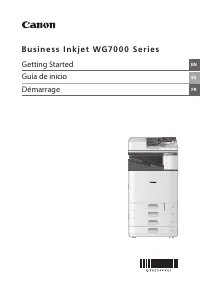 Canon 250
User Manual
Canon 250
User Manual
 Canon 251
User Manual
Canon 251
User Manual
 Canon 6710C002
User Manual
Canon 6710C002
User Manual
 Canon K10605
User Manual
Canon K10605
User Manual
 Canon K10613
User Manual
Canon K10613
User Manual
 Canon K10608
User Manual
Canon K10608
User Manual
 Canon K10609
User Manual
Canon K10609
User Manual
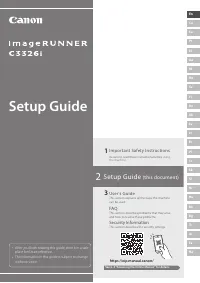 Canon imageRUNNER C3326i
User Manual
Canon imageRUNNER C3326i
User Manual
 Canon imageCLASS MF465dw
User Manual
Canon imageCLASS MF465dw
User Manual
 Canon K10617
User Manual
Canon K10617
User Manual