Page 3 - Printer Parts and Labels; Labels; Caution labels for drawer kick-out and display module
Printer Parts and Labels Labels CAUTION: Caution labels for drawer kick-out and display module connectors. ERROR PAPEROUT POWER FEED Paper rollcontrol panel Paper roll cover POWER FORWARD ERROR RELEASE SLIP REVERSE RELEASE Slip papercontrol panel Front cover On/Off switch Auto-cutter cover Ribbon in...
Page 4 - Quick Reference; Where to order paper and ribbons.
i Quick Reference This Quick Reference will direct you to key areas of this Operator’s Manual. For a complete listing of topics, see the Contents. Printer Parts and Labels inside front cover Ordering Paper and Ribbons page viii Where to order paper and ribbons. Setting Up the Printer page 1-1 How to...
Page 5 - ii; The contents of this manual are subject to change without notice.
ii All rights reserved. No part of this publication may be reproduced, stored in a retrieval system, or transmitted in any form or by any means, electronic, mechanical, photocopying, recording, or otherwise, without the prior written permission of Seiko Epson Corporation. No patent liability is assu...
Page 6 - iii; FCC CLASS A; FCC Compliance Statement; For American Users
iii FCC CLASS A FCC Compliance Statement For American Users This equipment has been tested and found to comply with the limits for a Class A digital device, pursuant to Part 15 of the FCC Rules. These limits are designed to provide reasonable protection against harmful interference when the equipmen...
Page 7 - iv; Printer; DECLARATION OF CONFORMITY
iv Product Name: Printer Type Name: M128A These printers conform to the following Directives and Norms Directive 89/336/EEC EN 55022 (1986 and 1994) Class B EN 50082-1 (1992) IEC 801-2 (1991) IEC 801-3 (1984) IEC 801-4 (1991) Directive 90/384/EEC EN45501: (1992) DECLARATION OF CONFORMITY
Page 8 - EMI and Safety Standards Applied; CE marking
v EMI and Safety Standards Applied The following standards are applied only to the printers that are so labeled. (EMC is tested using the EPSON PS-170 power supply) Europe: CE marking EN55022EN50082-1EN45501 Safety Standard: TÜV North America: EMI: FCC Class ASafety standards: UL 1950-2TH-D3 C-UL Ja...
Page 9 - About This Manual; Setting Up and Using; Chapter 1; the DIP switches, and adjusting the paper near end sensor.; Chapter 2; contains information on using the printer.; Chapter 3; contains troubleshooting information.; Reference; Chapter 4; contains specifications; Appendix A; tells how to change the DIP switch and paper near end settings,
vi About This Manual Setting Up and Using ❏ Chapter 1 contains information on unpacking the printer, setting it up, setting the DIP switches, and adjusting the paper near end sensor. ❏ Chapter 2 contains information on using the printer. ❏ Chapter 3 contains troubleshooting information. Reference ❏ ...
Page 10 - Introduction vii; Introduction; Features; Slip Section
Introduction vii Introduction Features The TM-H5000 and TM-H5000P are high-quality POS printers that can print on slip and receipt paper (paper roll). The printers have the following features: Slip Section ❏ Wide slip paper capability (maximum characters per line: 88 with 7 × 9 font). ❏ Copy printin...
Page 11 - viii Introduction; Options and Accessories; Thermal paper can be ordered from the supplier in your area.
viii Introduction Options and Accessories ❏ Magnetic Ink Character Recognition (MICR) reader (factory installed option) ❏ Direct connection display modules, DM-D102-012 and DM-D203-012 ❏ EPSON power supply unit, PS-170 ❏ EPSON ribbon cassette, ERC-31(P) ❏ Front extension table (WT-5000) Ordering Pap...
Page 12 - Introduction ix; Other Qualified Suppliers for Thermal Paper
Introduction ix In Southeast Asia: N.A.K. Mfg (Malaysia) SDN BHDLot 19-11, Bersatu Industrial Complexs,Jalan Satu, Kaw Per. Cheras Jaya,.Balakong Industrial Area, 43200 Cheras.Selangor Darul Ehsan, Malaysia Tel: 03-9047896, 9047900, 9047691Fax: 03-9047889 Other Qualified Suppliers for Thermal Paper ...
Page 13 - x Introduction; Ordering Ribbon Cassettes
x Introduction Original paper: F380Kanzaki Specialty Papers, Inc.Cummings StreetWare, MA 01082 U.S.A. Tel: (413)967-6204Fax: (413) 734-5101 Ordering Ribbon Cassettes The TM-H5000/H5000P uses a long-lasting ribbon cassette in the slip section. To order ribbon cassettes, contact your dealer or your lo...
Page 14 - xi; Contents; Setting Up the Printer; Using the Printer; Troubleshooting
xi Contents Quick Reference . . . . . . . . . . . . . . . . . . . . . . . . . . . . . . . . . . . . . . . . . . . . . . . . . . . . . . . iIntroduction . . . . . . . . . . . . . . . . . . . . . . . . . . . . . . . . . . . . . . . . . . . . . . . . . . . . . . . . . . vii Chapter 1 Setting Up the Pri...
Page 15 - xii; Reference Information; Chapter 5; Commands; Dip Switch and Paper Near End Settings; Appendix B; EPSON Sales Subsidiaries
xii Chapter 4 Reference Information Printing Specifications . . . . . . . . . . . . . . . . . . . . . . . . . . . . . . . . . . . . . . . . . . . . . . . . . . 4-1 Slip Paper . . . . . . . . . . . . . . . . . . . . . . . . . . . . . . . . . . . . . . . . . . . . . . . . . . . . . . . . . 4-1Receipt ...
Page 16 - Setting Up the Printer 1-1; Unpacking
Setting Up the Printer 1-1 Chapter 1 Setting Up the Printer Unpacking Your printer box should include these items. If any items are damaged or missing, please contact your dealer for assistance. See the note on page 1-4 for information about the hexagonal lock screws. Note: When you lift the printer...
Page 17 - Removing the protective material; Open the printer by pulling up on the tab on the front cover.
1-2 Setting Up the Printer Removing the protective material 1. Open the printer by pulling up on the tab on the front cover. 2. Remove the two dampers from the printer as shown below. 3. Store the dampers with the other packing materials and use them when transporting your printer. Tab
Page 18 - Setting Up the Printer 1-3; Connecting the Cables and Grounding the Printer; Connecting the computer; You need an appropriate interface cable.
Setting Up the Printer 1-3 Connecting the Cables and Grounding the Printer You can connect up to five cables to the printer. They all connect to the connector panel on the bottom of the printer, which is shown below: Note: There are caution labels beside the drawer kick-out connector and the display...
Page 20 - Setting Up the Printer 1-5; Connecting the Drawer
Setting Up the Printer 1-5 Connecting the Drawer WARNING: Use a drawer that matches the printer specification. Using an improper drawer may damage the drawer as well as the printer. CAUTION: Do not connect a telephone line to the drawer kick-out connector; otherwise the printer and the telephone lin...
Page 21 - Anschließen der Lade; anschlie
1-6 Setting Up the Printer Anschließen der Lade WARNUNG: Eine für den Drucker geeignete Lade verwenden. Bei Verwendung einer falschen Lade kann diese oder der Drucker beschädigt werden. ACHTUNG: Kein Telefonkabel an die Schnappsteckerbuchse anschließen, da sonst der Drucker und die Telefonkabel besc...
Page 22 - Setting Up the Printer 1-7; Connecting the Display Module; The display module can be used only for the serial interface.; Grounding the Printer; Make sure that the printer is turned off.
Setting Up the Printer 1-7 Connecting the Display Module Plug the cable connector (provided with the direct connection display module) securely into the printer’s display module connector until it clicks. CAUTION: Be sure not to connect this cable to the drawer kick-out connector, which is to the le...
Page 23 - Connecting the Power Supply
1-8 Setting Up the Printer 2. Connect the ground wire to the printer using the FG screw on the bottom of the printer, as shown. Connecting the Power Supply Use the optional EPSON PS-170 or equivalent power supply for your printer. WARNING: Make sure that you use the EPSON PS-170 power supply or equi...
Page 25 - Installing or Replacing the Paper Roll; Make sure that the printer is not receiving data otherwise, data
1-10 Setting Up the Printer Installing or Replacing the Paper Roll Note: Be sure to use paper rolls that meet the specifications. Do not use paper rolls that have the paper glued to the core because the printer cannot detect the paper end correctly. 1. Make sure that the printer is not receiving dat...
Page 28 - Setting Up the Printer 1-13; Installing the Ribbon Cassette; Be sure the printer is not receiving data when you replace a
Setting Up the Printer 1-13 Installing the Ribbon Cassette Use the EPSON ERC-31(P) ribbon cassette for your printer. Note the label inside this section that can assist you in replacing the ribbon. CAUTION: Never turn the ribbon knob in the opposite direction of the arrow marked on the cassette; othe...
Page 30 - Setting Up the Printer 1-15; Using the Power Switch Cover; This test is independent of any other equipment or software.; Running the self test with a paper roll; Make sure the printer is turned off and the printer covers are
Setting Up the Printer 1-15 Using the Power Switch Cover WARNING: If an accident occurs when the power switch cover is attached, unplug the power supply cord from the outlet immediately. Continued usage may lead to fire or shock. You can use the enclosed power switch cover to make sure that the powe...
Page 31 - Running the self test with slip paper
1-16 Setting Up the Printer 2. While holding down the FEED button, turn on the printer using the switch on the front of the printer to begin the self test. The self test prints the printer settings and then prints the following, cuts the paper, and pauses. (The PAPER OUT light blinks.) Self test pri...
Page 32 - Adjustments and Settings; See Appendix A if you need to make any of these changes.
Setting Up the Printer 1-17 4. Remove the paper from the printer and feed another sheet of slip paper into the printer to print characters from the character table. Continue to feed slip paper into the printer until the self test prints the following: ***completed*** The printer is ready to receive ...
Page 34 - Using the Printer 2-1; Operating the Control Panels; Paper Roll Control Panel; Button; Press the; Slip Control Panel
Using the Printer 2-1 Chapter 2 Using the Printer Operating the Control Panels You can control the basic paper feeding operations of the printer with the buttons on the control panels. The indicator lights help you monitor the printer’s status. Paper Roll Control Panel Button The button can be disab...
Page 35 - Buttons; Indicator lights; Paper roll panel lights
2-2 Using the Printer Buttons The printer and these buttons will not operate when the cover is open. Also these buttons can be disabled with the ESC c 5 command. FORWARD When the printer is in the slip mode (the SLIP light is on or blinking), press the FORWARD button once to advance slip paper one l...
Page 36 - Using the Printer 2-3; Slip panel lights; Slip Paper Handling; Send appropriate control commands from the computer to
Using the Printer 2-3 Slip panel lights POWER The POWER light is on when the printer is on. ERROR This indicates an error in the slip section of the printer. See Chapter 3 for information on what to do when this light comes on. RELEASE This light indicates that platen and paper feed roller are relea...
Page 38 - Using the Printer 2-5; Reading MICR characters on personal checks; Wait until the computer sends the FS a 0 command to the; printer, causing it to enter the MICR mode. The
Using the Printer 2-5 Using the MICR Reader (Option) If your printer has the factory installed optional Magnetic Ink Character Recognition (MICR) reader that enables the printer to read and process MICR characters on personal checks, read this section. Reading MICR characters on personal checks To u...
Page 40 - Troubleshooting 3-1; General problems; The lights on the control panel do not come on.; Printing problems; The paper roll section; light is on, the paper roll is not installed or is at; If the; light is off, make sure that the paper roll cover is
Troubleshooting 3-1 Chapter 3 Troubleshooting Troubleshooting This chapter gives solutions to some printer problems you may have. General problems The lights on the control panel do not come on. Make sure that the power supply cables are correctly plugged into the printer, the power unit, and to the...
Page 41 - The; If the self test works properly, check the following:
3-2 Troubleshooting If there is no paper jam and the printer has been printing for quite a while, the print head may be overheated. If the print head is overheated, the printer will resume printing when the head has cooled (usually within two or three minutes). If there is no paper jam and the print...
Page 42 - Troubleshooting 3-3; Paper roll printing is poor.; Cleaning the paper roll print head; Clean the thermal element of the print head with a cotton swab; The slip section printout is faint.
Troubleshooting 3-3 Paper roll printing is poor. Paper dust on the heating element of the thermal print head can lower the print quality. Try cleaning the print head as described below: Cleaning the paper roll print head CAUTIONS: After printing, the print head can be very hot. Be careful not to tou...
Page 43 - A line of dots is missing in the printout.; Paper handling problems; Paper is jammed inside the printer.; To clear a paper jam, follow the steps below:
3-4 Troubleshooting A line of dots is missing in the printout. The print head may be damaged. Stop printing and contact your dealer or a qualified service person. Paper handling problems Paper is jammed inside the printer. CAUTIONS: Do not touch the print head because it can be very hot after printi...
Page 45 - Auto cutter problems; The auto cutter is jammed.; Pull the cutter cover toward you so that you can rotate the
3-6 Troubleshooting Auto cutter problems The auto cutter is jammed. If a foreign object such as a push pin or paper clip drops in the auto cutter and causes the auto cutter to lock up, the printer enters an error state and begins the recovery operation automatically. If the problem is not serious, t...
Page 46 - Troubleshooting 3-7; Cleaning the Optional MICR Mechanism; The cleaning procedure; During in the self test mode; ) Confirm to set a roll paper and a ribbon cassette to make use a
Troubleshooting 3-7 2. Following the instructions on the label, rotate the knob until the appears in the hole. 3. Close the cutter cover. Cleaning the Optional MICR Mechanism MICA cleaning method (Recommended) * Combine these 2 procedures, if you encounter frequent MICR reading errors. The cleaning ...
Page 48 - Troubleshooting 3-9; Command code sequence; NOTES; Moistened Cleaning sheet
Troubleshooting 3-9 9) As a check paper, insert a cleaning sheet into a printer, * Set yellow non-stick side to be upside when cleaning using adhesive sheet. 10) Remove and do a sheet after cleaning sheet discharge. 11) Turn off the power switch. Command code sequence 1) MICA cleaning command <FS...
Page 49 - Hexadecimal Dump
3-10 Troubleshooting Hexadecimal Dump This feature allows experienced users to see exactly what data is coming to the printer. This can be useful in finding software problems. When you turn on the hex dump function, the printer prints all commands and other data in hexadecimal format along with a gu...
Page 50 - Reference Information 4-1; Printing Specifications; Slip Paper; Number of characters: Alphanumeric characters: 95
Reference Information 4-1 Chapter 4 Reference Information Printing Specifications Slip Paper Printing method: Serial impact dot matrix Head wire configuration: 9-pin vertical line, 0.353 mm (1/72-inch) wire pitch Head wire diameter: 0.29 mm (.01") Printing direction: Bidirectional, minimum dista...
Page 51 - Receipt Paper; Thermal line printing
4-2 Reference Information Receipt Paper Note: Printing speed may be slower, depending on the data transmission speed and the combination of control commands. Printing method: Thermal line printing Dot density: 180 dpi × 180 dpi [the number of dots per 25.4 mm (1”)] Printing direction: Unidirectional...
Page 52 - Reference Information 4-3; Number of characters:; Extended graphics: 128; Character size, characters per line
Reference Information 4-3 * CPL = Characters Per Line * Space between characters is not included * Characters can be scaled up to 64 times as large as the standard sizes. Paper feeding speed: Approximately 70 mm/second (approximately 2.76”/second) continuous printing Line spacing (default): 4.23 mm ...
Page 53 - Ribbon Specifications; The MICR reader is a factory-installed option.
4-4 Reference Information Ribbon Specifications MICR Reader (Option) The MICR reader is a factory-installed option. Type: Exclusive cassette ribbon Ribbon cassette specifications: Part number: ERC-31 (P), ERC-31(B) Color: (P) Purple, (B) Black Ribbon life: (P) 7,000,000 characters (B) 4,500,000 char...
Page 54 - Reference Information 4-5; Paper Specifications; Friction feed
Reference Information 4-5 Paper Specifications Paper feed method: Friction feed Paper feed pitch: Default 4.23 mm (1/6”) Paper feed speed: Slip: Approximately 60.3 msec/line (4.23 mm (1/6”) feeding) Approximately 86.4 mm/second (3.4 inches/second) (continuous feeding) Paper roll: Approximately 70 mm...
Page 55 - Slip paper; Normal paper
4-6 Reference Information Slip paper Paper type: Normal paper Carbon copy paper Pressure sensitive paper Total thickness: 0.09 to 0.36 mm (.0035 to .0141”) See “Copy capability and paper thickness” on the next page for more information. Size (W × L): 70 mm × 70 mm to 210 mm × 297 mm (A4) (2.76” × 2....
Page 57 - Notes on slip paper
4-8 Reference Information Notes on slip paper ❏ The slip paper must be flat, without curls or wrinkles, especially at the top edges. Otherwise, the paper may rub against the ribbon and become dirty. ❏ There must be no glue on the bottom edge. Choose slip paper carefully since paper feeding and inser...
Page 58 - Reference Information 4-9
Reference Information 4-9 ❏ Since the TOF sensor uses a reflective photo sensor and it detects from the back of slip paper, do not use paper that has holes or dark portions with low reflection (less than 40% reflection) at the sensor position. ❏ Use thinner paper (N30 or equivalent) between the top ...
Page 59 - Electrical Characteristics
4-10 Reference Information Electrical Characteristics Reliability Supply voltage: +24 VDC ± 10% (optional power supply: EPSON PS-170) Ripple voltage: 300mVpp or less (only when the printer is used with the MICR reader). Current consumption: (at 24V, except for drawer kick-out driving) Operating: Sli...
Page 60 - Reference Information 4-11
Reference Information 4-11 MICR reader mechanism (only when the printer is used with the MICR reader): 240,000 passes The MICR reader is defined to have reached the end of its life when it reaches the beginning of the Wearout Period. MTBF: 180,000 hoursFailure is defined as Random Failure occurring ...
Page 61 - Environmental Conditions
4-12 Reference Information Environmental Conditions Temperature: Operating: 5° to 45°C (41° to 113°F) Storage: -10° to 50°C (14° to 122°F) (except for paper) Humidity: Operating: 10 to 90% RH Storage: 10 to 90% RH (except for paper)
Page 62 - Command Notation; HT
Commands 5-1 Chapter 5 Commands Command Notation [Name] The name of the command. [Format] The code sequence.ASCII indicates the ASCII equivalents.Hex indicates the hexadecimal equivalents.Decimal indicates the decimal equivalents.[ ]k indicates the contents of the [ ] should be repeated k times. [Ra...
Page 63 - CR; DLE EOT n
5-2 Commands [Format] ASCII FF Hex 0C Decimal 12 [Description] ➀ Prints the data in the print buffer and ejects the slip paper (when the slip paper is selected as the print sheet). ➁ In page mode, prints the data in the print buffer collectively and returns to standard mode. CR [Name] Print and carr...
Page 64 - DLE ENQ n; ESC FF; ESC SP n
Commands 5-3 [Description] Transmits the selected printer status specified by n in real time, according to the following parameters: n = 1: Transmit printer status n = 2: Transmit off-line status n = 3: Transmit error status n = 4: Transmit paper roll sensor status n = 5: Transmit slip paper status ...
Page 67 - ESC
5-6 Commands • y specifies the number of bytes in the vertical direction.• c1 specifies the beginning character code for the definition, and c2 specifies the final code. • x specifies the number of dots in the horizontal direction.• d is the dot data for the characters. The dot pattern is in the hor...
Page 68 - ESC 3 n
Commands 5-7 (For slip paper) • The n L and n H indicate the number of dots of the bit image in the horizontal direction. The number of dots is calculated by n L + n H × 256. • If the bit-image data input exceeds the number of dots to be printed on a line, the excess data is ignored. • d indicates t...
Page 70 - ESC F
Commands 5-9 [Format] ASCII ESC @ Hex 1B 40 Decimal 27 64 [Description] Clears the data in the print buffer and resets the printer mode to the mode that was in effect when the power was turned on. ESC C n [Name] Set cut sheet eject length [Format] ASCII ESC C n Hex 1B 43 n Decimal 27 67 n [Range] 0 ...
Page 71 - ESC G n; ESC L
5-10 Commands Decimal 27 70 n [Range] 0 ≤ n ≤ 255 [Description] Sets or cancels the slip paper reverse eject • When the LSB is 0, cancels the slip paper reverse eject and sets the slip paper forward eject. • When the LSB is 1, sets the slip paper reverse eject. ESC G n [Name] Turn double-strike mode...
Page 72 - ESC R n; ESC S; ESC T n
Commands 5-11 ESC R n [Name] Select an international character set [Format] ASCII ESC R n Hex 1B 52 n Decimal 27 82 n [Range] 0 ≤ n ≤ 10 [Description] Selects an international character set n from the following table: ESC S [Name] Select standard mode [Format] ASCII ESC S Hex 1B 53 Decimal 27 83 [De...
Page 73 - ESC U n
5-12 Commands [Description] Selects the print direction and starting position in page mode. n specifies the print direction and starting position as follows: ESC U n [Name] Turn unidirectional printing mode on/off [Format] ASCII ESC U n Hex 1B 55 n Decimal 27 85 n [Range] 0 ≤ n ≤ 255 [Description] T...
Page 75 - ESC c 1 n
5-14 Commands [Description] Selects the type of paper for printing, using n as follows: ESC c 1 n [Name] Select paper type(s) for command settings [Format] ASCII ESC c 1 n Hex 1B 63 31 n Decimal 27 99 49 n [Range] 1 ≤ n ≤ 4 [Description] Selects paper type(s) for use with various command settings. E...
Page 76 - ESC c 4 n
Commands 5-15 • Each bit of n is used as follows: ESC c 4 n [Name] Select paper sensor(s) to stop printing [Format] ASCII ESC c 4 n Hex 1B 63 34 n Decimal 27 99 52 n [Range] 0 ≤ n ≤ 255 [Description] Selects the paper sensor(s) used to stop printing when a paper-end is detected, using n as follows: ...
Page 77 - ESC c 5 n
5-16 Commands ESC c 5 n [Name] Enable/disable panel buttons [Format] ASCII ESC c 5 n Hex 1B 63 35 n Decimal 27 99 53 n [Range] 0 ≤ n ≤ 255 [Description] Enables or disables the panel buttons. • When the LSB is 0, the panel buttons are enabled. • When the LSB is 1, the panel buttons are disabled. ESC...
Page 78 - ESC q; ESC t n
Commands 5-17 • t1 sets the slip paper wait time to [t1 × 1] minutes. • t2 sets the time from insertion of the slip paper to the start of printing to [t2 × 0.1] seconds. ESC p m t1 t2 [Name] Generate pulse [Format] ASCII ESC p mt1 t2 Hex 1B 70 mt1 t2 Decimal 27 112 mt1 t2 [Range] m = 0, 1, 48, 49 0 ...
Page 80 - GS
Commands 5-19 GS $ n L n H [Name] Set absolute vertical print position in page mode [Format] ASCII GS $ n L n H Hex 1D 24 n L n H Decimal 29 36 n L n H [Range] 0 ≤ n L ≤ 255, 0 ≤ n H ≤ 255 [Description] • Sets the absolute vertical print starting position for buffer character data in page mode. • Th...
Page 81 - GS B n
5-20 Commands • The number of dots in the vertical direction is y × 8. • If x × y is out of the specified range, this command is ignored. • The d indicates bit-image data. Data (d) specifies a bit printed to 1 and not printed to 0. • After a downloaded bit-image is defined, it is available until ESC...
Page 82 - GS H n; GS I n
Commands 5-21 • When the LSB is 0, white/black reverse mode is turned off. • When the LSB is 1, white/black reverse mode is turned on. GS H n [Name] Select printing position of HRI characters [Format] ASCII GS H n Hex 1D 48 n Decimal 29 72 n [Range] 0 ≤ n ≤ 3, 48 ≤ n ≤ 51 [Description] Selects the p...
Page 83 - GS L n
5-22 Commands GS L n L n H [Name] Set left margin [Format] ASCII GS L n L n H Hex 1D 4C n L n H Decimal 29 76 n L n H [Range] 0 ≤ n L ≤ 255 0 ≤ n H ≤ 255 [Description] Sets the left margin using n L and n H in standard mode. • The left margin is set to [(n L + n H × 256) × horizontal motion unit)] i...
Page 84 - GS W n
Commands 5-23 [Description] Selects a mode for cutting paper and executes paper cutting. The value of m selects the mode as follows: GS W n L n H [Name] Set printing area width [Format] ASCII GS W n L n H Hex 1D 57 n L n H Decimal 29 87 n L n H [Range] 0 ≤ n L ≤ 255 0 ≤ n H ≤ 255 [Description] Sets ...
Page 85 - GS a n
5-24 Commands • m specifies macro executing mode. • When m = 0: The macro executes r times continuously with interval specified by t. • When m = 1: After waiting for the period specified by t, the PAPER OUT and SLIP LED indicators blink and the printer waits for the FEED, FORWARD or REVERSE button t...
Page 86 - GS f n; GS h n
Commands 5-25 • When the LSB is 0, smoothing mode is turned off. • When the LSB is 1, smoothing mode is turned on. GS f n [Name] Select font for Human Readable Interpretation (HRI) characters [Format] ASCII GS f n Hex 1D 66 n Decimal 29 102 n [Range] n = 0, 1, 48, 49 [Description] Selects a font for...
Page 87 - GS r n
5-26 Commands m selects a bar code system as follows: [Description for ➀ ] • d indicates the character code to be printed and k indicates the number of characters to be printed. [Description for ➁ ] • n indicates the number of bar code data, and the printer processes n bytes from the next character ...
Page 88 - GS w n
Commands 5-27 [Format] ASCII GS r n Hex 1D 72 n Decimal 29 114 n [Range] 1 ≤ n ≤ 3, 49 ≤ n ≤ 51 [Description] Transmits the status specified by n as follows: GS w n [Name] Set bar code width [Format] ASCII GS w n Hex 1D 77 n Decimal 29 119 n [Range] 2 ≤ n ≤ 6 [Description] Set the horizontal size of...
Page 89 - MICR Control Commands (only for printers with MICR); DLE EOT BS n
5-28 Commands MICR Control Commands (only for printers with MICR) DLE EOT BS n [Name] Real-time MICR status transmission [Format] ASCII DLE EOT BS n Hex 10 04 08 n Decimal 16 4 8 n [Range] n = 1 [Description] Transmits the selected MICR status specified by n in real time as follows: FS a 0 n [Name] ...
Page 92 - Dip Switch and Paper Near End Settings A-1; Setting the DIP Switches; DIP switch functions; Serial interface specification
Dip Switch and Paper Near End Settings A-1 Appendix A Dip Switch and Paper Near End Settings Although the factory settings are best for almost all uses, if you have special requirements, you can change the DIP switch or paper near end settings. Setting the DIP Switches DIP switch functions Your prin...
Page 94 - Dip Switch and Paper Near End Settings A-3
Dip Switch and Paper Near End Settings A-3 Notes: • When pin 6 of the interface connector is used for the reset signal, the printer is reset at MARK on the RS-232 level. • When pin 25 of the interface connector is used for the reset signal, the printer is reset at SPACE on the RS-232 level or at HIG...
Page 95 - Parallel interface specification
A-4 Dip Switch and Paper Near End Settings Parallel interface specification Set 1 Set 2 SW Function ON OFF 1-1 Auto line feed Always enabled Always disabled 1-2 Receive buffer capacity 45 bytes 4K bytes 1-3 ~1-8 Undefined — — SW Function ON OFF 2-1 Handshaking (BUSY condition) •Receive buffer full•R...
Page 97 - Changing the DIP switch settings; Remove the screw from the DIP switch cover. Then take off the
A-6 Dip Switch and Paper Near End Settings Changing the DIP switch settings If you need to change settings, follow the steps below to make your changes: CAUTION: Turn off the printer while removing the DIP switch cover to prevent an electric short, which can damage the printer. 1. Make sure the prin...
Page 98 - Dip Switch and Paper Near End Settings A-7; Adjusting the Paper Near End Sensor; Loosen the adjusting screw and move the tab up to the upper
Dip Switch and Paper Near End Settings A-7 Adjusting the Paper Near End Sensor The paper near end sensor detects when paper is almost gone by measuring the diameter of the paper roll. The sensor has two settings. Because of variations in paper roll cores, it is not possible for the sensor to measure...
Page 100 - EPSON Sales Subsidiaries B-1; EPSON; Sales Subsidiaries
EPSON Sales Subsidiaries B-1 Appendix B EPSON Sales Subsidiaries EPSON AMERICA INC./OEM DIV. 20770 Madrona Ave. Torrance, CA 90559-2842 U.S.A.Tel : 1-310-787-6300Fax : 1-310-782-5350 EPSON EUROPE B.V. Prof. J.H. Bavincklaan 5 1183 AT Amstelveen The NetherlandsTel : 31-(0)20-5475-251Fax : 31-(0)20-64...


 Epson V11HB23020
User Manual
Epson V11HB23020
User Manual
 Epson C11CK75201
User Manual
Epson C11CK75201
User Manual
 Epson B11B272202
User Manual
Epson B11B272202
User Manual
 Epson V11HA52820
User Manual
Epson V11HA52820
User Manual
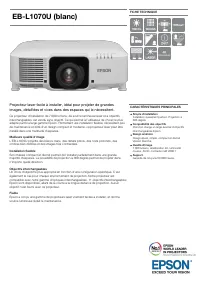 Epson V12H004UA3
Troubleshooting Guide
Epson V12H004UA3
Troubleshooting Guide
 Epson V12H004X0A
User Manual
Epson V12H004X0A
User Manual
 Epson A461H
Manual
Epson A461H
Manual
 Epson C11CH25401
User Manual
Epson C11CH25401
User Manual
 Epson C11CH72401
User Manual
Epson C11CH72401
User Manual
 Epson B11B257201
Manual
Epson B11B257201
Manual
 Epson V11HA85020
Installation Manual
Epson V11HA85020
Installation Manual
 Epson C11CK61201
User Manual
Epson C11CK61201
User Manual