Epson SQ-870- Manuals
Epson SQ-870– User Manual in PDF format online.
Manuals:
User Manual Epson SQ-870
Summary
REV.-A PRECAUTIONS Precautionary notations throughout the text are categorized relative to 1 ) personal injury, and 2) damage to equipment: DANGER Signals a precaution which, if ignored, could result in serious or fatal personal injury. Great caution should be exercised in performing procedures prec...
PREFACE T h i s m a n u a l d e s c r i b e s f u n c t i o n s , t h e o r y o f e l e c t r i c a l a n d m e c h a n i c a l operations, maintenance, and repair of the 170. T h e i n s t r u c t i o n s a n d p r o c e d u r e s i n c l u d e d h e r e i n a r e i n t e n d e d f o r t h e e x p ...
REVISION SHEET DATE ISSUED C H A N G E D O C U M E N T A F e b . 2 1 , 1 9 9 2 1st issue ,
TABLE OF CONTENTS C H A P T E R 1 . G E N E R A L D E S C R I P T I O N C H A P T E R 2 . O P E R A T I N G P R I N C I P L E S C H A P T E R 3 . D I S A S S E M B L Y A N D A S S E M B L Y C H A P T E R 4 . A D J U S T M E N T S C H A P T E R 5 . T R O U B L E S H O O T I N G C H A P T E R 6 . M A ...
1 . 2 1 . 3 1 . 4 1 . 5 1 . 6 1 . 7 CHAPTER 1 GENERAL DESCRIPTION FEATURES . . . . . . . . . . . . . . . . . . . . . . . . . . . . . . . . . . . . . . . . . . . . . . . . . . . . . . . . . . . . . . . . . . . . . . . . . . . . . . . . . . . . . . . . . . . . . . . . 1-1 SPECIFICATIONS . . . . . . . ...
REV.-A LIST OF FIGURES Figure 1-1. Exterior View of the 170 . . . . . . . . . . . . . . . . . . . . . . . . . . . . . . . . . . . . . . . . . . . . 1-2 Figure 1-2. Nozzle Configuration . . . . . . . . . . . . . . . . . . . . . . . . . . . . . . . . . . . . . . . . . . . . . . . . . . . . . . . . ......
1.2 SPECIFICATIONS This section provides specifications for the 170 printer. 1.2.1 H a r d w a r e S p e c i f i c a t i o n s Printing method On-demand type ink jet system Nozzle configuration 48 nozzles (48 X d i a g o n a l ) Al A2 ‘o ‘ 2 A 3 (7.125°) 1/45” 47/45” ● Figure 1-2. Nozzle Configurati...
REV.-A Printable area See figures 1-5 and 1-6 : or more ● 1 : 8 0 c o l u m n s : 3 . 0 m m ( 0 . 1 2 i n . ) o r m o r e w h e n t h e w i d t h o f p a p e r i s l e s s t h a n 2 2 9 m m ( 9 i n . ) . 13 mm (0.51 in.) or more when the width of paper is 257 mm (10.1 in.). 136 columns: 3.0 mm (O. 1...
REV.-A Dielectric strength 2 2 0 / 2 4 0 Rated voltage version Input voltage range Rated frequency range Input frequency range Rated current Power consumption Insulation resistance Dielectric Strength 1 0 0 0 1 m i n u t e o r 1 2 0 0 1 second (between AC line and chassis) 2 2 0 t o 2 4 0 1 9 8 t o ...
1.2.2 Firmware Control code Printing direction Input data buffer Character code Character tables Bit-map fonts Scalable fonts Specifications ES level 2 (EPSON standard code for printers) Bi-directional with logic seeking (text printing) (bit-image printing) 16KB (Standard) 128KB (factory option) 8 b...
1.3 INTERFACE OVERVIEW The printer has a parallel interface with the Parallel Interface specifications described below. Specifications for the 8-bit parallel interface are as follows: Data format 8-bit parallel Synchronization STROBE signal Handshaking BUSY and signal Signal level Adaptable connecto...
REV.-A CONTROL PANEL On the control panel are: 10 non-lock type buttons, and 24 indicators. k I I I Figure 1-10. Control Panel BUTTONS (1) PAUSE Button This button controls printer action. Pressing the button toggles the printer between PAUSE condition (no printing, no paper feeding, or no data and ...
REV.-A 1.5 DIP SWITCHES AND JUMPER SETTING This section describes the DIP switch selections and jumper setting for the 170 printer. 1.5.1 DIP Switch Settings The two DIP switch banks for the printer, located on the control panel, are conditions as shown in tables 1-12 through 1-15. (Note that the st...
REV.-A 1.6 OPERATING INSTRUCTIONS This section describes the self-test and hexadecimal dump functions as well as the error states, printer initialization, and buzzer operation. 1.6.1 Self-Test To run the self-test using draft mode, turn the printer on while pressing the LINE FEED button. To run the ...
(2) Software initialization Input of the command also initialize the printer. Printer initialization by code does not perform functions (d) or(e) above. The settings changed by the last operation are maintained. (3) Panel initialization This printer can be initialized by pressing the RESET button on...
When the paper is at the top-of-form position, the loading position is adjustable by using the ‘MICRO FEED’ function. In the ‘MICRO FEED’ function, pushing the LINE FEED button pushes the paper forward, and pushing the FORM FEED button pulls the paper backward. The adjusted loading position is store...
1.7.1 MAIN Board (Main Control Circuit T h e M A I N b o a r d i s t h e m a i n b o a r d i n t h e p r i n t e r , mechanism driver circuit. The (location: is used, and the 1 M byte memory space. M e m o r i e s 5 12K\l M bits program ROM 1 M bits M bits mask ROM Gate Arrays Memory management unit...
REV.-A 1.7.4 Printer Mechanism (M-4710/4760) The M-47 10/4760 printer mechanism was developed specifically for 170 printer. Included the components are a carriage motor, carriage mechanism, paper-feed motor, paper-feed mechanism, TE motor, top edge holding mechanism, pump motor, pump mechanism, prin...
LIST OF FIGURES Figure 2-1. Block Diagram of Printer Mechanism -Model - 4 7 1 0 / 4 7 6 0 . . . . . . . . . . . . . . . . . . . . . . . . . . . . . . . . . . . . . . . . . . . . . . . . . . . . . . . . . . . . . . . . . . . . . . . . . . . . . . . . 2-1 Figure 2-2. Internal Structure of Printhead .....
REV.-A 2.1 OPERATING PRINCIPLES OF PRINTER MECHANISM This section describes functions and operations of the printer mechanism - Model-47 10/4760. 10/4760 is a serial type printer mechanism with a 48-nozzle This printer mechanism consists of the unit, paper feed unit, ink mechanism, and sensors. Figu...
2.1.1 Mechanism The of this printer employs the on-demand method, where part of the ink stored in the reservoir within the is supplied into the nozzle each time ink in the nozzle chamber is injected. Figure 2-2 shows the internal structure of the The functions of the major components are explained b...
Adjustment of Platen Gap > REV.-A The platen gap must be adjusted with the head adjust lever (LEVER, GAP, ADJUST) depending on the thickness of paper. When the head adjust lever is operated, it turns the carriage guide shaft (SHAFT, CR, GUIDE, MAIN) and makes the carriage closer/farther to/from t...
When the release lever is shifted as described above, the arrangement of the gears is changed accordingly to enable various types of paper feeding operation (such as front push tractor feeding or rear push tractor feeding) or to disable either. Therefore, you can set continuous paper to each push tr...
REV.-A Paper Paper Tension Roller Rear PE Sensor Figure 2-18. Rear Entrance - Push-Pull Tractor Method Front Entrance The front entrance is used in the friction feed method or the tractor feed method (Push tractor method or Push-pull tractor method). The paper inserted through this entrance is detec...
REV.-A 2.1.3.4 Top Edge Holder Mechanism Operation This mechanism is provided to minimize unprintable area at the top edge of paper. The top edge of paper fed around the platen is held by the top edge holder plate until the top edge is delivered to the position where the paper tension roller comes d...
2.1.4.1 Pump Motor The pump motor drives through several gears. REV.-A the pump, cleaner blade, rubbing blade, and carriage lock lever (set/reset) Pump Motor Cleaning BladeDrive Gear 1 . Gear I Cleaner Lever Rubbing Cleaner Blade CR Stopper Figure 2-24. Pump Motor Table 2-2. Rotational Direction and...
REV.-A 2.1.4.2 Pump Mechanism The pump draws ink from the nozzles of the printhead and sends it to the wasted ink drain tank. This operation is performed to eliminate within the nozzles. Figure 2-25 illustrates the operation of the pump. When the pump motor rotates the pulley pumps in the wheel pump...
REV.-A The pad and blade is attached to the cleaner lever. When the pump motor rotates clockwise, the spur gear (20) is rotated and thus sets the lever forward. When the pump motor rotates counter-clockwise, the cleaner lever is reset. The spur gear will be disengaged from the cleaner lever as soon ...
REV.-A 2.1.4.6 Wasted Ink Drain Tank Used ink is collected into the wasted ink drain tank. The wasted ink drain tank has the absorber to collect used ink through the tube, and the opening which lets out the vapor from ink. This tank is provided with a sufficient capacity to collect the waste ink tha...
2.2 OPERATING PRINCIPLES OF POWER SUPPLY CIRCUITRY T h e p o w e r s u p p l y c i r c u i t r y o f t h i s p r i n t e r i s p r o v i d e d w i t h board (120V) or board (220/240 V). Both boards operate in the same way although the elements in the primary circuit are partly different. The power s...
2.3 OPERATING PRINCIPLES OF CONTROL CIRCUITRY This section describes the operating principles of the control circuitry of this printer - MAIN board. 2.3.1 Control Circuitry Overview The MAIN board is provided with (V25 +) (9.5 MHz) – a 16-bit one-chip micro- processor, - a gate array with memory man...
REV.-A 2.3.4 Paper Feed Motor Drive Circuit A stepping motor is used in the paper feed motor drive circuit of this printer. The motor is driven by 2-2 phase excitation and constant-current arrangement. For a single pulse, paper is fed 1/360 inch (minimum value). The acceleration/deceleration control...
REV.-A 2.3.6 Drive Circuit Figure 2-43 shows the drive circuit. The print data developed by CPU is transferred to the head control gate array - (ICI 2) via data bus. The data for 48 nozzles stored in is serially transmitted from HDDAT port to the head driver - 1632 is a clock for this serial transmi...
Figure 2-47 shows the timing for discharge/charge pulse. Figure 247. Timing for Discharge/Charge (2) Voltage Supply Circuit Pulse The viscosity of ink is subject to change due to the temperature. If the viscosity is too high, ink injection becomes difficult. To eliminate this difficulty, the head dr...
REV.-A 2.3.10 Control Circuit This printer is provided with an to store the data such as panel settings, paper position data (Paper cut position/Current printed line), wasted ink drain tank replacement counter, etc. when the main power is OFF. When the main power is ON, the data is stored in the RAM...
REV.-A CHAPTER 3 DISASSEMBLY AND ASSEMBLY 3 . 1 O V E R V I E W . . . . . . . . . . . . . . . . . . . . . . . . . . . . . . . . . . . . . . . . . . . . . . . . . . . . . . . . . . . . . . . . . . . . . . . . . . . . . . . . . . . . . . . . . . . . . . . . 3-1 3.1.1 Precautions for Disassembling the ...
LIST OF FIGURES Figure 3-1. How to Make a False Ink Cartridge . . . . . . . . . . . . . . . . . . . . . . . . . . . . . . . .3-2 Figure 3-2. Releasing Carriage Lock . . . . . . . . . . . . . . . . . . . . . . . . . . . . . . . . . . . . . . . . . . . . . . . . . . . . . . 3-3 Figure 3-3. Setting Sho...
Figure 3-36. Figure 3-37. Figure 3-38. Figure 3-39. Table 3-1. Table 3-2. Table 3-3. Table 3-4. Table 3-5. Table 3-6. Table 3-7. Table 3-8. Disassembly of Frame Assembly, RIGHT . . . . . . . . . . . . . . . . . . . . . . 3-33 Setting Release Lever . . . . . . . . . . . . . . . . . . . . . . . . . . ...
3 . 1 O V E R V I E W This section describes the various points to note when disassembling, assembling and transporting the printer. 3.1.1 Precautions for Disassembling the Printer Follow the precautions below when disassembling the printer. W A R N I N G ● Disconnect the power cable before disassem...
(2) Wasted Ink Drain Tank This printer is provided with the wasted ink drain tank, which is designed to have a sufficient capacity to collect the waste ink that is used during the whole printer life. However, it must be replaced in the following conditions. ● The “OVERFLOW” message is displayed. (Al...
REV.-A (3) Transportation Make sure the following preparations are properly made before delivering the printer. ● C a p p i n g ● Removing ink cartridge ● Setting shockproof attachments ● P a c k a g i n g Packing Material Protective Sheet Packing Material Figure 3-3. Setting Shockproof Attachments ...
REV.-A 3.2 DISASSEMBLY AND ASSEMBLY This chapter describes procedures for disassembling main components of this printer. Unless otherwise s p e c i f i e d , t h e d i s a s s e m b l e d u n i t o r c o m p o n e n t s c a n b e r e a s s e m b l e d s i m p l y b y p e r f o r m i n g t h e disass...
[ S t e p 6 ] [ S t e p 7 ] Disconnect the connector that connects the interlock switch to the resistor at the rear of the printer mechanism. Raise the front side of the HOUSING, UPPER with the rear side held. Figure 3-8. Housing Removal (3) 3.2.2 Replacement This section describes the procedures fo...
REV.-A ASSEMBLY POINTS When assemble the follow the procedures shown below. [Step 1] [ S t e p 2 ] [ S t e p 3 ] [ S t e p 4 ] [ S t e p 5 ] [ S t e p 6 ] [ S t e p 7 ] Verify that the PIN, ADJUST on the carriage is set in the direction as shown in the b e l o w . II I \ PIN, ADJUST Mark Mark I I I ...
REQUIRED ADJUSTMENT ITEMS If you have disassembled/assembled the make the following adjustment after repair. ● slant adjustment (Refer to section 4.5. 1.) If you have replaced the make the following adjustment in the specified sequence, (1) Platen gap adjustment (Refer to section 4.2.) (2) drive vol...
REV.-A 3.2.4 Printer Mechanism Removal This section describes how to remove the printer mechanism. W A R N I N G When working with the printer mechanism, take sufficient care in handling the ink. Carefully read the precautions in 3.1.1 before beginning the work. C A U T I O N Discharge ink from the ...
[ S t e p 8 ] Disconnect the following connectors, which connect the printer mechanism to the MAIN board; CN 13 (Blue/6 pins), 14 (White/6 pins), 12 (White/2 pins), CN15 (White/2 pins), CN 18 pins), CN 17 pins), CN 11 (White/3 pins), CN 10 (Blue/3 pins), (Yellow/2 pins), (White/2 pins). R e m o v e ...
3.2.6 HOLDER INK CARTRIDGE Removal [Step 1] Remove the housing. (Refer to section 3.2.1.) [Step2] Remove the printer mechanism. (Refer to section 3.2.4) [Step 3] Unscrew screw 12) which fastens the HOLDER INK CARTRIDGE to the HOUSING, LOWER to remove the HOLDER INK CARTRIDGE together with the TORSIO...
3.2.7 Printer Mechanism Disassembly This section describes how to disassemble the printer mechanism. W A R N I N G When working with the printer mechanism, take sufficient care in handling the ink. Carefully read the precautions in 3.1.1 before beginning the work. 3.2.7.1 Disassembly of PAPER HOLDIN...
REV.-A When engaging the timing belt to the carriage, make sure that 3 grooves can be seen at the end of the belt as shown in Figure 3-27. 1 1 Timing Belt 3 grooves Figure 3-27. Engaging Timing Belt R E Q U I R E D A D J U S T M E N T I T E M S If you have reassembled the carriage, make the followin...
[Step 12] Rotate the HOLDER, PLATEN, RIGHT and HOLDER, PLATEN, LEFT which fasten the PLATEN to the frame, LEFT/RIGHT, and remove the PLATEN HOLDER, PLATEN, LEFT/RIGHT Figure 3-31. Disassembly of PLATEN (2) ASSEMBLY POINTS When assembling the GUIDE, PAPER EJECT be sure to hook the TORSION SPRING 700 ...
REV.-A 3.2.7.10 Disassembly of PAPER GUIDE IStepl] Remove thehousing. (Refer to section 3.2.1.) [Step2] Remove the printer mechanism. (Refer to section 3.2.4) Remove the CAP (Refer to section 3.2.7.2) Remove the FRAME, FRONT. (Refer to section 3.2.7.4) Remove the PAPER HOLDING (Refer to section [Ste...
REV.-A ASSEMBLY POINTS When attaching the release lever to the FRAME RIGHT, make sure that all the teeth of the gap gear are fully engaged with the teeth of the release lever. Release Lever I INTERMITTED Gear Posifien Figure 3-37. Setting Release Lever ,: R E Q U I R E D A D J U S T M E N T I T E M ...
3.2.7.12 Disassembly of TRACTOR ASSY. [Step 1] Remove the TRACTOR GEARS (left/right) attached on the SHAFT, DRIVE, and remove the FRAME, (left/right). [Step 2] Remove the E-rings (6) attached on the SHAFT, DRIVE, and remove the tractors (left/right). TRACTOR GEAR \ FRAME, LEFT LEVER, RIGHT Figure 3-...
REV.-A This chapter describes the various adjustments you should make after you disassemble or replace any parts or components that require adjustment. Needless to say, you should also make adjustment in any case if the printer does not function properly or print quality is not good enough. Other co...
REV.-A [Step 4] Adjust the LEVER, PARALLEL, ADJUST so that the long needle of the dial gauge indicates a constant value at any point on the platen with an allowance of 3 divisions (0.03 mm) when you move the carriage to the left and right. Carriage CR, MAIN LEVER, PARALLEL, Figure 4-2. Platen Parall...
REV.-A [Step2] Insert the thickness gauge (exclusively made by EPSON) between the platen and the and rotate the SHAFT, CR, MAIN so that the head is pressed lightly against the head. When rotating the SHAFT, CR, MAIN, you can make use of the notch at the right side of the shaft. 1.00 mm mm and o Carr...
REV.-A 4.3 TIMING BELT TENSION ADJUSTMENT This adjustment is to change the tension of the timing belt to a proper level. this adjustment is not performed properly, printing settings will be interfered. This adjustment is required when you loosened the timing belt for disassembling or assembling the ...
4.4 DRIVE VOLTAGE ADJUSTMENT drive voltage of each should be adjusted individually, because all printheads are not exactly of the same characteristics. If it is not adjusted properly, print quality will be degraded. This adjustment is required when the or the printer mechanism is replaced. It is als...
Table 4-1. Head Drive Voltage and Jumper Setting Head Drive Voltage Jumper 5 Setting Jumper 6 Setting 1 2 2 . 2 - 1 2 3 . 7 x 120.7- 122.1 Y 1 1 8 . 8 - 1 2 0 . 6 z 117.1 - 118.7 B x 1 1 5 . 5 - 1 1 7 . 0 Y 1 1 3 . 8 - 1 1 5 . 4 z 1 1 2 . 4 - 1 1 3 . 7 c x 1 1 0 . 8 - 1 1 2 . 3 Y 1 0 8 . 8 - 1 1 0 ....
REV.-A 4.5 PRINT ADJUSTMENT The print adjustment can be divided into the inclination adjustment and print position adjustment. These adjustments can be performed by running the special program on the personal computer (EPSON PC/EQUITY or 100% IBM PC compatible machine) connected to the printer. 4.5....
[Step 1 1] Center the carriage and loosen the screw (fastening the printhead)on the righthand side. Then, holding the head with the hand, turn the PIN, ADJUST. The PIN, ADJUST can be turned to 5 different positions. Printhead inthead Fixed PIN, ADJUST Screw Figure 4-9. Head Inclination Adjustment [S...
REV.-A [Step 6] When “’80 COLUMN...1, 136 COLUMN...2° is displayed, select 80 column or 136 column for your machine. ● [Step 7] When HEAD END...E” is displayed, select by entering “l’”. [Step 8] When “PRINTER is displayed, enter the applicable printer number and press the return key. [Step 9] Print ...
5.2 REPAIR BY UNIT REPLACEMENT When a problem occurs, you can separate a particular unit that is responsible for the particular problem by referring to the symptoms listed below. Refer to Table 5-4, identify what the problem is, and then perform the checks according to the corresponding flowchart. T...
REV.-A (1) Printer fails to operate at time of power on. Use the correct input voltage. Yes Replace the fuse and pull out CN4 on the MAIN board. No Check the volta e of the power boar . No ● Replace the MAIN board. No Replace the printer mechanism. “Yes Replace the power board. N D N D 5-4
(4) Paper is not fed normally. that there are no stray pieces of paper oranything else nothingabnormal within the paper the paper path. Remove any stray pieces or foreign objects I Turn o the power turn smoothly ? A Replace the printer Yes mechanism. Replace MAIN board. < Was the paper feed Nomot...
REV.-A 5.3 REPAIR OF POWER SUPPLY BOARD This section describes the problems related to the power supply board. The table below provides various symptoms, likely causes, and checkpoints. The checkpoints refer to waveforms, resistance, and other values to be checked to evaluate the operation of each c...
REV.-A 5.4 REPAIR OF MAIN BOARD This section describes the problems related to the MAIN board. The table below provides various symptoms, likely causes, and checkpoints. The checkpoints refer to waveforms, resistance, and other values to be checked to evaluate the operation of each component. Check ...
REV.-A CHAPTER 6 M A I N T E N A N C E 6.1 PREVENTIVE MAINTENANCE . . . . . . . . . . . . . . . . . . . . . . . . . . . . . . . . . . . . . . . . . . . . . . . . . . . . . . . . . . 6-1 6.2 LUBRICATION AND ADHESIVE APPLICATION . . . . . . . . . . . . . . . . . . . . . . . . . . 6-1 LIST OF FIGURES F...
A P P E N D I X C O N N E C T O R CIRCUIT DIAGRAMS . . . . . . . . . . . . . . . . . . . . . . . . . . . . . . . . . . . . . . . . . . . . . . . . . . . . . . . . . . . . . . . . . . . . . . . . . CIRCUIT BOARD COMPONENT LAYOUT . . . . . . . . . . . . . . . . . . . . . . . . . . . . . . . . . . . E ...
LIST OF TABLES Table A - 1 . Table A-2. Table A-3. Table A-4. Table A-5. Table A-6. Table A-7. Table A-8. Table A-9. Table A-10. Table A-1 1. Table A-12. Table A-1 3. Table A-14. Table A-1 5. Table A-16. Table A-1 7. Table A-18. Table A-19. Table A-20. Table A-21. Connector Summary . . . . . . . . ....
A.1 CONNECTOR SUMMARY F i g u r e A - 1 i l l u s t r a t e s t h e i n t e r c o n n e c t i o n o f t h e p r i m a r y c o m p o n e n t s . T a b l e A - 1 s u m m a r i z e s t h e functions and sizes of the connectors. Case Open Sensor Control Panel P r i n t e r M e c h a n i s m M o d e l - ...
No. 2 3 45 6 7 8 9 1011 T a b l e A - 4 . M A I N ) Signal Name + 5+ 5 GPGP GP + 3 5+ 3 5 NC Function + 5 + 5 Signal ground Signal groundSignal groundPower groundPower groundPower ground + 3 5 Not connect Table A-1 1. MAIN) No. Signal Name Function I 2 3 - LEDPE Paper-end sensor (R) Signal ground Ta...
F i g u r e A - 4 . C 0 7 6 P S B B o a r d C i r c u i t A-9
1 I I .1 > 7 1 R e c t i f i e r F i g u r e A-6. C076 PSE Board Circuit A-1 1 F i l t e r D i a g r a m
1 , I Figure A-7. C076 PSE Boerd Circuit Diagram A-1 2
I I L I 1 F i g u r e A - 8 . C o n t r o l P a n e l B o a r d C i r c u i t D i a g r a m A-1 3
A.3 CIRCUIT BOARD COMPONENT LAYOUT ‘ – u s 1 u . Figure A-9. MAIN Board Component Layout (Surface) A-1 4
II II – - I L2 II I ● I . .?.. * Figure A-1 1. C076 PSB Board Component Layout A-1 6
REV.-A II I CN I I - - I I I CN3 I I 2 0 0 4 2 2 5 0 0 F i g u r e A - 1 2 . C 0 7 6 P S E B o a r d C o m p o n e n t L a y o u t A-1 7
REV.-A A.5 CASE OUTLINE DRAWING I 1 r I I J 325 mm r-= Figure A-19. Case Outline Drawing A-26
I -----1 1----1 I I ! , 1 “. I 1 1 . J / ’ 325 mm F i g u r e A - 2 0 . S Q - 1 1 7 0 C a s e O u t l i n e D r a w i n g A-27
EPSON SEIKO EPSON CORPORATION PRINTER DIVISION EPSON OVERSEAS MARKETING LOCATIONS EPSON AMERICA, INC. EPSON DEUTSCHLAND 20770 Madrona Avenue 6 , 4 0 0 0 D u s s e l d o r f 1 1 Torrance CA 90503, U . S . A . G e r m a n y P h o n e : ( 2 1 3 ) 7 8 2 - 0 7 7 0 Phone: (02 1 1) 56030 F a x : ( 2 1 3 ) ...
Epson Manuals
-
Epson V11HB23020
User Manual
-
Epson V11HB23020
Manual
- Epson C11CJ61201 N User Manual
-
Epson C11CK75201
User Manual
-
Epson B11B272202
User Manual
-
Epson V11HA52820
User Manual
-
Epson V11HA67820
User Manual
-
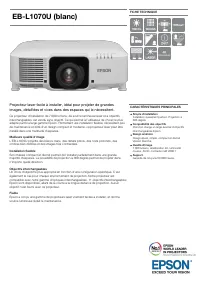
Epson V12H004UA3
Troubleshooting Guide
-
Epson V12H004X0A
User Manual
- Epson V12H004Y0A User Manual
-
Epson A461H
Manual
-
Epson A461H
User Manual
-
Epson A462E
Manual
-
Epson A462E
User Manual
-
Epson C11CH25401
User Manual
-
Epson C11CH72401
User Manual
-
Epson B11B257201
Manual
-
Epson V11HA85020
Installation Manual
-
Epson C11CK61201
User Manual
-
Epson C11CK65201
User Manual