Page 2 - SERVICE MANUAL; Color Image Scanner
SERVICE MANUAL Color Image Scanner EPSON GT-12000 4008511 ®
Page 3 - NOTICE; The contents of this manual are subject to change without notice.
NOTICE n All rights reserved. No part of this manual may be reproduced, stored in a retrieval system, or transmitted in any form or by a ny means, electronic,mechanical, photocopying, recording, or otherwise, without the prior written permission of SEIKO EPSON CORPORATION. n The contents of this man...
Page 4 - PRECAUTIONS; DANGER; ELECTRONICS TECHNICIANS IN THEIR LINE OF WORK.; WARNING; PRINTED CIRCUIT BOARDS AND/OR INDIVIDUAL CHIPS.
PRECAUTIONS Precautionary notations throughout the text are categorized relative to 1)Personal injury and 2) damage to equipment. DANGER Signals a precaution which, if ignored, could result in serious or fatal personal injury. Great caution should be exercised in performingprocedures preceded by DAN...
Page 5 - PREFACE; Provides a general overview and specifications of the product.
PREFACE This manual describes basic functions, theory of electrical and mechanical operations, maintenance and repair procedures of GT-12000. The instructions andprocedures included herein are intended for the experienced repair technicians, and attention should be given to the precautions on the pr...
Page 6 - REVISION STATUS; Date; All
REVISION STATUS Rev. Date Page(s) Contents A 1997/10/20 All First release
Page 7 - TABLE OF CONTENTS; PRODUCT DESCRIPTIONS
TABLE OF CONTENTS PRODUCT DESCRIPTIONS 1.1 OVERVIEW....................................................................................................................................................................1-1 1.2 SPECIFICATION ..................................................................
Page 10 - C H A P T E R
Page 12 - Product Descriptions
GT-12000 Product Descriptions Rev. A 1-2 IMAGING FUNCTIONSGradation: Input/internal process = 12bit/pixel Output = 8 or 12bit/pixel Zoom: 50 to 200% (1% increment) Gamma Correction: CRT (A/B)PRINTER (A/B/C)User definable (1 level) Color Correction: Impact-Dot PrinterThermal PrinterInk jet PrinterCRT...
Page 13 - Operation under direct sunlight or near
GT-12000 Product Descriptions Rev. A 1-3 ENVIRONMENTAL CONDITIONSTemperature: Operating = 5 to 35°C Storage = -25 to 60°C Humidity: Operating = 10 to 80% (no condensation) Storage = 10 to 85% (no condensation) RELIABILITYMain unit: MCBF 100,000 cycle OPERATING CONDITIONSDust: Ordinary office or home...
Page 14 - INTERFACE SPECIFICATION
GT-12000 Product Descriptions Rev. A 1-4 1.3 INTERFACE SPECIFICATION This scanner is equipped with the following interfaces: q Bi-directional Parallel Interface n Data: 8 bit parallel n Handshake: BUSY, /ACK handshaking n Signal: TTL level n Connector: 36 pins (Amphenol) q SCSI interface n Function:...
Page 16 - OPERATION SPECIFICATIONS; “OPERATE “; Turns on and off the scanner.; OPERATE; Comes On when an error has occurred.
GT-12000 Product Descriptions Rev. A 1-6 1.5 OPERATION SPECIFICATIONS 1.5.1 Switch Specification This scanner is equipped with 4 switches. Their functions are describedbelow: q “OPERATE “ n Turns on and off the scanner. n Pressing this switch for power-on initializes the scanner. q “RESET”Initialize...
Page 17 - Table 1-4. Error Types and Corresponding Indications
GT-12000 Product Descriptions Rev. A 1-7 1.5.3 Switch Setting Among the switches equipped with this scanner, SCSI switch and theterminator switch, which are used for SCSI interface, have the followingsettings: q SCSI-ID setting switch ID No. Availability Note 0 Available Normally assigned to other S...
Page 18 - Sub Scan Direction; Maximum Readable Area
GT-12000 Product Descriptions Rev. A 1-8 1.5.5 Readable Area The origin point for this scanner is marked at the rear left corner of thedocument table viewed from the front. See Figure 1-3 for the maximumreadable area of the scanner. 310mm 437mm 2 ±1.5mm 2 ±1.5mm 2 ±1.5mm 2 ±1.5mm Sub Scan Direction ...
Page 19 - OPERATING PRINCIPLES
Page 20 - Operating Principles; GENERAL DESCRIPTION; The EPSON GT-12000 is mainly composed of the following units:
GT-12000 Operating Principles Rev. A 2-1 2.1 GENERAL DESCRIPTION The EPSON GT-12000 is mainly composed of the following units: q Scanner mechanism(Lamp/Mirror units, CR drive mechanism, integral lens/CCD sensorunit drive mechanism) q Control Circuit q Power supply circuit The EPSON flat-bed type sca...
Page 21 - MECHANISM OPERATING PRINCIPLES
GT-12000 Operating Principles Rev. A 2-2 2.2 MECHANISM OPERATING PRINCIPLES Compared with other EPSON scanners, the main feature of this scannerlies in its new optical mechanism used for reading images. Instead of theunited lamp & CCD movement system used for other scanners, thisscanner scans wi...
Page 22 - ELECTRICAL CIRCUIT OPERATIONS; This section describes the electrical circuit of the GT-12000.
GT-12000 Operating Principles Rev. A 2-3 2.3 ELECTRICAL CIRCUIT OPERATIONS This section describes the electrical circuit of the GT-12000. 2.3.1 Control Circuit Operation The control circuits of this scanner are: q B054MAIN board (Main control circuit board) q B054SUB board (Relay board) q B054PNL bo...
Page 24 - Logic power lines; Figure 2-4. Voltage Doubler Rectifier Circuit Operation
GT-12000 Operating Principles Rev. A 2-5 2.3.2 Power Supply Circuit Operation Since the power supply circuit board B054PSH for this scanner meets theuniversal specification, it can use the rated voltage in the range from 100Vto 240V.The electrical circuit for the AC input part is designed on the bas...
Page 25 - TROUBLESHOOTING
Page 26 - The lamp does not light.; Option Error; Sets the status bit “7”.
GT-12000 Troubleshooting Rev. A 3-1 3.1 OVERVIEW This chapter describes the troubleshooting which enables you to solve theproblem efficiently when the scanner is operating abnormally. Theremedies for the errors detected by the self-diagnostic function and thecheck point for each phenomenon are descr...
Page 27 - CAUTION
GT-12000 Troubleshooting Rev. A 3-2 3.1.2 Troubleshooting This section provides test points for each major unit and check points foreach abnormal phenomenon. 3.1.2.1 Test Points Test points for the motors and sensors are shown in the tables below. Motors q Condition: Test the motor without any cable...
Page 28 - Troubleshooting; Start
GT-12000 Troubleshooting Rev. A 3-3 Flowchart 3-1Phenomenon: “Operate” LED does not light. Disconnect the cables from the connectors CN2/4/5/6/7 on the B054MAIN board, then, with the scanner power on, check the connector CN 5 on the B054MAIN board for the correct voltages shown below: Between Pins 1...
Page 32 - The mechnasim is
GT-12000 Troubleshooting Rev. A 3-7 Flowchart 3-7Phenomenon: Scanned image is abnormal. Start B054MAIN board is defective. Clean the glass. No Yes Clean the mirror. No Yes Replace the B054MAIN board and perform a test scanning. Is the image normal? The mechnasim is defective. (Needs replacing.) No I...
Page 33 - Troubleshooting for Electrical Circuit; Phenomenon; Waveform at the drain
GT-12000 Troubleshooting Rev. A 3-8 3.1.3 Troubleshooting for Electrical Circuit This section describes the abnormal phenomenon and correspondingcheck points for each electrical circuit board. 3.1.3.1 Power Supply Board (B054PSH Board) Phenomenon Check Points <Abnormal voltage> +5VDC is not ou...
Page 34 - Reset IC is defective.
GT-12000 Troubleshooting Rev. A 3-9 3.1.3.2 Control Circuit Board (B054MAIN Board) Phenomenon Check Points <No operation at all> Reset IC is defective. Check the reset IC (IC2) for the signalwaveforms output from the following pins: · Pin 7 (for +5V input) · Pin 6 (for PWRES output) <No ope...
Page 35 - CR does not stop at the home
GT-12000 Troubleshooting Rev. A 3-10 Phenomenon Check Points <”Fatal Error”> Motor (for mirror) driver circuit is defective. Check the Driver IC (IC3/4: · Phase drive signal waveformoutput from Pin 8/6 <”Fatal Error”> Motor (for focus) driver circuit is defective. Check the driver IC (IC...
Page 36 - DISASSEMBLY AND ASSEMBLY
Page 37 - Disassembly and Assembly; Description
GT-12000 Disassembly and Assembly Rev. A 4-1 4.1 OVERVIEW This chapter describes how to disassemble this scanner. Unless otherwisespecified, assembly can be accomplished by following disassemblyprocedures in reverse order. WARNING n n n n Be sure to disconnect the power cable from theAC power socket...
Page 38 - DISASSEMBLY PROCEDURES
GT-12000 Disassembly and Assembly Rev. A 4-2 4.2 DISASSEMBLY PROCEDURES This section describes disassembling and removing procedures for eachmajor unit of the scanner. See the flowchart in Figure 4-1. The jobs in the yellow boxes involve usingthe adjustment tools exclusively designed for this scanne...
Page 39 - T a k e o u t
GT-12000 Disassembly and Assembly Rev. A 4-3 4.2.1 Electrical Circuit Removal The major electrical circuit boards (B054MAIN and B054PSH) of thisscanner are all stored in one independent shield compartment. Therefore,they can be removed in one unit (board unit) from the scanner with ease. 1. Disconne...
Page 40 - then remove the top shield.; and the connector CN5 on the MAIN board; and remove the power supply board.; S c r e w L o c k S c r e w
GT-12000 Disassembly and Assembly Rev. A 4-4 4.2.1.2 MAIN/B054PSH Board Removal B054MAIN and B054PSH boards stored in the shield compartment areremoved in the following procedure: 1. Remove the shield compartment. (See Section 4.2.1.)2. Remove 12 screws (No.3) securing the top shield of the board un...
Page 41 - Lift up the upper housing to remove it.
GT-12000 Disassembly and Assembly Rev. A 4-5 4.2.2 Scanner Body Disassembly This section describes procedures for disassembling the major units of thescanner. CAUTION When removing the CR fixing knob or screw caps,be careful not to damage the upper housing. 4.2.2.1 Upper Housing Removal 1. Remove th...
Page 42 - ) Remove the key tops for the power switch; Front Side of the Scanner
GT-12000 Disassembly and Assembly Rev. A 4-6 4.2.2.2 Scanner Mechanism Removal The scanner mechanism can be removed from the lower housing in thefollowing procedure: 1. Remove the upper housing. (See Section 4.2.2.1.)2. Remove 4 screws (No.1) securing the scanner mechanism to the lower housing at th...
Page 43 - Panel Board Assembly; Figure 4-10. Panel Board Assembly Removal
GT-12000 Disassembly and Assembly Rev. A 4-7 4.2.3 Scanner Mechanism Disassembly The rest part of the chapter describes the procedures for removing themajor parts/units in the scanner mechanism. CAUTION Note that producing this scanner requires ratherprecise assembly and adjustment to ensureaccurate...
Page 44 - Sub Board Assembly
GT-12000 Disassembly and Assembly Rev. A 4-8 4.2.3.2 Sub Board Assembly Removal 1. Remove the scanner mechanism. (See Section 4.2.2.2.)2. Turn the mechanism over and place it on a flat surface.3. Disconnect all connector cables from the sub board assembly (B054SUB board). 4. Remove 2 screws (No.3) s...
Page 46 - Disconnect the cable for the motor from the relay connector and; Bottom of the Scanner Facing Upward
GT-12000 Disassembly and Assembly Rev. A 4-10 4.2.3.4 CR Motor Assembly Removal This section describes procedure for removing the motor unit which drivesthe carriage mechanism (mirror/lamp). 1. Remove the scanner mechanism. (See Section 4.2.2.2.)2. Turn the mechanism over and place it on a flat surf...
Page 47 - Set the scanner on a stable, level table.
GT-12000 Disassembly and Assembly Rev. A 4-11 4.2.3.5 Glass Frame Assembly Removal and Pre-operation Since the glass frame assembly is one of the reinforcing parts of themechanism, whole mechanism may be deformed if it is removed. Be sureto follow the instruction provided in this section during any ...
Page 48 - Remove 9 screws and remove the glass frame assembly. The screws; Note: Directions are described when the scanner is viewed from; Figure 4-16. Glass Frame Assembly Removal
GT-12000 Disassembly and Assembly Rev. A 4-12 3. Remove 9 screws and remove the glass frame assembly. The screws to be removed and their locations are as follows: · No.4: 5 screws securing the glass frame assembly by the right and left sides. · No.1: 2 screws securing the glass frame assembly by the...
Page 49 - glass frame assembly.; G l a s s F r a m e A s s e m b l y; S c a n n e r F r o n t S i d e; Determining the Glass Frame Assembling Installation position
GT-12000 Disassembly and Assembly Rev. A 4-13 4.2.3.5.1 Glass Frame Assembly Installation After the glass frame assembly has been removed for any purpose, itmust be reinstalled in the following procedure. 1. Place the glass frame assembly to the specified position in the scanner mechanism. 2. Referr...
Page 50 - where the front and rear frames are indented.); CR M
GT-12000 Disassembly and Assembly Rev. A 4-14 4.2.3.6 Lamp Assembly and Inverter Board Assembly Removal This section describes how to remove the lamp assembly and the inverterboard assembly from the carriage. 1. Remove the glass frame assembly. (See Section 4.2.3.5.)2. Move the CR to the position in...
Page 51 - H o o k; Lamp Assembly and Inverter Board Assembly Removal
GT-12000 Disassembly and Assembly Rev. A 4-15 4. Disconnect the connector cable for the lamp from the connector CN2 on the inverter board assembly. Then remove the lamp from thecarriage. 5. Disconnect the cable (black) from the connector CN1 on the inverter board assembly. Then remove the bracket (s...
Page 52 - covers the AF drive mechanism and remove the cover.; Figure 4-20. AF Drive Mechanism Cover Removal; Rotate this pulley manually.
GT-12000 Disassembly and Assembly Rev. A 4-16 4.2.3.7 HP (AF) Sensor Removal This section describes the procedure for removing the HP sensor whichdetects the reference position for the AF drive mechanism (lens/CCDsensor unit). 1. Remove the glass frame assembly. (See Section 4.2.3.5.)2. Remove 4 scr...
Page 53 - spring plate and fixing tension plate to loosen the timing belt.; Tension Plate Assembly; Figure 4-22. Tension Plate Assembly Removal
GT-12000 Disassembly and Assembly Rev. A 4-17 4.2.3.8 AF Motor Assembly Removal This section describes how to remove the motor which drives AF drivemechanism.1. Remove the glass frame assembly. (See Section 4.2.3.5.)2. Remove 4 screws (No.3) and remove the cover which covers the AF drive mechanism. ...
Page 55 - ADJUSTMENT
Page 56 - Adjustment
GT-12000 Adjustment Rev. A 5-1 5.1 OVERVIEW This scanner requires no adjustment for any service such asdisassembling and assembling the scanner including part replacement isprovided within the specification in Chapter 4 “Disassemble andAssembly”.
Page 57 - MAINTENANCE
Page 58 - Maintenance
GT-12000 Maintenance Rev. A 6-1 6.1 OVERVIEW This chapter provides information necessary to keep the scanner functionin optimum condition constantly and to prevent troubles. 6.1.1 Cleaning Perform cleaning when stain is noticeable. Stain on the document glass,particularly, has direct effect on scann...
Page 59 - APPENDIX
Page 60 - Appendix; S c a n n e r M e c h a n i s m; Board
GT-12000 Appendix Rev. A 7-1 7.1 OVERVIEW This chapter provides information necessary for servicing. 7.1.1 Connector Pin Assignment C N 3 C N 2 C N 4 C N 7 C N 5 C N 6 C N 1 CN5 C N 4 C N 1 CN2 C N 2 C N 1 C N 3 C N 6 S c a n n e r M e c h a n i s m B 0 5 4 M A I N B o a r d B 0 5 4 P S H B o a r d ...
Page 69 - EXPLODED DIAGRAMS
GT-12000 Appendix Rev. A 7-10 7.4 EXPLODED DIAGRAMS Figure 7-6. Exploded Diagrams (1)
Page 81 - Supports large document up to A3 size; PRODUCT DESCRIPTION; Page transportation & duplex scanning type
ADF Product Description Rev. A 1-1 1.1 FEATURES This auto document feeder (ADF) is the exclusive ADF for GT-12000, andits main features are as follows: q Supports large document up to A3 size q Page transportation systemDocument is transported page by page for each scanning operation q Supports dupl...
Page 82 - Accuracy in top position:; D o c u m e n t; Applicable document
ADF Product Description Rev. A 1-2 Accuracy in top position: Single feed: 0 - +2 mm Duplex feed: 0 - +2 mm Center alignment: Single feed: +1.5 mm Duplex feed: +3 mm Document skew: Single feed: +1.5 mm Duplex feed: +3 mm * Center alignment = (C+D)/2* Skew amount = (A-B)x200/L A B C D L D o c u m e n ...
Page 83 - Insulation resistance:; ENVIRONMENTAL CONDITION; Without condensation
ADF Product Description Rev. A 1-3 ELECTRICAL SPECIFICATIONPower supply: Supplied through the scanner- DC24V ± 10% - DC5V ± 10% Consumption current: DC24V = 2.0A DC5V = 0.3A Insulation resistance: 10 m W or more at DC500V (Between AC line and chassis) Dielectric strength: AC1000V per minute(Between ...
Page 84 - Figure 1-2. External Dimensions of the ADF
ADF Product Description Rev. A 1-4 APPEARANCEWeight: 16Kg or less Dimensions (W x D x H): 601 x 529 x 122 mm / 23.6 x 20.8 x 4.8 inch (with the extension tray stored.) 6 0 1 m m / 2 3 . 6 i n c h 529 m m / 20. 8 i nc h 1 2 2 m m 4 . 8 i n c h 1 4 7 m m 5 . 8 i n c h Figure 1-2. External Dimensions o...
Page 87 - Document is set in the paper feed tray.
ADF Operating Principles Rev. A 2-2 SINGLE FEEDINGIn single feeding mode, the ADF loads document from the paper feed trayand transports it to the scanning position, then ejects it immediately afterscanning. Therefore, document must be always transported in singledirection to let the ADF repeat feedi...
Page 88 - The document is transported until the rear edge passed the
ADF Operating Principles Rev. A 2-3 5. The document is transported until the rear edge passed the document stopper, then the transportation motor stops rotating. 6. The transportation motor rotates backward to move the documentback until it bumps against the paper stopper, and the motor stops.With t...
Page 89 - Transportation motor rotates backward to feed back the fed
ADF Operating Principles Rev. A 2-4 9. After scanned, the scanned document is ejected according to thesingle feed command from the scanner and the pre-fed document istransported to the scanning position. 10. After the document is fed by the forward rotation of the transportation motor and the paper ...
Page 90 - The ADF sends the operation complete signal to the scanner when
ADF Operating Principles Rev. A 2-5 13. While scanning, the document is ejected to the output tray. Rotational speed of the paper eject/reverse motor is reduced when the papereject/reverse sensor is near off condition to output the document tothe output tray slowly. 14. The paper eject/reverse motor...
Page 91 - The document is reversed.
ADF Operating Principles Rev. A 2-6 REVERSE FEEDINGIn the reverse feeding mode, document is fed in the following order: The document is fed. ® The document is reversed. ® Image is scanned ® The document is reversed again . ® Image on the reversed side is scanned. Setting a document1. Document is set...
Page 93 - The transportation motor rotates backward and then the paper
ADF Operating Principles Rev. A 2-8 9. According to the reverse feeding command, the transportation motorand the paper eject/reverse motor rotate forward to transport thescanned document to the paper eject/reverse mechanism and theflapper solenoid comes on to switch the paper path to the papereject/...
Page 95 - The transportation motor rotates backward and then the paper
ADF Operating Principles Rev. A 2-10 17. The transportation motor rotates backward and then the paper eject/reverse motor rotates forward to transport the document fromthe paper eject/reverse mechanism to the scanning position. Thepaper eject/reverse motor stops when the paper eject/reverse sensorgo...
Page 96 - According to the ejection command from the scanner, the scanner
ADF Operating Principles Rev. A 2-11 21. According to the ejection command from the scanner, the scanner starts ejecting the scanned document. The transportation motor andthe paper eject/reverse motor rotate forward to eject the scanneddocument. 22. When the paper eject/reverse sensor is near off co...
Page 97 - Figure 2-42. Transmission Circuit Block Diagram
ADF Operating Principles Rev. A 2-12 2.1.2 Electrical Circuit This ADF (R-4C1070).is equipped with only one control board. Thissection describes the functions of the board. 2.1.2.1 Transmission Circuit The transmission circuit manages parallel and serial signal transmissionbetween the ADF and the sc...
Page 98 - Figure 2-43. Document Width Detection Circuit Block Diagram; Figure 2-44. Document Sensor Circuit Block Diagram
ADF Operating Principles Rev. A 2-13 2.1.2.2 Paper Size Detection Circuit The edge guides in the paper feed tray of this ADF are used to detect thepaper size. As they move, slide resistance changes in accordance with thedistance between them. The resistance is then converted into analog dataand tran...
Page 99 - Registration operation; Paper Feeding Motor Encoder Sensor Circuit Block Diagram; Figure 2-46. Registration Sensor Circuit Block Diagram
ADF Operating Principles Rev. A 2-14 2.1.2.4 Paper Feeding Motor Encoder Sensor Circuit The paper feeding motor is used to manage the following operations: q Registration operation q Drives the transportation motor after the timing sensor goes off. q Controlling backward rotation of the motor Since ...
Page 100 - Timing Sensor Circuit / Reverse Sensor Circuit Block Diagrams
ADF Operating Principles Rev. A 2-15 2.1.2.6 Sensor Circuits The timing sensor and the paper eject/reverse sensor are reflex typesensors, and each of them has an LED and photo-transistor built in it.Each sensor emits infrared light from the LED toward the mirror attachedacross from the sensor and de...
Page 101 - Resets when 5 V is at an abnormally low level.
ADF Operating Principles Rev. A 2-16 2.1.2.7 Switch Circuits Each of the ADF, feeding cover and ejection cover is equipped with aopen/close sensor to detect status such as operation stop and erroroccurrence. These open/close mechanisms are used when removingjammed documents or setting documents manu...
Page 103 - Circuits; Transportation & Paper Eject/Reverse Motor
ADF Operating Principles Rev. A 2-18 2.1.2.10 Transportation/Paper Eject/Reverse Motor Driver Circuits Stepping motors are used for the transportation motor and the papereject/reverse motor. Each motor circuit controls constant current for themotor phase as well as direction for rotating and motor s...
Page 104 - Figure 2-52. Solenoid Driver Circuit Block Diagram; Figure 2-53 Rush Current Limitation Circuit
ADF Operating Principles Rev. A 2-19 2.1.2.11 Feeding Solenoid/Reverse Solenoid Sensor Circuits This ADF is equipped with 2 solenoids; one is a feeding solenoid used foropening and closing the paper feed shutter, and the other is a flappersolenoid which drives the flapper used to reverse the documen...
Page 105 - Following values can be written into the EEPROM of this ADF:
ADF Operating Principles Rev. A 2-20 2.1.2.13 EEPROM Transmission/Write Circuit Following values can be written into the EEPROM of this ADF: q Reference value for the empty sensor sensitivity q Reference value for the registration sensor sensitivity q Reference value for the paper eject/reverse sens...
Page 107 - R e m o v e t h e s l i d e c o v e r , t h e n r e m o v e t h e; Test Mode; Single feeding mode; Table 3-2. Error Indication during the Test Modes; Test is done without any error.
ADF Troubleshooting Rev. A 3-1 3.1 OVERVIEW This chapter describes the troubleshooting required when this ADFfunctions abnormally. Generally, defective part can be found easily byrunning various test modes as long as the ADF is in operation. The testmodes are described in the following sections. 3.1...
Page 108 - O n
ADF Troubleshooting Rev. A 3-2 3.1.1.1 Single Feeding Test Mode With this test mode, you can detect the defective part by setting thedocument (including a blank paper) and performing the single feeding. CHECK POINT ü ü ü ü Abnormal phenomenon does not necessarydetermine the test mode to be performed...
Page 111 - Figure 3-2 shows the internal; Figure 3-2. Internal Connection of the Transportation Motor
ADF Troubleshooting Rev. A 3-5 3.1.2 Motor/Solenoid Internal Coil Resistance This section provides the check points for the motors which are founddefective through the test modes described in Section 3.1.1. CHECK POINT ü ü ü ü n n n n Since a DC motor is used for the paperfeeding motor, check contin...
Page 112 - connection is shown below.; Figure 3-4. Internal Connection of the Reverse Motor; Shutter weight solenoid; Document Size and Corresponding VR Output
ADF Troubleshooting Rev. A 3-6 3.1.2.2 Paper Eject/Reverse Motor Check Point A 4-phase stepping motor is also used for the paper eject/reverse motor,and coil resistance between each coil is 2.6 W ± 10% . Internal coil connection is shown below. Y e l l o w B l u e R o t o r 1 3 5 7 9 1 1 B l a c k R...
Page 114 - Tool Name
ADF Disassembly and Assembly Rev. A 4-1 4.1 OVERVIEW This chapter describes how to dissemble the auto document feeder (ADF).If no instruction is given, assembly can be carried out by reversing thedisassembly procedures. CAUTION Since the ADF consists of many metal frames, becareful not to cut yourse...
Page 115 - DISASSEMBLY PROCEDURE; size sensor from the relay connector.; Screws
ADF Disassembly and Assembly Rev. A 4-2 4.2 DISASSEMBLY PROCEDURE Disassembly/Removal procedures for the major units in the ADF aredescribed in the following sections. 4.2.1 Paper Feed Tray Removal 1. Remove the ADF unit from the scanner body.2. Move the edge guides (blue) to the center.3. Remove 2 ...
Page 116 - Remove 2 screws and remove the control board unit.; Shield Cover
ADF Disassembly and Assembly Rev. A 4-3 4.2.2 Control Board Unit Removal 1. Turn the ADF over and remove 3 screws, then remove the shield cover.2. Disconnect all connector cables from the connectors on the control board. (See Figure 4-4 for connector location indicated with the yellowbroken lines.) ...
Page 117 - Transportation Belt Unit; Figure 4-5. Transportation Belt Unit Fixing Position
ADF Disassembly and Assembly Rev. A 4-4 4.2.3 Transportation Belt Unit Removal 1. Turn the ADF over.2. Fold 2 areas of the belt (indicated areas in Figure 4-5.) inside.3. Remove 2 right and left transportation belt unit fixing screws indicated in Figure 4-6, then hold the top edge of the belt and pu...
Page 119 - securing the GND line.; Screw fixing the GND line
ADF Disassembly and Assembly Rev. A 4-6 4.2.5 Paper Eject/Reverse Unit Removal 1. Turn the ADF over.2. Remove 4 screws securing the paper eject/reverse unit and 1 screw securing the GND line. 3. Disconnect 2 cables which connect the paper eject/reverse unit to the connectors on the control board uni...
Page 120 - Transportation Belt Drive Motor Removal; from the tension roller holder plate.; Figure 4-11. Transportation Belt Drive Motor Removal
ADF Disassembly and Assembly Rev. A 4-7 4.2.6 Transportation Belt Drive Motor Removal 1. Remove the transportation belt unit. (See Section 4.2.3.)2. Remove the shield cover. (See Section 4.2.2.)3. Disengage the belt from the motor pinion gear.4. Disconnect the cable from the motor, then unhook the t...
Page 121 - Remove 4 fixing screws and remove the paper feed motor unit.; Screw; Figure 4-13. Paper Feed Motor Unit Removal
ADF Disassembly and Assembly Rev. A 4-8 4.2.7 Paper Feed Motor Unit Removal This section describes the procedure for removing the paper feed motor inthe paper feed unit. 1. Remove the paper feed unit. (See Section 4.2.4.)2. Loosen the screw and remove the harness cover.3. Release all cables from the...
Page 122 - From each of the right and left sides of the paper; Figure 4-14. Paper Guide Installation Position
ADF Disassembly and Assembly Rev. A 4-9 4.2.8 Registration/Timing Sensor Removal This section describes how to remove the registration sensor and timingsensor in the paper feed unit. 1. Remove the paper feed unit. (See Section 4.2.4.)2. Remove the paper guide. The fixing screws to be removed are: · ...
Page 124 - remove the paper eject guide.
ADF Disassembly and Assembly Rev. A 4-11 4.2.10 Paper Eject Sensor Removal This section describes how to remove the paper eject sensor in the papereject/reverse unit. 1. Remove the paper eject/reverse unit. (See Section 4.2.5.)2. Remove 2 screws at the bottom of the paper eject/reverse unit and remo...
Page 126 - Adjustment items
ADF Adjustment Rev. A 5-1 5.1 OVERVIEW This chapter describes adjustments required after disassembling andassembling the ADF or replacing specified parts. Adjustment items of thisADF fall in 2 categories: mechanical adjustment and electrical adjustment. 5.1.1 Adjustment Tools The tools used for the ...
Page 127 - Flapper solenoid is removed.; Figure 5-1. Flapper Solenoid Installation Position Adjustment
ADF Adjustment Rev. A 5-2 5.1.2.1 Flapper Solenoid Installation Position Adjustment This adjustment is made to fix the flapper solenoid at the position whereproper operation of the flapper is ensured. A flapper is used toreverse/eject the document, and if it is set at an improper position, it maycau...
Page 128 - Separation plate is removed.; T o p V i e w; Figure 5-2. Separation Plate Gap Adjustment
ADF Adjustment Rev. A 5-3 5.1.2.2 Separation Plate Gap Adjustment To feed paper one by one from the paper feed tray into ADF in order, thegap between the paper separation plate and paper feed roller must beproperly set. Failure in this adjustment may cause jamming or multiplefeeding of the document....
Page 129 - Screws securing the DF supporting plate are loosened.; Install the ADF to the scanner.; Figure 5-4. Magnet Catch Installation Position Adjustment
ADF Adjustment Rev. A 5-4 5.1.2.3 Belt Tension Adjustment This adjustment is made to adjust tension of the timing belt used totransmit drive sent from the transportation motor to the transportation beltunit. Failure in this adjustment loses proper play of the belt, and documentskew or jam may occur....
Page 130 - Micro switch is removed.
ADF Adjustment Rev. A 5-5 5.1.2.5 Micro Switch Installation Position Adjustment This adjustment is made to adjust the micro switch installation position.With this adjustment, open/close condition of the ADF is correctlydetected. At the factory level, the micro switch comes on when the gapbetween the...
Page 131 - A D F F i x i n g S c r e w; Figure 5-6. Direction for Moving the Screw; Figure 5-7. Adjusting using the Hinge Base
ADF Adjustment Rev. A 5-6 5.1.2.6 Skew Correction Adjustment You must make this adjustment when the output image appears skewedon the PC monitor or ADF is removed from the ADF rear case. To makethe adjustment, use the scale on the right hinge base which supports theADF with the left hinge base. Sinc...
Page 132 - The Control board unit is replaced.
ADF Adjustment Rev. A 5-7 5.1.3 Electrical Adjustment This section describes the electrical adjustment for ADF. It consists of 3adjustment items which must be made after specified actions are taken,as shown in Table 5-3. Table 5-3. Electrical Adjustment Adjustment Item Actions taken Sensor adjustmen...
Page 133 - O N; LED indication
ADF Adjustment Rev. A 5-8 5.1.3.1 Sensor Adjustment This ADF is internally equipped with the following 3 photo-interruptersensors; empty sensor, registration sensor, and reverse sensor.Since these sensors function by transmitting infrared ray, paper debrisand dust built up around the sensors bring c...
Page 134 - Set the ADF on the scanner.; Table 5-5. Switch Setting and Corresponding Shifting Length
ADF Adjustment Rev. A 5-9 5.1.3.2 EEPROM Initialize and Sensor Adjustment This adjustment must be made after the control board unit is replaced.The EEPROM on the control board stores values for sensor sensitivity andscan stop position. Therefore, whenever you replace the control board,you must perfo...
Page 136 - Name
ADF Maintenance Rev. A 6-1 6.1 OVERVIEW Maintaining of this ADF includes the following 3 items: cleaning,lubrication and adhesion. This chapter provides information on thelubricants and adhesives used for maintaining this ADF. CAUTION n n n n Never apply thinner, trichloroethylene, orketone-based so...
Page 137 - Figure 6-2. Rollers and Registration Sensor
ADF Maintenance Rev. A 6-2 6.1.1.1 Cleaning Points Pickup RollerThe pickup roller, a half-moon-shape roller with a toothed side on it, islocated in the bottom part of the paper feed tray. Turn the roller manuallyand clean it with a cloth moistened with alcohol or water. Pick-up Roller Figure 6-1. Pi...
Page 138 - Transportation Belt; Figure 6-3. Transportation Belt Cleaning; Reverse Roller
ADF Maintenance Rev. A 6-3 Transportation BeltWith the ADF fully open, clean the belt by turning it manually. Transportation Belt Figure 6-3. Transportation Belt Cleaning Reverse Roller2 reverse rollers are located under the paper eject cover. Clean the rollersby turning them manually. Reverse Rolle...
Page 139 - Paper Eject Roller
ADF Maintenance Rev. A 6-4 Paper Eject Roller2 paper eject rollers are located near the slot where document is ejected.Clean the rollers by turning them manually. Paper Eject Roller Figure 6-5. Paper Eject Roller
Page 140 - Timing Sensor and Reflection Plate
ADF Maintenance Rev. A 6-5 Timing SensorWith the ADF open, remove 2 screws securing the registration guide onthe left. Then clean the timing sensor. Remove 2 screws and open the registration guide. Figure 6-6. Releasing the Registration Guide Timing Sensor and Reflection Plate Figure 6-7. Timing Sen...
Page 142 - This section gives information on where to lubricate in the ADF.; Cutouts in the registration links which slide along the; V i e w A
ADF Maintenance Rev. A 6-7 6.1.2 Lubrication This section gives information on where to lubricate in the ADF. WARNING Use only the lubricant specified for this ADF,since use of other lubricants may damagenearby parts. The lubricant specified is TBD. Lubricating Point (1) Points: q q q q Cutouts in t...
Page 143 - holder
ADF Maintenance Rev. A 6-8 Lubricating Point (2) Points: q q q q Sliding part for the bushing and the pulley roller holder q q q q Sliding part for the slide shaft bushing and the pulley holder Amount: 10 mg each P u l l e y R o l l e r H o l d e r S l i d e S h a f t B u s h i n g A ' A B u s h i n...
Page 144 - mg each
ADF Maintenance Rev. A 6-9 Lubricating Point (4) Points: Sliding parts in the leaf spring for the holding roller (Colored areas in Figure 6-13) Amount: 5 mg each L u b r i c a t i n g P o i n t H o l d i n g R o l l e r L e a f S p r i n g f o r H o l d i n g R o l l e r L u b r i c a t i n g P o i ...
Page 146 - Note: Do not lubricate the external surface of the eject roller.; E j e c t R o l l e r
ADF Maintenance Rev. A 6-11 Lubricating Point (8) Points: Tension shaft surface around which the right tension roller turns Amount: 5 mg Note: Do not lubricate the external surface of the right tension roller. T e n s i o n P l a t e T e n s i o n S h a f t R i g h t T e n s i o n R o l l e r Figure...
Page 147 - Note: Do not lubricate the external surface of the reverse roller.
ADF Maintenance Rev. A 6-12 Lubricating Point (10) Points: Sliding part of the reverse roller shaft(Colored area in Figure 6-19) Amount: 5 mg each Note: Do not lubricate the external surface of the reverse roller. R e v e r s e R o l l e r S h a f t R e v e r s e R o l l e r Figure 6-19. Lubricating...
Page 150 - This section provides adhering points in the ADF.
ADF Maintenance Rev. A 6-15 6.1.3 Adhesion This section provides adhering points in the ADF. WARNING Use only the adhesive specified for this ADF,since use of other adhesives may damagenearby parts. The specified adhesive is lock-tight #2 (B730200200). Adhering Point (1) q Occasion: Front and rear p...
Page 151 - Do not apply any adhesives to the brush.
ADF Maintenance Rev. A 6-16 Adhering Point (3) q Occasion: Discharging brush installation q Amount: 5 mg each q Method: Apply lock-tight to the half of the screw shaft from the head;then fasten the screw. Note: Do not apply any adhesives to the brush. S c r e w s s e c u r i n g t h e b r u s h D i ...
Page 153 - CONNECTOR SUMMARY
ADF Appendix Rev. A 7-1 7.1 CONNECTOR SUMMARY This section describes all connectors on the control board for the ADF andtheir corresponding signals and functions. Table 7-1. Connector Pin Assignment (CN1) Pin No. Signal name I/O destination Signal level Function 1 +5V Documentwidth +5V Inputs +5VDC ...
Page 155 - EXPLODED DIAGRAMS
ADF Appendix Rev. A 7-3 7.2 EXPLODED DIAGRAMS Figure 7-1. Exploded Diagram (1)


 Epson V11HB23020
User Manual
Epson V11HB23020
User Manual
 Epson C11CK75201
User Manual
Epson C11CK75201
User Manual
 Epson B11B272202
User Manual
Epson B11B272202
User Manual
 Epson V11HA52820
User Manual
Epson V11HA52820
User Manual
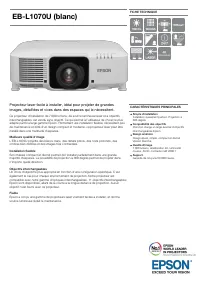 Epson V12H004UA3
Troubleshooting Guide
Epson V12H004UA3
Troubleshooting Guide
 Epson V12H004X0A
User Manual
Epson V12H004X0A
User Manual
 Epson A461H
Manual
Epson A461H
Manual
 Epson C11CH25401
User Manual
Epson C11CH25401
User Manual
 Epson C11CH72401
User Manual
Epson C11CH72401
User Manual
 Epson B11B257201
Manual
Epson B11B257201
Manual
 Epson V11HA85020
Installation Manual
Epson V11HA85020
Installation Manual
 Epson C11CK61201
User Manual
Epson C11CK61201
User Manual