Page 2 - Introduction; Important Usage Instructions
Introduction 2 E WARNING: TO REDUCE THE RISK OF FIRE OR ELECTRIC SHOCK, DO NOT EXPOSE THIS PRODUCT TO RAIN OR MOISTURE. Important Usage Instructions Digital Video Camcorder, OPTURA100 MC systems This device complies with Part 15 of the FCC Rules. Operation is subject to the following twoconditions: ...
Page 3 - IMPORTANT SAFETY INSTRUCTIONS
Introduction 3 E IMPORTANT SAFETY INSTRUCTIONS In these safety instructions the word“product” refers to the Canon Digital VideoCamcorder OPTURA100 MC A and all itsaccessories. 1. Read Instructions — All the safety andoperating instructions should be readbefore the product is operated. 2. Retain Inst...
Page 5 - Contents
Important Usage Instructions ....................2 IMPORTANT SAFETY INSTRUCTIONS ..................................3 Thank you for Choosing a Canon ..............7 Introducing the OPTURA100 MC ............8 Finding Your Way Around the OPTURA100 MC ............................9 ~ Preparations ... ~ P...
Page 6 - For quick reference; Using a Memory Card
In addition to the contents andindex please refer to: • Finding Your Way Around the OPTURA100 MC ( 9) • Screen displays ( 143) • Troubleshooting — in case you run into any problems ( 135) • Menu at a Glance ( 155) Symbols used in this instructionmanual: : Reference page numbers: Functions that can b...
Page 7 - Thank you for Choosing a Canon; Getting started
To get started we suggest that youmaster the basic operations of thecamcorder first, before moving on touse its full range of features. Introduction 7 E Thank you for Choosing a Canon Your camcorder is supplied with thefollowing accessories: WL-D74 WirelessController Two AA batteries SS-600 Shoulder...
Page 8 - Introducing the OPTURA100 MC; longer than
Introduction 8 E Canon’s opticaltechnology stabilizesyour recordings even inlong telephoto shots. Introducing the OPTURA100 MC Using a DV cable, connectthe OPTURA100 MC to aPC equipped with a DVterminal and transfer youroriginal images and soundto your PC. IEEE 1394 DV Terminal Just press the photob...
Page 9 - Finding Your Way Around the OPTURA100 MC
9 E Mastering the Basics Finding Your Way Around the OPTURA100 MC ( L IN E -I N ) R EC PAUSE INDEX REC SEARCH SCREEN MIX/ C A R D SLIDE SHOW LCD screen (p. 25) Flash button (p. 53)/ (play/pause) button (p. 28) (stop) button (p. 28)/INDEX SCREEN button (p. 108) BATT. (battery) RELEASE button (p. 14) ...
Page 12 - Powering Your Camcorder; Provide power from an AC outlet; or; Charge a battery pack; move the adapter away from the TV or the antenna cable.; Connecting the camcorder to an AC outlet; Connect the power adapter to the camcorder’s DC IN terminal.
12 E Mastering the Basics Powering Your Camcorder Before operating your camcorder, you will need to use the power adapter to: Provide power from an AC outlet or Charge a battery pack Notes: • The power adapter converts current from a household power socket (100–240 V AC, 50/60 Hz) to the DC current ...
Page 13 - Attaching and charging the battery packs; lightly and slide the battery down until it clicks into place.; Connect the power adapter to the camcorder.
13 E Mastering the Basics Attaching and charging the battery packs Your battery pack was partially charged before it left the factory. It should haveenough power for you to check that your camcorder is working properly.However, you must charge the battery pack fully if you want it to power thecamcor...
Page 14 - • Press the BATT. RELEASE button and remove the battery.; CA-560 Compact Power Adapter
14 E Mastering the Basics 6. Remove the battery pack after use. • Press the BATT. RELEASE button and remove the battery. Notes: • Never connect an unspecified product to the camcorder’s DC terminal. Likewise, do not connect the power adapter to an unspecified product. • You can find detailed notes f...
Page 15 - Charge the BP-500 Series battery packs with power from your car; car’s cigarette; Time required for full charge
15 E Mastering the Basics CHARGE The Compact Power Adapter CA-560 included with the camcorder can be usedalong with the CR-560 Kit for 3 different ways to power the camcorder or chargebattery packs:1. Charge the BP-500 Series battery packs with power from your car battery.2. Operate the camcorder wi...
Page 16 - Charge the BP-500 Series battery packs from a household AC; Operate the camcorder with power from your car battery.; car’s
16 E Mastering the Basics 3. Charge the BP-500 Series battery packs from a household AC outlet. 1 or 2 battery pack(s) + Charge Adapter + Compact Power Adapter CHARGE 2. Operate the camcorder with power from your car battery. Camcorder + DC Cable + Charge Adapter + Car Battery Cable → car’s cigarett...
Page 17 - Loading a Cassette; Make sure that you have attached a power source.; Loading and unloading
17 E Mastering the Basics Loading a Cassette 1. Make sure that you have attached a power source. 2. Slide the OPEN / EJECT 5 switch (on the bottom of the camcorder) to release the cassette compartment cover. • Pull the cover fully open (while holding the button) and wait a couple of seconds for the ...
Page 18 - Protecting tapes from accidental erasure; mark flashes in the display.; Cassette memory; damage the camcorder.; Handling cassettes
18 E Mastering the Basics Protecting tapes from accidental erasure To protect your recording from accidental erasure, slide the tab on the cassette sothat it exposes the hole. (This switch position is usually labeled SAVE or ERASEOFF.)If you load this cassette and put the camcorder in record pause m...
Page 19 - Basic Recording; Before you start recording
19 E Mastering the Basics Basic Recording Have you completed the following steps?• Attached a power source ( 12). • Removed the lens cap ( 127). • Fasten the grip belt ( 127). • Attach the lens hood ( 126). • Chosen the display: viewfinder ( 126) or LCD screen ( 25). Note: • When you’re using the vi...
Page 20 - Slide the program selector to; simply point and shoot without making any manual adjustments (; Press and release the start/stop button once to begin recording.
20 E Mastering the Basics 3. Load a cassette ( 17). 4. Slide the program selector to [ . • This selects the camcorder’s Easy Recording program. It allows you to simply point and shoot without making any manual adjustments ( 58). 5. Press and release the start/stop button once to begin recording. • F...
Page 21 - Changing the recording mode; About all 3 extended recording modes; SP or; In
21 E Mastering the Basics Choose from 4 recording modes: SP (standard play), 1.5 × SP, 2 × SP or 3 × SP. • Only SP and LP modes are available when the camcorder is set to CARD PLAY (VCR) mode. Recording times (this example uses an 80-minute tape) Changing the recording mode REC MODE••••SP VCR SET UP...
Page 22 - About SP and LP modes
22 E Mastering the Basics 16:9 (Wide screen TV recording) Produces images in the 16:9 format forplayback on wide screen TVs. To switch 16:9 to ON, open the menu and select CAM.SET UP. Thenselect 16:9, set it to ON and close the menu. Notes: • “16:9” is shown in the display when you switch the 16:9 m...
Page 23 - Confirmation/Warning beeps; in the; Turning off the tally lamp; You may therefore decide to turn it off.
23 E Mastering the Basics Confirmation/Warning beeps The camcorder’s short operation confirmation beeps are indicated by ` in the illustrations. Beeps sound upon certain camcorder operations such as when youturn the camcorder on, during the self-timer countdown, right before thecamcorder’s automatic...
Page 24 - digital zoom; Zooming; optical zoom
24 E Mastering the Basics 200 × digital zoom Magnifies the camcorder’s zoom range by up to 20 × in TAPE CAMERA mode. The zoom control continues to work as usual. You can freely zoom in and outbetween 1 × and 200 × magnification — the camcorder automatically switches between optical zooming (up to 10...
Page 25 - Using the LCD Screen; Opening and closing the LCD screen; it flat against the side of the camcorder.
25 E Mastering the Basics Using the LCD Screen Push the LCD panel OPEN button andopen the panel by pulling it away fromthe camcorder. This automaticallyswitches the LCD screen on and theviewfinder off. When you close theLCD panel, the LCD screenautomatically switches off and theviewfinder switches b...
Page 26 - Adjusting the LCD screen; You can adjust the brightness of the LCD screen.; About the LCD Screen
26 E Mastering the Basics Adjusting the LCD screen You can adjust the brightness of the LCD screen. Open the menu and select DISP.SET UP from the menu. Then selectBRIGHTNESS, adjust the level with the selector dial and close themenu. A bar showing the level appears in the display.• Turn the selector...
Page 27 - • These and all other indicators appear normally in the viewfinder.; Allowing the subject to monitor recording; • You can choose the display style,
27 E Mastering the Basics REC REC PAUSE EJECT • These and all other indicators appear normally in the viewfinder. Allowing the subject to monitor recording When you turn the LCD panel so that itfaces the same direction as the lens,you can watch yourself duringrecording or let your subject monitorrec...
Page 28 - Playing Back a Cassette; However, you cannot review the sound track.; Attach a power source and turn the POWER switch to PLAY; • The power indicator lights up green.
28 E Mastering the Basics Playing Back a Cassette You can use the LCD screen for instant, on-the-spot playback. When using theLCD screen, the camcorder also plays back the sound track via the built-inspeaker ( 31). • When you play back a tape, you can also close the LCD panel with its screen side fa...
Page 29 - ae; Special playback; Other playback modes
29 E Mastering the Basics Frame Advance To play back frame by frame, press the+/ ae button repeatedly during playback pause.Press and hold to play back continuousframe advance. Frame Reverse To play back in reverse frame by frame,press the –/ 4a button repeatedly during playback pause.Press and hold...
Page 32 - AUDIO terminal; Connections for Playback on a TV Screen; Power off all devices before starting the connections.
32 E Mastering the Basics • Use the S-150 S-video Cable to connect the S-video terminals. Use the STV-250N Stereo Video Cable to connect the AUDIO terminals. Connect thewhite plug to the white AUDIO terminal L (left). Connect the red plug to the red AUDIO terminal R (right). Do not connect the yello...
Page 33 - white plug to the white audio terminal; television to VIDEO.
33 E Mastering the Basics If your TV (or VCR) has audio/video input terminals VIDEO INPUT AUDIO L R AV DC IN 9.5V DV IN/OUT CHARGE IN/OUT • Connect the camcorder using the STV-250N Stereo Video Cable. Connect the white plug to the white audio terminal L (left). Connect the red plug to the red audio ...
Page 34 - Tips for Making Better Videos; Composition; • Make sure that the fastening screw of the tripod is no; Holding the camcorder
34 E Mastering the Basics Tips for Making Better Videos Composition The most important element in the scene does not have tobe in the center. For a more interesting picture, try toposition your subject so it is slightly to one side. Leavesome space on the side of the frame that the subject isfacing ...
Page 35 - Picture angle
35 E Mastering the Basics Picture angle Camcorder moves Close-up Instead of zooming while recording, tryto choose your picture angle before youbegin. A good way to tell a story withvideo is to begin with a long shot thatestablishes the situation, and then movein with medium shots and close-ups tosho...
Page 36 - Searching and Reviewing While Recording; to record pause mode.; Record search; • The + button plays the recording forwards and the – button plays it
36 E Using the Full Range of Features Searching and Reviewing While Recording When the camcorder is in record pause mode, you can use record review to playback the last few seconds of your recording and then return automatically torecord pause mode. You can quickly make sure that a scene has recorde...
Page 37 - Using the Menus; Camera menu; VCR MENU
37 E Using the Full Range of Features Using the Menus Many of the camcorder’s advanced functions are selected from menus whichappear in the display. There are 4 main menus:CAM. MENU Camera menu ( 39) VCR MENU VCR menu ( 40) C.CAM. MENU Card camera menu ( 42) C.PLAY MENU Card play menu ( 43) 2 CAM. M...
Page 38 - Selecting from the Menus
38 E Using the Full Range of Features Selecting from the Menus 1. Turn the POWER switch and the TAPE/CARD switch to the desired settings. 2. Press the MENU button to open the menu. • One of the main menus appears, according to the settings of the TAPE/CARD switch and the POWER switch. 3. Turn the se...
Page 39 - Card mix submenu; Camera set up submenu; List of Menus
39 E Using the Full Range of Features CAM.MENU SEL.SETSET MENUCLOSE CARD MIX CAM.SET UP VCR SET UP DISP.SET UP SYSTEM RETURN 1 3 5 2 4 6 CARD MIX 101-0143 43/50 MIX TYPE••••CARD CHROMA MIX LEVEL••• q w – + 1 To card mix submenu 2 To camera set up submenu 3 To VCR set up submenu 4 To display set up s...
Page 40 - Display set up submenu; VCR set up submenu
40 E Using the Full Range of Features CAM. MENU, cont. VCR MENU SEL.SETSET MENUCLOSE VCR SET UP CARD SET UP CARD OPER. DISP.SET UP SYSTEM RETURN 1 3 5 2 4 6 DISP.SET UP SEL.SETSET MENUCLOSE BRIGHTNESS•• MIRROR••••••ON TV SCREEN•••ON D/T DISPLAY•OFF RETURN – + !3 !5 !7 !4 !6 SYSTEM SEL.SETSET MENUCLO...
Page 41 - Card set up submenu; Return; Card operations submenu; Copy from cassette to card .; Return
41 E Using the Full Range of Features VCR SET UP SEL.SETSET MENUCLOSE REC MODE•••• SP OUTPUT CH•••L/R AUDIO DUB.••AUDIO IN WIND SCREEN•––– AUDIO MODE••12bit RETURN q e t w r y CARD OPER. SEL.SETSET MENUCLOSE COPY RETURN [ ] !0 !1 1 VCR set up submenu q Record mode ......................... 21 w Outp...
Page 42 - System submenu
42 E Using the Full Range of Features CAM.SET UP SEL.SETSET MENUCLOSE SHUTTER•••••AUTO IMAGE S. ••ON WHITE BAL.••AUTO RETURN q e w r CARD SET UP SEL.SETSET MENUCLOSE QUALITY•••••STANDARD IMAGE RES.••1280 × 960 FILE NOS.•••CONTINUOUS SHTR SOUND••ON RETURN t u o y i VCR MENU, cont. SYSTEM SEL.SETSET M...
Page 43 - -1 Card operations submenu (when playing back a single image)
43 E Using the Full Range of Features DISP.SET UP SEL.SETSET MENUCLOSE BRIGHTNESS•• MIRROR••••••ON TV SCREEN•••ON D/T DISPLAY•OFF RETURN – + !0 !2 !4 !1 !3 3 Display set up submenu !0 Brightness ............................. 26 !1 Mirror mode.......................... 27 !2 TV screen ..................
Page 44 - To print mark..................
44 E Using the Full Range of Features 1 -2 Card operations submenu (when displaying an index screen) y To image protect ………….. 112 u To print mark……………… 113 i Return 2 VCR set up submenu o Record mode ......................... 21 !0 Return 3 Display set up submenu !1 Brightness ........................
Page 45 - Using the Wireless Controller; Inserting batteries
45 E Using the Full Range of Features Using the Wireless Controller The supplied wireless controller canoperate the camcorder from a distanceof up to 16 feet (5 m). Point it at thecamcorder’s remote sensor while youpress the buttons. There are some functions that cannot beoperated without the wirele...
Page 46 - When Operating 2 Canon DV Camcorders (Remote Sensor Mode); To turn the remote sensor off:; • The selected mode will appear on the display for 4 seconds.; Press and hold the REMOTE SET button on the wireless controller.; OFF
46 E Using the Full Range of Features To prevent interference from otherCanon wireless controllers being used nearby, there are 2 remote sensormodes and an off setting. The wirelesscontroller and the camcorder have to beset to the same mode in order to becompatible. When Operating 2 Canon DV Camcord...
Page 47 - If your wireless controller isn’t working:
47 E Using the Full Range of Features If your wireless controller isn’t working: Make sure the camcorder and the wireless controller are both set to the samemode. Check the mode the camcorder is set to by pushing any button other thanthe REMOTE SET button on the wireless controller. The camcorder’s ...
Page 48 - Setting the Date and Time; Setting the time zone/daylight saving time; • If you are now in daylight saving time, select the time zone with the
48 E Using the Full Range of Features Setting the Date and Time The date and/or time display forms part of the data code. You can choose todisplay or hide it during playback ( 80). Set the date and time display when you first start using your camcorder. Install thebackup battery before you begin ( 1...
Page 50 - • The year display starts to flash.; Turn the selector dial up and down to change the year. Press the; and time again from the start.; Setting the clock; Date and time display
50 E Using the Full Range of Features 1. Open the menu and select SYSTEM. 2. Select D/TIME SET. • The year display starts to flash. 3. Turn the selector dial up and down to change the year. Press the dial in to move to another part of the display. • Once you move from the year, the next part of the ...
Page 51 - Taking Still Pictures to a Cassette; Press the PHOTO button halfway down and hold it:
51 E Using the Full Range of Features Taking Still Pictures to a Cassette You can record still pictures like a photograph. The camcorder records the pictureand sound to tape for several seconds. The exposure is automatically adjusted.Copy still photos automatically to a memory card ( 120) for transf...
Page 52 - Press the PHOTO button fully down to take the still picture.
52 E Using the Full Range of Features • If the subject is unsuitable for autofocus ( 136), the camcorder may not be able to focus, and F may continue to flash white in the display. Continue to hold the PHOTO button halfway down, then adjust the focus manuallywith the selector dial. • If you are usin...
Page 53 - Press the PHOTO button half way down and hold it.; Using the Built-in Flash; Changing the setting of the flash
53 E Using the Full Range of Features 1. Press the (flash) button. • The display changes in the following order with each press of the button. • The selected mode appears in the display, with the exception of (Auto), which is displayed and then disappears after 4 seconds. • When you press the flash ...
Page 54 - Returning the flash to the body
54 E Using the Full Range of Features Returning the flash to the body Press the flash down with your hand.• Do not return the flash to the body while it is firing. Caution: • Do not fire the flash close to people’s eyes.• Do not fire the flash at drivers while they are driving.• Do not fire the flas...
Page 55 - Turning the Image Stabilizer Off; • The
55 E Using the Full Range of Features Turning the Image Stabilizer Off M E N U With most camcorders, even the slightest hand movements will be noticeableduring telephoto recording. However, the OPTURA100 MC’s Optical ImageStabilizer allows you to obtain steady recordings even at high magnification.U...
Page 56 - Using the Various Recording Programs; the program selector to the; Availability of functions in each recording program
56 E Using the Full Range of Features Using the Various Recording Programs P The camcorder provides you with a choice of 7 recording programs. They usedifferent combinations of camcorder settings in order to adjust the exposure andother functions to match the recording situation.• For simple point-a...
Page 57 - Setting the program AE mode; • The program will appear in the display.
57 E Using the Full Range of Features Setting the program AE mode 1. Slide the program selector to Q (program AE) mode. 2. Press the selector dial in to display the program menu. 3. Turn the selector dial to move the arrow up or down the display. 4. Press the selector dial in to select the desired p...
Page 58 - Portrait; Easy Recording; Auto
58 E Using the Full Range of Features Portrait Use this program outdoors to make subjectsstand out from a softened foreground andbackground. It works well for still-lifes andclose-ups. The effect is most noticeable whenthe zoom position is between the middle rangeand the telephoto end. Focus manuall...
Page 59 - Spotlight; Low Light
59 E Using the Full Range of Features Use this program in places where thebackground is so bright that the subject appearsunderexposed in the display — a sunny beach orski resort, for example. You may notice someshudder when recording moving subjects. Sand & Snow Spotlight This program is design...
Page 60 - Using Digital Effects; Availability of digital effects in TAPE CAMERA mode only
60 E Using the Full Range of Features Using Digital Effects Use the camcorder’s digital effects for more interesting productions. • Faders: Start or end scenes on a tape with a fade to or from black( 61). Fade Trigger, Wipe , Stripe , Stripe , Checker, Window • Effects: Add flavor to your recordings...
Page 61 - Vertical; Faders; When you; Horizontal
61 E Using the Full Range of Features Fade Trigger (FADE-T) Vertical Wipe (WIPE ) Vertical stripe (STRIPE ) When you start recording, thepicture begins as a thin verticalline in the center of the screen which gradually expands sideways until it fills the whole of the screen. When you end a scene, th...
Page 62 - Effects; Black and White; Makes the image; Mosaic; Blurs the image by
62 E Using the Full Range of Features Effects Art (ART) Adds a paint-like effect, calledsolarization, to the image. Negative(NEGATIVE) Makes the image looklike negative film. Black and White (BLK & WHT) Makes the image black and white. Mosaic (MOSAIC) Blurs the image by enlarging the size of som...
Page 63 - buttons on the wireless controller; Operating faders; • You return to the digital effects menu.; Press the DIGITAL EFFECTS button to close the menu.; • The name of your selected fader flashes in the display.
63 E Using the Full Range of Features Digital effects can be set with the controls on the body of the camcorder or thewireless controller. Pressing the ▲ / ▼ buttons on the wireless controller correspond to turning the selector dial up and down, and pressing the SET buttoncorresponds to pressing the...
Page 64 - Press the DIGITAL EFFECTS button to open the digital effects; • When MOSAIC is selected, you cannot use the digital zoom.; Operating effects
64 E Using the Full Range of Features Sound records normally.When operating effects, make sure the program selector is set to Q . 1. Press the DIGITAL EFFECTS button to open the digital effects menu. • D.EFFECT | , FADER, EFFECT and MULTI-S appear. 2. Select EFFECT. • NEGATIVE, ART, BLK&WHT, SEP...
Page 65 - Operating the multi-image screen; Using the Multi-Image Screen
65 E Using the Full Range of Features Operating the multi-image screen When operating the multi-image screen, make sure the program selector is set to Q . 1. Press the DIGITAL EFFECTS button to open the digital effects menu. • D.EFFECT | , FADER, EFFECT and MULTI-S appear. 2. Select MULTI-S. • S. SP...
Page 66 - • The multi-image screen is recorded to the tape.
66 E Using the Full Range of Features 9. Press the ON/OFF button. • MULTI-S stops flashing.• The camcorder will capture the indicated number of images at the indicated speed. 10.Press the start/stop button to begin recording. • The multi-image screen is recorded to the tape. Notes: • You can operate...
Page 67 - Audio Recording; To switch to the 16; External microphone
67 E Using the Full Range of Features Audio Recording To switch to the 16 - bit mode, open the menu and select VCR SET UP. Then select AUDIO MODE, set it to “16 bit” and close the menu. • “16 bit” is shown in the display for approximately 4 seconds. Notes: • For details on adding new sound, see p. 9...
Page 68 - • WS; Wind screen
68 E Using the Full Range of Features To turn it on, open the menu and select VCR SET UP. Then selectWIND SCREEN, set it to ON and close the menu. • WS O is shown in the display when you turn the wind screen on. Notes: • The wind screen can be used for audio dubbing with the built-in microphone in T...
Page 69 - self-timer button on the body of the camcorder; seconds in; Setting the Self-Timer
69 E Using the Full Range of Features This is useful when you want to include yourself in the picture when recordingmovies or still photographs. 1. Press the self-timer button on the body of the camcorder or the SELF TIMER button on the wireless controller. • SELF-T appears in the display.• To have ...
Page 70 - • To cancel the self-timer before the countdown has begun, press the
70 E Using the Full Range of Features Notes: • If you have the beep turned on, it sounds each time the tally lamp flashes before recording. • To cancel the self-timer before the countdown has begun, press the SELF TIMER button. • To cancel the self-timer once the countdown has begun, press the SELF ...
Page 71 - clicks securely into place.; Set the camcorder to TAPE CAMERA mode or CARD CAMERA
71 E Using the Full Range of Features Using the VL-3 Video Light (optional) 1. Slide the Video Light onto the accessory shoe and tighten with the shoe lock. • Slide in the direction of the arrow on the bottom of the Video Light until it clicks securely into place. • Make sure that the light does not...
Page 72 - Refer to the DM-50’s instructions for further details.; Set the camcorder to TAPE CAMERA mode.; camcorder’s microphone terminal.
72 E Using the Full Range of Features The highly sensitive Directional Stereo Microphone DM-50 has been designedexclusively for camcorders equipped with an advanced accessory shoe . It is powered by the camcorder’s power supply. Use during cassette recording or audiodubbing ( 93). Refer to the DM-50...
Page 73 - Adjusting Exposure Manually; Exposure lock
73 E Using the Full Range of Features + , + CAMERA CARD CAMERA TA P E + , + CAMERA CARD CAMERA TA P E Adjusting Exposure Manually To make the recorded image brighter,turn the selector dial upwards (to amaximum of +11). This may benecessary if the background is verybright, or if the subject is lit fr...
Page 74 - • You cannot adjust the exposure without the
74 E Using the Full Range of Features Notes: • You cannot adjust the exposure without the e mark before E.LOCK in the display. Push the EXP button so that e appears before E.LOCK. Then you can adjust the exposure manually. • The standard exposure level depends on which recording program you have sel...
Page 75 - Make sure the camcorder is set to the; Concerning shooting in fluorescent lighting; When the camcorder is set to; TAPE; slower; Setting the Shutter Speed
75 E Using the Full Range of Features 1. Make sure the camcorder is set to the Q (program AE) mode. 2. Press the selector dial in and choose AUTO from the program menu. 3. Open the menu and select CAM.SET UP. 4. Select SHUTTER. 5. Press the selector dial in to select the desired shutter speed. • Onl...
Page 76 - Guidelines for shooting using high shutter speeds
76 E Using the Full Range of Features Guidelines for shooting using high shutter speeds • When shooting with a shutter speed of 1/1000 or higher, do not shoot the sun directly. Recommended shutter speeds when shooting: • People doing outdoor sports such as golf or tennis • Moving cars or trains or o...
Page 77 - Adjusting Focus Manually; Manual focus; Focus lock
77 E Using the Full Range of Features Adjusting Focus Manually FOCUS/ DATA CODE PUSH/SELECT Manual focus Use the selector dial to set the focus. • Turn the selector dial downward to move the focus farther away. • Turn the selector dial upwards to bring the focus nearer. Notes: • You cannot adjust th...
Page 78 - Setting the White Balance; appears in the display when you set the white balance to; b) To set the white balance yourself, point the camcorder at a white; you have finished setting the white balance.
78 E Using the Full Range of Features Setting the White Balance 1. Make sure the camcorder is set to the Q (program AE) mode. 2. Open the menu and select CAM.SET UP. 3. Select WHITE BAL. 4. a) For the indoor, outdoor or auto settings, press the selector dial in to choose the setting. • T / U appears...
Page 79 - Subjects with one dominant color, such as sky, sea or forest
79 E Using the Full Range of Features Setting the white balance manually will probably work betterthan auto white balance when shooting: Subjects with one dominant color, such as sky, sea or forest Close-ups In rapidly changing lighting conditions In places lit by certain types of fluorescent or mer...
Page 80 - • Press it once to display, once more to hide it.
80 E Using the Full Range of Features DATA CODE M E N U PO W ER O F F P LA Y ( VC R) CA ME RA FOCUS/ DATA CODE During TAPE PLAY (VCR) mode, the data code can be displayed or hidden whilethe camcorder is in play, slow or still mode. Camcorder data may be displayed as “– – –” during fast forward, rewi...
Page 81 - Setting the data code; Camera data; • The data code will read “– – –” in the following situations:; Possible data code combinations for cassettes:
81 E Using the Full Range of Features You can also choose to display camcorder data (shutter speed and exposuresettings) in cassette data codes. To change, open the menu and select DISP.SET UP. Then select DATACODE, set it to DATE/TIME, CAMERA DATA or CAM. & D/T andclose the menu. DATA CODE•••DA...
Page 82 - • When 6SEC.DATE is turned on but DISPLAYS (
82 E Using the Full Range of Features Six-second auto date The 6-second auto date appears for 6 seconds to mark the changeover of a day ifthe tape was being recorded at 12:00 midnight. It also appears for 6 seconds whenyou start playback and have the data code turned off. The 6-second auto date will...
Page 83 - Press the SEARCH SELECT button to choose between photo/date
83 E Using the Full Range of Features Searching the Tape (Photo Search/Date Search) This allows you to move quickly through still pictures recorded anywhere on atape (photo search) or between different days or areas of recording (date search)on a tape. 1. Press the SEARCH SELECT button to choose bet...
Page 84 - Returning to a Pre-Marked Position; Press the ZERO SET MEMORY button on the wireless controller; RTN
84 E Using the Full Range of Features Returning to a Pre-Marked Position Use the wireless controller to mark a point on a tape that you want to return tofollowing playback. 1. Press the ZERO SET MEMORY button on the wireless controller during playback at a point you want to return to later. • The ti...
Page 85 - Editing; Editing to a VCR; Preparations
85 E Editing Editing to a VCR 1. Find a point on your recorded cassette slightly before the section you want to copy. 2. Start to play it back while you monitor the picture on the TV. 3. Start recording on the VCR as soon as the section you want to copy appears on the screen. 4. Pause the VCR at the...
Page 86 - Dubbing to/from a Cassette with Digital Video Equipment; Connect the camcorder and the other digital device.; marked with the arrows facing as shown above.; the camcorder’s TAPE/CARD switch to TAPE.; • DV IN appears in the display.
86 E Editing REW PLAY FF REC PAUSE SEARCH SELECT ZERO SET MEMORY AUDIO DUB. STOP AV INSERT PAUSE SLOW + / – / × 2 ( L IN E -I N ) R EC PAUSE INDEX REC SEARCH SCREEN MIX/ C A R D SLIDE SHOW Digital video equipment fitted with the DV terminal lets you edit, copy andtransfer data digitally, with virtua...
Page 87 - Copyright signal; • The camcorder enters record pause mode.; Start playback on the other digital device while you monitor the; images on the tape that is being recorded to.; Dubbing
87 E Editing Copyright signal Certain pre-recorded software tapes are copyright protected. If you try to playback such a cassette, “COPYRIGHT PROTECTED PLAYBACK ISRESTRICTED” appears in the display for a few seconds and then the camcorderdisplays a blank blue screen; you cannot view the contents of ...
Page 88 - “Connections for Playback on a TV Screen” on p. 32.; Example recording from a VCR
88 E Editing OUTPUT VIDEO S(S1)-VIDEO AUDIO L R AV DC IN 9.5V DV IN/OUT CHARGE IN/OUT S IN/OUT ( L IN E -I N ) R EC PAUSE INDEX REC SEARCH SCREEN MIX/ C A R D SLIDE SHOW Recording from a VCR, TV or Analog Camcorder (Analog Line-in) You can record a video played on your VCR or analog camcorder (for d...
Page 89 - you want to copy and set it to playback pause mode.; • You can monitor the picture in the viewfinder or LCD.
89 E Editing 1. Find a point on your recorded cassette slightly before the section you want to copy and set it to playback pause mode. 2. Press the REC PAUSE button. • S-video and AV IN/OUT terminals work as input terminals.• The camcorder enters record pause mode. 3. Start playback on the other dev...
Page 90 - Recording Over Existing Scenes (AV Insert Editing)
90 E Editing Recording Over Existing Scenes (AV Insert Editing) OUTPUT VIDEO S(S1)-VIDEO AUDIO L R AV DC IN 9.5V DV IN/OUT CHARGE IN/OUT S IN/OUT You can insert new scenes from your VCR or other camcorder onto your pre-recorded tape using the OPTURA100 MC’s analog line-in or DV in terminals.Original...
Page 91 - The tape in the camcorder:; Turn the camcorder’s POWER switch to PLAY (VCR) and load a
91 E Editing TV: You cannot insert AV from a TV program with anomalous synchronized signals,such as when the program itself received poor signals. The tape in the camcorder: When using the OPTURA100 MC’s AV insert function, only record to tapesrecorded in SP mode.If there are non-recorded portions o...
Page 93 - Audio Dubbing; To connect other audio equipment:
93 E Editing Audio Dubbing AV DC IN 9.5V DV IN/OUT CHARGE IN/OUT OUTPUT AUDIO L R You can add sound to the original sound on a pre-recorded tape from audioproducts (AUDIO IN) or with the internal or external microphone (MIC. IN). Theoriginal sound will not be erased. For best results, add sound to t...
Page 94 - When using an external microphone; • To use your TV to monitor video, connect the S-video terminal (
94 E Editing 1. Open the menu and select VCR SET UP. 2. Select AUDIO DUB. 3. Select AUDIO IN or MIC. IN and close the menu. AUDIO DUB.••AUDIO IN VCR SET UP ( 37) REW PLAY FF REMOTE SET SEARCH SELECT ZERO SET MEMORY AUDIO DUB. STOP AV INSERT PAUSE SLOW + / – / × 2 PO W ER O F F P LA Y ( VC R) CA ME R...
Page 95 - Locate the point where you want to start audio dubbing, then press
95 E Editing 4. Locate the point where you want to start audio dubbing, then press the PAUSE button. • You can use the playback buttons on the body of the camcorder or the special playback functions on the wireless controller in the same way as in playbackmode. • The camcorder becomes set to playbac...
Page 96 - Setting the Audio Mix; • To simply choose STEREO1, STEREO2 or MIX/FIXED, make sure your
96 E Editing Setting the Audio Mix AUDIO MONITOR MIX BALANCE ST-1 ST-2 PO W ER O F F P LA Y ( VC R ) CA ME RA When you play back a tape that was recorded in 12-bit mode, you can set theaudio output to play: stereo 1 (the original sound), stereo 2 (any new sound,dubbed to the tape after recording), o...
Page 97 - Open the menu and select VCR SET UP. Then select OUTPUT CH,; Selecting audio output channels
97 E Editing When you play back a tape whose audio has been recorded on multiple channels,you can change the output channels of that sound. + 1. Load a tape recorded with multiple-channel audio. 2. Open the menu and select VCR SET UP. Then select OUTPUT CH, set it to the desired setting and close th...
Page 98 - household power socket using the power adapter.; Connecting to a PC
98 E Editing By using a DV cable and connecting the camcorder to a PC equipped with a DVterminal conforming to IEEE 1394/DV compatible capture board, you can transferimages taken with the camcorder to your PC.• While connected, it is recommended that you power your camcorder from a household power s...
Page 99 - Memory Card Introduction; Front; MultiMediaCard MMC-8M; Back; Important
99 E Using a Memory Card The camcorder can take, store and manage still images on 2 types of memorycards: the MultiMediaCard (supplied with the camcorder) or an SD Memory Card(commercially available). The MultiMediaCard is an ultra-small, ultra-light mediathat can record still images. About the same...
Page 100 - Selecting the recording image quality; Select the quality of a still image to be recorded.; Inserting and removing the memory card; Open the memory card compartment cover in the direction of the; • When you set the camcorder to CARD PLAY (VCR) mode, the last image
100 E Using a Memory Card Selecting the recording image quality Select the quality of a still image to be recorded. QUALITY•••••STANDARD CARD SET UP ( 37) To change the image quality, open the menu and select CARD SETUP. Then select QUALITY, set it to FINE and close the menu. Inserting and removing ...
Page 101 - Selecting the recording image resolution; To change the image resolution to 640; Image resolution
101 E Using a Memory Card Notes: • Depending on the image you are recording, sometimes there will be no difference in image quality between settings. • Images are compressed and recorded in the JPEG (Joint Photographic Experts Group) format. • The number of images that can still be recorded on a mem...
Page 102 - File numbers; CONTINUOUS; Turn off the shutter sound
102 E Using a Memory Card File numbers 1 CONTINUOUS Numbering is continuous between cards, so thatthe first file number assigned on a new memorycard is 1 more than the last file number assignedon the previous memory card. When the filenumbers are set to CONTINUOUS, each imagetaken is assigned a diff...
Page 103 - Recording Still Images to a Memory Card; sure the protect switch is set to allow recording.; Press the small green button on the POWER switch and hold, turn; other information appear in the display.; Press the PHOTO button halfway and hold it.; flashes white in the display as the camcorder adjust the
103 E Using a Memory Card Recording Still Images to a Memory Card 3 4 PHOTO PHOTO 2 1 CAR D TAP E PO W ER O F F PLA Y(VCR) CA M E R A The camcorder is equipped with a mechanical shutter so that you can record vividstill images onto a memory card (Progressive Photo function). You can alsorecord onto ...
Page 104 - Press the PHOTO button fully down to record the still picture.
104 E Using a Memory Card 4. Press the PHOTO button fully down to record the still picture. • F disappears from the display. The shutter sound sounds and simultaneously the display appears to close for an instant as if it were a shutter releasing. • While the camcorder is recording the still image, ...
Page 105 - Recording an Image from a Cassette as a Still Image; When the image you want to record appears in the display, press; still be recorded on the memory card appears in the display.; Press the PHOTO button fully down to record the image to the; • The card access indicator flashes.
105 E Using a Memory Card Recording an Image from a Cassette as a Still Image 2 3 PHOTO PHOTO 1 Record an image from a cassette onto a memory card. To automatically recordmultiple still images from a cassette to a memory card, refer to “Copying StillImages from a Cassette” on p.120.• A still image r...
Page 106 - Recording from Another DV Device as a Still Image; Connect the camcorder to the other digital device.; Load a memory card. Turn the camcorder’s POWER switch to; 80 onto a memory card.; appears in the display.; Recording
106 E Using a Memory Card Recording from Another DV Device as a Still Image CAR D TAP E PO W ER O F F P LA Y ( VC R ) PHOTO PHOTO PHOTO PHOTO CA ME RA 1. Connect the camcorder to the other digital device. • Connect the Canon CV-150F DV cable (optional) with the sides of the plugs marked with the arr...
Page 107 - Viewing Still Images; Do not change the data recorded on a memory card.; Still images whose image file names have been changed on a PC; There are 3 ways to view still images:; One after the other automatically in order of recording; Single Image; • The last image recorded appears in the display.
107 E Using a Memory Card Viewing Still Images CARD SLIDE SHOW CAR D TAP E PO W ER O F F P LA Y ( VC R ) ( L IN E -I N ) R EC PAUSE INDEX REC SEARCH SCREEN MIX/ C A R D SLIDE SHOW CA ME RA Play back and view still images recorded on a memory card. (For details onconnecting to a TV, see “Connections ...
Page 108 - Card Jump Function; number is assigned, appears in the display.; Slide Show; With an image in the display, press the SLIDE SHOW button.; • The images are played back one after another.; To stop the slide show, press the SLIDE SHOW button.; Index Screen; With an image in the display, press the; • Up to 6 images appear in the display.; mark to the image you want to view.; to go to the next image.
108 E Using a Memory Card 2 2 Card Jump Function You can jump from the current image to the desired image of unadjacent imagenumber without displaying the images one by one.The numbers shown in the upper right in CARD PLAY (VCR) mode indicate the imagenumber of the current still image / total number...
Page 109 - Settings of the Still Image Recorded to a Memory Card; Preventing Accidental Erasure (Protect; To mark an image for printing or erase print marks one at a time
109 E Using a Memory Card Settings of the Still Image Recorded to a Memory Card Immediately after you have recorded a still image to a memory card, you cancheck the image without switching the operation mode by the POWER switch.(CARD PHOTO REVIEW)You can also easily erase unwanted images while viewi...
Page 110 - CARD PHOTO REVIEW; open the CARD PHOTO REVIEW menu.; To erase images one at a time
110 E Using a Memory Card CARD PHOTO REVIEW + CAMERA CARD 1. During/after recoding a still image, press the CARD - button to open the CARD PHOTO REVIEW menu. • If you press the button after recording a still image, the last image recorded appears in the display. • If you press the button while recor...
Page 112 - With an image in the display, press the INDEX SCREEN button.
112 E Using a Memory Card Preventing Accidental Erasure (Protect) CARD SLIDE SHOW ( L IN E -I N ) R EC PAUSE INDEX REC SEARCH SCREEN MIX/ C A R D SLIDE SHOW PUSH/SELECT This section describes how to protect the still image from the Card Operationsubmenu when displaying an index screen in CARD PLAY (...
Page 113 - Marking a Still Image for Printing (Print Mark); Marking an image for printing while viewing an index screen
113 E Using a Memory Card Marking a Still Image for Printing (Print Mark) PUSH/SELECT This section describes how to mark the still image for printing from CardOperation submenu in CARD PLAY (VCR) mode (including the way to cancelthe setting).– When displaying an index screen, you can mark the image ...
Page 114 - With an image in the display, open the menu and select CARD; • ERASE ALL PRINT MARKS; Erasing all print marks
114 E Using a Memory Card Make sure a memory card that has images recorded on it has been inserted intothe camcorder. 1. With an image in the display, open the menu and select CARD OPER. 2. Select PRINT MARKS ALL ERASE. • ERASE ALL PRINT MARKS ? YES NO appears in the display. 3. Select YES. • The pr...
Page 115 - Erasing Still Images
115 E Using a Memory Card Erasing Still Images CARD SLIDE SHOW ( L IN E -I N ) R EC PAUSE INDEX REC SEARCH SCREEN MIX/ C A R D SLIDE SHOW PUSH/SELECT This section describes how to erase the still image from the Card Operationsubmenu when playing back a single image in CARD PLAY (VCR) mode.(SINGLE or...
Page 116 - IMAGES] NO YES appears in
116 E Using a Memory Card 1. Open the menu and select CARD OPER. 2. Select IMAGE ERASE. • CANCEL, SINGLE and ALL settings appear.• To cancel erasing, select CANCEL and close the menu. 3. Select ALL. • ERASE ALL IMAGES? [EXCEPT FOR IMAGES] NO YES appears in the display. 4. Select YES. • All images ex...
Page 117 - Combining Images and Recording Them to a Cassette (Card Mix); Select from 3 types of Card Mix effects:
117 E Using a Memory Card Combining Images and Recording Them to a Cassette (Card Mix) Liven up your productions by superimposing one image on top of the other.Combine 2 still images or a still image and a moving image. Choose a still imagefrom the memory card, either one of the pre-recorded sample ...
Page 118 - Make sure the program selector is set to; Open the menu and select; Select; Mix level
118 E Using a Memory Card CAM. CHROMA (Camera chroma key) Superimpose the currently recording image on top of a still image, whichbecomes its background. Shoot the subject of the currently recording imageagainst a blue background, such as a blue curtain. The original still image willappear in place ...
Page 119 - Press the PHOTO button halfway down and hold it.
119 E Using a Memory Card 4. Select the desired setting. • Your currently recording image is combined with the pre-recorded still image. 5. Select MIX LEVEL. 6. Adjust the mix level. • Turning the selector dial upwards adjusts to the right and turning downwards adjusts to the left. 7. Close the menu...
Page 120 - Copying Still Images from a Cassette; Locate the first still image on the cassette that you want to copy; • CANCEL and EXECUTE settings appear.; Press the stop button when your desired images have finished
120 E Using a Memory Card Copying Still Images from a Cassette ( L IN E -I N ) R EC PAUSE INDEX REC SEARCH SCREEN MIX/ C A R D SLIDE SHOW PUSH/SELECT Copies multiple still images from a tape to the memory card, using the PhotoSearch function.• A still image recorded to a tape is recorded onto a memo...
Page 121 - Copying Memory Card Still Images to a Cassette; Locate the point on the cassette where you want to start copying; copied onto the cassette.; button when your desired images have finished; The; SP; and; LP; recording modes are not available when copying
121 E Using a Memory Card Copying Memory Card Still Images to a Cassette ( L IN E -I N ) R EC PAUSE INDEX REC SEARCH SCREEN MIX/ C A R D SLIDE SHOW PUSH/SELECT Make sure a memory card that has images recorded on it and a cassette that hasenough recordable space have been inserted into the camcorder....
Page 122 - Formatting a Memory Card; with the camcorder, not a PC or other device.
122 E Using a Memory Card Formatting a Memory Card PUSH/SELECT Format new memory cards, if you get the message CARD ERROR, or topermanently and quickly erase all the images on a memory card, includingprotected images (this includes the pre-recorded card mix sample images). The MultiMediaCard supplie...
Page 123 - Other Information and Precautions; on most types of laptop PCs.; Memory card operating precautions
123 E Using a Memory Card Other Information and Precautions The camcorder formats memory cards in DCF (Design rule for Camera Filesystem).Images recorded on a memory card with this camcorder can be transferred to aPC with the use of the following products made for MultiMediaCards or SDMemory Cards: ...
Page 124 - Sample images; Card chroma key
124 E Using a Memory Card • Do not disassemble memory cards.• Do not bend or drop memory cards, or expose them to strong vibrations or external shocks. • Do not get memory cards wet. • Do not remove the memory card’s label or affix other labels. Affix labels to the memory card’s case. • Do not leave...
Page 125 - MultiMediaCard standard
125 E Using a Memory Card Card luminance key Camera chroma key MultiMediaCard MMC-8M Specifications Capacity 8 MB Interface MultiMediaCard standard Operating temperature range 32°F– 140°F (0°C – 40°C) Dimensions 32 × 24 × 1.4 mm Weight 1.5 g Weight and dimensions are approximate Errors and omissions...
Page 126 - Preparing the Camcorder; • Set the camcorder to TAPE CAMERA; Adjust the viewfinder; • Make sure attach the hood to the
Be careful not to leave the viewfinder exposed to bright sunlight, or it willmelt. (The light is concentrated by the viewfinder lens.) Adjust the angle of theviewfinder to prevent sunlight from entering. 126 E Additional Information Preparing the Camcorder • Set the camcorder to TAPE CAMERA mode. Ex...
Page 127 - Prepare the lens cap; • Attach the cord to the grip belt, and; Fasten the grip belt
127 E Additional Information Prepare the lens cap • Attach the cord to the grip belt, and then to the lens cap, passing the cordthrough the hole on the lens cap fromfront side. • Hook the lens cap on to the grip belt while you are recording, and place itover the lens when you have finished. Fasten t...
Page 128 - Notes on Using the Batteries; Charging and recording times
128 E Additional Information Notes on Using the Batteries Charging and recording times • These times vary — the safest policy is always to have 2 or 3 times as many battery packs as you think you will need. • You will get more recording time if you turn the camcorder off between shots, instead of le...
Page 129 - Taking care of the battery pack; Always attach the terminal cover.; • Do not allow any metal objects to; Keep the terminals clean.; When to recharge; • When the power is completely; How much power is left?
129 E Additional Information Taking care of the battery pack B D Always attach the terminal cover. • Do not allow any metal objects to touch the terminals, as this can causea short circuit and damage the batterypack. Attach the terminal coverwhenever the battery pack is notbeing used. Keep the termi...
Page 130 - Treat the battery pack with care.; Installing the backup battery
130 E Additional Information DANGER! Treat the battery pack with care. • Keep it away from fire (or it might explode).• Do not expose the battery pack to temperatures greater than 140°F (60°C). Do not leave it near a heater, or inside a car in hot weather, for example. • Do not try to disassemble or...
Page 131 - Maintenance; form on the lens and internal parts (; Cautions
131 E Additional Information Maintenance Avoid high temperatures and high humidity. • Do not leave the camcorder inside a car in hot weather, for example.• Be careful of heat radiating from video lighting equipment.• Do not take the camcorder into a humid room. Avoid sudden changes in temperature. •...
Page 132 - Viewfinder; • Clean the viewfinder screen using a cotton; LCD; treated cloth or volatile solvents such as paint thinner.
132 E Additional Information Viewfinder • Clean the viewfinder screen using a cotton swab. First, pull the viewfinder out until itstops. Then, press and hold the finderrelease button with a sharp object and pullthe viewfinder all the way out. To reattachthe viewfinder, first position the basehorizon...
Page 133 - Power sources; Using the camcorder abroad; Video heads; • When mosaic-like noise appears on the playback picture,
133 E Additional Information Power sources • You can use the compact power adapter to operate your camcorder and charge battery packs in any country where the electricity supply is between 100 and240 V AC, 50/60 Hz. Contact your Canon dealer for information about plugadapters for overseas use. TV pl...
Page 134 - Condensation; Protecting the camcorder from condensation; When a cold room is heated rapidly
134 E Additional Information Condensation Condensation may form on the camcorder when it is moved from a cold place to awarm place. Using the camcorder while condensation is present can damage boththe tape and the camcorder. Condensation may become a problem: When the camcorder is taken from an air-...
Page 135 - Troubleshooting; Cause and/or what to do about it; There’s no picture in the display.
135 E Additional Information Troubleshooting Cause and/or what to do about it • The camcorder is not set to the appropriate mode ( 19, 28). • The cassette is not loaded or is set for erasure prevention ( 17-18). • The cassette has reached the end.• The power source is not properly connected, or the ...
Page 136 - • The camcorder is on manual focus; The camcorder won’t focus.
136 E Additional Information Note: • Some subjects are not suitable for autofocus. In these situations, you will often get better results using manual focus ( 77). Focus on something which is about the same distance away, lock the focus, and then point the camcorder atyour original, hard-to-focus su...
Page 137 - Memory card operations
137 E Additional Information • The video heads need cleaning ( 133). • The TV/VIDEO selector on the TV isn’t set to VIDEO ( 32-33). • The speaker has been turned off with the selector dial ( 31). • Headphones are being used. ? There’s no picture on the TVscreen, even though the tape ismoving. ? Ther...
Page 138 - Miscellaneous; Problem
138 E Additional Information Miscellaneous Cause and/or what to do about it • The remote sensor mode is set to OFF B in the menu ( 46). • The remote sensor modes of the wireless controller and the camcorderitself are different ( 46). • The batteries are dead or not inserted. • Check the screen displ...
Page 139 - The OPTURA100 MC System Diagram
139 E Additional Information The OPTURA100 MC System Diagram (Availability differs from area to area) VL-3 Video Light DM-50 DirectionalStereo Microphone MultiMediaCard orSD Memory Card USB Card Reader PC Card Adapter FD Adapter WL-D77Wireless Controller MiniDVVideo Cassette CR-560 Charge Adapter/ C...
Page 140 - Optional Accessories; BP-500 Series Battery Packs; usual when the tele-converter is attached.
140 E Additional Information Optional Accessories Call or visit your local retailer/dealer for genuine Canon video accessories.You can also obtain genuine accessories for your Canon camcorder by calling: 1-800-828-4040, Canon U.S.A. Information Center. CR-560 Charge Adapter/Car BatteryCable Kit Conn...
Page 141 - DM-50 Directional Stereo Microphone; terminal of a Canon camcorder, it
141 E Additional Information FS-43U Filter Set Neutral density and MC protector filters tohelp you take control of difficult lightingconditions. VL-3 Video Light Attach the Video Light to a camcorderwhen recording in dark rooms. When on itsautomatic setting, the Video Light turnson/off automatically...
Page 142 - SC-A50 Soft Carrying Case
142 E Additional Information SC-A50 Soft Carrying Case This lightweight bag keeps the camcorderwithin easy reach without weighing youdown or getting in the way. Genuineleather. This mark identifies genuine Canon video accessories. When youuse Canon video equipment, we recommend Canon-brandaccessorie...
Page 143 - Screen Displays; For instructions on how to hook the camcorder up to your TV, see p. 32.; Turning off the LCD screen displays; the displays do not disappear when displaying an index screen.; indicates a flashing display.
143 E Additional Information Screen Displays To display the date and time, press the DATACODE button. See also p. 80. Press the wireless controller’s TV SCREENbutton or turn TV SCREEN on through themenu to see the other displays on the TVscreen. (The displays appear white on-screen.)They will not be...
Page 146 - Memory Card Displays
146 E Additional Information AUDIO IN MIC.IN DV IN Volume level ( 31): Speaker Headphones Audio output ( 96) Mix balance ( 96) Audio input ( 94) Microphone input DV input ( 86, 106) Condensation warning( 134) ST–1 ST–2 No memory card isinserted ( 100). Image quality ( 100): Standard Fine Image resol...
Page 147 - Recording reminder; and 5 images
147 E Additional Information Recording reminder When you start recording, thecamcorder counts from 0SEC to10SEC. Shots which are shorter thanten seconds may be difficult to editlater. On the other hand, if you are notplanning to edit the recording,remember that a shot which does notcontain action sh...
Page 148 - Caution phrases
148 E Additional Information Appears as a warningto protect the cassetteand also whencondensation isdetected. Remove thecassette as soon aspossible after thecamcorder hasdisplayed the caution. Refer to p. 87 Refer to p. 87 or p. 88 Appears when you tryto do audio dubbingor AV insert on a taperecorde...
Page 149 - Additional; Memory card caution phrases
An error has occurredwith the memory card.The camcorder cannotrecord or play back. Atemporary card erroris also possible. IfCARD ERROR disappears after 4 secondsand flashes red, turn the camcorder’s power off and back on again, and removeand reinsert the card. If flashes green, recording or playing ...
Page 150 - Specifications
150 E Additional Information Specifications OPTURA100 MC Power Supply (rated): 7.4 V DC Power Consumption (while recording with the AF turned on): 4.7 W (Using viewfinder),5.4 W (Using LCD screen) Television system: EIA standard (525 lines, 60 fields) NTSC color signal Video recording system: 3 rota...
Page 151 - minijack; Operating temperature range:; Operating temperature:; in
151 E Additional Information BP-512 Battery Pack LANC u u terminal: ø 2.5 mm mini minijack Operating temperature range: 32–104 ° F (0–40 ° C) Dimensions: 2 1 / 2 × 5 1 / 8 × 5 1 / 8 in (66 × 131 × 129 mm) Weight: 1 lb 7 1 / 4 oz (660 g) Battery type: Rechargeable lithium ion battery Rated voltage: 7...
Page 152 - Index; Audio Recording and Playback,
152 E Additional Information Index 16:9, 22 Å Abroad, Using the Camcorder, 133Accessories, 7, 140Adapter, AC, 12-14, 16AE Programs, 56Analog line-in, 88Audio Dubbing, 93Audio Mix, 96Audio Mode, 67Audio Output, 96 Audio Recording and Playback, 67, 96 Audio/Video Terminal, 32Auto, 58Autofocus, 77AV In...
Page 153 - Optional Accessories, 140
153 E Additional Information Ò LANC, 85LCD Screen, 25Lens Cap, 127Lens Hood, 126Loading Cassettes, 17Low Light, 59LP Mode, 21 ˜ Maintenance, 131Making Better Videos, 34Manual Exposure Control, 73Manual Focus, 77Memory Card Introduction, 99Menus, 37Microphone, 67, 72, 93Monitor Recording, 27Multi-Ima...
Page 155 - Menu at a Glance; Function
155 E Additional Information Menu at a Glance Use the list below to quickly navigate the camcorder’s menu. Functions are listedalphabetically. Function First make sure the camera is set to... Then select it from this submenu and set. 16:9 effect CAM.SET UP 6-sec. Date DISP.SET UP Audio dub VCR SET U...
Page 157 - CANON
157 E Additional Information U.S.A. CANON ® OPTURA100 MC DIGITAL VIDEO CAMCORDER LIMITED WARRANTY The limited warranty set forth below is given by Canon U.S.A., Inc. (“CUSA”) with respect to each Canon OPTURA100 MCDigital Video Camcorder (“DV Camcorder”) purchased and used in the United States. Each...
Page 158 - CANADA
158 E Additional Information CANADA CANON CONSUMER DIGITAL VIDEO EQUIPMENT LIMITEDWARRANTY The limited warranty set forth below is given by Canon Canada Inc. (“Canon Canada”) with respect to Canon digital video equipmentpurchased in Canada. This limited warranty is only effective upon presentation o...


 Canon 6130280
User Manual
Canon 6130280
User Manual
 Canon imageCLASS MF284dw
User Manual
Canon imageCLASS MF284dw
User Manual
 Canon imageCLASS LBP172dw
User Manual
Canon imageCLASS LBP172dw
User Manual
 Canon 248
User Manual
Canon 248
User Manual
 Canon 323
User Manual
Canon 323
User Manual
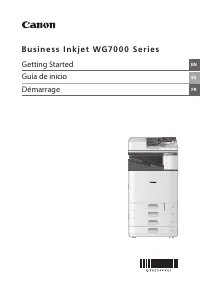 Canon 250
User Manual
Canon 250
User Manual
 Canon 251
User Manual
Canon 251
User Manual
 Canon 6710C002
User Manual
Canon 6710C002
User Manual
 Canon K10605
User Manual
Canon K10605
User Manual
 Canon K10613
User Manual
Canon K10613
User Manual
 Canon K10608
User Manual
Canon K10608
User Manual
 Canon K10609
User Manual
Canon K10609
User Manual
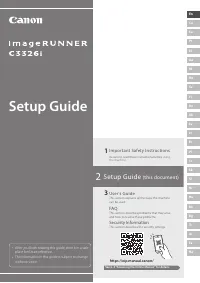 Canon imageRUNNER C3326i
User Manual
Canon imageRUNNER C3326i
User Manual
 Canon imageCLASS MF465dw
User Manual
Canon imageCLASS MF465dw
User Manual
 Canon K10617
User Manual
Canon K10617
User Manual