Page 3 - Thank you for purchasing a Canon product.; ■Symbols
Thank you for purchasing a Canon product. The EOS REBEL 2000/EOS 300 is a very compact autofocus, single-lens reflex camera. It can be used for a wide variety of subjects and situations with fully automatic and user-controlled picture-taking modes. Read this Instructions booklet and familiarize your...
Page 4 - Contents
Contents Handling Precautions........................................................................ 6 Quick Start Guide............................................................................... 8 Nomenciature................................................................................... 1...
Page 5 - Tv
Contents Tv Shutter-Speed Priority AE........................................................ 44 Av Aperture-Priority AE................................................................. 46 Depth-of-field Preview............................................................. 47 M Manual Exposure..........
Page 6 - Handling Precautions; Camera Care
Handling Precautions Camera Care (1) This camera is not waterproof and cannot be used in rain or under water. If the camera gets really wet, promptly consult your nearest Canon Service Center. If there are any water droplets on the camera, wipe off with a dry cloth. If the camera has been exposed to...
Page 7 - Lithium Batteries
Handling Precautions Lithium Batteries (1) The camera operates on two CR2 lithium batteries. Check the battery level in the following cases: • After replacing the batteries. • After not using the camera for an extended period. • The shutter stops working. • The camera is being used in a low-temperat...
Page 8 - Quick Start Guide; Install the batteries.; WAS
Quick Start Guide 1 Install the batteries. Insert two CR2 lithium batteries as shown by the battery orientation diagram on the battery chamber cover. See page 16. 2 Attach a lens. Align the red dots on the lens and camera and turn the lens clockwise until it snaps in place. See page 18. 5 Load the f...
Page 9 - focus mode switch to
Quick Start Guide i On the lens, set the focus mode switch to AF. See page 18. 4 Turn the Command Dial to <0> (Full Auto). See page 24. 7 Take the picture. Press the shutter button completely to take the picture. See page 19. 8 Unloading the film. At the end of the roll, the film rewinds autom...
Page 10 - Nomenclature; • For attaching EOS-dedicated
Nomenclature <ii)> Self-timer button (page 33) ■ - Built-in flash (page 60) AF-assist light (page 26) Function button (pages 27, 53, 54, 56) - < E0 > Focusing p>oint selector-- (page 38) LCD panel (page 12)------------- Red-eye reduction lamp-------- (page 27) Self-timer operation dis...
Page 12 - LCD Panel; oooo; ISOGQ
LCD Panel Self-timer icon — Shutter speed display - ISO speed display Manual focus icon • ISO icon Focusing point indicator o o o o oooo ISOGQ ■■■■I] Battery icon Battery level indicator Film status iconFilm-loaded indicatorFilm rewind-completed indicator Aperture display Red-eye reduction setting d...
Page 13 - Viewfinder Information
Nomenclature Viewfinder Information Focusing — Focusing points r -a 6 i 6 6 ill -a AE lock/FE lock indicator- Flash-ready indicator-------FE lock warning High-speed sync (FP flash) display--------------------------- Shutter speed display — Aperture display--------- Focusing point indicator - — In-fo...
Page 14 - Command Dial; ISO
Nomenclature Command Dial The Command Dial’s settings are divided into four zones. 1. Basic Zone D : Full Auto (page 24) For fully automatic picture-taking. • All you do is point the camera and press the shutter button. Programmed Image Control Zone Fully automatic picture-taking to suit the subject...
Page 15 - Before You Start; Attaching the Strap
This chapter describes the things you need to know and do before you start using your camera. Before You Start * • Eyepiece cover Attaching the Strap Pass the end of the strap through the camera’s strap eyeiet from the bottom. Then pass it through the strap’s ciasps. Puii the strap to make sure it d...
Page 16 - Installing the Batteries and Checking the Battery Level
Installing the Batteries and Checking the Battery Level Installing the Batteries The camera uses two lithium CR2 batteries. 1 Slide the battery chamber cover lever as shown by the arrow and open the battery chamber cover. Insert the batteries with the contacts (+ and -) oriented as shown on the batt...
Page 17 - Checking the Battery Level; Turn the Command Dial to any
Installing the Batteries and Checking the Battery Level Checking the Battery Level Check the battery level after replacing the batteries and before using the camera. J m S m ] 7 V s \ > / 11 -:o:- ■ Battery level icon Turn the Command Dial to any setting except <B>. • The camera will then t...
Page 18 - Mounting and Detaching a Lens; • If the focus mode switch is set to
Mounting a Lens Mounting and Detaching a Lens Remove the rear lens cap and the camera body cap. Align the red dots on the lens and camera and turn the lens as shown by the arrow until it snaps in place. On the lens, set the focus mode switch to AF. • If the focus mode switch is set to MF (or M on ol...
Page 19 - How the Shutter Button Works; Pressing the Shutter Button Halfway or Completely
How the Shutter Button Works The EOS camera’s shutter button can be depressed halfway or all the way. There is a click stop at the halfway point. Pressing the Shutter Button Halfway or Completely The shutter button works as described below. When it is pressed halfway: • Autofocusing is activated, an...
Page 20 - Loading and Unloading Film
Loading and Unloading Film Loading Film After you load the film, the camera first winds the entire roll onto the camera’s take-up spool. Then each time a picture is taken, one frame of film is rewound back into the film cartridge. Turn the Command Dial to any setting except <H>. Slide up the c...
Page 21 - II; Unloading Film; • The film will start rewinding. The; Open the camera back and
Loading and Unloading Film 0 » With DX-coded film, the camera automatically sets the film's ISO speed. • If the film is not DX-coded, set the ISO speed manually. See page 57. II ' Infrared film cannot be used with this camera.'The shutter curtains are manufactured with very high precision. To preven...
Page 22 - Holding the Camera; elbow lightly against your body.
Holding the Camera 41 If you remove the film from the camera in midroll w/ithout rewinding and then load a new roll of film, the new roll’s film leader will only be wound back into the film cartridge. To prevent this, close the camera back and press the shutter button completely before loading a new...
Page 23 - Automatic Shooting
Basic For quick and easy picture-taking, this section describes the Command Dial’s Basic Zone modes: <0>, <^>, <Sfc>, <fi>. <^>, and <S>.These modes set all the camera settings automatically. All you do is point the camera and press the shutter button.Also, these ...
Page 24 - O Full Auto Mode; Aim any of the focusing points on; Press the shutter button halfway
O Full Auto Mode In the <D> mode, all you do is point the camera and press the shutter button. Photograph any type of subject automatically. Any of the seven focusing points can focus the subject for easy picture-taking. Turn the Command Dial to <0>. • THE IMAGE WAS REMOVED DUE TO COPYRI...
Page 26 - fires automatically under low-light or backlit conditions.; Automatic Firing of the Built-in Flash; Single-frame and Continuous Shooting
In the <a>, <■?>>, <A>, and <S> modes, the built-in flash pops up and fires automatically under low-light or backlit conditions. Automatic Firing of the Built-in Flash 41 If the automatic pop-up of the built-in flash is obstructed accidentally, the icon will blink on the L...
Page 27 - Press the Function button so that; • The setting takes effect after any of
□ Full Auto Mode <§> Using Red-eye Reduction When flash is used in a low-light environment, the subject’s eyes may look red in the photograph. “Red eye” happens when the light from the flash reflects off the pupils of the eyes. The camera’s red-eye reduction feature uses a red-eye reduction la...
Page 28 - Portrait Mode; This mode blurs the background to
Portrait Mode This mode blurs the background to make the human subject stand out. • Holding down the shutter button executes continuous shooting. Turn the Command Dial to <^>. • The picture-taking procedure is the same as with the Full Auto mode <D> (page 24). • • Background blur is most...
Page 29 - Landscape Mode; This is for sweeping scenery,; • The picture-taking procedure is the
Landscape Mode THE IMAGE WAS REMOVED DUE TO COPYRIGHT RESTRICTIONS This is for sweeping scenery, night scenes, etc. Turn the Command Dial to <^>. • The picture-taking procedure is the same as with the Full Auto mode <a>(page24). 0 « If the shutter speed display blinks, the shutter speed ...
Page 31 - Sports Mode; This mode is ideal for sports and fast-
Sports Mode THE IMAGE WAS REMOVED DUE TO COPYRIGHT RESTRICTIONS This mode is ideal for sports and fast- moving subjects when you want to freeze the action on film.• Holding down the shutter button executes continuous focusing and shooting. Turn the Command Dial to <i^>. • The picture-taking pr...
Page 32 - S Night Scene Mode
S Night Scene Mode THE IMAGE WAS REMOVED DUE TO COPYRIGHT RESTRICTIONS This mode is for taking pictures of peopie at dusk or at night. The flash illuminates the subject properly while a slow shutter speed exposes the background to attain a natural-looking, balanced exposure. To prevent camera shake,...
Page 34 - Using the Eyepiece Cover
(5) Self-timer 0 *To cancel the self-timer after it starts, press the self-timer button <c5)> again. •When using the self-timer to take a picture of only yourself, first lock the focus (see page 39) on an object at the same distance where you will be in the picture. • With Remote Switch RS-60E...
Page 35 - Imprinting the Date or Time (QD Model only); The QD version of the camera has a; MODE; To change the date/time
Imprinting the Date or Time (QD Model only) THE IMAGE WAS REMOVED DUE TO COPYRIGHT RESTRICTIONS The date or time is imprinted on the lower right comer of the picture as shown above. The QD version of the camera has a quartz date feature which maintains an automatic calendar up to the year 2019. It c...
Page 36 - When the date/time on the quartz date display panel or imprinted
Imprinting the Date or Time (QD Model only) Setting the Date and Time .................. i 2 3 4 To set or change the date and time, follow the procedure below. MODE _______ ’ CM)o o f 11^ 'Г| Г| -1 J SELECT SET ________ 1 MODE vl/ СП)Ф о ^ 'Г 1 Г 1 1 .1 Ti SELECT SET /l\ 1 MODE — CD)0 # N, _ » II 1...
Page 37 - Shooting
The Creative Zone modes enable you to control the camera to obtain the effect you want. Shutter speed-priority, aperture-priority, and other user- controllable modes are provided. The Creative Zone modes (P, Tv, Av, M, and A-DEP) are described here along with other advanced operations. User-Controll...
Page 38 - Focusing Point Seiection; desired focusing point. When the; Automatic
Focusing Point Seiection The focusing point is shown as a little box. The focusing point can be selected automatically or manually. In the Full Auto, Programmed Image Control modes, and <A'DEP> mode, the focusing point is selected automatically. In the <P>, <Tv>, < Av>, and &...
Page 39 - Focusing Subjects not Covered by the Focusing Points i
Focusing Point Selection 3 Press the shutter button halfway. • The camera will return to normal. • Even if the shutter button is not pressed halfway, the focusing point selection mode will terminate after about 6 sec. If the focusing point has been selected manually and the Command Dial is turned to...
Page 40 - When Autofocus Fails (Switching to Manual Focus); Difficult Subjects for Autofocusing; M a n u a l F o c u s i n g; Set the lens focus mode switch to
When Autofocus Fails (Switching to Manual Focus) The camera has a high-precision AF system which can focus almost all subjects. However, it can fail to achieve focus (the in-focus indicator blinks) with the subjects listed below. Difficult Subjects for Autofocusing (a) Low-contrast subjects. Example...
Page 41 - Metering Modes; Evaluative metering
Metering Modes The camera has three metering modes: Evaluative, partial, and centerweighted averaging metering. Evaluative metering is the standard metering mode. Partial metering is set automatically \when AE lock Is used (see page 51), and centenweighted averaging metering is set automatically in ...
Page 42 - Program AE; Turn the Command Dial to
Program AE THE IMAGE WAS REMOVED DUE TO COPYRIGHT RESTRICTIONS Like the <□> mode, this is a general- purpose picture-taking mode for snapshots. The camera automatically sets the shutter speed and aperture to suit the subject’s brightness. 1 Turn the Command Dial to < P > . 42 Press the s...
Page 43 - Compose the shot and press the
P Program AE Compose the shot and press the r shutter button completely to take the picture. The Difference Between P and D The < P > and < 0 > modes set the same shutter speed and aperture settings automatically for picture-taking. However, the available features are different as shown ...
Page 44 - Shutter-Speed Priority AE; Set the desired shutter speed with the <
Tv Shutter-Speed Priority AE In this mode, you set the shutter speed and the camera sets the aperture automatically to suit the brightness of the scene.A fast shutter speed can freeze the motion of a fast-moving subject. Or, a slow shutter speed can blur the subject to give the impression of motion....
Page 45 - Check the viewfinder display.
Tv Shutter-Speed Priority AE Check the viewfinder display. Press the shutter button completely to take the picture. О • If the maximum aperture (the smallest f- number) blinks, the scene is too dark. In such a case, turn the < > to set a slower shutter speed until the aperture display stops bl...
Page 46 - Set the desired aperture with the <; Av; Select the desired aperture with
In this mode, you set the aperture and the camera sets the shutter speed automatically to suit the brightness of the scene.A large aperture (small f-number) can blur the background and make the subject stand out.Or, a small aperture (large f-number) can increase the depth of field to make both the f...
Page 47 - To check the depth of field visually,
Av Aperture-Priority AE/Depth-of-field Preview Check the viewfinder display. Press the shutter button completeiy to take the picture. • If the 30” shutter speed blinks, the scene is too dark. In such a case, turn the < > to set a larger aperture (smaller f-number) until the shutter speed displ...
Page 48 - Manual Exposure; In this mode, you set the shutter; Select the desired shutter speed; shutter speed is dispiayed.
M Manual Exposure THE IMAGE WAS REMOVED DUE TO COPYRIGHT RESTRICTIONS In this mode, you set the shutter speed and the aperture for total exposure control. The exposure level of the shutter speed and aperture you set is indicated on the exposure levei scaie. You can check whether the exposure will be...
Page 49 - ’ Press the shutter button
M Manual Exposure Select the desired aperture by holding down the > button and turning the <iSi>. • Turn the <iSi> until the desired aperture is displayed. 4 5 6 Press the shutter button halfway to focus the subject. Check the viewfinder display. Correct exposure - 2 . 1 . » . 1 . 2 +...
Page 50 - subjects to be in focus.; • The focusing points which achieve
This mode is for obtaining a wide depth of field automatically between a near subject and far subject. It is effective for group photos and landscapes. The camera uses the 7 focusing points to detect the nearest and farthest subjects to be in focus. *<A-DEP> stands for Auto Depth-of-fieid. A'D...
Page 51 - Partial Metering Using AE Lock; Aim the center of the viewfinder; viewfinder and the exposure level; Compose the shot and take the
^ Partial Metering Using AE Lock In high-contrast situations such as a person spotlighted against a dark background, the exposure may turn out too bright or too dark in certain areas of the photograph. To obtain a more accurate exposure in such cases, use AE lock to lock the subject’s exposure level...
Page 52 - Exposure Compensation; Turn the Command Dial to a
Exposure Compensation Changing the exposure level set by the camera is called exposure compensation. Exposure compensation can be used to make the picture darker or brighter intentionally. Exposure compensation can be set up to ±2 stops In half-stop increments. Turn the Command Dial to a Creative Zo...
Page 53 - Press the Function button and; underexposed and overexposed
^ Auto Exposure Bracketing (AEB)l With autoexposure bracketing, the camera automatically changes the exposure level within the set range for three successive frames. The bracketing amount centers on the correct exposure and the bracketed exposures can be varied up to ±2 stops in 1/2-stop increments....
Page 54 - Press the Function button so that the
'Щ л Auto Exposure Bracketing (AEB) - 2 i 1 i » i 1 i 2 * - 2 i 1 i » i 1 i 2 * I - 2 , 1 . » , 1 . 2 * I : Correct exposure : Underexposure ; Overexposure Take the pictures. • The viewfinder and LCD panei wiii dispiay the respective exposure ievel for each bracketed shot. • During AEB shooting whii...
Page 55 - Bulb Exposures
Bulb Exposures A bulb exposure starts when you press the shutter button completely and ends when you release the shutter button. Bulb exposures are useful when long exposures are required for night scenes, fireworks, heavenly bodies, etc. Remote Switch RS-60E3 (sold separately) is convenient since i...
Page 56 - Multiple Exposures; Press the Function button to point
m Multiple Exposures A single frame can be exposed multiple times to obtain a special effect. This is possible in the Creative Zone modes. Press the Function button to point the <►> arrow to the <Si> icon on the LCD panel. • “1" will be displayed on the LCD panel. Turn the <£2i>...
Page 57 - Multiple Exposures/Setting the ISO Film Speed; Setting the ISO Film Speed; • The ISO icon and the current ISO film; ISO film speed appears on the
Multiple Exposures/Setting the ISO Film Speed Before capturing multiple exposures on the same frame of film, exposure compensation must be set. See “Exposure Compensation” on page 52. As a general guide, you should set the exposure compensation amount shown below for the respective number of multipl...
Page 58 - Using the Remote Switch (Soid separately); Wireless remote control can be used in all picture-taking modes.; Connect the Remote Switch RS-
Using the Remote Switch (Soid separately) Wireless remote control can be used in all picture-taking modes. Connect the Remote Switch RS- 60E3’s plug to the camera’s remote control socket. Press the release button to take the picture. 58
Page 59 - • In the Basic Zone modes (except; Using; Using an External EOS-Dedicated Speedlite
• In the Basic Zone modes (except <Sk> and <‘s5v>), the built-in flash will pop up and fire automatically when necessary in low-light or backlit conditions. ' In Creative Zone modes, flash photography is possible at anytime by pressing the <4> button. You can also set the flash ape...
Page 60 - Using the Built-in Flash; In a Basic Zone Mode; T v; Built-in Fiash Range
Using the Built-in Flash In a Basic Zone Mode In a Basic Zone mode (except <Sk> and <*^>), the built-in flash will pop up and fire automatically in low-light or backlit conditions. In a Creative Zone Mode When using a Creative Zone mode, press the < “*> button to use the built-in f...
Page 61 - Flash Sync Speeds and Flash Apertures
Using the Built-in Flash Flash Sync Speeds and Flash Apertures Mode Sync Speed Flash Aperture P The sync speed is set automatically to 1/90 sec. The flash aperture is set automatically according to the TTL program. Tv Any sync speed 1/90 sec. or slower can be set manually." The flash aperture is...
Page 62 - Reference Section; Basic Photography Terms
Reference Section Basic Photography Terms Exposure Exposure occurs when the film is exposed to light. Correct exposure is attained when the film is exposed to a proper amount of light in accordance with the film’s sensitivity to light. The correct exposure is adjusted with the camera's shutter speed...
Page 63 - Depth of field
Reference Section Depth of field This is the range where acceptable focus can be achieved in front of and behind the point of optimum focus. The smaller the aperture (the larger the f-number), the deeper the depth of field. And the larger the aperture (the smaller the f-number), the shallower the de...
Page 64 - Feature Availability Table
Reference Section Feature Availability Table : S e t a u lom a lic a lly . O : U ser sele cta b le . C om m a n d D ia l M o de A F F o cu sin g P o int S e lectio n F ilm A d van ce M e te rin g M o d e B u ilt-in F la sh O n & S h o l A F A l F o cu s A u to M a nu a l S ing le C on tin u ou s...
Page 65 - Exposure Warnings; so
[ Reference Section Exposure Warnings M o de S a m ple W a rn ing (B linkin g ) D escrip tion C ou n te rm e asu re s P ^ \ 1 / ^ - J O " I S - T h e su b je ct is to o d ark. U se flash . ^ \ 1 / ^ _ j n n n _ Cuuu L L ^ ^ / 1 \ ^ T h e su b je ct is to o b rig h t. A ttach a ne u tra l d en si...
Page 66 - Troubleshooting Guide
Reference Section Troubleshooting Guide If you have a problem with the camera, first refer to this Troubleshooting Guide. P ro ble m P ro ba b le C a u se S o lu tio n P a g e 1 . N othin g is d is p la yed o n th e L C D p an e l. T h e b a tte ries are e xh a uste d. R ep la ce th e b atte rie s w...
Page 69 - Specifications
Reference Section Specifications ■Type T yp e ......................................... 3 5m m A F /A E sin g le-le ns re flex cam e ra w ith fo ca l-p lan e sh u tte r, bu ilt-in w in d e r, b u ilt-in fla sh, a n d au to da te ba ck. P ictu re siz e ............................. 2 4 m m x 3 6 m m ...
Page 72 - Index; Ik
Index A cce sso rie s.............................................................. 6 7A E B ........................................................................... 5 3A F M od e s a n d F ilm A dva n ce M o de s .................... 6 4A F -A ssisI La m p ..........................................
Page 74 - MEMO
Page 76 - Canon; Company information that is no longer current has been removed.
Canon Company information that is no longer current has been removed. If you have any questions regarding this model and are calling from the USA, please call 1 800 OK CANON. CT1 - 1121 - 000 ©CANON INC. 1999 PRINTED IN TAIWAN


 Canon 6130280
User Manual
Canon 6130280
User Manual
 Canon imageCLASS MF284dw
User Manual
Canon imageCLASS MF284dw
User Manual
 Canon imageCLASS LBP172dw
User Manual
Canon imageCLASS LBP172dw
User Manual
 Canon 248
User Manual
Canon 248
User Manual
 Canon 323
User Manual
Canon 323
User Manual
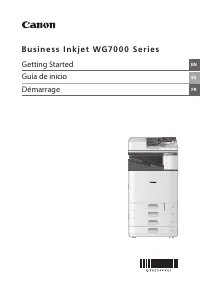 Canon 250
User Manual
Canon 250
User Manual
 Canon 251
User Manual
Canon 251
User Manual
 Canon 6710C002
User Manual
Canon 6710C002
User Manual
 Canon K10605
User Manual
Canon K10605
User Manual
 Canon K10613
User Manual
Canon K10613
User Manual
 Canon K10608
User Manual
Canon K10608
User Manual
 Canon K10609
User Manual
Canon K10609
User Manual
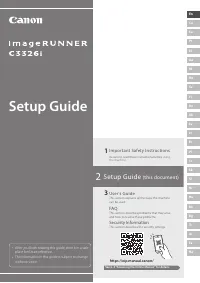 Canon imageRUNNER C3326i
User Manual
Canon imageRUNNER C3326i
User Manual
 Canon imageCLASS MF465dw
User Manual
Canon imageCLASS MF465dw
User Manual
 Canon K10617
User Manual
Canon K10617
User Manual