Page 2 - Flowchart and Reference Guides; Reference; OFF O
Flowchart and Reference Guides This Guide Shooting with the Camera Canon Digital Camera Software Starter Guide Disk Installing the Software This Guide This Guide Connecting the Camera to a Computer Direct Print User Guide Printer User Guide Using the Printer and Printing Downloading Images to a Comp...
Page 4 - Read This First; Disclaimer
2 Camera Body Temperature If your camera is used for prolonged periods, the camera body may become warm. Please be aware of this and take care when operating the camera for an extended period. About the LCD Monitor The LCD monitor is produced with extremely high-precision manufacturing techniques. M...
Page 5 - Trademark Acknowledgments
3 Trademark Acknowledgments • Canon and PowerShot are trademarks of Canon, Inc. • CompactFlash is a trademark of SanDisk Corporation. • iBook and iMac are trademarks of Apple Computer, Inc. • Macintosh, PowerBook, Power Macintosh and QuickTime are trademarks of Apple Computer, Inc, registered in the...
Page 6 - Table of Contents; Functions and operations tables. These pages
4 Table of Contents Functions and operations tables. These pages are shaded on the right edges to make them easy to find. Read This First 7 Please Read ........................................................... 7Safety Precautions ................................................. 8Preventing Malfun...
Page 8 - Symbols Used; to; Using the Flash
6 Table of Contents Symbols Used This mark denotes issues that may affect the camera's operation. This mark denotes additional topics that complement the basic operating procedures. Icons under title bars show the operations mode. As in the example below, the mode dial should be set to , , , , , , ,...
Page 9 - Please Read; Test Shots; cards, that results in the failure of an; Warning Against Copyright Infringement
7 Read This First Please Read Test Shots Before you try to photograph important subjects, we highly recommend that you shoot several trial images to confirm that the camera is operating and being operated correctly. Please note that Canon, its subsidiaries and affiliates, and its distributors are no...
Page 10 - Safety Precautions
8 Read This First Safety Precautions z Before using the camera, please ensure that you have read and understood the safety precautions described below. Always ensure that the camera is operated correctly. z The safety precautions noted on the following pages are intended to instruct you in the safe ...
Page 11 - WARNINGS; Do not trigger the flash in close proximity to human or animal eyes.
9 Read This First WARNINGS z Do not aim the camera directly into the sun or at other intense light sources which could damage your eyesight. z Do not trigger the flash in close proximity to human or animal eyes. Exposure to the intense light produced by the flash may damage eyesight. In particular, ...
Page 12 - clean or maintain the equipment.
10 Read This First z Stop operating the equipment if it is dropped or the casing is damaged. Failure to do so may result in fire or electrical shock. Immediately turn the camera’s power off, remove the camera batteries or unplug the power cord from the power outlet. Please consult your camera distri...
Page 14 - CAUTIONS; Do not store the equipment in humid or dusty areas.
12 Read This First CAUTIONS z Avoid using, placing or storing the equipment in places subject to strong sunlight or high temperatures, such as the dashboard or trunk (boot) of a car. Exposure to intense sunlight and heat may cause the batteries to leak, overheat or explode, resulting in fire, burns ...
Page 15 - Preventing Malfunctions; Avoid Strong Magnetic Fields
13 Read This First Preventing Malfunctions Avoid Strong Magnetic Fields Never place the camera in close proximity to electric motors or other equipment generating strong electromagnetic fields. Exposure to strong magnetic fields may cause malfunctions or corrupt image data. Avoid Condensation Relate...
Page 16 - Components Guide
14 To connect the camera to a computer or printer, use one of the following cables. Computer : Interface Cable IFC-400PCU (supplied with the camera) Direct Print Compatible Printers (Sold Separately) • CP Printers: Interface Cable IFC-400PCU (supplied with the camera) or the Direct Interface Cable D...
Page 18 - Shooting Mode Dial; • Image Zone; Indicators; • Indicator Next to the Viewfinder
16 Components Guide Shooting Mode Dial Use the shooting mode dial to select a Shooting mode. : Auto (p. 33) The camera automatically selects settings. • Image Zone The camera automatically selects settings according to the image composition type. : Portrait (p. 38) : Landscape (p. 38) : Night Scene ...
Page 19 - Preparing the Camera; Installing the Batteries; also use separately sold nickel metal hydride
17 Preparing the Camera Installing the Batteries The camera uses four AA-size alkaline batteries supplied with the camera. You may also use separately sold nickel metal hydride (NiMH) batteries. 1 Be sure that the camera power is off. 2 Slide the battery cover lock in the direction of the arrow, and...
Page 20 - Battery; Proper Battery Handling; Using
18 Preparing the Camera z For important information, see Battery Performance (p. 140). z For information about the Battery and Charger Kit and AA-size rechargeable NiMH batteries, see the System Map (separate from this guide). Proper Battery Handling z Use AA-size alkaline or Canon AA-size NiMH batt...
Page 21 - Battery Status Indications
19 Preparing the Camera z If you do not plan to use the camera for a long time, remove the batteries from the camera and store them in a safe place. Batteries may leak and damage the camera if left installed during prolonged periods of non-use. However, the date, time and other camera settings may r...
Page 22 - Installing a CF Card; CF
20 Preparing the Camera Installing a CF Card 1 Be sure that the camera is turned off. 2 Slide the CF card slot cover in the direction of the arrow, and open it. 3 Insert the CF card with the label facing out. z Insert the CF card all the way into the slot, so that the CF card eject button pops all t...
Page 23 - About CF Cards; Do not attempt to disassemble or alter a CF card.; Formatting a CF Card; Press the MENU
21 Preparing the Camera About CF Cards z CF cards are high-precision electronic devices. Do not bend them, apply force to them, or subject them to shocks or vibration. z Do not attempt to disassemble or alter a CF card. z Moving a CF card rapidly between temperature extremes will cause condensation ...
Page 24 - SET; Setting the Date/Time; battery has run down. Start from Step 4 to set
22 Preparing the Camera 4 Select [OK] using or and press the SET button. z To cancel formatting instead, select [Cancel] and press the SET button. z The capacity of the CF card displayed after formatting will be less than the rated capacity of the CF card. This is not a malfunction of the CF card or...
Page 25 - Set the date and; Direct Printer User Guide; Charging the date/time battery
23 Preparing the Camera 4 Set the date and time. z Press or to highlight another field. z Press or to change the value of the highlighted field. z The date can be set up to the year 2030. 5 Press the SET button. 6 Press the MENU button. z The date, time and other camera settings may reset to the def...
Page 26 - Setting the Language
24 Preparing the Camera Setting the Language Use this feature to select the language for the LCD monitor display. 1 Turn on the camera (p. 25). 2 Press the MENU button and select the [ (Set up)] menu using or . 3 Select (Language) using or and press the SET button. 4 Select a language using , , or a...
Page 27 - Basic Functions; Turning the Power On/Off; Press the ON/OFF button until the; Shooting Mode; Power Saving Function; Auto Power Down
25 Basic Functions Turning the Power On/Off 1 Press the ON/OFF button until the power indicator lights green (p. 16). Shooting Mode z Current shooting settings will appear in the LCD monitor for about 6 seconds. If you turn the mode switch to , the lens will retract after approximately 1 minute. Pla...
Page 28 - Switching between Shooting and
26 Basic Functions When the Auto Power Down Function Activates Press the ON button again. [Off]: The power saving function does not activate. z Display Off The LCD monitor automatically shuts off approximately 1 minute* after the last time a camera control is accessed.* This time can be changed (p. ...
Page 29 - appears on the
27 Basic Functions When a printer (sold separately) is properly connected, , , or appears on the LCD monitor. 149_CEL_CUG.book Page 27 Friday, April 30, 2004 3:13 PM
Page 30 - Using the LCD Monitor; play back images. Pressing the; LCD Monitor Display
28 Basic Functions Using the LCD Monitor The LCD monitor can be used to compose images while shooting, adjust settings menus and play back images. Pressing the DISP. button cycles the LCD monitor to the next mode each time the button is pressed. Shooting Mode The AF frame changes according to its On...
Page 32 - Playback Mode; * Detailed Display is not available in index; Standard Display
30 Basic Functions Playback Mode * Detailed Display is not available in index playback (9 images). Compression p. 40 Resolution (Still image) p. 40 Sound memo (WAVE file) p. 92 Movie p. 55 Protection Status p. 94 Image Number and Total (Display Image/Total) DISP. Button DISP. Button DISP. Button Sta...
Page 34 - About the; About the Histogram; Dark image; Sample Histograms
32 Basic Functions z While a recorded image is displayed on the LCD monitor, you can check the exposure with the graph (see About the Histogram (below)) that shows the distribution of the brightness data. If the exposure requires adjustment, set the exposure compensation and re-shoot. (Press the DIS...
Page 35 - Auto Mode; See; Functions Available in Each Shooting; Shooting – The Basics; Digital
33 Auto Mode In this mode, all you have to do is press the shutter button and let the camera do everything else. 1 Check that the camera is in Shooting mode (p. 26). 2 Turn the Shooting mode dial to . 3 Aim the camera at the subject you wish to shoot. See Functions Available in Each Shooting Mode (p...
Page 36 - Pressing Halfway; • The indicator next to the viewfinder will blink; Press the shutter; Pressing Fully; • You will hear the shutter sound when the
34 Shooting – The Basics 5 Press the shutter button halfway. z The shutter button has a two-stage action. Pressing Halfway Pressing halfway automatically sets the exposure and focus.• Two beeps will sound when the camera has finished metering, and the indicator next to the viewfinder will light gree...
Page 37 - When the shutter sound is set to [; Shooting with the Viewfinder; Compose the image so that the; Viewfinder; About the Autofocus Function
35 Shooting – The Basics z When the shutter sound is set to [ , , (On)] (p. 72) and [Mute] is set to On, no sound will be heard. z There is no shutter sound in movie mode. z Shots cannot be taken while the flash is charging. Shooting with the Viewfinder You can save the power by turning the LCD moni...
Page 38 - • The red-eye reduction lamp may emit; Reviewing an Image Right after; the image will keep on displaying regardless; Keeping the shutter button fully pressed; Erasing Images Individually; button and
36 Shooting – The Basics AF-assist Beam z The AF-assist beam will sometimes emit when the shutter button is pressed halfway to assist focusing in certain conditions, i.e. dark conditions. z The AF-assist beam can be turned off (p. 67).For example, if animals are your subject, turn off the beam when ...
Page 39 - Changing the Image Display Duration
37 Shooting – The Basics Changing the Image Display Duration The length of time images are displayed after a photo has been taken can be changed from 2 seconds to 10 seconds or turned off. 1 Press the MENU button. z The [ (Rec.)] menu appears. 2 Select (Review) using or . 3 Select a duration using o...
Page 41 - Turn the mode dial
39 Shooting – The Basics 1 Turn the mode dial and set the icon of the function you wish to use to . z Shooting procedures are the same as for the mode (p. 33). and Shooting Modes Always use a tripod to prevent camera shake. z See page 159 for settings that can be changed in this mode. z Tips for eac...
Page 42 - You can change the resolution and compression; Movies can be shot with the following resolutions.; Compression; Superfine; Fine; Resolution
40 Shooting – The Basics Changing the Resolution and Compression You can change the resolution and compression (excluding movies) settings to suit the purpose of the image you are about to shoot. Resolution Purpose L (Large) PowerShot A85 2272 x 1704 pixels PowerShot A75 2048 x 1536 pixels High Low ...
Page 43 - * The current setting is
41 Shooting – The Basics 1 Press the FUNC. button. 2 Select L * (2272 x 1704 or 2048 x 1536) using or . * The current setting is displayed. 3 Select the resolution or compression you wish to set using or . Example: PowerShot A85 Number of recordable images (Only displayed when the resolution, compre...
Page 44 - Use the flash according to the guidelines; The flash always fires.; Press the button
42 Shooting – The Basics Using the Flash Use the flash according to the guidelines below. Auto with red-eye reduction The flash fires automatically as required by the lighting level, and the red-eye reduction lamp fires each time the main flash fires. Auto The flash fires automatically as required b...
Page 45 - Setting the Red-eye Reduction
43 Shooting – The Basics z Shooting procedures are the same as for the mode (p. 33). When shooting with a high ISO sensitivity and using the flash, there is more of a chance of overexposure the closer you are to the subject. z When shooting in any mode other than mode, the flash fires with automatic...
Page 46 - Macro Mode; The image will be shot in macro mode when; Press the DISP. button to turn the
44 Shooting – The Basics z The red-eye reduction function cannot be set when the Special Scene mode (p. 51) is set to (Fireworks). z Red-Eye Reduction When shooting with the red-eye reduction function, the subjects must look right at the red-eye reduction lamp for this mode to be effective. Try aski...
Page 47 - button and select
45 Shooting – The Basics z The indicator beside the viewfinder will light yellow when the shutter button is pressed halfway. z Shooting procedures are the same as for the Mode (p. 33). z Always use the LCD monitor to compose images in macro mode. Shooting with the viewfinder is possible, though, par...
Page 48 - When; Digital Zoom; press the MENU button.
46 Shooting – The Basics z When is selected, the self-timer lamp blinks fast from the beginning. The shutter activates in two seconds. z Shooting procedures are the same as for the mode (p. 33). You can change the self-timer sound by changing the setting in [Self-timer Sound] in the [ (My Camera)] m...
Page 49 - Press the zoom lever toward; again to further zoom; Continuous Shooting
47 Shooting – The Basics 4 Press the zoom lever toward . z The lens will zoom to the maximum optical telephoto setting and stop. Release the lever and press it toward again to further zoom the image digitally. z Press the lever toward to zoom back out. 5 Shoot the image. z Shooting procedures are th...
Page 50 - Select using or and press; Shooting Panoramic Images; Use this mode when taking shots that you
48 Shooting – The Basics 3 Select using or and press the FUNC. button. 4 Press the shutter button halfway to lock the focus. 5 Press the shutter button all the way to shoot. z Shooting will stop when the shutter button is released. z The continuous shooting speed is approx. 2.2 frames per second (La...
Page 51 - Framing a Subject; The LCD monitor will turn on.
49 Shooting – The Basics Framing a Subject The PhotoStitch program detects the overlapping portions of adjoining images and merges them. When shooting, try to include a distinctive item (landmark) in the overlapping portions. z Compose each frame so that it overlaps 30 to 50 % of the adjoining image...
Page 53 - Turn the mode dial to; The current Scene mode screen is displayed.; Select the scene you wish to; Shooting procedures are the same as for the; Special Scene Mode; By simply selecting one of the following 6
51 Shooting – The Basics 1 Turn the mode dial to (Special Scene mode). z The current Scene mode screen is displayed. 2 Select the scene you wish to shoot using or and shoot the image. z The name of the Scene mode is displayed for six seconds each time you change the mode. z Shooting procedures are t...
Page 55 - Postcard Print Mode; You can shoot images with settings; using; Functions
53 Shooting – The Basics Postcard Print Mode You can shoot images with settings appropriate for postcard size printing. * When printing standard image data to postcard size, sometimes the top, bottom and sides may not get printed. By shooting images in the Postcard Print mode, you can check the prin...
Page 56 - Embedding the Date in the Image; Check that; Press the MENU button.
54 Shooting – The Basics Embedding the Date in the Image Data You can embed the date on image data when is selected. The date will be printed on your images even if it has not been set at the computer or printer. z Ensure that the camera’s date/time is set beforehand (p. 22). z You cannot embed the ...
Page 57 - Movie Mode; Use this mode to shoot movie clips. The; Turn the Shooting mode dial to .
55 Shooting – The Basics Movie Mode Use this mode to shoot movie clips. The resolution can be set to either [ (640 × 480)], [ (320 × 240)] or [ (160 × 120)] (p. 40) 1 Turn the Shooting mode dial to . z The LCD monitor turns on and displays the maximum recording time (in seconds). 2 Press the shutter...
Page 58 - or a computer
56 Shooting – The Basics z The recording time may not display properly during shooting or filming may stop unexpectedly with the following types of CF cards.- Slow recording cards- Cards formatted on a different camera or a computer - Cards which have had images recorded and erased repeatedly Althou...
Page 59 - Playback – The Basics; Displaying Images Individually; You can view the recorded images on the; Slide the mode; Press the; DISP; . button to show the data
57 Playback – The Basics Displaying Images Individually (Single Image Playback) You can view the recorded images on the LCD monitor. 1 Slide the mode switch to . z The last recorded image appears (single image playback). 2 Move between images using or . z Use to move to the previous image and to mov...
Page 60 - Magnifying Images; Canceling the Magnified Display; Viewing Images in Sets of Nine; Slide the mode switch to
58 Playback – The Basics Magnifying Images Images can be magnified up to approximately 10 times in single image playback. 1 Slide the mode switch to . 2 Press the zoom lever toward . z You can move around the magnified image using , , or . z Hold the SET button down and press the zoom lever toward t...
Page 61 - Jumping Between Images
59 Playback – The Basics 3 Change the image selection using , , or . 4 Press the zoom lever toward . z Index playback cancels and the display reverts to single image playback. Press the DISP. button to show the information for the displayed image (p. 30). The button operation in this row displays th...
Page 62 - Viewing/Editing Movies; Viewing Movies; Pausing and Resuming Play
60 Playback – The Basics Viewing/Editing Movies Viewing Movies You can playback the images shot in mode. 1 Slide the mode switch to . z Movies cannot be viewed in index playback. 2 Select a movie using or and press the SET button. z A movie displays with the icon on it. z The movie playback panel ap...
Page 63 - Editing Movies; button while it is playing.
61 Playback – The Basics You may experience frame dropping and audio breakup when playing back a movie on a computer with insufficient system resources. z The volume at which movies play back can also be adjusted in the Set up menu (p. 69). z If [Mute] (p. 68) is set to [On] in the Set up menu, the ...
Page 65 - Erasing; Erasing All Images; A confirmation screen appears.
63 Erasing Please note that erased images cannot be recovered. Exercise caution before erasing a file. Erasing Images Individually 1 Slide the mode switch to . 2 Select the image you wish to erase using or and press the button. z A confirmation screen appears. 3 Select [Erase] using or and press the...
Page 66 - Selecting Menus and Settings; Selecting Settings with the FUNC. Button (Shooting Mode Only); Shooting – Advanced Functions; FUNC
64 Selecting Menus and Settings Selecting Settings with the FUNC. Button (Shooting Mode Only) 1 Slide the mode switch to . 2 Press the FUNC. button. 3 Select a FUNC. menu option using or and select setting contents using or . 4 Press the FUNC. button. 5 Shoot the image. 2. FUNC. Shooting – Advanced ...
Page 67 - Selecting Settings with the MENU Button; Play Menu
65 Shooting – Advanced Functions Selecting Settings with the MENU Button Rec. Menu z For items with [...] next to them, push the SET button and carry out the settings from the next displayed menu. Once the settings are complete, press the SET button again and confirm these settings. z In the Shootin...
Page 68 - and
66 Shooting – Advanced Functions z Some menu items may not be available for selection according to the Shooting mode (p. 159) . z You can apply a desired image and sound to and in the My Camera menu. For details, see Registering the My Camera Settings (p. 116) or the Canon Digital Camera Software St...
Page 69 - Menu Settings and Default Settings; Sets whether or not the red-eye reduction lamp fires.
67 Shooting – Advanced Functions Menu Settings and Default Settings Rec. Menu Menu Item Setting Content Reference Page AiAF Sets the AiAF to on (the camera automatically selects the AF frame when taking a picture) or off (AF frame is set to the center frame). • On*/Off 78 Red-eye Sets whether or not...
Page 70 - Protects images from accidental erasure.
68 Shooting – Advanced Functions Play Menu Set up Menu Item Setting Content Reference Page Protect Protects images from accidental erasure. 94 Rotate Rotates images 90 or 270 degrees clockwise in the display. 91 Sound Memo Adds sound memos to images. 92 Erase All Erases all images from a CF card (ex...
Page 71 - Adjusts the Start-up Sound volume when the camera powers up.
69 Shooting – Advanced Functions Volume Adjusts the volume of the start-up sound, operation sound, self-timer sound, shutter sound, or playback sound. The volume cannot be adjusted if [Mute] is set to [On].• (Off) • (3) • (1) • (4) • (2)* • (5) - Start-up Volume Adjusts the Start-up Sound volume whe...
Page 72 - Sets how file numbers are assigned to images.
70 Shooting – Advanced Functions Power Saving The Auto Power Down and Display Off settings can be set by pressing the SET button. Auto Power Down Sets whether or not the camera automatically powers down after a specified period of time elapses without camera operation. • On* /Off 25 Display Off Spec...
Page 74 - Customizing the Camera (My Camera Settings); Sets Start-up image when you turn on the camera.
72 Shooting – Advanced Functions Customizing the Camera (My Camera Settings) You can select the theme, start-up image and sound, shutter sound, operation sound and self-timer sound used on this camera. These are called My Camera settings. You can also customize the and options for each item with ima...
Page 75 - Resetting the Settings to Default; Press the MENU button for longer
73 Shooting – Advanced Functions Resetting the Settings to Default You can reset the menu and button operation settings to default. 1 Turn on the camera. z Can be performed from Shooting or Playback mode. 2 Press the MENU button for longer than 5 seconds. z The message “Reset settings to default?” a...
Page 76 - How to Use the Mode Dial; Check that the camera is in; Functions Available in Each Shooting Mode
74 Shooting – Advanced Functions Using the Mode Dial (Creative Zone) You can freely select camera settings such as the shutter speed and aperture value to suit your shooting purposes.After settings are made, shooting procedures are the same as for the mode (p. 33). How to Use the Mode Dial 1 Check t...
Page 77 - Program AE; Differences between the and; Setting the Shutter Speed
75 Shooting – Advanced Functions Program AE Use the program AE mode to have the camera automatically set the shutter speed and aperture value to match the brightness of the scene. z The shutter speed and aperture value will show in red on the LCD monitor when the correct exposure cannot be obtained....
Page 78 - appears; Shutter Speed Display; Setting the Aperture
76 Shooting – Advanced Functions z Please note that camera shake becomes a factor at low shutter speeds. If the camera shake warning appears in the center of the LCD monitor, secure the camera to a tripod before shooting. z The aperture value and shutter speed change according to the zoom state as f...
Page 79 - Aperture Value Display; Manually Setting the Shutter; * The standard exposure is calculated by the
77 Shooting – Advanced Functions z If the shutter speed shows in red on the LCD monitor, the image is underexposed (insufficient light) or overexposed (too much light). Adjust the aperture value using or until the shutter speed display turns white. z Some aperture values may not be available with ce...
Page 80 - Switching between Autofocus Modes; appear when the LCD monitor is turned on; On
78 Shooting – Advanced Functions z See page 159 for settings that can be changed in this mode. z If you wish to change the exposure, select the shutter speed or the aperture with the SET button and change the value using or . z The LCD monitor’s brightness matches the selected shutter speed and aper...
Page 81 - MENU; Switching between Light
79 Shooting – Advanced Functions 2 Select [On] or [Off] using or . 3 Press the MENU button. z You can immediately shoot the image using the selected AF frame by pressing the shutter button instead of pressing the MENU button. The autofocus locks to center when using the digital zoom. Switching betwe...
Page 82 - Adjusting the Exposure; backlit or shot against a bright background.
80 Shooting – Advanced Functions 1 Select * (Evaluative) from the FUNC. menu. z See Selecting Menus and Settings (p. 65). * The current setting is displayed. 2 Select a light metering mode using or . 3 Press the FUNC. button. Adjusting the Exposure Adjust the exposure compensation setting to avoid m...
Page 83 - colors more accurately.; Auto
81 Shooting – Advanced Functions z You can shoot the image right after selecting settings by pressing the shutter button. The menu displays again after the shot, allowing you to change the settings easily. 3 Press the FUNC. button. z To cancel the exposure compensation, return the setting to 0 using...
Page 84 - Select the white; Fluorescent; Setting a Custom White Balance
82 Shooting – Advanced Functions 1 Select * (Auto) in the FUNC. menu. z See Selecting Menus and Settings (p. 64). * The current setting is displayed. 2 Select the white balance you wish to set using or . z See on the right regarding the custom setting. z When the LCD monitor is on, you can check the...
Page 85 - Aim the camera at
83 Shooting – Advanced Functions 1 Select * (Auto) from the FUNC. menu. z See Selecting Menus and Settings (p. 64). * The current setting is displayed. 2 Select (Custom) using or . 3 Aim the camera at a piece of white paper or cloth or gray card, and press the SET button. z Aim the camera so that th...
Page 86 - • Flash; Changing the ISO Speed; off for use in dark conditions, or when a fast; Select an ISO
84 Shooting – Advanced Functions • Flash Setting the flash to on or off is recommended. If the flash fires when reading the white balance data with the flash set to Auto with red-eye reduction or Auto, make sure that you also use the flash when you shoot. • ISO Speed z The custom white balance setti...
Page 87 - Changing the Photo Effect; By setting a photo effect before you shoot,; Effect Off
85 Shooting – Advanced Functions z Higher ISO speeds increase the image noise. To take clean images, use as low an ISO speed as possible. z The AUTO setting selects the optimal speed. It will also automatically raise the speed when the light from the flash is insufficient to illuminate the subject m...
Page 88 - Select the photo; Adjusting the Flash Output; In mode, the flash output can be controlled; Select; Selecting Menus; Adjust the flash output using or .
86 Shooting – Advanced Functions 1 Select * (Effect OFF) in the FUNC. menu. z See Selecting Menus and Settings (p. 64). * The current setting is displayed. 2 Select the photo effect using or . z If the LCD monitor is on, you can check the photo effect by viewing the image on the LCD monitor. z A sho...
Page 89 - Shooting Problem Subjects for; Shooting with Focus Lock
87 Shooting – Advanced Functions Shooting Problem Subjects for the Autofocus The following types of subjects may not be suited to autofocus photography. • Subjects with extremely low contrast to the surroundings • Subjects mixing close and far objects • Subjects with extremely bright objects at the ...
Page 90 - Shooting with AF Lock; MF
88 Shooting – Advanced Functions Shooting with AF Lock 1 Press the DISP. button to turn on the LCD monitor. 2 Press the shutter button halfway to lock the focus. Keep it pressed and press the MF button. z The icon appears on the LCD monitor. z The focus setting will lock even if the shutter button a...
Page 91 - Shooting in Manual Focus Mode; Press the DISP. button to turn on; Focus using or and shoot; Setting the Auto Rotate Function; This camera is equipped with an Intelligent
89 Shooting – Advanced Functions Shooting in Manual Focus Mode The focus can be manually set. 1 Press the DISP. button to turn on the LCD monitor. 2 Press the MF button until appears. z The indicator appears. z The indicator shows approximate figures. Use them as a shooting guideline only. z In the ...
Page 93 - Playback – Advanced Features; Rotating Images in the Display; Press or to select the image
91 Playback – Advanced Features Rotating Images in the Display You can rotate an image by 90° or 270° clockwise in the LCD monitor. 1 In the [ (Play)] menu, select (Rotate). z See Selecting Menus and Settings (p. 64). 2 Press or to select the image to be rotated and press the SET button. z Press the...
Page 94 - Attaching Sound Memos to Image; playback) you can attach sound memos (up
92 Playback – Advanced Features Attaching Sound Memos to Image In Playback mode (including single image playback, index playback and magnified playback) you can attach sound memos (up to 60 seconds) to an image. The sound data are saved in WAVE format. 1 Select (Sound Memo) from the [ (Play)] menu. ...
Page 95 - Auto Play; LCD monitor displays each image for; Pausing and Resuming Auto Play
93 Playback – Advanced Features z You cannot attach sound memos to movies. z You cannot record or play back sound memos for images that already have an incompatible sound file attached. If you attempt to record or play such images the “Incompatible WAVE format” message will display. z Sound memos fo...
Page 96 - Protecting Images; Select an image
94 Playback – Advanced Features z The display interval may vary for some images. z Movie images play for the length of time that they were recorded. z The power saving function is disabled during Auto Play (p. 93). Protecting Images Use the protect feature to protect important images from accidental...
Page 98 - Various Functions; About Printing; PictBridge
96 Various Functions About Printing Images shot with this camera can be printed using one of the following methods. - Connecting the camera to a direct print compatible printer* 1 with a single cable and pressing the button on the camera. - Selecting images and specifying the number of print copies ...
Page 99 - DPOF Print Settings; DPOF Transfer Settings
97 Various Functions DPOF Print Settings z Select the image you want to print (p. 98) z Select how many copies you want (p. 98) z Select the print style (p. 100)• Standard/Index/Both• Date On/Off• File Numbers On/Off For printing instructions, see the Direct Print User Guide . DPOF Transfer Settings...
Page 100 - copies in advance using the camera. This is; using or and; Single Images
98 Various Functions DPOF Print Settings You can select images on a CF card for printing and specify the number of print copies in advance using the camera. This is extremely convenient for sending the images to a photo developing service that supports DPOF or for printing on a direct print function...
Page 101 - All the Images on a CF Card
99 Various Functions z When the print type (p. 100) is set to [Index], select an image using or and mark or remove marks from images using or . A check mark appears on the marked image. z You can press the zoom lever and use the same procedures to select images in index playback (three images). All ...
Page 102 - Setting the Print Style; Standard
100 Various Functions settings when printing images that have had the date embedded with the [Date Stamp] function. This may cause the date to be printed twice. Setting the Print Style You can set up the print style as follows. 1 In the [ (Play)] menu, select (Print Order) and press the SET button. ...
Page 103 - Select a setting using or .; Print Type; Resetting the Print Settings
101 Various Functions 3 Select (Print Type), (Date) or (File No.) using or . 4 Select a setting using or . Print Type Select [Standard], [Index] or [Both]. Date Select [On] or [Off]. File No. Select [On] or [Off]. 5 Press the MENU button. z The set up menu will close and the Print Order menu will re...
Page 104 - Use or to; button to; Image Transfer Settings; You can use the camera to specify settings; The
102 Various Functions 1 In the [ (Play)] menu, select (Print Order) and press the SET button. z See Selecting Menus and Settings (p. 65). 2 Use or to select [Reset] and press the SET button. 3 Use or to select [OK] and press the SET button. z Select [Cancel] and press the SET button to cancel the re...
Page 105 - Selecting Images for Transferring; For setting images one by one
103 Various Functions Selecting Images for Transferring 1 In the [ (Play)] menu, select (Transfer Order) and press the SET button. z See Selecting Menus and Settings (p. 65). 2 Use or to select [Order] and press the SET button. z You can remove all the transfer marks at once by selecting [Reset]. 3 ...
Page 106 - Downloading Images to a Computer; The following methods can be used to; Computer System Requirements; Windows
104 Various Functions Downloading Images to a Computer The following methods can be used to download images recorded by the camera to a computer. Some methods are not applicable to all operating systems. z Downloading via a Camera to Computer Connection z With this method, you download images using ...
Page 107 - Macintosh; Canon Utilities
105 Various Functions Computer Model The above OS should be pre-installed on computers with built-in USB ports. CPU Windows 98/Windows Me/Windows 2000: Pentium 150 MHz or higher processor Windows XP: Pentium 300 MHz or higher processor For all of the above OS: Pentium 500 MHz or higher processor is ...
Page 108 - Troubleshooting
106 Various Functions IMPORTANTYou must install the software and driver bundled on the supplied Canon Digital Camera Solution Disk onto your computer before connecting the camera to a computer. The camera will not operate correctly if you connect it to your computer before installing the driver and ...
Page 109 - Set the camera's mode switch to; Proceed to steps 5 and 6 below.; Refer to the; Terminal; DIGITAL; the events dialog that appears on
107 Various Functions 3 Set the camera's mode switch to . 4 Press the ON/OFF button until the power lamp lights green. z Windows J Proceed to steps 5 and 6 below. z Macintosh J Refer to the Canon Digital Camera Software Starter Guide Disk and download images. DIGITAL Terminal 1.Open the terminal cov...
Page 110 - The Download Image window will display.
108 Various Functions 6 Click [Set] in the [CameraWindow - Set Auto-Launch] window (first time only). z The Download Image window will display. z Using the software and computer to download images: J See the Canon Digital Camera Software Starter Guide Disk . z Using the Camera to Download Images (Di...
Page 111 - Downloading Images by Direct; All Images; Confirm that the; button if the Direct Transfer; Wallpaper
109 Various Functions Downloading Images by Direct Transfer Use this method to download images using camera operations. Install the supplied software and adjust the computer settings before using this method for the first time (p. 106). All Images Transfers and saves all images to the computer. New ...
Page 112 - Images
110 Various Functions All Images/New Images/DPOF Trans. Images 1 Use or to select , or and press the button. z To cancel the transfer, press the SET button. z The images will download and the Direct Transfer menu will reappear. Select & Transfer/Wallpaper 1 Use or to select or and press the butt...
Page 113 - Connecting the Camera to the; limitations to downloading images with this; Downloading Directly from a CF card
111 Various Functions Connecting the Camera to the Computer to Download Images without Installing the Software If you are using Windows XP or Mac OS X (v10.1/v10.2/v10.3), you can use the software distributed with these operating systems to download images (JPEG format only) without installing the s...
Page 114 - Double-click the icon of the drive; Viewing Images on a TV Set; Turn off the television also.; Attach the AV Cable to the
112 Various Functions 2 Double-click the icon of the drive with the CF card. z Depending on the operating system, a window opens automatically. 3 Copy images from the card into a folder of your choice on the hard disk. z The images are stored in the [xxx CANON] folders located in the [DCIM] folder (...
Page 115 - Plug the other ends of the AV; Yellow Plug to the Video In Jack
113 Various Functions 3 Plug the other ends of the AV cable to the video in and audio in jacks on the TV. 4 Turn on the TV and switch it to Video mode. 5 Turn on the camera (p. 25). z The image will appear on the TV. Shoot or playback images as usual. z If the images are not appearing on the TV when...
Page 116 - Resetting the File Number; Select the set up method for the file number.
114 Various Functions Resetting the File Number Select the set up method for the file number. 1 In the [ (Set up)] menu, select (File No. Reset). z See Selecting Menus and Settings (p. 65). 2 Press or to select [On]. 3 Press the MENU button. On The camera resets the file number to 100-0001 each time...
Page 117 - Folder File Capacity; Customizing the Camera; My Camera allows you to customize the; As default settings, My Camera setting; Changing My Camera Settings; Example
115 Various Functions Folder File Capacity Each folder usually contains up to 100 images. However, since images shot in Continuous Shooting or Stitch Assist mode are always saved into the same folder, a folder may contain more than 100 images. The number of images may also exceed 100 if a folder con...
Page 118 - and select a menu; Registering My Camera Settings; Registering the CF Card Images and; Press the ON/OFF button to turn
116 Various Functions 2 Select [ (My Camera)] using or and select a menu item using or . 3 Select the contents you wish to set using or . 4 Press the MENU button. z Pressing the button closes the menu and makes the settings take effect. z In Shooting mode, the menu can be closed by pressing the shut...
Page 120 - File Format of My Camera Settings
118 Various Functions z Recording starts. z Recording stops when the time is exceeded.• Start-up Sound: 1 second • Operation Sound: 0.3 seconds• Self-timer Sound: 2 seconds• Shutter Sound: 0.3 seconds 7b Select (Register) using or . 8 Select [OK] using or and press the SET button. z Sounds recorded ...
Page 121 - • Recording Time; Operation Sound; See the supplied
119 Various Functions • Recording Time Any file formats other than those described above cannot be used with this camera. An example of this function is to record “Say Cheese”, as the self-timer sound so the camera will play back this sound 2 seconds before the photo is taken. You could also record ...
Page 122 - List of Messages; Direct Print
120 List of Messages The following table explains each of the messages that may appear on the LCD monitor. z For messages which may appear when a printer is connected, refer to the Direct Print User Guide . Busy... The camera is recording image data to the CF card. The playback mode is running. No m...
Page 124 - Problem
122 Troubleshooting Problem Cause Solution The camera doesn't function. The camera is turned off. z Press the ON/OFF button for a few moments. The CF card slot cover or the battery cover is open. z Be sure the cover is closed securely. Batteries are loaded in the wrong direction. z Reload the batter...
Page 125 - Cannot play back
123 Troubleshooting The camera doesn't shoot. The CF card is not formatted correctly. z Format the CF card. (p. 21). z The card may be defective (its logical may be corrupted). Contact the nearest Canon Customer Help Desk. Cannot play back You attempted to play back images shot with another camera o...
Page 127 - Subject out of focal range.
125 Troubleshooting Shots are blurry or unfocused. Subject out of focal range. z Ensure that there is at least 46 cm (1.5 ft.) between the camera lens and subject. z When shooting subjects within the 5 to 46 cm (2.0 in. – 1.5 ft.) wide angle range or the 26 to 46 cm (10 in. – 1.5 ft.) telephoto rang...
Page 128 - Adjust the camera angle.
126 Troubleshooting The subject comes out overexposed (too bright). Light is shining or reflecting into the camera. z Adjust the camera angle. The flash mode is set so that the flash always fire. z Set the flash to any other mode except on. A vertical bar of light (red, purple) appears on the LCD mo...
Page 129 - Incorrect video system setting.
127 Troubleshooting Image not showing on TV. Incorrect video system setting. z Set the video system to the appropriate setting, NTSC or PAL, for your TV. The mode dial is turned to (Stitch Assist). z Turn the mode dial to any mode other than . Zoom does not operate. Zoom lever was pressed while shoo...
Page 130 - Appendix; The indicator blinks
128 Appendix Using the Power Kits (Sold Separately) Using Rechargeable Batteries(Battery and Charger Kit CBK4-200) Included are the battery charger and four rechargeable AA-size NiMH (nickel metal hydride) batteries. Charge batteries as shown below. z This charger can be used only to charge Canon AA...
Page 132 - Using the AC Adapter Kit ACK600; Connect the power cord to the
130 Appendix z Charging time varies according to ambient temperature and to the batteries' initial charge state. z The battery charger may emit noise while charging. This is not a malfunction. z Battery/Charger Kit CBK100 can also be used. Use Canon AA-size batteries NB-1AH with the CBK100 charger. ...
Page 133 - Open the terminal cover, and; The camera supports use of the separately sold
131 Appendix 2 Open the terminal cover, and connect the compact power adapter's DC plug into the camera's DC IN terminal. z Please unplug the adapter from the power outlet when you have finished using the camera. Please do not attempt to use any AC adapter other than AC Adapter Kit ACK600 with your ...
Page 134 - Wide Converter WC-DC52; Shooting Ranges in Macro Mode; Conversion Lens Adapter LA-DC52C; between Front
132 Appendix z When using the wide converter, please set the camera to the wide angle end. z The wide converter blocks part of the view through the viewfinder. Wide Converter WC-DC52 Use this converter for taking wide-angle shots. The wide converter changes the focal length of the camera body’s lens...
Page 135 - Attaching a Lens; Ring
133 Appendix Attaching a Lens 1 Be sure that the camera is turned off. 2 Press the ring release button and hold it down, and turn the ring in the direction of the arrow. 3 When the z z z z mark on the ring and the mark on the camera are aligned, lift off the ring. Ring Release Button Ring 4 Align th...
Page 136 - You should not shoot images in; Camera Care and Maintenance; Camera; : Wipe the camera body with a soft; Lens; : First use a lens blower brush to
134 Appendix z Completely remove all dust and dirt from conversion lenses with a lens blower brush before use. The camera may focus on any dirt that remains. z Exercise due caution when handling the lenses since it is easy to dirty them with finger prints. z Be careful not to drop the camera or adap...
Page 137 - : Use a lens blower brush to
135 Appendix Never use water, paint thinner, benzene, or detergents to clean the camera, as these may cause damage or deformation. LCD Monitor, Viewfinder : Use a lens blower brush to remove dust and dirt. If necessary gently wipe the viewfinder and LCD monitor with a soft cloth or an eyeglass lens ...
Page 138 - Specifications; PowerShot A85 / PowerShot A75
136 Specifications All data is based on Canon’s standard testing methods. Subject to change without notice. PowerShot A85 / PowerShot A75 Camera Effective Pixels A85: Approx. 4.0 millionA75: Approx. 3.2 million Image Sensor A85: 1/2.7-inch CCD (Total number of pixels: Approx. 4.2 million)A75: 1/2.7-...
Page 140 - Canon Direct Print
138 Specifications Image Recording Format Still images: JPEG (Exif 2.2)* 1 , Movies: AVI (Image data: Motion JPEG; Audio data: WAVE (monaural)) Compression Superfine, Fine, Normal Number of Recording Pixels (A85) Still Images Large : 2272 x 1704 pixels Medium 1: 1600 x 1200 pixels Medium 2: 1024 x 7...
Page 142 - Battery Performance; Based on the CIPA standard; AA Alkaline Batteries; Based on the Canon standard; For information on handling batteries,; Playback
140 Specifications Battery Performance Based on the CIPA standard <Test Conditions> Normal temperature (23 °C ± 2 °C/73 °F ± 3.6 °F), normal relative humidity (50% ± 20%), with the LCD monitor on, alternating wide angle end and telephoto end shots at 30 second intervals with the flash fired on...
Page 143 - CF Cards and Estimated Capacities; Movie; Movie
141 Specifications CF Cards and Estimated Capacities (Recordable Images) PowerShot A85 CF card included with the camera FC- 32MH FC-64M FC- 128M FC- 256MH FC- 512MSH L 14 30 61 123 247 27 54 110 222 442 54 110 220 443 879 M1 30 61 122 246 491 54 109 219 440 879 108 217 435 868 1734 M2 53 107 215 431...
Page 144 - pixels
142 Specifications z Some CF cards are not sold in some regions. z The maximum movie clip length is approximately 30 sec. ( )* or 3 min. ( , ). The times shown are the maximum continuous recording times.* When using the FC-32MH CF card (included), the separately sold FC-256MH or FC-512MSH CF card (n...
Page 145 - Compact Power Adapter CA-PS500; Card
143 Specifications NiMH Battery NB-2AH Supplied with the separately sold NiMH Battery NB4-200 set and the Battery/Charger Kit CBK4-200. Batter y Charger CB-4AH/CB-4AHE Supplied with the optional Battery and Charger Kit CBK4-200. Type Rechargeable nickel metal hydride battery Nominal Voltage 1.2 V DC...
Page 146 - Focusing Range
144 Specifications Wide Converter WC-DC52 (Sold Separately) Close-up Lens 250D 52 mm (Sold Separately) Magnification Approx. 0.7x (35mm film equivalent at wide angle end: approx. 24.5 mm) Focusing Range (from front of lens) Approx. 2 mm (0.08 in.) – infinity (wide angle end and Macro mode) Thread Di...
Page 147 - Photo Tips and Information; Underexposure
145 Photo Tips and Information This section offers photography tips. z Tip for Using the Self-timer (p. 45) Normally, the camera shakes a little when you press the shutter button. Setting the self-timer to delays the shutter release for two seconds and allows the camera to stop shaking, thus prevent...
Page 148 - Optimal Exposure
146 Photo Tips and Information Optimal Exposure Overexposure The whole recorded image is bright, which makes black elements of the image appear gray. Shooting dark subjects or in dark places may cause the image to be overexposed. Adjust the exposure compensation towards the - end. z z z z ISO Speed ...
Page 149 - Index
147 Index A AC Adapter Kit . . . . . . . . . . . . . . . . . . . . . . . . . . . . . . 130AF Frame . . . . . . . . . . . . . . . . . . . . . . . . . . . . . . . . . . . 78Aperture-Priority AE . . . . . . . . . . . . . . . . . . . . . . . . . . . 76Aperture Value . . . . . . . . . . . . . . . . . . ....
Page 153 - MEMO
151 MEMO 149_CEL_CUG.book Page 151 Friday, April 30, 2004 3:13 PM
Page 161 - Function
159 Functions Available in Each Shooting Mode The following chart shows the functions and settings available in each Shooting mode. Function (1) Reference Pages Resolu- tion Large L O* O* O* O* O* O* O* U U U U * – O* O* O* O* 40 Medium 1 M1 O O O O O O O U U U U – O O O O Medium 2 M2 O O O O O O O ...


 Canon 6130280
User Manual
Canon 6130280
User Manual
 Canon imageCLASS MF284dw
User Manual
Canon imageCLASS MF284dw
User Manual
 Canon imageCLASS LBP172dw
User Manual
Canon imageCLASS LBP172dw
User Manual
 Canon 248
User Manual
Canon 248
User Manual
 Canon 323
User Manual
Canon 323
User Manual
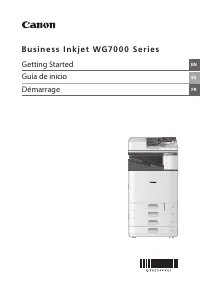 Canon 250
User Manual
Canon 250
User Manual
 Canon 251
User Manual
Canon 251
User Manual
 Canon 6710C002
User Manual
Canon 6710C002
User Manual
 Canon K10605
User Manual
Canon K10605
User Manual
 Canon K10613
User Manual
Canon K10613
User Manual
 Canon K10608
User Manual
Canon K10608
User Manual
 Canon K10609
User Manual
Canon K10609
User Manual
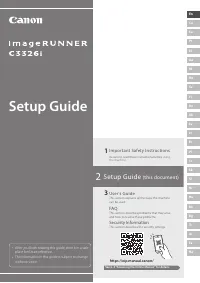 Canon imageRUNNER C3326i
User Manual
Canon imageRUNNER C3326i
User Manual
 Canon imageCLASS MF465dw
User Manual
Canon imageCLASS MF465dw
User Manual
 Canon K10617
User Manual
Canon K10617
User Manual