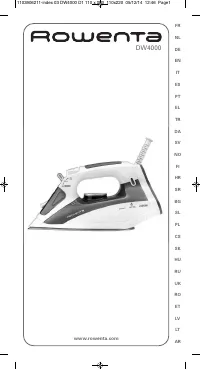
Rowenta COMPACT GARMENT STEAMER - Manual

This user manual covers the Rowenta Pro Compact garment steamer, detailing its operation, safety, accessories, maintenance, and troubleshooting. The document outlines essential safety precautions–such as proper handling of steam, electrical use, and avoiding damage to the appliance–and explains how to assemble, fill with water, and safely operate the device. It also includes guidance for using optional attachments like crease guides and lint pads, along with step-by-step instructions for cleaning, descaling, and storing the steamer correctly. Additionally, it addresses common issues (e.g., steam problems or leaks) with troubleshooting tips and briefly mentions warranty coverage and service contact details.


Table of Contents:
- Page 1 – Product Identification and Support Information
- Page 2 – Steam Iron Components and Accessories Diagram
- Page 3 – Safety Instructions and Usage Guidelines
- Page 4 – Appliance Assembly and Initial Setup
- Page 5 – Garment Steamer Operation and Care
- Page 6 – Accessory Usage Safety Procedures
- Page 7 – Optional Accessory Instructions
- Page 8 – Storage, Cleaning, and Descaling Procedures
- Page 9 – Troubleshooting Steam Appliance Issues
- Page 10 – Limited Warranty Information
- Page 11 – Service Center and Contact Information
www.rowentausa.com
1103901405 - 03/07
COMPACT GARMENT STEAMER
"Loading the manual" means you need to wait until the file loads and becomes available for online reading. Some manuals are very large, and the time they take to appear depends on your internet speed.
Was this manual helpful?
About this manual
- Brand
- Rowenta
- Model
- COMPACT GARMENT STEAMER
- Document type
- Manual
- Language(s)
- English
- Pages
- 12
- File size
- 942.3 KB
- Format
Summary
Identification details, model reference, and links to support resources.
Diagram labeling for the steam iron body, soleplate, steam vents, and optional attachments like crease release and steam nozzle.
Precautions regarding supervised use, handling of cords and steam heads, electrical requirements, wattage limits, and avoiding immersion.
Ask a question
Related manuals
More Rowenta Other models
 Rowenta CV8020 Manual
 Rowenta DX1900 Manual
 Rowenta DX9000 Manual
 Rowenta GARMENT STEAMER Manual
 Rowenta HA 425 Manual
 Rowenta P2 Professional Manual
 Rowenta Powerglide 2 Manual
 Rowenta Power Press Manual
 Rowenta Pressure iron & steamer Manual
 Rowenta Professional Steam Iron Manual
 Rowenta Toaster Manual
 Rowenta Travel Iron Manual