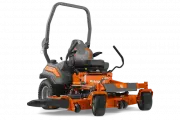
Page 2 - Conformity requirements; Introduction; Pre-delivery inspection and product
Contents Conformity certificates.............................................. 2Introduction............................................................... 2Safety........................................................................ 6Operation.........................................................
Page 6 - Product damage; Safety; Safety definitions
Keep hands away from rotating parts. Look out for persons and animals when you operate the product forward. Look out for persons and animals when you operate the product rearward. Use caution when you lift the cover. Warning! Battery acid is corrosive, explosive and flammable. Keep body parts away f...
Page 7 - Safety instructions for operation
• Keep the product clean to make sure that you can clearly read signs and stickers. • Keep in mind that the operator will be held responsible for accidents that involve other persons or their property. • Only use the product in daylight or in other well-lit conditions. Keep the product at a safe dis...
Page 10 - Safety instructions for maintenance
Transport safety • Use an approved transport vehicle for transportation of the product. • The product is heavy and can cause crush injuries. Be careful when you load it onto or off a vehicle or trailer. • A markets national or local regulations can set limit to the transportation of the product. • T...
Page 11 - Operation
• Let the product become cool before you do maintenance near the engine. • The blades are sharp and can cause cuts. Wind protection around the blades or use protective gloves when you do work on the blades. • Do not turn the engine over if the spark plug or ignition cable is removed. • Make sure tha...
Page 15 - Maintenance
Maintenance Introduction WARNING: Before you do any maintenance work you must read and understand the safety chapter. Maintenance schedule * = The instructions are not given in this operator's manual. X = The instructions are given in this operator's manual.O = Refer to the engine manual for instruc...
Page 17 - To clean the product; To do a check of the parking brake
To clean the product CAUTION: Do not use a high- pressure washer or a steam cleaner. Water can go into bearings and electrical connections and cause corrosion which causes damage to the product. Clean the product immediately after use.• Do not clean hot surfaces such as the engine, muffler and exhau...
Page 18 - To remove and install the battery
4. Disengage the parking brake. To charge the battery • Charge the battery if it is too weak to start the engine. Refer to Battery charging times on page 29 for battery charging times. • Use a standard battery charger. CAUTION: Do not use a boost charger or start booster. A boost charger or a start ...
Page 23 - Lubrication schedule
Lubrication schedule A C A B C C B Refer to Lubrication Interval Mont hly Year- ly Each 25 hours Each 50 hours Each 100 hours Each 400 hours A Lubricate the grease nipple on the pivot axle with a grease gun. X B Lubricate the grease nipple on the wheel axle with a grease gun. X C Lubricate the greas...
Page 24 - Troubleshooting; Troubleshooting schedule
To lubricate the cutting deck spindles 1. Set the cutting deck in mow position.2. Lubricate each cutting deck spindle 2-3 strokes. Note: Use a grease gun with a rubber hose when you lubricate the cutting deck spindles. Troubleshooting Troubleshooting schedule If you cannot find a solution to your pr...
Page 26 - Transportation, storage and disposal; Transportation; Storage
Problem Cause The transaxle leaks oil. The seals, housing or gaskets are damaged. There is air in the hydraulic system. The cutting result is unsatisfactory. The tire pressure is different on the right and left sides. Refer to Tire pressure on page 19. The blades are damaged. The suspension of the c...
Page 27 - Disposal
• Clean the product, refer to To clean the product on page 17. • Remove unwanted materials from the cooling fan. • Repair paint damages to prevent corrosion.• Examine the product for worn or damaged parts and tighten loose screws and nuts. • Remove the battery. Clean it, charge it, and keep it cool ...
Page 28 - Technical data
Technical data Technical data Z460XS Engine Brand/Model Kawasaki/FX730V Nominal engine output, hp/kW 8 23.5/17.5 Displacement, cm 3 726 Max. engine speed, rpm 3600 ± 100 Fuel, min. octane grade lead-free, max 10% Ethanol, max 15% MTBE 87 AKI/91 RON Tank volume, gal/l 12/45.4 Oil Class SJ, SL, SM, SN...
Page 29 - Battery charging times
Z460XS Blade length, in./cm 20.8/52.8 Blade Engagement Electric clutch Productivity, acres/h / m 2 /h 5.3/21539.7 Tires Tire pressure, rear – front, kPa/PSI/bar 103/15/1 Front caster tires, in. 13 x 6.5-6 Rear tires, turf pneumatic, in. 23 x 10.5-12 Anti-scalp roller 4 adjustable Transmission Transm...
Page 30 - Service
Service Service Do a yearly check at an authorized service center to make sure that the product functions safely and at its best during high season. The best time to do a servicing or overhaul of the product is low season. When you send an order for the spare parts, give information about the purcha...
Page 31 - Electrical diagram
Page 32 - Requisitos de conformidad; Introducción; Inspección previa a la entrega y
Contenido Certificados de conformidad................................... 32Introducción............................................................ 32Seguridad................................................................36Funcionamiento...................................................... 42Mant...
Page 36 - Daños en el producto; Seguridad; Definiciones de seguridad
Mantenga una distancia de seguridad con respecto al producto. No opere el producto en pendientes de más de 10°. No lleve pasajeros. Tenga cuidado con los objetos que puedan salir expulsados o rebotar. Mantenga las manos y los pies alejados. Mantenga las manos lejos de las piezas giratorias. Tenga cu...
Page 41 - Instrucciones de seguridad para el
Transporte• Utilice rampas de ancho completo cuando cargue y descargue un producto para transportarlo. Seguridad de remolque • Obedezca las recomendaciones del fabricante sobre los límites de peso para el equipo remolcado y al remolcar en pendientes. • Utilice únicamente equipos de remolque aprobado...
Page 42 - Funcionamiento
esté encendido. No haga una prueba de funcionamiento del sistema de encendido con los dedos. • Deje que el producto se enfríe antes de realizar tareas de mantenimiento cerca del motor. • Las cuchillas son filosas y pueden causar cortes. Envuelva las cuchillas con protección o utilice guantes protect...
Page 45 - Detener el motor
3. Empuje cuidadosamente las 2 palancas de control hacia adelante. El producto comenzará a avanzar. La velocidad de avance aumenta mientras más se empujan hacia adelante las 2 palancas de control. 4. Tire cuidadosamente de las 2 palancas de control hacia atrás. El producto comenzará a retroceder. La...
Page 46 - Mantenimiento
7. Coloque la llave de encendido en la posición de parada. 8. Retire la llave de encendido del sistema de encendido cuando esté lejos del producto. Para conseguir un buen resultado de corte • Para un mejor funcionamiento, realice el mantenimiento del producto con regularidad como se indica en el pro...
Page 48 - Para limpiar el producto
Mantenimiento Para llevar a ca- bo un manteni- miento diario Realice el man- tenimiento por lo menos 1 vez al año. Intervalo de mantenimiento en ho- ras Antes Des- pués 50 100 200 250 300 500 Revise la cubierta de limpieza del motor O Limpie el polvo y la suciedad de las aletas del cilindro y de la ...
Page 49 - Para comprobar el freno de
• Utilice aire comprimido para limpiar la superficie superior del equipo de corte. • Utilice una manguera de agua para limpiar debajo del equipo de corte. • Cuando el producto esté limpio, arranque el equipo de corte durante un breve período para eliminar el agua restante. Para limpiar el motor y el...
Page 56 - Solución de problemas; Programa de solución de problemas
Consulte Lubricación Intervalo Una vez al mes Anual men- te Cada 25 ho ras Cada 50 ho ras Cada 100 ho- ras Cada 400 ho- ras B Lubrique la boquilla de engrase en el eje de rueda con una pistola de engrase. X C Lubrique la boquilla de engrase con una pis- tola de engrase. X Utilice siempre grasa de bu...
Page 59 - Transporte, almacenamiento y eliminación de residuos; Transporte; Almacenamiento
Transporte, almacenamiento y eliminación de residuos Transporte • El producto es pesado y puede causar lesiones por aplastamiento. Tenga cuidado cuando lo cargue o descargue de un vehículo o remolque. • Cargue el producto en reversa por las rampas autorizadas con un ángulo máximo de operación de 10°...
Page 61 - Datos técnicos
Datos técnicos Datos técnicos Z460XS Motor Marca/modelo Kawasaki/FX730V Potencia nominal del motor, hp/kW 17 23,5/17,5 Cilindrada, cm 3 726 Máx. régimen del motor, rpm 3600 ± 100 Combustible, grado de octanos mínimo sin plomo, etanol al 10 % máx., 15 % MTBE máx. 87 AKI/91 RON Volumen del depósito, g...
Page 62 - Tiempos de carga de la batería
Z460XS Cantidad de cuchillas 3 Longitud de la hoja, in/cm 20,8/52,8 Acoplamiento de la cuchilla Embrague eléctrico Productividad, acres/h / m 2 /h 5,3/21539,7 Neumáticos Presión de los neumáticos, traseros y delanteros, kPa/PSI/bar 103/15/1 Neumáticos de la ruedecilla delantera, in 13 x 6,5-6 Neumát...
Page 63 - Servicio
Servicio Servicio Realice una comprobación anual en un centro de servicios autorizado para asegurarse de que el producto funciona de forma segura y a su máximo potencial durante la temporada alta. El mejor momento para hacer mantenimiento o reparaciones a este producto es en la temporada baja. Cuand...
Page 64 - Diagrama eléctrico