Dewalt DWFP1KITW73801 - User Manual
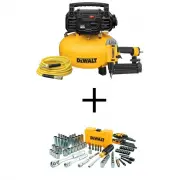
Dewalt DWFP1KITW73801 Compressor – User Manual, read for free online in PDF format. We hope this helps you resolve any issues you may have. If you have further questions, please contact us through the contact form.




Table of Contents:
- Page 3 – mode d’emploi et porter une attention particulière à ces symboles.; WALT
- Page 4 – – Pour plus d’informations,; utilisation
- Page 5 – Definiciones: Normas de seguridad; y preste atención a estos símbolos.; Instrucciones de seguridad importantes; Utilice siempre protección auditiva; CONSERVE ESTAS INSTRUCCIONES
- Page 6 – Eje Central Lázaro Cárdenas No. 18; sAn LUis poTosi, sLp
- Page 7 – Características; pArA oTrAs LocALiDADes:; es una marca registrada de Underwriters Laboratories y ETL
IF YOU HAVE ANY QUESTIONS OR COMMENTS ABOUT THIS OR ANY D
e
WALT TOOL,
CALL US TOLL FREE AT:
1-800-4-D
e
WALT (1-800-433-9258)
Important Safety Instructions
WARNING:
Do not operate this unit until you read this instruction manual for safety,
operation and maintenance instructions.
WARNING:
This product contains chemicals known to the State of California to cause
cancer, and birth defects or other reproductive harm.
Wash hands after handling.
WARNING:
Some dust contains chemicals known to the State of California to cause cancer,
birth defects or other reproductive harm such as asbestos and lead in lead based paint.
SAVE THESE INSTRUCTIONS
DANGER: RIsk of ExplosIoN oR fIRE
WhAT cAn hAppen
hoW To prevenT iT
• It is normal for electrical contacts within the
motor and pressure switch to spark.
• Always operate the compressor in a
well ventilated area free of combustible
materials, gasoline, or solvent vapors.
• If electrical sparks from compressor come
into contact with flammable vapors, they
may ignite, causing fire or explosion.
• If spraying flammable materials, locate
compressor at least 20' (6.1 m) away from
spray area. An additional length of air hose
may be required.
• Store flammable materials in a secure
location away from compressor.
• Restricting any of the compressor ventilation
openings will cause serious overheating
and could cause fire.
• Never place objects against or on top of
compressor.
• Operate compressor in an open area at
least 12" (30.5 cm) away from any wall or
obstruction that would restrict the flow of
fresh air to the ventilation openings.
• Operate compressor in a clean, dry well
ventilated area. Do not operate unit in any
confined area. Store indoors.
• Unattended operation of this product could
result in personal injury or property damage.
To reduce the risk of fire, do not allow the
compressor to operate unattended.
• Always remain in attendance with the
product when it is operating.
• Always turn off and unplug unit when not in
use.
DANGER: RIsk To BREATHING (AspHyxIATIoN)
WhAT cAn hAppen
hoW To prevenT iT
• The compressed air directly from your
compressor is not safe for breathing. The
air stream may contain carbon monoxide,
toxic vapors, or solid particles from the air
tank. Breathing these contaminants can
cause serious injury or death.
• Never use air obtained directly from the
compressor to supply air for human
consumption. The compressor is not
equipped with suitable filters and in-line
safety equipment for human consumption.
• Exposure to chemicals in dust created by
power sanding, sawing, grinding, drilling,
and other construction activities may be
harmful.
• Sprayed materials such as paint, paint
solvents, paint remover, insecticides, weed
killers, may contain harmful vapors and
poisons.
• Work in an area with good cross ventilation.
Read and follow the safety instructions
provided on the label or safety data sheets
for the materials you are spraying. Always
use certified safety equipment: NIOSH/
OSHA respiratory protection or properly
fit ting face mask designed for use with your
specific application.
WARNING: RIsk of BuRsTING
Air Tank:
On February 26, 2002, the U.S. Consumer Product Safety Commission published
Release # 02-108 concerning air compressor tank safety:
Air compressor receiver tanks do not have an infinite life. Tank life is dependent upon several
factors, some of which include operating conditions, ambient conditions, proper installations,
field modifications, and the level of maintenance. The exact effect of these factors on air
receiver life is difficult to predict.
If proper maintenance procedures are not followed, internal corrosion to the inner wall of the
air receiver tank can cause the air tank to unexpectedly rupture allowing pressurized air to
suddenly and forcefully escape, posing risk of injury to consumers.
Your compressor air tank must be removed from service by the end of the year shown on your
tank warning label.
The following conditions could lead to a weakening of the air tank, and result in a violent air
tank explosion:
WhAT cAn hAppen
hoW To prevenT iT
• Failure to properly drain condensed water
from air tank, causing rust and thinning of
the steel air tank.
• Drain air tank daily or after each use. If air
tank develops a leak, replace it immediately
with a new air tank or replace the entire
compressor.
• Modifications or attempted repairs to the air
tank.
• Never drill into, weld, or make any
modifications to the air tank or its
attachments. Never attempt to repair a
damaged or leaking air tank. Replace with
a new air tank.
• Unauthorized modifications to the safety
valve or any other components which
control air tank pressure.
• The air tank is designed to withstand
specific operating pressures. Never make
adjustments or parts substitutions to alter
the factory set operating pressures.
ATTAchmenTs & Accessories:
• Exceeding the pressure rating of air tools,
spray guns, air operated accessories, tires,
and other inflatables can cause them to
explode or fly apart, and could result in
serious injury.
• Follow the equipment manufacturers
recommendation and never exceed the
maximum allowable pressure rating of
attachments. Never use compressor to
inflate small low pressure objects such as
children’s toys, footballs, basketballs, etc.
Tires:
•
over inflation of tires could result in
serious injury and property damage.
• Use a tire pressure gauge to check the tires
pressure before each use and while inflating
tires; see the tire sidewall for the correct tire
pressure.
noTe:
Air tanks, compressors and similar
equipment used to inflate tires can fill
small tires very rapidly. Adjust pressure
regulator on air supply to no more than
the rating of the tire pressure. Add air in
small increments and frequently use the tire
gauge to prevent over inflation.
WARNING: RIsk of ElEcTRIcAl sHock
WhAT cAn hAppen
hoW To prevenT iT
• Your compressor is powered by electricity.
Like any other electrically powered device, if
it is not used properly it may cause electric
shock.
• Never operate the compressor outdoors
when it is raining or in wet conditions.
• Never operate compressor with protective
covers removed or damaged.
• Repairs attempted by unqualified personnel
can result in serious injury or death by
electrocution.
• Any electrical wiring or repairs required
on this product should be performed by
authorized service center personnel in
accordance with national and local electrical
codes.
•
Electrical Grounding:
Failure to provide
adequate grounding to this product
could result in serious injury or death
from electrocution. Refer to
Grounding
instructions
paragraph in the
Installation
section.
• Make certain that the electrical circuit
to which the compressor is connected
provides proper electrical grounding, correct
voltage and adequate fuse protection.
WARNING: RIsk fRom flyING oBjEcTs
WhAT cAn hAppen
hoW To prevenT iT
• The compressed air stream can cause soft
tissue damage to exposed skin and can
propel dirt, chips, loose particles, and small
objects at high speed, resulting in property
damage or personal injury.
• Always wear certified safety equipment:
ANSI Z87.1 eye protection (CAN/CSA
Z94.3) with side shields when using the
compressor.
• Never point any nozzle or sprayer toward
any part of the body or at other people or
animals.
• Always turn the compressor off and bleed
pressure from the air hose and air tank
before attempting maintenance, attaching
tools or accessories.
WARNING: RIsk of HoT suRfAcEs
WhAT cAn hAppen
hoW To prevenT iT
• Touching exposed metal such as the
compressor head, engine head, engine
exhaust or outlet tubes (J, Fig. 2), can result
in serious burns.
• Never touch any exposed metal parts on
compressor during or immediately after
operation. Compressor will remain hot for
several minutes after operation.
• Do not reach around protective shrouds or
attempt maintenance until unit has been
allowed to cool.
WARNING: RIsk fRom movING pARTs
WhAT cAn hAppen
hoW To prevenT iT
• Moving parts such as the pulley, flywheel,
and belt can cause serious injury if they
come into contact with you or your clothing.
• Never operate the compressor with guards
or covers which are damaged or removed.
• Keep your hair, clothing, and gloves away
from moving parts. Loose clothes, jewelry,
or long hair can be caught in moving parts.
• Air vents may cover moving parts and
should be avoided as well.
• Attempting to operate compressor with
damaged or missing parts or attempting to
repair compressor with protective shrouds
removed can expose you to moving parts
and can result in serious injury.
• Any repairs required on this product should
be performed by authorized service center
personnel.
WARNING: RIsk of uNsAfE opERATIoN
WhAT cAn hAppen
hoW To prevenT iT
• Unsafe op er a tion of your compressor could
lead to se ri ous in jury or death to you or
others.
• Review and understand all instructions and
warnings in this manual.
• Be come fa mil iar with the op eration and
con trols of the air compressor.
• Keep operating area clear of all persons,
pets, and obstacles.
• Keep chil dren away from the air compressor
at all times.
• Do not operate the product when fatigued
or under the influence of alcohol or drugs.
Stay alert at all times.
• Never defeat the safety features of this
prod uct.
• Equip area of operation with a fire
extinguisher.
• Do not op er ate machine with missing,
broken, or un au tho rized parts.
• Never stand on the compressor.
WARNING: RIsk of fAllING
WhAT cAn hAppen
hoW To prevenT iT
• A portable compressor can fall from a table,
workbench, or roof causing damage to the
compressor and could result in serious
injury or death to the operator.
• Always operate compressor in a stable
secure position to prevent accidental
movement of the unit. Never operate
compressor on a roof or other elevated
position. Use additional air hose to reach
high locations.
WARNING: RIsk fRom NoIsE
WhAT cAn hAppen
hoW To prevenT iT
• Under some conditions and duration of
use, noise from this product may contribute
to hearing loss.
• Always wear proper hearing protection
during use.
SAVE THESE INSTRUCTIONS
FOR FUTURE USE
ASSEMBLY
UnpAckinG
Remove unit from carton and discard all packaging.
INSTALLATION
How To Set Up Your Unit
LocATion of The Air compressor
• Locate the air compressor in a clean, dry and well ventilated area.
• The air compressor should be located at least 12" (30.5 cm) away from the wall or other
obstructions that will interfere with the flow of air.
• The air compressor pump and shroud are designed to allow for proper cooling. The
ventilation openings on the compressor are necessary to maintain proper operating
temperature. Do not place rags or other containers on or near these openings.
Grounding Instructions (Fig. 1)
WARNING:
Risk of Electrical Shock. In the event of a short circuit, grounding reduces the
risk of shock by providing an escape wire for the electric current. This air compressor must be
properly grounded.
The portable air compressor is equipped with a cord having a grounding wire with an
appropriate grounding plug (A).
1. The cord set and plug (A) with this unit contains a grounding pin (B). This plug MUST be
used with a grounded outlet (C).
imporTAnT:
The outlet being used must be installed and grounded in accordance with all
local codes and ordinances.
2. Make sure the outlet being used has the same configuration as the grounded plug.
DO NOT USE AN ADAPTER.
See figure 1.
3. Inspect the plug and cord before each use. Do not use if there are signs of damage.
4. If these grounding instructions are not completely understood, or if in doubt as to whether
the compressor is properly grounded, have the installation checked by a qualified electrician.
DANGER:
Risk of Electrical Shock. IMPROPER GROUNDING CAN RESULT IN ELECTRICAL
SHOCK.
• Do not modify the plug provided. If it does not fit the available outlet, a correct outlet
should be installed by a qualified electrician.
• Repairs to the cord set or plug MUST be made by a qualified electrician.
ins
T
r
U
c
T
ion
mA
n
UAL
mA
n
UAL
D
e ins
T
r
U
cciones
G
U
iD
e D'
UT
iL
is
A
T
ion
DW
fp
55126
h
eavy Duty 165
psi
m
ax. 6 Gallon Air
c
ompr
essor
c
ompr
esor de air
e de alto r
endimiento de 165 psi de máximo, 6 galones
c
ompr
esseur à air à r
éservoir de 22,7 L (6 gallons) et un maximum de
1038 k
p
a (165 psi)
INSTRUCTIVO DE OPERACIÓN, CENTROS DE SER
VICIO Y
PÓLIZA
DE
GARANTÍA.
AD
ver
T
enci
A:
LÉASE
ESTE
INSTRUCTIVO
ANTES
DE
USAR
EL
PRODUCTO.
D
e
WALT Industrial Tool Co., 701 East Joppa Road, Baltimore, MD 21286
(JAN14) Part No. N331539 DWFP55126 Copyright © 2014 D
e
WALT
The following are trademarks for one or more D
e
WALT power tools: the yellow and black color scheme;
the “D” shaped air intake grill; the array of pyramids on the handgrip; the kit box configuration; and the array of lozenge-
shaped humps on the surface of the tool.
If you have questions or comments, contact us.
s
i tiene dudas o comentarios, contáctenos.
p
our toute question ou tout commentaire, nous contacter
.
1-800-4-D
e
W
AL
T • www
.dewalt.com
Definitions: Safety Guidelines
The definitions below describe the level of severity for each signal word. Please read the
manual and pay attention to these symbols.
DANGER:
Indicates an imminently hazardous situation which, if not avoided,
will
result
in
death or serious injury
.
WARNING:
Indicates a potentially hazardous situation which, if not avoided,
could
result
in
death or serious injury
.
cAuTIoN
: Indicates a potentially hazardous situation which, if not avoided,
may
result
in
minor or moderate injury
.
NoTIcE:
Indicates a practice
not related to personal injury
which, if not avoided,
may
result in
property damage.
"Loading the manual" means you need to wait until the file loads and becomes available for online reading. Some manuals are very large, and the time they take to appear depends on your internet speed.
Summary
coDe possiBLe cAUse possiBLe soLUTion 9 Compressor is not large enough for accessory Check the accessory air requirement. If it is higher than the CFM or pressure supplied by your air compressor, a larger compressor is needed to operate accessory. 10 Hole in air hose Replace air hose. 11 Check valve...
DirecTives De mise À LA Terre (fiG. 1) AvERTIssEmENT: RisqUE dE choc éLEcTRiqUE ! En cas de court-circuit, la mise à la terre réduit le risque de choc en fournissant un fil de fuite pour le courant électrique. ce compresseur d'air doit être adéquatement mis à la terre. Ce compresseur d'air portatif ...
coDe cAUse proBABLe soLUTion proBABLe 7 Le régulateur n’est pas réglé correctement pour l’accessoire utilisé Il est normal que la pression chute lorsqu’un accessoire est utilisé, ajuster le régulateur comme indiqué sous Caractéristiques si la pression chute trop. remArQUe : Régler la pression régulé...


