Page 4 - Table of Contents
- 4 - Table of Contents Box Contents ................................................................................................................. 6Optional Items ................................................................................................................. 6GA-M68M-S2 Motherb...
Page 8 - Block Diagram
- 8 - Block Diagram DDR2 1066/800/667 MHz DIMM PCIe CLK (100 MHz) AM3/AM2+/AM2 C P U CPU CLK+/-(200 MHz) Hyper Transport Bus 2 SATA 3Gb/s ATA-133/100/66/33 IDE Channel PCI Bus 8 USB Ports Dual Channel Memory LPC BUS PCI CLK (33 MHz) 2 PCI D-Sub LAN RJ45 RTL8201CL PS/2 KB/Mouse COM Port LPT Port F l ...
Page 9 - Hardware Installation; Installation Precautions; Do not place the computer system on an uneven surface.; Chapter 1 Hardware Installation
Hardware Installation - 9 - 1-1 Installation Precautions The motherboard contains numerous delicate electronic circuits and components which can becomedamaged as a result of electrostatic discharge (ESD). Prior to installation, carefully read the user'smanual and follow these procedures: • Prior to ...
Page 10 - Product Specifications
Hardware Installation - 10 - 1-2 Product Specifications C P U Support for AM3/AM2+/AM2 processors:AMD Phenom ™ II processor/ AMD Phenom ™ processor/ AMD Athlon ™ II processor/ AMD Athlon ™ processor/ AMD Sempron ™ processor (Go to GIGABYTE's website for the latest CPU support list.) Hyper Transpor...
Page 12 - Installing the CPU and CPU Cooler; Read the following guidelines before you begin to install the CPU:
Hardware Installation - 12 - 1-3 Installing the CPU and CPU Cooler Read the following guidelines before you begin to install the CPU: • Make sure that the motherboard supports the CPU.(Go to GIGABYTE's website for the latest CPU support list.) • Always turn off the computer and unplug the power cord...
Page 15 - Installing the Memory
Hardware Installation - 15 - 1-4 Installing the Memory Read the following guidelines before you begin to install the memory: • Make sure that the motherboard supports the memory. It is recommended that memory ofthe same capacity, brand, speed, and chips be used.(Go to GIGABYTE's website for the late...
Page 17 - Installing an Expansion Card; Example: Installing and Removing a PCI Express x16 Graphics Card:
Hardware Installation - 17 - 1-5 Installing an Expansion Card Read the following guidelines before you begin to install an expansion card: • Make sure the motherboard supports the expansion card. Carefully read the manual thatcame with your expansion card. • Always turn off the computer and unplug t...
Page 18 - Back Panel Connectors; Parallel Port
Hardware Installation - 18 - 1-6 Back Panel Connectors PS/2 Keyboard and PS/2 Mouse Port Use the upper port (green) to connect a PS/2 mouse and the lower port (purple) to connect a PS/2keyboard. Parallel Port Use the parallel port to connect devices such as a printer, scanner and etc. The parallel p...
Page 20 - Internal Connectors; AT X
Hardware Installation - 20 - 1-7 Internal Connectors Read the following guidelines before connecting external devices: • First make sure your devices are compliant with the connectors you wish to connect. • Before installing the devices, be sure to turn off the devices and your computer. Unplug thep...
Page 31 - BIOS Setup; Chapter 2 BIOS Setup
- 31 - BIOS Setup Chapter 2 BIOS Setup BIOS (Basic Input and Output System) records hardware parameters of the system in the CMOS on themotherboard. Its major functions include conducting the Power-On Self-Test (POST) during systemstartup, saving system parameters and loading operating system, etc. ...
Page 32 - Startup Screen; The following screen may appear when the computer boots.
BIOS Setup - 32 - 2-1 Startup Screen The following screen may appear when the computer boots. Function Keys:<DEL>: BIOS Setup Press the <Delete> key to enter BIOS Setup or to access the Q-Flash utility in BIOS Setup. <F9>: Xpress Recovery2 If you have ever entered Xpress Recovery2 ...
Page 33 - The Main Menu; BIOS Setup Program Function Keys
- 33 - BIOS Setup 2-2 The Main Menu Once you enter the BIOS Setup program, the Main Menu (as shown below) appears on the screen. Usearrow keys to move among the items and press <Enter> to accept or enter a sub-menu. (Sample BIOS Version: F1a) Main Menu HelpThe onscreen description of a highlig...
Page 35 - Set Memory Clock
- 35 - BIOS Setup 2-3 MB Intelligent Tweaker(M.I.T.) Whether the system will work stably with the overclock/overvoltage settings you made isdependent on your overall system configurations. Incorrectly doing overclock/overvoltagemay result in damage to CPU, chipset, or memory and reduce the useful li...
Page 38 - Standard CMOS Features; Date
BIOS Setup - 38 - 2-4 Standard CMOS Features CMOS Setup Utility-Copyright (C) 1984-2009 Award Software Standard CMOS Features D a t e ( m m : d d : y y ) Wed , Aug 12 2009 Time (hh:mm:ss) 11:52:24 IDE Channel 0 Master [ N o n e ] IDE Channel 0 Slave [ N o n e ] IDE Channel 2 Master [ N o n e ]...
Page 40 - Advanced BIOS Features; Virtualization; Auto; Hard Disk Boot Priority
BIOS Setup - 40 - 2-5 Advanced BIOS Features Virtualization Virtualization allows a platform to run multiple operating systems and applications in independentpartitions. With virtualization, one computer system can function as multiple virtual systems.(Default: Disabled) Patch AMD TLB Erratum (Note)...
Page 42 - Integrated Peripherals; Serial-ATA RAID Config; NV SATA Controller
BIOS Setup - 42 - 2-6 Integrated Peripherals CMOS Setup Utility-Copyright (C) 1984-2009 Award Software Integrated Peripherals On-Chip IDE Channel [Enabled] NV SATA Controller [Enabled] IDE Prefetch Mode [Enabled] USB Memory Type [SHADOW] Serial-ATA RAID Config [Press Enter] Onboard Audio Function ...
Page 43 - Disabled will turn off all of the USB functionalities below.
- 43 - BIOS Setup NV SATA RAID function Enables or disables RAID for the integrated SATA 3Gb/s controller. Enabled allows you toconfigure RAID for individual SATA channel. (Default: Disabled) NV SATA 1 Primary RAID Enables or disables RAID for the first channel of the integrated SATA 3Gb/s controlle...
Page 44 - USB Keyboard Support
BIOS Setup - 44 - USB Keyboard Support Allows USB keyboard to be used in MS-DOS. (Default: Disabled) USB Mouse Support Allows USB mouse to be used in MS-DOS. (Default: Disabled) Legacy USB storage detect Determines whether to detect USB storage devices, including USB flash drives and USB harddrives ...
Page 45 - Power Management Setup; ACPI Suspend Type; Specifies the ACPI sleep state when the system enters suspend.; Soft-Off by Power button; Vista
- 45 - BIOS Setup 2-7 Power Management Setup ACPI Suspend Type Specifies the ACPI sleep state when the system enters suspend. S1(POS) Enables the system to enter the ACPI S1 (Power on Suspend) sleep state.In S1 sleep state, the system appears suspended and stays in alow power mode. The system can be...
Page 46 - mode when you install 32-bit Windows
BIOS Setup - 46 - (Note) Supported on Windows ® Vista ® operating system only. USB Resume from Suspend Allows the system to be awakened from ACPI S3 sleep state by a wake-up signal from theinstalled USB device. (Default: Enabled) Power-On by Alarm Determines whether to power on the system at a desir...
Page 47 - PnP/PCI Configurations; PCI 1 IRQ Assignment; PCI 2 IRQ Assignment
- 47 - BIOS Setup 2-8 PnP/PCI Configurations PCI 1 IRQ Assignment Auto BIOS auto-assigns IRQ to the first PCI slot. (Default) 3,4,5,7,9,10,11,12,14,15 Assigns IRQ 3,4,5,7,9,10,11,12,14,15 to the first PCI slot. PCI 2 IRQ Assignment Auto BIOS auto-assigns IRQ to the second PCI slot. (Default) 3,4,5,7...
Page 48 - PC Health Status; Displays the current system voltages.
BIOS Setup - 48 - 2-9 PC Health Status CMOS Setup Utility-Copyright (C) 1984-2009 Award Software PC Health Status Reset Case Open Status [Disabled] Case Opened Yes V c o r e OK DDR2 1.8V OK +3.3V OK +12V OK Current System Temperature 32 o C Current CPU Temperature 45 o C Current CPU FAN Speed 3245 R...
Page 49 - CPU Smart FAN Mode
- 49 - BIOS Setup CPU Smart FAN Mode Specifies how to control CPU fan speed. This item is configurable only if CPU Smart FANControl is set to Enabled . Auto Lets BIOS autodetect the type of CPU fan installed and sets the optimal CPUfan control mode. (Default) Voltage Sets Voltage mode for a 3-pin CP...
Page 50 - -11 Load Optimized Defaults
BIOS Setup - 50 - 2-10 Load Fail-Safe Defaults Press <Enter> on this item and then press the <Y> key to load the safest BIOS default settings.In case system instability occurs, you may try to load Fail-Safe defaults, which are the safest and moststable BIOS settings for the motherboard. ...
Page 51 - Supervisor Password
- 51 - BIOS Setup 2-12 Set Supervisor/User Password Press <Enter> on this item and type the password with up to 8 characters and then press <Enter>. Youwill be requested to confirm the password. Type the password again and press <Enter>. The BIOS Setup program allows you to specify...
Page 52 - -14 Exit Without Saving
BIOS Setup - 52 - 2-13 Save & Exit Setup 2-14 Exit Without Saving Press <Enter> on this item and press the <Y> key. This saves the changes to the CMOS and exits theBIOS Setup program. Press <N> or <Esc> to return to the BIOS Setup Main Menu. Press <Enter> on this it...
Page 53 - Drivers Installation; Chapter 3 Drivers Installation; Installing Chipset Drivers
Drivers Installation - 53 - Chapter 3 Drivers Installation 3-1 Installing Chipset Drivers • Before installing the drivers, first install the operating system. • After installing the operating system, insert the motherboard driver disk into your optical drive.The driver Autorun screen is automaticall...
Page 54 - Application Software
Drivers Installation - 54 - 3-2 Application Software This page displays all the utilities and applications that GIGABYTE develops and some free software.You can click the Install button on the right of an item to install it. 3-3 Technical Manuals This page provides content descriptions for this driv...
Page 55 - Contact; This page provides the basic system information.
Drivers Installation - 55 - 3-4 Contact For the detailed contact information of the GIGABYTE Taiwan headquarter or worldwide branch offices,click the URL on this page to link to the GIGABYTE Website. 3-5 System This page provides the basic system information.
Page 56 - Download Center
Drivers Installation - 56 - 3-6 Download Center To update the BIOS, drivers, or applications, click the Download Center button to link to the GIGABYTEWeb site. The latest version of the BIOS, drivers, or applications will be displayed.
Page 57 - Chapter 4 Unique Features; Xpress Recovery2; Installation and Configuration
Unique Features - 57 - Chapter 4 Unique Features 4-1 Xpress Recovery2 (Note) Xpress Recovery2 checks the first physical hard drive in the following sequence: The first PATA IDE connector, the second PATA IDE connector, the first SATA connector, the second SATA connector and so forth. Forexample, whe...
Page 58 - Unique Features; B. Accessing Xpress Recovery2; the following message:; C. Using the Backup Function in Xpress Recovery2
Unique Features - 58 - Step 3:When partitioning your hard drive, make sureto leave unallocated space (10 GB or more isrecommended; actual size requirements vary,depending on the amount of data) and begin theinstallation of the operating system. Step 4:After the operating system is installed, right-c...
Page 59 - E. Removing the Backup; Select REBOOT to exit Xpress Recovery2.
Unique Features - 59 - E. Removing the Backup D. Using the Restore Function in Xpress Recovery2 F. Exiting Xpress Recovery2 Select REBOOT to exit Xpress Recovery2. Select RESTORE to restore the backup to your harddrive in case the system breaks down. The RESTOREoption will not be present if no backu...
Page 60 - BIOS Update Utilities; design, which enhances protection; What is DualBIOS
Unique Features - 60 - 4-2-1 Updating the BIOS with the Q-Flash Utility A. Before You Begin: 1 . From GIGABYTE's website, download the latest compressed BIOS update file that matches your motherboard model. 2 . Extract the file and save the new BIOS file (e.g. M68MS2.F1) to your floppy disk, USB fla...
Page 61 - Make sure the BIOS update file matches your motherboard model.
Unique Features - 61 - B. Updating the BIOS When updating the BIOS, choose the location where the BIOS file is saved. The follow procedureassumes that you save the BIOS file to a floppy disk. Step 1:1 . Insert the floppy disk containing the BIOS file into the floppy disk drive. In the main menu of Q...
Page 63 - Update the BIOS without Using the Internet Update Function:; Restart your system after updating the BIOS.; Load BIOS Defaults after BIOS Update:
Unique Features - 63 - 4-2-2 Updating the BIOS with the @BIOS Utility A. Before You Begin: 1 . In Windows, close all applications and TSR (Terminate and Stay Resident) programs. This helps prevent unexpected failures when performing a BIOS update. 2 . During the BIOS update process, ensure the Inter...
Page 64 - EasyTune 6; The EasyTune 6 Interface; Tab; Easy mode allows you to adjust the CPU FSB only.
Unique Features - 64 - 4-3 EasyTune 6 GIGABYTE's EasyTune 6 is a simple and easy-to-use interface that allows users to fine-tune theirsystem settings or do overclock/overvoltage in Windows environment. The user-friendly EasyTune 6interface also includes tabbed pages for CPU and memory information, l...
Page 65 - Appendix; Chapter 5 Appendix; E . Install the SATA RAID driver; Before you begin; An empty formatted floppy disk.; -1-1 Configuring the Onboard SATA Controller
Appendix - 65 - (Note ) Skip this step if you do not want to create RAID array on the SATA controller. Chapter 5 Appendix 5-1 Configuring SATA Hard Drive(s) To configure SATA hard drive(s), follow the steps below: A . Install SATA hard drive(s) in your computer.B . Configure SATA controller mode in ...
Page 66 - Configuring SATA controller mode in BIOS Setup; Figure 1; Figure 2
Appendix - 66 - The BIOS Setup menus described in this section may differ from the exact settings for yourmotherboard. The actual BIOS Setup menu options you will see shall depend on the motherboardyou have and the BIOS version. Step 2:Save changes and exit BIOS Setup. B. Configuring SATA controller...
Page 67 - C. Configuring RAID set in RAID BIOS; Figure 3
Appendix - 67 - C. Configuring RAID set in RAID BIOS Enter the RAID BIOS setup utility to configure a RAID array. For a non-RAID configuration, please skipthis step and proceed to the installation of Windows operating system. Step 1:After the POST memory test begins and before the operating system b...
Page 71 - -1-3 Installing the SATA RAID/AHCI Driver and Operating System; A. Installing Windows XP
Appendix - 71 - Figure 1 Step 2:The screen displays two drivers, both of which need to be installed. First select NVIDIA RAID Driverand press <Enter>. On the next screen, press <S> to return to the screen in Figure 2. Then select NVIDIAnForce Storage Controller and press <Enter>. W...
Page 72 - B. Installing Windows Vista
Appendix - 72 - B. Installing Windows Vista (The procedure below assumes that only one RAID array exists in your system.) Step 1:Restart your system to boot from the Windows Vista setup disk and perform standard OS installationsteps. When a screen similar to that below appears (RAID hard drive will ...
Page 75 - Configuring Audio Input and Output
Appendix - 75 - Center/Subwoofer Speaker Out Rear Speaker Out Side Speaker Out A. Installing the 5.1/7.1 Surround Cable: 5-2 Configuring Audio Input and Output 5-2-1 Configuring 2/4/5.1/7.1-Channel Audio The motherboard provides three audio jacks on the back panel which can support 2/4/5.1-channelau...
Page 76 - will appear in the notification area. Double-; click the icon to access the HD Audio Manager.
Appendix - 76 - • To install a microphone, connect your microphone to the Mic in or Line in jack andmanually configure the jack for microphone functionality. • Audio signals will be present on both of the front and back panel audio connections simultaneously.If you want to mute the back panel audio ...
Page 77 - You may configure an audio environment on the Sound Effects tab.
Appendix - 77 - Step 3:On the Speakers screen, click the Speaker Configu-ration tab. In the Speaker Configuration list, selectStereo, Quadraphonic, 5.1 Speaker, or 7.1 Speakeraccording to the type of speaker configuration you wishto set up. Then the speaker setup is completed. Step 2:Connect an audi...
Page 81 - * Enabling Stereo Mix
Appendix - 81 - Step 5:After completing the settings above, click Start, pointto All Programs, point to Accessories, and thenclick Sound Recorder to begin the sound recording. * Enabling Stereo Mix If the HD Audio Manager does not display the recording device you wish to use, refer to the stepsbelow...
Page 82 - . To stop recording audio, click the Stop Recording button; Be sure to save the recorded audio file upon completion.
Appendix - 82 - A. Recording Sound: 1 . Make sure you have connected the sound input device (e.g. microphone) to the computer.2 . To record the audio, click the Start Recording button . 3 . To stop recording audio, click the Stop Recording button . Be sure to save the recorded audio file upon comple...
Page 83 - Troubleshooting
Appendix - 83 - 5-3 Troubleshooting 5-3-1 Frequently Asked Questions To read more FAQs for your motherboard, please go to the Support&Downloads\Motherboard\FAQpage on GIGABYTE’s website. Q: In the BIOS Setup program, why are some BIOS options missing?A: Some advanced options are hidden in the BI...
Page 86 - Regulatory Statements; Regulatory Notices
Appendix - 86 - 5-4 Regulatory Statements Regulatory Notices This document must not be copied without our written permission, and the contents there of must not beimparted to a third party nor be used for any unauthorized purpose. Contravention will be prosecuted.We believe that the information cont...
Page 87 - China Restriction of Hazardous Substances Table
Appendix - 87 - Finally, we suggest that you practice other environmentally friendly actions by understanding andusing the energy-saving features of this product (where applicable), recycling the inner and outerpackaging (including shipping containers) this product was delivered in, and by disposing...
Page 95 - Contact Us
Appendix - 95 - Contact Us GIGA-BYTE TECHNOLOGY CO., LTD. Address: No.6, Bau Chiang Road, Hsin-Tien,Taipei 231, Taiwan TEL: +886-2-8912-4000 FAX: +886-2-8912-4003Tech. and Non-Tech. Support (Sales/Marketing) :http://ggts.gigabyte.com.twWEB address (English): http://www.gigabyte.com.twWEB ad...
Page 96 - GIGABYTE Global Service System
Appendix - 96 - To s u b m i t a t e c h n i c a l o r n o n - t e c h n i c a l ( S a l e s /Marketing) question, please link to :http://ggts.gigabyte.com.twThen select your language to enter the system. GIGABYTE Global Service System G.B.T. TECHNOLOGY TRADING GMBH - Germany WEB a...


 Gigabyte 8I845GE RZC
User Manual
Gigabyte 8I845GE RZC
User Manual
 Gigabyte 8S661FXM RZ
User Manual
Gigabyte 8S661FXM RZ
User Manual
 Gigabyte 8VM533M RZ
User Manual
Gigabyte 8VM533M RZ
User Manual
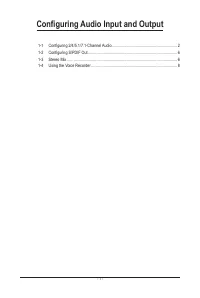 Gigabyte B650
User Manual
Gigabyte B650
User Manual
 Gigabyte GA 73PVM S2H rev 1 0
User Manual
Gigabyte GA 73PVM S2H rev 1 0
User Manual
 Gigabyte GA 770T D3L rev 1 x
User Manual
Gigabyte GA 770T D3L rev 1 x
User Manual
 Gigabyte GA 770T D3L rev 3 1
User Manual
Gigabyte GA 770T D3L rev 3 1
User Manual
 Gigabyte GA 770TA UD3 rev 1
User Manual
Gigabyte GA 770TA UD3 rev 1
User Manual
 Gigabyte GA 790XT USB3 rev 1
User Manual
Gigabyte GA 790XT USB3 rev 1
User Manual
 Gigabyte GA 790XTA UD4 rev 1
User Manual
Gigabyte GA 790XTA UD4 rev 1
User Manual
 Gigabyte GA 870A UD3 rev 2 2
User Manual
Gigabyte GA 870A UD3 rev 2 2
User Manual
 Gigabyte GA 880G UD3H rev 1 x
User Manual
Gigabyte GA 880G UD3H rev 1 x
User Manual
 Gigabyte GA 880GA UD3H rev 2 2
User Manual
Gigabyte GA 880GA UD3H rev 2 2
User Manual
 Gigabyte GA 8AENXP D
User Manual
Gigabyte GA 8AENXP D
User Manual
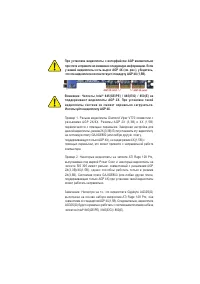 Gigabyte GA 8GE800
User Manual
Gigabyte GA 8GE800
User Manual
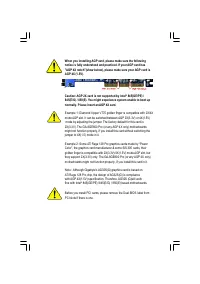 Gigabyte GA 8GE800 Pro
User Manual
Gigabyte GA 8GE800 Pro
User Manual
 Gigabyte GA 8GEM667
User Manual
Gigabyte GA 8GEM667
User Manual
 Gigabyte GA 8GEMT4
User Manual
Gigabyte GA 8GEMT4
User Manual
 Gigabyte GA 8GPNXP Duo
User Manual
Gigabyte GA 8GPNXP Duo
User Manual