Page 3 - tions so you will know how to operate your model properly.; Contents; Bluetooth
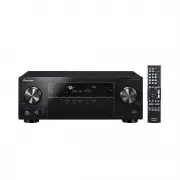
3 Thank you for buying this Pioneer product. Please read through these operating instruc- tions so you will know how to operate your model properly. Contents 01 Before you start Features ....................................................................................................................
Page 4 - SABRE DAC
4 09 Control with HDMI function About the Control with HDMI function ........................................................................................................................... 82Making Control with HDMI connections .......................................................................
Page 5 - Flow of settings on the receiver; Flow for connecting and setting the receiver; Required setting item; Important; Wiring Navi; (When using connections other than the recommended connections)
5 Flow of settings on the receiver Flow for connecting and setting the receiver The unit is a full-fledged AV receiver equipped with an abundance of functions and terminals. It can be used eas-ily after following the procedure below to make the connections and settings. Required setting item : 1 , 2...
Page 6 - Before you start
6 Features ............................................................................................................................................ 7Checking what’s in the box ............................................................................................................ 9Inst...
Page 7 - Features; Audio; A compatible component is required to use the above function.
7 Before you start 01 Features Audio % Dolby Atmos Excluding VSX-830 This AV receiver supports the latest Dolby Atmos surround sound system. Dolby Atmos is a new technology in which, through real time calculation of audio data and meta data (position and time information) included in the audio signa...
Page 8 - Network; This receiver, equipped with
8 Before you start 01 Network % Built-in Wi-Fi This receiver is compatible with Wi-Fi standards, and supports the 2.4 GHz and 5 GHz dual bands. % Wireless Direct With this receiver, you can enjoy music playback without a router by direct wireless connection using an iPhone or other Wi-Fi mobile devi...
Page 9 - Installation; Built-in AVNavigator; iControlAV5 Remote Application; Checking what’s in the box; Note
9 Before you start 01 Installation % Built-in AVNavigator With the built-in AVNavigator that included in this receiver, Wiring Navi can be used to interactively connect and set initial settings of this receiver with a smart phone, tablet, PC or Mac through a home network. In addition, with VSX-1130 ...
Page 10 - Installing the receiver; WARNING; Operating range of remote control unit
10 Before you start 01 Installing the receiver ! When installing this unit, make sure to put it on a level and stable surface. ! Don’t install it on the following places: — on a color TV (the screen may distort) — near a cassette deck (or close to a device that gives off a magnetic field). This may ...
Page 11 - Controls and displays
11 Remote control (In case of VSX-1130/VSX-930) .......................................................................... 12Remote control (In case of VSX-830) ............................................................................................ 13Display .................................
Page 12 - White
12 Controls and displays 02 Remote control (In case of VSX-1130/VSX-930) This section explains how to operate the remote control for the receiver. RECEIVER D.ACCESS DIMMER SLEEP RCU SETUP MPX PRESET TUNE BAND PTY iPod TUNER INPUT USB ADPT ROKU BT TV TV MHL CD OUT P. DVD BD ALL ZONE STBY SOURCE STAND...
Page 14 - TV preset; Input function button
14 Controls and displays 02 The remote has been conveniently color-coded according to component control using the following system: ! White – Receiver control, TV control ! Blue – Operation of other devices and each input ( TUNER , etc.) (See pages 63 , 64 , 66 , 67 and 96 .) 1 u STANDBY/ON This swi...
Page 15 - Display; page
15 Controls and displays 02 Display HDMI DIGITAL ANALOG L C R SL SR XL XR XC LFE AUTO DIGITAL PLUS AUTO SURROUND STREAM DIRECT PROLOGIC Neo:6 ADV.SURROUND STANDARD SP A B SLEEP DSD PCM DTS HD ES 96/24 MSTR S.RTRV SOUND UP MIX MONO dB MULTI-ZONE STEREO TrueHD TUNED RDS ALC ATT USB TV DVD HDMI DVR ...
Page 16 - Front panel
16 Controls and displays 02 Front panel VSX-1130/VSX-930 1 2 5 3 3 4 6 7 8 10 11 9 12 13 14 16 15 VSX-830 1 2 5 3 3 6 7 8 10 11 9 12 13 14 17 18 15 1 u STANDBY/ON This switches between standby and on for this receiver. 2 INPUT SELECTOR dial Use to select an input function. 3 Indicators ! MCACC PRO (...
Page 17 - 5 iPod/iPhone terminals; Use to connect your Apple iPod/iPhone as an audio source (; 6 HDMI 5 INPUT terminal
17 Controls and displays 02 15 iPod/iPhone terminals Use to connect your Apple iPod/iPhone as an audio source ( page 34 ), or connect a USB device for audio and photo playback ( page 34 ). 16 HDMI 5 INPUT terminal Excluding VSX-830 Use for connection to a compatible HDMI device (Video camera, etc.) ...
Page 18 - Connecting your equipment
18 Connecting your equipment ......................................................................................................... 19Rear panel ...................................................................................................................................... 19Determini...
Page 19 - CAUTION; power outlet. Plugging in should be the final step.; Rear panel; The Input; Input function
19 Connecting your equipment (In case of VSX-1130/VSX-930) 03 Connecting your equipment This receiver provides you with many connection possibilities, but it doesn’t have to be difficult. This chapter explains the kinds of components you can connect to make up your home theater system. CAUTION ! Bef...
Page 20 - Determining the speakers’ application; [B] Dolby Enabled Speaker system connection
20 Connecting your equipment (In case of VSX-1130/VSX-930) 03 Determining the speakers’ application This unit permits you to build various surround systems, in accordance with the number of speakers you have. ! Be sure to connect speakers to the front left and right channels ( L and R ). ! It is als...
Page 21 - HDZONE; Other speaker connections; Automatically conducting optimum sound tuning (Full Auto MCACC)
21 Connecting your equipment (In case of VSX-1130/VSX-930) 03 [C] 7.2 channel surround system (Surround back/Front wide) connection ! Speaker System setting: 7.2ch SB/FW SBR SBL SR SL FWR FWL R SW2 C SW1 L A 7.2 ch surround system connects the left and right front speakers ( L / R ), the center spea...
Page 22 - Placing the speakers; Listener speaker placement guidelines; TMdL; Layout as seen from above; Some tips for improving sound quality
22 Connecting your equipment (In case of VSX-1130/VSX-930) 03 Placing the speakers Refer to the chart below for placement of the speakers you intend to connect. Listener speaker placement guidelines Listener speakers, such as Left, Right, Center, Left Surround, and Right Surround, are placed at ear ...
Page 23 - Connecting the speakers; These speaker terminals carry; HAZARDOUS LIVE; voltage. To prevent the risk of electric shock when con-; Bare wire connections; speaker cables to your speakers.; SUBWOOFER 2; Installing your speaker system; Standard surround connection; When only connecting one surround back speaker, connect it to the
23 Connecting your equipment (In case of VSX-1130/VSX-930) 03 Connecting the speakers Each speaker connection on the receiver comprises a positive (+) and negative (–) terminal. Make sure to match these up with the terminals on the speakers themselves.This unit supports speakers with a nominal imped...
Page 24 - Ceiling; terminal when using; Speaker System
24 Connecting your equipment (In case of VSX-1130/VSX-930) 03 Dolby Enabled Speaker Dolby enabled speakers bring a new sense of height and immersion to the listening experience without installa-tion of overhead speakers. Ceiling Listener Dolby Enabled Speaker The front or surround speaker and Dolby ...
Page 25 - Bi-amping your speakers
25 Connecting your equipment (In case of VSX-1130/VSX-930) 03 ! Speaker System setting: 7.2ch/5.2.2ch Speaker Setting : Dolby Sp (Surr) TOP MIDDLE SURROUND SURROUND BACK CENTER 5.2.2ch 5.2.ch SPEAKER B 5.2.2ch HDZONE / BI-AMP FRONT R L R L R L R L (Single) B SUBWOOFER PRE OUT 1 2 7.2.ch AUDIO OUT A ...
Page 26 - Bi-wiring your speakers; About the audio connection; Transferable audio signals; Types of cables and terminals; About the video converter; The Input Setup menu; Notes
26 Connecting your equipment (In case of VSX-1130/VSX-930) 03 Bi-wiring your speakers Your speakers can also be bi-wired if they support bi-amping. ! With these connections, the Speaker System setting makes no difference. CAUTION ! Don’t connect different speakers from the same terminal in this way....
Page 27 - About HDMI; Control with HDMI func-; are trademarks of Sony Corporation.; Connecting your TV and playback components; Connecting using HDMI; Control with HDMI function
27 Connecting your equipment (In case of VSX-1130/VSX-930) 03 About HDMI The HDMI connection transfers uncompressed digital video, as well as almost every kind of digital audio.This receiver incorporates High-Definition Multimedia Interface (HDMI ® / TM ) technology. This receiver supports the funct...
Page 28 - Connecting your DVD player with no HDMI output
28 Connecting your equipment (In case of VSX-1130/VSX-930) 03 ! When connecting to an HDMI/DVI-compatible monitor using the HDMI OUT 2 terminal, switch the HDMI output setting to OUT 2 or OUT 1+2 . See Switching the HDMI output on page 88 . Also, MAIN/HDZONE must be set to MAIN beforehand ( page 111...
Page 29 - Connecting your TV with no HDMI input; ing input terminal settings are necessary (; Connecting a satellite/cable receiver or other set-top box; The; tal input you connected the set-top box to (see
29 Connecting your equipment (In case of VSX-1130/VSX-930) 03 Connecting your TV with no HDMI input This diagram shows connections of a TV (with no HDMI input) and DVD player (or other playback component) to the receiver. Important ! With these connections, the picture is not output to the TV even i...
Page 30 - terminal. When doing so, also connect the receiver and TV by HDMI (see; digital input you connected the set-top box to (see; Connecting other audio components; ANALOG IN 1
30 Connecting your equipment (In case of VSX-1130/VSX-930) 03 ! If your set-top box is equipped with an HDMI output terminal, we recommend connecting it to the receiver’s HDMI SAT/CBL IN terminal. When doing so, also connect the receiver and TV by HDMI (see Connecting using HDMI on page 27 ). /MHL B...
Page 31 - Connecting the subwoofer; Speaker Setting; LARGE; Connecting AM/FM antennas; Connecting external antennas; AM LOOP
31 Connecting your equipment (In case of VSX-1130/VSX-930) 03 Connecting the subwoofer 2 MONITOR OUT SUBWOOFER PRE OUT 1 AUDIO OUT 2 SUBWOOFER PRE OUT 1 AUDIO OUT ANALOG INPUT Powered subwoofer 1 ANALOG INPUT Powered subwoofer 2 ! If you’re not using a subwoofer, change the front speaker setting (se...
Page 32 - Making MULTI-ZONE connections; MULTI-ZONE listening options; Sub Zone; HDMI
32 Connecting your equipment (In case of VSX-1130/VSX-930) 03 Making MULTI-ZONE connections Equipment connected to this receiver in a different room (sub zone) from a room with this receiver (main zone) can be played by operating this receiver (multi-zone function). This receiver can configure a HDZ...
Page 33 - Connect the speaker to the surround back speaker terminal.; Connecting to the network through LAN interface; Setting network connection; LAN terminal specifications
33 Connecting your equipment (In case of VSX-1130/VSX-930) 03 Multi-zone connection using the HDMI terminal and speaker terminals (HDZONE) Important ! The settings must be changed at ZONE Setup in order to use the HDZONE function ( page 111 ). ! To use the HDZONE functions, set Control or Control Mo...
Page 34 - Connecting an iPod; Tip; Playing an iPod; Playing an iPod; Connecting a USB device; front panel of this receiver.; Playing a USB device; Connecting an MHL-compatible device; device to the MHL terminal on the rear panel of this receiver.; MHL Setup; Connecting an HDMI-equipped component to the front panel
34 Connecting your equipment (In case of VSX-1130/VSX-930) 03 Connecting an iPod This receiver has a dedicated iPod terminal that will allow you to control playback of audio content from your iPod using the controls of this receiver. 5V 1 A HDMI 5 INPUT iPod/iPhone USB cable included with the iPod T...
Page 35 - Connecting an IR receiver; receiver remote sensor window.; Plugging in the receiver; Do not use any power cord other than the one supplied with this unit.
35 Connecting your equipment (In case of VSX-1130/VSX-930) 03 Connecting an IR receiver If you keep your stereo components in a closed cabinet or shelving unit, or you wish to use the sub zone remote control in another zone, you can use an optional IR receiver (such as a Niles or Xantech unit) to co...
Page 37 - Speaker system setting
37 Connecting your equipment (In case of VSX-830) 04 Connecting your equipment This receiver provides you with many connection possibilities, but it doesn’t have to be difficult. This chapter explains the kinds of components you can connect to make up your home theater system. CAUTION ! Before makin...
Page 38 - After connecting, be sure to conduct the; Full Auto MCACC; cient distance from your CRT TV.
38 Connecting your equipment (In case of VSX-830) 04 [B] Front Bi-amping connection (High quality surround) ! Speaker System setting: Front Bi-Amp R SW2 C SW1 L Front Bi-Amp Play the front speaker in high sound quality (bi-amp). Other speaker connections ! Your favorite speaker connections can be se...
Page 42 - HDMI Setup
42 Connecting your equipment (In case of VSX-830) 04 ! For input components, connections other than HDMI connections are also possible (see Connecting your DVD player with no HDMI output on page 42 ). ! If you want to listen to the sound of the TV over the receiver, connect the receiver and TV with ...
Page 44 - Connecting using
44 Connecting your equipment (In case of VSX-830) 04 ! When connecting to a satellite/cable TV tuner with an optical digital audio cable or a coaxial digital audio cable, performing input terminal settings are are necessary ( page 59 ). ! If your set-top box is equipped with an HDMI output terminal,...
Page 48 - Basic Setup
48 Initial settings of this receiver ...................................................................................................... 49Setting with a special application (Start-up Navi) ...................................................................... 49Perform settings using the A...
Page 49 - Initial settings of this receiver; WIRELESS; Perform settings using the AVNavigator built into this receiver; How to use the built-in AVNavigator; Operating Environment; Press; STATUS
49 Basic Setup 05 Initial settings of this receiver There are three ways to initialize this receiver. ! Setting with a special application (Start-up Navi) on page 49 ! Perform settings using the AVNavigator built into this receiver on page 49 ! Setting by referring to the operating instructions on p...
Page 50 - iPad; Select and use the desired function.
50 Basic Setup 05 ! With a Windows PC, you can use the following method to launch AVNavigator. Launch Explorer and right-click <VSX-1130>, <VSX-930> or <VSX-830> displayed in the ‘ Network ’ folder, then click ‘ View device webpage ’. ! On a Mac, launch Safari and click <VSX-113...
Page 51 - Setting by referring to the operating instructions; About the Home Menu; work connection
51 Basic Setup 05 Setting by referring to the operating instructions Use HOME MENU when referring to the operating instructions for various settings. About the Home Menu This receiver’s Home Menu ( HOME MENU ) can be used to make various settings and to check and adjust items that have been set. ! W...
Page 52 - 1 Enter the address of your proxy server or the domain name.
52 Basic Setup 05 A: Connecting with a LAN cable (wired LAN) Simply connect the LAN cable. Network settings are unnecessary. ! When wireless LAN is set once, the following procedures 1 through 3 must be executed. ! Only when connected to a network without a DHCP server function, the following networ...
Page 53 - to select ‘Wireless’.; YES
53 Basic Setup 05 C: Perform this receiver’s settings using the iOS equipment (iOS version 7.1 or later) The Wi-Fi settings of your iPod/iPhone/iPad (equipment with iOS version 7.1 or later) can be applied to this receiver. ! The iOS equipment and router must be connected through Wi-Fi. ! Check that...
Page 54 - D: WPS connection settings; 1 Select the DHCP setting you want.
54 Basic Setup 05 ! Select [Complete]. XXXXXX Note This screen is iOS 7.1. When software other than iOS 7.1 is installed on an iPhone, iPod touch, or iPad, the opera-tion for the iPhone, iPod touch, or iPad may change. D: WPS connection settings WPS is an abbreviation for “Wi-Fi Protected Setup”. Th...
Page 55 - G: Setting with Web Control; Making network settings using Safari
55 Basic Setup 05 5 Select ‘Network, Bluetooth’ from the HOME MENU.6 Select ‘Network Connection’ from the Network, Bluetooth menu.7 Select ‘Wireless’ from the Network Connection menu.8 Select [Manual] with the i / j button, and press the ENTER button. 9 Enter the SSID with the i / j / k / l button, ...
Page 56 - Select the frequency with; Friendly Name; Select ‘Network Information’ from the Network, Bluetooth menu.; to select the setting.; Other network settings; Input the name you want.
56 Basic Setup 05 6 Select the frequency with k / l . Select the frequency band of Wireless Direct connection. If you do not know the frequency band of your equip- ment, select 2.4GHz . ! 2.4GHz – Uses the band of 2.4 GHz. ! 5GHz – Uses the band of 5 GHz. 7 Select ‘OK’, then press ENTER. When WEP is...
Page 57 - Parental Lock; Specify whether to turn Parental Lock on or off.
57 Basic Setup 05 Parental Lock Set restrictions for using Internet services. Also set the password accompanying the usage restrictions. ! Upon shipment from the factory, the password is set to “0000”. Important When the INTERNET RADIO , PANDORA , Spotify or FAVORITES input is selected, the setting ...
Page 58 - Data Management; Make sure ‘OK’ is selected, then press ENTER.; The System Setup and Other Setup menus; Problems when using the Auto MCACC Setup
58 Basic Setup 05 ! EQ Type – When you select Expert for Measurement Type , set the correction method of the frequency char- acteristics of the viewing environment. Usually, set SYMMETRY . For details, see Automatic MCACC (Expert) on page 99 . ! MCACC – The six MCACC presets are used for storing sur...
Page 59 - Input function default and possible settings; Select the input function that you want to set up.; The Input Setup
59 Basic Setup 05 The Input Setup menu You only need to make settings in the Input Setup menu if you didn’t hook up your digital equipment according to the default settings (see Input function default and possible settings on page 59 ). In this case, you need to tell the receiver what equipment is h...
Page 60 - Changing the OSD display language (OSD Language)
60 Basic Setup 05 ! In case of VSX-830 Input function Input Terminals HDMI Audio BD ( BD ) DVD IN 1 k SAT/CBL IN 2 k HDMI 1 k HDMI 2 k HDMI 3 IN 3 HDMI 4 IN 4 HDMI 5 / MHL IN 5 INTERNET RADIO PANDORA Spotify MEDIA SERVER FAVORITES iPod/USB TV OPTICAL <a> CD COAXIAL TUNER BT AUDIO a When ARC at...
Page 61 - Basic playback
61 Playing a source ............................................................................................................................. 62Playing an iPod .............................................................................................................................. 63P...
Page 62 - Playing a source; Switch on your system components and receiver.; Listening to your system; Turning off the sound; Use ALL; Setting the Audio options
62 Basic playback 06 Playing a source Here are the basic instructions for playing a source (such as a DVD disc) with your home theater system. VSX-1130/VSX-930 STANDBY/ON VOLUME iPod TUNER USB ADPT ROKU BT TV MHL CD DVD BD SAT SOURCE CONTROL HDMI NET ALL SURR AUTO ADV LISTENING MODE VSX-830 1 Switch...
Page 63 - Playing back audio files stored on an iPod; Finding what you want to play; RETURN; All; Basic playback controls; Switching the iPod controls; iPod iPhone DIRECT CONTROL
63 Basic playback 06 Playing an iPod This receiver has the iPod/iPhone terminal that will allow you to control playback of audio content from your iPod using the controls of this receiver.Here we describe the procedure for playback on an iPod. For playback on a USB device, see Playing a USB device o...
Page 64 - Playing back audio files stored on a USB memory device; Playing back photo files stored on a USB memory device; to select a folder, then press ENTER to browse that folder.; What it does
64 Basic playback 06 Playing a USB device It is possible to play files using the USB interface on the front of this receiver. ! Compatible USB devices include external magnetic hard drives, portable flash memory drives (particularly key drives) and digital audio players (MP3 players) of format FAT16...
Page 65 - About playable file formats; Music files; Playing an MHL-compatible device; For connection of MHL standard-compatible equipment, refer to; MHL; receiver, the power to the receiver must be turned on.
65 Basic playback 06 About playable file formats The USB function of this receiver supports the following file formats. Note that some file formats are not available for playback although they are listed as playable file formats. ! For MP3, WAV, AAC, FLAC, AIFF, Apple Lossless, and DSD files, gaples...
Page 66 - Saving station; Automatic tuning; Improving FM sound; Tune to a station you want to memorize.; Listening to the radio; Listening to station presets; Listening to station presets
66 Basic playback 06 Listening to the radio The following steps show you how to tune in to FM and AM radio broadcasts using the automatic (search) and manual (step) tuning functions. If you already know the frequency of the station you want, see Tuning directly to a station below. Once you are tuned...
Page 67 - Searching for RDS programs; Music playback using; wireless technology; Remote control operation
67 Basic playback 06 Searching for RDS programs One of the most useful features of RDS is the ability to search for a particular kind of radio program. You can search for any of the program types listed above. 1 Press TUNER to select the FM band. ! RDS is only possible in the FM band. 2 Press PTY. P...
Page 68 - Pairing with the unit (Initial registration); Listen to music on the unit from a; capable device; Radio wave caution
68 Basic playback 06 Pairing with the unit (Initial registration) In order for the unit to playback music stored on a Bluetooth capable device, pairing must first be performed. Pairing should be performed when first using the unit with the Bluetooth capable device, or when the pairing data on the de...
Page 69 - Scope of operation
69 Basic playback 06 Notes ! In the event noise appears in your television image, there is the possibility that a Bluetoot h wireless technology enabled device or this unit (including products supported by this unit) are causing signal interference with the antenna input connector of your television...
Page 71 - Enjoying various types of playback using the listening modes; Auto playback; playback of a source.; Standard surround sound; With two channel sources
71 Listening to your system 07 Enjoying various types of playback using the listening modes Using this receiver, you can listen to any source in surround sound. However, the options available will depend on your speaker setup and the type of source you’re listening to.To play with surround sound, ch...
Page 72 - Using the Advanced surround effects; Using Stream Direct; About Dolby Atmos
72 Listening to your system 07 Using the Advanced surround effects The Advanced surround effects can be used for a variety of additional surround sound effects. Most Advanced Surround modes are designed to be used with film soundtracks, but some modes are also suited for music sources. Try different...
Page 73 - Selecting MCACC presets; Choosing the input signal; to select the input signal corresponding to the source component.; Better sound using Phase Control; to switch on phase correction.
73 Listening to your system 07 Selecting MCACC presets ! Default setting: MEMORY 1 If you have calibrated your system for different listening positions, you can switch between settings to suit the kind of source you’re listening to and where you’re sitting (for example, watching movies from a sofa, ...
Page 74 - Better sound using Phase Control and Full Band Phase Control; to select ‘FULLBND’.; Checking MCACC Data
74 Listening to your system 07 Better sound using Phase Control and Full Band Phase Control Excluding VSX-830 This receiver is equipped with the two types of functions that correct phase distortion and group delay: Phase Control and Full Band Phase Control. Activating Full Band Phase Control is stro...
Page 75 - Playback with NETWORK features
75 Introduction ................................................................................................................................... 76Playback with Network functions ................................................................................................ 77About network...
Page 76 - Introduction; Listening to Internet radio stations; About playable DLNA network devices; About the DHCP server function
76 Playback with NETWORK features 08 Introduction This receiver is equipped with the LAN terminal and you can enjoy the following features by connecting your components to these terminals. Listening to Internet radio stations You can select and listen to your favorite Internet radio station from the...
Page 77 - About HTC Connect; HTC Connect Certified Smartphones; Playback with Network functions; Press NET repeatedly to select the category you want to play back.
77 Playback with NETWORK features 08 About HTC Connect This receiver features “HTC Connect”, a simple way to enjoy music content from your HTC Connect certified smart phone.1 HTC Connect music streaming provided on this product has been developed based on interoperability testing as defined by the H...
Page 78 - About list of Internet radio; vTuner; Saving and retrieving Internet radio stations; Playing back your favorite songs; Display the Internet Radio list screen.; to select ‘Get access code’, then press ENTER.; Help; Listening to Pandora Internet Radio; PANDORA; Resetting the system; Inputting characters using the software keyboard; About the Spotify audio stream playback function
78 Playback with NETWORK features 08 About list of Internet radio The list of Internet radio stations on this receiver is created, edited, and managed by the vTuner database service exclusively for use with this receiver. For details about vTuner, see vTuner on page 132 . Saving and retrieving Inter...
Page 79 - Preparations (2) Connecting this unit to the network; Playing back audio files stored on components on the network; FAVORITES; About network playback; Windows Media Player; Windows Media Player 11/Windows Media Player 12; DLNA; DLNA CERTIFIED; Audio Player; , the DLNA Logo and DLNA CERTIFIED; Living Network Alliance.; Content playable over a network; Disclaimer for Third Party Content
79 Playback with NETWORK features 08 Preparations (2) Connecting this unit to the network ! Connect this unit to the network and also to the Internet (pages 33 , 46 ). ! Connect the mobile digital device by Wi-Fi to the wireless LAN router of the same network as the one to which this unit is connect...
Page 80 - About playback behavior over a network; connection may be blocked.; back may not be possible even with the file formats listed here.
80 Playback with NETWORK features 08 About playback behavior over a network ! Playback may stall when the PC is switched off or any media files stored on it are deleted while playing content. ! If there are problems within the network environment (heavy network traffic, etc.) content may not be disp...
Page 82 - About the Control with HDMI function; Making Control with HDMI connections; Control with; Select the ‘Control Mode’ setting you want.
82 Control with HDMI function 09 About the Control with HDMI function Synchronized operations below with a Control with HDMI-compatible Pioneer TV or Blu-ray Disc player are pos- sible when the component is connected to the receiver using an HDMI cable. ! The receiver’s volume can be set and the sou...
Page 83 - Before using synchronization; Sound Retriever Link; Cautions on the Control with HDMI function
83 Control with HDMI function 09 Before using synchronization Once you have finished all connections and settings, you must: 1 Put all components into standby mode.2 Turn the power on for all components, with the power for the TV being turned on last.3 Choose the HDMI input to which the TV is connec...
Page 84 - Using other functions
84 Setting the Audio options ............................................................................................................ 85Setting the Video options ............................................................................................................. 87Switching the ou...
Page 85 - Note that if a setting doesn’t appear in the; AUDIO PARAMETER; menu, it is unavailable due to the current; to select the setting you want to adjust.; See the table below for the options available for each setting.; Press RETURN to confirm and exit the menu.; Audio parameter menu; Setting
85 Using other functions 10 Setting the Audio options There are a number of additional sound settings you can make using the AUDIO PARAMETER menu. The defaults, if not stated, are listed in bold. Important ! Note that if a setting doesn’t appear in the AUDIO PARAMETER menu, it is unavailable due to ...
Page 87 - Setting the Video options; VIDEO PARAMETER; Video parameter menu
87 Using other functions 10 p ! This can be set when MANUAL is selected for V.SPs . ! You can’t use the Virtual Wide mode when the headphones are connected to this receiver or when any of the stereo, Front Stage Surround Advance, Sound Retriever Air or Stream Direct modes is selected. ! Excluding VS...
Page 88 - Switching the speaker terminals; to switch the speaker terminals to be played.; When you select; Manual speaker setup; Switching the HDMI output; HDMI 4K/60p signal output setting; Select an input terminal that you wish to change settings using
88 Using other functions 10 Switching the output (OUTPUT PARAMETER) You can press OUT P. to switch the output of speaker terminals or HDMI terminals to be played. Switching the speaker terminals In case of VSX-1130/VSX-930 If you selected 7.2ch/5.2.2ch , 7.2ch SB/FW or Speaker B at Speaker system se...
Page 89 - Changing the channel level while listening; to select the channel you wish to adjust.; Input Volume Absorber; Adjust the volume using; Using the MULTI-ZONE controls; ZONE Setup; Press MULTI-ZONE CONTROL on the front panel.; Saving station presets; HDZONE remote controls; HDZ; Network settings from a web browser
89 Using other functions 10 Changing the channel level while listening Using the channel level settings, you can adjust the overall balance of your speaker system, an important factor when setting up a home theater system. 1 Press CH LV..2 Use i / j to select the channel you wish to adjust. 3 Adjust...
Page 90 - Using the sleep timer; Press SLEEP repeatedly to set the sleep time.; SLEEP; Dimming the display; FL OFF; Checking your system settings; to check the system setting.; When you’re finished, press STATUS again to switch off the display.
90 Using other functions 10 Using the sleep timer The sleep timer switches the receiver into standby after a specified amount of time so you can fall asleep without worrying about the receiver being left on all night. Use the remote control to set the sleep timer. % Press SLEEP repeatedly to set the...
Page 91 - MULTI ZONE OFF; Set the; Control; with HDMI to; OFF; RESET; Select ‘RESET’ using PRESET; The display shows; Press ENTER to confirm.; Default system settings
91 Using other functions 10 Resetting the system Use this procedure to reset all the receiver’s settings to the factory default. Use the front panel controls to do this. Set MULTI-ZONE to MULTI ZONE OFF . ! Disconnect the iPod and USB memory device from the receiver beforehand. ! Set the Control wit...
Page 92 - Operation of other devices by remote control
92 About the Remote Setup menu .................................................................................................... 93Operating multiple receivers ........................................................................................................ 93Setting the remote to co...
Page 93 - Operation of other devices by remote control (excluding VSX-830); About the Remote Setup menu; Operating multiple receivers; Remote Control Mode Setup; Press and hold RCU SETUP, then press ‘4’ for three seconds.; Setting the remote to control other components; Programming signals from other remote controls; Selecting preset codes directly; Press and hold RCU SETUP, then press ‘1’ for three seconds.; Preset code list; Press RCU SETUP to exit the preset setup mode.
93 Operation of other devices by remote control (excluding VSX-830) 11 About the Remote Setup menu The Remote Setup mode is set by pressing the number button while pressing RCU SETUP . The different items on the Remote Setup menu are described below. For their setting procedures, refer to the explan...
Page 94 - Press and hold RCU SETUP, then press ‘2’ for three seconds.; Erasing all learnt settings that are in one; Press RCU SETUP to exit the programming mode.; Erasing one of the remote control button settings; Press and hold RCU SETUP, then press ‘8’ for three seconds.; Press and hold the button to be erased for three seconds.
94 Operation of other devices by remote control (excluding VSX-830) 11 Programming signals from other remote controls If the preset code for your component is not available, or the available preset codes do not operate correctly, you can program signals from the remote control of another component. ...
Page 95 - Erasing all learnt settings that are in one input function; Setting the switching time for the receiver operation; Resetting the remote control settings; Default preset codes
95 Operation of other devices by remote control (excluding VSX-830) 11 Erasing all learnt settings that are in one input function This operation erases all the operational settings of other devices that have been programmed in one input func-tion, and restores the factory default.This function is ha...
Page 96 - Controlling components; Setting the remote to control; TV and Audio/Video components
96 Operation of other devices by remote control (excluding VSX-830) 11 Controlling components This remote control can control components after entering the proper codes (see Setting the remote to control other components on page 93 for more on this). Use the input function buttons to select the comp...
Page 97 - Audio/Video components; LD
97 Operation of other devices by remote control (excluding VSX-830) 11 Audio/Video components Button(s) LD CD/CD-R/SACD MD/DAT TAPE u SOURCE POWER ON/OFF POWER ON/OFF POWER ON/OFF POWER ON/OFF Number buttons numerics numerics numerics — CLR +10 >10/CLEAR CLEAR<a> CLEAR ENTER (CLASS) ENTER D...
Page 99 - Select the parameters you want to set.
99 The MCACC PRO (VSX-1130/VSX-930)/Advanced MCACC (VSX-830) menu 12 Making receiver settings from the MCACC PRO (VSX-1130/VSX- 930)/Advanced MCACC (VSX-830) menu The MCACC PRO/Advanced MCACC (Multi Channel ACoustic Calibration) system was developed in Pioneer’s laboratories with the aim of making i...
Page 100 - Wait for the Auto MCACC Setup to finish outputting test tones.; Manual
100 The MCACC PRO (VSX-1130/VSX-930)/Advanced MCACC (VSX-830) menu 12 ! STAND.WAVE Multi-Point (only available when the Auto MCACC Menu above is EQ Pro & S-Wave ) – In addition to measurements at the listening position, you can use two more reference points for which test tones will be analyzed ...
Page 101 - Manual MCACC setup; Select the setting you want to adjust.; Fine Channel Level; Select ‘Fine Channel Level’ from the Manual MCACC setup menu.; Fine Speaker Distance; Select each channel in turn and adjust the distance as necessary.
101 The MCACC PRO (VSX-1130/VSX-930)/Advanced MCACC (VSX-830) menu 12 Manual MCACC setup You can use the settings in the Manual MCACC setup menu to make detailed adjustments when you’re more familiar with the system. Before making these settings, you should have already completed Automatically con- ...
Page 102 - Acoustic Calibration EQ Professional; Type A: Reverberance of high vs. low frequencies; Type B: Reverb characteristics for different channels; Using Acoustic Calibration EQ Professional; Automatically conducting optimum sound tuning (Full
102 The MCACC PRO (VSX-1130/VSX-930)/Advanced MCACC (VSX-830) menu 12 Standing Wave ! Default setting: ON / ATT 0.0dB (all filters) Acoustic standing waves occur when, under certain conditions, sound waves from your speaker system resonate mutually with sound waves reflected off the walls in your li...
Page 104 - Renaming MCACC presets
104 The MCACC PRO (VSX-1130/VSX-930)/Advanced MCACC (VSX-830) menu 12 Acoustic Cal EQ Use this to display the calibration values for the frequency response of the various channels set in the different MCACC presets. See Acoustic Calibration EQ Adjust on page 102 for more on this. 1 Select ‘Acoustic ...
Page 106 - Making receiver settings from the System Setup menu
106 The System Setup and Other Setup menus 13 Making receiver settings from the System Setup menu The following section describes how to change the speaker-related settings manually and make various other settings (input selection, OSD language selection, etc.). ! With factory default settings, the ...
Page 107 - Select ‘Speaker System’ from the Manual SP Setup menu.; Select the speaker system setting.; Select ‘X. OVER’ and set the crossover frequency.
107 The System Setup and Other Setup menus 13 In case of VSX-830 ! Default setting: 5.2ch 1 Select ‘Speaker System’ from the Manual SP Setup menu. See Making receiver settings from the System Setup menu on page 106 if you’re not already at this screen. 2 Select the speaker system setting. ! 5.2ch – ...
Page 108 - Channel Level; Select ‘Channel Level’ from the Manual SP Setup menu.; Speaker Distance
108 The System Setup and Other Setup menus 13 In case of VSX-830 Use this setting to specify your speaker configuration (size, number of speakers and crossover frequency). It is a good idea to make sure that the settings made in Automatically conducting optimum sound tuning (Full Auto MCACC) on page...
Page 109 - The Other Setup menu; Auto Power Down; Volume Setup; Select the Volume Limit setting you want.
109 The System Setup and Other Setup menus 13 MHL Setup Select whether or not to switch the input automatically to the MHL input when an MHL-compatible device is connected. ! Default setting: ON 1 Press MAIN RECEIVER to switch the remote control to the receiver operation mode, and then press HOME ME...
Page 110 - Software Update; Check on the screen whether or not an update file was found.; Status messages; On Screen Display Setup
110 The System Setup and Other Setup menus 13 Software Update Use this procedure to update the receiver’s software and check the version. There are two ways to update: via the Internet and via a USB memory device.Updating via the Internet is performed by accessing the file server from the receiver a...
Page 111 - On the AVNavigator menu screen, select Network Setup.; Using Safari to set a friendly name
111 The System Setup and Other Setup menus 13 ZONE Setup Excluding VSX-830 Switches the sub-zone setting. 1 Select ‘ZONE Setup’ from the Other Setup menu.2 Select ‘MAIN/HDZONE’, then press ENTER.3 Set the usage of the HDMI OUT 2 terminal. ! MAIN : Select this to output the same input source as in th...
Page 112 - Using Safari to update the firmware; If; Bonjour; . Once the firmware update; The firmware upload status screen is displayed.; The upload process finished successfully.; ” will be shown when the update is completed.
112 The System Setup and Other Setup menus 13 Using Safari to update the firmware 1 Launch Safari on your computer.2 Press Bookmark icon. Click Bonjour list (a), and then select this receiver’s name (Friendly Name) (b) in Bookmark. If Bonjour list is not displayed, access the IP address“http://(the ...
Page 113 - FAQ
113 Troubleshooting .......................................................................................................................... 114Power ............................................................................................................................................ 1...
Page 114 - Troubleshooting; Press; Power
114 FAQ 14 Troubleshooting Incorrect operations are often mistaken for trouble and malfunctions. If you think that there is something wrong with this component, check the points below. Sometimes the trouble may lie in another component. Investigate the other components and electrical appliances bein...
Page 115 - Other audio problems; Symptom
115 FAQ 14 Symptom Remedy Excluding VSX-830: No sound from surround back speakers. Check that the surround back speakers are set to LARGE or SMALL , and the surround speakers are not set to NO (see Speaker Setting on page 107 ). Check the speaker connections (see Connecting the speakers on page 23 )...
Page 116 - BT AUDIO; Settings
116 FAQ 14 BT AUDIO Symptom Remedy The Bluetooth wireless technology device cannot be connected or oper-ated. Sound from the Bluetooth wire- less technology device is not emitted or the sound is interrupted. Check that no object that emits electromagnetic waves in the 2.4 GHz band (microwave oven, w...
Page 117 - Professional Calibration EQ graphical output
117 FAQ 14 Professional Calibration EQ graphical output Symptom Remedy The reverb characteristics graph after EQ calibration does not appear entirely flat. There are cases where the graph does not appear flat (even when selecting ALL CH ADJ in the Auto MCACC Setup) due to adjustments made to compens...
Page 120 - iPod
120 FAQ 14 iPod Symptom Cause Remedy iPod is not recognized. This receiver recognizes the iPod as a fraud. Switch off and on again this receiver.Reconnect the iPod with the receiver switched off.Change to an input other than iPod/USB, then set the input back to iPod/USB. iPod touch/iPhone is not rec...
Page 122 - Wireless LAN; Symptoms
122 FAQ 14 Wireless LAN Symptoms Causes Remedies Network cannot be accessed via wireless LAN. SSID uses double-byte characters such as in the Japanese language. This receiver is compatible only with single-byte alphanu-merical characters and some symbols such as the under-bar. If characters other th...
Page 123 - Additional information
123 About Wi-Fi ® ................................................................................................................................. 124 SABRE DAC TM ................................................................................................................................ ...
Page 124 - The Wi-Fi CERTIFIED Logo is a certification mark of Wi-Fi Alliance.; and the logo are trademarks of ESS Technology, Inc.
124 Additional information 15 About Wi-Fi ® The Wi-Fi CERTIFIED Logo is a certification mark of Wi-Fi Alliance. The Wi-Fi Protected Setup Identifier Mark is a certification mark of Wi-Fi Alliance. SABRE DAC TM SABRE DAC TM and the logo are trademarks of ESS Technology, Inc. About HDMI HDMI (High-Def...
Page 125 - Windows 8; This product is Windows 8 Compatible.; Software license notice; About Apple Lossless Audio Codec; About FLAC; FLAC Decoder; Copyright; About Spotify
125 Additional information 15 Windows 8 This product is Windows 8 Compatible. Windows ® and the Windows logo are trademarks of the Microsoft group of companies. MHL MHL, the MHL Logo, and Mobile High-Definition Link are trademarks or registered trademarks of MHL, LLC in the United States and other c...
Page 126 - About Performance Audio Framework; Surround sound formats; Dolby
126 Additional information 15 About Performance Audio Framework Copyright (C) 2004-2014 Texas Instruments Incorporated - http://www.ti.com/All rights reserved.Redistribution and use in source and binary forms, with or without modification, are permitted provided that the following conditions are met...
Page 127 - Auto Surround, ALC and Stream Direct with different input signal; Multichannel signal formats; Dolby Atmos format
127 Additional information 15 Auto Surround, ALC and Stream Direct with different input signal formats The following charts show what you will hear with different input signal formats, depending on the Stream Direct mode (see Using Stream Direct on page 72 ) you have selected. Stereo (2 channel) sig...
Page 128 - Speaker Setting Guide; Position of front speakers and monitor
128 Additional information 15 Speaker Setting Guide In order to achieve an even better surround effect, it is important to accurately position the speakers and make their volume and tone characteristics uniform so as to finely focus the multi-channel sound.The three major elements in positioning the...
Page 129 - Position of center speaker and monitor; About messages displayed when using network functions; Important information regarding the HDMI connection; Configuration A; The picture quality will change slightly during conversion.; Configuration B; display every time you switch input functions.; Cleaning the unit; Use a polishing cloth or dry cloth to wipe off dust and dirt.
129 Additional information 15 Position of center speaker and monitor Since mostly dialogs are output from the center speaker, keeping the center speaker as close as possible to the screen makes the overall sound more natural. For TVs using Braun tubes, however, when installing the center speaker on ...
Page 130 - Declaration of Conformity with regard to the R&TTE Directive; PIONEER HOME ELECTRONICS; ΜΕ ΤΗΝ ΠΑΡΟΥΣΑ Pioneer ΔΗΛΩΝΕΙ
130 Additional information 15 Declaration of Conformity with regard to the R&TTE Directive 1999/5/EC Manufacturer: PIONEER HOME ELECTRONICS CORPORATION 1-1, Shin-ogura, Saiwai-ku, Kawasaki-shi, Kanagawa 212-0031, Japan EU Representative’s: Pioneer Europe NV Haven 1087, Keetberglaan 1, 9120 Melse...
Page 131 - Glossary; Audio formats/Decoding; Calibrating the sound field/Improving the sound quality; AUTO; Settings to create virtual front height channel audio.
131 Additional information 15 Glossary Audio formats/Decoding Dolby The Dolby technologies are explained below. See http://www.dolby.com for more detailed information. Dolby Digital Dolby Digital is a multichannel digital audio coding system widely used in cinemas, and in the home for DVD and digita...
Page 132 - ALC; Network function
132 Additional information 15 ALC (Auto Level Control) In the Auto level control ( ALC ) mode, this receiver equalizes playback sound levels. Also, the low and high frequency sounds, dialogs, surround effects, etc., that are difficult to hear when the vol-ume is low are adjusted to be optimal for th...
Page 133 - function; Receiver function
133 Additional information 15 Bluetooth function Bluetooth wireless technology A short-range wireless communications standard for digital devices. Information is exchanged between devices several meters to several tens of meters apart using radio waves. It uses radio waves on the 2.4 GHz band which ...
Page 134 - Features index
134 Additional information 15 Features index AVNavigator See How to use the built-in AVNavigator on page 49 . ECO MODE 1, 2 See Using the Advanced surround effects on page 72 . HDZONE See Making MULTI-ZONE connections on page 32 . HTC Connect See About HTC Connect on page 77 . Pandora See Listening ...
Page 135 - Specifications; For Oceania model
135 Additional information 15 Specifications Audio Section (VSX-1130/VSX-930) Rated power output (1 kHz, 6 W , 1 %) Front, Center, Surround, Surround back ....................................................................................150 W per channel Rated power output (20 Hz to 20 kHz, 8 W , ...
Page 136 - This product includes FontAvenue
136 Additional information 15 Notes ! These specifications are applicable when the power supply is 230 V. ! Specifications and the design are subject to possible modifications without notice, due to improvements. ! This product includes FontAvenue ® fonts licensed by NEC Corporation. FontAvenue is a...
Page 137 - even if a preset code is entered.
137 Additional information 15 Preset code list Excluding VSX-830 You should have no problem controlling a component if you find the manufacturer in this list, but please note that there are cases where codes for the manufacturer in the list will not work for the model that you are using. There are a...
Page 139 - VCR
139 Additional information 15 BD If operations are not possible using the preset codes below, you may be able to conduct operations with the preset codes for the DVD , DVR (BDR, HDR) . Pioneer 2034, 2192, 2255, 2258, 2259, 2260, 2281 Denon 2310, 2311, 2312 Hitachi 2307, 2308, 2309 JVC 2290, ...
Page 140 - Satellite Set Top Box
140 Additional information 15 Satellite Set Top Box Pioneer 6220, 6219, 6204 @sat 6251 @Sky 6238 ABsat 6180 Acoustic Solutions 6217 ADB 6174 Akai 6214 Akura 6228 Alba 6176, 6200, 6180, 6217 Allsat 6214 Alltech 6180 Allvision 6252, 6238, 6199 Amitronica 6180 Ampere 6256, 6261 Amstrad 6202, 62...
Page 142 - © 2015 PIONEER HOME ELECTRONICS CORPORATION.; PIONEER HOME ELECTRONICS CORPORATION; PIONEER EUROPE NV
© 2015 PIONEER HOME ELECTRONICS CORPORATION. All rights reserved. <ARB7592-A> PIONEER HOME ELECTRONICS CORPORATION 1-1, Shin-ogura, Saiwai-ku, Kawasaki-shi, Kanagawa 212-0031, Japan PIONEER ELECTRONICS (USA) INC. P.O. BOX 1540, Long Beach, California 90801-1540, U.S.A. TEL: (800) 421-1404 PION...