Dewalt DWE357 - Manual
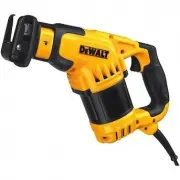
Dewalt DWE357 Reciprocating Saw – Manual, read for free online in PDF format. We hope this helps you resolve any issues you may have. If you have further questions, please contact us through the contact form.


Definitions: Safety Guidelines
The definitions below describe the level of severity for each signal word. Please read the
manual and pay attention to these symbols.
DANGER:
Indicates an imminently hazardous situation which, if not avoided,
will
result
in
death or serious injury
.
WARNING:
Indicates a potentially hazardous situation which, if not avoided,
could
result
in
death or serious injury
.
CAUTION:
Indicates a potentially hazardous situation which, if not avoided,
may
result in
minor or moderate injury
.
NOTICE:
Indicates a practice
not related to personal injury
which, if not avoided,
may
result in
property damage
.
IF YOU HAVE ANY QUESTIONS OR COMMENTS ABOUT THIS OR ANY D
E
WALT TOOL,
CALL US TOLL FREE AT:
1-800-4-D
E
WALT (1-800-433-9258)
.
WARNING:
To reduce the risk of injury, read the instruction manual.
General Power Tool Safety Warnings
WARNING! Read all safety warnings and all instructions.
Failure to follow the
warnings and instructions may result in electric shock, fire and/or serious injury.
SAVE ALL WARNINGS AND INSTRUCTIONS
FOR FUTURE REFERENCE
The term “power tool” in the warnings refers to your mains-operated (corded) power tool or
battery-operated (cordless) power tool.
1) WORK AREA SAFETY
a)
Keep work area clean and well lit.
Cluttered or dark areas invite accidents.
b)
Do not operate power tools in explosive atmospheres, such as in the presence
of flammable liquids, gases or dust.
Power tools create sparks which may ignite the
dust or fumes.
c)
Keep children and bystanders away while operating a power tool.
Distractions
can cause you to lose control.
2) ELECTRICAL SAFETY
a)
Power tool plugs must match the outlet. Never modify the plug in any way.
Do not use any adapter plugs with earthed (grounded) power tools.
Unmodified
plugs and matching outlets will reduce risk of electric shock.
b)
Avoid body contact with earthed or grounded surfaces such as pipes, radiators,
ranges and refrigerators.
There is an increased risk of electric shock if your body is
earthed or grounded.
c)
Do not expose power tools to rain or wet conditions.
Water entering a power tool
will increase the risk of electric shock.
d)
Do not abuse the cord. Never use the cord for carrying, pulling or unplugging
the power tool. Keep cord away from heat, oil, sharp edges or moving parts.
Damaged or entangled cords increase the risk of electric shock.
e)
When operating a power tool outdoors, use an extension cord suitable for
outdoor use.
Use of a cord suitable for outdoor use reduces the risk of electric shock.
f)
If operating a power tool in a damp location is unavoidable, use a ground fault
circuit interrupter (GFCI) protected supply.
Use of a GFCI reduces the risk of
electric shock.
3) PERSONAL SAFETY
a)
Stay alert, watch what you are doing and use common sense when operating a
power tool. Do not use a power tool while you are tired or under the influence
of drugs, alcohol or medication.
A moment of inattention while operating power tools
may result in serious personal injury.
b)
Use personal protective equipment. Always wear eye protection.
Protective
equipment such as dust mask, non-skid safety shoes, hard hat, or hearing protection
used for appropriate conditions will reduce personal injuries.
c)
Prevent unintentional starting. Ensure the switch is in the off position before
connecting to power source and/or battery pack, picking up or carrying the tool.
Carrying power tools with your finger on the switch or energizing power tools that have
the switch on invites accidents.
INSTRUCTION MANUAL
GUIDE D’UTILISATION
MANUAL DE INSTRUCCIONES
DWE357
Compact Variable Speed Reciprocating Saw
Scie alternative compacte à vitesse variable
Sierra alternativa compacta de velocidad variable
INSTRUCTIVO DE OPERACIÓN, CENTROS DE SERVICIO Y
PÓLIZA DE GARANTÍA.
ADVERTENCIA:
LÉASE ESTE
INSTRUCTIVO ANTES DE USAR EL PRODUCTO.
D
E
WALT Industrial Tool Co., 701 East Joppa Road, Baltimore, MD 21286
(APR12) Part No. N156063 DWE357 Copyright © 2012 D
E
WALT
The following are trademarks for one or more D
E
WALT power tools: the yellow and black color scheme, the “D” shaped
air intake grill, the array of pyramids on the handgrip, the kit box configuration, and the array of lozenge-shaped humps
on the surface of the tool.
d)
Remove any adjusting key or wrench before turning the power tool on.
A wrench
or a key left attached to a rotating part of the power tool may result in personal injury.
e)
Do not overreach. Keep proper footing and balance at all times.
This enables
better control of the power tool in unexpected situations.
f)
Dress properly. Do not wear loose clothing or jewelry. Keep your hair, clothing
and gloves away from moving parts.
Loose clothes, jewelry or long hair can be
caught in moving parts.
g)
If devices are provided for the connection of dust extraction and collection
facilities, ensure these are connected and properly used.
Use of dust collection
can reduce dust-related hazards.
4) POWER TOOL USE AND CARE
a)
Do not force the power tool. Use the correct power tool for your application.
The
correct power tool will do the job better and safer at the rate for which it was designed.
b)
Do not use the power tool if the switch does not turn it on and off.
Any power
tool that cannot be controlled with the switch is dangerous and must be repaired.
c)
Disconnect the plug from the power source and/or the battery pack from the
power tool before making any adjustments, changing accessories, or storing
power tools.
Such preventive safety measures reduce the risk of starting the power
tool accidentally.
d)
Store idle power tools out of the reach of children and do not allow persons
unfamiliar with the power tool or these instructions to operate the power tool.
Power tools are dangerous in the hands of untrained users.
e)
Maintain power tools. Check for misalignment or binding of moving parts,
breakage of parts and any other condition that may affect the power tool’s
operation. If damaged, have the power tool repaired before use.
Many accidents
are caused by poorly maintained power tools.
f)
Keep cutting tools sharp and clean.
Properly maintained cutting tools with sharp
cutting edges are less likely to bind and are easier to control.
g)
Use the power tool, accessories and tool bits, etc. in accordance with these
instructions, taking into account the working conditions and the work to be
performed.
Use of the power tool for operations different from those intended could
result in a hazardous situation.
5) SERVICE
a)
Have your power tool serviced by a qualified repair person using only identical
replacement parts.
This will ensure that the safety of the power tool is maintained.
Additional Specific Safety Rules for Reciprocating Saws
•
Hold power tool by insulated gripping surfaces, when performing an operation
where the cutting accessory may contact hidden wiring or its own cord.
Cutting
accessory contacting a “live” wire may make exposed metal parts of the power tool “live”
and could give the operator an electric shock.
• Use clamps or another practical way to secure and support the workpiece to a
stable platform.
Holding the work by hand or against your body leaves it unstable and may
lead to loss of control.
•
Hold saw firmly with both hands for all cutting operations.
During cutting operations,
the blade may suddenly bind in the work and may cause the saw to kickback towards the
operator.
•
Keep hands away from moving parts.
Never place your hands near the cutting area.
•
Use extra caution when cutting overhead and pay particular attention to overhead
wires which may be hidden from view.
Anticipate the path of falling branches and debris
ahead of time.
•
Do not operate this tool for long periods of time.
Vibration caused by the operating
action of this tool may cause permanent injury to fingers, hands, and arms. Use gloves to
provide extra cushion, take frequent rest periods, and limit daily time of use.
•
Air vents often cover moving parts and should be avoided.
Loose clothes, jewelry or
long hair can be caught in moving parts.
•
An extension cord must have adequate wire size (AWG or American Wire Gauge)
for safety.
The smaller the gauge number of the wire, the greater the capacity of the cable,
that is 16 gauge has more capacity than 18 gauge. An undersized cord will cause a drop in
line voltage resulting in loss of power and overheating. When using more than one extension
to make up the total length, be sure each individual extension contains at least the minimum
wire size. The following table shows the correct size to use depending on cord length and
nameplate ampere rating. If in doubt, use the next heavier gauge. The smaller the gauge
number, the heavier the cord.
Minimum Gauge for Cord Sets
Ampere Rating
Volts
Total Length of Cord in Feet (meters)
120V
25 (7.6)
50 (15.2)
100 (30.5)
150 (45.7)
240V
50 (15.2)
100 (30.5)
200 (61.0)
300 (91.4)
More
Than
Not More
Than
AWG
0
6
18
16
16
14
6
10
18
16
14
12
10
12
16
16
14
12
12
16
14
12
Not Recommended
WARNING: ALWAYS
use safety glasses. Everyday eyeglasses are NOT safety glasses. Also
use face or dust mask if cutting operation is dusty. ALWAYS WEAR CERTIFIED SAFETY
EQUIPMENT:
• ANSI Z87.1 eye protection (CAN/CSA Z94.3),
• ANSI S12.6 (S3.19) hearing protection,
• NIOSH/OSHA/MSHA respiratory protection.
WARNING:
Some dust created by power sanding, sawing, grinding, drilling, and other
construction activities contains chemicals known to the State of California to cause cancer, birth
defects or other reproductive harm. Some examples of these chemicals are:
• lead from lead-based paints,
•
crystalline silica from bricks and cement and other masonry products, and
• arsenic and chromium from chemically-treated lumber.
Your risk from these exposures varies, depending on how often you do this type of work.
To reduce your exposure to these chemicals: work in a well ventilated area, and work with
approved safety equipment, such as those dust masks that are specially designed to filter out
microscopic particles.
•
Avoid prolonged contact with dust from power sanding, sawing, grinding, drilling,
and other construction activities. Wear protective clothing and wash exposed
areas with soap and water.
Allowing dust to get into your mouth, eyes, or lay on the skin
may promote absorption of harmful chemicals.
WARNING:
Use of this tool can generate and/or disperse dust, which may cause serious
and permanent respiratory or other injury. Always use NIOSH/OSHA approved respiratory
protection appropriate for the dust exposure. Direct particles away from face and body.
WARNING: Always wear proper personal hearing protection that conforms to ANSI
S12.6 (S3.19) during use.
Under some conditions and duration of use, noise from this product
may contribute to hearing loss.
• The label on your tool may include the following symbols. The symbols and their definitions
are as follows:
V .................. volts
A ................... amperes
Hz ................ hertz
W .................. watts
min .............. minutes
................ alternating current
........... direct current
................ alternating or direct current
................ Class I Construction
no ................. no load speed
....................
....................
(grounded) n
................... rated
speed
................ Class II Construction
.................. earthing terminal
....................
(double insulated)
.................. safety alert symbol
…/min ......... per minute
BPM.............. beats per minute
IPM .............. impacts per minute
RPM .............. revolutions per minute
SPM ............ strokes per minute
sfpm .............. surface feet per minute
SAVE THESE INSTRUCTIONS FOR FUTURE USE
If you have questions or comments, contact us.
Pour toute question ou tout commentaire, nous contacter.
Si tiene dudas o comentarios, contáctenos.
1-800-4-D
E
WALT • www.dewalt.com
"Loading the manual" means you need to wait until the file loads and becomes available for online reading. Some manuals are very large, and the time they take to appear depends on your internet speed.
Was this manual helpful?
About this manual
- Brand
- Dewalt
- Model
- DWE357
- Document type
- Manual
- Category
- Reciprocating Saw
- Language(s)
- English
- Pages
- 7
- File size
- 3.1 MB
- Format


