Page 5 - Table of Contents
5 Table of Contents 1 Running View................................................................................ 1–1 1.1 Starting View ................................................................................................................................ 1–1 1.2 View Window: the Sites Tab...
Page 6 - View: Operator Guide
View: Operator Guide 6 6.10 Alarm Station .............................................................................................................................. 6–20 6.11 Fault Relay ................................................................................................................
Page 9 - Preparation; View; Rapid Eye Multi-Media View
1–1 1 Running View Preparation Your Rapid Eye Multi system administrator (Multi SA) needs to prepare a Multi database before operators can run View . How to do so is explained in the Admin User Guide , part no. K5403. 1.1 Starting View Figure 1. Shortcut for View, on the Windows desktop ! ! ! ! 1 To...
Page 10 - View Window: the Sites Tab; Sites
View: Operator Guide 1–2 User account and password Passwords can be assigned to a user account. Use of passwords is optional . How to setup passwords is explained in the Admin User Guide , part no. K5403. Fig. 2. Logging-on to a Multi system 1.2 View Window: the Sites Tab Fig. 3. On the Sites tab, M...
Page 11 - Running View; Selecting a Multi Site; To select a site; Missing site; Quick; To search through long lists of Multi sites
Running View 1–3 1.2.1 Selecting a Multi Site A “site” is a Multi-Media unit or Multi unit that is connected and operational. ! ! ! ! 2 To select a site • After starting View, the Sites action tab and its toolbar are displayed by default. Click a “site” name listed on the tab. For lists of sites tha...
Page 12 - Properties; Site Properties; Your Account Information
View: Operator Guide 1–4 1.2.3 Site Properties A site’s properties—name, location, and connection details—are controlled by a Multi SA. You can view, but not edit, a site's properties. Finding out about a site’s properties can be useful: • to check if the time zone from which images are being obtain...
Page 13 - Customizing the View Window; Screen real estate: hiding the toolbar and status bar
Running View 1–5 Info: viewing your administrative information Multi View makes your Multi account’s information available. Info indicates the database file in use, its location, the name of the user account, the rights of the operator using the account, the status of alarm notification and more. ! ...
Page 14 - Sites Tab: Toolbar Reference; Table 1; Command Function/Session; More About View; Index
View: Operator Guide 1–6 1.4.1 Sites Tab: Toolbar Reference Table 1 Sites toolbar Command Function/Session Section To use the latest Multi database: rights in user account, sites added, modified or deleted, and so on. 1.3 To display this guide in PDF format. 1.5 To display live video from the site t...
Page 15 - Start; Web site
Running View 1–7 Other guides Other guides by Honeywell are available after installing View software: Honeywell, Please Read This First! , K9700 ———, Multi-Media Software: Software Setup Instructions , K5401 These user guides are available in Adobe’s portable document format (PDF), on the View opera...
Page 17 - Live video versus recorded video; Viewing Live Video; Process; Starting a Live Session; To start a live session at a site; Starting View; Live
2–1 2 Live Video Live video versus recorded video Using a Live session, you can access and monitor the video feed of many cameras at once, and even access many Multi sites, all at once. This section shows how to: • obtain live video • use cameras that can pan, tilt and zoom • end a Live session. See...
Page 18 - Choosing a connection.; Cameras; 0 To select live video feeds from a site; the; OK; . Each live video feed is displayed in its own camera window.
View: Operator Guide 2–2 3. Either: • a Connection dialog appears; see figure 7, below. Select a connection, then click OK . A tear-away player then appears, as in figure 8. • a tear-away player appears in the session pane and a list of streams (cameras and other data devices) is displayed; see figu...
Page 19 - Live Video
Live Video 2–3 Fig. 8. Live session: connection icons ( ) appear on the site list. Fig. 9. Live video feed, from a camera named ‘side entrance’, at a site called ‘Foucault facility, 232’.
Page 20 - Managing Video Feeds; camera window
View: Operator Guide 2–4 ! ! ! ! 11 To move and size a tear-away player window • You can drag a player window from the View window. When dragged away, an asterisk is added to the title of the tear-away player’s name. ! ! ! ! 12 To return a tear-away player to its session pane Click either: • . The E...
Page 22 - Video Smoothing and Quality; Video smoothing
View: Operator Guide 2–6 ! ! ! ! 16 To toggle the size of a camera window/data window • Double-click the title bar of a camera window. The camera window quadruples in area; its video is now a “double-sized stream”. To return the camera window to its original size, double-click the title bar again. 2...
Page 23 - Video quality: Live sessions; Time reference
Live Video 2–7 Video quality: Live sessions Video quality while monitoring live sessions can be lowered on low-speed dial-up connections to improve the transmission time of images. It can also be heightened on one camera for more detail, as needed. The Video quality of recording is customized global...
Page 24 - Resolution of Live Video; Dynamic resolution for Live video; Monitor Settings in Microsoft Windows; Setting Microsoft Windows
View: Operator Guide 2–8 Fig. 13. Globally customizing the time reference. Customizing the time reference does not change the time on your Multi-Media unit or your PC. Only the display changes. See also 6.9.1: Setting the Date for Correct Alarm Sorting , p. 6–20. ! ! ! ! 23 To temporarily change a t...
Page 26 - Recorded video
View: Operator Guide 2–10 Table 2 Microsoft Windows: Display Properties, Settings Screen area (pixels) Recommended by Honeywell for viewing higher video resolutions 1600 by 1200 yes 1280 by 1024 yes 1152 by 864 no 1024 by 768 no 800 by 600 no 640 by 480 no * Video can still be viewed and worked with...
Page 27 - Sizing Camera Windows; Optimal rendering; 6 To size a camera window optimally for a resolution; menu appears on the video. See figure 16.; Video Resolution; to display a list of resolutions.
Live Video 2–11 2.2.2 Sizing Camera Windows Optimal rendering As an operator makes a camera window larger or smaller, the resolution of its video image changes. The resolution is optimized for window size and speed of delivery. For live work, video at higher resolutions makes more use of the process...
Page 28 - Resolution; Other settings for good video; Quality; and Microsoft Windows’; Screen area; . The “best” setting
View: Operator Guide 2–12 Resolution gauge: metering When an operator sizes a camera window smaller or larger than optimal, marks appear in the rectangles of the resolution gauge. Figures 19 and 20 illustrate metering, when an operator sizes a camera window with the mouse. The icon’s bottom row beha...
Page 29 - Initial Camera Window Size; Options for New; Reference; unit’s CPU
Live Video 2–13 2.2.4 Initial Camera Window Size You can customize the initial size at which camera windows appear. ! ! ! ! 27 To customize the size at which camera windows open 1. On the main View menu, click Options , then New Players . The Options for New Players window appears, as in figure 21. ...
Page 31 - Table 7; Unit’s message
Live Video 2–15 Table 7 Unit’s message message CPU version* Rapid Eye Multi-Media V6.2 P4 4.5 Rapid Eye Multi-Media V6.1 P4 4.4 Rapid Eye Multi-Media V5.2 P3 4.5 Rapid Eye Multi-Media V5.1 P3 4.4 ADEMCO Video Multi*Media V5 P3 4.1.0 to 4.3.0 * The version is listed in Maintenance on the System tab. ...
Page 32 - Use PTZ; PTZ camera window; 9 To see PTZ controls in a live session
View: Operator Guide 2–16 2.3 Pan, Tilt and Zoom Flexibility Like most of the Multi security features, use of cameras that can pan, tilt and zoom (PTZ) is optional. Your Multi SA can inform you if PTZ cameras are connected to Multi-Media unit(s) in your system. Before you can use a PTZ camera ... To...
Page 33 - Using Preset PTZ Positions; Security effects of PTZ use on recorded video
Live Video 2–17 ! ! ! ! 30 To pan/tilt a PTZ camera • Click the mouse when the pointer displays an arrow. ! ! ! ! 31 To stop a PTZ camera that continues to pan/tilt 1. Move the pointer to the center of the image until a small, white, octagon—a “stop” icon—appears. 2. Click the stop icon. 2.3.1 Using...
Page 34 - Table 8; Behavior; PTZ Command Reference; Table 9; Button Function; OFF
View: Operator Guide 2–18 Table 8 Position after close of session, for PTZ cameras Session ends... Behavior Stay put The camera remains in the last position used by the operator. If it is panning, it keeps on panning; if it is not moving, it stays put. The “stay put” behavior makes available the Ret...
Page 35 - Ending a Live Session; 4 To end a live video monitoring session; Close the tear-away player “Live from ...” window.; Disconnect; on the View toolbar. This also closes other sessions such as
Live Video 2–19 2.4 Ending a Live Session ! ! ! ! 34 To end a live video monitoring session • Close the tear-away player “Live from …” window. - or - • Click Disconnect on the View toolbar. This also closes other sessions such as retrieval or alarm at the site. This removes the “Live” indicator bene...
Page 37 - Viewing Recorded Video; Site; 5 To select a site; Starting a Retrieval Session; Retrieval
3–1 3 Recorded Video Recorded video Using a Retrieval session, you can access the recordings from many cameras, and even access many Multi sites, all at once. 3.1 Viewing Recorded Video Process Start by selecting a Multi site and then running a Retrieval session. You can specify the date and time of...
Page 38 - Specifying the Start Time; 7 To type the start date and time of a retrieval; Repeat these steps as needed.
View: Operator Guide 3–2 3.1.3 Specifying the Start Time When you start a Retrieval session, Multi automatically sets the start date and time to the nearest minute. You can change the start of a Retrieval session. You have the option of specifying the beginning date/time of the retrieval session bef...
Page 39 - Recorded Video; 8 To set the date of a retrieval with the calendar utility; to the month/year heading in the utility.; 9 To select feeds of recorded video; . Each feed of retrieved video is displayed in its own camera window.; Playback; Playback toolbar; Slider; Setting the playback speed slider to ten times the normal speed.; 0 To scan a recorded video feed more quickly
Recorded Video 3–3 ! ! ! ! 38 To set the date of a retrieval with the calendar utility 1. In the Stream List dialog, display the calendar utility by clicking the arrow next to the date box. See figure 24, above. 2. Click a date in the calendar. To go to another month, click the arrow keys next to th...
Page 40 - Skipping Through Video; 2 To spot video by skipping through it; Go to; First available video, sound or data
View: Operator Guide 3–4 3.2.2 Skipping Through Video For quickly spotting recorded video, use the skip-to-time slider. ! ! ! ! 42 To spot video by skipping through it • Drag the skip-to-time slider to the right of its center position. The amount of skip appears as a tool tip on the slider. See figu...
Page 41 - 4 To obtain a report on later media; hides the icon and no report is produced.
Recorded Video 3–5 Power outages and so on, can temporarily stop a unit from recording. When recording resumes, there is a “hole” in the video archive. These holes can cause the later media indicator to appear. ! ! ! ! 44 To obtain a report on later media • If after skipping through video (see above...
Page 42 - Resolution of Recorded Video; Optimal size for camera windows in a Retrieval; 5 To size a camera window optimally for a resolution
View: Operator Guide 3–6 Table 10 Jump-to-time results recorded video (time) tool tip (text) jumps to... (time) 10:02:02 2 minutes later 10:04:00 10:02:57 2 minutes later 10:04:00 10:02:02 2 minutes earlier 10:01:00 10:02:57 2 minutes earlier 10:01:00 Requesting video from many cameras Since images ...
Page 43 - NTSC; resolution
Recorded Video 3–7 Fig. 31. Image size: menu and report, available in a camera window during a Retrieval session. Resolution gauge: the resolution at which the recording was made During a Retrieval session, a resolution gauge reports if a camera window’s size is smaller-than-optimal, optimal or grea...
Page 44 - PAL; Ending a Retrieval Session; 6 To end a recorded video monitoring session; site name; See also
View: Operator Guide 3–8 Table 13 Recording: resolution selection for PAL camera (pixel × pixel) resolution 192×144 384×288 704×288 704×576* gauge * Not available on Multi-Media LT units. 3.4 Ending a Retrieval Session ! ! ! ! 46 To end a recorded video monitoring session Do one of the following: • ...
Page 45 - Adjusting a Video Feed; Camera attributes of video feed; individually for each camera
4–1 4 Troubleshooting Video 4.1 Adjusting a Video Feed Camera attributes of video feed To adjust the video feed of cameras, ask your Multi-Media system administrator (Multi SA) or View operator that has the right to run maintenance sessions . Video feeds are adjusted individually for each camera whi...
Page 46 - 7 To configure a Rapid Eye site’s camera(s); Right to change camera settings; Tips; Common sense caution
View: Operator Guide 4–2 The cameras connected to a Multi-Media unit are detected automatically. You can name a camera and adjust a camera’s picture settings during a maintenance session. ! ! ! ! 47 To configure a Rapid Eye site’s camera(s) 1. Run a maintenance session at the site. 2. Click the Vide...
Page 47 - Set similar recording rates for all cameras.; Set Recording Rate to a lower number.; Slow video due to other software
Troubleshooting Video 4–3 Fig. 35. High recording rates can slow live sessions. System priority If overtaxed, the priority of a Multi-Media unit is always to capture and store video, audio, data and alarms. This may result in slower service to View operators. If the video you are observing appears s...
Page 48 - At the Source...; Cameras in the environment; environmental lighting.; a camera can be rendered ineffective by direct sunlight,; environmental conditions.; Condensation, excessive heat or cold, even a dirty
View: Operator Guide 4–4 4.2 At the Source… Cameras in the environment Normal operation of View can reveal weaknesses in the position of cameras. Video surveillance can be hampered by: • blind spots. Mobile equipment, vehicle docking, renovation work, and so on. • environmental lighting. a camera ca...
Page 49 - Searching for Motion; Motion detection; Admin User’s Guide; 9 To start a Motion Search session; Site action tab; Motion
5–1 5 Searching for Motion 5.1 Setup Before you can use motion search, your Multi SA needs to run a maintenance session to enable Motion detection for each of the cameras whose video may eventually be searched for motion. ! ! ! ! 48 To enable motion detection • See the Admin User’s Guide . Motion se...
Page 51 - Searching for Motion; Early “From” Future “To”; First available video; 1 To obtain the time offset of later media; Offset
Searching for Motion 5–3 5.2.1 Early “From”; Future “To” First available video From. If the “from time…” for a motion search is a time at which the unit was not recording video, the first image after the requested time is displayed. A flashing later media icon appears, indicating that the image in a...
Page 52 - Threshold; Options can be ignored; Search; Masking that Detects Motion; Mask buttons
View: Operator Guide 5–4 5.2.2 Motion Threshold Options can be ignored The simplest way to obtain a report of motion in the video is to click Search after clicking Fetch ; see procedure 50 in 5.2, above. Use of Motion Threshold or Masking that Detects Motion , explained in this section and 5.2.3, ar...
Page 53 - 2 To focus motion search on an area of a video feed’s picture; Show / Hide masking grid; Enlarged detail of image used during a motion search.
Searching for Motion 5–5 ! ! ! ! 52 To focus motion search on an area of a video feed’s picture 1. After preparing a motion search, as explained in 5.2, Preparation , click , the Show / Hide mask button. You have the option of clicking , the Show / Hide masking grid button. 2. On the larger image, c...
Page 55 - Report; Options
Searching for Motion 5–7 5.3 Search Report ! ! ! ! 57 To obtain a report • After preparing a motion search (see 5.2, Preparation ), and using the optional motion options, click Search . A motion search report is produced. See figure 43. Motion is reported each time it is detected between the From an...
Page 56 - From; Selecting items in the report; Trim; Norm
View: Operator Guide 5–8 Example To obtain a report of only the highest magnitudes, say from 90% to 100%: • click in the From box and then type “90”, without quotation marks. The report is updated on-the-fly. Fig. 44. Detail of selection in frequency chart of a report. Selecting items in the report ...
Page 57 - Unselect; Video from Motion Search; 9 To view video of results in the Motion Search session; Working Frame; Working; Video
Searching for Motion 5–9 Unselect To show the report without any highlighting, click Unselect . Fig. 45. Effect of Zoom button on selection of list items. Zooming makes a cluster of items appear more spread-out, and facilitates a finer selection. Items that are out-of-order in the list Setting the c...
Page 58 - Sensitivity; and; Interval; Video Controls for Motion; Replay video: seeing a video excerpt again; Frame; pauses the video. Click again to see the next frame of video.
View: Operator Guide 5–10 Fig. 46. Detection options toolbar: Sensitivity and Interval . You can control the playback using the playback toolbar, much as you would in a Retrieval session. See figure 47, in the next section. 5.4.1 Video Controls for Motion Replay video: seeing a video excerpt again T...
Page 59 - 0 To optimize watching video from motion report; Viewing video of events just prior to detection of motion; 2 To change the amount of pre-detection viewing
Searching for Motion 5–11 Fast-forward to next event The fast-forward button speeds up video, then slows down video to 1x speed (auto- 1x), four seconds before the video shows the detected motion. The slowing of video is a cue that motion is about to be displayed. After you have witnessed the motion...
Page 60 - Opting for a Retrieval Session; Video from many cameras
View: Operator Guide 5–12 5.5 Opting for a Retrieval Session Video from many cameras To view video from many cameras, at the time that the motion was detected, a Retrieval session can be started from a Motion Search session. ! ! ! ! 63 To view video in a Retrieval session 1. Select one or many items...
Page 61 - False Positive Reports; Lights; A Source of false positives; 5 To mask out a flashing monitor; Hide mask; masked, followed by the; Invert Mask
Searching for Motion 5–13 5.6 False Positive Reports Motion search can be triggered by changes in lighting or movement outside of an area of interest. 5.6.1 Flashing Lights A Source of false positives A computer monitor can also be a source of false positives. To unmask it or a flashing light from a...
Page 62 - Detection; search; in the; Admin User Guide
View: Operator Guide 5–14 5.6.2 Smaller Detection Masks The easiest solution for false reports of motion is to use smaller masks to search for motion. For example: to search for the opening of a door, when many people walk by that door, set the motion search mask on the top corner of the door. See f...
Page 63 - Highlighting; Solutions; Report Options
Searching for Motion 5–15 5.6.3 Using Highlighting Motion Highlighting. Enables/disables the highlighting of motion. If you are getting more reports of movement than you expect (false positives), click the Motion Highlighting button, while running a video feed. This lets you “see motion” as it is de...
Page 64 - Saving & Reusing Search Data; Repeating a Motion Search
View: Operator Guide 5–16 5.7 Saving & Reusing Search Data You can save the: • date and time for a motion search and its motion detection options for reuse. - and/or - • lists of movement found in the video or edited lists, for further use with word processing software or spreadsheets. 5.7.1 Rep...
Page 65 - Alarms; Flexibility
6–1 6 Alarms and Events 6.1 About Alarms Flexibility A Multi system administrator (Multi SA) can set a Multi-Media unit to: • log events and/or have them trigger an alarm. No special hardware is needed for such alarms: they ring on an operator’s PC. By default, some events are always logged, for adm...
Page 66 - 1 To customize alarm options in View; Alarm Handling Options
View: Operator Guide 6–2 Viewing video from the time of the alarm A View operator has the option of customizing if and how video from the time and site of the alarm is received. Video can be seen: • immediately. Live video from the site where the alarm was sent is seen full- screen. See 6.2: Live-al...
Page 68 - Alarm Rights for Operators; 2 To receive and process alarms; Setting an alarm; Session; For systems with many Multi-Media units; 3 To retrieve video recorded at the time of an alarm; Customizing Alarms
View: Operator Guide 6–4 6.1.2 Alarm Rights for Operators ! ! ! ! 72 To receive and process alarms A View operator needs the Multi SA to: 1. Add the Process alarms right to a View-operator account. - and to - 2. Grant access to sites set to send alarms. Time limit for operating sites: suspended whil...
Page 69 - Clip of Alarm Video; A clip of all live cameras can be made manually or automatically.; Automatic record for live alarm
Alarms and Events 6–5 Fig. 59. Location of toolbar in a full-screen Live Alarmed session. This Multi-Media site is using only four of a possible sixteen cameras. 6.2.1 Clip of Alarm Video A clip of all live cameras can be made manually or automatically. Preparation • Automatic. Select Automatic reco...
Page 70 - The Alarm Session Window; Actions
View: Operator Guide 6–6 ! ! ! ! 74 To stop making a clip during an alarmed-live session 1. To stop recording, do one of the following: • click , the recording-a-clip button • close the live alarmed session. 2. Either: • save the clip. Type a name for the clip in the Save dialog that appears and cli...
Page 71 - Alarms and Events; Acknowledging an Alarm; 6 To acknowledge an alarm in an alarm session; Alarm Session; ACK; The alarms are sorted chronologically.
Alarms and Events 6–7 6.3.2 Acknowledging an Alarm Why acknowledge (ACK) before REARM? When operators ACK alarms, the alarms remain listed, for operator reference. Alarms cannot be triggered again if not rearmed. This can be simpler than turning alarms off, for example: during construction work or o...
Page 72 - Run a Retrieval session
View: Operator Guide 6–8 ! ! ! ! 77 To acknowledge all alarms in a live-alarmed session 1. Set your copy of View to “ Automatically acknowledge alarms ”, as explained in 6.1.1: Customizing Alarms . 2. In a live-alarmed window click the small on the toolbar. An “(A)” appears next to alarms in the ala...
Page 73 - 0 To view recorded video from the time of an alarm; Controlling Playback; session in the background. For the location of; button in an Alarm session, see; 1 To view live video after receiving an alarm
Alarms and Events 6–9 ! ! ! ! 80 To view recorded video from the time of an alarm 1. While running an alarm session, select an alarm from the session’s tear-away player, as explained in 6.3: Alarm Session . 2. To start a Retrieval session from the time of the alarm, click Video . When a site has man...
Page 74 - Dealing with Multiple Alarms; Controlling an Onsite Device: Output
View: Operator Guide 6–10 Surveillance common sense View operators may find that security video from outside world and customer-device events is usually more informative than from other events. For example, viewing video from the time of an alarm, caused by an intrusion detection sensor at your site...
Page 75 - Terminology note; Application; Preparations; Run live alarm; Setting an Alarm; Modify configuration
Alarms and Events 6–11 Terminology note Outputs can also be referred to as general-purpose outputs (GPOs), in some technical documentation. 6.6.1 Peephole Application One application for outputs is to remotely unlock a door after visual inspection of a doorway. Preparations Installation personnel wi...
Page 76 - How can Multi events be processed?; Using Apply and Restore
View: Operator Guide 6–12 How can Multi events be processed? Events are set during site-by-site maintenance sessions, to either: • sound an alarm. View operators are warned when the event occurs. Operators can use information about it, to search for video at the time of the event. See figure 56. • b...
Page 77 - 7 To set an alarm on the events tab; Alarm doubling
Alarms and Events 6–13 Multi-Media unit back to the state that it was in, before the two “applies”. For an illustration of these buttons in the Maintenance window, see figure 62 on p.6–13. 6.7.2 Events ! ! ! ! 87 To set an alarm on the events tab 1. Continue or start a maintenance session. To start ...
Page 78 - Device; Selecting a customer device
View: Operator Guide 6–14 6.7.3 Customer Device Selecting a customer device Your Multi SA configures your Multi system to deal with customer devices. For example, a retail store wants to obtain video of employees at a point of sale (POS), when goods are purchased. Figure 63 shows what the Data Recor...
Page 79 - Multi-Media Event Reference; View operator; . An administrator can trace events caused by View operators,; By default, events are; not; set to trigger alarms. Setting events to trigger alarms is
Alarms and Events 6–15 6.8 Multi-Media Event Reference Flexibility Your Multi SA, security personnel or View operators decide which events should trigger alarms. Sources of events • outside world. Events triggered by sensors connected to a unit or by Rapid Eye’s motion detection. • customer-device ....
Page 81 - Source
Alarms and Events 6–17 Table 16 Event reference, by source and tab. Source Event in maintenance, except where noted Cause: an alarm or log entry could indicate … outside world System : no video recording* a cut cable, dead camera, power outage Inputs : activate , input ports 1 to 16 Inputs : deactiv...
Page 82 - Searching for Event; Reading the Alarm Log
View: Operator Guide 6–18 6.8.1 Testing Alarms It is a good idea to test the alarms that you set. Find out if you are better served with a Live-alarmed response from View. To set alarm options, see 6.1.1: Customizing Alarms, on p. 6–2. 6.8.2 Logging Events Silently “Logged” events that do not produc...
Page 84 - Setting the Date for Correct Alarm Sorting; Alarm station definition; Station
View: Operator Guide 6–20 6.9.1 Setting the Date for Correct Alarm Sorting Multi-Media reports use true chronological lists of alarms only if care is taken to express the date in numbers. Make the date display as “yyyy-MM-dd” in Microsoft Windows. ! ! ! ! 94 To set the windows date 1. Using Microsof...
Page 85 - Relay; 5 To check if this pulse is enabled on a unit
Alarms and Events 6–21 Speed of alarm notification After you have set events to “alarm”, and alarm hardware connected to the video unit is triggered, notification of the event is either: • immediate. Your Multi-Media units are networked to the alarm station or an alarm session is in progress at the ...
Page 87 - Clips and Stills; Making and Saving a Clip; Definition
7–1 7 Clips and Stills 7.1 Making and Saving a Clip Definition A clip is a copy of video, audio or data. A clip is made during a live session or a retrieval session. Clips are listed on the Clips action tab. See figure 66. Purpose of clips After using View to make clips, you can: • view portions of ...
Page 88 - Clip of Live Video; 6 To make a clip from live video; Save; Save As; Clip from Recorded Video; 7 To make a clip from recorded video; Fast Forward
View: Operator Guide 7–2 7.1.1 Clip of Live Video Clips made from live video hold all streams, unlike clips made from recorded video. ! ! ! ! 96 To make a clip from live video 1. From a site, start a live session; see 2.1.1: Starting a Live Session , p. 2–1. 2. Select the streams that you need to re...
Page 89 - Clip: Name Reference; element; You have the option of renaming clips.; Automatic Clip of Alarms
Clips and Stills 7–3 5. When all the video you need is recorded, click again. A dialog is displayed: Retrieval at [site name]: Save Recorded Clip to File . 6. As you would with any file, name the clip and choose a folder where the clip will be stored. When you save the clip, it is stored as a *.rem ...
Page 90 - Storage
View: Operator Guide 7–4 7.1.5 Customizing Storage Clips and stills are stored by default in the Multi application folder. To store them elsewhere, use the next procedure (98) to create a folder. ! ! ! ! 98 To create a folder to store stills and/or clips 1. Using View, click the Clips action tab. 2....
Page 91 - Clips and Stills; Viewing a Clip; Play options; MultiClip
Clips and Stills 7–5 7.2 Viewing a Clip Play options Using View, you can play • one clip at different speeds, as during a retrieval session. • many clips at once, each in its own session . Use this to compare two scenes or two subjects at different times. - or - • copies of the same clip. Use this t...
Page 92 - Editing; Comparing events: making a clip with a jump; Gap; Jumping into the future; Pause; Jumping into the past; Viewing Many Clips at Once; 05 To compare clips
View: Operator Guide 7–6 Double-clicking several *.rem files causes multiple MultiClip Player sessions to be opened. To free up Windows resources, remember to close MultiClip Player sessions when finished. 7.3 Coarse Editing Comparing events: making a clip with a jump While making a clip from record...
Page 93 - Handouts for users and non-users of Rapid Eye Multi; Stills
Clips and Stills 7–7 ! ! ! ! 106 To view copies of the same clip at once To highlight a portion of a clip, you may want to view a copy of it slightly out of sequence with the original. 1. Using Microsoft Windows’ Explorer, duplicate the *.rem file in its folder. To do so, use Windows explorer to loc...
Page 94 - Start Recording Bitmaps
View: Operator Guide 7–8 Fig. 69. Enabling production of still shots from video (i.e. bitmaps). After enabling View to produce bitmaps, a stills button appears on the session toolbar when you run live, retrieval or clip sessions. See figure 70. Many bitmaps from one click Stills are produced at a rh...
Page 95 - Name; Microsoft Windows file explorer
Clips and Stills 7–9 ! ! ! ! 108 To produce bitmaps of a camera feed • While running a live, retrieval or clip session, click the stills button. The button starts flashing. ! ! ! ! 109 To stop producing bitmaps of a camera feed • While the stills button is flashing, click it. 7.4.2 Still: Name Refer...
Page 96 - Size
View: Operator Guide 7–10 7.4.3 Still: Size Reference The size of Multi-Media stills gets bigger with higher resolution. For the meaning of resolution gauge readings and resolution settings, see 2.2: Resolution of Live Video, starting on p. 2–8. Table 19 Size of Multi-Media stills (bitmaps with *.bm...
Page 97 - Flexibility of Multi audio; Audio; To listen to a Multi site; channel 1 Listen; button on the audio toolbar,; channel 2 Listen
8–1 8 Audio 8.1 Overview Flexibility of Multi audio Like most of the Multi features, use of audio is optional. Audio can monitored and recorded along with video or independently of it. Your Multi system administrator (Multi SA) can inform you about which Multi sites have audio in an operational stat...
Page 99 - Up; Multi-Media Unit Installation Instructions; Audio for Multi-Media LT; Broadcasting and Monitoring Audio; Do not use audio on a dial-up connection with video.; Audio toolbar; 10 To interrupt an audio broadcast
Audio 8–3 In many situations, unwarranted recording of audio can be unlawful. Check with local authorities if you are unsure. 8.4 Setting Up Audio setup is performed during a maintenance session. Microphones, speakers, and so on are needed for audio, both at the operator’s station and at the Multi-M...
Page 100 - Audio tab detail. You have the option of recording audio.; Eagle Audio is an optional audio interface it is discussed in the
View: Operator Guide 8–4 Testing recording If audio recording is used, Honeywell recommends testing if the recorded audio meets your needs. After recording a few typical audio interactions, run a retrieval session to hear what was recorded. You may need to further adjust the gain controls for microp...
Page 101 - Watching Site Tours; About Site Tour; To set up a Site Tour, you need a Multi SA account and Admin software.; See the
9–1 9 Watching Site Tours 9.1 About Site Tour Flexibility Like most of the Multi security features, use of site tours is optional. Your Multi system administrator (Multi SA) can inform you about which sites (if any) are part of a tour. Multi View Operators can consider these guidelines as suggestion...
Page 102 - Running a Site Tour; 11 To start a Site Tour; Samples of Site Tours in List; Tour; Managing Video Feeds,
View: Operator Guide 9–2 9.2 Running a Site Tour ! ! ! ! 111 To start a Site Tour 1. Click the Tours action tab in the Multi View window. Tours that are listed have been set up using the Admin software. Fig. 73. Samples of Site Tours in List Click beside the tour name to display the sequence of the ...
Page 103 - Watching Site Tours; Site Tour: Properties; 12 To display site tour properties; Stopping a Site Tour; 13 To pause a Site Tour
Watching Site Tours 9–3 9.3 Site Tour: Properties You can display properties of the site tour such as the sites to be visited and the duration of time of each. These properties reflect the site tour settings made using Admin software. See your Multi SA to setup or modify a site tour. ! ! ! ! 112 To ...
Page 104 - Ending a Site Tour; 15 To end a Site Tour; Click the
View: Operator Guide 9–4 9.4.1 Ending a Site Tour ! ! ! ! 115 To end a Site Tour • Click the x in the top-right corner of the Site Tour window.
Page 105 - 0 Event Search Session; Preparation: only “logged” events can be searched; Searching for Event Records; 16 To find and list records of events; Events
10–1 10 Event Search Session 10.1 Overview Preparation: only “logged” events can be searched Before you can search for the record(s) of an event, you or your Multi SA needs to set the event to “log” prior to an event’s occurrence . Fig. 76. You can set a Rapid Eye Multi-Media unit to log an event. S...
Page 106 - 17 To input different times and dates; press cursor keys on the keyboard. The; 18 To set the date of a retrieval with the calendar utility; Search for Events; Recording; Searching for Data
View: Operator Guide 10–2 ! ! ! ! 117 To input different times and dates Click on the part of the time or date that you want to change and either: • press cursor keys on the keyboard. The → ← keys move the cursor to the next field, and the ↑ ↓ keys increase/decrease a value. • type a value, as neede...
Page 109 - 1 Customer Devices; Data; messages
11–1 11 Customer Devices 11.1 Live Data Messages from hardware Hardware devices that provide messages over a serial cable can be connected to a Multi-Media unit. These messages can be viewed in real time, in a live session. See also video. Section 2: Live Video , on p. 2–1. audio. Section 8.2: Live ...
Page 111 - 23 To set the date of a retrieval with the calendar utility; You cannot go beyond the limits of the data
Customer Devices 11–3 Calendar You can display a calendar utility by clicking the arrow next to the date box. ! ! ! ! 123 To set the date of a retrieval with the calendar utility 1. In the Stream List dialog, display the calendar utility by clicking the arrow next to the date box. 2. Click a date in...
Page 112 - Expressions; Technical note on special characters
View: Operator Guide 11–4 ! ! ! ! 124 For a quick reminder of the labels associated with serial device data • Run a Search for Events session, as explained in 10: Event Search Session , p. 10–1, and click the Data Recording tab. The data/rules are listed along with its labels. These are the same lab...
Page 113 - Customer Devices; Defining a Data Message; What you need to know; specific rights; to know how rules; Listing customer devices
Customer Devices 11–5 Technical users who know how to use a regular expression (RE) benefit most from using the special characters in a rule. 11.3.2 Defining a Data Message What you need to know You can define messages from a customer device as: • customer-device events for Multi, during a maintenan...
Page 115 - 2 Scheduling; another camera’s custom schedule.; Cameras can be grouped into one of
12–1 12 Scheduling Flexibility Use of scheduling is optional. You also have the option of scheduling cameras and alarms before or after they are setup. Scheduling is performed unit-by-unit. A benefit of scheduling is that it spares storage on your Multi-Media unit. In a nutshell A Multi-Media unit c...
Page 116 - Schedule; Basic schedule
View: Operator Guide 12–2 12.1 Camera Schedule Basic schedule By default, all of a Multi-Media unit’s cameras are assigned to the basic schedule . Customizing the basic schedule coordinates the recording of all cameras on that unit. ! ! ! ! 127 To customize the basic schedule on one unit 1. Continue...
Page 118 - 32 To assign a camera, or groups of cameras, to a schedule; Camera; Use the schedule of camera...
View: Operator Guide 12–4 12.1.2 Customizing Schedules Camera and groups of cameras You can customize the schedule of an individual camera, then assign other cameras to that schedule or to its own. ! ! ! ! 132 To assign a camera, or groups of cameras, to a schedule 1. Continue or start a maintenance...
Page 119 - Scheduling; Global schedule; alarm schedule; Holiday or exception days; Recording schedule; Holiday and Exception
Scheduling 12–5 12.2 Alarm Schedule Global schedule All of a Multi-Media unit’s alarms are assigned to the alarm schedule . Customizing the alarm schedule disarms all of the alarms at these times, on those days. Fig. 84. Arming alarms for weekends, holidays and exception days. Holiday or exception d...
Page 121 - Base
13–1 13 Find-it 13.1 Knowledge Base ! 1 To start and log on to View 1–1 ! 2 To select a site 1–3 ! 3 To search through long lists of Multi sites 1–3 ! 4 To display a site’s properties 1–4 ! 5 To obtain the latest site list 1–4 ! 6 To display the Information dialog 1–5 ! 7 To give the session pane mo...
Page 136 - Microsoft Windows
View: Operator Guide 14–4 tilt, camera. See PTZ time gap, in clip, 7–6 time limit, site operation, 1–4, 6–4 time reference: operator preference, 2–7, 2–8; temporary setting, 2–8 toolbars in session pane, 1–5 top of the minute, 3–7 Trim (selection) button, 5–8 24/7, 6–20 U Ultrak, KD6i restriction, 2...
Page 137 - N O T E S
Page 144 - © 2004 Honeywell International Inc.
Honeywell Video Systems 171 Eileen Way Syosset, NY 11791, USA www.honeywellvideo.com TEL 1-800-796-CCTV TEL+1–516–921–6704 Honeywell Security Australia Pty Ltd. Unit 5, Riverside Centre, 24–28 River Road West Parramatta, NSW 2150, Australia www.ademco.com.au TEL +61–2–8837–9300 Honeywell Video Syste...


 Honeywell DT8050A
Installation Manual
Honeywell DT8050A
Installation Manual
 Honeywell DT8050
Manual
Honeywell DT8050
Manual
 Honeywell TPFIT25WK
User Manual
Honeywell TPFIT25WK
User Manual
 Honeywell TPFIT32AWK
User Manual
Honeywell TPFIT32AWK
User Manual
 Honeywell 24DX47
User Manual
Honeywell 24DX47
User Manual
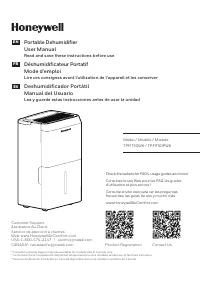 Honeywell TPFIT50PWK
User Manual
Honeywell TPFIT50PWK
User Manual
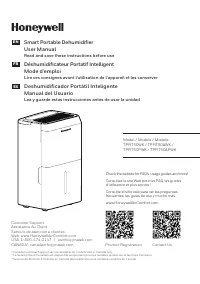 Honeywell TPFIT50WK
User Manual
Honeywell TPFIT50WK
User Manual
 Honeywell 00010
User Manual
Honeywell 00010
User Manual
 Honeywell ADVBLEWIFI
Manual
Honeywell ADVBLEWIFI
Manual