Panasonic FV-01VCN1 - Troubleshooting Guide
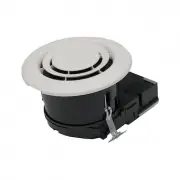
A Repair Manual for WhisperAir units covers essential topics like electrical wiring, installation requirements, compliance with safety codes, and operational considerations. The guide addresses common concerns such as power specifications, grounding, surge protection, and proper placement–including ceiling clearance, wet-area suitability, and retrofit compatibility. It also explores performance factors like coverage area, humidity tolerance, maintenance needs, and the role of nanoe™X technology in air purification, including its benefits for odor control, mold prevention, and smart-home integration while emphasizing safety and warranty details.


Table of Contents:
- Page 1 – Electrical Wiring and Installation Requirements
- Page 2 – Physical Installation Guidelines
- Page 3 – Operational Performance and Maintenance
- Page 4 – Nanoe™X Technology and Health Benefits
- Page 5 – Product Functionality, Comparisons, and Warranty
FREQUENTLY ASKED QUESTIONS
WIRING
Can we daisy chain the WhisperAir Repair units together? Example: for a classroom that needs 4 units?
Yes, please follow local jurisdiction for code requirements.
How much power or watts is Whisper Air Repair using? How much electricity does 1 unit use on average? What if I
have 10 units, how much power is that?
The power consumption of the product is 4 watts. It operates for 24 hours so it uses 96 Watt-hours per day (or 96Wh).
Using 10 units makes it 960Wh (or 0.96 KWh) per day.
Would I wire this in with my lighting for the room it is going into?
You can wire with lighting for the room, but it is recommended to have Whisper Air Repair on a separate switch for
extended operation, without the light.
My contractor mentioned a service switch, what is that?
A service switch would be installed between the electrical panel and the device so that the unit can be shut off to be
serviced. This can also be addressed using a lockout tagout breaker. Follow all local electrical and safety codes, as well
as the National Electrical Code (NEC) and the Occupational Safety and Health Act (OSHA).
Can this unit be installed to Chicago wiring standards?
The wiring of this product should be similar to our ventilation fans. Follow all local electrical and safety codes, as well as
the National Electrical Code (NEC) and the Occupational Safety and Health Act (OSHA).
Is a box(enclosure) optional? Can it be a portable unit?
No, a box enclosure is not recommended for this product.
Can I use armored cable for a commercial install?
Yes, the junction box has a metal cover for the connection from the MC and allows for a connection to ground from that.
Does this come with a 120v plug or will it be hardwired?
This product is intended to be hardwired. Please refer to the installation guide. Follow all local electrical and safety
codes, as well as the National Electrical Code (NEC) and the Occupational Safety and Health Act (OSHA).
Is the unit grounded?
Whisper Air Repair does provide a ground connection in the junction box; please follow local jurisdiction and code
requirements when installing. Follow all local electrical and safety codes, as well as the National Electrical Code (NEC)
and the Occupational Safety and Health Act (OSHA).
Can this unit be damaged from a power surge? Example: when the power comes back on after a storm or outage?
Can it run on my generator?
It is possible that a power surge could damage this product, but there is an internal fuse to prevent a serious electrical
event. If the generator operates 120V, it should be able to run.
FV-01VCN1
"Loading the manual" means you need to wait until the file loads and becomes available for online reading. Some manuals are very large, and the time they take to appear depends on your internet speed.
Was this manual helpful?
About this manual
- Brand
- Panasonic
- Model
- FV-01VCN1
- Document type
- Troubleshooting Guide
- Category
- Air Purifier
- Language(s)
- English
- Pages
- 5
- File size
- 596.6 KB
- Format
Other Manuals for Panasonic FV-01VCN1
Summary
Information regarding electrical wiring, power consumption, installation with lighting and switches, grounding, and protection against power surges.
Requirements for unit installation, including necessary hole size, ceiling clearance, compatibility with various ceiling types, suitability for wet areas, retrofit options, grille color choices, and contractor considerations.
Details on unit operation, coverage area, performance when HVAC or doors are active, operational temperature and humidity ranges, maintenance needs, power specifications, LED indicators, and ozone emissions.
Ask a question
Related manuals
Other Panasonic appliances
 Panasonic 2 Manual
 Panasonic 2SB1218A Manual
 Panasonic 2SD1819A Manual
 Panasonic 3.0 Manual
 Panasonic 3CCD Manual
 Panasonic 7 Manual
 Panasonic 12-808 Manual
 Panasonic 32J330E User Manual
 Panasonic 35 Manual
 Panasonic 42HD Manual
 Panasonic 42HL57 Manual
 Panasonic 470 Manual
 Panasonic 650w Manual
- Panasonic 700 Manual
 Panasonic 850 Manual
 Panasonic 970 Manual
 Panasonic 990 Manual
 Panasonic 1080p Manual
 Panasonic 1200 Manual
 Panasonic 1438M Manual