Dewalt DW364K - Manual
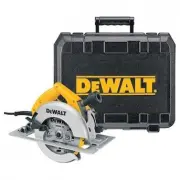
Dewalt DW364K Circular Saw – Manual, read for free online in PDF format. We hope this helps you resolve any issues you may have. If you have further questions, please contact us through the contact form.


Table of Contents:
- Page 2 – Avoid contact with the blade teeth to prevent personal injury.; Workpiece Support; get caught or hung up on the work and to prevent electric shock.; Cutting
- Page 3 – Lire toutes ces directives. Tout manquement aux directives
- Page 5 – Lea todas las instrucciones. El incumplimiento con alguna de
- Page 7 – PARA OTRAS LOCALIDADES:; Tensión de alimentación:
D
E
WALT Industrial Tool Co., 701 East Joppa Road, Baltimore, MD 21286 (NOV07)
Form No. N003078 DW364, DW384 Copyright © 1997, 2000, 2003, 2004, 2007 D
E
WALT
The following are trademarks for one or more D
E
WALT power tools: the yellow and black color
scheme; the “D” shaped air intake grill; the array of pyramids on the handgrip; the kit box con-
figuration; and the array of lozenge-shaped humps on the surface of the tool.
D
W364 7-1/4" (180 mm) Hea
vy Duty Cir
cular Sa
w
D
W384 8-1/4" (209 mm) Hea
vy Duty Cir
cular Sa
w
D
W364 Scie cir
culaire de ser
vice intensif de 180 mm (7-1/4 po)
D
W384 Scie cir
culaire de ser
vice intensif de 209 mm (8-1/4 po)
D
W364 Sierra cir
cular de 180 mm (7-1/4") para trabajo pesado
D
W384 Sierra cir
cular de 209 mm (8-1/4") para trabajo pesado
INSTR
UCTION MANU
AL
GUIDE D'UTILISA
TION
MANU
AL DE INSTR
UCCIONES
INSTR
UCTIV
O DE OPERA
CIÓN, CENTR
OS DE SER
VICIO
Y PÓLIZA
DE GARANTÍA.
AD
VER
TENCIA:
LÉASE ESTE INSTR
UCTIV
O ANTES
DE USAR EL PR
ODUCT
O
.
If y
ou ha
ve questions or comments,
contact us.
P
our toute question ou tout commentaire
, nous contacter
.
Si tiene dudas o comentarios,
contáctenos.
1-800-4-D
E
W
A
L
T
• www
.dewalt.com
IF YOU HAVE ANY QUESTIONS OR COMMENTS ABOUT THIS OR ANY D
E
WALT TOOL,
CALL US TOLL FREE AT:
1-800-4-D
E
WALT (1-800-433-9258)
Definitions: Safety Guidelines
The definitions below describe the level of severityfor each signal word.
Please read the manual and pay attention to these symbols.
DANGER:
Indicates an imminently hazardous situation which, if not
avoided,
will
result in
death or serious injury
.
WARNING:
Indicates a potentially hazardous situation which, if not
avoided,
could
result in
death or serious injury
.
CAUTION
: Indicates a potentially hazardous situation which, if not avoided,
may
result in
minor or moderate injury
.
CAUTION:
Used without the safety alert symbol indicates a potentially
hazardous situation which, if not avoided,
may
result in
property damage
.
General Safety Rules
WARNING:
Read all instructions. Failure to follow all instructions listed below may result
in electric shock, fire and/or serious injury. The term “power tool” in all of the warnings
listed below refers to your mains-operated (corded) power tool or battery-operated (cordless)
power tool.
SAVE THESE INSTRUCTIONS
1) WORK AREA SAFETY
a) Keep work area clean and well lit.
Cluttered or dark areas invite accidents.
b) Do not operate power tools in explosive atmospheres, such as in the presence of
flammable liquids, gases or dust.
Power tools create sparks which may ignite the dust
or fumes.
c) Keep children and bystanders away while operating a power tool.
Distractions can
cause you to lose control.
2) ELECTRICAL SAFETY
a) Power tool plugs must match the outlet. Never modify the plug in any way. Do not
use any adapter plugs with earthed (grounded) power tools.
Unmodified plugs and
matching outlets will reduce risk of electric shock.
b) Avoid body contact with earthed or grounded surfaces such as pipes, radiators,
ranges and refrigerators.
There is an increased risk of electric shock if your body is
earthed or grounded.
c) Do not expose power tools to rain or wet conditions.
Water entering a power tool will
increase the risk of electric shock.
d) Do not abuse the cord. Never use the cord for carrying, pulling or unplugging the
power tool. Keep cord away from heat, oil, sharp edges or moving parts.
Damaged
or entangled cords increase the risk of electric shock. Replace or repair damaged cords.
Make sure your extension cord is in good condition. Use only 3-wire extension cords that
have 3-prong grounding-type plugs and 3-pole receptacles that accept the tool’s plug.
e) When operating a power tool outdoors, use an extension cord suitable for outdoor
use.
Use of a cord suitable for outdoor use reduces the risk of electric shock. When
using an extension cord, be sure to use one heavy enough to carry the current your
product will draw. An undersized cord will cause a drop in line voltage resulting in loss
of power and overheating. The following table shows the correct size to use depending
on cord length and nameplate ampere rating. If in doubt, use the next heavier gauge.
The smaller the gauge number, the heavier the cord.
MINIMUM GAUGE FOR CORD SETS
Volts
Total Length of Cord in Feet
120V
0-25
26-50
51-100
101-150
240V
0-50
51-100
101-200
201-300
Ampere Rating
More Not more
AWG
Than Than
6 - 10
18
16
14
12
6 - 10
18
16
14
12
10 - 12
16
16
14
12
12 - 16
14
12 Not Recommended
3) PERSONAL SAFETY
a) Stay alert, watch what you are doing and use common sense when operating a
power tool. Do not use a power tool while you are tired or under the influence of
drugs, alcohol or medication.
A moment of inattention while operating power tools may
result in serious personal injury.
b) Use safety equipment. Always wear eye protection.
Safety equipment such as dust
mask, non-skid safety shoes, hard hat, or hearing protection used for appropriate
conditions will reduce personal injuries.
c) Avoid accidental starting. Ensure the switch is in the off-position before plugging
in.
Carrying power tools with your finger on the switch or plugging in power tools that
have the switch on invites accidents.
d) Remove any adjusting key or wrench before turning the power tool on.
A wrench or
a key left attached to a rotating part of the power tool may result in personal injury.
e) Do not overreach. Keep proper footing and balance at all times.
This enables better
control of the power tool in unexpected situations. Air vents often cover moving parts
and should also be avoided.
f) Dress properly. Do not wear loose clothing or jewellery. Keep your hair, clothing and
gloves away from moving parts.
Loose clothes, jewellery or long hair can be caught in
moving parts. Air vents often cover moving parts and should also be avoided.
g) If devices are provided for the connection of dust extraction and collection
facilities, ensure these are connected and properly used.
Use of these devices can
reduce dust-related hazards.
4) POWER TOOL USE AND CARE
a) Do not force the power tool. Use the correct power tool for your application.
The
correct power tool will do the job better and safer at the rate for which it was designed.
b) Do not use the power tool if the switch does not turn it on and off.
Any power tool
that cannot be controlled with the switch is dangerous and must be repaired.
c) Disconnect the plug from the power source and/or the battery pack from the power
tool before making any adjustments, changing accessories, or storing power
tools.
Such preventive safety measures reduce the risk of starting the power tool
accidentally.
d) Store idle power tools out of the reach of children and do not allow persons
unfamiliar with the power tool or these instructions to operate the power tool.
Power tools are dangerous in the hands of untrained users.
e) Maintain power tools. Check for misalignment or binding of moving parts, breakage
of parts and any other condition that may affect the power tools operation. If
damaged, have the power tool repaired before use.
Many accidents are caused by
poorly maintained power tools.
f) Keep cutting tools sharp and clean.
Properly maintained cutting tools with sharp
cutting edges are less likely to bind and are easier to control.
g) Use the power tool, accessories and tool bits etc., in accordance with these
instructions and in the manner intended for the particular type of power tool, taking
into account the working conditions and the work to be performed.
Use of the power
tool for operations different from those intended could result in a hazardous situation.
5) SERVICE
a) Have your power tool serviced by a qualified repair person using only identical
replacement parts.
This will ensure that the safety of the power tool is maintained.
Additional Safety Rules for Circular Saws
DANGER:
a) Keep hands away from cutting area and the blade. Keep your secondhand on
auxiliary handle, or motor housing.
If both hands are holding the saw, they cannot be
cut by the blade
b) Do not reach underneath the workpiece.
The guard cannot protect you from the blade
below the workpiece.
c) Adjust the cutting depth to the thickness of the workpiece.
Less than a full tooth of
the blade teeth should be visible below the workpiece.
d) Never hold piece being cut in your hands or across your leg. Secure the workpiece
to a stable platform.
It is important to support the work properly to minimize body
exposure, blade binding, or loss of control.
e) Hold power tool by insulated gripping surfaces when performing an operation
where the cutting tool may contact hidden wiring or its own cord.
Contact with a
“live” wire will also make exposed metal parts of the power tool “live” and shock the
operator.
f) When ripping always use a rip fence or straight edge guide.
This improves the
accuracy of cut and reduces the chance of blade binding.
g) Always use blades with correct size and shape (diamond versus round) of arbor
holes.
Blades that do not match the mounting hardware of the saw will run eccentrically,
causing loss of control.
h) Never use damaged or incorrect blade washers or bolt.
The blade washers and
bolt were specially designed for your saw, for optimum performance and safety of
operation.
i) Keep your body positioned to either side of the blade, but not in line with the saw
blade.
KICKBACK could cause the saw to jump backwards (see Causes and Operator
Prevention of Kickback and KICKBACK).
j) CAUTION:
Blades coast after turn off. Serious personal injury may result.
k) Avoid cutting nails. Inspect for and remove all nails from lumber before cutting.
CAUSES AND OPERATOR PREVENTION OF KICKBACK
– Kickback is a sudden reaction to a pinched, bound or misaligned saw blade, causing an
uncontrolled saw to lift up and out of the workpiece toward the operator.
– When the blade is pinched or bound tightly by the kerf closing down, the blade stalls and
the motor reaction drives the unit rapidly back toward the operator.
– If the blade becomes twisted or misaligned in the cut, the teeth at the back edge of the
blade can dig into the top surface of the wood causing the blade to climb out of the kerf
and jump back toward operator.
Kickback is the result of tool misuse and/or incorrect operating procedures or conditions and
can be avoided by taking proper precautions as given below:
a) Maintain a firm grip with both hands on the saw and position your body and arm to
allow you to resist kickback forces.
Kickback forces can be controlled by the operator,
if proper precautions are taken.
b) When blade is binding, or when interrupting a cut for any reason, release the trigger
and hold the saw motionless in the material until the blade comes to a complete
stop. Never attempt to remove the saw from the work or pull the saw backward
while the blade is in motion or kickback may occur.
Investigate and take corrective
actions to eliminate the cause of blade binding.
c) When restarting a saw in the workpiece, center the saw blade in the kerf and check
that the saw teeth are not engaged into the material.
If saw blade is binding, it may
walk up or kickback from the workpiece as the saw is restarted.
d) Support large panels to minimize the risk of blade pinching and KICKBACK.
Large
panels tend to sag under their own weight. Support must be placed under the panel on
both sides, near the line of cut and near the edge of the panel.
e) Do not use dull or damaged blade.
Unsharpened or improperly set blades produce
narrow kerf causing excessive friction, blade binding, and KICKBACK.
f) Blade depth and bevel adjusting locking levers must be tight and secure before
making cut.
If blade adjustment shifts while cutting, it may cause binding and
KICKBACK.
g) Use extra caution when making a “Pocket Cut” into existing walls or other blind
areas.
The protruding blade may cut objects that can cause kickback.
LOWER GUARD SAFETY INSTRUCTIONS
a) Check lower guard for proper closing before each use. Do not operate the saw if
lower guard does not move freely and close instantly. Never clamp or tie the lower
guard into the open position.
If saw is accidentally dropped, lower guard may be bent.
Raise the lower guard with the retracting handle and make sure it moves freely and does
not touch the blade or any other part, in all angles and depths of cut.
b) Check the operation of the lower guard spring. If the guard and the spring are not
operating properly, they must be serviced before use.
Lower guard may operate
sluggishly due to damaged parts, gummy deposits, or a build-up of debris.
c) Lower guard should be retracted manually only for special cuts such as “plunge
cuts” and “compound cuts.” Raise lower guard by retracting handle and as soon
as blade enters the material, the lower guard must be released.
For all other sawing,
the lower guard should operate automatically.
d) Always observe that the lower guard is covering the blade before placing saw
down on bench or floor.
An unprotected, coasting blade will cause the saw to walk
backwards, cutting whatever is in its path. Be aware of the time it takes for the blade to
stop after switch is released.
WARNING: ALWAYS USE SAFETY GLASSES.
Everyday eyeglasses are NOT safety
glasses. Also use face or dust mask if cutting operation is dusty. ALWAYS wear certified safety
equipment:
• ANSI Z87.1 eye protection (CAN/CSA Z94.3).
• ANSI S12.6 (S3.19) hearing protection.
• NIOSH/OSHA respiratory protection.
WARNING:
Some dust created by power sanding, sawing, grinding, drilling, and other con-
struction activities contains chemicals known in the state of California to cause cancer, birth
defects or other reproductive harm. Some examples of these chemicals are:
• lead from lead-based paints,
• crystalline silica from bricks and cement and other masonry products, and
• arsenic and chromium from chemically-treated lumber (CCA).
Your risk from these exposures varies, depending on how often you do this type of work.
To reduce your exposure to these chemicals: work in a well ventilated area, and work with
approved safety equipment, such as those dust masks that are specially designed to filter out
microscopic particles.
•
Avoid prolonged contact with dust from power sanding, sawing, grinding, drilling,
and other construction activities. Wear protective clothing and wash exposed
areas with soap and water.
Allowing dust to get into your mouth, eyes, or lay on the skin
may promote absorption of harmful chemicals.
WARNING:
Use of this tool can generate and/or disburse dust, which may cause serious and
permanent respiratory or other injury. Always use NIOSH/OSHA approved respiratory protec-
tion appropriate for the dust exposure. Direct particles away from face and body. Always oper-
ate tool in well-ventilated area and provide for proper dust removal. Use dust collection system
wherever possible.
WARNING: Always wear proper personal hearing protection that conforms to ANSI
S12.6 (S3.19) during use.
Under some conditions and duration of use, noise from this product
may contribute to hearing loss.
• The label on your tool may include the following symbols. The symbols and their definitions
are as follows:
V ......................volts A
................amperes
Hz ....................hertz W
...............watts
min ..................minutes
.............alternating current
...............direct current
.............alternating or direct current
....................Class I Construction
no ..............no load speed
........................
(grounded)
...............earthing terminal
....................Class II Construction
..............safety alert symbol
........................
(double insulated)
BPM...........beats per minute
…/min .............per minute
RPM ..........revolutions per minute
SAVE THESE INSTRUCTIONS
FEATURES (Fig. 1, 2)
A. End cap
G. Outer clamp washer
B. Trigger switch
H. Blade clamping screw
C. Lower blade guard retracting lever
I. Blade lock
D. Lower blade guard
J. Shoe
E. Inner clamp washer
F. Blade
Motor
Be sure your power supply agrees with nameplate marking. As little as 10% lower voltage can
cause loss of power and can result in overheating. All D
E
WALT tools are factory-tested; if this
tool does not operate, check the power supply.
WARNING:
Accessories must be rated for at least the speed recommended on the tool
warning label. Accessories running over rated speed can fly apart and cause injury. Accessory
ratings must always be above tool speed as shown on tool nameplate.
CAUTION:
Avoid contact with the blade teeth to prevent personal injury.
Electric Brake
Your saw has an automatic electric brake which is designed to stop the blade from coasting in
about two seconds after you release the trigger switch (B). It is useful when making certain cuts
in wood where a coasting blade would result in a wide, imprecise cut.
Occasionally, under certain conditions, the brake will not function properly and won’t stop the
saw in the 2 seconds discussed above. If this condition persists, turn the saw on and off four
or five times. If the brake still does not stop the blade in about 2 seconds, the problem may be
worn brushes. Replace the brushes as described below and try the saw again. If the problem
still persists, have the tool serviced at a D
E
WALT certified service center.
Adjustments and Setup
WARNING: To reduce the risk of serious personal injury, turn tool off and disconnect
tool from power source before making any adjustments or removing/installing attach-
ments or accessories.
ATTACHING AND REMOVING BLADES (FIG. 2, 3)
To attach the blade, retract lower blade guard (D) using the retracting lever (C) and place inner
clamp washer (E) and blade (F) on saw spindle with teeth at bottom of blade pointing forward.
Install outer clamp washer (G). The larger surfaces of both washers must face the blade. Thread
on blade clamping screw (H) firmly by hand to hold washers in position.
Lightly depress the blade lock (I) while turning the spindle until the blade stops rotating. Tighten
blade clamping screw (clockwise) firmly with the blade wrench (Fig. 3).
NEVER ENGAGE BLADE LOCK WHILE SAW IS RUNNING, OR ENGAGE IN AN EFFORT TO
STOP THE TOOL. NEVER TURN SWITCH ON WHEN BLADE LOCK IS ENGAGED.
When removing the blade, first unplug the saw. Engage the blade lock and unscrew the blade
clamping screw by turning it counter-clockwise with the blade wrench.
CUTTING DEPTH ADJUSTMENT (FIG. 4)
Loosen (counterclockwise) the cutting depth adjustment knob (K). Lift the saw handle, as
shown, to adjust it to the desired height. Tighten the knob to secure it in place. If depth of cut
cannot be adjusted, inspect parts for damage and service as required before use. A scale and
pointer are provided to enable you to select a specific depth of cut. Simply align the pointer to
the desired depth of cut.
NOTE:
To adjust the depth of cut pointer for various blade diameters, loosen the cutting depth
adjustment knob and raise the saw until the blade just touches the workpiece and tighten the
knob. This is the zero depth of cut position. If required, loosen the screw that holds the pointer
"Loading the manual" means you need to wait until the file loads and becomes available for online reading. Some manuals are very large, and the time they take to appear depends on your internet speed.
Was this manual helpful?
Helpful for 3 of 3 readers
About this manual
- Brand
- Dewalt
- Model
- DW364K
- Document type
- Manual
- Category
- Circular Saw
- Language(s)
- English, Spanish, French
- Pages
- 7
- File size
- 2.4 MB
- Format
Other Manuals for Dewalt DW364K
Summary
H G E SPINDLEBROCHE EJE BLADE / LAME / HOJA FIG.2 E G H C F and adjust to the zero indicator mark. The saw is now adjusted to accurately indicate the depth of cut for the blade used.For the most efficient cutting action using a carbide tipped saw blade, set the depth adjustment so that about one hal...
withdrawing the blade from the material. When starting each new cut, repeat as above. Never tie the blade guard in a raised position. KICKBACK When the saw blade becomes pinched or twisted in the cut, kickback can occur. The saw is thrust rapidly back toward the operator. When the blade is pinched o...
plásticos utilizados en estas piezas. Utilice un paño humedecido sólo con agua y jabón neutro. Nunca permita que penetre líquido dentro de la herramienta ni sumerja ninguna de las piezas en un líquido. Lubrification L’outil est monté sur des roulements à billes et à rouleaux autolubrifiants qui ne r...
Ask a question
Related manuals
More Dewalt Circular Saws models
 Dewalt DCB346-3WCS565B User Manual
 Dewalt DCS373B User Manual
 Dewalt DCS373P2 User Manual
 Dewalt DCS391P1 User Manual
 Dewalt DCS565B User Manual
 Dewalt DCS565P1 User Manual
 Dewalt DCS570B User Manual
 Dewalt DCS571B User Manual
 Dewalt DCS573B User Manual
 Dewalt DCS577B User Manual
 Dewalt DCS577X1 User Manual
 Dewalt DCS578X1 User Manual
 Dewalt DCS692X2 User Manual
 Dewalt DWE575 Manual
 Dewalt DWE575SB Manual
 Dewalt DWS520K Manual


