Champion RWC50 - User Manual
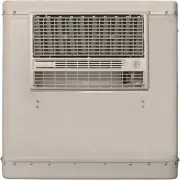
A user manual for Champion-Essick window evaporative coolers outlines their operation, installation, maintenance, and troubleshooting. The guide covers both manual and remote-controlled units, explaining airflow balancing, safety precautions, and essential setup steps like mounting hardware, water supply connections, and winter shutdown procedures. It also includes technical details such as specifications, parts diagrams, and a limited warranty section for repair support.


Table of Contents:
- Page 1 – Product Identification and Safety Overview
- Page 2 – Cooler Operation and Installation Procedures
- Page 3 – Installation and Maintenance Tasks
- Page 4 – Air Conditioner Conversion Assembly
- Page 5 – Troubleshooting and Warranty Information
- Page 6 – Technical Specifications and Parts Diagram
- Page 7 – Replacement Parts List
- Page 8 – System Operation and Safety Guidelines
- Page 9 – Window Air Conditioner Mounting Guidance
- Page 10 – Water Connection and Winterization Maintenance
- Page 11 – Duct Configuration Conversion Wiring
- Page 12 – Evaporative Cooler Troubleshooting and Warranty
Circle the model of your cooler and
record the serial number below.
Read Carefully All Of This Manual
Before Installing The Unit.
Encierre con un circulo el modelo de su
enfriador y escribe el número de serie abajo.
Lea Con Cuidado Todo Este Manual Antes
De Instalar La Unidad.
Serial #
Número De Serie
Read And Save These Instructions
Evaporative Cooling
Evaporative cooling is nature’s way of cooling. When air is moved
over a wet surface, water is evaporated and heat is absorbed. When
stepping out of a swimming pool with the wind blowing, evaporative
cooling makes you feel cool, even though the air may be warm.
The human body itself is cooled primarily by the evaporation of
perspiration.
This unit works on the same principle. Air is drawn across wet
fi lter pads where the air is cooled by evaporation and then circulated
throughout the building. It is this combination of cooled air and the
movement of air over the skin which makes it feel cool.
Unlike refrigeration systems which recirculate the air, an evaporative
cooler continually brings in fresh air while exhausting old air. You
are completely replacing the air every 2 to 4 minutes by opening
windows or doors or a combination of both. The air is always fresh,
not stale, laden with smoke and odors as happens with refrigerated
air conditioning.
Vea el Español en el interior
110496-1
12-08
www.championcooler.com
Manual Control Units
WC37 • N37W
WC44 • N44W
WC46 • N46W
WC50 • N50W
Remote Control Units
RWC46 • RN46W
RWC50 • RN50W
Safety Rules
1. Read these instructions carefully.
2. Unit must be in the
Off Position
and
Unplugged
from power
receptacle when installing or performing any maintenance.
3. This cooler will run on 120 volt A.C., 60 Hz (cycle) current
only.
4. Motor and pump are grounded and have an automatic thermal
overload switch which will shut motor off when it overheats. The
motor will restart automatically when it cools down.
5. Pump receptacle is for grounded evaporative cooler pump only.
Do not plug anything else into receptacle.
WARNING
: To reduce the risk of fi re or electric shock, do not
use this fan with any “solid-state fan speed control device.”
Convertible Kit Not Shipped With Cooler
Available Upon Request At No Additional Cost
Windo
w Units
With
Convertible Gri
lle
C H A M P I O N • E S S I C K
Window Evaporative
Cooler Manual
"Loading the manual" means you need to wait until the file loads and becomes available for online reading. Some manuals are very large, and the time they take to appear depends on your internet speed.
Was this manual helpful?
About this manual
- Brand
- Champion
- Model
- RWC50
- Document type
- User Manual
- Category
- Evaporative Cooler
- Language(s)
- English, Spanish
- Pages
- 12
- File size
- 754.3 KB
- Format
Summary
Model numbers for manual and remote control units, serial number recording instructions, explanation of evaporative cooling, and electrical safety rules.
Instructions for operating and installing the cooler, settings for pump and fan controls, methods for balancing airflow using windows, and mounting procedures using house legs and chain hooks.
Steps for installing window panel retainers, connecting water supply, maintenance procedures including oiling bearings, checking belt tension, cleaning the pump, replacing pads, and winter shutdown protocols.
Ask a question
Related manuals
More Champion Evaporative Coolers models


Other Champion appliances
 Champion 100379 User Manual
 Champion 100416 User Manual
 Champion 100485 User Manual
 Champion 200946 User Manual
 Champion 200978 User Manual
 Champion 201067 User Manual
 Champion 201110 User Manual
 Champion 201120 User Manual
 Champion 201153 User Manual
 Champion 201169 User Manual
 Champion 201223 User Manual
 Champion 201353 User Manual