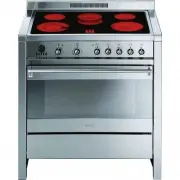
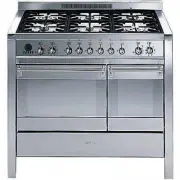
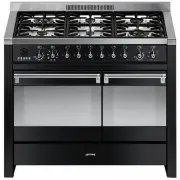
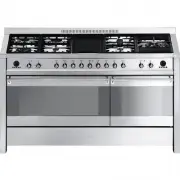
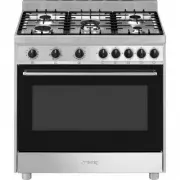
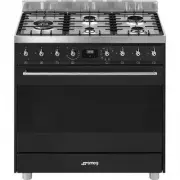
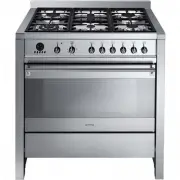
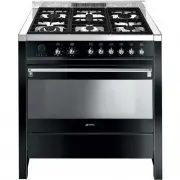
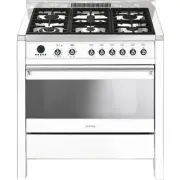
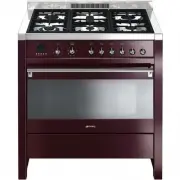
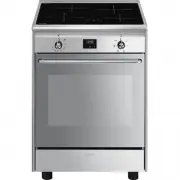
Page 2 - General instructions; INSTRUCTIONS FOR USE; cooking and heating up food
General instructions 4 1. INSTRUCTIONS FOR USE This manual is an integral part of the appliance. It must be kept in its entirety and in an accessible placefor the whole working life of the appliance. We recommend reading this manual and all the information itcontains carefully before using the appli...
Page 4 - SAFETY PRECAUTIONS; Never disconnect the plug by pulling on the cable.
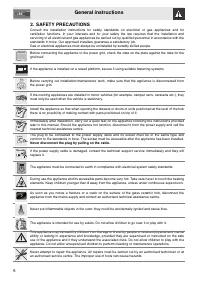
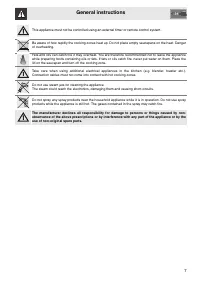
General instructions 6 2. SAFETY PRECAUTIONS Consult the installation instructions for safety standards on electrical or gas appliances and forventilation functions. In your interests and for your safety the law requires that the installation andservicing of all electrical and gas appliances be carr...
Page 6 - Instructions for disposal; ENVIRONMENTAL CARE; Our environmental care
Instructions for disposal 8 3. ENVIRONMENTAL CARE 3.1 Our environmental care Pursuant to Directives 2002/95/EC, 2002/96/EC, 2003/108/EC, relating to the reduction of the use ofhazardous substances in electrical and electronic appliances, as well as to the disposal of refuse, thecrossed out bin symbo...
Page 7 - Instructions for the user; GET TO KNOW YOUR APPLIANCE
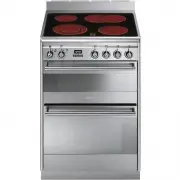
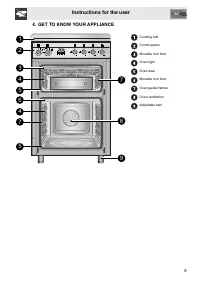
9 Instructions for the user 4. GET TO KNOW YOUR APPLIANCE Cooking hob Control panel Movable roof liner Oven light Oven seal Movable roof liner Oven guide frames Oven ventilation Adjustable feet 0 0 2 345 7 647 5 8 1 9
Page 8 - Description of the controls on the front panel; Standard heating
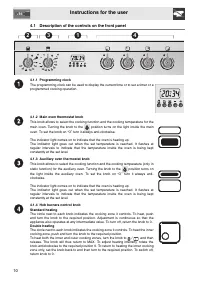
10 Instructions for the user 4.1 Description of the controls on the front panel 4.1.1 Programming clock The programming clock can be used to display the current time or to set a timer or aprogrammed cooking operation. 4.1.2 Main oven thermostat knob This knob allows to select the cooking function an...
Page 9 - AVAILABLE ACCESSORIES; Using the rack or tray
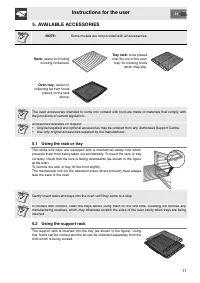
11 Instructions for the user 5. AVAILABLE ACCESSORIES NOTE: Some models are not provided with all accessories. Rack: useful for holding cooking containers. Tray rack: to be placed over the top of the oven tray; for cooking foods which may drip. Oven tray: useful for collecting fat from foods placed ...
Page 10 - USING THE COOKING HOB; General warnings and advice; Failure to clean
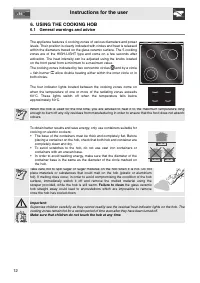
12 Instructions for the user 6. USING THE COOKING HOB 6.1 General warnings and advice The appliance features 4 cooking zones of various diameters and powerlevels. Their position is clearly indicated with circles and heat is releasedwithin the diameters traced on the glass ceramic surface. The 5 cook...
Page 11 - Before using the appliance; Heat the empty appliance to the maximum temperature; Oven runners
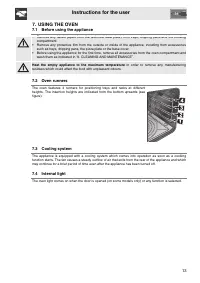
13 Instructions for the user 7. USING THE OVEN 7.1 Before using the appliance • Remove any labels (apart from the technical data plate) from trays, dripping pans and the cooking compartment. • Remove any protective film from the outside or inside of the appliance, including from accessories such as ...
Page 12 - General warnings and advice for use
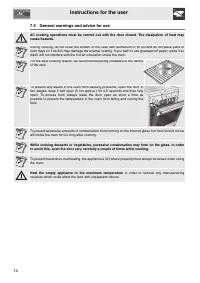
14 Instructions for the user 7.5 General warnings and advice for use All cooking operations must be carried out with the door closed. The dissipation of heat maycause hazards. During cooking, do not cover the bottom of the oven with aluminium or tin foil and do not place pans oroven trays on it as t...
Page 13 - Electronic programmer; LIST OF FUNCTIONS
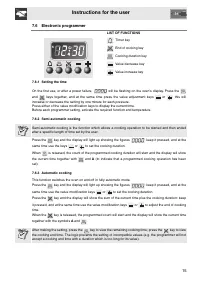
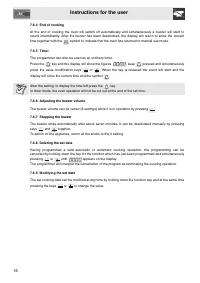
15 Instructions for the user 7.6 Electronic programmer LIST OF FUNCTIONS Timer key End of cooking key Cooking duration key Value decrease key Value increase key 7.6.1 Setting the time On the first use, or after a power failure, will be flashing on the oven's display. Press the and keys together, and...
Page 15 - COOKING WITH THE OVEN
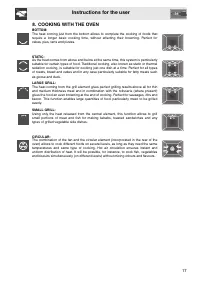
17 Instructions for the user 8. COOKING WITH THE OVEN BOTTOM: The heat coming just from the bottom allows to complete the cooking of foods thatrequire a longer basic cooking time, without affecting their browning. Perfect forcakes, pies, tarts and pizzas. STATIC: As the heat comes from above and bel...
Page 16 - Cooking advice and instructions; We recommend preheating the oven before putting the food in.
18 Instructions for the user 8.1 Cooking advice and instructions 8.1.1 General advice • We recommend preheating the oven before putting the food in. Place the food in the oven only once the cooking light is off. • • For cooking on several levels, we recommend using a fan-assisted function to achieve...
Page 17 - CLEANING AND MAINTENANCE; Cleaning stainless steel; Food stains or residues
19 Instructions for the user 9. CLEANING AND MAINTENANCE Do not use steam jets for cleaning the appliance. The steam could reach the electronics,damaging them and causing short-circuits. CAUTION: For your safety, you are advised to wear protective gloves while performing anycleaning or extraordinary...
Page 18 - Cleaning the oven
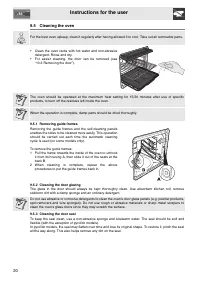
20 Instructions for the user 9.5 Cleaning the oven For the best oven upkeep, clean it regularly after having allowed it to cool. Take out all removable par ts. • Clean the oven racks with hot water and non-abrasive detergent. Rinse and dry. • For easier cleaning, the door can be removed (see “10.3 R...
Page 19 - EXTRAORDINARY MAINTENANCE
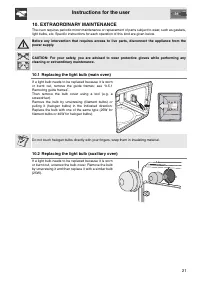
21 Instructions for the user 10. EXTRAORDINARY MAINTENANCE The oven requires periodic minor maintenance or replacement of parts subject to wear, such as gaskets,light bulbs, etc. Specific instructions for each operation of this kind are given below. Before any intervention that requires access to li...
Page 20 - Removing the door
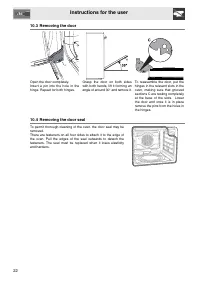
22 Instructions for the user 10.3 Removing the door Open the door completely.Insert a pin into the hole in thehinge. Repeat for both hinges. Grasp the door on both sideswith both hands, lift it forming anangle of around 30° and remove it. To reassemble the door, put thehinges in the relevant slots i...
Page 21 - Removing the internal glass panels; Removing the internal glass panel:; Removing the middle glass panels:; Replacing the glass panels:
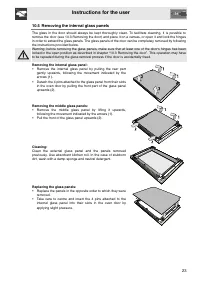
23 Instructions for the user 10.5 Removing the internal glass panels The glass in the door should always be kept thoroughly clean. To facilitate cleaning, it is possible toremove the door (see 10.3 Removing the door) and place it on a canvas, or open it and lock the hingesin order to extract the gla...
Page 22 - Instructions for the installer; Installing in kitchen units
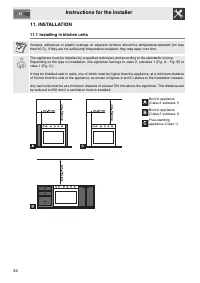
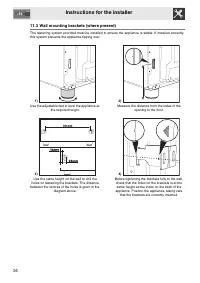
24 Instructions for the installer 11. INSTALLATION 11.1 Installing in kitchen units Veneers, adhesives or plastic coatings on adjacent furniture should be temperature-resistant (no lessthan 90°C). If they are not sufficiently temperature-resistant, they may warp over time. The appliance must be inst...
Page 23 - Room ventilation and combustion extraction
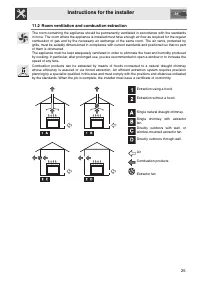
25 Instructions for the installer 11.2 Room ventilation and combustion extraction The room containing the appliance should be permanently ventilated in accordance with the standardsin force. The room where the appliance is installed must have enough air flow as required for the regularcombustion of ...
Page 25 - Electrical connection
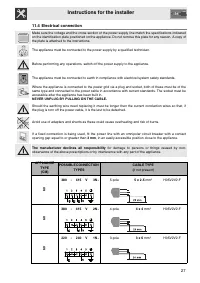
27 Instructions for the installer 11.4 Electrical connection Make sure the voltage and the cross-section of the power supply line match the specifications indicatedon the identification plate positioned on the appliance. Do not remove this plate for any reason. A copy ofthe plate is attached to the ...
Page 26 - Positioning and levelling the appliance
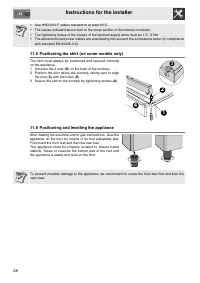
28 Instructions for the installer • Use H05V2V2-F cables resistant to at least 90°C. • The values indicated above refer to the cross-section of the internal conductor. • The tightening torque of the screws of the terminal supply wires must be 1.5 - 2 Nm. • The aforementioned power cables are sized t...