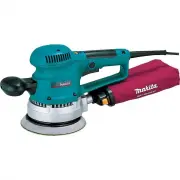
Page 2 - ENGLISH; SPECIFICATIONS; Read and understand all instructions.; SAVE THESE INSTRUCTIONS; Work Area; Electrical Safety
2 ENGLISH SPECIFICATIONS • Due to our continuing programme of research and development, the specifications herein are subject to change without notice. • Note: Specifications may differ from country to country. GENERAL SAFETY RULES USA002-2 (For All Tools) WARNING: Read and understand all instructio...
Page 3 - SPECIFIC SAFETY RULES; AWG
3 hearing protection must be used for appropriate con-ditions. Ordinary eye or sun glasses are NOT eyeprotection. Tool Use and Care 15. Use clamps or other practical way to secure and support the workpiece to a stable platform. Hold- ing the work by hand or against your body is unsta-ble and may lea...
Page 4 - FUNCTIONAL DESCRIPTION; Switch action
4 hazardous substances. Use appropriate respira-tory protection. 8. Be sure that there are no cracks or breakage onthe pad before use. Cracks or breakage maycause a personal injury. SAVE THESE INSTRUCTIONS WARNING: MISUSE or failure to follow the safetyrules stated in this instruction manualmay caus...
Page 5 - ASSEMBLY; Front grip
5 ASSEMBLY CAUTION: • Always be sure that the tool is switched off andunplugged before carrying out any work on the tool. Front grip Install the front grip on the tool so that its protrusions fitinto the matching notches in the front of the tool. Securethe front grip using a screwdriver to tighten t...
Page 6 - Installing paper dust bag (optional accessory); OPERATION; Sanding operation
6 Installing paper dust bag (optional accessory) Place the paper dust bag on the paper dust bag holderwith its front side upward. Insert the front fixing card-board of the paper dust bag into the groove of the paperdust bag holder. Then press the upper part of the front fixing cardboard inarrow dire...
Page 7 - MAINTENANCE; MAKITA LIMITED ONE YEAR WARRANTY
7 Applying wax Use an optional sponge pad. Apply wax to the spongepad or work surface. Run the tool to smooth out wax. NOTE: • First, wax a non critical portion of the work surfaceto make sure that the tool will not scratch thesurface or result in uneven waxing. Removing wax Use an optional felt pad...
Page 9 - FRANÇAIS; SPÉCIFICATIONS; (Pour tous les outils
9 FRANÇAIS SPÉCIFICATIONS • Le fabricant se réserve le droit de modifier sans avertissement les spécifications. • Note: Les spécifications peuvent varier selon les pays. RÈGLES DE SÉCURITÉ GÉNÉRALES USA002-2 (Pour tous les outils ) AVERTISSEMENT: Vous devez lire et comprendre toutes lesinstructions....
Page 10 - Calibre américain des fils
10 11. Méfiez-vous d’un démarrage accidentel. Avant de brancher l’outil, assurez-vous que soninterrupteur est sur ARRÊT. Le fait de transporter un outil avec le doigt sur la détente ou de brancherun outil dont l’interrupteur est en position MARCHEpeut mener tout droit à un accident. 12. Enlevez les ...
Page 11 - SYMBOLES; Interrupteur
11 CONSIGNES DE SÉCURITÉ SPÉCIFIQUES USB040-5 NE vous laissez PAS tromper (au fil d’uneutilisation répétée) par un sentimentd’aisance et de familiarité avec leproduit, en négligeant le respectrigoureux des consignes de sécurité quiaccompagnent la ponceuse. Si vousn’utilisez pas cet outil de façon sû...
Page 12 - Cadran de rélage de vitesse; ASSEMBLAGE; Poignée avant
12 Cadran de rélage de vitesse La vitesse de rotation peut être ajustée en tournant lecadran de réglage de la vitesse sur un numéro deréglage donné, de 1 à 5.Une vitesse plus élevée est obtenue lorsque le cadranest tourné dans le sens du numéro 5. Une vitesse plusbasse est obtenue lorsqu’il est tour...
Page 14 - UTILISATION; Opération de sablage
14 UTILISATION Opération de sablage ATTENTION: • Ne mettez jamais l’outil en marche alors qu’il setrouve en contact avec la pièce à travailler, pouréviter de vous blesser. • Ne jamais utiliser l’outil sans le disque abrasif. Vousrisquer de sérieusement endommager le tampon. • Ne jamais forcer l’outi...
Page 15 - GARANTIE LIMITÉE D’UN AN MAKITA
15 ENTRETIEN ATTENTION: • Assurez-vous toujours que l’outil est hors tension etdébranché avant d’y effectuer tout travaild’inspection ou d’entretien. Pour maintenir la SÉCURITÉ et la FIABILITÉ du produit,les réparations, l’inspection et le remplacement descharbons, et tout autre travail d’entretien ...
Page 16 - ESPAÑOL; ESPECIFICACIONES; Lea y entienda todas las instrucciones.
16 ESPAÑOL ESPECIFICACIONES • Debido a un programa continuo de investigación y desarrollo, las especificaciones aquí dadas están sujetas a cambios sin previo aviso. • Nota: Las especificaciones pueden ser diferentes de país a país. NORMAS DE SEGURIDAD GENERALES USA002-2 (Para todas las herramientas)...
Page 18 - SÍMBOLOS; No se recomienda
18 REGLAS ESPECÍFICAS DE SEGURIDAD USB040-5 NO permita que la comodidad ofamiliaridad con el producto (a causa desu uso frecuente) substituya elcumplimiento estricto de las reglas deseguridad sobre la lijadora. Si ustedutiliza esta herramienta de modoinseguro o incorrecto, puede sufrirheridas graves...
Page 19 - MONTAJE; Empuñadura frontal
19 Accionamiento del interruptor PRECAUCIÓN: • Antes de enchufar la herramienta, compruebesiempre que el gatillo interruptor se accionadebidamente y que vuelve a la posición “OFF”(apagado) cuando lo suelta. • El interruptor puede ser bloqueado en la posición“ON” (encendido) para mayor comodidad delo...
Page 21 - OPERACIÓN; Operación de lijado
21 Después presione la parte superior del cartón en elsentido de la flecha para que quede sujeto en las garras. Inserte el diente de la bolsa recolectora de papel en laguía del soporte de la bolsa. Después instale el soportede la bolsa recolectora nuevamente en la herramienta. OPERACIÓN Operación de...
Page 22 - MANTENIMIENTO; GARANTÍA LIMITADA MAKITA DE UN AÑO
22 Use una almohadilla de esponja opcional. Aplique ceraen la almohadilla de esponja o sobre la superficie detrabajo. Haga funcionar la herramienta para distribuir lacera. NOTA: • En primer lugar, encere una porción no visible de lasuperficie de trabajo para asegurarse de que laherramienta no raye l...
Page 24 - Makita Corporation
WARNING Some dust created by power sanding, sawing, grinding, drilling, and otherconstruction activities contains chemicals known to the State of Californiato cause cancer, birth defects or other reproductive harm. Some examplesof these chemicals are:• lead from lead-based paints, • crystalline sili...