Page 2 - Checking the Package Contents
2 Check if the following items are included in your camera package. If anything is missing, contact the retailer from which you purchased the camera. • A memory card is not included. • Adobe Reader must be installed to view the PDF manuals. Microsoft Word Viewer 2003 can be installed to view Word ma...
Page 3 - Read This First
3 Test Shots Take some initial test shots and play them back to make sure the images were recorded correctly. Please note that Canon Inc., its subsidiaries and affiliates, and its distributors are not liable for any consequential damages arising from any malfunction of a camera or accessory, includi...
Page 4 - What Do You Want to Do?; Shoot; Shoot in places where I cannot use the flash (turn off the flash); I F; Take good people shots
4 What Do You Want to Do? Shoot 4 ● Shoot, leaving it to the camera to make settings . . . . . . . . . . . . 22 ● Shoot to match special conditions. . . . . . . . . . . . . . . . . . . . 52 – 54 ● Focus on faces . . . . . . . . . . . . . . . . . . . . . . . . . . . . . . . . 22 , 60 , 76 ● Shoot in ...
Page 5 - View
What Do You Want to Do? 5 ● Shoot without the effects of camera shake even in low light conditions (High ISO Auto) . . . . . . . . . . . . . . . . . 54 , 68 ● Make dark subjects appear brighter (i-Contrast) . . . . . . . . . . . . . 81 ● Use the viewfinder to shoot . . . . . . . . . . . . . . . . . ...
Page 6 - Table of Contents; Shooting in Special
6 Chapters 1 – 3 explain the basic operations and frequently used functions of this camera. Chapters 4 onward explain the advanced functions, letting you learn more as you read each chapter. Checking the Package Contents .......2Read This First ..................................3What Do You Want to ...
Page 7 - Getting More Out of
Table of Contents 7 Adjusting the White Balance ........... 69Changing the Tone of an Image (My Colors) ............... 70 Shooting Using a TV Monitor .......... 71 Î Shooting Using the Two Second Self-Timer ................................. 71 $ Customizing the Self-Timer ........ 72 Changing the C...
Page 8 - Camera; Caution; Caution; Warning; Safety Precautions
8 • Before using the camera, please ensure that you read the safety precautions described below. Always ensure that the camera is operated correctly. • The safety precautions noted on the following pages are intended to prevent injuries to yourself and other persons, or damage to the equipment. • Be...
Page 11 - Getting Started; mode, and then how to view, erase and print the images you; Attaching the Strap/Holding the Camera
11 Getting Started This chapter explains preparations before shooting, how to shoot in A mode, and then how to view, erase and print the images you take. The latter part of this chapter explains how to shoot and view movies and transfer images to a computer. Attaching the Strap/Holding the Camera • ...
Page 12 - Charging the Battery
12 Use the included charger to charge the battery. Remove the cover. Insert the battery. ● Align the S marks on the battery and charger, then insert the battery by sliding it in and down . Charge the battery. ● For CB-2LY: Flip out the plug and plug the charger into a power outlet . ● For CB-2LYE: P...
Page 13 - Approximate Number of Shots That Can Be Taken; Battery Charge Indicator; Using the battery and charger effectively
Charging the Battery 13 Approximate Number of Shots That Can Be Taken * The number of shots that can be taken is based on the Camera & Imaging Products Association (CIPA) measurement standard. • Under some shooting conditions, fewer shots can be taken. Battery Charge Indicator An icon or message...
Page 14 - Insert the memory card.; Inserting the Battery and Memory Card
14 Insert the included battery and a memory card into the camera. Check the card’s write-protect tab. ● If the memory card has a write-protect tab, you will not be able to record images if the tab is in the locked position. Slide the tab up until you hear a click. Open the cover. ● Slide the cover ,...
Page 15 - Close the cover; Removing the Battery and Memory Card; The battery will pop up.; Remove the memory card.; The memory card will pop up.
Inserting the Battery and Memory Card 15 Close the cover. ● Close the cover , and slide it until it locks into place with a click. Removing the Battery and Memory Card Remove the battery. ● Open the cover and press the battery lock in the direction of the arrow. X The battery will pop up. Remove the...
Page 16 - Approximate Number of Shots per Memory Card; Compatible Memory Cards; SD memory cards; Can you check the number of shots that can be taken?
Inserting the Battery and Memory Card 16 Approximate Number of Shots per Memory Card • Values are based on the default settings. • The number of shots that can be taken will vary depending on camera settings, the subject and the memory card used. You can check the number of shots that can be taken w...
Page 17 - Set the date and time.; Press the; Setting the Date and Time; Reappearing Date/Time screen
17 The Date/Time settings screen will appear the first time the camera is turned on. Since the dates and times recorded into your images are based on these settings, be sure to set them. Turn on the camera. ● Press the ON/OFF button. X The Date/Time screen will appear. Set the date and time. ● Press...
Page 18 - Changing the Date and Time; qr; Change the date and time.
Setting the Date and Time 18 Changing the Date and Time You can change the current date and time settings. Display the menus. ● Press the n button. Select [Date/Time] in the 3 tab. ● Press the qr buttons to select the 3 tab. ● Press the op buttons to select [Date/ Time], then press the m button. Cha...
Page 19 - opqr; Setting the Display Language
19 You can change the language displayed in the LCD monitor menus and messages. Set the playback mode. ● Press the 1 button. Display the settings screen. ● Press and hold the m button , then press the n button . Set the display language. ● Press the opqr buttons to select a language, then press the ...
Page 20 - Format the memory card.; Formatting Memory Cards
20 Before you use a new memory card or one that has been used in other devices, you should format the card with this camera. Formatting (initializing) a memory card erases all data on the memory card. As you cannot retrieve the erased data, exercise adequate caution before formatting the memory card...
Page 21 - Press halfway; (lightly to the first; Press fully; Pressing the Shutter Button
21 The shutter button has two stops. To take images that are in focus, be sure to first press the shutter button lightly (halfway) to focus, then take the shot. Press halfway (lightly to the first stop) . X The camera focuses and automatically selects the necessary settings for shooting, such as the...
Page 22 - Select the; Set the mode switch to; Taking Pictures
22 Since the camera can determine the subject and shooting conditions, you can let it automatically select the best settings for the scene and just shoot. The camera can also detect and focus on faces, setting the color and brightness to optimal levels. Turn on the camera. ● Press the ON/OFF button....
Page 23 - Press the shutter button halfway to focus.
A Taking Pictures 23 Focus. ● Press the shutter button halfway to focus. X When the camera focuses, it will beep twice and the indicator will light green (orange when the flash will fire). X Green AF frames appear where the subject is in focus. X Several AF frames will appear when the camera focuses...
Page 24 - Scene Icons
A Taking Pictures 24 • The image comes out dark even if the flash fired when shooting? The subject is too far away for the flash to reach. Shoot within the effective flash range of approximately 30 cm – 4.2 m (12 in. – 14 ft.) at maximum wide angle, and approximately 30 cm – 2.4 m (12 in. – 7.9 ft.)...
Page 25 - Select the playback mode.; Viewing Images; Switching to and from playback mode
25 You can view your images on the screen. Select the playback mode. ● Press the 1 button. X The last image you took will appear. Select an image. ● Pressing the q button will cycle through the images in reverse order. ● Pressing the r button will cycle through the images in the order they were take...
Page 26 - Erasing Images
26 You can select and erase images one at a time. Please note that erased images cannot be recovered. Exercise adequate caution before erasing an image. Select the playback mode. ● Press the 1 button. X The last image you took will appear. Select an image to erase. ● Press the qr buttons to display ...
Page 27 - Items to Prepare; Turn off the camera and printer.; Printing Images
27 You can easily print the images you have taken if you connect the camera to a PictBridge compliant printer (sold separately). Items to Prepare • Camera and PictBridge compliant printer (sold separately) • Interface cable supplied with the camera (p. 2) Turn off the camera and printer. Connect the...
Page 29 - Shooting Movies
29 The camera can automatically select all settings so that you can shoot movies just by pressing the shutter button. Select the E mode. ● Set the mode switch to E . Compose the shot. ● Moving the zoom lever toward i will zoom in on your subject, making it appear larger. Moving the lever toward j wi...
Page 30 - Press the shutter button fully.; Estimated Shooting Times
E Shooting Movies 30 Shoot. ● Press the shutter button fully. X The camera will start shooting the movie, and [ Rec] and the elapsed time will appear on the screen. ● Once shooting begins, take your finger off the shutter button. ● If you change the composition of your shot during shooting, the focu...
Page 31 - Viewing Movies
31 You can view your movies on the screen. Select the playback mode. ● Press the 1 button. X The last image you shot will appear. X appears on movies. Select a movie. ● Press the qr buttons to select a movie, then press the m button. X The movie control panel will appear on the screen. Play the movi...
Page 32 - System Requirements; Windows; Transferring Images to a Computer
32 You can use the included software to transfer your camera images to a computer. System Requirements Even though these are recommended system requirements, not all computer functions can be guaranteed. Windows Macintosh OS Windows Vista (including Service Pack 1)Windows XP Service Pack 2, Service ...
Page 33 - Camera and computer; Preparations; Install the software.; The screen on the left displays.
Transferring Images to a Computer 33 Items to Prepare • Camera and computer • DIGITAL CAMERA Solution Disk supplied with the camera (p. 2) • Interface cable supplied with the camera (p. 2) Preparations Windows XP and Mac OS X (v10.4) are used for these explanations. Install the software. Windows Pla...
Page 34 - CameraWindow will appear.
Transferring Images to a Computer 34 Connect the camera to the computer. ● Turn off the camera. ● Open the cover, and insert the cable’s small plug into the camera terminal in the direction as shown. ● Insert the cable’s larger plug into the computer’s USB port. For connection details, refer to the ...
Page 35 - Macintosh; Transferring Images with a Computer; For further operations, refer to the
Transferring Images to a Computer 35 Macintosh X CameraWindow will appear when you establish a connection between the camera and computer. ● If CameraWindow does not appear, click the [CameraWindow] icon on the Dock (the bar which appears at the bottom of the desktop). Transferring Images with a Com...
Page 36 - Accessories
36 Accessories Wrist Strap WS-DC7 Interface Cable IFC-400PCU* 1 DIGITAL CAMERA Solution Disk AV Cable AVC-DC400* 1 AC Adapter Kit ACK-DC40 Compact Power Adapter CA-DC10 Supplied with Camera *1 Also available for purchase separately.*2 See the user guide supplied with the printer for more information...
Page 38 - Power Supplies; Other Accessories; The battery charger can also be used when abroad.; Separately Sold Accessories
38 The following camera accessories are sold separately.Some accessories are not sold in some regions, or may no longer be available. Power Supplies • AC Adapter Kit ACK-DC40 This kit lets you power the camera using household power. Recommended for powering the camera for an extended period of time ...
Page 39 - Learning More; Conventions Used in this Guide; : Hints for getting more out of your camera.
39 Learning More This chapter explains the parts of the camera and what displays on the screen, as well as, the basic operating instructions. Conventions Used in this Guide • Icons are used in the text to represent the camera buttons and switches. • Language that displays on the screen appears insid...
Page 40 - Mode Switch; Use the mode switch to change modes.; Components Guide
40 Mode Switch Use the mode switch to change modes. Components Guide Lamp (AF Assist Beam) (p. 24) / Red-Eye Reduction Lamp (p. 111) / Self-Timer Lamp (p. 59) Microphone (p. 30) LensZoom LeverShooting: i (Telephoto)/ j (Wide Angle) (p. 22) Playback: k (Magnify) (p. 94) / g (Index) (p. 90) Shutter Bu...
Page 41 - Indicators
Components Guide 41 Indicators The indicators on the back of the camera will light or blink under the following conditions. SpeakerViewfinder (p. 73) Indicators (p. 41) Screen (LCD Monitor) (pp. 42 , 43) 1 (Playback) Button (p. 25) Mode Switch (p. 40) A/V OUT (Audio/Video Output) and DIGITAL Termina...
Page 42 - Switching the Display; You can change the display using the; Information Displayed on the Screen
42 Shooting (Information Display) * : Standard, : Held vertically When shooting, the camera detects if it is held vertically or horizontally, and adjusts settings accordingly for the best shot. It also detects orientation during playback, so you can hold the camera in either orientation and it will ...
Page 44 - In “Detailed Information Display”; Histogram during Playback; is called the; Power Saving during Shooting; turns on the monitor and shooting; Power Saving during Playback
Power Saving Function (Auto Power Down) 44 Display in Dark Conditions during Shooting The display automatically brightens when shooting in dark conditions, allowing you to check the composition (Night Display function). However, the brightness of the image on the screen, and the brightness of the ac...
Page 45 - Select a shooting mode.; op; FUNC. Menu – Basic Operations
45 Commonly used shooting functions can be set with the FUNC. menu. The menu and menu items differ depending on the Shooting mode (p. 122) . Select a shooting mode. ● Set the mode switch to the desired shooting mode. Display the FUNC. menu. X Press the m button. Select a menu item. ● Press the op bu...
Page 46 - Menu – Basic Operations
46 Various functions can be set from the menus. The menu items are organized under tabs, such as for shooting ( 4 ) and playback ( 1 ). The menu items differ depending on the mode (pp. 124 – 127) . Display the menu. ● Press the n button. Select a tab. ● Press the qr buttons, or move the zoom lever (...
Page 47 - Changing the Sound Settings
47 You can silence or adjust the volume of camera sounds. Muting Sounds Display the menu. ● Press the n button. Select [Mute]. ● Press the qr buttons to select the 3 tab. ● Press the op buttons to select [Mute], then use the qr buttons to select [On]. Adjusting the Volume Display the menu. ● Press t...
Page 48 - Returning the Camera to Default Settings; Are there functions that cannot be reset?
48 When you have mistakenly changed a setting, you can reset the camera to the default settings. Display the menu. ● Press the n button. Select [Reset All]. ● Press the qr buttons to select the 3 tab. ● Press the op buttons to select [Reset All], then press the m button. Reset the settings. ● Press ...
Page 49 - Perform the low level format.; Low Level Memory Card Formatting; About low level formatting
49 Perform low level formatting when you think that the recording/reading speed of a memory card has dropped. Low level formatting a memory card completely erases all data on the memory card. As you cannot retrieve the erased data, exercise adequate caution before formatting the memory card. Display...
Page 50 - With the; Changing the Screen Brightness
50 The screen brightness can be changed in two ways. With the n Button ● Press the n button, select the 3 tab, select [LCD Brightness] and then press the m button. ● Press the qr buttons to change the brightness. ● Press the n button again to complete the setting. With the l Button ● Press the l but...
Page 52 - Select the desired mode.; Shooting in Various Conditions
52 The camera will select the necessary settings for the conditions in which you wish to shoot when you select the matching mode. Set the mode switch to 4 (p. 40) . Select the shooting mode. ● Press the m button, then use the op buttons to select G . Select the desired mode. ● Press the qr buttons t...
Page 53 - Lets you shoot indoors with natural colors.; Special Conditions; Take shots of fireworks
4 Shooting in Various Conditions 53 V Take shots of kids and pets(Kids&Pets) ● Lets you capture subjects that move around, such as children and pets, without missing photo opportunities. H Take indoor shots (Indoor) ● Lets you shoot indoors with natural colors. Special Conditions U Shoot sunsets...
Page 54 - Take shots of aquatic life in an; Recording pixels are set to
4 Shooting in Various Conditions 54 S Shoot underwater (Underwater) ● Lets you shoot underwater with Waterproof Case WP-DC29 (sold separately). y Take shots of aquatic life in an aquarium (Aquarium) ● Lets you take natural-colored shots of aquatic life in indoor aquariums. O Take shots of foliage (F...
Page 55 - You can shoot with the flash turned off.; Turning the Flash Off; What if the indicator blinks orange and a flashing
! Turning the Flash Off 55 You can shoot with the flash turned off. Press the r button. Select ! . ● Press the qr buttons to select ! , then press the m button. X ! will appear on the screen. ● Follow the steps above to return the setting to . When you press the shutter button halfway in low light c...
Page 56 - and the zoom factor used.; Move the zoom lever toward; Hold the lever until zooming stops.; Move it toward; Zoom Factors at which Images Deteriorate; Zooming in More Closely on Subjects; Turning off the digital zoom
56 You can use the digital zoom to zoom up to a maximum of 12x and capture subjects that are too far away for the optical zoom (p. 22) to enlarge. The images may appear coarse, however, depending on the recording pixel setting (p. 65) and the zoom factor used. Move the zoom lever toward i . ● Hold t...
Page 57 - Digital Tele-Converter; Combinations that Cause Image Deterioration
Zooming in More Closely on Subjects (Digital Zoom) 57 Digital Tele-Converter The focal length of the lens can be increased by an equivalent of 1.4x or 2.3x. This enables a faster shutter speed and less chance of camera shake than the zoom (including digital zoom) used by itself at the same zoom fact...
Page 58 - Inserting the Date and Time
58 You can insert the shooting date and time in the lower right corner of an image. Once inserted, however, they cannot be deleted. Be sure to check beforehand that the date and time are correctly set (p. 17) . Select [Date Stamp]. ● Press the n button. ● Press the qr buttons to select the 4 tab, th...
Page 59 - Using the Self-Timer
59 The self-timer can be used to shoot a group photo that includes the camera operator. The camera will activate approximately 10 seconds after the shutter button is pressed. Press the p button. Select Ò . ● Press the op buttons to select Ò , then press the m button. X Once set, Ò will appear. Shoot...
Page 60 - when you enter the composition.; Select; Follow Step 2 on; To restore the original setting, select; Using the Face Self-Timer; What if a face is not detected?
60 Once you compose the shot, such as for a group photo, and press the shutter button, the camera will take three shots in a row two seconds after it detects your face (p. 76) when you enter the composition. Select " . ● Follow Step 2 on p. 59 and select " . Compose the shot and press the sh...
Page 61 - Selecting Settings Yourself
61 Selecting Settings Yourself In this chapter you will learn how to use the various functions in G mode to progressively advance your shooting skills. • This chapter assumes that the mode switch is set to 4 and the camera is in G mode. • G stands for Program AE. • Before attempting to shoot using a...
Page 62 - Shooting in Program AE
62 You can select the settings for various functions to suit your preferences. AE stands for Auto Exposure. Set the mode switch to 4 (p. 40) . ● G will appear. ● If G does not appear, press the m button and select the shooting mode item. Press the qr buttons to select G and press the m button. Adjus...
Page 63 - After pressing the; Using
63 You can shoot landscapes and far away subjects. The focusing range is 3 m (9.8 ft.) and greater from the camera. Select u . ● After pressing the q button, press the qr buttons to select u , then press the m button. X Once set, u will appear. You can shoot an object at a close distance or even sho...
Page 64 - Zooming In on Close Subjects
64 You can zoom in on close subjects. The possible shooting range is approximately 3 – 10 cm (1.2 – 3.9 in.) from the end of the lens, however, you can zoom in even closer on the subject using the digital zoom.The digital zoom may cause images to appear coarse at some recording pixel settings (p. 65...
Page 65 - Select the recording pixels.; Changing the image quality.; Changing the Recording Pixels; Changing the Image Quality
65 You can select from six settings. Select the recording pixels. ● After pressing the m button, press the op buttons to select . Select an option. ● Press the qr buttons to select an option, then press the m button. X The setting you selected will display on the screen. You can select from the foll...
Page 66 - Suitable for sending images as e-mail
Changing the Image Quality (Compression Ratio) 66 Approximate Values for Recording Pixels and Image Quality • The values in the table are measured according to Canon standards and may change depending on the subject, memory card and camera settings. Approximate Values for Paper Size ● Suitable for s...
Page 67 - Select the drive mode.; Adjusting the Brightness
67 You can adjust the standard exposure set by the camera in 1/3-stop increments in the range of –2 to +2. Select the exposure compensation. ● After pressing the o button, press the qr buttons to adjust the exposure compensation, then press the m button. X The compensation range you set will display...
Page 68 - Select the ISO speed.; Changing the ISO Speed; Changing the ISO speed
68 Select the ISO speed. ● After pressing the m button, press the op buttons to select . Select an option. ● Press the qr buttons to select an option, then press the m button. X The setting you selected will display on the screen. • Lowering the ISO speed results in sharper images, but there may be ...
Page 69 - Select the white balance.; Custom White Balance; Adjusting the White Balance
69 The white balance (WB) function sets the optimal white balance for natural looking colors. Select the white balance. ● After pressing the m button, press the op buttons to select . Select an option. ● Press the qr buttons to select an option, then press the m button. X The setting you selected wi...
Page 70 - Custom Color; Changing the Tone of an Image (My Colors)
70 You can change the tone of an image to sepia or black and white when shooting. Select My Colors. ● After pressing the m button, press the op buttons to select . Select an option. ● Press the qr buttons to select an option, then press the m button. X The setting you selected will display on the sc...
Page 71 - Shooting Using a TV Monitor
71 You can use a TV to display the camera screen content. • Connect the camera to a TV as described in “Viewing Images on a TV” (p. 95) . • Shooting procedures are the same as when using the camera’s monitor. You can set the self-timer to a delay of approximately two seconds. Select Î . ● After pres...
Page 72 - Customizing the Self-Timer; What if the number of shots is set to two or more shots?
72 You can set the time delay (0 – 30 seconds) and the number of shots taken (1 – 10 shots). Select $ . ● After pressing the p button, press the op button to select $ , then immediately press the n button. Select the settings. ● Press the op buttons to select [Delay] or [Shots]. ● Press the qr butto...
Page 73 - Turn off the screen; Changing the Composition with the
73 While you press and hold the shutter button halfway, the focus and exposure are fixed. You can now recompose and shoot. This is called Focus Lock. Focus. ● Center the subject you want in focus, and press the shutter button halfway. ● Confirm that the AF Frame on the subject is green. Recompose. ●...
Page 76 - Face AiAF; Changing the AF Frame Mode; You can reduce the AF frame size
76 You can change the AF (Auto Focus) frame mode to match the conditions you want to shoot. Select [AF Frame]. ● Press the n button, select the 4 tab, select [AF Frame], then press the qr buttons to select an option. Face AiAF • Detects people’s faces and sets the focus, exposure (evaluative meterin...
Page 77 - The focus locks and; Compose the scene and shoot.; Shooting with the AF Lock
% Shooting with the AF Lock 77 The focus can be locked. After locking the focus, the focal distance will not change even when you release your finger from the shutter button. Lock the focus. ● Keep the shutter button pressed halfway and press the q button. X The focus locks and % is displayed on the...
Page 78 - Magnifying the Focal Point
78 If you press the shutter button halfway, the AF frame will magnify and you can check the focus. Select [AF-Point Zoom]. ● Press the n button and select [AF- Point Zoom] on the 4 tab. Use the qr buttons to select [On]. Check the focus. ● Press the shutter button halfway. X In [Face AiAF] (p. 76) ,...
Page 79 - Select the metering mode.; Changing the Metering Mode; Shooting with the AE Lock
79 You can change the metering mode (brightness measuring function) to match the shooting conditions. Select the metering mode. ● After pressing the m button, press the op buttons to select . Select an option. ● Press the qr buttons to select an option, then press the m button. X The setting will di...
Page 80 - Shooting with the FE Lock
80 Just as with the AE lock (p. 79) , you can lock the exposure for shooting with the flash. FE stands for “Flash Exposure”. Select h (p. 62) . Lock the exposure. ● Point the camera toward the subject and press the o button while pressing the shutter button halfway. X The flash will fire and when ( ...
Page 81 - Making Dark Subjects Appear
81 The camera can automatically detect and compensate for faces or subjects that appear dark in certain shooting conditions. Select [i-Contrast]. ● Press the n button, select [i- Contrast] from the 4 tab, and use the qr buttons to select [Auto]. X @ will appear on the screen (p. 42) . @ Making Dark ...
Page 83 - Select the shutter speed.; Confirm the exposure.; Shooting Long Exposures
83 You can set the shutter speed to a range between 1 and 15 seconds to shoot long exposures. However, you should attach the camera to a tripod to prevent the camera from moving and blurring the image. Select ≈ . ● Set the mode switch to 4 , the press the m button. ● Press the op buttons to select G...
Page 85 - Shooting Movies” and “Viewing Movies” sections of Chapter 1.
85 Using Various Functions for Shooting Movies This chapter provides more advanced information than the “ E Shooting Movies” and “Viewing Movies” sections of Chapter 1. • This chapter assumes that the mode switch is set to E . 6
Page 86 - Select the image quality.; Image Quality Table
86 You can select between two image quality settings. Select the image quality. ● After pressing the m button, press the op buttons to select . Select an option. ● Press the qr buttons to select an option, then press the m button. X The setting will display on the screen. Image Quality Table Estimat...
Page 87 - AE Lock/Exposure Shift
87 You can set the exposure or change it in 1/3 steps within a range of ±2. Focus. ● Press the shutter button halfway to focus. Lock the exposure. ● Press the o button to lock the exposure. The exposure shift bar appears. ● Press the o button again to release the lock. Change the exposure. ● While w...
Page 88 - Summary for “Viewing Movies”; Playback Functions
88 The following functions can be used in the same way as for still images. • Erasing Images (p. 26) • g Searching Images by Sets of 9 (Index Display) (p. 90) • d Searching for Images Using the Jump Display (p. 91) • . Viewing Slideshows (p. 92) • + Changing Image Transitions (p. 94) • Viewing Image...
Page 90 - Searching 9 Images at a Time; Searching Images by Sets of 9
90 Displaying 9 images at a time lets you quickly find the image you want. Move the zoom lever toward g . X Images will display in an index. The selected image will have a green frame and be enlarged. Select an image. ● Press the opqr buttons to select an image. ● Moving the zoom lever toward k , wi...
Page 91 - Select a jump method.; In Single Image Playback, press the; Searching for Images Using the Jump
91 When there are many images on the memory card, you can search them by a specified method or image unit. Select a jump method. ● In Single Image Playback, press the o button. X The search method and the position of the currently displayed image will appear at the bottom of the screen. ● Press the ...
Page 92 - Viewing Slideshows
92 You can automatically play back images recorded to a memory card. Each image displays for approximately 3 seconds. Select [Slideshow]. ● Press the n button and select the 1 tab, then select [Slideshow] and press the m button. Select a transition effect to start the slideshow. ● Press the qr butto...
Page 93 - Checking the Focus
93 You can magnify the area of a recorded image that was inside the AF frame or the area of a face that was detected to check the focus. Press the l button, and switch to the focus check display (p. 43) . X A white frame will appear where the AF frame or face was when the focus was set. X A gray fra...
Page 94 - Magnifying Images
94 Move the zoom lever toward k . ● The display will zoom in on the image and will appear, if you continue to hold the zoom lever, it will continue to zoom in up to a factor of 10x. ● If you press the opqr buttons, you can move the location of the displayed area. ● Move the zoom lever toward g to zo...
Page 95 - Camera and TV; Turn off the camera and TV.; Viewing Images on a TV; What if the images don’t properly display on the TV?
95 Using the supplied AV cable, you can connect the camera to a TV to view images you have shot. Items to Prepare • Camera and TV • AV cable supplied with the camera (p. 2) Turn off the camera and TV. Connect the camera to the TV. ● Open the camera’s terminal cover and fully insert the plug of the s...
Page 96 - Protecting Images
96 You can protect important images so that they cannot be erased by the camera (pp. 26 , 97) . Select [Protect]. ● Press the n button and select the 1 tab, then select [Protect] and press the m button. Protect the image. ● Press the qr buttons to select an image to protect and press the m button. X...
Page 97 - Erasing All Images
97 In addition to selecting and erasing images one at a time, you can erase all images at once. Since erased images cannot be recovered, exercise adequate caution before erasing. Protected images (p. 96) cannot be erased. Select [Erase all]. ● Press the n button and select the 1 tab, then select [Er...
Page 98 - Rotating Images
98 You can change the orientation of an image and save it. Select [Rotate]. ● Press the n button and select the 1 tab, then select [Rotate] and press the m button. Rotate the image. ● Press the qr buttons to select an image to rotate. ● The image will rotate 90° with each press of the m button. ● To...
Page 99 - Select an image size.; Display the new image.; Resizing Images
99 You can resize images to a lower pixel setting and save the resized image as a separate file. Select [Resize]. ● Press the n button and select the 1 tab, then select [Resize] and press the m button. Select an image. ● Press the qr buttons to select the image and press the m button. Select an imag...
Page 100 - Save as a new image and display.
100 Detects and compensates for dark sections of subjects or people’s faces and saves the image as a separate file. You can select 4 levels of correction: [Auto], [Low], [Medium] or [High]. Select [i-Contrast]. ● Press the n button and select the 1 tab, then select [i-Contrast] and press the m butto...
Page 101 - Correcting the Red-Eye Effect
101 You can automatically correct red eyes in images and save them as new files. Select [Red-Eye Correction]. ● Press the n button and select the 1 tab, then select [Red-Eye Correction] and press the m button. X The [Red-Eye Correction] screen will appear. Select an image. ● Press the qr buttons to ...
Page 102 - Print Settings
102 You can select certain images on a memory card for printing (up to 998 images) and specify the number of print copies so they can be printed together or processed at a photo developer service. You can then print all the selected images at once or take the memory card to a photo developer to orde...
Page 103 - Selecting the Number of Copies
Selecting Images for Printing (DPOF) 103 Selecting the Number of Copies Select [Select Images & Qty.]. ● Press the n button and select the 2 tab, then select [Select Images & Qty.] and press the m button. Select an image. ● Press the qr buttons to select an image, then press the m button. X ...
Page 104 - Set the number of prints.; Set All Images to Print Once; Clearing All Selections
Selecting Images for Printing (DPOF) 104 Set the number of prints. ● Press the op buttons to set the number of prints (maximum 99). ● Repeat Steps 2 and 3 to select other images and the number of prints for each. ● You cannot set the number of print copies for Index prints. You can only select which...
Page 105 - Print Added Images; Personal Printing Guide; Connect the camera to the printer
Selecting Images for Printing (DPOF) 105 Print Added Images The following examples use the Canon SELPHY series printers. Please also refer to the Personal Printing Guide . Connect the camera to the printer (p. 27) . Print. ● Press the op buttons, select [Print now] and press the m button. X Printing...
Page 107 - Customizing the Camera
107 Customizing the Camera You can customize various functions to suit your shooting preferences. The first part of this chapter explains convenient and commonly used functions. The latter part explains how to change shooting and playback settings to suit your purposes. 8
Page 108 - Turning off the Power Saving Function; Setting the Screen Shut-Off Time; Changing Functions
108 You can customize convenient and commonly used functions from the 3 tab (p. 46) . Turning Off the Start-up Image You can turn off the start-up image that displays when you turn on the camera. ● Select [Start-up Image], then press the qr buttons and select [Off]. Turning off the Power Saving Func...
Page 109 - Changing the File Number Assignment; Creating a Folder; You can create new folders in which to save images.
Changing Functions 109 Changing the File Number Assignment Images you shoot are automatically assigned file numbers in the order they were taken, from 0001 – 9999, and saved to folders of up to 2,000 images. You can change the file number assignment. ● Select [File Numbering], then press the qr butt...
Page 110 - Creating Folders by Day and Time; You can set a day and time for folder creation.; Turning off Auto Rotate; Changing the Lens Retract Time; button when in a shooting mode
Changing Functions 110 Creating Folders by Day and Time You can set a day and time for folder creation. ● Select [Create Folder], then press the m button. ● Select [Auto Create], then press the qr buttons to select an interval. ● Select [Time], then press the qr buttons to set a time. ● The new fold...
Page 111 - Turning off the AF Assist Beam; Turning off the Red-Eye Reduction Function; Changing Shooting Functions
111 If you set the mode switch to 4 , and the mode to G , you can change the settings in the 4 tab (p. 46) . Turning off the AF Assist Beam If the camera cannot focus in low light conditions when you press the shutter button halfway, the lamp will automatically light to assist focusing. You can turn...
Page 112 - Changing the Image Display Time; Changing the Image Display Right After Shooting; You can change the image display that appears after shooting.; Displaying the Overlay
Changing Shooting Functions 112 Changing the Image Display Time You can change the length of time the images display directly after shooting. ● Select [Review], then press the qr buttons to select an option. ● If you select [Off], the image will not display. ● If you select [Hold], the image display...
Page 113 - Changing the IS-Mode Settings
Changing Shooting Functions 113 Changing the IS-Mode Settings ● Select [IS Mode], then press the qr buttons to select an option. • In mode, you cannot set [3:2 Guide] or [Both]. • Grid Lines will not be recorded on the image. • The gray areas displayed with [3:2 Guide] are the areas that will not be...
Page 114 - Selecting the Image that First Displays in; Changing Playback Functions
114 You can adjust the settings in the 1 tab by pressing the 1 button (p. 46) . Selecting the Image that First Displays in Playback ● Select [Resume], then press the qr buttons to select an option. Changing Playback Functions Last seen Resumes with the image last viewed. Last shot Resumes with the m...
Page 115 - Useful Information
115 Useful Information This chapter introduces how to use the AC adapter kit (sold separately), troubleshooting tips contains lists of functions. The index also appears at the end. 9
Page 116 - Plug the cord into the coupler.; You can turn the camera on to use it.; Using Household Power
116 If you use AC Adapter Kit ACK-DC40 (sold separately), you can use the camera without worrying about how much charge is left in the battery. Insert the coupler. ● Open the cover (p. 14) and insert the coupler as shown until it locks into place with a click. ● Close the cover (p. 15) . Plug the co...
Page 117 - Troubleshooting
117 If you think there is a problem with the camera, first check the following. If the items below do not solve your problem, contact a Canon Customer Support Help Desk as listed on the included customer support list. Power You pressed the ON/OFF button, but nothing happened. • Confirm that the batt...
Page 118 - Image is dark even though the flash fired
Troubleshooting 118 Image is blurred. • Press the shutter button halfway to focus, then shoot (p. 21) . • Shoot the subject within the focusing distance (p. 128) . • Set the [AF-assist beam] to [On] (p. 111) . • Confirm that functions which you do not intend to use (macro, etc.) are not set. • Shoot...
Page 119 - Shooting movies; Correct shooting time does not display, or stops.; Playback; Cannot play back images or movies.
Troubleshooting 119 Recording images to the memory card takes a long time, or continuous shooting slows down. • Format the memory card in the camera (p. 49) . When you can’t make settings for shooting functions or FUNC. menu • The items in which settings can be made differ depending on the shooting ...
Page 120 - List of Messages that Appear on the Screen
120 If error messages appear on the LCD monitor, try one of the following solutions. No memory card • The memory card is not installed in the correct direction. Install the memory card in the correct direction (p. 14) . Card locked! • The SD memory card or SDHC memory card’s write protect tab is set...
Page 121 - Communication error
List of Messages that Appear on the Screen 121 Cannot complete! • Print settings could not be saved correctly. Reduce the number of settings and try again (p. 102) . Naming error! • The file name could not be created because there is an image with the same name as the folder that the camera is attem...
Page 122 - Functions Available in Each Shooting Mode
122 Functions Available in Each Shooting Mode Shooting modes Function A G I F Flash (pp. 55 , 62 , 80) { { { *1 — { { *1 — { — — { { { { Focusing Zone (p. 63) All Range { — — — — { { { — { { { — { { { Exposure Compensation (p. 67) /Exposure Shift (p. 87) — { { { Self-Timer (pp. 59 , 60 , 71 , 72) { ...
Page 124 - Shooting Menu; Menus
124 4 Shooting Menu Menus Shooting modes Function A G I F AF Frame (p. 76) Face AiAF { { { { Center — { { { AF Frame Size (p. 76) Normal/Small — { — — Digital Zoom (p. 56) Standard/Off { { { { Digital Tele-converter (1.4x/2.3x) { { { { AF-Point Zoom (p. 78) On/Off { { { { AF-assist Beam (p. 111) On/...
Page 126 - Set up Menu
Menus 126 3 Set up Menu 1 Playback Menu Item Options/Summary Ref. Page Mute On/Off* p. 47 Volume Set all operation sounds (5 levels). p. 47 LCD Brightness Set within a range of ±2. p. 50 Start-up Image On*/Off p. 108 Format Formats card, erasing all data pp. 20 , 49 File Numbering Continuous*/Auto R...
Page 127 - Print Menu
Menus 127 2 Print Menu Item Options/Summary Ref. Page Print Displays printing screen. p. 27 Select Images & Qty. Selects individual images for printing. p. 103 Select All Images Selects all images for printing. p. 104 Clear All Selections Cancels all settings for printing. p. 104 Print Settings ...
Page 128 - Specifications
128 Camera Effective Pixels . . . . . . . . . . .Approx. 10 millionImage Sensor. . . . . . . . . . . . . . . . . . .1/2.3-inch type CCD (Total number of pixels: Approx. 10.3 million) Lens . . . . . . . . . . . . . . . . . . . . . . . . . .6.2 (W) – 18.6 (T) mm 35mm film equivalent: 35 (W) – 105 (T) ...
Page 130 - All data is based on tests by Canon.
Specifications 130 Battery Pack NB-6L Type . . . . . . . . . . . . . . . . . . . . . . . . . . Rechargeable lithium-ion batteryVoltage . . . . . . . . . . . . . . . . . . . . . . . . 3.7 V DCCapacity . . . . . . . . . . . . . . . . . . . . . . . 1000 mAhCharging cycles . . . . . . . . . . . . . . . ...
Page 131 - Do not store memory cards in hot, humid or dusty locations.; Handling Precautions
131 Equipment • This camera is a high-precision electronic device. Do not drop it or subject it to strong impacts. • Never place the camera close to magnets or motors that generate strong electromagnetic fields. Exposure to strong magnetic fields may cause malfunctions or corrupt image data. • If wa...
Page 132 - Numerics; Index
132 Numerics 3:2 Guide................................................ 112 A AC Adapter Kit.................................. 38 , 116 Accessories .............................................. 36 AE Lock .................................................... 79 AF Frame .................................


 Canon 2727C002
User Manual
Canon 2727C002
User Manual
 Canon 3637C001
User Manual
Canon 3637C001
User Manual
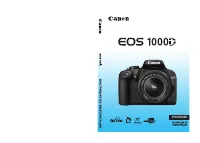 Canon EOS 1000D
User Manual
Canon EOS 1000D
User Manual
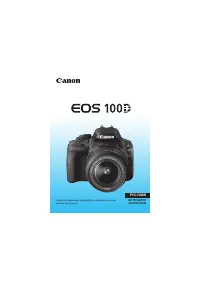 Canon EOS 100D
User Manual
Canon EOS 100D
User Manual
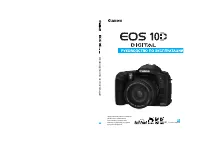 Canon EOS 10D
User Manual
Canon EOS 10D
User Manual
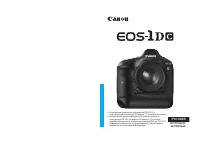 Canon EOS 1D C
User Manual
Canon EOS 1D C
User Manual
 Canon EOS 1D Mark IV
User Manual
Canon EOS 1D Mark IV
User Manual
 Canon EOS 1D X Mark III
Manual
Canon EOS 1D X Mark III
Manual
 Canon EOS 1Ds Mark III
User Manual
Canon EOS 1Ds Mark III
User Manual
 Canon EOS 3
Troubleshooting Guide
Canon EOS 3
Troubleshooting Guide
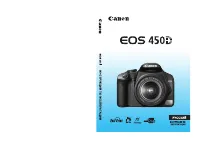 Canon EOS 450D
User Manual
Canon EOS 450D
User Manual
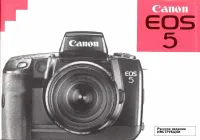 Canon EOS 5
Manual
Canon EOS 5
Manual
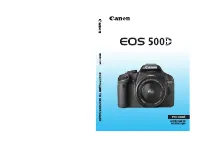 Canon EOS 500D
User Manual
Canon EOS 500D
User Manual
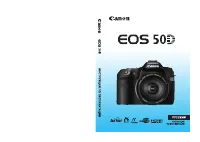 Canon EOS 50D
User Manual
Canon EOS 50D
User Manual