Page 3 - Table of contents; Cleaning the cooking compartment and accessories 15; Additional information on products, accessories,
en 3 Table of contents [en]Instructi on manual Free standi ng cooker 8 Intended use . . . . . . . . . . . . . . . . . . . . . . . . . . . . . 4 ( Important safety information . . . . . . . . . . . . . . . 5 Halogen lamp. . . . . . . . . . . . . . . . . . . . . . . . . . . . . . . . 6 ] Causes of dam...
Page 4 - Intended use; Warning – WHAT TO DO IF YOU SMELL
en Intended use 4 8 Intended use Intended use Read these instructions carefully. Only then will you be able to operate your appliance safely and correctly. Retain the instruction manual and installation instructions for future use or for subsequent owners.The images shown in these instructions are f...
Page 5 - Important safety information; Important safety; Warning – Risk of fire!; Risk of serious burns!
Important safety information en 5 ( Important safety information Important safety i nformati on : Warning – Risk of fire! ■ A draught is created when the appliance door is opened. Greaseproof paper may come into contact with the heating element and catch fire. Do not place greaseproof paper loosely ...
Page 6 - Risk of electric shock and serious injury!; Halogen lamp
en Important safety information 6 : Warning – Risk of scalding! ■ The accessible parts become hot during operation. Never touch the hot parts. Keep children at a safe distance. Risk of scalding! ■ When you open the appliance door, hot steam can escape. Steam may not be visible, depending on its temp...
Page 7 - Hob
Causes of damage en 7 ] Causes of damage Causes of damage Hob Caution! ■ Only use the burners when cookware has been placed on top. Do not heat up empty pots or pans. The saucepan base will be damaged. ■ Only use pots and pans with an even base. ■ Place the pot or pan centrally over the burner. This...
Page 8 - Environmental protection; Saving energy
en Environmental protection 8 7 Environmental protection Envi ronmental protecti on Your new appliance is particularly energy-efficient. Here you can find tips on how to save even more energy when using the appliance, and how to dispose of your appliance properly. Saving energy ■ Only preheat the ap...
Page 9 - Installation and connection; Gas connection; For the licensed expert or after-sales service; Electrical connection; Warning – Danger of death!
Installation and connection en 9 5 Installation and connection Instal l ati on and connecti on Do not install the appliance behind a decorative door or the door of a kitchen unit, as this may cause the appliance to overheat. Gas connection Installation must only be performed by an approved expert or...
Page 10 - Levelling the cooker; Warning – Risk of gas leak!; Measures to be noted during transport; If the original packaging is no longer available; Green and yellow
en Installation and connection 10 For the after-sales service Caution! ■ The appliance must be connected in accordance with the data on the rating plate. ■ Only connect the appliance to an electrical connection that meets the applicable provisions. The socket must be easily accessible so that you ca...
Page 11 - General information; Explanaions; Standard burner
Getting to know your appliance en 11 * Getting to know your appliance Getti ng to know your appl i ance In this section, we will explain the indicators and controls. You will also find out about the various functions of your appliance. Note: Depending on the appliance model, individual details and c...
Page 12 - Control panel; Types of heating and functions
en Getting to know your appliance 12 Control panel Details may vary depending on the appliance model. Types of heating and functions Use the function selector to set the types of heating and other functions. To make sure you always use the right type of heating to cook your food, we have explained t...
Page 13 - Cooking compartment; Opening the appliance door; Accessories; Accessories included; Positions
Accessories en 13 Temperature display When the appliance is heating, the indicator lamp above the temperature selector is lit. It goes out during pauses in the heating.When you are preheating the appliance, the optimal time to place your food in the cooking compartment is when the indicator lamp fir...
Page 14 - Notes; Optional accessories
en Accessories 14 Notes ■ Hold the baking tray securely at the sides with both hands and slide it into the shelf supports, keeping it parallel. Do not move the baking tray from side to side as you slide it in, otherwise it will not go in easily and the enamelled surfaces may be damaged. ■ Make sure ...
Page 15 - Cleaning the cooking compartment and; Cleaning the cooking compartment; Heating function
Before using for the first time en 15 K Before using for the first time Before usi ng for the fi rst ti me Before you can use your new appliance, you must make some settings. You must also clean the cooking compartment and accessories. Cleaning the cooking compartment and accessories Before using th...
Page 16 - Cooking pans; Precautions for use
en Cooking pans 16 Å Cooking pans Cooki ng pans Precautions for use The following advice is intended to help you save energy and prevent pan damage: BurnerElectric hotplate* Power [kW] Minimum cookware diameter Maximum cookware diameter Electric hotplate* 1 kW 14.5 cm 14.5 cm Wok burner* 3.5 kW 24 c...
Page 17 - Advance cleaning of burner cup and cap; The gas burner does not ignite; Warnings
Gas burners en 17 Ä Gas burners Gas burners This chapter explains how to set a hotplate. The table shows heat settings and cooking times for various meals. Advance cleaning of burner cup and cap Clean the burner cap (1) and cup (2) with water and washing-up liquid. Dry the individual parts carefully...
Page 18 - Operating the appliance; Switching the appliance on and off; Changing
en Operating the appliance 18 1 Operating the appliance Operati ng the appl i ance You have already learnt about the controls and how they work. Now we will explain how to apply settings on your appliance. Switching the appliance on and off Use the function selector to switch the appliance on or off...
Page 19 - Rapid heating; Cleaning; Cleaning agents; When cleaning the hob do not use
Cleaning en 19 Rapid heating With Rapid heating, you can shorten the heat-up time. Then, for best results, use: ■ < 3D hot air ■ % Top/bottom heating Only use Rapid heating when a temperature of over 100 °C has been selected.To achieve an even cooking result, do not place your food into the cooki...
Page 20 - Removing and refitting the; Zone
en Cleaning 20 Upper glass cover*(depending on appli- ance model) Glass cleaner: Clean with a soft cloth. You can remove the upper glass cover for cleaning. To find out how to do this, please refer to the section Upper glass cover . Rotary knobs Do not remove. Hot soapy water: Clean with a dish clot...
Page 21 - Surfaces in the cooking compartment; Cleaning enamel surfaces
Cleaning en 21 Notes ■ Slight differences in colour on the front of the appliance are caused by the use of different materials, such as glass, plastic and metal. ■ Shadows on the door panels, which look like streaks, are caused by reflections made by the interior lighting. ■ Enamel is baked on at ve...
Page 22 - Keeping the appliance clean; Rails; Detaching and refitting the rails; Detaching the rails
en Rails 22 Keeping the appliance clean Always keep the appliance clean and remove dirt immediately so that stubborn deposits of dirt do not build up. : Warning – Risk of fire! Loose food remnants, fat and meat juices may catch fire. Before using the appliance, remove the worst of the food remnants ...
Page 23 - Appliance door; Detaching and attaching the oven door; Warning – Risk of injury!; Removing and installing the door panels; Removal
Appliance door en 23 q Appliance door Appl i ance door With good care and cleaning, your appliance will retain its appearance and remain fully functional for a long time to come. This will tell you how to remove the appliance door and clean it. Detaching and attaching the oven door For cleaning purp...
Page 24 - Additional door safety; Trouble shooting; Malfunction table; We have tested the recipe for you in our cooking studio; Warning – Risk of electric shock!
en Trouble shooting 24 4. Lift the panel up and pull it out (fig. C). Clean the panels with glass cleaner and a soft cloth. : Warning – Risk of injury! Scratched glass in the appliance door may develop into a crack. Do not use a glass scraper, sharp or abrasive cleaning aids or detergents. Installat...
Page 25 - Customer service; E number and FD number; To book an engineer visit and product advice
Customer service en 25 Replacing the bulb in the top of the cooking compartment If the cooking compartment light bulb fails, it must be replaced. Heat-resistant, 25 watt, 230 V halogen bulbs are available from the after-sales service or specialist retailers.When handling the halogen bulb, use a dry ...
Page 26 - Recommended setting values
en Tested for you in our cooking studio 26 J Tested for you in our cooking studio Tested for you i n our cooki ng studi o Here, you can find a selection of dishes and the ideal settings for them. We will show you which type of heating and temperature are best suited to your dish. You will get inform...
Page 27 - Cakes and pastries; * Preheat for 10 minutes
Tested for you in our cooking studio en 27 compartment and the operating modes of your appliance.Ensure that you always use suitable accessories and that they are placed in the oven the right way around. ~ "Accessories" on page 13 Greaseproof paper Only use greaseproof paper that is suitable...
Page 28 - Tested for you in our cooking studio; Small baked items
en Tested for you in our cooking studio 28 Small baked items Biscuits Bread and rolls Yeast cake with moist topping Universal pan 3 % 160-180 30-50 Yeast cake with moist topping, 2 levels Universal pan + baking tray 3+1 < 150-170 40-65 Plaited loaf, savarin Universal pan 2 % 160-170 35-40 Swiss r...
Page 29 - Pizza, quiche and savoury cakes
Tested for you in our cooking studio en 29 Pizza, quiche and savoury cakes Baking tips Bread, 1500 g (in a loaf tin or free-form) Universal pan or loaf tin 2 6 - 180-200 60-70 Flatbread Universal pan 3 < - 240-250 25-30 Bread rolls, sweet, fresh Universal pan 3 % - 170-180* 20-30 Bread rolls, swe...
Page 30 - Roasting on the wire rack
en Tested for you in our cooking studio 30 Bakes and gratins Your appliance offers a range of heating functions for cooking bakes. The settings tables list the optimal settings for a wide range of dishes.How well cooked a bake is will depend on the size of the cookware and the shelf position of the ...
Page 32 - Poultry
en Tested for you in our cooking studio 32 Poultry Meat Fish Dish Accessories/cookware Shelf position Heating function Temperature in °C Cooking time in mins Chicken, 1.3 kg Wire rack 2 7 200-220 60-70 Small chicken portions, 250 g each Wire rack 3 7 220-230 30-35 Chicken goujons, nuggets, frozen Un...
Page 33 - Tips on roasting and braising; Vegetables and side dishes
Tested for you in our cooking studio en 33 Tips on roasting and braising Vegetables and side dishes Here, you can find information for preparing grilled vegetables, potatoes and frozen potato products. Adhere to the specifications in the table. Yoghurt You can use your appliance to make your own yog...
Page 35 - Preserving; Preparation
Tested for you in our cooking studio en 35 Preserving For preserving, the jars and rubber seals must be clean and intact. If possible, use jars of the same size. The information in the table is for round, one-litre jars. Caution! Do not use jars that are larger or taller than this. The lids could cr...
Page 36 - Prove dough; Dough fermentation; Defrosting; * Heat up up to 50 °C with
en Tested for you in our cooking studio 36 Prove dough Your yeast dough will prove considerably more quickly using this heating function than at room temperature and will not dry out. Do not start the appliance if the cooking compartment is not completely cool.Always allow yeast dough to prove twice...
Page 37 - Test dishes; Baking
Tested for you in our cooking studio en 37 Test dishes These tables have been produced for test institutes to facilitate appliance testing.As per EN 60350-1. Baking Items that are placed in the oven on baking trays or in baking tins/dishes at the same time will not necessarily be ready at the same t...
Page 40 - XXXCPTDIIPNFDPNXFMDPNF; XXXCPTDIIPNFDPN
5IBOLZPVGPSCVZJOHB#PTDI)PNF"QQMJBODF 3FHJTUFSZPVSOFXEFWJDFPO.Z#PTDIOPXBOEQSPGJUEJSFDUMZGSPN t&YQFSUUJQTUSJDLTGPSZPVSBQQMJBODFt8BSSBOUZFYUFOTJPOPQUJPOTt%JTDPVOUTGPSBDDFTTPSJFTTQBSFQBSUTt%JHJUBMNBOVBMBOEBMMBQQMJBODFEBUBBUIBOEt&BTZBDDFTTUP#PTDI)PNF"QQMJBODFT4FSWJDF 'SFFBOEFBTZSFHJTUSBUJ...
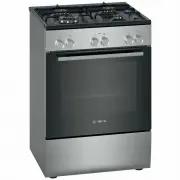


 Bosch HSG636XS6 Manual
 Bosch HSG656XB6A User Manual
 Bosch HSG958DB1A User Manual
 Bosch HSLP451UC User Manual
 Bosch HSLP751UC User Manual
 Bosch HXR39KI50A User Manual
 Bosch MBA534BB0A User Manual
 Bosch MBA534BS0A User Manual
 Bosch MBG5787S0A User Manual
 Bosch VBC5540S0 User Manual
 Bosch VBD554FS0 User Manual
 Bosch VBD578FS0 User Manual
 Bosch CMG633BB1A User Manual
 Bosch CMG633BS1B User Manual