Page 2 - CONTENTS
Rev 0.0 1 CONTENTS EN CONTENTS 1 INTRODUCTION ........................................................................................ 3 2 DESCRIPTION AND USE OF THE CONTROLS .......................................... 5 2.1 Upper panel ...................................................................
Page 4 - INTRODUCTION; This manual comprises the following sections:; Nomenclature of fi gures and tables:
Rev 0.0 3 INTRODUCTION EN 1 INTRODUCTION Thank you for choosing one of our products. To use this dishwasher correctly and safely, please read this manual carefully. The manual is divided into sections giving you a step-by-step guide to all your ap-pliance’s functions. The texts are easy to understan...
Page 5 - Symbols used in this manual
4 Rev 0.0 INTRODUCTION EN Symbols used in this manual (see tab. 1-01) DANGER. This symbol highlights information and warnings which, if not observed, may compromise personal safety or damage the appliance. This symbol highlights general information and warnings. Tab. 1-01
Page 6 - USER INSTRUCTIONS; DESCRIPTION AND USE OF THE CONTROLS
Rev 0.0 5 USER INSTRUCTIONS EN 2 DESCRIPTION AND USE OF THE CONTROLS 2.1 Upper panel All the dishwasher controls are grouped on the upper panel (see fi g. 2-01). The dishwasher can only be switched on, programmed, switched off, etc. with the door open.A brief description (see tab. 2-01) of the vario...
Page 9 - Before starting a washing program, make sure that:; on
8 Rev 0.0 USER INSTRUCTIONS EN Only run the soak program with half loads. After using the above table to choose the most suitable washing cycle, pro-gram the appliance. Before starting a washing program, make sure that: The water supply tap is open. There is regenerating salt in the water softener t...
Page 10 - program; minute; Changing the current program; program selection
Rev 0.0 9 USER INSTRUCTIONS EN 2.2.4 Interrupting a program To interrupt the current program simply open the door of the dishwasher; to restart the program, simply close the door again. The program restarts from where it was interrupted. If it is necessary to open the door during the washing cycle, ...
Page 11 - PROGRAM DELAY; The “; ” function delays the beginning of the washing program; Program delay; button
10 Rev 0.0 USER INSTRUCTIONS EN 2.2.7 Options PROGRAM DELAY The “ Program delay ” function delays the beginning of the washing program up to 9 hours from the moment in which programming takes place. This makes it possible to use the dishwasher at a certain time of day. Before programming a delay, op...
Page 12 - Switching off; tor lights of the fourth and fi fth program; functions; Adjusting the water softener; program delay
Rev 0.0 11 USER INSTRUCTIONS EN 2.2.8 Switching off At the end of the program, the dishwasher emits a short beep and the indica- tor lights of the fourth and fi fth program (ref. pr. 4, pr. 5 fi g. 2-04) fl ash. Turn off the appliance by opening the door and pressing the on/off button (ref. 1 fi g. ...
Page 13 - the display indicates the water hardness adjustment and the; Water hardness table
12 Rev 0.0 USER INSTRUCTIONS EN N.B.: the display indicates the water hardness adjustment and the program delay. A dot (.) after the number means that the water hard-ness adjustment is being displayed. If no dot (.) appears, the pro-gram delay is being displayed. Water hardness table (see tab. 2-03)...
Page 14 - Always
Rev 0.0 13 USER INSTRUCTIONS EN 3 ENERGY SAVING AND ENVIRONMENTAL RESPECT Always try to run the dishwasher fully loaded. Do not wash the dishes under a running tap. Use the most suitable washing program for each type of load. Do not pre-rinse. If available, connect the dishwasher to a hot water syst...
Page 15 - REMOVING THE DISHES; At the end of the washing program, wait at least
14 Rev 0.0 USER INSTRUCTIONS EN 4 REMOVING THE DISHES At the end of the washing program, wait at least 20 minute before removing the dishes in order to allow them to cool. To prevent any water droplets on the upper rack from falling onto the dishes in the lower rack, empty the lower rack fi rst and ...
Page 16 - TROUBLESHOOTING
Rev 0.0 15 USER INSTRUCTIONS EN 5 TROUBLESHOOTING The dishwasher can to signal a number of malfunctions by turning on various indicator lights, as described below (see following table): FAULT DESCRIPTION E1 Acquastop failure The anti-fl ooding system has tripped (only for models fi tted with this fe...
Page 17 - Alarms
16 Rev 0.0 USER INSTRUCTIONS EN If an alarm situation occurs, the dishwasher interrupts the current program and signals the fault. Alarms E1, E3, E4, immediately terminate the current program. Alarms E5, E6 interrupt the current program and, after the problem has been eliminated, resume the cycle. T...
Page 18 - Contents
Rev 0.0 1 CONTENTS EN Contents 1 INTRODUCTION ........................................................................................ 3 2 IMPORTANT SAFETY INSTRUCTION ......................................................... 5 3 INSTALLATION AND HOOK-UP ................................................
Page 20 - INTRODUCTION: general information about the manual.
Rev 0.0 3 INTRODUCTION EN 1 INTRODUCTION Thank you for choosing one of our products. To use this dishwasher correctly and safely, please read this manual carefully. The manual is divided into sections giving you a step-by-step guide to all your appliance’s functions. The texts are easy to understand...
Page 21 - DANGER OF ELECTROCUTION.
4 Rev 0.0 INTRODUCTION EN Symbols used in this manual (see tab. 1-01) DANGER. This symbol highlights information and warnings which, if not observed, may compromise personal safety or damage the appliance. DANGER OF ELECTROCUTION. This symbol highlights information and warnings of an electrical natu...
Page 22 - WARNINGS; IMPORTANT SAFETY INSTRUCTION; : IT MUST ALWAYS BE KEPT INTACT TOGETHER WITH THE
Rev 0.0 5 WARNINGS EN 2 IMPORTANT SAFETY INSTRUCTION (Save this instructions) THIS MANUAL FORMS AN INTEGRAL PART OF THE APPLI-ANCE : IT MUST ALWAYS BE KEPT INTACT TOGETHER WITH THE DISHWASHER (INCLUDING THE “INSTALLATION” AND “DESCRIP-TION OF CONTROLS” MANUALS, IF ATTACHED). BEFORE USING THE APPLIAN...
Page 25 - DO NOT INTRODUCE ANIMALS INTO THE DISHWASHER.
8 Rev 0.0 WARNINGS EN DO NOT INTRODUCE ITEMS IN HEAT-SENSITIVE PLASTI¬C, SUCH AS DISPOSABLE CUTLERY OR PLATES, AS THESE MAY BECOME DEFORMED. DO NOT WASH OBJECTS IN PLASTIC UN-LESS THEY ARE MARKED “DISHWASHER PROOF” OR THE LIKE. FOR UNMARKED OBJECTS, FOLLOW THE INSTRUCTIONS OF THE MANUFACTURER; IF NO...
Page 26 - DO NOT TAMPER WITH THE DISHWASHER CONTROLS.
Rev 0.0 9 WARNINGS EN KNIVES OR OTHER SHARP-ENDED COOKING UTENSILS MUST BE PLACED IN THE CUTLERY BASKET BLADE-DOWN, OR LAID HORIZONTAL IN THE UPPER RACK. TAKE CARE NOT TO CUT YOURSELF AND ENSURE THAT THEY DO NOT PROJECT FROM THE RACK.POSITION SHARP/POINTED OBJECTS SO AS TO PREVENT THEM FROM DAMAGING...
Page 27 - THE SYMBOL
10 Rev 0.0 WARNINGS EN BEFORE CLEANING OR SERVICING THE APPLIANCE, REMOVE THE PLUG OR TURN OFF THE MULTI-POLE SWITCH. REMOVE THE WASHING COMPARTMENT DOOR AND DISCON-NECT THE MAINS POWER SUPPLY WHEN REMOVING THE OLD DISHWASHER FOR MAINTENANCE OR DISPOSAL. THE SYMBOL ON THE PRODUCT, OR ON THE DOCUMENT...
Page 28 - INSTALLATION INSTRUCTIONS; INSTALLATION AND HOOK-UP
Rev 0.0 11 INSTALLATION INSTRUCTIONS EN 3 INSTALLATION AND HOOK-UP To install and hook up this appliance, consult the attached installation manual. Bear in mind the following warnings when installing and hooking up the dish-washer. DURING INSTALLATION, TAKE CARE NOT TO INJURE YOURSELF ON THE SHARP E...
Page 29 - IN THE EVENT OF DAMAGE TO THE SUPPLY CORD,
12 Rev 0.0 INSTALLATION INSTRUCTIONS EN CHECK THAT THE VOLTAGE AND THE FREQUENCY OF THE MAINS MATCH THE RATINGS ON THE NAME PLATE OF THE AP-PLIANCE POSITIONED ON THE INNER EDGE OF THE DOOR. IN THE EVENT OF DAMAGE TO THE SUPPLY CORD, HAVE IT REPLACED BY THE MANUFACTURER OR AN AUTHORIZED TECH-NICAL SE...
Page 31 - OPERATING
14 Rev 0.0 USER INSTRUCTIONS EN 4 OPERATING INSTRUCTIONS BEFORE STARTING TO USE THE APPLIANCE, MAKE SURE YOU HAVE READ AND UNDERSTOOD ALL THE WARNINGS CONTAI-NED IN CHAPTER 2 “IMPORTANT SAFETY INSTRUCTION”. Once the dishwasher has been correctly installed, prepare for use as follows: adjust the wate...
Page 32 - Using the water softening system; ). When using water of medium hardness, the regenerating salt
Rev 0.0 15 USER INSTRUCTIONS EN 4.1 Using the water softening system The amount of scale contained in the water (water hardness index) can cause whitish staining on the dry dishes, which tend to become dull over time. The dishwasher is equipped with an automatic softening system which uses a spe-cia...
Page 33 - one liter of water; Each time the salt container is refi lled, make sure that; do not fi ll the container completely; as it contains insoluble substances which, over time,; before starting the; ADDING DETERGENT TO THE SALT CONTAINER; SAL
16 Rev 0.0 USER INSTRUCTIONS EN A When using the dishwasher for the fi rst time, in addition to the salt it is also necessary to add one liter of water to the container. Each time the salt container is refi lled, make sure that the cap (ref. A fi g. 4-01) is securely closed . The mixture of water an...
Page 34 - detergent dispenser; WITH THE EXCEPTION OF THE
Rev 0.0 17 USER INSTRUCTIONS EN 4.2 Using the rinse-aid and detergent dispensers The detergent and rinse aid dispensers are situated on the inner part of the door: the detergent dispenser (ref. A fi g. 4-03) is on the left, and the rinse- aid dispenser (ref. B fi g. 4-03) is on the right. A B WITH T...
Page 35 - the
18 Rev 0.0 USER INSTRUCTIONS EN 4.2.1 Adding the rinse-aid The rinse aid helps the dishes dry faster and prevents the formation of scale de-posits and staining; it is automatically added to the water during the fi nal rinse cycle, from the container situated on the inner side of the door. A C B To a...
Page 37 - Only; tain; natural enzymes; Detergents containing; phosphates; are more effective against grease and
20 Rev 0.0 USER INSTRUCTIONS EN A B When a program with hot prewash is selected (see program table in the “De-scription of Controls” manual), extra detergent must be placed in the cavity (ref. A or B fi g. 4-06, depending on models). Only use dishwasher-specifi c detergents. For optimal washing resu...
Page 38 - General warnings and recommendations; Correct loading of the
Rev 0.0 21 USER INSTRUCTIONS EN When using detergent tabs, place them in the cutlery basket. The dispenser has been designed for powder or liquid detergent. As the cover does not open completely during the washing cycle, tabs are not fully released (dis-solved). This could generate the following pro...
Page 39 - MAKE SURE that the items being washed are dishwasher-safe.
22 Rev 0.0 USER INSTRUCTIONS EN MAKE SURE that the items being washed are dishwasher-safe. Items which are not dishwasher-safe: Wooden dishes, pots or pans: these may be damaged by the high wash- ing temperatures. Handcrafted items: these are rarely suitable for washing in a dishwasher. The relative...
Page 40 - Using the racks
Rev 0.0 23 USER INSTRUCTIONS EN 4.4 Using the racks The dishwasher has a capacity of 10 place-settings , including serving dishes. Examples of loading 10 place-settings in the upper rack (see fi g. 4-07) and in the lower rack (see fi g. 4-08) are shown below; move the upper rack to its bottom positi...
Page 41 - rack; Con supporti fissi
24 Rev 0.0 USER INSTRUCTIONS EN Fig. 4-09 4.4.1 Lower rack The lower rack receives the full force of the lower spray arm, and should there-fore be used for the “toughest” items with a heavier degree of soiling.All types and combinations of loads are permitted, provided that the dishes, pots and pans...
Page 42 - Loading the lower rack; Esempi di caricamento:
Rev 0.0 25 USER INSTRUCTIONS EN Loading the lower rack (see fi g. 4-10) Carefully load fl at plates, soup plates, dessert and serving dishes, position-ing them vertically. Pots, pans and their covers must be loaded upside down. When loading soup plates and dessert bowls, be sure to leave a gap betwe...
Page 43 - basket; with the handles; fere with the spray arm in the; upper rack making sure that knife tips do
26 Rev 0.0 USER INSTRUCTIONS EN 4.4.2 Cutlery basket (see fi g. 4-11) The cutlery basket can be removed to simplify unloading. Arrange the cutlery in an orderly manner inside the basket, with the handles pointing downwards and taking care not to injure yourself with the knife blades . The basket is ...
Page 45 - Loading the upper rack
28 Rev 0.0 USER INSTRUCTIONS EN Loading the upper rack (vedi fi g. 4-14) Load plates facing forward; cups, bowls etc. must always be facing downwar-ds. The left-hand side of the rack can be loaded with two layers of cups and glasses. The right-hand side can be fi lled with plates and side-plates, fi...
Page 46 - Adjusting the upper rack
Rev 0.0 29 USER INSTRUCTIONS EN Adjusting the upper rack The upper rack can be adjusted in two positions, according to the user’s needs and according to the height of the dishes in the lower rack. Proceed as follows: pull out the right-hand rack guide. Release the corresponding stop (ref. A fi g. 4-...
Page 47 - CLEANING AND USER-MAINTENANCE
30 Rev 0.0 USER INSTRUCTIONS EN 5 CLEANING AND USER-MAINTENANCE BEFORE CARRYING OUT ANY WORK, ALWAYS DISCONNECT THE APPLIANCE FROM THE ELECTRICAL POWER SUPPLY. 5.1 General warnings and recommendations NEVER USE ABRASIVE AND/OR CORROSIVE DETERGENTS TO CLEAN THE APPLIANCE. Clean the outer surfaces and...
Page 48 - Cleaning the spray arms; checking that their rotary; if this is not the case, make sure they have; Removing the spray arms; To remove the; upper
Rev 0.0 31 USER INSTRUCTIONS EN 5.2 Cleaning the water intake fi lter (only some models) The water intake fi lter (ref. B fi g. 5-01) located at the outlet of the water supply tap needs to be cleaned periodically. After having closed the water supply tap, unscrew the end (ref. A fi g. 5-01) of the w...
Page 50 - Cleaning the fi lter unit
Rev 0.0 33 USER INSTRUCTIONS EN Fig. 5-05 Fig. 5-06 5.4 Cleaning the fi lter unit Periodically inspect the fi lter unit (ref. A fi g. 5-05) and, if necessary, clean it under running water (at room temperature), using a stiff brush. To remove the fi lter, grip the handle, turn anticlockwise and lift ...
Page 51 - Clean the fi lters; under running water; , take care that there are no food residues on; thoroughly clean the fi lters; according to the above in-; Carefully replace; the fi lters in their seats, to avoid damaging the wash
34 Rev 0.0 USER INSTRUCTIONS EN 5.5 General warnings and recommendations for correct maintenance Clean the fi lters under running water (at room temperature) using a stiff brush. When removing the fi lter , take care that there are no food residues on it. If any residues fall into the washing pit (r...
Page 52 - Prolonged disuse; Troubleshooting minor problems; If the program fails to start, check that:
Rev 0.0 35 USER INSTRUCTIONS EN Prolonged disuse Run the soak program twice in succession. Unplug the power cord from the socket. Leave the door slightly open in order to prevent the formation of unpleas- ant odors inside the washing tank. Fill the rinse-aid dispenser . Shut off the water supply tap...
Page 53 - If the dishes fail to dry or remain dull, check that:; the rinse aid dispenser setting is not too high.; If there are visible traces of rust inside the tank:
36 Rev 0.0 USER INSTRUCTIONS EN If the dishes fail to dry or remain dull, check that: there is rinse aid inside the special container; the rinse-aid dispenser setting is correct; the detergent used is of good quality and has not lost its effectiveness (for example, through incorrect storage, with th...
Page 54 - TECHNICAL; Width; Water supply pressure
Rev 0.0 37 USER INSTRUCTIONS EN 6 TECHNICAL DATA (SEE TAB. 6-01) Width 44.7 cm ÷ 44.9 cm (17 - 19/32” ÷ 17 - 43/64”) Depth measured fl ush with the outer edge of the control panel 55 cm (21 - 21/32”) Height from 82 to 87 cm (from 32 - 9/32” to 34 - 1/4”) Capacity 10 standard place-settings Water sup...
Page 59 - WASHING AND DRYING OF DISHES
Rev 0.0 5 WARNINGS EN 2 SAFETY INFORMATION THIS MANUAL FORMS AN INTEGRAL PART OF THE APPLIANCE AND MUST THEREFORE BE KEPT INTACT TOGETHER WITH THE MACHINE. BEFORE USING THE APPLIANCE, CAREFULLY READ ALL THE INSTRUCTIONS CONTAINED IN THIS MANUAL. INSTAL-LATION MUST BE PERFORMED BY A QUALIFIED TECHNIC...
Page 60 - DO NOT ATTEMPT TO
6 Rev 0.0 WARNINGS EN TWO PEOPLE WEARING SAFETY GLOVES ARE REQUIRED TO LIFT THE DISHWASHER. DO NOT LEAVING DISCARDED PACKAGING MATERIALS UNSU-PERVISED WITHIN THE HOME. SEPARATE THE VARIOUS PACK-AGING MATERIALS AND TAKE THEM TO THE NEAREST SORTED WASTE COLLECTION CENTRE. KEEP CHILDREN, PHYSICALLY AND...
Page 63 - The kit supplied with the dishwasher comprises:
Rev 0.0 9 INSTALLATION INSTRUCTIONS EN 3.1 Kit supplied with dishwasher (models sta_4645/sta_8743) The kit supplied with the dishwasher comprises: adhesive steam guard (ref. A fi g. 3-02); • 1 steel steam guard (ref. B fi g. 3-02);* • 1 template for door panel (ref. C fi g. 3-02); • 2 hooks for door...
Page 66 - ABSOLUTELY FORBIDDEN.; Only for free-standing models
12 Rev 0.0 INSTALLATION INSTRUCTIONS EN 5 INSTALLATION AND HOOK-UP DURING INSTALLATION, TAKE CARE NOT TO INJURE YOURSELF ON THE SHARP EDGES OF THE APPLIANCE. Remove the polystyrene rack blocks. Position the appliance in the chosen in-stallation position. The sides and rear of the appliance can lie a...
Page 67 - relative kit; from specialized retail-
Rev 0.0 13 INSTALLATION INSTRUCTIONS EN If the appliance is not in a niche and can therefore be accessed on one • side, cover the door hinge area for safety reasons (cutting hazard). Covers are available as accessories from specialized retailers or from the Technical Service Centre. To build in the ...
Page 70 - Connecting to the water supply; PREVENTING THE RISK OF CLOGGING OR DAMAGE:
16 Rev 0.0 INSTALLATION INSTRUCTIONS EN A through hole with a diameter of at least 8 cm (5/32”) is required to pass the hoses and power cord (ref. A fi g. 5-05).Make sure there area no rough edges that could damage the power cord or hoses. If the dishwasher is installed in a metal unit protect the e...
Page 71 - Firmly secure the hose by tightening the relative ring; If the pressure is too high, fi t a pressure reducer.
Rev 0.0 17 INSTALLATION INSTRUCTIONS EN 5.2.1.1 Connecting to the water tap Connect the inlet hose to a threaded ¾” gas cold water tap, fi tting the supplied fi lter (ref. A fi g. 5-06). Firmly secure the hose by tightening the relative ring nut with your hands (ref. B fi g. 5-06); fi nish by tighte...
Page 73 - Connecting to a drain; Insert the relative hose into a drain with a minimum diameter of
Rev 0.0 19 INSTALLATION INSTRUCTIONS EN 5 .2.1.2 Connecting the drain hose Connecting to a drain Insert the relative hose into a drain with a minimum diameter of 4 cm (1-37/64”) (ref. A fi g. 5-09); alternatively, place the hose on the sink (ref. B fi g. 5-09) using the supplied hose support (see fi...
Page 74 - Connecting to a “T” union of the drain circuit
20 Rev 0.0 INSTALLATION INSTRUCTIONS EN Connecting to a “T” union of the drain circuit MAKE THE CONNECTION UPLINE FROM THE SIPHON OF THE DRAIN LINE AND AT LEAST 400 mm (15-3/4”) ABOVE THE FLOOR ON WHICH THE DISHWASHER WILL BE INSTALLED. Connect the dishwasher drain hose (ref. A fi g. 5-11) to the “T...
Page 75 - Connecting to a waste disposal unit with an air gap
Rev 0.0 21 INSTALLATION INSTRUCTIONS EN Connecting to a waste disposal unit with an air gap MAKE THE CONNECTION UPLINE FROM THE SIPHON OF THE DRAIN LINE AND AT LEAST 400 mm (15-3/4”) ABOVE THE FLOOR ON WHICH THE DISHWASHER WILL BE INSTALLED. Remove the cover of the waste disposal unit (ref. A fi g. ...
Page 76 - Connecting to the air gap (no waste disposal unit)
22 Rev 0.0 INSTALLATION INSTRUCTIONS EN Connecting to the air gap (no waste disposal unit) MAKE THE CONNECTION UPLINE FROM THE SIPHON OF THE DRAIN LINE AND AT LEAST 400 mm (15-3/4”) ABOVE THE FLOOR ON WHICH THE DISHWASHER WILL BE INSTALLED. Connect the dishwasher drain hose (ref. A fi g. 5-13) to th...
Page 77 - Connecting to a waste disposal unit (no air gap)
Rev 0.0 23 INSTALLATION INSTRUCTIONS EN Connecting to a waste disposal unit (no air gap) MAKE THE CONNECTION UPLINE FROM THE SIPHON OF THE DRAIN LINE AND AT LEAST 400 mm (15-3/4”) ABOVE THE FLOOR ON WHICH THE DISHWASHER WILL BE INSTALLED. Remove the cover of the waste disposal unit (ref. A fi g. 5-1...
Page 78 - Electrical connections and warnings; Grounding instructions
24 Rev 0.0 INSTALLATION INSTRUCTIONS EN 5 .2.2 Electrical connections and warnings CHECK THAT THE VOLTAGE AND THE FREQUENCY OF THE MAINS MATCH THE RATINGS ON THE NAME PLATE OF THE AP-PLIANCE POSITIONED ON THE INNER EDGE OF THE DOOR. IN THE EVENT OF DAMAGE TO THE SUPPLY CORD, HAVE IT REPLACED BY THE ...
Page 79 - Never remove the; If the power cord is damaged, have it replaced; Installation procedure
Rev 0.0 25 INSTALLATION INSTRUCTIONS EN PLUG IS NOT SUITABLE FOR THE SOCKET, CALL IN A QUALIFIED ELECTRICIAN TO FIT A SUITABLE PLUG. The plug at the end of the power cord and the corresponding socket must be of the same type and must conform to current regulations governing electrical appliances. Th...
Page 82 - the screws are not supplied.
28 Rev 0.0 INSTALLATION INSTRUCTIONS EN Drill holes for the panel handle using a drill with a suitable bit. Use the screw-driver to secure the door handle before hooking the panel to the dishwasher (see fi g. 5-21). N.B.: the screws are not supplied. Insert the door spacers contained in the accessor...
Page 85 - Procedure for mounting the door panel
Rev 0.0 31 INSTALLATION INSTRUCTIONS EN 5.3.3 Procedure for mounting the door panel (models pla_8743) Mount the door panel.Place the template on the inner surface of the panel, centering it along the up-per side and matching up the reference locators (ref. A fi g. 5-27); mark the po-sition of the do...
Page 89 - Completion of installation
Rev 0.0 35 INSTALLATION INSTRUCTIONS EN 5.3.4 Completion of installation (all models) Finish the cut with a fi le (see fi g. 5-35) in order to remove any burrs and/or imperfections. Put back the base plate (see fi g. 5-36) and try to open the dish-washer door fully; if the base plate still obstructs...


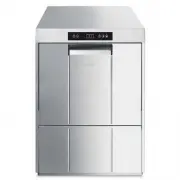 Smeg CW511MDA-2
User Manual
Smeg CW511MDA-2
User Manual
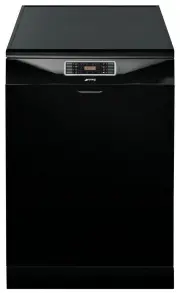 Smeg DWA157B
User Manual
Smeg DWA157B
User Manual
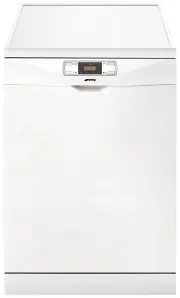 Smeg DWA314W
User Manual
Smeg DWA314W
User Manual
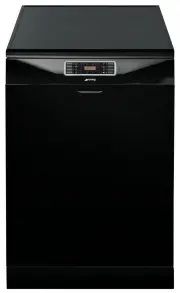 Smeg DWA315B
User Manual
Smeg DWA315B
User Manual
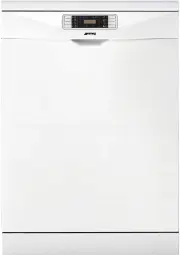 Smeg DWA315W
User Manual
Smeg DWA315W
User Manual
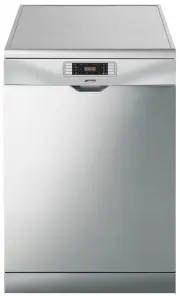 Smeg DWA315X
User Manual
Smeg DWA315X
User Manual
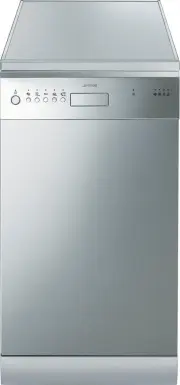 Smeg DWA4510X
User Manual
Smeg DWA4510X
User Manual
 Smeg DWA4510X2
User Manual
Smeg DWA4510X2
User Manual
 Smeg DWA615DB3
User Manual
Smeg DWA615DB3
User Manual
 Smeg DWA615DX3
User Manual
Smeg DWA615DX3
User Manual
 Smeg DWA6214B2
User Manual
Smeg DWA6214B2
User Manual
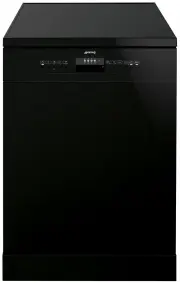 Smeg DWA6314B2
User Manual
Smeg DWA6314B2
User Manual
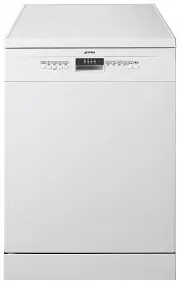 Smeg DWA6314W2
User Manual
Smeg DWA6314W2
User Manual
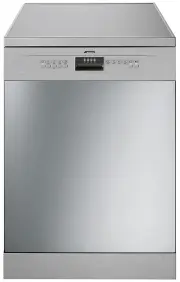 Smeg DWA6314X2
User Manual
Smeg DWA6314X2
User Manual
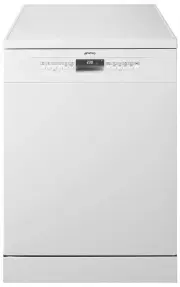 Smeg DWA6315W
User Manual
Smeg DWA6315W
User Manual
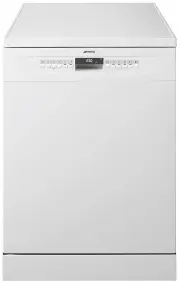 Smeg DWA6315W2
User Manual
Smeg DWA6315W2
User Manual
 Smeg DWA6315W3
User Manual
Smeg DWA6315W3
User Manual
 Smeg DWA6315X3
User Manual
Smeg DWA6315X3
User Manual
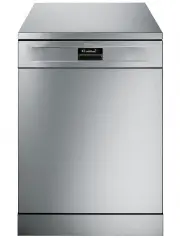 Smeg DWA6D15X
User Manual
Smeg DWA6D15X
User Manual
 Smeg DWAFI152T
User Manual
Smeg DWAFI152T
User Manual