Page 2 - Instructions; General safety instructions; Risk of damaging the appliance
Instructions 28 1 Instructions 1.1 General safety instructions Risk of personal injury • Never touch the heating elements during use. • Keep children under the age of eight at a safe distance unless they are constantly supervised and make sure that they do not play with the appliance. • Never try to...
Page 3 - For this appliance
Instructions 29 EN • Do not use the appliance to cool rooms for any reason. • Always disconnect the appliance from the mains in the event of a breakdown, maintenance, when replacing the light bulb or during cleaning. • Do not keep liquids in tins or glass containers in the freezer. • Do not use shar...
Page 4 - Manufacturer liability; it along with the plug.
Instructions 30 • In the event of damage to the cooling circuit, avoid the use of naked flames and ventilate the area properly. • Do not use the appliance or parts of it in ways other than those specified in this manual. 1.2 Manufacturer liability The manufacturer declines all liability for damage t...
Page 5 - Identification plate; Danger of suffocation
Instructions 31 EN • If the appliance is replaced, remove the door and leave the shelves in their positions, in order to prevent children from being trapped inside. Our appliances are packaged in non-polluting and recyclable materials.• Deliver the packing materials to the appropriate recycling cent...
Page 6 - Description; General Description
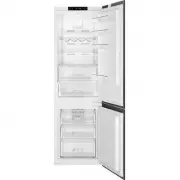
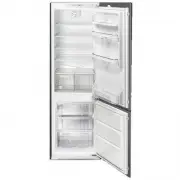
Description 32 2 Description 2.1 General Description 1 Quick freezing compartment 2 Ice tray 3 Freezer thermostat 4 Ice cube pan 5 Freezer lamp 6 Refrigerator thermostat 7 Refrigerator lamp 8 Bottle balcony 9 Egg container 10 Refrigerator balconies 11 Freezer balconies 12 Freezer shelves 13 Fruit an...
Page 7 - Description of parts; For storing fresh foods.
Description 33 EN 2.2 Description of parts Freezer compartment For storing frozen foods, freezing fresh foods and producing ice cubes. Refrigerator compartment For storing fresh foods. Defrost water outlet Defrost water is channelled through a dedicated opening connected to a pan on the back of the ...
Page 8 - Available accessories; Shelves
Description 34 2.3 Available accessories Shelves For optimising fridge space and placing foodstuffs inside the refrigerator compartment. Fruit and vegetable drawers For storing fruit and vegetables, maintaining a constant humidity level. Door balconies and shelves For storing foodstuffs in small con...
Page 9 - Egg holder
Description 35 EN Egg holder For conserving eggs inside the refrigerator compartment. 2.4 NO-FROST technology The NO-FROST technology ensures a constant temperature and a higher cooling power.The forced recirculation air in the appliance is free of humidity and quickly dries the food inside. The inn...
Page 10 - Use; Preliminary operations; Refrigerator thermostat adjustment
Use 36 3 Use 3.1 Instructions 3.2 Preliminary operations 1. Remove any protective film from the outside or inside of the appliance, including accessories. 2. Remove any labels (apart from the technical data plate) from the accessories and shelves. 3. Remove and wash all the appliance accessories (se...
Page 11 - Freezer thermostat adjustment
Use 37 EN • Position 5 generates the appliance maximum cooling power. Freezer thermostat adjustment Temperature in the freezer compartment can be regulated by rotating the dedicated thermostat knob, from position 1 to position 5 . • Positions 1 and 2 allow food to be preserved for a short time. • Po...
Page 12 - Using the accessories
Use 38 3.4 Using the accessories Shelves These can be positioned at different heights on the guides according to requirements. Each shelf has a safety fitting to prevent it from being accidentally removed. To remove them completely, extract them horizontally and lift. Door balconies and shelves Suit...
Page 13 - Humidity regulator
Use 39 EN Humidity regulator Can be used to adjust the humidity level in the fruit and vegetable drawer. Slide the regulator horizontally to open or close the passage of air through the slots. Ice tray Fill the ice tray with water, which can be cold or at room temperature. Place it horizontally in t...
Page 14 - Using the refrigerator; Arranging food; Using the freezer compartment
Use 40 3.5 Using the refrigerator compartment Arranging food Arrange food on the various shelves, making sure that they wrapped and covered hermetically. This precaution ensures that: • the flavour, moisture and freshness of the foods is preserved; • any contamination of foods with odours or tastes ...
Page 15 - Frozen foods storage life table; Noises during operation; • The drawers, shelves and trays on the
Use 41 EN Frozen foods storage life table Defrosted foods Food must be consumed as soon as possible once defrosted. Freezing foods preserves them, but it does not destroy any micro-organisms, which are activated after thawing, damaging the foods.If possible, do not re-freeze partially or fully defro...
Page 16 - Heated front surface; Practical energy saving advice
Use 42 3.8 Heated front surface There is a front surface heating system inside the cabinet to limit the formation of condensation around the door seal. 3.9 Turning the appliance off Whenever the appliance is to remain unused for long periods, it should be switched off.1. Unplug the appliance from th...
Page 17 - Refrigerator compartment door
Use 43 EN Refrigerator compartment door • Keep eggs, butter, cheese etc. in the upper and central parts. • Keep drinks, bottles, cans etc. in the lower part. Refrigerator compartment • Keep conserves, wine, biscuits etc. in the upper part. • Keep dairy products, ready meals, pastries, fruit juices, ...
Page 18 - Cleaning and maintenance; Cleaning the appliance; Cleaning the outside of the appliance
Cleaning and maintenance 44 4 Cleaning and maintenance 4.1 Instructions 4.2 Cleaning the appliance A special antibacterial protection on the appliance's interior walls prevents bacterial growth and keeps them clean. They must nevertheless be cleaned regularly in order to keep them in good condition....
Page 19 - Defrosting the refrigerator compartment; Replacing the lamp; Freezer lamp replacement
Cleaning and maintenance 45 EN To improve energy savings and efficiency of the appliance, periodically clean the condenser, located in the rear area, using a broom, a vacuum cleaner or a cloth. 4.3 Defrosting Defrosting the refrigerator compartment The refrigerator compartment does not require defro...
Page 20 - Refrigerator lamp replacement
Cleaning and maintenance 46 Refrigerator lamp replacement The refrigerator lamp is below the refrigerator thermostat; to replace: 1. Remove the protective panel using a screwdriver. 2. Replace the lamp(s) using the same type of lamp(s). 4.5 What to do if... The appliance does not work:• Make sure th...
Page 22 - Installation; Electrical connection; Power voltage
Installation 48 5 Installation 5.1 Electrical connection General information • Check the mains characteristics against the data indicated on the plate. The identification plate bearing the technical data, serial number and brand name is visibly positioned inside the appliance. Do not remove this pla...
Page 23 - • Ensure that the appliance is located with
Installation 49 EN • Ensure that the appliance is located with sufficient space for the door to open and for the internal drawers and shelves to be removed, if necessary. Spacers To ensure proper cooling of the condenser, the appliance must not be placed too close to the wall. To avoid this, the pro...
Page 24 - Pressure on the seal
Installation 50 Level the appliance horizontally adjusting its feet. Lean the appliance slightly towards the rear part to facilitate proper door closure. A few days after installation, check that the initial level adjustment is still correct. Make sure that the appliance is still stable and the door...