Page 2 - Instructions; General safety instructions
Instructions 24 1 Instructions 1.1 General safety instructions Risk of personal injury • Never touch the heating elements during use. • Keep children under eight years of age at a safe distance if they are not constantly supervised. • Children must never play with the appliance. • Switch the applian...
Page 3 - For this appliance; Manufacturer liability; Power voltage
Instructions 25 EN For this appliance • Ensure that the appliance is switched off before replacing the bulb. • Do not rest any weight or sit on the open door of the appliance. • Take care that no objects are stuck in the doors. 1.2 Manufacturer liability The manufacturer declines all liability for d...
Page 4 - Identification plate; Danger of suffocation
Instructions 26 Our appliances are packed in non-polluting and recyclable materials.• Consign the packing materials to the appropriate selective collection centres. 1.5 Identification plate The identification plate bears the technical data, serial number and brand name of the appliance. Do not remov...
Page 5 - Description; General Description; Control panel
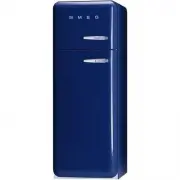
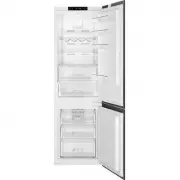
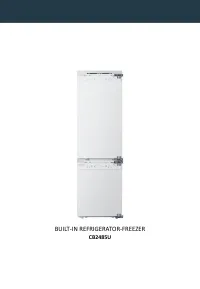
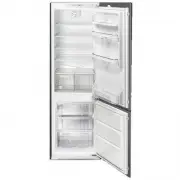
Description 27 EN 2 Description 2.1 General Description 1 Freezer compartment 2 Fan 3 Control panel/Lamp 4 Refrigerator compartment 5 Defrost water outlet 6 Freezer door 7 Fridge door 2.2 Parts definition Control panel For setting the temperature inside the refrigerator and freezer compartments. Ref...
Page 6 - Fan
Description 28 Fan Distributes the temperature and reduces condensation on the shelves and other surfaces. Freezer compartment For storing frozen foods, freezing fresh foods and producing ice cubes. Defrost water outlet At the back of the refrigerator compartment, under the refrigeration plate, ther...
Page 7 - Available accessories; Shelves
Description 29 EN 2.4 Available accessories Shelves For optimising fridge space and placing foodstuffs inside the refrigerator compartment. Bottle rack For storing bottles inside the refrigerator compartment. Fruit and vegetable drawer For storing fruit and vegetables, maintaining a constant humidit...
Page 8 - Door balconies and shelves
Description 30 Door balconies and shelves For storing foodstuffs in small containers. The shelf in the lower part of the door is useful for storing bottles. In some models, the internal part of the freezer door is also fitted with balconies for frozen foods which are handled more frequently (e.g. ic...
Page 9 - Use; Preliminary operations
Use 31 EN 3 Use 3.1 Instructions 3.2 Preliminary operations 1. Remove any protective film from the outside or inside of the appliance, including accessories. 2. Remove any labels (apart from the technical data plate) from the accessories and shelves. 3. Remove and wash all the appliance accessories ...
Page 11 - Ice tray; Using the refrigerator; Arranging foods
Use 33 EN Ice tray Fill the ice tray with cold water or other liquids. Place it horizontally in one of the freezer drawers. Close the freezer door and wait a few hours. When the water has fully frozen, remove the tray from the freezer compartment and remove the ice for use. 3.5 Using the refrigerato...
Page 12 - Using the freezer compartment; Super Freeze Freezer Function
Use 34 3.6 Using the freezer compartment Activate the Super Freeze freezer function 24 hours before freezing fresh foodstuffs. Super Freeze Freezer Function 1. Press the Super Freeze button in the centre of the control panel. 2. When you wish to deactivate the Super Freeze function, return the Super...
Page 13 - Noises during operation
Use 35 EN 3.7 Noises during operation The refrigerator and freezer compartments are cooled by means of a compression system. In order to maintain the preset temperature inside the refrigerator and freezer compartments, the compressor comes into operation in response to the level of cooling required,...
Page 14 - Food storage advice
Use 36 3.10 Food storage advice Practical energy saving advice • Correct use of the appliance, correct packaging of foodstuffs, a constant temperature and food hygiene have significant effects on the quality of storage. • Reduce the number of times that the doors are opened and the length of time th...
Page 15 - Cleaning and maintenance; Cleaning the appliance; Cleaning the outside of the appliance
Cleaning and maintenance 37 EN 4 Cleaning and maintenance 4.1 Instructions 4.2 Cleaning the appliance A special antibacterial protection on the appliance's interior walls prevents bacterial growth and keeps them clean. They must nevertheless be cleaned regularly in order to keep them in good conditi...
Page 16 - Defrosting the refrigerator compartment; Replacing the lamp; Replace the lamp with one of the same
Cleaning and maintenance 38 4.3 Defrosting Defrosting the refrigerator compartment The refrigerator compartment does not require defrosting, as any ice which forms on the refrigeration plate will melt when the compressor is idle.If ice thicker than 3-5 mm should form on the inside walls of the refri...
Page 18 - • The door is being opened too often or
Cleaning and maintenance 40 Temperature inside freezer compartment not low enough to freeze foods properly:• The thermostat is set at too high a temperature. • The door is being opened too often or for too long. • The door is not closing/sealing properly.• The door seal is damaged or dirty. Clean or...
Page 19 - Installation; Electrical connection; General information
Installation 41 EN 5 Installation 5.1 Electrical connection General information • Check the grid characteristics against the data indicated on the plate. The identification plate bearing the technical data, serial number and brand name is visibly positioned inside the appliance. Do not remove this p...
Page 20 - Choice of location
Installation 42 Choice of location Always install the refrigerator in a dry place with satisfactory ventilation. Depending on its climate class (stated on the nameplate inside the refrigerator compartment), the appliance can be used in different temperature conditions. • Install the appliance at lea...