Page 2 - Safety Precautions; DISPOSAL INSTRUCTIONS – OUR ENVIRONMENT POLICY; Important; SAFETY PRECAUTIONS; by authorised engineers from the
Safety Precautions 20 DISPOSAL INSTRUCTIONS – OUR ENVIRONMENT POLICY Our refrigerators are only packaged using non-pollutant, environment-friendly, recyclable materials. We urge you tocooperate by disposing of the packaging properly. Contact your local dealer or the competent local organisations for...
Page 3 - INTENDED USE OF THE REFRIGERATOR; Never allow children to play with the refrigerator
Safety Precautions 21 2. INTENDED USE OF THE REFRIGERATOR - Never attempt to move the refrigerator by pulling on the door or the handle. - High-alcohol drinks must only be stored sealed and ver tical. - Do not use electrical equipment (such as ice cream makers or blenders) inside the appliance. - To...
Page 4 - INSTALLATION AND CONNECTION; Choosing the site; Positioning and levelling the appliance; authorised Smeg technical service engineer.
Safety Precautions 22 3. INSTALLATION AND CONNECTION 3.1 Choosing the site Always place the refrigerator in a dry place with satisfactory ventilation. Never expose it to direct sunlightor install it outdoors. Depending on its climate class (stated on the nameplate inside the refrigeratorcompartment)...
Page 5 - Instructions for the Installer; PRODUCT DESCRIPTION; Refrigerator compartment defrosting water drain
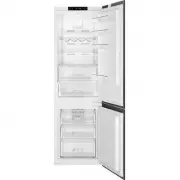
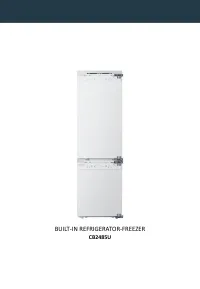
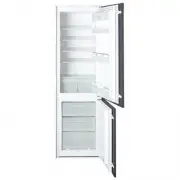
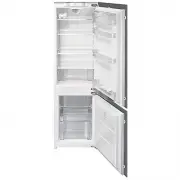
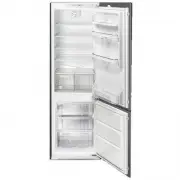
Instructions for the Installer 23 4. PRODUCT DESCRIPTION 4.1 FAB 28 Refrigerator (A) : compar tment for storing fresh foods Freezer compartment (B) : compartment for storing frozen foods and for freezing fresh foods. To open the door, pull the handle towards you.(see diagram below) To close, push th...
Page 6 - Instructions for the User; Door shelves and containers
Instructions for the User 24 4.6 Door shelves and containers The inside of the door is fitted with special shelves and boxes to take eggs, butter, dairy products, tubes,preserves and other small packages. The bottom of the door has a shelf to take vertical bottles. All door shelves and boxes can be ...
Page 7 - Instructions for the user; ARRANGING FOODS INSIDE THE REFRIGERATOR
Instructions for the user 25 5. ARRANGING FOODS INSIDE THE REFRIGERATOR COMPARTMENT 6. SETTING AND SELECTING THE OPERATING TEMPERATURE Arrange the foods on the various shelves, taking care that they have an airtight wrapping or cover. Thisprecaution will: - conserve foods' fragrance, moisture and fr...
Page 8 - Storing frozen foods; FOOD
Instructions for the User 26 7. FREEZING FOODS For proper storage and freezing, fruit and vegetables should be packed in portions of not more than 1 kgand meat and fish up to a max. of 2 kg. Small packages of food freeze more quickly, giving betterconservation of their nutrients and flavour, even af...
Page 9 - Thawing frozen foods
Instructions for the user 27 To prevent deterioration of frozen foods, do not exceed the permitted storage date, whichdepends on the type of food. 7.2 Thawing frozen foods Partially thawed foods should be eaten as soon as possible. Low temperatures preserve foods but theydo not destroy the micro-org...
Page 10 - MAINTENANCE AND CLEANING; Defrosting the refrigerator compartment; Defrosting the freezer
Instructions for the User 28 8. MAINTENANCE AND CLEANING 8.1 Defrosting the refrigerator compartment The refrigerator compartment has automatic defrosting. During normal operation of the refrigerator, frostforms on its back wall when the compressor is working and dissolves when it is not in operatio...
Page 11 - Practical advice for saving energy; adjust the feet provided as appropriate; Identifying and Dealing with Malfunctions; for safety reasons, you must first
Instructions for the user 29 8.5 Practical advice for saving energy - Install the refrigerator in a cool, well ventilated place, protected against direct sunlight and well away from heat sources. - Do not place hot foods in the refrigerator or freezer sections. Wait for foods and drinks to cool to r...
Page 12 - TROUBLESHOOTING GUIDE; PROBLEM
Instructions for the User 30 9. TROUBLESHOOTING GUIDE PROBLEM POSSIBLE CAUSE PROBABLE SOLUTION Noisy operation - see "operating noise" section The compressor starts up too often oroperates continuously: - compressor and condensercooling inadequate: - rise in outside temperature;- doors opene...