Page 2 - Contents; Safety information
Contents English 2 Contents Safety information 4 What you need to know about safety instructions 4 Important safety symbols 4 Important safety precautions 5 Instructions when using your dishwasher 7 Instructions for protecting your children 9 Instructions for installing your dishwasher 10 Before you...
Page 3 - Cycle chart; For standard test; Product fiche
Contents English 3 Cycle chart 49 Appendix 50 Transportation/relocation 50Protection against frost 50 Disposing the dishwasher and helping the environment 50 Specifications 51 For standard test 52 14 place settings 52 Product fiche 53 DW9000M_DD68-00203A-01_EN.indd 3 2018-02-20 12:05:29
Page 4 - What you need to know about safety instructions; What the icons and signs in this user manual mean:
Safety information English 4 Safety information Congratulations on your new Samsung dishwasher. This manual contains important information on the installation, use and care of your appliance. Please take time to read this manual to take full advantage of your dishwasher’s many benefits and features....
Page 5 - Important safety precautions; For use in Europe
Safety information English 5 Important safety precautions To reduce the risk of fire, electric shock, or injury to persons when using your appliance, follow basic precautions, including the following: 1. This appliance is not to be used by persons (including children) with reduced physical, sensory ...
Page 6 - : Children of less than 3 years should be kept; CAUTION; In order to avoid a hazard due to inadvertent resetting; WARNING; : Knives and other utensils with sharp points must
Safety information Safety information English 6 7. For use in Europe : Children of less than 3 years should be kept away unless continuously supervised. 8. CAUTION : In order to avoid a hazard due to inadvertent resetting of the thermal cut-out, this appliance must not be supplied through an externa...
Page 7 - Instructions when using your dishwasher; Do not use solvents in the dishwasher. Danger of explosion.
Safety information English 7 Instructions when using your dishwasher This dishwasher is not designed for commercial use. It is intended for use in domestic households and in similar working and residential environments such as:• Shops• Offices and showroomsand by residents in establishments such as:...
Page 8 - Do not use the strong acid cleaning agent.
Safety information Safety information English 8 Only use detergent and rinse aid formulated for domestic dishwashers. Do not use washing-up liquid. Do not use the strong acid cleaning agent. Do not fill the rinse aid reservoir with powder or liquid detergent. This will cause serious damage to the re...
Page 9 - Instructions for protecting your children
Safety information English 9 Instructions for protecting your children This appliance is not a toy! To avoid the risk of injury, keep children well away and do not allow them to play in or around the dishwasher or to use the controls. They will not understand the potential dangers posed by it. They ...
Page 10 - Instructions for installing your dishwasher; Dishwasher at a glance
Safety information Safety information English 10 Instructions for installing your dishwasher Before setting up the appliance, check it for any externally visible damage. Under no circumstances should you use a damaged appliance. A damaged appliance could be dangerous. The dishwasher must only be plu...
Page 11 - that this is necessary.
Safety information English 11 Do not connect the appliance to the mains electricity supply by a multi-socket unit or an extension lead. These do not guarantee the required safety of the appliance (e.g. danger of overheating). This appliance may only be installed in mobile installations such as ships...
Page 12 - Water softener
Safety information Safety information English 12 Always disconnect the dishwasher from the electrical supply for maintenance work (switch off at the wall socket and remove the plug). If the connection cable is damaged it must be replaced with a special cable, available from the manufacturer. For saf...
Page 13 - Instructions about the WEEE; (Applicable in countries with separate collection systems)
Safety information English 13 Instructions about the WEEE Correct Disposal of This Product (Waste Electrical & Electronic Equipment) (Applicable in countries with separate collection systems) This marking on the product, accessories or literature indicates that the product and its electronic acc...
Page 14 - Before you start; Upper rack
Before you start English 14 Before you start Follow these instructions carefully to ensure proper installation of the dishwasher and to prevent accidents when washing dishes. Dishwasher at a glance 03 05 06 07 08 09 04 02 01 01 Cover top 02 Top nozzle 03 Lower nozzle 04 Salt storage 05 Water reflect...
Page 15 - Unsuitable items for the dishwasher; Water reflector
Before you start English 15 CAUTION • Do not wash items that are covered with ash, sand, wax, lubricating grease, or paint. These materials will damage the dishwasher. Ash does not dissolve and will spread inside the dishwasher. • Remove food remains such as bones, fruit seeds, etc. and waste such a...
Page 16 - Basic use of racks; Height adjustment; To raise the upper rack
Before you start Before you start English 16 Basic use of racks Height adjustment You can adjust the height of the upper rack so that the lower rack can accommodate larger sized dishes. Depending on the height of the upper rack, the lower rack can accommodate plates up to 31 cm in diameter, and the ...
Page 17 - To remove the upper rack; Loading dishes; Into the lower rack
Before you start English 17 To remove the upper rack To remove the upper rack, pull the upper rack to the front until it is fully extended, and then lift it slightly to remove. See the figures above for the illustrated steps. CAUTION • Do not operate the dishwasher without the upper rack. Otherwise,...
Page 18 - Into the Zone Booster+ areas
Before you start Before you start English 18 Into the Zone Booster+ areas For more effective cleaning, load large items into the left side of the lower rack— the Zone Booster+ areas. The Zone Booster+ function supplies more powerful water jets to the Zone Booster+ areas. Make sure pot handles and ot...
Page 19 - Using the glass support; Cutlery rack; Organize items as desired
Before you start English 19 Using the glass support The glass support is especially suited for wine glasses. Hang wine glasses onto the pegs of the glass support. Fold the glass support back when it is not being used. CAUTION Do not adjust the level of the upper rack with the glass support propped u...
Page 20 - Detergent guidelines; To fill the detergent dispenser; Gently press the dispenser flap to
Before you start Before you start English 20 Detergent guidelines All dishwasher cycles require detergent in the detergent compartment. Apply detergent as appropriate for the selected cycle to ensure best performance. WARNING • Do not consume dishwasher detergent. Avoid breathing in detergent fumes....
Page 21 - Apply the recommended amount of
Before you start English 21 2. Apply the recommended amount of detergent to the main compartment. 3. Close the flap, and then press down to lock. NOTE This dishwasher has no separate compartment for tablet detergent. 4. For best results, apply a small amount (about 8 g) of detergent onto the door. T...
Page 22 - Rinse aid
Before you start Before you start English 22 Rinse aid Rinse aid improves the drying performance of the dishwasher. When the Rinse Refill indicator lights up on the control panel, refill with rinse aid. Only use liquid rinse aid. Powdered rinse aid will clog the compartment opening and cause the dis...
Page 23 - Salt storage; Salt indicator
Before you start English 23 Salt storage CAUTION • Use dishwasher-specific salt only. Do not use any other type of salt or solvent. This may damage the salt storage and the water softening system. • To prevent corrosion due to an excessive amount of salt or salty water, always fill the salt storage ...
Page 24 - Touchpad responsiveness; • Touch the centre of each button with
Before you start Before you start English 24 Touchpad responsiveness To prevent the touch-enabled controls from losing responsiveness, follow these instructions. • Touch the centre of each button with one finger. • Do not touch more than one button at a time, except as directed. • Clean the surface ...
Page 25 - Built-in installation under the sink; Preparation; Remove the 2 screws from the
Before you start English 25 Built-in installation under the sink You can install the dishwasher under the sink. To do this, follow the instructions below. WARNING Samsung Electronics is not responsible for any product failure or damage that may arise from your installation of the free-standing model...
Page 26 - If necessary, remove both the plastic
Before you start Before you start English 26 4. If necessary, remove both the plastic part and the weight balance on the rear side. To do this, remove the marked screws in the left-sided figure. CAUTION • The weight balance on the rear is heavy. Use caution to remove it. • Make sure to fasten the up...
Page 27 - Installation; STEP 1; Select a location; Installation in a new location
Before you start English 27 Installation The installation procedure may differ depending on the model. STEP 1 Select a location A B Select a location that meets the following conditions.• The location must have a solid floor that can support the weight of the dishwasher. • The location must be near ...
Page 28 - STEP 2; Check the water line; may cause the dishwasher to malfunction.; STEP 3; Arrange the hoses; Arrange the power plug, the water
Before you start Before you start English 28 STEP 2 Check the water line • The water line pressure must be between 0.05 and 0.8 MPa.• Make sure that the water temperature does not exceed 60 °C. Hot water over 60 °C may cause the dishwasher to malfunction. • Make sure that the water supply valve is t...
Page 29 - STEP 4; Level the dishwasher; While slightly lifting the front or rear
Before you start English 29 STEP 4 Level the dishwasher You can adjust the height of the dishwasher up to 30 mm using the levelling legs. 0-30 mm 1. While slightly lifting the front or rear (or both in turns) of the dishwasher, turn the levelling legs to adjust the height. 2. When complete, use the ...
Page 30 - STEP 5; Connect the drain hose
Before you start Before you start English 30 STEP 5 Connect the drain hose 1. Detach the hose holder from the dishwasher, and then cut off the protruding part from the holder as shown. 2. Fix the holder to a wall by tightening the 2 screws (Ø4 X 12). Max. 80 cm 3. Insert the drain hose into the hold...
Page 31 - STEP 6; Final check; Turn the circuit breaker on.
Before you start English 31 STEP 6 Final check 1. Remove all foam, paper packaging, and unnecessary parts from inside the dishwasher. 2. Turn the circuit breaker on. 3. Open the water supply valve to supply water to the dishwasher. 4. Plug in and turn the dishwasher on. Then, select and run the Quic...
Page 32 - Operations; Control panel; POWER
Operations English 32 Operations Control panel DW60M9550** 01 02 04 05 06 08 09 07 10 03 DW60M9530** 01 POWER Press to turn the dishwasher on or off. When a cycle is complete, all other indicators turn off with “ 0 ” on the display. Then, the dishwasher turns off automatically. 02 Cycle bar Press to...
Page 34 - Indicators; Control Lock indicator; Rinse Refill indicator
Operations Operations English 34 Indicators Control Lock indicator Lights up if Control Lock is activated, and blinks if any button except for the POWER button is pressed. Self Clean indicator(applicable models only) Lights up if Self Clean is activated, and blinks for 5 seconds every 20-22 cycles. ...
Page 35 - Cycle overview; Select this cycle for heavily soiled items.
Operations English 35 Cycle overview 01 02 03 04 05 06 07 01 Auto This cycle detects the level of soil and automatically initiates the optimal cycle, which is appropriate for all levels of soiled items. 02 ECO This cycle reduces power and water consumption, which is appropriate for normally soiled i...
Page 36 - Simple steps to start
Operations Operations English 36 Simple steps to start 1. Open the door, and then load the dishwasher. Make sure dishes are empty. 2. If applicable, put the dishes in the lower rack. If adding the Zone Booster+ option, put the dishes in the left side of the lower rack. 3. Apply detergent to the dete...
Page 37 - Settings; Sound
Operations English 37 Settings You can change the sound settings or display brightness to your preference. To change the settings, press the Sanitize and Delay Start buttons simultaneously for 3 seconds. Press Sanitize to navigate through sub menus, and press Delay Start to confirm your changes. Sou...
Page 38 - NOTE; To cancel your changes
Operations Operations English 38 Water softener Press Sanitize until ' L0 - L5 ' is displayed. Select a water hardness level from Level 0 to Level 5 (default: L3), and then press Delay Start . NOTE If the water hardness level in your area is 0, you do not need to use dishwasher-specific salt. Howeve...
Page 39 - Auto Door; Sanitize
Operations English 39 Auto Door To improve drying performance, the door opens automatically in the drying process. ‘ 0 ’ will be displayed when the current cycle is complete.Press Sanitize until ‘ A1 ’ or ‘ A0 ’ is displayed to enter Auto Door mode. Then, press Delay Start to enable (A1) or disable ...
Page 40 - Delay Start; Control Lock
Operations Operations English 40 Delay Start You can delay the cycle starting time up to 24 hours in 1-hour increments. To increase the delay time, press Delay Start . The hour displayed indicates the time at which the cycle will start. 1. Open the door, and then load the dishwasher. 2. Press Delay ...
Page 41 - Maintenance; Cleaning; Exterior; Interior
Maintenance English 41 Maintenance Cleaning Keep the dishwasher clean to improve performance, reduce unnecessary repairs, and lengthen the lifecycle. Exterior Clean spills on the surface of the dishwasher as they occur. Use a soft, damp cloth on the control panel to gently wipe away spills and dust....
Page 42 - Nozzles; Upper nozzle
Maintenance Maintenance English 42 Nozzles To prevent the nozzles from being clogged or if the nozzles are clogged, remove and clean each nozzle. Use caution when removing the nozzles as they may break. Upper nozzle 1. Open the door, and then pull out the upper rack to reveal the upper nozzle. 2. Lo...
Page 43 - Filter
Maintenance English 43 Filter We recommend cleaning the filter every month. 1. Open the door, and then remove the lower rack first. 2. Turn the filter handle counter clockwise to unlock the filter cover. 3. Remove the filter cover, and then the cylindrical micro filter underneath. DW9000M_DD68-00203...
Page 44 - Remove any dirt and impurities from
Maintenance Maintenance English 44 4. Remove any dirt and impurities from the micro filter and the filter cover. 5. Rinse them with running water, and then dry well. 6. Reinsert the filter, and then the filter cover. 7. Turn the filter handle clockwise to lock. CAUTION Make sure the filter cover is ...
Page 45 - Troubleshooting; Checkpoints; Symptom
Troubleshooting English 45 Troubleshooting Checkpoints If you encounter an issue to check with the dishwasher, first check the table below and try the suggestions. Symptom Possible Cause Action The dishwasher does not start. The door is not completely closed. • Make sure the door is latched and comp...
Page 48 - Information codes; • Check if the water supply valve is closed, if the water supply is
Troubleshooting Troubleshooting English 48 Information codes If the dishwasher fails to operate, you may see an information code on the display. Check the table below and try the suggestions. Code Action LC Leakage check • Close the water supply valve. Go to your home’s circuit breaker panel, and se...
Page 50 - Appendix; Transportation/relocation; Protection against frost; Transportation/relocation
Appendix English 50 Appendix Transportation/relocation Make sure the dishwasher is empty with no loose parts. First, drain the dishwasher as follows. 1. Open the door, and then turn the dishwasher on. 2. Select and run the ECO cycle. 3. Press START , and then close the door. 4. When the cycle is fin...
Page 51 - Specifications
Appendix English 51 Specifications MODEL FS (Free Standing) DW60M9550F*, DW60M9530F* Power 220-240 V~, 50 Hz Water pressure 0.05-0.8 Mpa Wash capacity 14 place settings Rated power 2000-2300 W Dimension (Width x Depth x Height) 598 X 600 X 845 (mm) Weight (Unpacked) 54.0 kg • Dimensions of the space...
Page 54 - Memo
Memo English 54 DW9000M_DD68-00203A-01_EN.indd 54 2018-02-20 12:05:37


 Samsung DW50T6060US
User Manual
Samsung DW50T6060US
User Manual
 Samsung DW50T6060US/AA
User Manual
Samsung DW50T6060US/AA
User Manual
 Samsung DW5343TGBSL
User Manual
Samsung DW5343TGBSL
User Manual
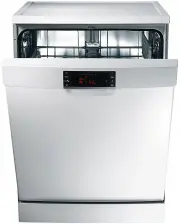 Samsung DW5343TGBWQ
User Manual
Samsung DW5343TGBWQ
User Manual
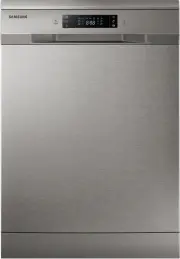 Samsung DW60H6050FS
User Manual
Samsung DW60H6050FS
User Manual
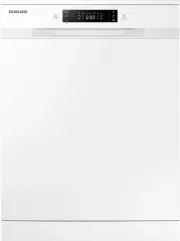 Samsung DW60H6050FW
User Manual
Samsung DW60H6050FW
User Manual
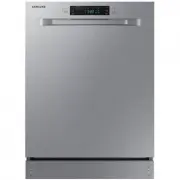 Samsung DW60R2014US
User Manual
Samsung DW60R2014US
User Manual
 Samsung DW60R2014US/AA
User Manual
Samsung DW60R2014US/AA
User Manual
 Samsung DW80B6060UG
User Manual
Samsung DW80B6060UG
User Manual
 Samsung DW80B6060US
User Manual
Samsung DW80B6060US
User Manual
 Samsung DW80B7070AP
User Manual
Samsung DW80B7070AP
User Manual
 Samsung DW80B7070AP/AA
User Manual
Samsung DW80B7070AP/AA
User Manual
 Samsung DW80B7070UG
User Manual
Samsung DW80B7070UG
User Manual
 Samsung DW80B7070US
User Manual
Samsung DW80B7070US
User Manual
 Samsung DW80B7071UG
User Manual
Samsung DW80B7071UG
User Manual
 Samsung DW80B7071US
User Manual
Samsung DW80B7071US
User Manual