Page 2 - IMPORTANT SAFETY INSTRUCTIONS; DANGER; WARNING
IMPORTANT SAFETY INSTRUCTIONS When using the sewing machine, basic safety precautions should always be followed, including the following. Read all instructions before using this machine. DANGER To reduce the risk of electric shock. The sewing machine should never be left unattended when plugged in. ...
Page 3 - CAUTION; MALTA AND CYPRUS ONLY; IMPORTANT; SAVE THESE INSTRUCTIONS; This machine is intended for household use.; FOR USERS IN COUNTRIES EXCEPT CENELEC COUNTRIES
1 English CAUTION When leaving this sewing machine unattended, the main power and light switch of the machine must be switched off or the plug must be removed from the socket-outlet. When servicing the sewing machine, or when removing covers, the machine or the electrical set must be disconnected fr...
Page 4 - Notes on the motor; WARNING LABELS
2 CONGRATULATIONS ON CHOOSING THIS COMPACT OVERLOCK MACHINE Your machine is a high quality, easy-to-use product. To fully enjoy all the features, we suggest that you study this booklet.If you need more information regarding the use of your machine, your nearest authorized dealer is always happy to b...
Page 5 - Contents
3 English Contents Chapter 1: Names of parts and their functions ................................................................... 4 Accessories ........................................................................................................................5 Powering the machine .............
Page 7 - Accessories; Included accessory
5 English Accessories Included accessory 1 Soft cover: X77871000 2 Accessory bag: XB2297001 3 Tweezers: XB1618001 4 Thread net (4): X75904000 5 Thread spool cap (4): X77260000 6 Cleaning brush: X75906001 7 Hexagonal driver: XB0393001 8 Needle set (130/705H): XB2772001 #80: 2 pcs., #90: 2 pcs. 9 Foot...
Page 8 - Powering the machine; Turning on the machine; Turning direction of hand wheel; Attaching/ Removing presser foot
6 Powering the machine Turning on the machine 1. Insert the three-pin plug into the socket on the bottom right side of the machine. Insert the power supply plug into a power outlet. 2. Turn the main power and light switch <A> to "I" mark (to "O" mark to turn off). <A> Ope...
Page 9 - Trim trap
7 English Trim trap The optional trim trap <A> holds the trimmed fabric and thread produced when sewing. <A> <B> To install: Insert the trim trap <A> until it contacts the front cover. NOTE: Be sure to position the positioning guide <B> to the one on the machine. To rem...
Page 10 - Retracting knife; Stitch length
8 Retracting knife To sew without cutting the fabric edge, you need to retract the knife as follows. CAUTION Do not touch the knife. Move the knife lever only while the needle is at its lowest point. Be sure to unplug the power supply cord from the wall outlet before retracting the knife. 1. Pull up...
Page 11 - Differential feed; Differential feed adjustment; Adjusting the presser foot pressure
9 English Differential feed This serger is equipped with two sets of feed dogs under the presser foot to move the fabric through the machine. The differential feed controls the movement of both the front and the rear feed dogs. When set at 1, the feed dogs are moving at the same speed (ratio of 1). ...
Page 12 - Tension adjustment dial; Tension control
10 Tension adjustment dial There is a thread tension dial for each needle thread, the lower looper thread and the upper looper thread. The correct thread tension may vary according to the type and thickness of the fabric and the type of thread used. Thread tension adjustments may be necessary for an...
Page 14 - Chart of thread tension adjustment, One needle (Three thread)
12 A C C B A B A B D E A B D E A B D D E E Chart of thread tension adjustment, One needle (Three thread) When you adjust the thread tension, do it in the following order:(1) Needle thread (2) Upper looper thread (3) Lower looper threadThis is the easiest way to obtain the correct thread tension. A: ...
Page 15 - Needle; Needle description; How to check the needle; Removing/ Installing the needle
13 English Needle This machine uses a standard home sewing machine needle. The recommended needle is 130/705H (#80 or #90). Needle description 1 Back (flat side) 2 Front 3 Groove 1 2 3 How to check the needle 4 Flat surface 5 Place the needle on its flat side and check to see if the space is paralle...
Page 16 - Thread tree; How to use the thread spool cap; How to use the thread net
14 CHAPTER 2 PREPARATION BEFORE THREADING Thread tree Raise the telescoping thread tree to its highest position. Make sure that the thread holders are in alignment above the spool pins as illustrated below. 1 Thread holder on thread tree 2 Spool pin 3 Correct position How to use the thread spool cap...
Page 17 - CHAPTER 3; Lower looper easy threading operation; Threading the lower looper
15 English CHAPTER 3 THREADING 4. Pass the thread through the tension disc 4 which is in the channel next to the blue tension adjustment dial. 5. Guide the thread down the channel and pass the thread through the threading points 5678 next to the blue color marks following the numerical order in the ...
Page 19 - Threading the upper looper
17 English 5. Guide the thread down the channel and pass the thread through the threading points 5678 next to the green color marks following the numerical order in the accompanying illustration. NOTE: Make sure to thread only through the upper thread take up 7 . 6. Pass the thread through the eye o...
Page 21 - CHAPTER 4
English 19 CHAPTER 4 SEWING MATERIALS, THREADS AND NEEDLES COMPARISON CHART Material Stitch Stitch Length (mm) Thread Needle Fine materials: Georgette Lawn Organdy Tricot Overlock stitch 2.0-3.0 Spun #80-90Cotton #100Tetron #80-100 130/705H#80 Fine materials: Georgette Lawn Organdy Tricot Narrow ove...
Page 22 - Stitch selection; Four-thread overlock stitch; Test sewing
20 CHAPTER 5 SEWING Stitch selection Select the stitch pattern before you start sewing. This sewing machine can sew five different stitches by following the simple steps below: Four-thread overlock stitch Use all four threads and two needles for producing four-thread overlock stitches.Use: Produces ...
Page 23 - To remove work
21 English 3. The fabric will be fed automatically. You need only guide it in the required direction. 4. Check the stitch formation (stitch chain) to see if it is uniform. If the stitch is not uniform, re-check that the threading has been done properly and in sequence. 5. Follow the Seam Allowance G...
Page 24 - To secure chain; Method 1; Method 2
22 To secure chain There are two methods available to secure the chain. Method 1 Secure the chain of the beginning and the end of a stitch with your machine. At the beginning of a stitch 1. Sew a few stitches, after chaining-off for 5 cm (2 inches). 2. Stop the machine and raise the presser foot.3. ...
Page 25 - If threads break during sewing; To sew fine materials; Instructions for both narrow overlock/
23 English If threads break during sewing Remove the material and re-thread in the correct order, Lower looper, Upper looper, right needle and then the left needle (to re-thread, see CHAPTER 3 "Threading"). Replace the material under the presser foot and sew 3-5 cm (1-1/8 to 2 inches) over t...
Page 27 - Chart of narrow overlock/ Rolled hemming stitch
English 25 Chart of narrow overlock/ Rolled hemming stitch Rolled hemming stitch Narrow overlock stitch Stitch Style Underside of material Top of material Underside of material Top of material Materials See CHAPTER 4 "Sewing materials, threads, and needles comparison chart". See CHAPTER 4 &#...
Page 29 - CHAPTER 7; Cleaning; Oiling
27 English CHAPTER 7 MAINTENANCE Cleaning CAUTION Turn off the machine before cleaning. Turn the hand wheel and move the needles down. Periodically clean dust, trimmed fabric and thread with the included cleaning brush. Oiling For smooth and silent operation, the moving parts (indicated with arrows)...
Page 30 - Flatlock stitching; Blind stitch foot; Features
28 CHAPTER 8 INTRODUCTION OF OPTIONAL FEET 5. Lift the presser foot lever and insert the fabric with the folded edge on the left in such a way that the needle pierces just the folded edge as it sews. 6. Lower the presser foot lever, adjust the fabric guide toward the folded edge. 7. Adjust the guide...
Page 31 - Pin tuck stitching
29 English Procedure 1. Attach the blind stitch foot (see CHAPTER 1 "Attaching/ Removing presser foot"). 2. Set up the machine for 3 thread overlock with one needle in the left position. The right needle should be removed. 3. Fold the fabric as shown in the illustration. 1 Surface 4. Turn th...
Page 32 - Taping foot; How to set the elastic / tape
30 7. Align the blind stitch presser foot guide with the line on the right side of the stitch finger. By turning the screw forward the stitch guide will go to the right. By turning the screw backward the stitch guide will go to the left. 8. Align the fold with the guide and insert the fabric up to t...
Page 33 - Pearl sequence foot; Preparation
31 English 5. Set the stitch length control lever. - Tapes: between "3" and "4"- Elastics: "4" 6. Adjust the presser adjusting dial 2 - at "0" when sewing with tapes.- at desirable number for contraction when sewing with elastics. NOTE: Contraction will be increased w...
Page 34 - Piping foot; How to adjust the machine; Start sewing
32 Piping foot Features By using the piping foot, you can obtain piping at the edge of material. The piping is useful to decorate on edge of wares (pajamas, sports ware), cover for furniture, cushion, bag, etc. LP Preparation Attach the piping foot (see CHAPTER 1 "Attaching/ Removing presser foo...
Page 35 - Gathering foot
33 English Gathering foot Features You can create beautiful gathers using the gathering foot on various garment and home decorating applications. LG Preparation Attach the gathering foot (see CHAPTER 1 "Attaching/ Removing presser foot"). Machine setting (type of stitch): - 2 needle 4 thread...
Page 36 - Specifications; SPECIFICATIONS
34 Specifications Use Fine to heavy materials Sewing speed Maximum 1,300 stitches per minute Stitch width 2.3 mm to 7 mm (3/32 to 9/32 inch) Stitch length (pitch) 2 mm to 4 mm (5/64 to 5/32 inch) Needle bar stroke 25 mm (63/64 inch) Presser foot Free presser type Presser foot lift 5 mm to 6 mm (3/16...
Page 38 - INSTRUCCIONES IMPORTANTES DE SEGURIDAD; PELIGRO; ADVERTENCIA; PRECAUCIÓN
36 INSTRUCCIONES IMPORTANTES DE SEGURIDAD Cuando utilice esta máquina, deberá tomar siempre medidas de seguridad básicas, incluidas las que se enumeran a continuación. Lea todas las instrucciones antes de utilizar la máquina. PELIGRO Para reducir el riesgo de descarga eléctrica La máquina de coser n...
Page 39 - CONSERVE ESTAS INSTRUCCIONES; PARA USUARIOS DE PAÍSES NO MIEMBROS DEL CENELEC; juegan con el aparato.; PARA USUARIOS DE PAÍSES MIEMBROS DEL CENELEC; niños sin supervisión.
Español 37 Para proporcionar una vida útil más larga a la máquina 1. No guarde esta máquina bajo la luz directa del sol ni en condiciones de mucha humedad. No utilice ni guarde la máquina cerca de un calefactor, plancha, lámpara halógena ni ningún otro objeto que desprenda calor. 2. Utilice únicamen...
Page 40 - SÓLO PARA LOS USUARIOS DEL REINO; IMPORTANTE; ENHORABUENA POR HABER ELEGIDO ESTA COMPACTA; Notas sobre el motor
38 SÓLO PARA LOS USUARIOS DEL REINO UNIDO, IRLANDA, MALTA Y CHIPRE IMPORTANTE - Si debe cambiar el fusible del enchufe, utilice un fusible homologado por ASTA para BS 1362, es decir, que lleve la marca correspondiente a la marca en el enchufe. - Vuelva a colocar siempre la tapa del fusible. No utili...
Page 41 - Contenido
Español 39 Contenido CAPÍTULO 1: Nombres de las partes y sus funciones ....................................................... 40 Accesorios .......................................................................................................................41 Encendido de la máquina ................
Page 43 - Accesorios; Accesorios incluidos
Español 41 Accesorios Accesorios incluidos 1 Funda: X77871000 2 Bolsa de accesorios: XB2297001 3 Pinzas: XB1618001 4 Malla para hilo (4): X75904000 5 Tope del carrete (4): X77260000 6 Cepillo limpiador: X75906001 7 Llave hexagonal: XB0393001 8 Juego de agujas (130/705H): XB2772001 n° 80: 2 unidades,...
Page 44 - Encendido de la máquina; Activación de la máquina; Cambio de la dirección de la ruedecilla; Instalación/desmontaje del prensatelas
42 Encendido de la máquina Activación de la máquina 1. Introduzca el enchufe de tres puntas en la conexión que se encuentra en el lado inferior derecho de la máquina. Inserte el enchufe de alimentación en una toma de corriente. 2. Coloque el interruptor de alimentación principal y de luz <A> e...
Page 45 - Orificio de corte; Costura de mangas (extracción
Español 43 Orificio de corte El orificio de corte opcional <A> sostiene el hilo y el tejido cortado generados al coser. <A> <B> Para instalar: Inserte el orificio de corte <A> hasta que toque la tapa delantera. NOTA: Asegúrese de situar la guía de colocación <B> en la g...
Page 46 - Repliegue de la cuchilla; Largo de las puntadas
44 Repliegue de la cuchilla Para coser sin cortar el borde del tejido, necesita replegar la cuchilla de la siguiente forma. PRECAUCIÓN No toque la cuchilla. Mueva la palanca de cuchilla sólo cuando la aguja esté en el punto más bajo. Asegúrese de desconectar el cable de alimentación de la toma de co...
Page 47 - Alimentador con diferencial; Ajuste del alimentador con diferencial; Ajuste de la presión del prensatelas
Español 45 Alimentador con diferencial Esta máquina de coser está provista de dos series de alimentadores debajo del prensatelas para guiar el tejido por la máquina. El alimentador con diferencial controla los movimientos de los alimentadores delanteros y traseros. Al ajustarlo en 1, los alimentador...
Page 48 - Disco de ajuste de la tensión; Control de la tensión
46 Disco de ajuste de la tensión Existe un disco de tensión para el hilo de cada aguja, el hilo del áncora superior y el del áncora inferior. La tensión de hilo correcta puede variar dependiendo del tipo y grosor del tejido así como del tipo de hilo utilizado. Ajustes de tensión del hilo pueden reve...
Page 49 - Tabla de ajuste de tensión de los hilos, dos agujas (Cuatro hilos)
Español 47 A C B A B D A B E F A B E F A B E F A B C D Tabla de ajuste de tensión de los hilos, dos agujas (Cuatro hilos) A: RevésB: DerechoC: Hilo de la aguja izquierdaD: Hilo de la aguja derechaE: Hilo del áncora superiorF: Hilo del áncora inferior El hilo de la aguja derecha está suelto. El hilo ...
Page 50 - Tabla de ajuste de tensión de los hilos, una aguja (Tres hilos)
48 A C C B A B A B D E A B D E A B D D E E Tabla de ajuste de tensión de los hilos, una aguja (Tres hilos) Al ajustar la tensión de los hilos, debe hacerlo en el orden siguiente:(1) Hilo de las agujas (2) Hilo del áncora superior (3) Hilo del áncora inferiorEs la mejor forma de lograr una tensión de...
Page 51 - Aguja; Descripción de la aguja; Cómo comprobar la aguja; Desmontaje/instalación de la aguja
Español 49 Aguja Está máquina funciona con una aguja normal para máquinas de coser domésticas. Se recomienda el uso de una aguja 130/705H (n° 80 o n° 90). Descripción de la aguja 1 Parte trasera (lado plano) 2 Parte delantera 3 Canal 1 2 3 Cómo comprobar la aguja 4 Superficie plana 5 Coloque la aguj...
Page 52 - Árbol del hilo; Cómo utilizar la malla para hilo
50 CAPÍTULO 2 Preparación antes del enhebrado Árbol del hilo Levante el árbol telescópico del hilo hasta su posición más alta. Compruebe que los portahilos quedan alineados sobre los portabobinas como se ilustra a continuación. 1 Portahilos en el árbol del hilo 2 Portabobinas 3 Posición correcta Com...
Page 53 - CAPÍTULO 3; Proceso simple de enhebrado del; Enhebrado del áncora inferior
Español 51 CAPÍTULO 3 Enhebrado 5. Guíe el hilo por el canal y pase el hilo por los puntos de enhebrado 5678 situados al lado de las marcas de color azul siguiendo el orden numérico de la ilustración. NOTA: Asegúrese de enhebrar ambas tomas de hilo 7 . Continúe con “Proceso simple de enhebrado del á...
Page 55 - Enhebrado del áncora superior
Español 53 6. Pase el hilo por el ojo del áncora superior 9 . NOTA: Si el hilo del áncora superior se rompe al coser: el hilo del áncora inferior se engancha a veces con el hilo del áncora superior. En este caso, baje el áncora superior girando la ruedecilla, saque el hilo del áncora inferior fuera ...
Page 56 - Enhebrado de la aguja derecha; Enhebrado de la aguja izquierda
54 Enhebrado de la aguja derecha Enhebre el hilo según lo ilustrado en la secuencia, siguiendo el color rosado y los números inscritos al lado de cada punto de enhebrado. <A> <B> <C> 1. Saque el hilo del carrete y páselo directamente por el portahilos 1 y la placa del hilo 2 del ár...
Page 57 - CAPÍTULO 4
Español 55 CAPÍTULO 4 Tabla de relación entre los distintos tejidos, hilos y agujas de costura Tejido Puntada Largo de las puntadas (mm) Hilo Aguja Tejidos finos: Georgette Lino Organdí Tricot Puntada overlock 2,0-3,0 Hilo de hilvanar n° 80-90Algodón n° 100Tetron n° 80-100 130/705H#80 Tejidos finos:...
Page 58 - Selección de las distintas puntadas; Puntada overlock de cuatro hilos; Costura de prueba
56 CAPÍTULO 5 Costura Selección de las distintas puntadas Seleccione el patrón de puntada antes de empezar a coser. Esta máquina de coser puede realizar cinco puntadas distintas siguiendo los sencillos pasos que se indican a continuación. Puntada overlock de cuatro hilos Utilice los cuatro hilos y l...
Page 59 - Para retirar el trabajo; Para empezar a coser
Español 57 4. Compruebe la formación de las puntadas (en la cadeneta) para ver si son uniformes. Si las puntadas no son uniformes, vuelva a comprobar que el hilo esté bien enhebrado y según la secuencia adecuada. 5. Siga la Guía de Tolerancia de Costura para cortar adecuadamente las costuras de los ...
Page 60 - Para asegurar la cadeneta; Método 1; Método 2
58 Para asegurar la cadeneta Existen dos métodos para asegurar la cadeneta. Método 1 Asegure la cadeneta del principio y del fin de una puntada con la máquina. Al principio de una puntada 1. Cosa algunas puntadas tras realizar una cadeneta de unos 5 cm. 2. Detenga la máquina y levante el prensatelas...
Page 61 - Si los hilos se rompen al coser; Para coser tejidos finos; Instrucciones para las puntadas
Español 59 Si los hilos se rompen al coser Quite el tejido y vuelva a enhebrar en el orden correcto: Áncora inferior, áncora superior, aguja derecha y aguja izquierda (para volver a enhebrar, véase el CAPÍTULO 3 “Enhebrado”). Sustituya el tejido colocado bajo el prensatelas y cosa 3-5 cm sobre las p...
Page 63 - Tabla de puntada overlock estrecha/de dobladillo enrollado
Español 61 Tabla de puntada overlock estrecha/de dobladillo enrollado Puntada de dobladillo enrollado Puntada overlock estrecha Estilo de puntada Parte inferior del tejido Parte superior del tejido Parte inferior del tejido Parte superior del tejido Tejidos Véase el CAPÍTULO 4 “Tabla de relación ent...
Page 65 - CAPÍTULO 7; Limpieza; Engrasado
Español 63 CAPÍTULO 7 Mantenimiento Limpieza PRECAUCIÓN Apague la máquina antes de limpiarla. Gire la ruedecilla para mover las agujas hacia abajo. Limpie periódicamente el polvo, los restos de tejido y los hilos con el cepillo limpiador que se incluye. Engrasado Para conseguir un funcionamiento sua...
Page 66 - Puntadas overlock planas; Prensatelas para puntadas invisibles; Características
64 CAPÍTULO 8 Introducción de prensatelas opcional 6. Baje la palanca del prensatelas y ajuste la guía del tejido hacia el borde doblado. 7. Ajuste la posición de la guía del prensatelas con el tornillo de ajuste de modo que la máquina toque ligeramente el pliegue en la tela. En este caso, el criter...
Page 67 - Puntadas de pliegues pequeños
Español 65 Procedimiento 1. Conecte el prensatelas para puntadas invisibles (véase el CAPÍTULO 1 “Instalación/desmontaje del prensatelas”). 2. Ajuste la máquina para puntada overlock de 3 hilos con una aguja en la posición izquierda. La aguja de la derecha se debe quitar. 3. Doble el tejido como se ...
Page 68 - Prensatelas para cintas; Ajuste de la máquina (tipo de
66 8. Alinee el pliegue con la guía e inserte el tejido hasta la posición de la aguja. 3 Tornillo de ajuste 4 Guía del tejido 9. Guíe el pliegue del tejido para coser a medio camino entre la aguja y la cuchilla superior. 10. Siga cosiendo hasta que se hayan cosido todas las líneas marcadas. Corrija ...
Page 69 - Prensatelas para tira de perlas; Preparación
Español 67 5. Ajuste la palanca de control del largo de las puntadas.- Cintas: entre “3” y “4” - Elásticos: “4” 6. Gire el disco de ajuste del prensatelas 2 - hasta “0” al coser con cintas. - hasta el número que desee para rizar al coser con elásticos. NOTA: El rizo aumentará cuanto mayor sea el núm...
Page 70 - Prensatelas para ribeteados
68 Prensatelas para ribeteados Características Al utilizar el prensatelas para ribeteados, puede ribetear el borde del tejido. El ribeteado es útil para decorar los bordes de pijamas o ropa deportiva, tapetes para muebles, cojines, bolsas, etc. LP Preparación Conecte el prensatelas para ribeteados (...
Page 71 - Prensatelas fruncidor
Español 69 Prensatelas fruncidor Características Puede crear bonitos frunces con el prensatelas fruncidor en distintos tipos de prendas y aplicaciones para decoración de hogar. LG Preparación Conecte el prensatelas fruncidor (véase el CAPÍTULO 1 “Instalación/desmontaje del prensatelas”). Ajuste de l...
Page 72 - Especificaciones; ESPECIFICACIONES
70 Especificaciones Uso Tejidos finos a gruesos Velocidad de costura 1.300 puntadas por minuto como máximo Ancho de las puntadas 2,3 mm a 7 mm Largo de las puntadas (altura) 2 mm a 4 mm Movimiento de la barra de las agujas 25 mm Prensatelas Tipo de prensatelas libre Elevación del prensatelas 5 mm a ...
Page 73 - SETTING RECORD / NOTAS DE AJUSTES
English 71 SETTING RECORD / NOTAS DE AJUSTES FABRICTEJIDO THREAD HILO NEEDLE AGUJA THREAD TENSION TENSION DE HILO NOTENOTA Left needle Aguja izquierda Right needle Aguja derecha Upper- looper Áncora superior Lower- looper Áncora inferior STITCH TYPE TIPO DE PUNTADA Español
Page 74 - Please visit us at
English Spanish 884-B02/B03 Printed in Taiwan XB2794-301 Please visit us at http://support.brother.com/ where you can get product support and answers to frequently asked questions (FAQs). Visítenos en http://support.brother.com/ donde hallará consejos para la solución de problemas así como la lista ...


 Brother 1034D
User Manual
Brother 1034D
User Manual
 Brother 2340CV
Manual
Brother 2340CV
Manual
 Brother 3034D
Manual
Brother 3034D
Manual
 Brother Boutique 27 / 37
User Manual
Brother Boutique 27 / 37
User Manual
 Brother CP60X
User Manual
Brother CP60X
User Manual
 Brother CS5055
User Manual
Brother CS5055
User Manual
 Brother CS-8060
Manual
Brother CS-8060
Manual
 Brother Innov-is 150 (SE)
User Manual
Brother Innov-is 150 (SE)
User Manual
 Brother Innov-is 200
User Manual
Brother Innov-is 200
User Manual
 Brother Innov-is 250
User Manual
Brother Innov-is 250
User Manual
 Brother Innov-is 300
User Manual
Brother Innov-is 300
User Manual
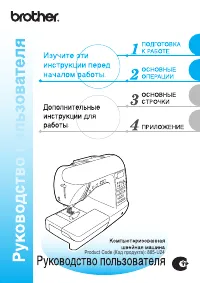 Brother Innov-is 550 (SE)
User Manual
Brother Innov-is 550 (SE)
User Manual
 Brother Innov-is 900
User Manual
Brother Innov-is 900
User Manual
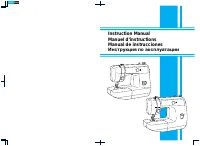 Brother JS-23
User Manual
Brother JS-23
User Manual
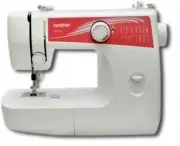 Brother LS 2150
User Manual
Brother LS 2150
User Manual
 Brother LS-3125
User Manual
Brother LS-3125
User Manual