Page 2 - Restrictions; to any person without prior written consent from Company; No warranty
i Terms of Use IMPORTANT-PLEASE READ CAREFULLY: This Terms of Use (“Agreement”) is a legal agreement between Brother Industries, Ltd. (“Company”) and you that governs your use of any Software, installed on or made available by Company for use with sewing or craft products (“Company Product”). The te...
Page 3 - ii; Termination
ii LIMITATIONS SHALL APPLY TO THE MAXIMUM EXTENT ALLOWED BY APPLICABLE LAW NOTWITHSTANDING ANY FAILURE OF ESSENTIAL PURPOSE OF ANY LIMITED REMEDY. 4.2 NOTWITHSTANDING THE CLAUSE 3 OR 4.1 HEREOF, THIS AGREEMENT DOES NOT PURPORT TO EXCLUDE OR RESTRICT COMPANY'S LIABILITY FOR DEATH OR PERSONAL INJURY R...
Page 4 - Symbols Used in This Document; The following symbols are used in this document.; INTRODUCTION; WARNING
1 Thank you for purchasing this machine.Before using this machine or attempting any maintenance, carefully read the “IMPORTANT SAFETY INSTRUCTIONS” on the Product Safety Guide, and then read the Operation Manual for the correct operation of the various functions. In addition, after you have finished...
Page 5 - CONTENTS
2 Terms of Use .................................................. iINTRODUCTION .......................................... 1IMPORTANT NOTICE ................................... 1IMPORTANT SAFETY INSTRUCTIONS ......... 1 Symbols Used in This Document ........................... 1 FEATURES...............
Page 7 - FEATURES
4 Patterns (“Pattern” mode) Select a pattern and edit it to create your own design. By simply loading craft paper or fabric, you can quickly create precision paper and fabric cutouts. The editing functions of ScanNCut DX will allow you to easily edit the built-in patterns to create your own design. ...
Page 9 - Chapter 1; GETTING STARTED; Unit Descriptions - Front; PARTS AND FUNCTIONS
6 Chapter 1 GETTING STARTED Unit Descriptions - Front a Operation Panel Allows you to control the unit and specify settings with the LCD panel and operating buttons. The angle of the operation panel can be adjusted. b Tool Tray Stores accessories for easy access during use. c Carriage Moves the inst...
Page 11 - Removing the Packing Materials; Note; Turning On/Off the Machine; Connect the power cord to the machine.; Plug the power cord into an electrical outlet.; BEFORE USE
8 Removing the Packing Materials Before turning on the machine, open the front tray cover, and then remove all shipping tapes (in front and back of the machine) and the cardboard shock-absorbing material. a Shipping tape b Cardboard shock-absorbing material Note • If the packing materials were remov...
Page 12 - To turn off the machine, press; Preparing for Feeding the Mat; Pull out the rear tray.; Memo; Operation of LCD Panel
9 1 The home screen appears. Memo • LCD panels commonly have bright spots (permanently lit dots) and dark spots (unlit dots). It may cause some unexpected luminous spots to appear and tiny picture elements to be missed in the screen. Please note that this is not a sign of malfunction. d To turn of...
Page 13 - Settings Screen; From the LCD panel, touch; Group 1; Group 2; MACHINE SETTINGS
10 Settings Screen From the LCD panel, touch to select and adjust the settings for each function.This section contains descriptions of the machine settings which will appear when is selected on the home screen. ■ Group 1 a Touch to display the previous or next item. * Swiping the touch pen (stylus) ...
Page 14 - Group 3; Group 4
11 1 Half Cut Select whether or not to make half-cuts. For details, see “Half Cut (Kiss Cut) Settings” on page 29. Cut Pressure (Half Cut) Specify the cutting pressure for half-cuts. Blade Adjustment Area Select from 1/4, 1/2, 3/4 or whole cutting area to be used for blade adjustment. Before cutting...
Page 17 - Chapter 2; BASIC OPERATIONS; Selecting the Mat Appropriate for the Material; FIRST STEPS; Mat
14 Chapter 2 BASIC OPERATIONS The following procedures describe basic operations, from preparing the material to performing trial cutting. 1. Selecting the Mat Appropriate for the Material.................................... P.142. Attaching the material to the mat .....................................
Page 18 - Reference Table of Mat and Material Combinations
15 2 Reference Table of Mat and Material Combinations Use a mat appropriate for the material, as referred to in this table. Before using materials from your project, test attaching the material to check the adhesion to the mat.You can also check the latest reference table at “ http://s.brother/cfokb...
Page 20 - Attaching the material to the mat; Test attaching the material.; Attach the material to the mat’s adhesive side.
17 2 Attaching the material to the mat After preparing the mat and sheet (when cutting fabric) appropriate for the material, attach the material to the mat. For the mat and sheet appropriate for the material, see “Reference Table of Mat and Material Combinations” on page 15. Note • Do not discard th...
Page 22 - Peel off the backing from the contact sheet.
19 2 b Cut the iron-on fabric appliqué contact sheet to a size 2 cm (3/4") or more larger than the outline of the pattern to be cut. a Pattern to be cut b Cutting line of sheet c Margin of 2 cm (3/4") or more c With the glossy side of the contact sheet facing down, place it on the wrong side...
Page 24 - Attaching the Material (for Quilt Piecing)
21 2 ■ Fabric (for Quilt Piecing) a Standard tack adhesive mat b High tack adhesive fabric support sheet Attaching the Material (for Quilt Piecing) Use the high tack adhesive fabric support sheet to attach fabrics for quilt piecing to the standard tack adhesive mat. These sheets should only be use...
Page 27 - Blade and Material Combination
24 Blade and Material Combination The appropriate blade differs depending on the material type and thickness. Before cutting the material, be sure to perform test cut (trial cut). For details on trial cutting, see “Test Cut (Trial Cut)” on page 26.Use the following table to select the appropriate cu...
Page 28 - Installing and Uninstalling the Holder; Press; Remove the protective cap.; Push down on the holder lock lever.
25 2 Installing and Uninstalling the Holder Select the holder appropriate for the material, and then install it into the machine. For details on the holder appropriate for the material, see “Blade and Material Combination” on page 24. a Press in the operation panel to turn on the machine. For detail...
Page 29 - To change the shape and size of the pattern,
26 Test Cut (Trial Cut) Perform test/trial cut or draw on the type of material to be used in your project, to check that the desired result can be achieved.This section describes the procedure for performing test cut. ■ Turning On the Machine Press in the operation panel to turn on the machine. • Fo...
Page 30 - Loading the Mat; Attach the material that will be cut to the mat.; While holding the mat level and lightly; Cutting; Select “Cut” in the test screen.
27 2 ■ Loading the Mat a Attach the material that will be cut to the mat. • For details on attaching material to the mat, see “Attaching the material to the mat” on page 17. b While holding the mat level and lightly inserting it into the feed slot, press in the operation panel. Insert the tip of the...
Page 31 - Unloading the Mat; Checking the Test/Trial Cut Results; With an Appropriate Cutting Pressure; Changing the Auto Cutting Pressure; Changing the Cut Pressure Setting; results
28 ■ Unloading the Mat a Press in the operation panel to feed out the mat. Note • Do not forcefully pull the mat while it is being fed out. Otherwise, damage, for example, to the feed rollers, may result. b Peel off the material from an area that is easily removable, such as a corner, and then slowl...
Page 32 - Touch
29 2 b Touch or to adjust the cutting pressure, and then touch the "OK" key. c Check that the settings have changed in the test screen, and then perform test/trial cut again. Note • Be careful not to increase the pressure too much. Otherwise, the blade may break. If the pressure is too stron...
Page 33 - Select “Pattern” in the home screen.; PATTERN CUTTING
30 The following procedures use built-in patterns to describe the entire series of operations, from selecting a pattern and editing it to cutting. Tutorial 1 - Cutting Patterns In this tutorial, we will cut two built-in patterns. ■ Turning On the Machine Press to turn on the machine. • For details, ...
Page 34 - Select the second pattern to be used.
31 2 ■ Selecting and Editing the Second Pattern a Touch the “Add” key in the mat layout screen. b Select the location of the pattern to be added. • For this example, touch the “Pattern” key to add a built-in pattern. For details on recalling pattern data, see step c in “Retrieve Data” on page 55. c ...
Page 35 - Select “Cut” in the preview screen.
32 Memo • To move a pattern within the cutting/drawing area, touch the pattern on the screen and drag it to the desired position. • To delete a pattern from the arrangement, select the pattern in the mat editing screen, and then use the function for deleting. Touch the "Edit" key in the ma...
Page 36 - In this tutorial, we will cut a built-in pattern in the
33 2 Note • Touch the “Test” key in the preview screen to perform test/trial cut. When test/trial cut is finished, the following screen appears. - Touch the “Start” key to start cutting the pattern. - Touch the “Test again” key to return to the test screen. Change the settings, and then perform test...
Page 38 - Cutting the First Pattern
35 2 h Check the pattern piece arrangement using the mat layout screen. The pattern piece to be cut out appears in the screen. After checking the arrangement, touch the “OK” key.• From this screen, an individual pattern piece can be edited, moved, deleted or saved. For details on the editing functio...
Page 39 - Cutting the pattern outline
36 ■ Editing and Cutting the Second Pattern Piece a Select and edit the second pattern piece, and then touch the “OK” key. For details on editing the pattern, follow steps f - h (page 34) in “Selecting and Editing the First Pattern Piece”. a Touch to return to the pattern category selection screen f...
Page 42 - Selecting All Patterns; PATTERN SELECTION
39 2 The following four pattern selection functions are available in the mat editing screen depending on your preference: ● Selecting a Single Pattern ● Selecting Desired Patterns ● Selecting All Patterns ● Specifying the Selection Area Touch the "Edit" key in the mat layout screen to use ...
Page 43 - Specifying the Selection Area
40 ■ Specifying the Selection Area a Touch in the mat editing screen for making multiple pattern selection. b Touch for specifying an area to select the patterns. Memo • Make sure that is not selected before specifying the area to select. c Touch and drag the area resizing keys to specify the area, ...
Page 44 - Chapter 3; ADVANCED OPERATIONS; Pattern Editing Functions; Available in the following screen; CUTTING AND EDITING FUNCTIONS
41 3 Chapter 3 ADVANCED OPERATIONS Pattern Editing Functions The pattern editing functions available may differ depending on the pattern you select. Follow the instructions in either this section or “Pattern Editing Functions - Multiple Patterns” on page 42. Available in the following screen Note • ...
Page 45 - Pattern Sizing; Editing the Pattern Piece; Mat Layout Screen
42 Pattern Editing Functions - Multiple Patterns The pattern editing functions available may differ depending on the pattern you select. Follow the instructions in either this section or “Pattern Editing Functions” on page 41. ■ Pattern Sizing Available in the following screen a Touch to edit the pa...
Page 46 - Layout Editing Functions
43 3 Layout Editing Functions The layout editing functions are available when the "Edit" key is touched in the mat layout screen. The mat editing screen appears. a Magnifying Zoom in on the pattern at 200%. Then, touch to display the patterns enlarged by 400%. To scroll through the screen,...
Page 47 - Object Editing Screen
44 Object Editing Screen a Sizing Change the size of the selected pattern. Touching this key displays the pattern sizing screen. From that screen, the height and width of the pattern can be changed. b Duplicating (Pattern Quantity) Create a duplicate of the pattern. c Rotating Rotate the pattern. ...
Page 48 - Undoing an Operation; In the editing screen after patterns have been; Grouping/Ungrouping Patterns
45 3 i Welding (Merging the Outlines of Multiple Patterns) Weld the outlines of multiple patterns to create a single outline. For details, see “Welding (Merging the Outlines of Multiple Patterns)” on page 47. j Alignment Select multiple patterns to align them based on their positions or heights. For...
Page 49 - Ungrouping Patterns
46 c Touch in the object editing screen. All of the selected patterns are grouped. (The color of the key changed.) Memo • The key color indicates how the selected patterns are grouped. - : Two or more patterns are selected and can be grouped. When the key is touched, it appears as . - : The patter...
Page 50 - Select
47 3 Welding (Merging the Outlines of Multiple Patterns) When multiple patterns are selected, the outlines of those patterns can be welded to create a single outline. a Select two heart patterns of different sizes and arrange them in the mat layout screen. b Touch the large heart pattern in the mat ...
Page 51 - Aligning Patterns
48 The outlines of the selected patterns are welded. Note • This function welds the outermost outline of the patterns. When welding certain types of patterns that have inside areas cut out, the cut-out areas are not used to create the outline. Be sure that the welded patterns in the preview area m...
Page 52 - Original
49 3 c Align the patterns. • The patterns are aligned depending on the key that is touched, as described below. • If three or more patterns were selected, they can be distributed horizontally ( g ) or vertically ( h ). Note • When patterns are distributed, they may extend out the mat. Adjust the pat...
Page 53 - Centering Two or More Patterns; Auto Layout Functions
50 ■ Centering Two or More Patterns a Add two circle patterns, and then change the size of one. • For details on resizing patterns, see “Object Editing Screen” on page 44. b After selecting two patterns, touch in the object editing screen to display the following screen. After touching and to align ...
Page 54 - Scanning a Background Image
51 3 Scanning a Background Image In this example, we will use material with a cutout in its upper-left corner as a background image. Memo • The background scanning function is also useful when cutting out patterns from material with a design on it. By arranging the patterns on the screen in the desi...
Page 55 - Character Input Functions; Typing In the Word “RAINBOW”
52 d Touch the "Edit" key. The mat editing screen appears. Memo • The pattern can also be moved by touching and dragging it in the screen. e Use the layout editing functions to move the patterns. • For details on moving patterns, see “Layout Editing Functions” on page 43. Memo • The patter...
Page 56 - Type in the characters.; Check the character arrangement.
53 3 c Type in the characters. The keyboard is in the QWERTY layout. After entering the characters, touch the “OK” key. a Character input display b Character keys c Uppercase/lowercase selection key d Space key e Letter/accented character/number selection key f Backspace key (deletes one character f...
Page 57 - Saving; MEMORY FUNCTIONS
54 Patterns and characters arranged in the cutting/drawing area can be saved and recalled later. For details on the file formats that can be imported into the cutting machine from a USB flash drive or computer, see “Importing Designs” on page 58. If the name of the data file/folder cannot be ide...
Page 58 - Touch the “OK” key to finish saving the data.; Retrieve Data
55 3 When saving is finished, the following message appears. For details on checking data saved in CanvasWorkspace, refer to the Help for CanvasWorkspace. d Touch the “OK” key to finish saving the data. Retrieve Data a Touch the “Retrieve Data” key in the home screen to display the retrieve source...
Page 59 - Start up CanvasWorkspace on a computer.
56 c Retrieve from dedicated application (via a wireless network connection). The transferred pattern from dedicated application appears on mat layout screen. For details, see “Retrieve from CanvasWorkspace (Via a Wireless Network Connection)” on page 56 or “Retrieve Transferred Patterns from Arts...
Page 60 - Transferable File Formats
57 3 d Touch the “Retrieve Data” key in the home screen to display the retrieve source selection screen. • If in the home screen is blue, the machine is connected to a wireless network. e Select . The mat layout screen appears. Retrieve from CanvasWorkspace (Using a USB Cable) (compatible only wit...
Page 61 - Importing Designs
58 b Start up CanvasWorkspace on a computer. c Click [Transfer FCM File to ScanNCut DX via USB Cable…] on the [File] menu to transfer the FCM file edited in CanvasWorkspace to the machine. When the pattern data is saved to the machine, the following message appears. Click [OK]. Note • Only one pat...
Page 62 - Retrieving Embroidery Data for Cutting (Compatible Models Only)
59 3 Embroidery data (.phc or .pes files) can be retrieved to the machine, then cut out or drawn. .phc files are embroidery data from sewing machines equipped with an embroidering function, and .pes files are embroidery data created with the embroidery design software system PE-DESIGN. With this emb...
Page 63 - Creating Appliqué Data; Creating Embroidering Line Data
60 Creating Appliqué Data Memo • Make sure that the pattern contains an “APPLIQUE MATERIAL” pattern. a Touch to display the pattern piece list screen, and then touch the “OK” key. The pattern editing screen appears. a DuplicatingCreate a duplicate of the pattern. For details, see “Pattern Editing ...
Page 66 - Preparation; Close the lid of the pen holder.; Drawing; Select and edit the pattern.; DRAWING FUNCTIONS
63 3 With a pen and pen holder, you can draw patterns on material. Using the seam allowance settings also allows you to draw patterns with seam allowances on material and then cut them out. These drawing functions can be used to create quilt pieces. ■ Preparation Prepare the following accessories fo...
Page 67 - Touch the “Start” key to start drawing.; Cutting Around Drawings; Touch the “Edit” key.
64 c Raise the scanner lever (on the left side of the machine) to “2”. d Load the mat with the material for drawing (cutting) attached. • Lightly insert the mat into the feed slot, and press in the operation panel. • For details on inserting the mat, see “Loading the Mat” on page 27. e Select “Draw”...
Page 68 - Specify the seam allowance settings.
65 3 c Touch the “Object Edit” key in the mat editing screen. d Touch . The Seam Allowance screen appears. If appears in gray, the seam allowance cannot be applied. Memo • Depending on the pattern, the seam allowance may be applied as a default. Check the setting. The pattern in the preview appear...
Page 69 - Select “Draw” in the preview screen.
66 h Check the pattern arrangement, and then touch the “OK” key. When using fabric, the patterns may not be cleanly cut if they are arranged near the edge of the fabric. In this case, move patterns so they are at least 10 mm from the fabric edge (the edge of the cutting/drawing area in the screen).•...
Page 71 - Precautions for Using the Fill Function; Filling Patterns; Making Pattern Outlines Thicker
68 Using Drawing Functions to Fill Patterns/Make Outlines Thicker Precautions for Using the Fill Function ● Depending on the material and pen being used, material drawn with a filled pattern may be difficult to peel off or may tear. Perform test/trial drawing with the pattern to be used in your pr...
Page 73 - Chapter 4; SCANNING FUNCTIONS; Tutorial 3 - Scanning and Cutting; Prepare the original.; Scanning; In the selection screen for the cutting data
70 Chapter 4 SCANNING FUNCTIONS A printed image (paper/sticker), stamped paper or an original hand-drawn illustration can be scanned and its outline can be cut out or drawn. This is useful for scanning images for paper crafts, then cutting them out. Tutorial 3 - Scanning and Cutting In this tutorial...
Page 75 - right sides of the feed slot, press; Creating Cutting Data; Grayscale recognition mode
72 e Attach the original that will be scanned to the mat. Memo • In “Direct Cut” mode, the scanning mat cannot be used. • Depending on the machine model, the sizes of mats that can be used will differ. Check the “Maximum Scanning Area” under “Machine Information” of the settings screen. • Before att...
Page 77 - Outline Distance; original
74 b Ignore Object Size Key Small unnecessary patterns (dotted lines, etc.) can be excluded from cutting data. For details, see “Specifying “Ignore Object Size”” on page 82. c Smoothing Setting Key Specify the level of smoothing applied to the image outline. For details, see “Adjusting Image Detecti...
Page 78 - Outlining and Framing; Select the shape of the cutting line.
75 4 a Touch . The setting screen appears. b Touch or to change the setting. ■ Outlining and Framing Any shape can be specified as the cutting line for the scanned image. Available in the following screen a Touch . The settings screen appears. b Select the shape of the cutting line. a Outlining ...
Page 81 - Example 1
78 ■ Creating Cutting Data The procedure for creating cutting data differs depending on the mode. Grayscale recognition mode a Select the cutting line type in the image editing screen. The image shape is detected and cutting lines are created based on one of three standards. For this example, touc...
Page 82 - and; Outline detection
79 4 b Use the touch pen (stylus) to touch and drag it around the screen to trim the cutting lines. • When trimming is performed, the “OK” key changes to the “Preview” key. Touch the “Preview” key to confirm the trimmed area. a Image Detection Level Key Adjust the image detection level. b Ignore Obj...
Page 83 - Saving Data
80 d Ignore Object Size Key Small unnecessary patterns (dotted lines, etc.) can be excluded from cutting data. For details, see “Specifying “Ignore Object Size”” on page 82. e Smoothing Setting Key Specify the level of smoothing applied to the image outline. For details, see “Specifying Smoothing” o...
Page 84 - Retrieve Cutting Data; Retrieve the saved cutting data.
81 4 ■ Retrieve Cutting Data Saved cutting data can be retrieved for cutting. a Attach the material for cutting to the mat, and then load the mat. • For details on attaching the material, see “Attaching the material to the mat” on page 17. • For details on loading the mat, see “Loading the Mat” on p...
Page 85 - Adjusting Image Detection Levels; Specifying “Ignore Object Size”
82 Adjusting Image Detection Levels The output levels of the scanned image data can be adjusted. Available in the following screen ■ Specifying “Ignore Object Size” Small unnecessary patterns (dotted lines, etc.) can be excluded from cutting data. In the following example, we will scan three images ...
Page 86 - Specifying Smoothing
83 4 ■ Specifying Smoothing Curves and corners in the image can be smoothed out. a Touch in the function selection screen to display the smoothing setting screen. b Touch or to specify the setting. • Four settings are available: OFF, Low, Middle and High. Setting to "Low" is suitable for smo...
Page 87 - Material That Can be Scanned; Tutorial 5 - Scanning to USB
84 A pattern printed on paper or fabric, an image, a pattern template or an original hand-drawn illustration can be scanned and saved as image data on a USB flash drive.This is useful for saving the data of an original image as backup before cutting. Notes on Scanning ■ Scanning Specifications • Sca...
Page 88 - Select the size of the scanning area.; Select the scanning resolution.; Scanning and Saving; Load the mat into the feed slot.
85 4 f Select the size of the scanning area. From the list, touch the key for the size of the original to be scanned. For this example, select the A4 size. a Size selection keys b Touch to cancel the setting and return to the previous screen. c Touch to scroll through the list. After the selected ...
Page 89 - Selecting the Area to be Saved
86 d Touch the “OK” key to exit “Scan to USB” mode. e Press in the operation panel to feed out the mat. f Remove the USB flash drive from the USB port (for a USB flash drive) on this machine. g From a computer, check the saved image data. Selecting the Area to be Saved When saving a scanned image to...
Page 91 - Chapter 5; APPENDIX; Replacement Criteria; Twist off the holder cap to remove it.; CONSUMABLES
88 Chapter 5 APPENDIX Replacement Criteria For the safe operation of this machine, replace the following consumables according to the replacement criteria. To purchase parts, contact the retailer who sold you this machine or the nearest authorized service center. For details on the optional accessor...
Page 92 - Installing
89 5 c Pull up the holder to leave the blade in the rubber area. ■ Installing a Grasp the shaft of the new blade, and then insert it into the blade slot in the end of the holder. The blade shaft is held in place by a magnet in the holder. Slowly insert the blade shaft, and then slowly release it aft...
Page 93 - Cleaning the Holder; CARE AND MAINTENANCE
90 Cleaning ■ Cleaning the Mat Cuttings and cut edges of patterns attached to the mat may reduce the mat’s adhesive strength and prevent correct operation. Periodically clean the mat. Using the included spatula, lightly scrape off any cuttings attached to the mat. Strongly rubbing the adhesive side ...
Page 94 - Attach the holder cap to the holder.; Cleaning Inside the Machine; Open the front tray cover.
91 5 b Using a commercially available brush, clean off cuttings, lint and dust. Specifically clean off lint and dust around the blade. If lint and dust accumulate between the blade and holder, the blade may no longer rotate or the cutting quality may become poor. In addition, clean out any lint and ...
Page 95 - Cleaning the Scanner Glass; Store away the operation panel.; Attach the cover to the machine.; Push in the rear tray.
92 Cleaning the Scanner Glass If there are unwanted vertical lines in the scanned image or if scanning cannot be done cleanly, the scanning area of the scanner may have become dirty. Clean the scanner glass inside the machine. a Turn off the machine, unplug the power cord from the electrical outlet,...
Page 96 - Adjusting the Screen; Materials; Insert the holder into the carriage.; Attach the paper to the mat.
93 5 Adjusting the Screen If the screen does not respond correctly when you touch a key (the machine does not perform the operation or performs a different operation), follow the steps below to make the proper adjustments. a Holding your finger on the LCD screen, turn the main power to off and back ...
Page 98 - b c
95 5 Adjusting the Position of the Feed Roller For normal operations (when the optional roll feeder is not used), it is not necessary to adjust the position of the feed roller. If the feed roller is inadvertently moved, follow the procedure below to return it to its original position.For details on ...
Page 99 - TROUBLESHOOTING
96 Please pay attention to all applicable safety warnings when referring to the sections cited below.If the machine stops operating correctly, check the following possible problems before requesting service.You can solve most problems by yourself. If you need additional help, the Brother Solutions C...
Page 103 - ERROR MESSAGES
100 The following table lists some of the messages that may appear while the machine is operating as well as their corresponding solutions.Perform the necessary operation according to the instructions in the message or the solution described here.If the problem persists, contact the retailer who sol...
Page 106 - Automatic Update Function; Updating from the Home Screen; Updating from the Settings Screen; UPDATING THE SOFTWARE
103 5 The machine’s software can be updated with any of the following three procedures. ● Updating Using Automatic Update Function- Updating from the Home Screen- Updating from the Settings Screen ● Updating Using a USB Flash Drive ● Updating Using the Application (CanvasWorkspace) Memo • The guides...
Page 107 - Touch the “Update” key to start the update.; Display the home screen on the machine.
104 Update Procedure Using USB Flash Drive Using a USB flash drive, the machine’s software can be updated. For update information, refer to details posted on the Brother Solutions Center (http://s.brother/cuoad/). If an update file is posted, download the file, and then update the machine according ...
Page 109 - OPTIONAL ACCESSORIES; PRODUCT SPECIFICATIONS
106 The following are available as optional accessories to be purchased separately. * Contact the retailer who sold you this machine or the nearest authorized service center. * Use a mat designed specifically for this machine. The machine will not operate correctly if any other mat is used. * For th...
Page 110 - INDEX
107 A AC power jack ............................................................... 7 Advanced pattern cutting ............................................ 33 Aligning Patterns .......................................................... 48 Artspira .......................................................
Page 111 - English
Please visit us at http://s.brother/cpoac/ where you can get product support and answers to frequently asked questions (FAQs). These machines are approved for use in the country of purchase only. Local Brother companies or their dealers will only support machines purchased in their own countries. En...


 Brother 1034D
User Manual
Brother 1034D
User Manual
 Brother 2340CV
Manual
Brother 2340CV
Manual
 Brother 3034D
Manual
Brother 3034D
Manual
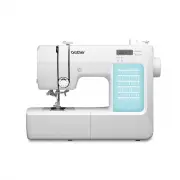
 Brother Boutique 27 / 37
User Manual
Brother Boutique 27 / 37
User Manual
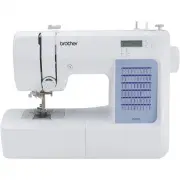
 Brother CP60X
User Manual
Brother CP60X
User Manual
 Brother CS5055
User Manual
Brother CS5055
User Manual
 Brother CS-8060
Manual
Brother CS-8060
Manual
 Brother Innov-is 150 (SE)
User Manual
Brother Innov-is 150 (SE)
User Manual
 Brother Innov-is 200
User Manual
Brother Innov-is 200
User Manual
 Brother Innov-is 250
User Manual
Brother Innov-is 250
User Manual
 Brother Innov-is 300
User Manual
Brother Innov-is 300
User Manual
 Brother Innov-is 550 (SE)
User Manual
Brother Innov-is 550 (SE)
User Manual
 Brother Innov-is 900
User Manual
Brother Innov-is 900
User Manual
 Brother JS-23
User Manual
Brother JS-23
User Manual
 Brother LS 2150
User Manual
Brother LS 2150
User Manual
 Brother LS-3125
User Manual
Brother LS-3125
User Manual