Ingersoll Rand P1.5IU-A9 - User Manual
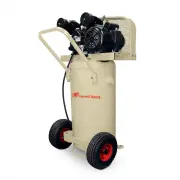
Ingersoll Rand P1.5IU-A9 Compressor – User Manual, read for free online in PDF format. We hope this helps you resolve any issues you may have. If you have further questions, please contact us through the contact form.


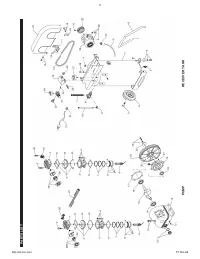
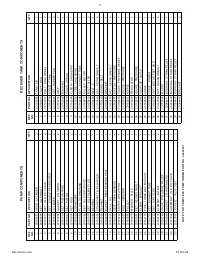


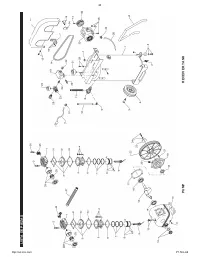
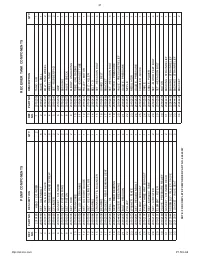
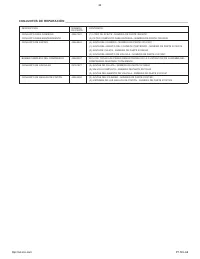
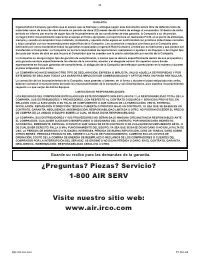
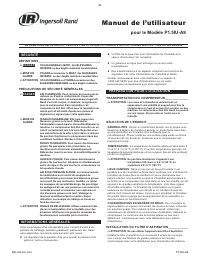
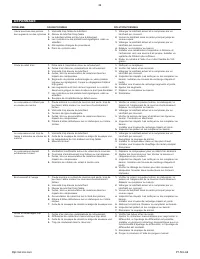
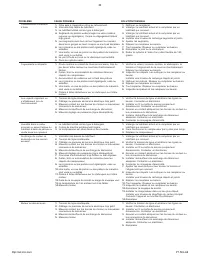
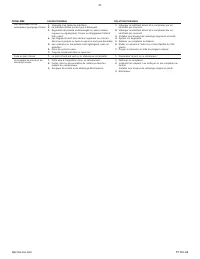
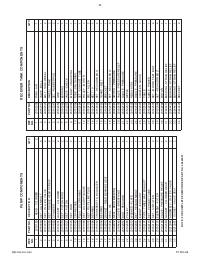
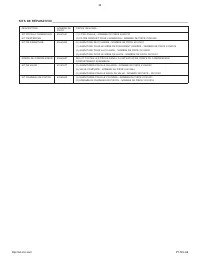

Table of Contents:
- Page 2 – DANGER
- Page 3 – OPERATION
- Page 6 – TROUBLESHOOTING
- Page 9 – IV; IP
- Page 12 – SEGURIDAD; PELIGRO; INFORMACIONES GENERALES; Manual del usuario
- Page 14 – PRECAUCIÓN; OPERACIÓN
- Page 15 – MANTENIMIENTO; ADVERTENCIA; PROGRAMA DE MANTENIMIENTO DE RUTINA; COMPROBACIÓN DE LA TENSIÓN DE LA CORREA
- Page 17 – LOCALIZACIÓN DE FALLAS
- Page 23 – Visite nuestro sitio web:; Guarde su recibo para las demandas de la garantía.
- Page 24 – SÉCURITÉ; INFORMATIONS GÉNÉRALES; Manuel de l’utilisateur
- Page 26 – LUBRIFIANTS DE RECHANGE.; OPÉRATION
- Page 27 – VIDANGE D’HUILE DE LA POMPE DU COMPRESSEUR _
- Page 28 – ATTENTION
- Page 29 – DÉPANNAGE
- Page 35 – Visiter notre site de web :; Gardez votre reçu pour des réclamations de garantie.
SAFETY
DEFINITIONS______________________________________
•
DANGER
WILL cause DEATH, SEVERE INJURY or
substantial property damage.
•
WARNING
CAN cause DEATH, SEVERE INJURY or
substantial property damage.
•
CAUTION
WILL or CAN cause MINOR INJURY or property
damage.
GENERAL SAFETY PRECAUTIONS __________________
•
DANGER
INTAKE AIR. Can contain carbon monoxide or
other contaminants. Will cause serious injury or
death. Ingersoll Rand air compressors are not
designed, intended or approved for breathing air.
Compressed air should not be used for breathing
air applications unless treated in accordance
with all applicable codes and regulations.
•
WARNING
HAZARDOUS VOLTAGE. Can cause serious
injury or death. Disconnect power and bleed
pressure from tank before servicing.
Lockout/Tagout machine. Compressor must be
connected to properly grounded circuit. See
grounding instructions in manual. Do not operate
compressor in wet conditions. Store indoors.
MOVING PARTS. Can cause serious injury. Do
not operate with guards removed. Machine may
start automatically. Disconnect power before
servicing. Lockout/Tagout machine.
HOT SURFACES. Can cause serious injury. Do
not touch. Allow to cool before servicing. Do not
touch hot compressor or tubing.
HIGH PRESSURE AIR. Bypassing, modifying or
removing safety/relief valves can cause serious
injury or death. Do not bypass, modify or remove
safety/relief valves. Do not direct air stream at
body. Rusted tanks can cause explosion and
severe injury or death. Drain tank daily or after
each use. Drain valve located at bottom of tank.
•
CAUTION
RISK OF BURSTING. Use only suitable air
handling parts acceptable for pressure of not
less than the maximum allowable working
pressure of the machine.
GENERAL INFORMATION
Your air compressor unit is suitable for operating air tools,
caulking guns, grease guns, sandblasters, etc. Depending on
your application, the following accessories may be required:
l
An air pressure regulator to adjust the air pressure entering
the tool or accessory.
l
An air line filter for removal of moisture and oil vapor in
compressed air.
l
An in-line lubricator to prolong the life of air tools.
l
Separate air transformers which combine the functions of air
regulation and/or moisture and dirt removal.
Contact your nearest authorized dealer or call 1-800-AIR-SERV
for more information on air tools and accessories for your
application.
PREPARATION FOR USE
TRANSPORTING THE UNIT _________________________
•
CAUTION
The wheels and handle do not provide adequate
clearance, stability or support for pulling the unit
up and down stairs or steps. The unit must be
lifted or pushed up a ramp. Do not use the handle
to lift the unit.
SELECTING A LOCATION ___________________________
GENERAL.
Select a clean, dry, well-lighted area with plenty of
space for proper cooling air flow and accessibility. Locate the unit
on a solid level surface at least 12 inches (30 cm) from walls.
Ensure unit is as level as possible.
TEMPERATURE.
Ideal operating temperatures are between
32°F and 104°F (0°C and 40°C). In lower temperatures, you must
protect safety/relief valves and drain valves from freezing.
•
CAUTION
Never operate in temperatures below 20°F
(-6.6°C) or above 125°F (51.0°C).
HUMID AREAS.
In frequently humid areas, moisture may form in
the bare pump and produce sludge in the lubricant, causing
running parts to wear out prematurely. Excessive moisture is
especially likely to occur if the unit is located in an unheated area
that is subject to large temperature changes. Two signs of
excessive humidity are external condensation on the bare pump
when it cools down and a “milky” appearance in petroleum
compressor lubricant. You may be able to prevent moisture from
forming in the bare pump by increasing ventilation or operating
for longer intervals.
NOISE CONSIDERATIONS.
Consult local officials for
information regarding acceptable noise levels in your area. To
reduce excessive noise, use vibration mounts or intake silencers,
relocate the unit or construct total enclosures or baffle walls.
Contact your dealer for assistance.
Owner’s Manual
for Model P1.5IU-A9
© Ingersoll-Rand Company
IMPORTANT INFORMATION! READ AND FOLLOW THESE INSTRUCTIONS. RETAIN FOR REFERENCE.
C.C.N. : 80444425
REV.
: B
DATE
: FEBRUARY 2008
"Loading the manual" means you need to wait until the file loads and becomes available for online reading. Some manuals are very large, and the time they take to appear depends on your internet speed.
Was this manual helpful?
About this manual
- Brand
- Ingersoll Rand
- Model
- P1.5IU-A9
- Document type
- User Manual
- Category
- Compressor
- Language(s)
- English, Spanish, French
- Pages
- 36
- File size
- 5.7 MB
- Format
Summary
INSTALLING THE AIR INLET FILTER _________________ • CAUTION Do not operate without air inlet filter. Install the air inlet filters at the inlet connections at the barepump. If heavy duty filtration is required, contact your dealer forinformation. INSTALLING DISCHARGE PIPING ___________________ If it...
ALTERNATE LUBRICANTS. You may use a petroleum-based lubricant that is premium quality, does not contain detergents,contains only anti-rust, anti-oxidation, and anti-foam agents asadditives, has a flashpoint of 440°F (227°C) or higher, and hasan auto-ignition point of 650°F (343°C) or higher. See the...
TROUBLESHOOTING PROBLEM POSSIBLE CAUSE POSSIBLE SOLUTION Abnormal piston, ring or cylinderwear 1. Lubricant viscosity too low. 2. Lubricant level too low. 3. Detergent type lubricant being used. 4. Cylinder(s) or piston(s) scratched, worn or scored. 5. Extremely dusty atmosphere. 6. Worn cylinder fi...
Ask a question
Related manuals
More Ingersoll Rand Compressors models


Other Ingersoll Rand appliances
 Ingersoll Rand 2-1/2 Manual
 Ingersoll Rand 15QMAX User Manual
 Ingersoll Rand 15T Manual
- Ingersoll Rand 35MAX User Manual
 Ingersoll Rand 92N Manual
 Ingersoll Rand 107XPA Manual
 Ingersoll Rand 107XPA-A40 Manual
 Ingersoll Rand 109XPA User Manual
 Ingersoll Rand 114GQC User Manual
 Ingersoll Rand 116 Manual
- Ingersoll Rand 117 Manual
 Ingersoll Rand 132 Manual
 Ingersoll Rand 170G User Manual