DeLonghi DES16EW - User Manual
A user manual for a domestic dehumidifier covers its core functionality, from basic concepts like humidity control to detailed operation of its controls, modes, and error indicators. The document also addresses essential safety practices–such as proper installation, electrical handling, and child supervision–to prevent accidents while ensuring correct usage. Installation instructions clarify how to configure the unit for manual or continuous drainage, including setup diagrams. Maintenance guidance includes cleaning procedures for components like filters and storage tips, alongside technical specs like power ratings and disposal compliance with environmental regulations. Troubleshooting highlights common operational issues–such as humidity reduction failures–and provides diagnostic steps before seeking professional service.


Table of Contents:
- Page 1 – Dehumidifier Component Diagram and Concepts
- Page 2 – Safety Warnings and Handling Instructions
- Page 3 – General Safety Guidelines and Environmental Compliance
- Page 4 – Dehumidifier Installation Procedures
- Page 5 – Operating Functions and Display Interpretation
- Page 6 – Selecting Operating Modes and Airflow Control
- Page 7 – Maintenance, Specifications, and Disposal
- Page 8 – Troubleshooting Guide
10
SOME NOTIONS ON
HUMIDITY
Air always contains a certain amount of water in
the form of vapour. This determines the level of
humidity in an atmosphere.
The capacity of the air to hold water vapour
increases with temperature.
This is why in our homes, as soon as the tempe-
rature decreases, the vapour contained in the air
condenses, as is evident on the colder surfaces in
the room, such as the windows, walls etc.
The purpose of a dehumidifier is to remove the
excess moisture from the air, avoiding the dama-
ge caused by condensation.
Experts have established that the optimum envi-
ronmental conditions for our well being and for
the home are obtained between 40% and 60%
relative humidity. With very low temperatures,
you are recommended to heat the room even
minimally.
This considerably increases the dehumidifying
power of the appliance.
With heating, the condensation formed by the
water vapour on windows and other cold surfaces
evaporates into the air to be collected by the
dehumidifier. Air leaving the dehumidifier is
usually about 1°C warmer than room temperatu-
re.
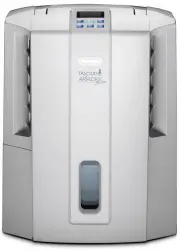
DESCRIPTION/ACCESSORIES
1. Control panel
2. Water level viewing window
3. Condensate collection tank
4. Lifting
handle
5. Air intake grille
1
6
3
5
7
2
4
8
9
10
6. Silver ion air filter
7. Air outlet grille
8. Condensate drain hose (2 m)
9. Castors
10. Continuous drain connector (certain models
only)
"Loading the manual" means you need to wait until the file loads and becomes available for online reading. Some manuals are very large, and the time they take to appear depends on your internet speed.
Was this manual helpful?
About this manual
- Brand
- DeLonghi
- Model
- DES16EW
- Document type
- User Manual
- Category
- Air Dryer
- Language(s)
- English
- Pages
- 8
- File size
- 629.9 KB
- Format
Summary
Explanation of basic humidity concepts and a labeled diagram detailing the dehumidifier's components, including the control panel, water tank, air intake, drain hose, and casters.
Fundamental safety warnings for the appliance, explanations of warning symbols, instructions for handling the unit with dry hands, proper unplugging procedures, installation supervision, and child safety precautions.
Safety guidelines, installation and handling precautions, environmental information regarding refrigerant and packaging disposal, electrical connection requirements, and liability warnings for instruction adherence.