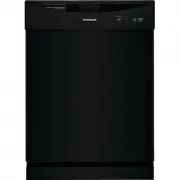
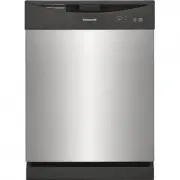
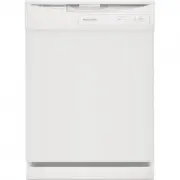
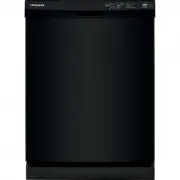
Page 2 - IMPORTANT SAFETY INSTRUCTIONS; WARNING
WARNING This symbols will help alert you to such dangers as personal injury, burns, fire and electrical shock. WARNING To reduce the risk of fire, electrical shock or injury when using your dishwasher, follow the above basic precautions . SAVE THESE INSTRUCTIONS 2 IMPORTANT SAFETY INSTRUCTIONS WARNI...
Page 3 - PRODUCT REGISTRATION
CAUTION Property Damage Hazard Before starting dishwasher be sure that the wa- ter is connected and turned on. Failure to do so may cause damage to the pump seal and result in water leakage. 3 PRODUCT REGISTRATION Thank you for choosing Frigidaire This Use & Care Guide is part of our commitment ...
Page 4 - FEATURES AT A GLANCE; To Start a Cycle
4 FEATURES AT A GLANCE Features may vary according to model Your dishwasher cleans by spraying a mixture of hot water and detergent through the spray arms against soiled surfaces. First, the dishwasher drains for a few seconds to remove soils dropped while loading, then fills with water covering the...
Page 5 - OPERATING INSTRUCTIONS; Wash Cycle Selections; Wash Pressure; NOTE
5 OPERATING INSTRUCTIONS Wash Cycle Selections Cycle times are approximate and will vary with options selected. Hot water is necessary to activate dishwasher detergent and melt fatty food soils. An automatic sensor will check the incoming water temperature and, if it is not hot enough, the cycle wil...
Page 7 - Status Window
7 OPERATING INSTRUCTIONS Status Window The STATUS window, available on some models, indicates the following activity: 1-24 . . . . . . . Number of delay start hours. The last hour will count down in minutes. MINUTES . . . . Number of minutes left in cycle (1-199). L0----L6 . . . . . Level of Rinse A...
Page 8 - Cycle Chart
8 OPERATING INSTRUCTIONS Cycle Chart NOTE *The time remaining may suddenly increase or drop several minutes. This means that the dishwasher received input from the Smart Sensor concerning the soil load and has automatically adjusted the cycle length. Cycle Settings Water (approx.) Time * (Hours) W...
Page 9 - PREPARING AND LOADING DISHES; Dish Preparation; Loading the Upper Rack
9 PREPARING AND LOADING DISHES Dish Preparation Scrape away large pieces of food, bones, pits, toothpicks, etc. The continuously filtered wash fluid will remove remaining food particles. Burned-on foods should be loosened before loading. Empty liquids from glasses and cups. Foods such as mustard, ma...
Page 10 - Adjustable Upper Rack; Loading the Bottom Rack
10 Adjustable Upper Rack The top rack height can be easily adjusted to accommodate loading taller dishes in either rack. To raise the rack to the upper position, lift rack until both sides are at the same height and the rack will secure in place. Ensure that the rack remains level from front to back...
Page 11 - Cup Shelf/Stemware Holders; Fold-down Tines Bottom Rack
11 PREPARING AND LOADING DISHES 12 place settings standard loading pattern Cup Shelf/Stemware Holders The Cupshelf holder can be folded down to be used to load two levels of cups, juice glasses, and other short items or fold down both and use for long items such as utensils and spatulas. Fold up to ...
Page 12 - Add an Item; Soft Grip Rack; CAUTION
12 PREPARING AND LOADING DISHES When covers are up, mix items in each section of the basket with some pointing up and some down to avoid nesting. Water spray cannot reach nested items. Add an Item To add or remove items after wash cycle starts: • Unlatch door and wait a few seconds until wash action...
Page 13 - DISHWASHER DISPENSER & DETERGENTS
How much Detergent to use The amount of detergent to use depends on the water hardness. Water hardness is measured in grains per gallon. Using too little detergent can result in poor cleaning and hard water filming or spotting. Using too much detergent in soft water can cause etching to some glasswa...
Page 14 - Detergent Usage Chart; Dosage of detergent
Detergent Usage Chart Dosage of detergent Place a single detergent tablet or packet into the detergent dispenser compartment. 14 DISHWASHER DISPENSER & DETERGENTS NOTE For very hard water, detergent alone may not be enough. A water softener is recommended to improve water quality and dishwashi...
Page 15 - To add liquid rinse aid:; FACTORS AFFECTING PERFORMANCE; Water Pressure; How to adjust the rinse aid dosage; Water Temperature
IMPORTANT Before starting a cycle, run hot water to clear cool water from pipe. 15 Rinse Aid Rinse aid greatly improves drying, reduces water spots, filming. With it water “sheets” off dishes rather than forming water droplets that cling and leave spots.A dispenser, located next to the detergent cup...
Page 16 - Clean the Coarse Filter; Clean the Cylinder Fine Filter; Outside; CARE AND CLEANING
Clean the Coarse Filter Take out the Cylinder Fine Filter and remove the Coarse Filter from the dishwasher tub bottom. Flush the Coarse Filter by holding it under running water and replace. Clean the Cylinder Fine Filter The Cylinder Fine Filter is designed to collect some big items such as broken g...
Page 17 - Winterizing; To Disconnect Service:; BEFORE YOU CALL; Food Soils Left on Dishes
Winterizing A dishwasher left in an unheated place should be protected from freezing. Have a qualified person do the following: To Disconnect Service: 1. Turn off electrical power to the dishwasher at the supply source by removing fuses or tripping circuit breaker. 2. Shut off water supply. 3. Place...
Page 19 - Removing Spots and Film
19 BEFORE YOU CALL Removing Spots and Film Hard water can cause lime deposit buildup on the interior of the dishwasher. Dishes and glasses may also get spots and film for a number of reasons. (See Glassware/Flatware Spotted or Cloudy section). To remove buildup, and film, clean using the following i...
Page 20 - MAJOR APPLIANCE WARRANTY
20 MAJOR APPLIANCE WARRANTY Your appliance is covered by a one year limited warranty. For one year from your original date of purchase, Electrolux will pay all costs for repairing or replacing any parts of this appliance that prove to be defective in materials or workmanship when such appliance is i...