Tefal L9569432 - User Manual
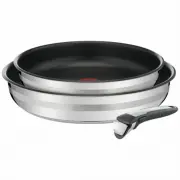
Tefal L9569432 Frying Pan – User Manual, read for free online in PDF format. We hope this helps you resolve any issues you may have. If you have further questions, please contact us through the contact form.


Table of Contents:
- Page 2 – Use on an induction hob; Never heat pots and pans when empty; Helpful hints on lid use; For safety reasons if; Handles and knobs
- Page 3 – Non-stick coating with Thermospot Technology; The ceramic surface can be heated up to 570°F/300°C on a stovetop.; Oven and grill use; Cookware is oven safe up to
- Page 4 – Do not use steel wool, steel scouring pads or harsh detergents.
TEFAL / T-FAL*
INSTRUCTIONS FOR USE FOR COOKWARE
Congratulations on your purchase and welcome to the world of Tefal/T-Fal* cookware! Tefal/T-Fal* cookware is designed to provide many years of cooking enjoyment and superior performance provided that our use and
care advice is followed :
Before first use
•
Remove all packaging materials, labels, stickers and tags.
Note: Some cookware is shipped with a protective plastic piece, in particular those located at the base of the handle. Please discard before use, as failure to remove this
piece could create a fire hazard
•
Wash cookware in warm, soapy water, then rinse and dry thoroughly using a soft cloth or paper towel.
•
For cookware with a non-stick interior, heat each pan on low for 30 seconds, remove from heat and spread one teaspoon of cooking oil over the entire interior surface with a clean
cloth or paper towel. Wipe off any excess.
General cooking tips
•
Use only low to medium heat with your cookware at all times (including boiling water). Low to medium heat offers the best cooking performance. High heat may damage your
cookware and this type of damage is not covered under the guarantee. Use high heat only for reducing liquids. Medium to medium high for sautéing, stir frying and frying. Low heat
for warming food, simmering and preparing delicate sauces.
•
Never let cookware boil dry or leave an empty piece of cookware on a heated ring or gas flame.
•
Select the appropriate hob ring or gas flame size so that the heat or gas flame touches only the bottom of the cookware and does not climb up the sides of the pan.
•
Do not use non-stick coated pans to flambé.
•
Let pans cool before cleaning to prevent warping caused by extreme temperature shocks. Avoid any extreme temperature changes.
•
Do not slide or drag cookware across the hob surface as this may cause damage to both the cookware and the hob surface.
•
Discolouration: Overheating and extreme temperature shock can cause brown or blue stains. This is not a defect in the product, it occurs from using too high a heat setting (Typically
in an empty or minimally filled pan). Also, large amounts of iron in your water can cause discolouration and result in the pan looking slightly rusty. Large amounts of limestone in
your water can cause white spots that you can easily remove by gently boiling lemon juice or white vinegar in the pan (ensure the kitchen is well ventilated) and rubbing softly with a
non-abrasive sponge.
•
When boiling water, add salt to water only after it has come to the boil to keep salt grains from damaging the steel components of the cookware
•
Never heat fat or oil to the extent it smokes, burns or turns black.
•
Milk scorches easily. Heat over low to medium heat until bubbles form around the edges.
•
To avoid spillage, do not fill the pans more than two-thirds full.
•
Avoid using your pans to store acidic, salty or fatty foods before or after cooking.
•
Unless otherwise stated only use your Tefal pans on a hob and not in an oven
–
refer also to sections regarding handles, knobs and lids.
Hob suitability and use
•
Ensure suitability for your hob by referring to the symbols displayed on the sleeve, packaging or catalogue
•
Always dry the base of your cookware before cooking, especially if you use it on a ceramic, halogen or induction hob, otherwise the pan may stick to the hob.
•
Depending on your hob type, the base of your pan may become marked or scratched. This is normal.
•
Choose a suitable sized gas flame or ring for the base of the pan and centre your pan over the heat source.
"Loading the manual" means you need to wait until the file loads and becomes available for online reading. Some manuals are very large, and the time they take to appear depends on your internet speed.
Summary
• Take care when placing pans on gas hobs as the number of support legs vary and small pans in particular may need a trivet, which most gas hob manufacturers will supply with their hob or can be bought from them separately. • On a ceramic hob, take care that your hob and the base of the pan/ pot are...
• With use some minor discolouration of the non-stick coating may occur. This is quite normal and will not affect the non-stick properties of your cookware. • Slight surface marks or abrasions are normal and will not affect the performance of the non-stick surface. Those marks will not be covered by...
Cleaning your cookware • After each use, wash the inner and outer coatings of your pan with hot water, liquid detergent and a sponge. Rinse and dry thoroughly. • Do not use metal scouring pads, abrasive wire wool or harsh scouring powder. • Never put cold water into a hot pan or plunge hot cookware ...