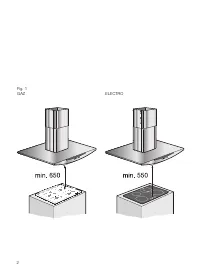
Page 2 - ELECTRO
Page 3 - When the extractor hood is operated
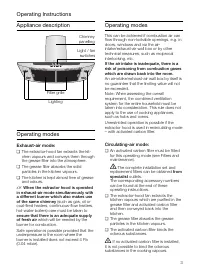
3 Appliance description Operating Instructions Operating modes Operating modes Exhaust-air mode: ❑ The extractor-hood fan extracts the kit-chen vapours and conveys them throughthe grease filter into the atmosphere. ❑ The grease filter absorbs the solid particles in the kitchen vapours. ❑ The kitchen...
Page 4 - Before using for the first time; Repairs
4 Before using for the first time Important notes: ❑ The Instructions for Use apply to severalversions of this appliance. Accordingly,you may find descriptions of individualfeatures that do not apply to your specific appliance. ❑ This extractor hood complies with all relevant safety regulations. Rep...
Page 5 - Operating procedure
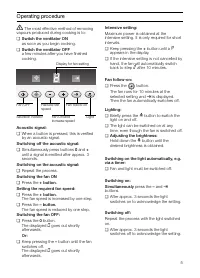
5 Intensive setting: Maximum power is obtained at the intensive setting. It is only required for shortintervals. ❑ Keep pressing the + button until a ç appears in the display. ❑ If the intensive setting is not cancelled byhand, the fan will automatically switchback to step } after 10 minutes. Fan fo...
Page 6 - Filters and maintenance
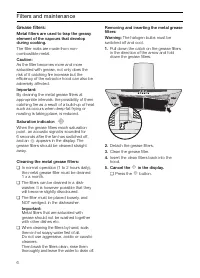
6 Grease filters: Metal filters are used to trap the greasyelement of the vapours that developduring cooking. The filter mats are made from non-combustible metal. Caution: As the filter becomes more and more saturated with grease, not only does therisk of it catching fire increase but the efficiency...
Page 7 - Saturation indicator:; U b; J b; Replacing the activated carbon filter:; Activated carbon filter:; Inserting the filter:
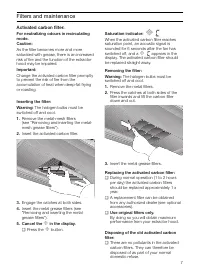
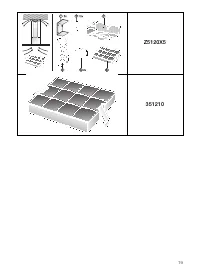
7 Saturation indicator: U b When the activated carbon filter reachessaturation point, an acoustic signal is sounded for 6 seconds after the fan hasswitched off, and a J b appears in the display. The activated carbon filter shouldbe replaced straight away. Removing the filter: Warning: The halogen bu...
Page 8 - Cleaning and care; Stainless steel surfaces:; Replacing the light bulbs
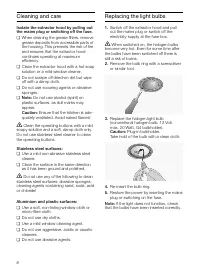
8 Cleaning and care Isolate the extractor hood by pulling outthe mains plug or switching off the fuse. ❑ When cleaning the grease filters, removegrease deposits from accessible parts ofthe housing. This prevents the risk of fireand ensures that the extractor hoodcontinues operating at maximum effici...
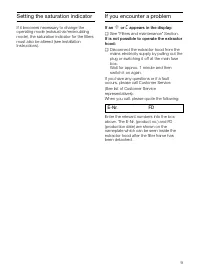
Page 9 - If you encounter a problem; If an; When you call, please quote the following:; Setting the saturation indicator
9 If you encounter a problem If an J or ã appears in the display: ❑ See "Filters and maintenance" Section. If is not possible to operate the extractorhood: ❑ Disconnect the extractor hood from themains electricity supply by pulling out theplug or switching it off at the main fusebox.Wait for...
Page 11 - Prior to installation; Exhaust air should neither be directed; which will be needed by the
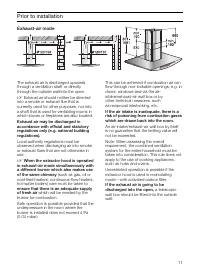
11 Prior to installation The exhaust air is discharged upwardsthrough a ventilation shaft or directlythrough the outside wall into the open. D Exhaust air should neither be directed into a smoke or exhaust flue that iscurrently used for other purposes, nor intoa shaft that is used for ventilating ro...
Page 12 - Connecting a
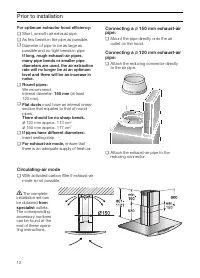
12 Prior to installation For optimum extractor hood efficiency: ❑ Short, smooth air exhaust pipe. ❑ As few bends in the pipe as possible. ❑ Diameter of pipe to be as large aspossible and no tight bends in pipe. If long, rough exhaust-air pipes,many pipe bends or smaller pipe diameters are used, the ...
Page 13 - Preparing the ceiling; Electrical connection; The extractor hood
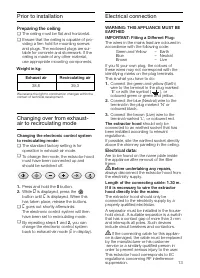
Prior to installation Preparing the ceiling ❑ The ceiling must be flat and horizontal. ❑ Ensure that the ceiling is capable of pro-viding a firm hold for mounting screwsand plugs. The enclosed plugs are sui-table for concrete and stonework. If theceiling is made of any other material,use appropriate...
Page 14 - Installation; is designed to be
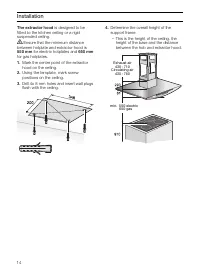
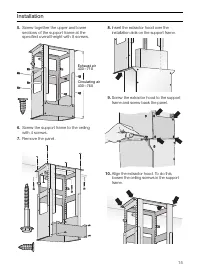
14 Installation The extractor hood is designed to be fitted to the kitchen ceiling or a rigid suspended ceiling. Ensure that the minimum distance between hotplate and extractor hood is 550 mm for electric hotplates and 650 mm for gas hotplates. 1. Mark the centre point of the extractorhood on the ce...
Page 16 - Carefully remove the protective foil.
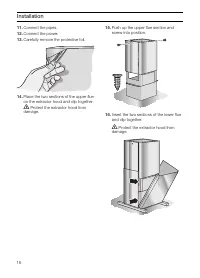
16 Installation 11. Connect the pipes. 12. Connect the power. 13. Carefully remove the protective foil. 15. Push up the upper flue section andscrew into position. 16. Insert the two sections of the lower flueand clip together. Protect the extractor hood from damage. 14. Place the two sections of the...
Page 17 - Notes