Liebherr SWTNES4265RH - User Manual
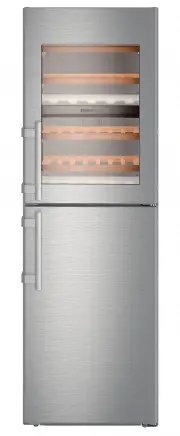
Liebherr SWTNES4265RH Freezer – User Manual, read for free online in PDF format. We hope this helps you resolve any issues you may have. If you have further questions, please contact us through the contact form.


Table of Contents:
- Page 2 – Contents; ment; Appliance range of use; or a normal household setting. Only drinks such; Appliance at a glance
- Page 3 – ance
- Page 4 – Example of food arrangement; Danger of tipping and falling:; General safety information
- Page 5 – Operating structure; Controls and displays
- Page 6 – Appliance options; Transporting the appliance; Putting into operation
- Page 7 – Installing the appliance; Reversing the door
- Page 8 – Remove the upper soft stop mechanism
- Page 9 – Remove the bottom soft stop mechanism
- Page 11 – Moving the upper bearing parts to the
- Page 13 – 0 Moving the handles to the other side
- Page 15 – 5 Fit the bottom soft stop mechanism
- Page 16 – Water connection
- Page 17 – Insertion into a row of kitchen units
- Page 18 – Disposing of packaging; Connecting the appliance; Switching on the appliance
- Page 19 – Setting the clean ventilation grid; Changing the temperature unit; Switching on the child safety device; Control
- Page 20 – Freezer compartment
- Page 22 – Setting the temperature of the wine
- Page 23 – Maintenance
- Page 25 – Cleaning the IceMaker; Customer service; Malfunctions
- Page 26 – Messages
- Page 27 – Switching the appliance off; Switch off the appliance from the menu; Decommissioning
- Page 28 – Taking the appliance out of service; 0 Disposing of the appliance; Disposing of the appliance
Operating and installation instructions
wine cooling cabinet
20190322
7088105 - 00
SWTNes / WFS 1151
"Loading the manual" means you need to wait until the file loads and becomes available for online reading. Some manuals are very large, and the time they take to appear depends on your internet speed.
Was this manual helpful?
About this manual
- Brand
- Liebherr
- Model
- SWTNES4265RH
- Document type
- User Manual
- Category
- Freezer
- Language(s)
- English
- Pages
- 30
- File size
- 2 MB
- Format
Summary
Contents 1 Appliance at a glance............................................ 2 1.1 Description of appliance and equipment.................. 2 1.2 Appliance range of use............................................. 2 1.3 Conformity................................................................ 3 1.4...
freezer compartment. This includes, for example, using - in staff kitchens, bed and breakfast establish- ments, - by guests in country houses, hotels, motels and other accommodation, - for catering and similar services in the whole- sale trade. All other types of use are not permitted.Foreseeable mi...
1.7 Example of food arrangement Fig. 3 1.8 Smart device The appliance is ready for integration into a smart home and for extended services. Other options can be selected with a SmartDeviceBox. This is acti- vated via the MyLiebherr customer portal. You will find more information about availability a...
Ask a question
Related manuals
More Liebherr Freezers models


Other Liebherr appliances
 Liebherr 24 Manual
 Liebherr 30 Manual
- Liebherr 36 Manual
- Liebherr 60 Manual
 Liebherr 7080 359-02 Manual
 Liebherr 7081 157-00 Manual
 Liebherr 7082 Manual
 Liebherr 7082 135-00 Manual
 Liebherr 7082 213-00 Manual
 Liebherr 7082 218-03 Manual
 Liebherr 7082 224-00 Manual
 Liebherr 7084 750-00 Manual
 Liebherr 180613 7085462-00 Manual
 Liebherr 7085446-01 Manual
 Liebherr 7085592-01 Manual
 Liebherr C 4023 User Manual
 Liebherr C5740IM User Manual