Page 2 - After you have finished reading the instructions, keep this man-; Contents
Thank you for buying this Pioneer product. Please read through these operating instructions so you will know how to operate your model properly. After you have finished reading the instructions, keep this man- ual in a safe place for future reference. Before You Start About this unit 4 About this ma...
Page 3 - English
When playing back an MP3/WMAdisc 26 When playing back a WAV disc 26 Scrolling text information in the display 26 Multi-CDPlayer Playing a CD 27 50-disc multi-CD player 27 Introduction of advanced multi-CD player operation 28 Repeating play 28 Playing tracks in random order 28 Scanning CDs and tracks...
Page 4 - About this unit; CAUTION; About this manual; In case of trouble
If you want to dispose this product, do not mixit with general household waste. There is a se-parate collection system for used electronicproducts in accordance with legislation that re-quires proper treatment, recovery and recy-cling. Private households in the 25 member states of the EU, in Switzer...
Page 5 - Features; About WMA; Visit our website
Features CD playback Music CD/CD-R/CD-RW playback is possible. MP3 file playback You can play back MP3 files recorded on CD- ROM/CD-R/CD-RW (ISO9660 Level 1/Level 2 standard recordings). ! Supply of this product only conveys a li- cense for private, non-commercial use and does not convey a license n...
Page 6 - Removing the front panel
Protecting your unit from theft The front panel can be detached from the head unit and stored in the provided protective case to prevent theft. Important ! Never use force or grip the display and thebuttons too tightly when removing or attach-ing. ! Avoid subjecting the front panel to excessiveshock...
Page 8 - Optional remote control; What
Optional remote control The steering remote control CD-SR100 is sold separately. Operation is the same as when using the but- tons on the head unit. See the explanation of the head unit about the operation of each but- ton with the exception of ATT , which is ex- plained below. e ATT button Press to...
Page 9 - Turning the unit on; Selecting a source; Turning the unit off
Turning the unit on % Press SOURCE to turn the unit on. When you select a source, the unit is turned on. Selecting a source You can select a source you want to listen to. To switch to the built-in CD player, load a disc in the unit (refer to page 17). % Press SOURCE to select a source. Press SOURCE ...
Page 10 - Listening to the radio; Tuner
Listening to the radio 3 2 1 4 These are the basic steps necessary to operate the radio. More advanced tuner operation is explained starting on the next page. This unit s AF (alternative frequencies search) function can be turned on and off. AF should be off for normal tuning operation (refer to pag...
Page 13 - Introduction of RDS operation; Switching the RDS display; Selecting alternative
Introduction of RDS operation 4 3 2 1 RDS (radio data system) is a system for provid- ing information along with FM broadcasts. This inaudible information provides such fea- tures as program service name, program type, traffic announcement standby and automatic tuning, and is intended to aid radio l...
Page 14 - Using PI Seek; Limiting stations to regional; Receiving traffic
3 Press b to turn AF off. Press b and AF :OFF is displayed. Notes ! Only RDS stations are tuned in during seektuning or BSM when AF is on. ! When you recall a preset station, the tunermay update the preset station with a new fre-quency from the station s AF list. (This is only available when using p...
Page 15 - Receiving PTY alarm; RDS
1 Tune in a TP or enhanced other net- work s TP station. When you are tuned into a TP or enhanced other network s TP station the TP indicator will light. 2 Press TA to turn traffic announcement standby on. Press TA and TA :ON appears in the display. The tuner will stand-by for traffic announce- ment...
Page 17 - Playing a CD
Playing a CD 2 1 These are the basic steps necessary to play a CD with your built-in CD player. More ad- vanced CD operation is explained starting on the next page. 1 Tracknumber indicator Shows the track currently playing. 2 Play time indicator Shows the elapsed playing time of the cur- rent track....
Page 18 - Repeating play; Playing tracks in random order
Introduction of advanced built-in CD player operation 2 1 1 Function display Shows the function status. 2 RPT indicator Shows when repeat play is turned on. % Press FUNCTION to display the function names. Press FUNCTION repeatedly to switch be- tween the following functions: RPT (repeat play) RDM (r...
Page 19 - Pausing CD playback
3 When you find the desired trackpress b to turn scan play off. SCAN :OFF appears in the display. The track will continue to play. # If the display has automatically returned to the playback display, select SCAN again by press- ing FUNCTION . Note After scanning of a CD is finished, normal play-back...
Page 20 - Using disc title functions; Entering disc titles
Searching every 10 tracks in the current disc If a disc contains over 10 tracks, you can search every 10 tracks. When a disc contains many tracks, you can roughly search for the track you want to play. 1 Select the search method ROUGH. Refer to Selecting the search method on the previous page. 2 Pre...
Page 21 - Displaying disc titles; Using CD TEXT functions; Displaying text information on; Scrolling text information in
Displaying disc titles You can display the text information of any disc that has had a disc title entered. % Press DISPLAY. Press DISPLAY repeatedly to switch between the following settings: Play time DISC TITLE (disc title) When you select DISC TITLE , the title of the currently playing disc is sho...
Page 23 - Introduction of advanced
! If you cannot insert a disc completely or ifafter you insert a disc the disc does not play,check that the label side of the disc is up.Press EJECT to eject the disc, and check the disc for damage before inserting it again. ! Playback is carried out in order of file number.Folders are skipped if th...
Page 24 - Scanning folders and tracks
1 Press FUNCTION to select RPT. Press FUNCTION until RPT appears in the dis- play. 2 Press c or d to select the repeat range. Press c or d until the desired repeat range ap- pears in the display. ! FLD Repeat the current folder ! TRK Repeat just the current track ! DSC Repeat all tracks Notes ! If y...
Page 25 - Searching every 10 tracks in
Pausing MP3/WMA/WAV playback Pause lets you temporarily stop playback of the MP3/WMA/WAV. 1 Press FUNCTION to select PAUSE. Press FUNCTION until PAUSE appears in the display. 2 Press a to turn pause on. PAUSE:ON appears in the display. Play of the current track pauses. 3 Press b to turn pause off. P...
Page 26 - Displaying text information; When playing back an MP3/; Scrolling text information
# If the current folder contains less than 10 tracks, pressing and holding c recalls the first track of the folder. Also, if the remaining numberof tracks after searching every 10 tracks is lessthan 10, pressing and holding c recalls the first track of the folder. Displaying text information on MP3/...
Page 29 - Scanning CDs and tracks; Creating a playlist with ITS
Note If you turn random play on during DSC and then return to the playback display, DRDM appears in the display. Scanning CDs and tracks While you are using DSC , the beginning of each track on the selected disc plays for about 10 seconds. When you are using MCD , the be- ginning of the first track ...
Page 30 - Erasing a track from your ITS; Erasing a CD from your ITS playlist
TITLE IN (disc title input) ITS (ITS program- ming) 3 Select the desired trackby pressing c or d . 4 Press a to store the currently playing trackin the playlist. ITS IN is displayed briefly and the currently playing selection is added to your playlist. The display then shows ITS again. 5 Press BAND ...
Page 32 - Using compression and
When you select DISC TITLE , the title of the currently playing disc is shown in the display. # If no title has been entered for the currently playing disc, NO DISC TITLE is displayed. Using CD TEXT functions You can use these functions only with a CD TEXT compatible multi-CD player. Some discs have...
Page 33 - Using balance adjustment; Audio Adjustments
Introduction of audio adjustments 1 2 3 4 5 6 1 Audio display Shows the audio adjustment status. 2 CUSTOM indicator Shows when custom equalizer curve is cur- rently selected. 3 SW indicator Shows when the subwoofer output is turned on. 4 Bass booster indicator Shows when the bass boost is in effect....
Page 34 - Using the equalizer; Recalling equalizer curves; Adjusting equalizer curves
3 Press c or d to adjust left/right speaker balance. When you press c or d , BAL : 0 is displayed. Each press of c or d moves the left/right speaker balance towards the left or the right. BAL : L15 BAL : R15 is displayed as the left/ right speaker balance moves from left to right. Using the equalize...
Page 35 - Fine-adjusting equalizer curve; Adjusting loudness
Fine-adjusting equalizer curve You can adjust the center frequency and the Q factor (curve characteristics) of each currently selected curve band ( EQ-L / EQ-M / EQ-H ). Level (dB) Center frequency Q=2N Q=2W Frequency (Hz) 1 Press AUDIO and hold until frequency and the Q factor (e.g., F- 80:Q1W) app...
Page 36 - Adjusting subwoofer settings; Using the high pass filter
3 Press c or d to select the phase of sub- woofer output. Press c to select reverse phase and REV ap- pears in the display. Press d to select normal phase and NOR appears in the display. Adjusting subwoofer settings When the subwoofer output is on, you can ad- just the cut-off frequency and the outp...
Page 37 - Adjusting source levels
Front image enhancer (F.I.E.) The F.I.E. (Front Image Enhancer) function is a simple method of enhancing front imaging by cutting mid- and high-range frequency output from the rear speakers, limiting their output to low-range frequencies. You can select the fre- quency you want to cut. Precaution Wh...
Page 38 - Adjusting initial settings; Setting the FM tuning step; Initial Settings
Adjusting initial settings 1 Using the initial settings, you can customize various system settings to achieve optimal per- formance from this unit. 1 Function display Shows the function status. 1 Press SOURCE and hold until the unit turns off. 2 Press SOURCE and hold again until function name appear...
Page 39 - Saving the battery
2 Press a or b to turn AUX1/AUX2 on or off. Pressing a or b will turn AUX on or off and that status will be displayed (e.g., AUX1 :ON ). Setting the rear output and subwoofer controller This unit s rear output (rear speaker leads out- put and RCA rear output) can be used for full- range speaker ( R-...
Page 40 - Using the AUX source; About; Selecting AUX as the source; Setting the AUX title; Other Functions
Using the AUX source This unit can control up to two auxiliary equip- ments such as VCR or portable devices (sold separately). When connected, auxiliary equip- ments are automatically read in as AUX sources and assigned to AUX1 or AUX2 . The relationship between AUX1 and AUX2 sources is explained be...
Page 41 - Sound muting; CD player and care
Understanding built-in CD player error messages When you contact your dealer or your nearest Pioneer Service Center, be sure to record the error message. Message Cause Action ERROR-11, 12, 17, 30 Dirty disc Clean disc. ERROR-11, 12, 17, 30 Scratched disc Replace disc. ERROR-15 The inserted disc does...
Page 43 - MP3 additional information; Additional Information
! The maximum number of characters which can be displayed for a folder name is 64. ! In case of files recorded according to the Romeo file system, only the first 64 charac- ters can be displayed. ! When playing discs with MP3/WMA/WAV files and audio data (CD-DA) such as CD- EXTRA and MIXED-MODE CDs,...
Page 44 - WAV additional information; About folders and MP3/
WAV additional information ! This unit plays back WAV files encoded in Linear PCM (LPCM) format or MS ADPCM format. ! You can only play back WAV files in the fre- quencies 16, 22.05, 24, 32, 44.1 and 48 kHz (LPCM), or 22.05 and 44.1 kHz (MS ADPCM). The sampling frequency shown in the display may be ...
Page 45 - Terms
Terms Bit rate This expresses data volume per second, or bps (bits per second) units. The higher the rate, the more information is available to reproduce the sound. Using the same encoding method (such as MP3), the higher the rate, the better the sound. ID3 tag This is a method of embedding track-re...
Page 47 - Specifications
Specifications General Power source ............................. 14.4 V DC (10.8 15.1 V al- lowable) Grounding system ................... Negative type Max. current consumption ..................................................... 10.0 A Dimensions (W × H× D): DIN Chassis ..................... 178 ...
Page 48 - para que pueda dar el mejor uso posible a su modelo.; Contenido
Gracias por haber comprado este producto Pioneer. Lea con detenimiento estas instrucciones sobre el funcionamiento del aparato, para que pueda dar el mejor uso posible a su modelo. Una vez que las haya leído, guarde este manual en un lugar seguro para consultarlo en el futuro. Antes de comenzar Acer...
Page 49 - Español
Al reproducir un disco MP3/WMA 75 Al reproducir un disco WAV 75 Desplazamiento de información de texto en el display 76 Reproductor de CDmúltiple Reproducción de un CD 77 Reproductor de CD múltiple de 50 discos 77 Introducción a las funciones avanzadas del reproductor de CD múltiple 78 Repetición de...
Page 51 - Acerca de esta unidad; PRECAUCIÓN; Acerca de este manual
Si desea deshacerse de este producto, no lomezcle con los residuos generales de suhogar. De conformidad con la legislación vi-gente, existe un sistema de recogida distintopara los productos electrónicos que requierenun procedimiento adecuado de tratamiento,recuperación y reciclado. Las viviendas pri...
Page 52 - En caso de problemas; Acerca de WMA; Antes de comenzar
Recomendamos que se familiarice con las funciones y su operación, leyendo el manual antes de comenzar a usar esta unidad. Es par- ticularmente importante que lea y tenga en cuenta los mensajes de ADVERTENCIA y PRECAUCIÓN en este manual. En caso de problemas En caso de que este producto no funcione c...
Page 53 - Extracción de la carátula
! Es posible que ocurra un pequeño retardo aliniciar la reproducción de ficheros WMA codi-ficados con datos de imagen. Visite nuestro sitio Web Visítenos en el siguiente sitio: ! Registre su producto. Conservaremos los datos de su compra archivados para que pueda consultar esta información en caso d...
Page 55 - Mando a distancia opcional; Qué es cada cosa
d Botones a / b / c / d Presione estos botones para utilizar los con- troles de sintonización por búsqueda ma- nual, avance rápido, retroceso y búsqueda de pista. También se usan para controlar las funciones. Mando a distancia opcional El mando a distancia de volante CD-SR100 se vende por separado. ...
Page 56 - Encendido de la unidad; Selección de una fuente; Apagado de la unidad; Encendido y apagado
Encendido de la unidad % Presione SOURCE para encender la uni- dad. Cuando se selecciona una fuente, la unidad se enciende. Selección de una fuente Puede seleccionar una fuente que desee escu- char. Para cambiar al reproductor de CD incor- porado, cargue un disco en la unidad (consulte la página 64)...
Page 57 - Para escuchar la radio; Sintonizador
Para escuchar la radio 3 2 1 4 A continuación se indican los pasos básicos necesarios para hacer funcionar la radio. En la página siguiente se explican las funciones más avanzadas del sintonizador y cómo utili- zarlas. Se puede activar y desactivar la función AF (búsqueda de frecuencias alternativas...
Page 60 - Cambio de la visualización
Introducción a la operación RDS 4 3 2 1 RDS (sistema de datos de radio) es un sistema que ofrece información junto con las transmi- siones FM. Esta información no audible brinda funciones tales como nombre del servicio de programa, tipo de programa, espera por anun- cio de tráfico y sintonización au...
Page 61 - Uso de la búsqueda PI; Limitación de las emisoras para
Selección de frecuencias alternativas Si está escuchando una transmisión y la re- cepción se debilita o se producen otros proble- mas, la unidad buscará automáticamente una emisora diferente en la misma red que esté transmitiendo una señal más fuerte. ! El ajuste predeterminado para la función AF es...
Page 62 - Recepción de anuncios de
Notas ! La programación regional y las redes regiona-les se organizan de distinta manera según elpaís (es decir, pueden cambiar de acuerdocon la hora, el estado o la provincia de que setrate, o el área de transmisión). ! El número de presintonía puede desaparecerdel display si se sintoniza una emiso...
Page 63 - Lista PTY
Recepción de transmisiones de alarma PTY La alarma PTY es un código PTY especial para anuncios de emergencias tales como un de- sastre natural. Cuando el sintonizador recibe el código de alarma de radio, ALARM aparece en el display y el volumen se ajusta según el volumen de TA. Cuando la emisora dej...
Page 64 - Reproducción de un CD; Reproductor de CD
Reproducción de un CD 2 1 A continuación se indican los pasos básicos necesarios para reproducir un CD con el re- productor de CD incorporado. En la página si- guiente se explican las funciones más avanzadas del reproductor y cómo utilizarlas. 1 Indicador de número de pista Muestra la pista que se e...
Page 67 - Ingreso de títulos de discos
Selección del método de búsqueda Se puede cambiar el método de búsqueda entre las opciones de avance rápido/retroceso y búsqueda cada 10 pistas. 1 Presione FUNCTION para seleccionar FF/REV. Presione FUNCTION hasta que FF/REV apa- rezca en el display. # Si se seleccionó anteriormente el método de bús...
Page 68 - Visualización de los títulos; Uso de las funciones CD TEXT; Visualización de información
4 Presione d para mover el cursor a la próxima posición de carácter. Cuando se visualice la letra deseada, presione d para mover el cursor a la próxima posición y seleccione la próxima letra. Presione c para mover el cursor hacia atrás en el display. 5 Mueva el cursor a la última posición presionand...
Page 70 - Reproducción de ficheros
Reproducción de ficheros MP3/WMA/WAV 5 4 3 2 1 A continuación se indican los pasos básicos necesarios para reproducir un MP3/WMA/ WAV con el reproductor de CD incorporado. En la página 72 se explican las funciones más avanzadas y cómo utilizarlas. 1 Indicador de número de pista Muestra la pista (fic...
Page 72 - Reproducción de las pistas
Introducción a las funciones avanzadas del reproductor de CD incorporado (MP3/ WMA/WAV) 2 1 1 Visualización de función Muestra el estado de la función. 2 Indicador RPT Aparece cuando se selecciona la gama de repetición para la pista (fichero) actual. % Presione FUNCTION para visualizar los nombres d...
Page 73 - Exploración de carpetas y; Pausa de la reproducción
2 Presione FUNCTION para seleccionar RDM. Presione FUNCTION hasta que RDM aparezca en el display. 3 Presione a para activar la reproducción aleatoria. RDM :ON aparece en el display. Las pistas se reproducirán en un orden aleatorio en la gama de repetición FLD o DSC seleccionada con anterioridad. 4 P...
Page 74 - Búsqueda cada 10 pistas en
3 Presione b para desactivar la pausa. PAUSE:OFF aparece en el display. La repro- ducción continuará desde el mismo punto donde la pausa ha sido activada. Uso de la compresión y BMX El uso de las funciones COMP (compresión) y BMX le permiten ajustar la calidad de repro- ducción de sonido de este rep...
Page 75 - Al reproducir un disco MP3/WMA; Al reproducir un disco WAV
# Si la carpeta actual tiene menos de 10 pistas, al presionar c y mantener presionado se llama la primera pista de la carpeta. También si despuésde realizar una búsqueda cada 10 pistas, quedanmenos de 10 pistas, al presionar c y mantener presionado se llama la primera pista de lacarpeta. Visualizaci...
Page 79 - Exploración de CD y pistas
2 Presione FUNCTION para seleccionar RDM. Presione FUNCTION hasta que RDM aparezca en el display. 3 Presione a para activar la reproducción aleatoria. RDM :ON aparece en el display. Las pistas se reproducirán en un orden aleatorio en la gama de repetición MCD o DSC seleccionada con anterioridad. 4 P...
Page 80 - Creación de una lista de; Reproducción de la lista de
3 Presione b para desactivar la pausa. PAUSE:OFF aparece en el display. La repro- ducción continuará desde el mismo punto donde la pausa ha sido activada. Uso de listas de reproducción ITS La función ITS (selección instantánea de pista) le permite crear una lista de reproduc- ción de sus pistas favo...
Page 81 - Borrado de una pista de la lista; Borrado de un CD de la lista de
3 Presione a para activar la reproducción ITS. ITS-P:ON aparece en el display. La reproduc- ción de las pistas de la lista comienza en la gama de repetición MCD o DSC seleccionada con anterioridad. # Si no hay pistas programadas en la gama ac- tual de reproducción ITS, se visualiza EMPTY . 4 Presion...
Page 83 - Desplazamiento de información; Uso de la compresión y del
Uso de las funciones CD TEXT Estas funciones sólo se pueden usar con un re- productor de CD múltiple compatible con CD TEXT. Algunos discos contienen información que viene codificada de fábrica. Estos discos pue- den contener información tal como el título del CD, el título de la pista, el nombre de...
Page 84 - Uso del ajuste del balance; Ajustes de audio
Introducción a los ajustes de audio 1 2 3 4 5 6 1 Visualización de audio Muestra el estado de los ajustes de audio. 2 Indicador CUSTOM Aparece cuando se selecciona la curva de ecualización personalizada. 3 Indicador SW Aparece cuando la salida de subgraves está activada. 4 Indicador Bass booster Apa...
Page 85 - Uso del ecualizador; Llamada de las curvas de; Ajuste de las curvas de
# Cuando el ajuste de la salida posterior es R-SP :S/W , no se puede ajustar el balance entre los altavoces delanteros/traseros. Consulte Ajuste de la salida posterior y del controlador de subgra-ves en la página 91. 3 Presione c o d para ajustar el balance entre los altavoces izquierdos/derechos. C...
Page 86 - Ajuste preciso de la curva de; Ajuste de la sonoridad
Nota Si realiza ajustes, la curva CUSTOM se actualiza- rá. Ajuste preciso de la curva de ecualización Se puede ajustar la frecuencia central y el fac- tor Q (características de las curvas) de cada banda de curvas seleccionada ( EQ-L / EQ-M / EQ-H ). Nivel (dB) Frecuencia central Q=2N Q=2W Frecuencia...
Page 87 - Uso de la salida de subgraves; Configuración de los ajustes de; Uso del filtro de paso alto
Uso de la salida de subgraves Esta unidad está equipada con una salida de subgraves que se puede activar o desactivar. 1 Presione SW para seleccionar SUB W. SUB W aparece en el display. # También puede seleccionar el menú de ajus- tes de subgraves presionando AUDIO en la uni- dad. # Cuando el ajuste...
Page 88 - Intensificación de los graves; Mejora de imagen frontal
3 Presione c o d para seleccionar la fre- cuencia de corte. Cada vez que se presiona c o d , se selecciona la frecuencia de corte en el siguiente orden: 50 63 80 100 125 (Hz) Sólo las frecuencias más altas que aquéllas en la gama seleccionada se generan a través de los altavoces delanteros o trasero...
Page 91 - Ajuste de la salida posterior y; Ajustes iniciales
2 Presione a o b para activar o desacti- var A-PI. Al presionar a o b se activará o desactivará A-PI y se visualizará en el display el estado co- rrespondiente (p. ej., A-PI :ON ). Cambio del ajuste de un equipo auxiliar Los equipos auxiliares conectados a esta uni- dad se pueden activar por separad...
Page 93 - Uso de la fuente AUX; Acerca de; Fuente; Selección de AUX como la fuente; Ajuste del título del equipo; Otras funciones
Uso de la fuente AUX Esta unidad puede controlar hasta dos equi- pos auxiliares, como VCR o dispositivos portá- tiles (se venden por separado). Cuando están conectados, los equipos auxiliares son identifi- cados automáticamente como fuentes AUX y se asignan a AUX1 o AUX2 . La relación entre las fuen...
Page 97 - Información adicional sobre MP3; Información adicional
! Esta unidad puede no funcionar correcta- mente, dependiendo de la aplicación utili- zada para codificar ficheros WMA. ! Según la versión de Windows Media Pla- yer utilizada para codificar los ficheros WMA, es posible que no se visualicen co- rrectamente los nombres de álbumes y demás información d...
Page 98 - Acerca de las carpetas y los
! La calidad del sonido de los ficheros MP3 suele ser mejor cuando se utilizan velocida- des de grabación superiores. Esta unidad puede reproducir grabaciones con veloci- dades de 8 kbps a 320 kbps, pero para poder disfrutar de una determinada calidad de sonido, se recomienda utilizar sólo los disco...
Page 100 - Glosario
Glosario Etiqueta ID3 Es un método para incorporar información re- lacionada con las pistas en un fichero MP3. Esta información incorporada puede consistir en el título de la pista, el nombre del artista, el título del álbum, el género musical, el año de producción, comentarios y otros datos. El con...
Page 102 - Especificaciones
Especificaciones Generales Fuente de alimentación ........ 14,4 V CC (10,8 15,1 V per- misible) Sistema de conexión a tierra ..................................................... Tipo negativo Consumo máximo de corriente ..................................................... 10,0 A Dimensiones (An × ...
Page 104 - PIONEER CORPORATION
PIONEER CORPORATION 4-1, MEGURO 1-CHOME, MEGURO-KU, TOKYO 153-8654, JAPAN PIONEER ELECTRONICS (USA) INC. P.O. Box 1540, Long Beach, California 90801-1540, U.S.A. TEL: (800) 421-1404 PIONEER EUROPE NV Haven 1087, Keetberglaan 1, B-9120 Melsele, Belgium TEL: (0) 3/570.05.11 PIONEER ELECTRONICS ASIACEN...


 Pioneer AVH-P3100DVD
Manual
Pioneer AVH-P3100DVD
Manual
 Pioneer AVH-P3200BT
Manual
Pioneer AVH-P3200BT
Manual
 Pioneer AVH-P3300BT
Manual
Pioneer AVH-P3300BT
Manual
 Pioneer AVH-P4000DVD
Manual
Pioneer AVH-P4000DVD
Manual
 Pioneer AVH-P4100DVD
Manual
Pioneer AVH-P4100DVD
Manual
 Pioneer AVH-P5000DVD
Manual
Pioneer AVH-P5000DVD
Manual
 Pioneer AVH-P5100DVD
Manual
Pioneer AVH-P5100DVD
Manual
 Pioneer AVH-P5200BT
Manual
Pioneer AVH-P5200BT
Manual
 Pioneer AVH-P6000DVD
Manual
Pioneer AVH-P6000DVD
Manual
 Pioneer AVH-P6500DVD
Manual
Pioneer AVH-P6500DVD
Manual
 Pioneer AVH-P6800DVD
Manual
Pioneer AVH-P6800DVD
Manual
 Pioneer AVH-P7500DVD
Manual
Pioneer AVH-P7500DVD
Manual
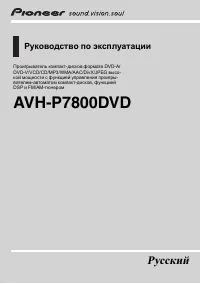 Pioneer AVH-P7800DVD
Manual
Pioneer AVH-P7800DVD
Manual
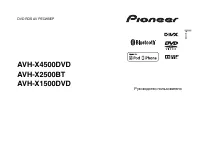 Pioneer AVH-X1500DVD
Manual
Pioneer AVH-X1500DVD
Manual
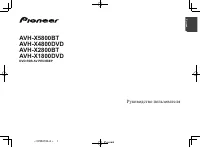 Pioneer AVH-X1800DVD
Manual
Pioneer AVH-X1800DVD
Manual
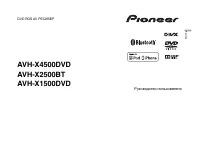 Pioneer AVH-X2500BT
Manual
Pioneer AVH-X2500BT
Manual
 Pioneer AVH-X2800BT
Manual
Pioneer AVH-X2800BT
Manual
 Pioneer AVH-X4800DVD
Manual
Pioneer AVH-X4800DVD
Manual
 Pioneer AVH-X5800BT
Manual
Pioneer AVH-X5800BT
Manual
 Pioneer AVH-X7500BT
Manual
Pioneer AVH-X7500BT
Manual