Page 2 - Contents; Before use
- 2 - Contents Before use Before use .............................................. 6 About GPS ....................................................8 Standard Accessories ........................... 9 Names and Functions of Main Parts ... 10 Cursor button ...............................................
Page 6 - Camera handling; Keep the camera away from excessive vibration, force,; Condensation (When the lens or the LCD monitor is fogged up)
- 6 - Before use Before use ■ Camera handling Keep the camera away from excessive vibration, force, or pressure. ● Avoid using the camera under the following conditions, which may damage the lens, LCD monitor, or camera body. This may also cause the camera to malfunction or prevent recording. •Dropp...
Page 7 - Always take a test shot first; be restricted even for the purpose of personal use.; Also refer to “Usage cautions and notes” (→186); screens provided in this manual.; Recording mode:; Available recording modes
- 7 - Before use ■ Always take a test shot first Before important events when you will use the camera (at weddings, for example), always take a test shot to make sure that pictures and sound record correctly. ■ No compensation for missed shots We cannot compensate for missed shots if technical probl...
Page 8 - About GPS; battery even if the camera is turned OFF.
- 8 - Before use About GPS ■ About the camera’s location name information Before using the camera, be sure to read “Licence Agreement for Place Name and Map Data”. (→190) ■ When [GPS Setting] is [ON], the GPS function works even if the camera is turned OFF. •Electromagnetic waves from the camera can...
Page 9 - Standard Accessories; camera was purchased.; Optional accessories; You can record or play back pictures on the built-in memory
- 9 - Standard Accessories Check that all the accessories are supplied before using the camera. ● The accessories and their shape will differ depending on the country or area where the camera was purchased. For details on the accessories, refer to Basic Operating Instructions. ● Battery Pack is indi...
Page 10 - Names and Functions of Main Parts
- 10 - Names and Functions of Main Parts ● The illustrations and screens in this manual may differ from the actual product. Mode dial (→25) Use this to select the recording mode. Flash (→66) Built-in GPS antenna (→128) Self-timer indicator (→70) / AF Assist Lamp (→103) Lens barrel Card/Battery door ...
Page 11 - Cursor button; socket
- 11 - Names and Functions of Main Parts Cursor button We recommend using the supplied hand strap to avoid dropping the camera. [HDMI] socket (→156, 158) [AV OUT/DIGITAL] socket (→15, 156, 165, 168) This socket is also used when charging the battery. [EXPOSURE] button (→73) In the recording mode: Op...
Page 12 - Touch operations; Touch
- 12 - Names and Functions of Main Parts Touch operations This camera’s touch screen senses pressure that is applied to the screen. Touch To “touch” is to press the touch screen and then pull the finger back again. Drag To “drag” is to touch and slide your finger across the touch screen surface. Tou...
Page 13 - Charging battery; Always charge before first use!; •Charge the battery while it is in the camera.; regardless of the camera ON/OFF switch setting.; About batteries that you can use with this unit; that a genuine Panasonic battery pack is used.
- 13 - Charging battery • Always use the dedicated AC adaptor (supplied), USB connection cable (supplied), and battery for this camera. Always charge before first use! (battery shipped uncharged) •Charge the battery while it is in the camera. Camera status Charge Turn off (also in [Sleep Mode] (→57)...
Page 14 - Inserting the battery; To remove battery; Remove battery from camera after use.
- 14 - Charging battery Inserting the battery To charge the battery, insert it into the camera. •Set the camera ON/OFF switch to OFF Slide to the release lever to the [OPEN] position and open the card/ battery door [OPEN] [LOCK] Release lever Insert the battery all the way •Make sure to insert the b...
Page 15 - Charging the battery; Set the camera ON/OFF switch to OFF; Charging the battery through the computer; computer specifications.
- 15 - Charging battery Charging the battery We recommend charging in a location where the ambient temperature is between 10 °C and 30 °C (50 °F to 86 °F) (same for the battery temperature). Set the camera ON/OFF switch to OFF ■ Charging the battery by connecting the camera to the electrical outlet ...
Page 16 - Charging lamp indications
- 16 - Charging battery ■ Charging lamp indications On: Charging in progress Off: Charging stops (After charging stops, disconnect the camera from the electrical outlet or your computer.) ■ Notes on charging time When using the AC adaptor (supplied) Charging time Approx. 260 min •The charging time i...
Page 17 - Guidelines for number of recordable pictures and operating time; or other functions are used frequently, or in colder climates.; Recording still pictures; Recording conditions by CIPA standard; •Using the supplied battery.
- 17 - Charging battery Guidelines for number of recordable pictures and operating time The number of recordable pictures or available operating time may vary according to surrounding environment and usage conditions. Figures may be reduced if flash, zoom, or other functions are used frequently, or ...
Page 18 - Recording motion pictures; Recording conditions; Viewing pictures
- 18 - Charging battery ■ Recording motion pictures [Rec Mode] [AVCHD] [MP4] [Rec Quality] [GPH] [PSH] [GFS] [FSH] [FHD] Available recording time ∗ 1 Approx. 55 min Approx. 65 min Approx. 70 min Actual available recording time ∗ 2 Approx. 30 min Approx. 35 min Approx. 40 min ● Recording conditions •...
Page 19 - Inserting and removing the card (optional); Slide to the release lever to the; To remove card
- 19 - Inserting and removing the card (optional) ● Keep the Memory Card out of reach of children to prevent swallowing. ● To remove the card, turn the camera off and wait until the LUMIX indicator on the LCD monitor goes off. (Failure to wait may cause the camera to malfunction and may damage the c...
Page 20 - Picture save destination
- 20 - Picture save destination (cards and built-in memory) Pictures will be saved to a card if one is inserted, or to the built-in memory if not. ■ Built-in memory (approx. 12 MB) ● You can store only still pictures. ● Pictures may be copied between cards and the built-in memory. (→127) ● The acces...
Page 21 - Displaying the picture recording capacity; or static electricity.
- 21 - Picture save destination (cards and built-in memory) Displaying the picture recording capacity Estimated remaining pictures or recording time capacity (press [DISP.] button to switch display) Displayed when no card is inserted (pictures will be saved to built-in memory) While the camera is ac...
Page 22 - capacity (and depending on recording conditions and type of card).; Recording picture capacity (still pictures); continuous recording is displayed on the screen.
- 22 - Picture save destination (cards and built-in memory) Recording capacity guidelines (pictures/recording time) The number of pictures you can take and the recording time vary in proportion to card capacity (and depending on recording conditions and type of card). ■ Recording picture capacity (s...
Page 23 - Setting the clock; Turn on the power; The power is turned on.; display order or time display; •To return to the previous screen,
- 23 - Setting the clock Turn on the power The power is turned on. If the language select screen is not displayed, proceed to step . Press [MENU/SET] while the message is displayedPress to select the language, and press [MENU/SET] The [Please set the clock] message appears. Press [MENU/SET]Press to ...
Page 24 - correcting time of day using the GPS function; To change time setting; •For details about how to set the menu (→51); Set the date and time; the screen of the camera.
- 24 - Setting the clock Press to select [Yes] and press [MENU/SET] if automatically correcting time of day using the GPS function •To manually set date and time → select [No]. •When you select automatic time adjustment using the GPS function, [GPS Setting] is set to [ON]. •For details about [Auto C...
Page 25 - Basics; Sequence of operations
- 25 - Basics Sequence of operations 1 Turn on the power 2 Set to 3 Set to the desired recording mode Align the mode dial correctly to the mode that you want to use. → [Intelligent Auto] Mode Take pictures with automatic settings. (→31) [Program AE] Mode Record pictures with your own settings. (→27)...
Page 26 - Aim the camera and shoot; Taking still pictures; Set to
- 26 - Sequence of operations 4 Aim the camera and shoot ■ Taking still pictures Press the shutter button halfway to focus Press and hold the shutter button to take the picture ■ Recording motion pictures Press the motion picture button to start recording Press the motion picture button again to fin...
Page 27 - Taking pictures with your own settings; If aperture and shutter speed are shown in red, you do
- 27 - Taking pictures with your own settings [Program AE] Mode Recording mode: ● If a warning is displayed about jitter, use [Stabilizer], a tripod, or [Selftimer]. ● If aperture and shutter speed are shown in red, you do not have appropriate exposure. You should either use the flash, change [Sensi...
Page 28 - First adjust focus according to subject; Return to desired composition; How to adjust focus
- 28 - When [AF Mode] is set to (1-area-focusing), focus on the AF area in the centre of the picture. If a subject you want to record is not in the centre, follow the steps below. First adjust focus according to subject Align the AF area with the subject Hold down halfway Focus display ( When focus ...
Page 29 - Touching the screen and recording
- 29 - Touching the screen and recording (Touch Shutter function) This function enables you to focus and record still pictures simply by touching the subjects that appear on the screen. Touch on the screen •The icon changes to , and you can now proceed with touch shutter recording. Touch the subject...
Page 30 - Touch the place where you want to set the focus and exposure
- 30 - Touching the screen and adjusting the focus and exposure (Touch AF/AE function) This function enables the focus and exposure to be set when you touch the subject displayed on the screen. •Perform these operations with the touch shutter function (→29) released. Touch the place where you want t...
Page 31 - Taking pictures with automatic settings; About flash
- 31 - Taking pictures with automatic settings [Intelligent Auto] Mode Recording mode: Set to ([Intelligent Auto] Mode) Take a picture Press halfway (press lightly to focus) Press fully (press the button all the way to record) Focus display ( When focus is aligned: illuminated When focus is not alig...
Page 32 - Taking pictures with automatic settings [Intelligent Auto] Mode; Automatic Scene Detection; The icon of; About Backlight Compensation; backlighting may not be detected correctly.); About the Happy colour setting; Settings
- 32 - Taking pictures with automatic settings [Intelligent Auto] Mode Automatic Scene Detection Camera reads scene when pointed at subject, and makes optimum settings automatically. The icon of scene detected Recognises people Recognises babies ∗ 1 Recognises landscapes Recognises night scenes and ...
Page 33 - movements of the subject to minimise the blur of the subject.; will not be identified.
- 33 - Taking pictures with automatic settings [Intelligent Auto] Mode [Motion Deblur] The camera automatically sets the optimum shutter speed in accordance with the movements of the subject to minimise the blur of the subject. ■ Settings Press [MENU/SET] Use cursor button to select [Rec] menu and p...
Page 35 - AF Tracking; exposure of the subject even when the subject is moving.; With touch screen operations; Touch the subject; •To release AF Tracking → Touch; With cursor button operations; •To cancel AF Tracking → Press again.; Align the AF Tracking frame with the subject, and then press; •To cancel AF Lock → Press .; Face Recognition will be inactive while using AF Tracking.
- 35 - Taking pictures with automatic settings [Intelligent Auto] Mode AF Tracking This function enables the camera to continue to focus on the subject and adjust the exposure of the subject even when the subject is moving. ■ With touch screen operations Perform these operations with the touch shutt...
Page 36 - menu
- 36 - Taking pictures with automatic settings [Intelligent Auto] Mode [Intelligent Auto] Mode restrictions Only the menu items which are displayed in the [Intelligent Auto] Mode can be set. The settings selected in the [Program AE] or other modes will reflect on the menu items in the [Setup] menu t...
Page 37 - Taking motion pictures; Press the motion picture button to; Press the motion picture button
- 37 - Taking motion pictures Recording mode: Press the motion picture button to start recording [Rec Mode] (→106)/[Rec Quality] (→107) Elapsed recording time Remaining recording time (approx.) ● Immediately release the motion picture button after pressing it. ● You can also use zoom while recording...
Page 38 - About the recording format for recording motion pictures; viewing on a large format TV or for saving to disc.; when uploading videos to the Internet.; About the compatibility of the recorded motion pictures; equipment that is compatible with AVCHD Progressive.
- 38 - Taking motion pictures ■ About the recording format for recording motion pictures This unit can record motion pictures in either AVCHD or MP4 formats. AVCHD: You can record high definition quality images with this format. It is suitable for viewing on a large format TV or for saving to disc. ...
Page 39 - Records a motion picture at your preferred settings.; Recording motion pictures in; • will be selected for nightscapes and other dark scenes.; Motion picture recording in other recording modes
- 39 - Taking motion pictures ■ Recording motion pictures in Records a motion picture at your preferred settings. •Aperture and shutter speed are automatically set. ■ Recording motion pictures in The camera automatically detects the scene to record motion pictures with optimal settings. When scene d...
Page 40 - Use a sufficiently charged battery.
- 40 - Taking motion pictures ● If the surrounding temperature is high, or a motion picture is recorded continuously, is displayed and recording may be stopped halfway through to protect the camera. (Only when [Rec Quality] is set to [GPH], [PSH], [GFS] or [FSH]) ● Use a sufficiently charged battery...
Page 41 - Press the shutter button fully during the motion picture; Burst function
- 41 - Taking motion pictures Recording still pictures while a motion picture is being recorded Still pictures can be recorded even while a motion picture is being recorded. Press the shutter button fully during the motion picture recording Still pictures are recorded with [Aspect Ratio] setting of ...
Page 42 - Viewing your pictures; Drag your finger across the screen, and select the picture to
- 42 - Viewing your pictures [Normal Play] ● It may not be possible to view pictures on this camera that were previously edited on a computer. ● If the REC/PLAY switch is moved from to while the power is on, the lens barrel will be retracted after approx. 15 seconds. ● This camera is compliant with ...
Page 43 - •The area can also be magnified by moving the zoom lever toward T.; Drag your finger over the screen to move the position of the; Playback zoom cannot be used during motion picture playback.; Viewing a list of pictures “Multi Playback”
- 43 - Viewing your pictures [Normal Play] Zooming in and viewing “Playback Zoom” Touch the area that you want to magnify Each time you touch an area, the camera magnifies the selected area by 2x, 4x, 8x, and 16x in succession. (The picture quality displayed becomes successively lower.) •The area ca...
Page 45 - Viewing motion pictures; Select a picture with the motion picture icon, and touch; •You can also press to play back motion pictures.; Operations during motion picture playback; Touch the screen to display the control panel.
- 45 - Viewing motion pictures This unit was designed to play motion pictures using the AVCHD, MP4 and QuickTime Motion JPEG formats. •Slide the REC/PLAY switch to . Select a picture with the motion picture icon, and touch Playback now starts. •You can also press to play back motion pictures. Motion...
Page 46 - You can also use the cursor button to perform playback operations.
- 46 - Viewing motion pictures ● You can also use the cursor button to perform playback operations. : Pause/play : Stop : Fast rewind (2 steps)/Single-frame rewind (while paused) : Fast forward (2 steps)/Single-frame forward (while paused) [MENU/SET]: Capturing still pictures from motion pictures (→...
Page 47 - Capturing still pictures from motion pictures; Save a scene from a motion picture as a still picture.; Display the picture that you want to capture as a still picture; original motion picture.
- 47 - Viewing motion pictures Capturing still pictures from motion pictures Save a scene from a motion picture as a still picture. Display the picture that you want to capture as a still picture by pausing a motion picture during playbackTouch •A confirmation screen is displayed. Select [Yes] with ...
Page 48 - Select a motion picture to be split and then touch; The original motion picture that was split does not
- 48 - Viewing motion pictures [Video Divide] A single motion picture can be split into 2 parts. This is convenient when you want to keep just the necessary scenes, or if you wish to delete unnecessary scenes to increase free space on your card, such as when travelling. Select a motion picture to be...
Page 49 - Deleting pictures; Press to delete displayed picture
- 49 - Deleting pictures ● Do not turn off the power during deletion. ● Use a sufficiently charged battery. ● Pictures cannot be deleted in the following cases: •Protected pictures •Card switch is in “LOCK” position. •Pictures not of DCF standard (→42) Press to delete displayed picture •A confirmati...
Page 50 - Use cursor button to select picture and; •You can select [All Delete Except Favorite]
- 50 - Deleting pictures Press to delete displayed picture Use to select [Delete Multi]/ [Delete All] and press [MENU/SET] ● [Delete Multi] Use cursor button to select picture and press [DISP.] button Picture selected •To cancel → Press [DISP.] button again. •To execute → Press [MENU/SET]. •You can ...
Page 51 - Setting the menu; Use cursor button to select a; Menu selection screen
- 51 - Setting the menu Press [MENU/SET] The menu selection screen is displayed. Use cursor button to select a menu, and then press [MENU/SET] •The menu type can also be selected by touch operations. Use to select the menu item, and then press [MENU/SET] Menu items Pages (The pages can also be selec...
Page 52 - Menu type; changing of the beep sounds.
- 52 - Setting the menu Menu type [Rec] menu (→95) (Recording mode only) •You can perform settings such as tones, Sensitivity, Aspect Ratio, and Picture Size. [Motion Picture] menu (→106) (Recording mode only) •You can select the recording mode and picture quality and other settings. [GPS] menu (→12...
Page 53 - Using Quick menu; •The menu items and setting items that are; Press to select the settings
- 53 - Setting the menu Using Quick menu During recording, you can easily call some of the menu items and set them. Press [Q.MENU] button Press to select a menu item •The menu items and setting items that are displayed differ depending on the recording mode. Press to select the settings Press [MENU/...
Page 55 - Item
- 55 - Using the [Setup] menu Item Settings, notes [Volume] Adjust volume of sound from speakers (7 levels). [0] / [1] / [2] / [3] / [4] / [5] / [6] •Cannot be used to adjust TV speaker volume when connected to TV. [Cust.Set Mem.] Register settings on current camera. (→85) [C1] / [C2-1] / [C2-2] / [...
Page 62 - Changing recording information display; In Recording Mode; You can only turn on and turn off the display.; Histogram; Displays distribution of brightness in picture – e.g. if the
- 62 - Changing recording information display Application (Record) Change between different LCD monitor displays, such as Histograms. Press [DISP.] button to change display ● In Recording Mode Recording information ∗ 1 Motion picture recording information ∗ 1, ∗ 2 No display Guide lines ∗ 1, ∗ 3 ● I...
Page 63 - Using Zoom; Adjust the focus after adjusting the zoom.
- 63 - Using Zoom Recording mode: ● Adjust the focus after adjusting the zoom. ● Do not touch the lens barrel during zooming. ● The zoom ratio and the zoom bar displayed on the screen are estimates. ● The camera may make a rattling noise and vibrate when the zoom lever is operated - this is not a ma...
Page 64 - Using the zoom by performing touch operations; The zoom bar appears on the screen.; Touch the T or W edge of the zoom bar on the screen; Fast zooming all the way to the T end
- 64 - Using Zoom Using the zoom by performing touch operations Touch The zoom bar appears on the screen. Touch the T or W edge of the zoom bar on the screen Fast zooming all the way to the T end ∗ Fast zooming Fast zooming all the way to the W end ∗ Slow zooming ∗ When or is touched again while zoo...
Page 65 - Zoom types and use; Optical Zoom
- 65 - Using Zoom Zoom types and use The zoom ratio changes when the number of recording pixels is changed. ■ Optical Zoom Zooming in up to 20x is possible if pictures without have been selected by [Picture Size] on the [Rec] menu. (→95) ● Optical Zoom cannot be used in the following cases: •Scene M...
Page 66 - Taking pictures with flash; Flash settings may be changed when changing recording mode.
- 66 - Taking pictures with flash Recording mode: Press to display [Flash]Use cursor button to select the desired type and press [MENU/SET] Type, operations Uses ∗ 1 [Auto] • Automatically judges whether or not to flash Normal use [Auto/Red-Eye] ∗ 2 • Automatically judges whether or not to flash (re...
Page 67 - Available types in each mode; Shutter speeds for each flash mode
- 67 - Taking pictures with flash ■ Available types in each mode (○: Available, –: Not available, : Default setting) [Scene Mode] ○ ∗ 1 ○ ○ ○ ○ ○ – ○ ○ ○ ○ ○ – ○ ○ ○ ○ – – – ○ – – – – ○ ○ ○ ○ ○ – ○ ○ ○ ○ ○ – ○ – – – – ○ – – – – – ○ ○ ○ ○ ○ ○ ○ ○ ○ ○ ○ ○ ∗ 1 Set to , , or depending on the subject and...
Page 68 - Taking close-up pictures; Taking close-up pictures without standing; Focus range; Shortest recording distance
- 68 - Taking close-up pictures Recording mode: When you want to enlarge the subject, setting to [AF Macro] ( ) enables you to take pictures at an even closer distance than the normal focus range (up to 3 cm (0.098 feet) for max. W). Press to display [Macro Mode]Use cursor button to select [AF Macro...
Page 69 - or
- 69 - Taking close-up pictures [Macro Zoom] To take even larger images of the subject, setting to [Macro Zoom] enables the subject to appear even larger than when using [AF Macro]. Press to display [Macro Mode]Use cursor button to select [Macro Zoom] and press [MENU/SET]Adjust the Digital Zoom magn...
Page 70 - Taking pictures with self-timer; This function cannot be used in the following cases:
- 70 - Taking pictures with self-timer Recording mode: We recommend using a tripod. This is also effective for correcting jitter when pressing the shutter button, by setting the self-timer to 2 seconds. Press to display [Selftimer]Use cursor button to select time duration and press [MENU/SET]Take a ...
Page 71 - •If the picture is too dark, adjust the exposure; Taking pictures with Exposure Compensation; Depending on the brightness, this may not be possible in some cases.
- 71 - Corrects the exposure when there is a backlight or when the subject is too dark or too bright. ■ Recording mode: Press to display [Exposure]Use cursor button to select a value and press [MENU/SET] •If the picture is too dark, adjust the exposure to the “+” direction. •If the picture is too br...
Page 73 - Determine aperture and shutter speed and record
- 73 - Determine aperture and shutter speed and record Recording mode: [Aperture-Priority] Mode When recording, you can control the aperture value to meet your recording purposes. Shutter speed is automatically adjusted to be appropriate for the set aperture value. Set mode dial to ([Aperture-Priori...
Page 74 - Also, long-exposure recording of up to 15 seconds is possible.; Set mode dial to; •Manual exposure assist is displayed.; Press [EXPOSURE] button and use cursor button to determine; •Aperture and shutter speed are automatically set.
- 74 - Determine aperture and shutter speed and record [Manual Exposure] Mode This mode of recording lets you set any aperture value and shutter speed when exposure adjustment prevents you from recording at the desired exposure (brightness/darkness). Also, long-exposure recording of up to 15 seconds...
Page 75 - Taking Pictures with different picture effects; these effects on the LCD monitor.
- 75 - Taking Pictures with different picture effects [Creative Control] mode Recording mode: You can select your own settings from various effects and take pictures while confirming these effects on the LCD monitor. Set mode dial to Press to select a setting, and press [MENU/SET] Setting Effect [EX...
Page 77 - Taking pictures according to the scene; •Some scenes are switched to the following scenes:
- 77 - Taking pictures according to the scene [Scene Mode] Recording mode: Using [Scene Mode] enables you to take pictures with optimum settings (exposure, colouring, etc.) for given scenes. Set mode dial to Use cursor button to select the scene and press [MENU/SET] ■ Changing the selected scene mod...
Page 78 - Taking pictures according to the scene [Scene Mode]
- 78 - Taking pictures according to the scene [Scene Mode] •How to select a scene (→77) •Using flash in Scene Modes (→66) [Portrait] Improves the skin tone of subjects for a healthier appearance in bright daylight conditions. Tips • The closer the zoom is positioned to the T (telephoto) edge and the...
Page 81 - To record age and name
- 81 - Taking pictures according to the scene [Scene Mode] •How to select a scene (→77) •Using flash in Scene Modes (→66) [HDR] The camera can combine several still pictures taken with different exposures into a single properly exposed picture with rich gradation. Tips • After the shutter button has...
Page 84 - Taking 3D pictures; Tips for recording pictures
- 84 - Taking 3D pictures [3D Photo Mode] Recording mode: Pictures are recorded continuously while moving the camera horizontally, and two pictures selected automatically are combined to make a single 3D picture. To view 3D pictures, a television that supports 3D is required (This unit will play bac...
Page 85 - Select the recording mode you wish to register and set the; used by just setting the mode dial.; Register your own settings and record
- 85 - Registering your preferred recording mode, [Rec] menu settings, etc. to [Cust.Set Mem.] and setting the mode dial to / allows you to switch quickly to those settings. [Cust.Set Mem.] Up to 4 current camera settings can be registered. ■ Recording mode: Select the recording mode you wish to reg...
Page 86 - Set mode dial to /; •When set to; Use cursor button to select custom set; •Use and to confirm the registered settings.; When changing the menu settings; Records motion pictures in registered recording mode.
- 86 - Register your own settings and record [Custom] Mode [Custom] Settings registered in [Cust.Set Mem.] can be quickly called up by setting the mode dial to / . ■ Recording mode: Set mode dial to / ([Custom] mode) •When set to → The camera switches to the recording mode and settings registered in...
Page 87 - Use cursor button to select the burst setting, and press
- 87 - Burst function Recording mode: A burst of still pictures can be recorded while the shutter button is pressed fully. Select [Burst] from the [Rec] menu (→51) Use cursor button to select the burst setting, and press [MENU/SET] Setting Speed Description No. of pictures ∗ 1 Approx. 2 - 10 picture...
Page 88 - Note on the picture size setting
- 88 - Burst function ■ Note on the picture size setting [Aspect Ratio] 4:3 5 M, 3 M, 0.3 M 2.5 M, 0.3 M 3 M 3:2 4.5 M, 2.5 M, 0.3 M 3 M, 0.3 M 2.5 M 16:9 3.5 M, 2 M, 0.2 M 3.5 M, 0.2 M 2 M 1:1 3.5 M, 2.5 M, 0.2 M 2 M, 0.2 M 2.5 M ● Pictures taken with the or setting are recorded together as a group...
Page 89 - Recording with the Face Recognition function; How the Face Recognition function works; During playback; Recording tips when registering face pictures; on the first picture.; for previously recorded pictures is not changed.
- 89 - Recording with the Face Recognition function [Face Recog.] Recording mode: ■ How the Face Recognition function works During recording (When [AF Mode] is (Face Detection)) • The camera recognises a registered face and adjusts focus and exposure. • When registered faces that have set names are ...
Page 90 - Align the face with the guide and record.; Use cursor button to select the item for editing and press
- 90 - Recording with the Face Recognition function [Face Recog.] Registering face pictures Up to 6 people’s face pictures can be registered along with such information as name and birthdate. You can facilitate Face Recognition by the way you register faces: for example, register multiple face pictu...
Page 91 - Editing or deleting information about registered persons; Information about registered people can be edited or deleted.; Select [MEMORY] with cursor button and then press
- 91 - Recording with the Face Recognition function [Face Recog.] Editing or deleting information about registered persons Information about registered people can be edited or deleted. Select [Face Recog.] from the [Rec] menu (→51) Select [MEMORY] with cursor button and then press [MENU/SET]Use curs...
Page 92 - Useful features for travel; picture was taken will be recorded.; Use cursor button to select [Travel Setup] and press; based on local destination time.
- 92 - Useful features for travel [Travel Date] •For [Setup] menu setting procedures (→51) If you set your travel schedule and record pictures, the day of your trip on which the picture was taken will be recorded. ■ Recording mode: ∗ ∗ Recording only. (Cannot set.) Select [Travel Date] from the [Set...
Page 93 - Use cursor button to select [Destination] and press; To set summer time; cancelled, the time automatically returns to the current time.; When you come back from your travel destination; difference with home time.
- 93 - Useful features for travel [World Time] •For [Setup] menu setting procedures (→51) Set the recording date and time with the local time at your destination. ■ Recording mode: ■ Preparation: Set [Auto Clock Set] to [OFF]. (→140) Select [World Time] from the [Setup] menu (→51) •Message will be d...
Page 94 - Entering Text; displayed; Text is inserted at the cursor position.; Editing text; cursor to the text to edit; When you are finished entering text, use cursor button to
- 94 - Entering Text Use the cursor button to enter names with the Face Recognition function and in Scene Modes [Baby] and [Pet], or to register locations in [Travel Date] etc. Use cursor button to select charactersPress [MENU/SET] several times until the desired character is displayed Cursor positi...
Page 95 - Set the aspect ratio of still pictures.; Edges may be cut off when printing – be sure to check in advance.
- 95 - Using the [Rec] menu [Aspect Ratio] •For [Rec] menu setting procedures (→51) Set the aspect ratio of still pictures. ■ Recording mode: ■ Settings: / / / ● Edges may be cut off when printing – be sure to check in advance. [Picture Size] •For [Rec] menu setting procedures (→51) Set the size (nu...
Page 96 - Set quality of picture.; Standard quality, priority to the number of pictures; movement and brightness.
- 96 - Using the [Rec] menu [Quality] •For [Rec] menu setting procedures (→51) Set quality of picture. ■ Recording mode: ■ Settings: ([Fine]) High quality, priority to picture quality ([Standard]) Standard quality, priority to the number of pictures ● The setting is fixed to , in [High Sens.] Scene ...
Page 97 - White Balance setting is fixed to [AWB] in the following cases:
- 97 - Using the [Rec] menu [White Balance] •For [Rec] menu setting procedures (→51) Adjust colouring to suit light source if colours otherwise appear unnatural. ■ Recording mode: ■ Settings: [AWB] (automatic) / (outdoor, clear sky) / (outdoor, cloudy sky) / (outdoor, shade) / (Incandescent lighting...
Page 98 - Setting White Balance manually (; Select
- 98 - Using the [Rec] menu ■ Setting White Balance manually ( ) Select and press [MENU/SET] Point the camera towards a white object (e.g. paper) and press [MENU/SET] White Balance is set to . •Even if the camera’s power is OFF, the set White Balance is remembered. •It may not be possible to set the...
Page 100 - if suddenly moving closer to subject.
- 100 - Using the [Rec] menu ● Focus is fixed to (1-area-focusing) in the following cases: •[High Speed Video] scene mode •[Miniature Effect] in [Creative Control] mode ● Use (1-area-focusing) if focus is difficult to align with (Spot-focusing). ● Cannot set to (Face Detection) in the following case...
Page 101 - significant contrast between background and subject.; at a higher ISO Sensitivity than the setting.
- 101 - Using the [Rec] menu [Face Recog.] •For [Rec] menu setting procedures (→51) For details (→89). [Metering Mode] •For [Rec] menu setting procedures (→51) You can change the position for measuring brightness when correcting exposure. ■ Recording mode: ■ Settings: [Metering Mode] Brightness meas...
Page 102 - brighter pictures in dark locations.; recommend using a tripod and the self-timer.; zoom ratio up to 2 times.
- 102 - Using the [Rec] menu [Min. Shtr Speed] •For [Rec] menu setting procedures (→51) Sets shutter speed to minimum. We recommend using slower shutter speeds to take brighter pictures in dark locations. ■ Recording mode: ■ Settings: [AUTO] [1/250] [1/125] [1/60] [1/30] [1/15] [1/8] [1/4] [1/2] [1]...
Page 103 - Illuminates lamp when dark to facilitate focus alignment.; Lamp illuminated with halfway press of shutter; Lamp off (taking pictures of animals in the dark,
- 103 - Using the [Rec] menu [Burst] •For [Rec] menu setting procedures (→51) For details (→87). [Color Mode] •For [Rec] menu setting procedures (→51) Set colour effects. ■ Recording mode: ■ Settings: [STANDARD] / [VIVID] ∗ 1 (sharper) / [B&W] / [SEPIA] / [Happy] ∗ 2 ∗ 1 Except [Intelligent Auto...
Page 104 - Automatically detects and prevents jitter.; Cases where Optical Image Stabiliser may be ineffective:
- 104 - Using the [Rec] menu [Red-Eye Removal] •For [Rec] menu setting procedures (→51) Automatically detects red-eye and corrects still picture data when recording with flash red-eye reduction ( ). ■ Recording mode: ■ Settings: [ON] / [OFF] ● This setting will work only when [AF Mode] is (Face Dete...
Page 105 - Date stamps on still pictures cannot be erased.
- 105 - Using the [Rec] menu [Date Stamp] •For [Rec] menu setting procedures (→51) Still pictures can be taken with the recording date and time stamped on the still picture. ■ Recording mode: ■ Settings: [W/O TIME] / [WITH TIME] / [OFF] ● Date stamps on still pictures cannot be erased. ● The date ca...
Page 106 - Sets the data format of the motion picture that is recorded.
- 106 - Using the [Motion Picture] menu [Rec Mode] •For [Motion Picture] menu setting procedures (→51) Sets the data format of the motion picture that is recorded. ■ Recording mode: ■ Settings: [AVCHD] • This is a data format suitable for playback on high-definition TVs. [MP4] • This data format is ...
Page 107 - Sets the picture quality of the motion picture that is recorded.; What is bit rate
- 107 - Using the [Motion Picture] menu [Rec Quality] •For [Motion Picture] menu setting procedures (→51) Sets the picture quality of the motion picture that is recorded. ■ Recording mode: ■ Settings: [AVCHD] in [Rec Mode] Item Picture size/Bit rate fps [Aspect Ratio] [GPH] 1920×1080 pixels/Approx. ...
Page 108 - focus position at the start of recording.; Fix focus position at the start of motion picture recording.
- 108 - Using the [Motion Picture] menu [Continuous AF] •For [Motion Picture] menu setting procedures (→51) Either allow the focus to be constantly adjusted during motion picture recording, or fix the focus position at the start of recording. ■ Recording mode: ■ Settings: [ON] [OFF]: Fix focus posit...
Page 109 - Representative picture display; Display within each burst group; Re-acquiring the burst group information
- 109 - Playing back still pictures recorded using the burst function Pictures taken with the or setting are recorded together as a group (burst group). ■ Representative picture display A representative picture (first burst picture) is displayed when it is displayed together with other still picture...
Page 110 - Playing back still pictures recorded using the burst function
- 110 - Playing back still pictures recorded using the burst function ● [Playback] menu items cannot be used while the display appears within each burst group. ● Burst pictures cannot be displayed as a burst group during [GPS Area Play] or [Favorite] playback with [Slide Show] or [Filtering Play]. ●...
Page 111 - Different playback methods; Recorded pictures can be played back in a variety of ways.; Use cursor button to select [Playback Mode] menu and press; •The menu type can also be selected by touch operations.; Use cursor button to select the playback method and press
- 111 - Different playback methods [Playback Mode] Recorded pictures can be played back in a variety of ways. Press [MENU/SET] in playback mode The menu selection screen is displayed. Use cursor button to select [Playback Mode] menu and press [MENU/SET] •The menu type can also be selected by touch o...
Page 112 - Different playback methods [Playback Mode]
- 112 - Different playback methods [Playback Mode] [Slide Show] •For switching [Playback Mode] (→111) Automatically play pictures in order and to music. Recommended when viewing on TV screen. Use cursor button to select the playback method and press [MENU/SET] [All] Play all. [Picture Only] Plays ba...
Page 113 - Operations during Slide Show; The operation guide appears on the bottom right of the LCD monitor.
- 113 - Different playback methods [Playback Mode] ■ Operations during Slide Show The operation guide appears on the bottom right of the LCD monitor. •If you do not perform any operation for approx. 2 seconds, the operation guide is turned off. To display the guide again, press the [DISP.] button. D...
Page 114 - Select the filtering method using cursor button, and press
- 114 - Different playback methods [Playback Mode] [Filtering Play] •For switching [Playback Mode] (→111) You can refine the selection of pictures to be viewed by narrowing them down to pictures in selected categories or to favourite pictures, and then view those pictures. Select the filtering metho...
Page 115 - Retouching pictures
- 115 - Retouching pictures [Auto Retouch] You can adjust the colour and brightness of a still picture to bring them into balance. •New pictures are created after editing pictures with [Auto Retouch]. Before starting to edit, make sure that there is enough free space in the built-in memory or memory...
Page 117 - • Confirmation screen is
- 117 - Using the [Playback] menu You can set the recorded picture to upload to the image-sharing websites, edit the picture (for example, trimming), and set a protection setting in the picture. •For [Playback] menu display and operation methods (→51) •Depending on the [Playback Mode], some [Playbac...
Page 118 - Enter characters
- 118 - Using the [Playback] menu ■ Uploading to image-sharing websites When setting [Upload Set], the built-in uploading tool automatically makes copies on the card inside the camera. Connect the camera to your computer (→165) before performing uploading operations. For more details, refer to (→167...
Page 120 - Items that can be stamped
- 120 - Using the [Playback] menu ■ Items that can be stamped [Shooting Date] [W/O TIME]: Stamp recording date [WITH TIME]: Stamp recording date and time [Name] : Stamp name registered in Face Recognition : Stamp name registered in [Baby] or [Pet] [Location] Stamp location registered in [Setup] menu...
Page 121 - button
- 121 - Using the [Playback] menu [Resize] •For [Playback] menu display and operation methods (→51). Picture size can be reduced to facilitate e-mail attachment and use in web pages, etc. (Still pictures recorded at the smallest recording pixel level cannot be further reduced.) ■ [SINGLE] Use cursor...
Page 122 - Use cursor button to select a still picture, and then press
- 122 - Using the [Playback] menu [Cropping] •For [Playback] menu display and operation methods (→51). Enlarge your still pictures and crop unwanted areas. Use cursor button to select a still picture, and then press [MENU/SET]Select area to crop and press [MENU/SET] Expand Change position •Confirmat...
Page 123 - To clear all
- 123 - Using the [Playback] menu [Favorite] •For [Playback] menu display and operation methods (→51). By labelling your favourite pictures with a star ( ), you can play back your favourite pictures only, or you can delete all pictures except your favourites. Use cursor button to select [SINGLE] or ...
Page 124 - all of the DPOF information and then set it again with this camera.
- 124 - Using the [Playback] menu [Print Set] •For [Playback] menu display and operation methods (→51). Picture/picture no./date printing settings can be made for when printing with DPOF print- compatible shops or printers. (Ask at the shop to check for compatibility.) Use cursor button to select [S...
Page 125 - May not be effective when using other devices.
- 125 - Using the [Playback] menu [Protect] •For [Playback] menu display and operation methods (→51). Set protection to disable picture deletion. Prevents deletion of important pictures. Use cursor button to select [SINGLE] or [MULTI] and press [MENU/SET]Use cursor button to select picture and press...
Page 126 - Use cursor button to select the person to replace for another; Recognition information cannot be edited in protected pictures.
- 126 - Using the [Playback] menu [Face Rec Edit] •For [Playback] menu display and operation methods (→51). Edit or delete the recognition information for pictures with mistaken Face Recognition. Use cursor button to select [REPLACE] or [DELETE] and press [MENU/SET]Use cursor button to select the pi...
Page 127 - You can copy pictures between built-in memory and memory card.; Use cursor button to select the copy method (direction) and; operations during copying.
- 127 - Using the [Playback] menu [Copy] •For [Playback] menu display and operation methods (→51). You can copy pictures between built-in memory and memory card. Use cursor button to select the copy method (direction) and press [MENU/SET] : Copy all pictures from built-in memory to card (go to step ...
Page 128 - GPS and map functions; taken on a map during playback.; Precautions on properly receiving a GPS signal; significant error in positioning may occur.
- 128 - Using the GPS function to record the location of a picture GPS and map functions Before using the GPS function, read “About GPS” (→8) and “Licence Agreement for Place Name and Map Data” (→190). GPS stands for Global Positioning System. You can check your current location using GPS satellites...
Page 129 - Using the GPS function to record the location of a picture; Using the GPS function to execute positioning; The GPS function is set to OFF.; About operations during positioning; The GPS status indicator lights up while positioning
- 129 - Using the GPS function to record the location of a picture Using the GPS function to execute positioning When [GPS Setting] is [ON], the camera periodically receives radio signals from the GPS satellites and executes positioning. When positioning is executed successfully, the place name and ...
Page 130 - Displaying the status and result of positioning; Place name; GPS reception icon; Even if GPS reception is good, it will take approx. 2 to 3 minutes to; •When positioning is executed for the first time
- 130 - Using the GPS function to record the location of a picture ■ Displaying the status and result of positioning The icons that indicate the status and result of positioning will appear on the LCD monitor. When positioning is successful, camera will search the place name information (name of pla...
Page 131 - Information to be recorded on the pictures
- 131 - Using the GPS function to record the location of a picture ■ Information to be recorded on the pictures When the camera successfully executes positioning, it records the following information in still pictures and motion pictures ∗ (except for the picture quality settings of [PSH], [FSH], an...
Page 132 - Executing the positioning function right away to update the; displayed, update the positioning information.; the positioning information.; The GPS status indicator lights up and the
- 132 - Using the GPS function to record the location of a picture Executing the positioning function right away to update the current location If the displayed place name is different from the current location or a previous location is displayed, update the positioning information. If some time has...
Page 133 - Interval between positioning operations
- 133 - Using the GPS function to record the location of a picture ■ Interval between positioning operations Even if the positioning information is not updated, the camera automatically tries to execute positioning immediately after it is turned on and subsequently at regular intervals when [GPS Set...
Page 134 - Changing place name information to be displayed
- 134 - Using the GPS function to record the location of a picture Changing place name information to be displayed You can change the recorded place name information items to be displayed on the screen. Press [MENU/SET]Use cursor button to select [GPS] menu and press [MENU/SET]Use cursor button to s...
Page 135 - Disabling the positioning function when the camera is turned off
- 135 - Using the GPS function to record the location of a picture Disabling the positioning function when the camera is turned off When [GPS Setting] is [ON], the GPS function remains activated even if the camera is turned off. To disable the positioning function when the camera is turned off, set ...
Page 136 - place name information.; Use cursor button to select a place name or landmark from; If you do not want to record a place name or landmark; landmarks are not recorded.
- 136 - Changing the place name information to be recorded When there are other candidate locations as a result of positioning, you can change the location information to another place name or landmark in the neighbourhood. •When there is a choice for differing place name information, appears in fro...
Page 137 - Changing the recorded GPS information; •You can edit the location information only on a picture (; Specifying the location from the map
- 137 - Changing the recorded GPS information [Edit Location] You can edit the location information (latitude and longitude) recorded on still pictures and motion pictures. •You can edit the location information only on a picture ( appears on the screen when this picture is played back) recorded wit...
Page 138 - The location information that was edited last will be displayed.
- 138 - Changing the recorded GPS information ■ Using the location information of another picture for reference Use cursor button to select [Use another picture] and press [MENU/SET] Use cursor button to select a picture to be used as a reference for the recording location and press [MENU/SET] A map...
Page 139 - Directly editing a place name or landmark name; Use cursor button to select an item to be edited and press [MENU/SET]
- 139 - Changing the recorded GPS information ■ Selecting a place name from candidates Use cursor button to select [Candidate] and press [MENU/SET] Use cursor button to select an item to be edited and press [MENU/SET] Place names or landmark names near the location information recorded in a picture ...
Page 140 - Adjusting the time using GPS; adjusts the time to the local time.
- 140 - Adjusting the time using GPS You can automatically update the [Clock Set] of the camera using the date and time information contained in GPS radio signals. When you move to a different time zone from your home area and positioning is executed successfully, the camera automatically adjusts th...
Page 141 - Reducing the time required for positioning; About the “GPS Assist Tool”; Operating environment; Using the “GPS Assist Tool”
- 141 - Reducing the time required for positioning You can reduce the time required for positioning by copying in advance the predicted satellite information (GPS assist data) of GPS satellites required for positioning to the camera. •A computer that can be connected to the Internet is required to d...
Page 142 - Using “GPS Assist Tool” by connecting the camera and computer; Start up the “GPS Assist Tool” on your computer and update; The GPS assist data of the camera is updated.; Terminate the connection between the camera and computer; when you connect the camera to a computer.
- 142 - Reducing the time required for positioning Using the “GPS Assist Tool” ■ Using “GPS Assist Tool” by connecting the camera and computer Preparation: Turn on the computer and close all other open application programs. Press [MENU/SET]Use cursor button to select [GPS] menu and press [MENU/SET]U...
Page 143 - •Turn on the computer that is connected to a card reader/writer; the computer and update the GPS assist data
- 143 - Reducing the time required for positioning ■ Using a card reader/writer (commercially available) Preparation: •Turn on the computer that is connected to a card reader/writer (commercially available) and close all other open application programs. •Insert a memory card in the camera before sta...
Page 144 - Updating the GPS assist data; Operate the “GPS Assist Tool”; Changing the proxy settings
- 144 - Reducing the time required for positioning Updating the GPS assist data Start up the “GPS Assist Tool” on the computer ■ Windows Double-click [GPSASIST.EXE] stored in the connected camera or memory card The “GPS Assist Tool” will start up. •When the “GPS Assist Tool” is copied to the memory ...
Page 145 - Checking the expiration date of the GPS assist data; started up on the computer.
- 145 - Reducing the time required for positioning Checking the expiration date of the GPS assist data The GPS assist data expires in 30 days. We recommend using new GPS assist data. Press [MENU/SET]Use cursor button to select [GPS] menu and press [MENU/SET]Use cursor button to select [Assist Data] ...
Page 146 - Using the map function; Confirming the place where you took a picture using a map
- 146 - Using the map function You can display a map showing the location where a picture was taken or your current location. ● If you copy the map data stored on the supplied DVD to a memory card, you can display more detailed maps. (→150) ● The place name information recorded on a picture and the ...
Page 147 - Displaying your current location on a map; This camera is not equipped with a navigation function.
- 147 - Using the map function Displaying your current location on a map When positioning is executed successfully using GPS, you can display your current location on a map. •Make sure to set [GPS Setting] to [ON]. (→129) Press [MAP] button in playback mode Touch [My Location] Map scale level (The l...
Page 148 - Displaying only pictures taken in the same area; picture list will not be displayed.
- 148 - Using the map function Displaying only pictures taken in the same area You can select the area of a picture on a map to narrow down the pictures to be displayed. Press [MAP] button in playback mode Display the map so that the place where you took the pictures is moved within the display rang...
Page 149 - Displaying a map by selecting a country or region
- 149 - Using the map function Displaying a map by selecting a country or region You can select a place name that you want to display and show it on a map. Press [MENU/SET] in playback modeUse cursor button to select [Map] menu and press [MENU/SET]Use cursor button to select [Select Area] and press ...
Page 150 - Installing “LUMIX Map Tool”; Mac; Insert the DVD
- 150 - Using the map data on the DVD (supplied) You can use “LUMIX Map Tool” to copy the map data on the DVD (supplied) to a memory card. When the map data is copied to the memory card, detailed maps can be displayed on the camera. ● Install “LUMIX Map Tool” on your computer before starting the det...
Page 151 - Select a card from the pull-; Click the checkbox to select; •Perform the rest of the steps in; memory card from the computer; •Windows: Execute “Safely Remove Hardware” on the taskbar
- 151 - Using the map data on the DVD (supplied) Copying the map data to a memory card Preparation: •Install “LUMIX Map Tool” on your computer before starting the copying procedure. (→150) •Turn on the computer and close all other open application programs. •Insert the supplied DVD in your computer ...
Page 153 - Registering my landmark; Registering my landmark from a map; You can register a location specified on a map as My landmark.; Enter my landmark name; will be displayed at the centre of the map.
- 153 - Registering my landmark You can register a user-defined location that is not registered in this camera as my landmark in order to display it when positioning is executed or to record it on a picture. (Up to 50 landmarks) ● You can only register the landmark name as My landmark. (You cannot r...
Page 154 - Registering the recording location as my landmark; •Operations available when a map is displayed (→146)
- 154 - Registering my landmark Registering the recording location as my landmark You can use the location information of a picture to register it as My landmark. Press [MENU/SET] in playback modeUse cursor button to select [Map] menu or [GPS] menu and press [MENU/SET]Use cursor button to select [My...
Page 155 - Selecting My landmark and displaying it on a map
- 155 - Registering my landmark Selecting My landmark and displaying it on a map You can display a map by moving the registered My landmark to the centre. Press [MENU/SET] in playback modeUse cursor button to select [Map] menu and press [MENU/SET]Use cursor button to select [Select Area] and press [...
Page 156 - Viewing on TV screen; Connecting with other devices; Also consult TV operating manual.; Connect camera to TV; To connect with an HDMI mini cable (optional); pictures in high resolution.; Turn on TV; Set to auxiliary input.; Turn on camera
- 156 - Viewing on TV screen Connecting with other devices You can view pictures on a TV screen by connecting your camera to your TV with the HDMI mini cable (optional) or AV cable (optional). ● Also consult TV operating manual. Preparation: •Set [Output] to connect your camera to a TV using the AV ...
Page 158 - Cables that do not comply with HDMI standards will not work.
- 158 - Viewing on TV screen VIERA Link (HDMI) (HDAVI Control™) What is VIERA Link (HDMI)? ● VIERA Link is a function that automatically links this camera to VIERA Link- compatible devices by connecting HDMI mini cables (optional) for enabling easy operation with the VIERA remote control. (Some oper...
Page 159 - Panasonic television (VIERA) with an HDMI mini cable; •When operating, refer to the VIERA Link operating panel.; Other related operations; Power OFF
- 159 - Viewing on TV screen Preparation: Set [VIERA Link] to [ON] (→59). Connect the camera to a VIERA Link (HDMI)-compatible Panasonic television (VIERA) with an HDMI mini cable (optional) (→156) Turn on camera Set REC/PLAY switch to Proceed with the operation while referring to what is displayed ...
Page 160 - Viewing 3D still pictures; Connect the camera to a 3D-capable TV by use of an HDMI; To select and play back only still pictures recorded in 3D; •Playback Zoom
- 160 - Viewing on TV screen Viewing 3D still pictures If you connect this camera to a 3D-capable TV, and play back still pictures that you recorded in 3D, you can enjoy impressive 3D still pictures on the TV. If a 3D-capable TV has an SD card slot, you can play back 3D still pictures that you recor...
Page 161 - pictures, a black screen will be displayed for a few seconds.
- 161 - Viewing on TV screen ● On the LCD monitor of this camera, 3D still pictures will be played back in 2D (conventional pictures). ● If you switch between 3D still pictures and normal still pictures while playing back pictures, a black screen will be displayed for a few seconds. ● If you select ...
Page 162 - Follow the correct method for your device.; Copy by inserting the SD card into the recorder; Dubbing playback pictures via AV cables (optional); on your recorder first before stopping the
- 162 - Keep the recorded still pictures and motion pictures The methods for copying still and motion pictures recorded with this camera to other devices vary according to the file format (JPEG, MPO, AVCHD, MP4, Motion JPEG). Follow the correct method for your device. Copy by inserting the SD card i...
Page 163 - Keep the recorded still pictures and motion pictures; Use “PHOTOfunSTUDIO” to copy to your computer; installation, refer to Basic Operating Instructions.; Connect the camera to your computer; •For details on how to use “PHOTOfunSTUDIO”, see the “PHOTOfunSTUDIO”
- 163 - Keep the recorded still pictures and motion pictures Use “PHOTOfunSTUDIO” to copy to your computer Using the “PHOTOfunSTUDIO” software on the supplied disc, you can save still pictures and motion pictures recorded with this camera in all file formats to a computer. Install “PHOTOfunSTUDIO” t...
Page 164 - Using with your PC; •Some computers can read directly from the camera’s memory card.; Computer specifications
- 164 - Using with your PC Still/motion pictures can be copied from the camera to your computer by connecting the two together. •Some computers can read directly from the camera’s memory card. For details, see the manual for your computer. •If your computer does not support SDXC Memory Cards a messa...
Page 165 - Connect camera to computer; To cancel connection; Copying still pictures and motion pictures recorded in [MP4] and
- 165 - Using with your PC Connect camera to computer •Please make sure you use the supplied USB connection cable. Use of cables other than the supplied USB connection cable may cause malfunction. Use cursor button on the camera to select [PC], and press [MENU/SET] •A message may be displayed on scr...
Page 166 - Folder and file names on computer
- 166 - Using with your PC ∗ 1 New folders are created in the following cases: • When pictures are taken to folders containing files numbered 999. • When using cards already containing the same folder number (for example, pictures taken with other cameras, etc.). • When recording after performing [N...
Page 167 - Uploading pictures to image-sharing websites; even when you are away from your regular computing environment.; Select the upload destination; screens are subject to change without notice.
- 167 - Using with your PC Uploading pictures to image-sharing websites Using the uploading tool ([LUMIX Image Uploader]), you can upload still pictures and motion pictures to image-sharing websites (Facebook or YouTube). There is no need to copy pictures to your computer or install specialised soft...
Page 168 - Printing; Connect camera to printer; To cancel print
- 168 - Printing Preparation: •Charge the battery sufficiently. •When printing pictures from the built-in memory, remove any memory cards. •Adjust the print quality or other settings on your printer, as needed. •Turn on the camera and printer. Connect camera to printer •Please make sure you use the ...
Page 169 - Do not use any other USB connection cables except the supplied one.
- 169 - Printing ● Do not use any other USB connection cables except the supplied one. ● Disconnect USB connection cable after printing. ● Turn off power before inserting or removing memory cards. ● When the battery begins to run out during communication, a warning beep sounds. Cancel printing and d...
Page 170 - Printing multiple pictures
- 170 - Printing Printing multiple pictures Use cursor button to select [Multi Print] in step (→168) Use cursor button to select item and press [MENU/SET] • [Multi Select] : Scroll between pictures with cursor button, select pictures to print with the [DISP.] button. (Press [DISP.] button again to r...
Page 171 - Making print settings on the camera
- 171 - Printing Making print settings on the camera Setting options include the number of printed pictures and their size. Make settings before selecting [Print start]. Use cursor button to select the item and press [MENU/SET] Item Settings [Print with Date] [ON]/[OFF] [Num.of prints] Set number of...
Page 172 - List of LCD monitor displays; Screens shown here are only examples. The actual display may vary.; In recording; Others
- 172 - List of LCD monitor displays Screens shown here are only examples. The actual display may vary. •Press the [DISP.] button to change display. ■ In recording Others 1 2 3 4 56 7 11 8 9 10 1 Recording Mode (→25) 2 Backlight Compensation (→32, 34) Recording quality (→107) Picture Size (→95) Qual...
Page 174 - In playback
- 174 - List of LCD monitor displays Screens shown here are only examples. The actual display may vary. •Press the [DISP.] button to change display. ■ In playback 1 2 3 4567 8 9 1 Playback Mode (→111) 2 Protected picture (→125) Favourites (→123) Date/text stamped display (→105, 119) Colour Mode (→10...
Page 176 - Message displays
- 176 - Message displays Meanings of and required responses to major messages displayed on LCD monitor. [This memory card cannot be used] ● A MultiMediaCard was inserted. → Not compatible with the camera. Use a compatible card. [Some pictures cannot be deleted] [This picture cannot be deleted] ● Non...
Page 178 - Troubleshooting; GPS
- 178 - Q&A Troubleshooting Try checking these items (→178 - 185) first. If the problem persists, performing [Reset] in the [Setup] menu may resolve the issue (→58). (Note that except for some items such as [Clock Set], all settings are returned to their values from the time of purchase.) Batter...
Page 179 - Map; Recording
- 179 - Q&A Troubleshooting GPS (continued) Positioning takes time. ● When using the camera for the first time or after not using it for a while, positioning may take several minutes. ● Positioning usually takes less than two minutes, but because the positions of the GPS satellites change, it ma...
Page 181 - Panorama picture recording stops before finishing.; LCD monitor; Brightness is unstable.; Flash; Multiple flashes are emitted.
- 181 - Q&A Troubleshooting Recording (continued) Panorama picture recording stops before finishing. ● If the pan motion of the camera is too slow, the camera assumes that the operation has been aborted and stops recording. ● If the pan motion of the camera is too shaky when it is moved toward t...
Page 182 - Playback; Pictures have been rotated.
- 182 - Q&A Troubleshooting Playback Pictures have been rotated. ● [Rotate Disp.] is activated (→60) Cannot view pictures. There are no recorded pictures. ● REC/PLAY switch is not set to (play). ● No pictures in built-in memory or card (pictures played from card if inserted, from built-in memory...
Page 184 - Cannot print when connecting to printer.; The edges of pictures are cut off when printing.; Cannot print panorama pictures properly.
- 184 - Q&A Troubleshooting TV, computer, printer (continued) Cannot print when connecting to printer. ● Printer not compatible with PictBridge. ● Set [USB Mode] to [PictBridge(PTP)] (→58). The edges of pictures are cut off when printing. ● Release any trimming or edgeless printing settings on p...
Page 186 - Usage cautions and notes; When in use; Caring for your camera
- 186 - Usage cautions and notes When in use ● Camera may become warm if used for long periods of time, but this is not a fault. ● Keep this unit as far away as possible from electromagnetic equipment (such as microwave ovens, TVs, video games etc.). • If you use this unit on top of or near a TV, th...
Page 187 - When not using for a while; Memory cards; LCD Monitor
- 187 - Usage cautions and notes When not using for a while ● Turn off camera power before removing battery and card (ensure that battery is removed to prevent damage through over-discharge). ● Do not leave in contact with rubber or plastic bags. ● Store together with a drying agent (silica gel) if ...
Page 188 - About charging the battery
- 188 - Usage cautions and notes About charging the battery ● The time required for charging varies depending on conditions of battery usage. Charging takes longer at high or low temperatures and when the battery has not been used in some time. ● Battery will be warm during charging and for some tim...
Page 189 - About 3D viewing
- 189 - Usage cautions and notes About 3D viewing ● Anyone who is hypersensitive to light, suffers from heart disease or is otherwise unwell should avoid viewing 3D contents. • Viewing 3D contents may have an adverse effect to the individual. ● If you feel tired, uncomfortable or otherwise strange w...
Page 190 - Licence Agreement for
- 190 - Usage cautions and notes Important! Be sure to read the following before using the location names that are stored in this product. Licence Agreement for Place Name and Map Data Personal Use Only. You agree to use this Data together with this digital camera for the solely personal, non-commer...
Page 193 - About Location Information, Place Name Information, and Maps
- 193 - Usage cautions and notes Notices related to licensed software copyright holders © 2011 NAVTEQ. All rights reserved. “MAPPLE” is a trademark of Shobunsha Publications, Inc. This data includes information taken with permission from Canadian authorities, including © Her Majesty the Queen in Rig...
Page 196 - Landmark types
- 196 - Usage cautions and notes ■ Landmark types Although approx. 1,000,000 landmarks are registered in the built-in memory, there are also some unregistered landmarks. (The registered information is current as of December 2011 and will not be updated.) •It differs from that registered on our GPS-e...


 Panasonic DC-FZ1000M2
User Manual
Panasonic DC-FZ1000M2
User Manual
 Panasonic DC-S5M2X
User Manual
Panasonic DC-S5M2X
User Manual
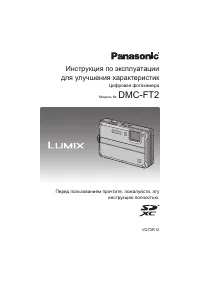 Panasonic DMC-FT2
User Manual
Panasonic DMC-FT2
User Manual
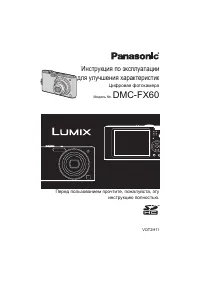 Panasonic DMC-FX60
User Manual
Panasonic DMC-FX60
User Manual
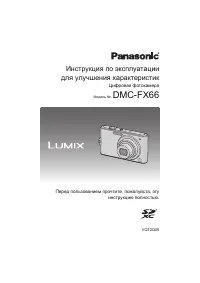 Panasonic DMC-FX66
User Manual
Panasonic DMC-FX66
User Manual
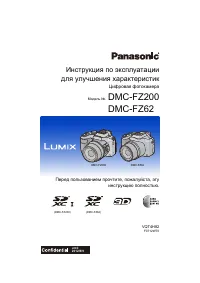 Panasonic DMC-FZ200
Manual
Panasonic DMC-FZ200
Manual
 Panasonic DMC-FZ2500
User Manual
Panasonic DMC-FZ2500
User Manual
 Panasonic DMC-FZ62
User Manual
Panasonic DMC-FZ62
User Manual
 Panasonic DMC-GH2
User Manual
Panasonic DMC-GH2
User Manual
 Panasonic DMC-LS60
User Manual
Panasonic DMC-LS60
User Manual
 Panasonic DMC-SZ9
Manual
Panasonic DMC-SZ9
Manual
 Panasonic DMC-TZ20
Manual
Panasonic DMC-TZ20
Manual
 Panasonic DMC-TZ60
Manual
Panasonic DMC-TZ60
Manual
 Panasonic DMC-ZX1
User Manual
Panasonic DMC-ZX1
User Manual
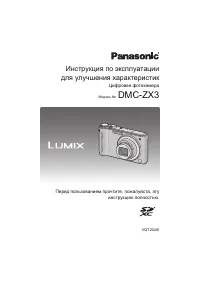 Panasonic DMC-ZX3
User Manual
Panasonic DMC-ZX3
User Manual