Page 3 - For Your Safety; WARNINGS
i For Your Safety To prevent damage to your Nikon product or injury to yourself or to others, read the following safety precautions in their entirety before using this equipment. Keep these safety instruc-tions where all those who use the product will read them. The consequences that could result fr...
Page 4 - ii; Do not expose to high temperatures; Notices; • No part of the manuals included with this
ii Do not expose to high temperatures Do not leave the device in a closed vehicle under the sun or in other areas subject to extremely high temperatures. Failure to observe this pre-caution could result in fi re or in damage to the casing or internal parts. Observe caution when using the WA-E1 When u...
Page 5 - iii; FCC Radio Frequency Interference Statement; • Connect the equipment into an outlet on a; CAUTIONS; Modifi cations; FCC Radiation Exposure Statement; : Handling the cord on this product will
iii FCC Radio Frequency Interference Statement This equipment has been tested and found to comply with the limits for a Class B digital device, pursuant to Part 15 of the FCC rules. These limits are designed to provide reason-able protection against harmful interference in a residential installation...
Page 6 - iv; CAUTION; : This class B digital apparatus meets; ATTENTION; : Cet appareil numérique de la classe; Notices for Customers in Canada; Outdoor use of wireless transceivers is prohibited in France.; Symbol for Separate Collection in European Countries; point. Do not dispose of as household waste.
iv CAUTION : This class B digital apparatus meets all requirements of the Canadian Interfer-ence Causing Equipment Regulations. ATTENTION : Cet appareil numérique de la classe B respecte toutes les exigences du Règlement sur le matériel brouilleur du Canada. Notices for Customers in Canada RSS-GEN E...
Page 7 - Table of Contents
v Table of Contents For Your Safety ....................................................... iNotices ...................................................................... ii Introduction ................................................... 1 Supported Modes .............................................
Page 9 - Introduction
1 Thank you for purchasing a WT-3 or WT-3A wireless transmitter for compatible Nikon digital cameras. The WT-3 is for use in the country of sale, the countries of the European Union (EU) and European Free Trade Association (EFTA), Thailand, Japan, and Hong Kong. The WT-3A is for use in the country o...
Page 10 - Wireless Networks: Infrastructure Versus Ad-hoc; Wireless networks may be either; Infrastructure; : Connection is via a wireless
2 Supported Modes The WT-3 connects the camera to wireless and Ethernet networks. The camera can then be controlled remotely from a computer or photographs transmitted from the camera to an ftp server or printer. The WT-3 supports the following modes: Mode Host Description Network type Transfer mode...
Page 11 - System Requirements; : Nikon D200 digital single-lens refl ex camera; The PD-10 Wireless Printer Adapter
3 System Requirements Before using the WT-3 or WT-3 Setup Utility CD, confi rm that your system meets the following requirements: Camera • Model : Nikon D200 digital single-lens refl ex camera • Firmware : A and B version 2.00 (provided on supplied WT-3 Setup Utility CD) Power source One EN-EL3e recha...
Page 12 - ) and connect the antenna as shown at right (; Restrictions on Wireless Devices
4 Connector cover When using the WA-E1, remove the antenna connector cap ( 햲 ) and connect the antenna as shown at right ( 햳 ). The WA-E1 Extended Range Antenna (Available Separately) The optional WA-E1 extended range antenna with tripod mount can be used to extend the range of wireless transmit-ter...
Page 13 - button, and command; Command dials; The function performed by the WT-3; Option
The WT-3 Controls The WT-3 is equipped with a shutter-release button, AF-ON button, and command dials for ease of use when taking photographs in tall (portrait) orientation. The shut-ter-release button and command dials perform the same functions as the match-ing controls on the camera body; for mor...
Page 14 - Setup; Follow the steps below to prepare the WT-3 for use:; Update the camera fi rmware; : The WT-3 is supported from camera fi rmware A version 2.00 and B; Copy network profi les to the camera; : Users of Windows XP Service Pack 1 or later or Mac; Install the WT-3 Setup Utility; Updating the Camera Firmware; to display the “D200 Firm-; Insert the battery; selected; Wireless transmitter
6 Setup Follow the steps below to prepare the WT-3 for use: Update the camera fi rmware : The WT-3 is supported from camera fi rmware A version 2.00 and B version 2.00. Users of earlier versions will need to update the camera fi rmware as described in the fi rmware update manual on the supplied WT-3 Set...
Page 15 - Installing the WT-3 Setup Utility; Supported Operating Systems; Windows XP Service Pack 1 or Later; If the “Select Region” Dialog Is Not Displayed; If the “Select Region” dialog is not displayed, select; My Computer; from the; Start; menu; Click; Easy Install; Other Install Center Options; : View the ReadMe fi le or visit Nikon sup-; The WT-3 Setup Utility; Select a language and click; Next
7 Installing the WT-3 Setup Utility The WT-3 Setup Utility is used to copy computer and printer profi les to the camera. The WT-3 Setup Utility is required when confi guring the camera for connection to a computer in transfer, PC, and print modes. Either the WT-3 Setup Utility or the camera menus ( 48...
Page 17 - Mac OS X Version 10.3 or Later; : View the ReadMe fi le or visit Nikon
9 Mac OS X Version 10.3 or Later 1 Start the computer and log in to an account with administrator privileges. 2 Insert the supplied installer CD in a CD-ROM drive. Double-click the installer CD icon on the desktop, and then double-click the Welcome icon. The “Select Region” dialog will be displayed;...
Page 18 - Install; OK; and remove the WT-3 Setup Utility CD; Quit; Installing PictureProject
10 7 Click Install . 9 Click OK and remove the WT-3 Setup Utility CD from the CD-ROM drive. If prompted to restart the computer, follow the on-screen instructions. 8 Click Quit . Installing PictureProject Install PictureProject before installing the WT-3 Setup Utility. The WT-3 Setup Utility must be...
Page 19 - Copying Network Profi les to the Camera; USB; Connecting the USB Cable
11 Copying Network Profi les to the Camera Profi les for network computers, ftp servers, and printers can be copied to the cam-era using the WT-3 Setup Utility. The WT-3 Setup Utility is required for connection to a computer in transfer, PC, and print modes. Either the WT-3 Setup Utility or the camera...
Page 20 - Other Ways of Starting the WT-3 Setup Utility; and selecting; All Programs; clicking the; WT-3 Setup Utility icon
12 3 Turn the camera on. 4 Turn the computer on and start the WT-3 Setup Utility.• Windows : Double-click the WT-3 Setup Utility icon on the desktop • Macintosh : Click the WT-3 Setup Utility icon in the Dock. The dialog shown at right will be displayed; click Next . 5 Select Add/edit profi le and cl...
Page 21 - Enter the following information.; Profi le name; to confi gure the cam-; Computer; if the network; Ethernet and Wireless; for wireless or wireless and Ethernet networks.; . When a new profi le is created under; Ethernet; is selected for interface type, or to Step 10 if; Ethernet only; button
13 Help Click the Help button for online help. The “Select Action” Dialog The other options in the “Select Action” dialog are described below. Note that the camera need not be connected to a computer to choose a printer or change the upload folder.• Change password : The dialog shown at right will b...
Page 23 - Ad-hoc Wireless Networks; was selected for; Profi le type; in Step 7, the dialog
15 Ad-hoc Wireless Networks Ad-hoc mode uses IP addresses beginning with 169.254. If the computer later becomes part of an infrastructure network, it must be reconfi gured for automatic IP addressing and the camera wireless profi le modifi ed to refl ect the new settings. Consult the network administra-...
Page 25 - Creating a Printer Profi le; Setup wireless printer
17 Creating a Printer Profi le The default printer for computer profi les ( 13) is the system printer for the host computer. To choose a diff erent printer, start the WT-3 Setup Utility as described in Step 4 of “Copying Network Profi les to the Camera” ( 12; there is no need to con-nect the camera to t...
Page 26 - Important; To ensure that the cover is not lost, place
18 Connecting the WT-3 2 Remove the power connector cover from the WT-3 and attach it to the camera strap or store it in a safe place. Be sure to replace the power con-nector cover when the WT-3 is not in use. 4 Insert the WT-3 into the camera battery chamber as shown. 5 Rotate the knob in the direc...
Page 28 - Inserting the Battery; Open the battery chamber cover.; tery Info; option in the camera setup menu.; Removing the Battery; Batery latch
20 3 Insert the battery as shown on the inside of the battery chamber cover. The battery latch will slide aside during insertion and pop up to lock the bat-tery in place when fully inserted. Inserting the Battery To power the camera when the WT-3 is in place, insert the camera battery into the WT-3 ...
Page 29 - Uploading Images: Transfer Mode; Upload images; Connecting to the Host or ftp Server; Choose PTP; option in the camera setup menu to; PTP; Front; Select; Transfer mode; for the; mitter; option in the camera setup menu; Connect to the host or ftp server
21 Uploading Images: Transfer Mode Choose transfer mode to upload photographs to a computer or ftp server. The principal steps are: Upload images ...................................................................................... 23–25 Before connecting to the host, create a host profi le using th...
Page 30 - Viewing Profi le Information; Press the camera; Editing ftp Server Profi les; Upload photos as they are taken.
22 Viewing Profi le Information Press the camera button to view information on the selected profi le. 5 A list of available connection profi les will be dis-played. Press the multi selector up or down to highlight the desired profi le and press to the right to select. Editing ftp Server Profi les If an f...
Page 31 - Uploading Images; Press the button to view pictures on the
23 During Upload Do not remove the memory card or disconnect the Ethernet cable during upload. File Names If the destination folder on an ftp server contains fi les with the same names as images select-ed for upload, the fi les on the server will be replaced by the images uploaded from the cam- era. S...
Page 33 - Network Status; The Status LEDs; POWER; ity is shown by the; LINK; LED lights while data are being sent.; Off; The Status Display
25 Network Status The status of the link between the server and the WT-3 is shown by the status LEDs and by the display in the top level of the wireless transmitter menu. The Status LEDs The POWER LED lights when the WT-3 is on. Signal qual- ity is shown by the LINK LED: the faster the LED blinks, t...
Page 34 - Controlling the Camera: PC Mode; Connect to the computer; Connecting to the Computer; PC mode; ter; option in the camera setup menu (; Control the camera using Nikon Capture 4
26 Controlling the Camera: PC Mode In PC mode, a camera equipped with a WT-3 can be controlled over a wireless net-work from a computer running Nikon Capture 4 version 4.4 or later (available sepa-rately) and photographs saved directly to the computer hard disk instead of the camera memory card. The...
Page 35 - On; for; The message “Now in PC mode” will be displayed
27 Viewing Profi le Information Press the camera button to view information on the selected profi le. 4 A list of available connection profi les will be dis-played. Press the multi selector up or down to highlight the desired profi le and press to the right to select. 5 Select On for Wireless transmitte...
Page 36 - Controlling the Camera Using Nikon Capture 4; Do not turn the; Start Nikon Capture 4 Camera Control on the host
28 Controlling the Camera Using Nikon Capture 4 Ethernet Networks: Do Not Disconnect the Ethernet Cable Do not disconnect the Ethernet cable while the camera is on. Wireless Networks: Loss of Signal During Transfer A loss of signal may interrupt the connection while pictures are being transferred to...
Page 38 - Printing Pictures: Print Mode; Print pictures; Selecting a Printer; Turn the camera on and confi rm that the printer; Print mode
30 Printing Pictures: Print Mode Choose print mode to print JPEG pictures from the camera to a printer connected to a network computer or to the optional PD-10 wireless printer adapter ( 32). RAW pictures can not be printed directly from the camera, but can be printed using PictureProject or Nikon C...
Page 39 - Connected to printer pictures can be printed
31 5 A list of available printer profi les will be displayed. Press the multi selector up or down to highlight the desired profi le, then press to the right to se-lect and return to the top level of the wireless transmitter menu. Viewing Profi le Information Press the camera button to view information ...
Page 40 - Create a profi le for the PD-10; Creating a Profi le for the PD-10
32 Printing Pictures Using the PD-10 Wireless Printer Adapter The optional PD-10 wireless printer adapter allows photographs to be printed di-rectly from the camera without cables or a computer. The principal steps for using the PD-10 are: Create a profi le for the PD-10 ................................
Page 42 - Menu Guide
34 This section describes the settings available for the Wireless transmitter option in the camera setup menu when the WT-3 is connected. Menu Guide Wireless LAN System Turn the WT-3 on or off . Select Off to reduce the drain on the battery. When On is selected, power consumption is reduced if no memo...
Page 43 - Wireless; Text Entry; The following dialog is displayed when text entry is required.; Keyboard area; : Use multi selector; Text display area; right buttons on multi selector.
35 FTP Registration (for Connection to ftp Servers Only) In transfer mode, ftp profi les can be created without using the WT-3 Setup Utility. See the Appendix for more information ( 48). Editing ftp Profi les To edit an ftp server profi le, highlight it in the profi le list in transfer mode and press th...
Page 44 - : Choose a mode according to how the; Connection to wireless network is via access point.; is selected for; Communication mode; Authentication; : Choose the type of authentication used by the; Channel; Using the Menus
36 Wireless Menu, Page 1/2 SSID : A BSS- or ESS-ID is required for connection to a wireless LAN adapter or access point. To change the BSS- or ESS-ID, highlight the current ID, press the multi selector to the right, and enter a new ID as described in the note on the previous page. Press to return to...
Page 45 - Highlight encryption method.; No encryption; was selected in Steps 1–2.; Encryption
37 Encryption 1 Highlight encryption method. 2 Return to wireless menu (2/2). 3 Highlight encryption key. Skip Steps 3–5 if No encryption was selected in Steps 1–2. 4 Edit encryption key:• Base 16: press multi selector left or right to select character, up or down to change. 64-bit keys require 10 d...
Page 46 - Key index; : In infrastructure networks that use WEP encryption,; Obtain automatically; : Highlight this option and press the multi
38 1 Choose index. 2 Return to wireless menu (1/2). Key index : In infrastructure networks that use WEP encryption, choose the key index used by the host or access point. TCP / IP Adjust TCP / IP settings as described on the following pages. The TCP / IP menu has two pages of options; to scroll betw...
Page 47 - Address; Highlight; Mask; Press multi selector left or right to select,
39 1 Highlight Address . 2 Enter edit mode. 5 Highlight Mask . 6 Enter edit mode. 4 Exit to TCP / IP menu (1/2). If subnet mask is required, proceed to Step 5. 3 Press multi selector left or right to select, up or down to change. 8 Exit to TCP / IP menu (1/2). 7 Choose subnet mask.
Page 48 - Use gateway; : Highlight this option and press the multi selector
40 TCP / IP Menu, Page 2/2 Use gateway : Highlight this option and press the multi selector right to toggle it on ( ✔ ) or off . If the network requires a gate- way address, turn this option on and enter the address sup-plied by the network administrator as described below. 2 Enter edit mode. 1 Highl...
Page 49 - Enable DNS
41 Enable DNS : Highlight this option and press the multi selector right to toggle it on ( ✔ ) or off . If a D omain N ame S erver (DNS) exists on the network, turn this option on and enter the ad-dress supplied by the network administrator as described be-low. 1 Highlight Address . 2 Enter edit mode...
Page 50 - Server; Folder; Display text entry dialog.; FTP
42 FTP Menu, Page 1/3 Server 1 Highlight Address . 2 Display text entry dialog. 5 Highlight Folder . 6 Display text entry dialog. FTP Adjust ftp settings as described on the following pages. The ftp menu has three pages of options; to scroll between pages, press the multi selector up or down. 4 Retu...
Page 51 - Port; PASV mode
43 10 Enter edit mode. 9 Highlight Port . PASV mode : Highlight this option and press the multi selector right to toggle PASV mode on ( ✔ ) or off . Turn this option off to use normal (PORT ) mode. Be sure the server supports PASV mode before turning this option on. 12 Return to ftp menu (1/3). 11 Pre...
Page 52 - Anonymous login; : Highlight this option and press the multi se-; User ID; Password
44 FTP Menu, Page 2/3 Anonymous login : Highlight this option and press the multi se- lector right to toggle it on ( ✔ ) or off . Turn this option on for anonymous login, off to enter a user name and password as described below. 1 Highlight User ID . 3 Enter user name ( 35). 5 Highlight Password . 7 E...
Page 53 - Use proxy server; : Highlight this option and press the multi selec-
45 FTP Menu, Page 3/3 Use proxy server : Highlight this option and press the multi selec- tor right to toggle it on ( ✔ ) or off . If a proxy server is required for ftp, turn this option on and enter an address and port num-ber as described below. 1 Highlight Address . 2 Display text entry dialog. 3 ...
Page 54 - The following settings are available in transfer mode:; Auto Send; Be sure memory card is inserted in; is selected in the; menu. Pictures will instead be marked with a “send” indicator as; Yes; to delete photographs from the camera memory; Send File As; Upload JPEG fi les only.
46 Settings (Transfer Mode Only) The following settings are available in transfer mode: Auto Send Choose whether to upload photographs to the server as they are taken. Option Description Off (default) Photos are not automatically uploaded as they are taken. Photos can be selected for transmission whe...
Page 56 - Appendices; Firewalls
48 Appendices Creating ftp Profi les Using the Camera Menus In transfer mode, the camera menus can be used to create ftp profi les in place of the WT-3 Setup Utility. Before creating an ftp profi le with the camera menus, set the camera USB option to PTP and connect the WT-3. To prevent unexpected loss...
Page 57 - Connect via Ethernet only.
49 4 The registration dialog shown at right will be displayed. Press the multi selector up or down to highlight an option, then press to the right to select. Select Done to proceed to Step 5 when settings are complete. Rename : The dialog shown at right will be dis- played. Enter a profi le name of u...
Page 58 - If; wireless transmitter menu.; Errors
50 5 If On is selected for Wireless transmitter > Wireless LAN system , a confi r- mation dialog will be displayed. Choose from the following options:• Yes : Open a connection to the new server and return to the top level of the wireless transmitter menu. • No : Return to Step 3 without connecting...
Page 59 - Troubleshooting; Problem
51 Troubleshooting Problem Solution “POWER” LED does not light. • Confi rm that battery is inserted in WT-3 and is fully charged. • Reattach WT-3.• Insert memory card (transfer and print modes only). • Turn camera on.• Press shutter-release button halfway to activate ex- posure meters. • Select On fo...
Page 60 - Glossary; Auto IP (APIPA—Automatic Private IP Addressing); See also
52 Glossary Ad-hoc : Devices in an ad-hoc wireless network communicate directly (“peer to peer”), without a wireless access point. AES (Advanced Encryption Standard) : An encryption standard developed for use by the American government. AES has been praised for combining strong encryption with rapid...
Page 62 - See; Subnet mask
54 SS-ID (Service Set ID) : An SS-ID prevents interference between devices in diff erent networks by allowing communication only between devices that share an SS-ID. See BSS-ID , ESS-ID . Subnet mask : A mask that divides a network into subnets. TCP/IP (Transmission Control Protocol/Internet Protocol...
Page 63 - Specifi cations
55 Specifi cations Wireless Standards IEEE 802.11b/g (standard wireless LAN protocol), ARIB STD-T66 (standard for low power data communications systems) Communications protocols IEEE 802.11g: OFDMIEEE 802.11b: DBPSK, DQPSK, CCK Operating frequency WT-3: 2412–2472 MHz (13 channels)WT-3A: 2412–2462 MHz...
Page 64 - Example 1
56 Battery Life The number of shots that can be taken with a fully-charged EN-EL3e battery (1500 mAh) varies with the con di tion of the batteries, temperature, and how the camera and WT-3 are used. The following measurements were performed at a temperature of 20 °C (68 °F) both with the WT-3 off and...
Page 65 - Index
57 Index G Gateway, 15, 40, 52 I IP address, 15, 38, 53Infrastructure, 2, 14, 36, 53 L LAN. See Wireless LAN, Ethernet LED. See Status LEDs LINK. See Status LEDs M MAC address, 16Memory cards, 21, 30Menus, 34–47, 48–50 entering text in, 35 Mode , 2, 21, 26, 30, 34 N Nikon Capture 4, 26, 28 P Passwor...


 Nikon D3300
Manual
Nikon D3300
Manual
 Nikon D4S
Manual
Nikon D4S
Manual
 Nikon D5300
Manual
Nikon D5300
Manual
 Nikon D5500
Manual
Nikon D5500
Manual
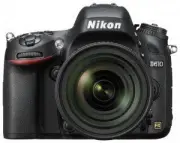 Nikon D610
Manual
Nikon D610
Manual
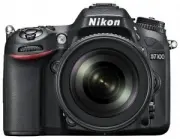 Nikon D7100
Manual
Nikon D7100
Manual
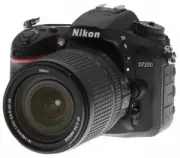 Nikon D7200
Manual
Nikon D7200
Manual
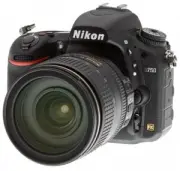 Nikon D750
Manual
Nikon D750
Manual
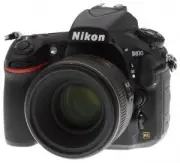 Nikon D810
Manual
Nikon D810
Manual
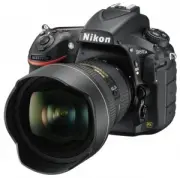 Nikon D810A
Manual
Nikon D810A
Manual
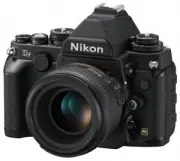 Nikon Df
Manual
Nikon Df
Manual
 Nikon 1 AW1
Manual
Nikon 1 AW1
Manual
 Nikon 1 J3
Manual
Nikon 1 J3
Manual
 Nikon 1 J4
Manual
Nikon 1 J4
Manual
 Nikon 1 J5
Manual
Nikon 1 J5
Manual
 Nikon 1 S2
Manual
Nikon 1 S2
Manual
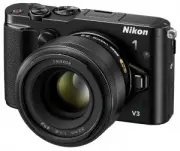 Nikon 1 V3
Manual
Nikon 1 V3
Manual
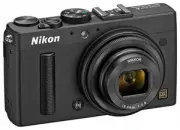 Nikon Coolpix A
Manual
Nikon Coolpix A
Manual
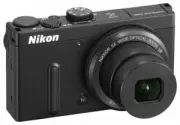 Nikon Coolpix P330
Manual
Nikon Coolpix P330
Manual
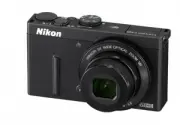 Nikon Coolpix P340
Manual
Nikon Coolpix P340
Manual