Page 2 - Foreword; Main features and functions of the SB-80DX
2 Foreword Thank you for purchasing the Nikon Speedlight SB-80DX.To get the most out of your Speedlight, please read this instructionmanual thoroughly before use. n (p. xx) indicates the reference page. Main features and functions of the SB-80DX • The SB-80DX is a high-performance Speedlight having ...
Page 3 - Take trial shots; Tips on using the Speedlight
3 Preparation Take trial shots Take trial shots before shooting at important occasions like weddings orgraduations. Have Nikon spot-check your Speedlight regularly Nikon recommends that you have your Speedlight serviced by an authorizeddealer or service center at least once every two years. Using yo...
Page 4 - Camera groups and available flash modes; Group
4 Camera groups and available flash modes In this manual, Nikon SLR cameras are divided into eight groups (I to VII, and DigitalSLRs) unless otherwise noted. First consult the camera group table to see whichgroup your camera belongs to. Then as you read the manual, you will find specificinformation ...
Page 6 - Contents
6 Contents Preparation Foreword........................................................................2Tips on using the Speedlight .........................................3Camera groups and available flash modes ...................4Speedlight parts ...................................................
Page 7 - Advanced operation; Reference information
7 Advanced operation Exposure compensation and flash output level compensation ...................................................56 The flash shooting distance range with zoom lenses having a variable aperture ..............................59 Slow-sync flash mode/Red-eye reduction control........60...
Page 8 - Speedlight parts
8 Speedlight parts 4 3 1 2 7 6 5 9 8 10 11 14 13 12 1 Control button quick reference (p. 12) Easy reference chart for two-button operationsand custom settings 2 Flash head (p. 68) Can be tilted up to 90° or down to –7°, and rotated horizontally 180° to the left and 90° to the right. 3 Flash head til...
Page 9 - 7 Flash head rotating angle
9 Preparation 20 19 15 18 16 17 24 23 22 21 15 Flash head tilting angle scale (p. 68) 16 Modeling illuminator button (p. 61) Press to fire flash repeatedly to check theillumination and the shadows cast on thesubject before taking pictures. Wireless slave flash cancel button (p. 85) The SB-80DX will ...
Page 10 - LCD panel; About the LCD panel
10 For reference, all indications are displayed in the illustration. LCD panel 2 3 4 5 678 1 9 10 11 12131415161718 About the LCD panel • Because of the directional characteristics of the liquid crystal, the LCD is difficult to read when viewed diagonally from above; however, the display can be seen...
Page 11 - Control buttons
11 Preparation Press the MODE and SEL buttons simultaneously To recall the underexposure value in the TTL/D-TTL auto flashmode (p. 31). Press the MODE and ON/OFF buttons simultaneouslyfor approx. 2 sec. To reset all settings, including custom settings, to theirdefault settings (except the distance u...
Page 12 - Item; Custom settings
12 Item Setting (Bold: default) Wireless flash mode* 1 (p. 84) OFF (canceled) ON (activated) Sound monitor* 2 in the wireless L (sound on) M (sound off) flash mode (p. 89) AF-assist illuminator (p. 62) AF ILL (activated) NO AF ILL (canceled) Standby function (p. 19) Selecting the distance unit (m, f...
Page 13 - Setting the LCD panel illuminator using Custom settings
13 Preparation l Setting the LCD panel illuminator using Custom settings 1 Press the g button for approx. 2 sec. to display the Custom settings mode. 2 Press the e or f button to choose the Q LCD panel illuminator setting. 3 Press the c or d button to turn the LCD panel illuminator on or off. 4 To g...
Page 14 - Lenses; CPU lenses
14 In this manual, Nikkor lenses are divided into two types: CPU Nikkor lenses andnon-CPU Nikkor lenses. Lenses CPU Nikkor lenses G-type Nikkor‚ D-type Nikkor‚ Non-G/D-type AF Nikkor (except for AF Nikkor for the F3AF)‚ AI-P Nikkor Non-CPU Nikkor lenses AI-S Nikkor, AI Nikkor‚ Series E CPU lenses CP...
Page 16 - Usable batteries; Installing batteries
16 l Usable batteries m Install four AA-type penlight batteries (1.5V or lower) of any of these types: (1) Alkaline-manganese (1.5V) (2) Lithium (1.5V) (3) NiCd (rechargeable, 1.2V) (4) Ni-MH (Nickel Metal Hydride) (rechargeable, 1.2V) n When replacing batteries, use fresh batteries of the same bran...
Page 17 - Replacing / recharging the batteries; Minimum number of flashes and recycling times; External power sources
17 Basic operation n Minimum recycling time is for operation using fresh batteries. n The data was measured without using AF-assist illuminator, zoom-head position adjustment, or LCD panel illumination. n The above data may vary due to variations in battery performance. l Replacing / recharging the ...
Page 18 - Test firing; lb; button
18 2 Test firing (confirming exposure) l Test firing CAUTION! When test firing the Speedlight, never position your eyes close to the flashhead. m The SB-80DX fires at specified output in the Manual flash mode or at approx.1/16 output in the TTL/D-TTL auto flash mode. m In the Non-TTL auto flash/Auto...
Page 19 - Standby function to conserve battery power
19 Basic operation l Standby function to conserve battery power m If the SB-80DX and the camera are not used for approx. 40 seconds, thestandby function activates and automatically turns the SB-80DX off toconserve battery power (standby-off state). n Only the R indicator appears on the LCD panel in ...
Page 20 - Attach the SB-80DX to the camera and; Turn the mounting foot lock lever securely until it stops.
20 3 Attach the SB-80DX to the camera and l Turn the mounting foot lock lever securely until it stops. m To lock the Speedlight in place, turn the lock lever approx. 90° clockwise untilit stops. To unlock, turn the lever counterclockwise until it stops. Lock Unlock 1 Make sure the SB-80DX and the ca...
Page 21 - Warning indication; adjust the flash head
21 Basic operation The underbar blinks when the flash head is tilted down –7°. The flash shooting distance range disappearsif the flash head is adjusted to other thanthe horizontal/front or down –7° position. l Warning indication m If the flash head is not adjusted to the horizontal/front position, ...
Page 22 - Setting the ISO sensitivity; Digital data communication with the SB-80DX
22 4 Setting the ISO sensitivity Digital data communication with the SB-80DX When the SB-80DX is used with cameras in Groups I and II, and NikonDigital SLRs cameras, digital data communication is performed. Thecamera automatically sends the ISO sensitivity to the SB-80DX. With a CPUlens, the apertur...
Page 23 - Available ISO sensitivity in TTL/D-TTL auto flash operation
23 Basic operation l Available ISO sensitivity in TTL/D-TTL auto flash operation m The maximum ISO sensitivity range usable in the TTL/D-TTL auto flash modeis ISO 25 to 1000. n The ISO sensitivity range may become narrower, depending on the cameras in use. Fordetails, see your camera instruction man...
Page 24 - Adjust the zoom-head position; The power zoom function
24 5 Adjust the zoom-head position l The power zoom function m When the SB-80DX is used with cameras in Groups I, II, or Nikon Digital SLRs,in combination with a CPU lens, the power zoom function activates and the zoom head is automatically adjusted. n The zoom-head position is automatically adjuste...
Page 25 - Canceling the power zoom function using Custom settings
25 Basic operation n A small M above the “ZOOM” indication appears on the LCD panel while manually settingthe zoom-head position. n Generally, set the zoom-head position to the focal length of the lens in use or to theclosest wideangle setting.For example, select the 50mm setting when using a 60mm l...
Page 26 - Setting the camera’s exposure mode and; Exposure mode and metering system
26 6 Setting the camera’s exposure mode and l Exposure mode and metering system m The camera’s available exposure mode and metering system vary, dependingon the cameras and lenses in use or the SB-80DX’s flash modes. For details,refer to “Detailed operation” (p. 33) and your camera’s instruction man...
Page 27 - metering system; Exposure modes other than Programmed Auto exposure (P)
27 Basic operation metering system l Exposure modes other than Programmed Auto exposure (P) In Shutter-Priority Auto exposure (S) mode m By selecting a slower shutter speed, the proper exposure for the background can be achieved. n The camera selects the correct aperture. Set the shutter speed on th...
Page 28 - Setting the SB-80DX’s flash mode; For film-based cameras
l TTL/D-TTL auto flash mode (p. 35) m Every time you press the MODE button, the flash mode changes. In the TTL auto flash mode, the D indicator appears on the LCD panel. m When using Nikon Digital SLRs cameras, D-TTL auto flash is activated and CD appears on the LCD panel. n Note that the usable fla...
Page 29 - Flash shooting distance range in the TTL/D-TTL auto flash modes; About the flash shooting distance range
29 Basic operation Aperture Flash shooting distance range (m/ft.) ISO sensitivity Zoom-head position (mm) Flash shooting distance range in the TTL/D-TTL auto flash modes ∗ 1 With the Nikon Diffusion Dome attached and the wide-flash adapter in place ∗ 2 With the Nikon Diffusion Dome attached ∗ 3 With...
Page 30 - Compose the picture and shoot with flash; Set the camera’s flash sync mode to Front-curtain sync.
30 8 Compose the picture and shoot with flash l Set the camera’s flash sync mode to Front-curtain sync. m Set the camera’s flash sync mode to Front-curtain sync with cameras featuring a Rear-curtain sync flash mode. n For other flash sync modes, refer to “Slow-sync flash mode” (p. 60), “Red-eye redu...
Page 31 - Display of the amount of underexposure
31 Basic operation l If the ready-light blinks after shooting, the light might be insufficient. m In various auto flash modes, when the flash has fired at its maximum outputand underexposure may have occurred, the ready-lights on the SB-80DX andin the camera’s viewfinder blink for approx. 3 sec. Dep...
Page 32 - Using the SB-80DX with the COOLPIX
32 COOLPIX 900 series (COOLPIX 995, etc.) and COOLPIX 5000 digital cameras have a built-in compact flash unit. When morepowerful illumination is required, or when performing multipleflash, connecting the SB-80DX or another Nikon Speedlight tothe COOLPIX using cords is recommended as an externalflash...
Page 34 - SB-80DX available flash modes
34 SB-80DX available flash modes ∗ 1 Monitor Preflashes are fired. ∗ 2 3D Multi-Sensor Balanced Fill-Flash and Multi-Sensor Balanced Fill-Flash are generally referred to as Automatic Balanced Fill-Flash with TTL Multi Sensor (Automatic BalancedFill-Flash with TTL Multi-Sensor for Digital SLRs in D-T...
Page 35 - D Multi-Sensor Balanced Fill-Flash for Digital SLRs; Multi-Sensor Balanced Fill-Flash for Digital SLRs; Matrix Balanced Fill-Flash; Center-Weighted Fill-Flash for Digital SLRs; Balancing the exposure for the main subject and background; Monitor Preflashes
35 Detailed operation T T L / D - T T L auto flash mode The SB-80DX’s TTL/D-TTL auto flash mode varies, depending on the camerasand lenses in use or the camera’s exposure mode and metering system. Fordetails, refer to “Usable cameras compatible with the TTL/D-TTL auto flashmode” (p. 36) and your cam...
Page 36 - Usable cameras compatible with the TTL/D-TTL; Cameras compatible with the TTL/D-TTL auto flash mode
36 Usable cameras compatible with the TTL/D-TTL Exposure modeP : Programmed Auto S : Shutter-Priority Auto A : Aperture-Priority Auto M : Manual Metering system Y : Matrix W : Center-Weighted X : Spot The available types of TTL/D-TTL auto flash vary, depending on thecamera/lens/exposure mode/meterin...
Page 37 - auto flash mode; II
37 Detailed operation auto flash mode Camera TTL/D-TTL Exposure Metering Lens auto flash mode mode system F4-Series DF P/S/A/M Y CPU lens ∗ 1 DF A/M Y Non-CPU lens ∗ 2 DF ∗ 3 P/S/A/M W CPU lens ∗ 1 DF ∗ 3 A/M Y Non-CPU lens D P/S/A/M YWX CPU lens ∗ 1 D A/M YWX Non-CPU lens ∗ 1: The A and M exposure ...
Page 38 - Usable cameras compatible with the TTL/D-TTL auto flash mode; IV
38 Usable cameras compatible with the TTL/D-TTL auto flash mode Camera TTL/D-TTL Exposure Metering Lens auto flash mode mode system F-601 M / D P/S Y CPU lens ∗ 1 N6000 D P/S W CPU lens ∗ 1 D A/M W Non-CPU lens ∗ 1 D P/S YW CPU lens D A/M W Non-CPU lens ∗ 1: Only D appears on the SB-80DX’s LCD panel...
Page 40 - mode
40 Any camera and lens combination. (For Digital SLRs, it ispossible only when a non-CPU lens is mounted.) Non-TTL auto flash A mode Usable camerasand lenses The SB-80DX’s built-in sensor measures the flash illumination reflected backfrom the subject, automatically controlling the SB-80DX’s light ou...
Page 41 - Setting the aperture in the Non-TTL auto flash
41 Detailed operation 6 Compose the picture, make sure the ready-lightis on, then shoot. n When the flash has fired at its maximum output and underexposure may have occurred, the ready-lighton the SB-80DX blinks for approx. 3 sec. Tocompensate, use a wider aperture or move closer tothe subject and r...
Page 42 - Digital SLRs + CPU lenses; Auto Aperture; AA; flash mode; Usable cameras and lenses
42 Digital SLRs + CPU lenses Auto Aperture AA flash mode In addition to Non-TTL auto flash (p. 40), the SB-80DX’s built-in sensor correctlycontrols the flash output in combination with data automatically transmitted fromthe camera and lens to the SB-80DX, including the ISO sensitivity value,aperture...
Page 43 - Setting the aperture in Auto Aperture
43 Detailed operation 5 Compose the picture, confirm that the ready-lightis on, then shoot. n When the flash has fired at its maximum output andunderexposure may have occurred, the ready-lighton the SB-80DX blinks for approx. 3 sec. Tocompensate, use a wider aperture or move closer tothe subject and...
Page 44 - Manual; ÉG
44 Manual ÉG mode In this mode, the flash always fires at a specified output. The SB-80DXfeatures three types of manual modes. Types Usable camera Manual flash No limitation Repeating flash No limitation FP High-Speed Flash sync F5, F100, F90X/N90s, F90-Series/N90, D1-Series m You can calculate the ...
Page 45 - To calculate the correct aperture; To calculate the guide number
45 Detailed operation ISO 25 50 100 200 400 800 1600 Factors x0.5 x0.71 x1 x1.4 x2 x2.8 x4 To calculate the correct aperture n Calculate the correct aperture by using this equation and the guide numbertable, according to the ISO sensitivity and flash output level that are set: f/stop (aperture) = Gu...
Page 46 - Manual flash operation
46 Manual G mode l Manual flash operation m In Manual flash photography, you select the aperture and flash output level. Inthis way, you can control the exposure and flash shooting distance whenshooting subjects where the correct exposure is difficult to obtain in the TTLor Non-TTL auto flash mode. ...
Page 47 - Setting the flash output level; When you press the
47 Detailed operation ▲ 1/1 (0.0) ➔ 1/2 (0.0) ➔ 1/2 ( 0.3) ➔ 1/2 ( 0.7) ➔ 1/4 (0.0) FP ➔ 1/128 (0.0) 1/4 ( 0.7) ➔ 1/4 ( 0.3) 1/128 (0.0) ➔ 1/128 ( 0.3) ➔ 1/128 ( 0.7) ➔ 1/64 (0.0) FP ➔ 1/1 (0.0) ➔ 1/2 (0.0) 1/64 ( 0.7) ➔ 1/64 ( 0.3) 5 Confirm that the ready-light is on, then shoot. ▲ ▲ ➔ ➔ Setting t...
Page 48 - Repeating flash mode; Maximum number of repeating flashes per frame
48 Manual G mode l Repeating flash mode m In the Repeating Flash mode, the SB-80DX fires repeatedly during a single exposure, creating stroboscopic multiple-exposure effects. This mode is useful when shooting fast-moving subjects. n In the Repeating flash mode, use fresh or fully charged batteries. ...
Page 50 - Making sure the flash fires correctly before shooting
50 8 Set the shutter speed. n Use the equation to determine the shutter speed and set that shutter speed or one slower. Shutter speed = Number of flashes per frame ÷ Frequency of flashes (Hz) n For example, if the number of flashes per frame is 10 and frequency is 5 Hz, divide 10 by 5 to get a shutt...
Page 51 - FP High-Speed Flash sync; Usable cameras
51 Detailed operation l FP High-Speed Flash sync K mode m High-speed flash synchronization at shutter speeds between 1/250 and 1/4000 sec. (1/500 and 1/16000 sec. for the D1-Series) is possible, allowing you to use a wider aperture to achieve shallow depth of field and blur the background. n Do not ...
Page 53 - Notes on continuous flash shooting; Maximum number of continuous firings
53 Detailed operation Notes on continuous flash shooting l Maximum number of continuous firings m It is recommended to allow the SB-80DX to cool off for at least 10 minutes after the maximum number of continuous firings as shown in this table: Max. no. of continuous firings l Synchronization during ...
Page 54 - Checking the correct exposure before shooting; TTL auto flash mode; D-TTL auto flash mode; Non-TTL auto flash mode; Auto Aperture flash mode
54 Checking the correct exposure before shooting You can determine whether the subject will receive the correct exposure by test firing the SB-80DX before actually taking the picture. l TTL auto flash mode m Press the SB-80DX’s MODE button until “ A ” (Non-TTL auto flash) appears on the LCD panel. S...
Page 56 - Exposure compensation and flash output level; In TTL/D-TTL auto flash and Auto Aperture flash
56 Exposure compensation allows you to take well-balanced pictures byintentionally modifying the correct exposure when a subject of extremely high or low reflectivity is included in a picture or when you want to create flashphotographs to match your creative preferences. n Some plus compensation may...
Page 57 - compensation; Making exposure compensation for the main subject only; Making exposure compensation for the background only
57 Advanced operation compensation Making exposure compensation in the Non-TTL auto flash and Manual flash mode m Exposure compensation is performed by intentionally modifying the correctaperture. m In the Non-TTL auto flash mode, the correct exposure can be obtained whenthe same aperture is set on ...
Page 58 - Exposure compensation and flash output level compensation; Flash output level compensation; Canceling flash output level compensation
58 Usable cameras For cameras in Groups I to III, and Digital SLRs cameras Exposure compensation and flash output level compensation l Flash output level compensation m Make exposure compensation for a flash illuminated subject without affectingthe background exposure by modifying the SB-80DX’s flas...
Page 59 - Lenses having a variable aperture; Reading the aperture using the scale on the lens
59 Advanced operation The flash shooting distance range with zoom lenses having a variable aperture With zoom lenses having a variable aperture, take note of the following beforesetting the aperture on the SB-80DX and confirming the flash shooting distancerange. Lenses having a variable aperture m T...
Page 60 - Red-eye reduction with slow-sync flash mode
60 l Slow-sync flash m The flash is controlled at a slow shutter speed to obtain the correct exposurefor both the main subject and background in low-light situations or at night. m Available with cameras providing slow-sync. You cannot set the slow-syncfunction on the SB-80DX directly. Set it on the...
Page 61 - Rear-curtain sync and Modeling illumination; Modeling illumination
Usable cameras All cameras 61 Advanced operation Rear-curtain sync and Modeling illumination Rear-curtain sync Front-curtain sync Shooting data n Camera: F100 (2 seconds, f/4 + 1/2) n Focal length: 70mm n Speedlight: SB-80DX (Manual, flash output level: M1/1) m In normal flash synchronization, when ...
Page 62 - Autofocus flash operation in dim light
62 Autofocus flash operation in dim light Usable cameras and lenses Cameras with autofocus function + autofocus lens When the light is too dim for normal autofocus operation, the SB-80DX’s AF-Assist Illuminator enables you to perform autofocus flash photography in dim light.In dim light, the AF-assi...
Page 63 - Activating and canceling the AF-Assist illuminator using
63 Advanced operation l Activating and canceling the AF-Assist illuminator using Custom settings 1 Press the g button for more than 2 sec. to display the Custom settings mode. 2 Press the e or f button to choose “AF-Assist illuminator.” 3 Press the c or d button to activate or cancel the AF-Assist I...
Page 66 - Bounce flash operation; (For taking pictures without; Tilting the flash head
66 Bounce flash Normal flash Bounce flash operation (For taking pictures without Tilt or rotate the flash head to bounce the light off the ceiling or walls tosoften shadows and create more natural-looking portraits indoors. Even softer shadows are possible when using the Nikon DiffusionDome. 90¡ 50¡...
Page 67 - unattractive shadows)
67 Technical operation/Effective S peedlight placement unattractive shadows) 1 Set the camera’s exposure mode to Aperture-Priority Auto (A) or Manual (M). 2 Set the camera’s metering system to MatrixMetering Y or Center-Weighted Metering W . 3 Set the flash mode to TTL/D-TTL auto flash, or Non-TTL a...
Page 68 - Flash head tilting and rotating angles; Choosing the reflecting surface
68 l Setting the aperture m With bounce flash, there is a light loss when compared with normal flash withthe flash head adjusted to the horizontal/front position. You should use anaperture that is 2 to 3 stops wider. m The flash shooting distance range indicator disappears, if the flash head isadjus...
Page 69 - Using the built-in bounce card; Shooting with the Nikon Diffusion Dome
69 Technical operation/Effective S peedlight placement l Using the built-in bounce card m In bounce flash photography, use the SB-80DX’s built-in bounce card tocreate a highlight in the subject’s eyes, making the eyes look more vibrant. n As shown in the illustrations below, pull out the wide-flash ...
Page 70 - Close-up flash operation
70 Close-up flash operation With the built-in wide-flash adapter attached to the SB-80DX, close-up flashshooting can be performed. The built-in wide-flash adapter diffuses the lightfrom the flash to soften shadows. When the SB-80DX is used off-camera, youcan take more natural-looking close-up pictur...
Page 74 - Multiple flash operation; (Creating various flash; Master flash unit and slave flash unit(s)
74 Multiple flash operation (Creating various flash Multiple flash photography allows you to create more natural-looking pictures byusing several flash units to eliminate the shadows cast by the subject or toemphasize the subject’s shape. Multiple flash operation can be performed intwo ways: (1) By ...
Page 75 - effects by using more than one Speedlight)
75 Technical operation/Effective S peedlight placement effects by using more than one Speedlight) Canceling the power standby function m When using a Speedlight having a standby function as a slave flash unit,make sure that the standby function is set to off, or select a standby durationthat is long...
Page 76 - Sample photographs and the positions of the Speedlights; Available flash modes for multiple flash shooting; Multiple flash shooting using cords
76 The master flash unit used off-camera illuminates the subject from the side tocreate a more natural-looking picture,and slave flash units and illuminate the subject from the top and the rear toeliminate shadows, helping to give abetter rendition of the subject. Shooting data n Camera: F100 (1/250...
Page 77 - Connecting the master and slave flash units
77 Technical operation/Effective S peedlight placement l Connecting the master and slave flash units m Refer to “System chart for TTL multiple flash” (p. 80). Also see the instructionmanuals of your cameras, Speedlights, and accessories. n Use the optional TTL Remote Cords SC-18 or SC-19 to connect ...
Page 78 - TTL multiple flash
78 l TTL multiple flash 1 Set the camera’s exposure mode to Aperture-Priority Auto (A) or Manual (M). 2 Attach the master flash unit to the camera, turn the power on, and set the flash mode to TTL auto flash. n Available TTL auto flash modes are Matrix Balanced Fill-Flash, Center-Weighted Fill-Flash...
Page 79 - Manual multiple flash
79 Technical operation/Effective S peedlight placement l Manual multiple flash 1 Set the camera’s exposure mode to Aperture-Priority Auto (A) or Manual (M). 2 Turn off the power and attach the master flashunit to the camera. 3 Connect the sync terminal on the master flashunit to the slave flash unit...
Page 80 - System chart for TTL multiple flash
80 System chart for TTL multiple flash SC-24 SB-21B SB-21A SB-16A SB-17 SC-14 SB-11 SC-23 SB-14SB-140 SB-16B SB-15 SB-25 SB-26 SB-24 Master flash unit SC-17 V-type Sync Cord SB-27 AS-17 SB-29/29s Items marked on page 80 areconnected to item on page 81. SB-28/28DX SB-22 SB-22s SB-20 SB-23 SB-30 SB-50...
Page 82 - Wireless multiple flash shooting
82 Wireless multiple flash can be operated in two ways: (1) In the A (auto) mode, inwhich the wireless slave flash units start and stop firing in sync with the masterSpeedlight, and (2) in the M (manual) mode, in which the wireless slave flashunits only fire in sync with the master Speedlight. n In ...
Page 83 - Notes on setting the slave flash units.
83 Technical operation/Effective S peedlight placement Three slave flash units are used. Slave flash unit is used to eliminate the shadow caused by the master flash unit , while slave flash units and brightly illuminate the subject from behind as well as the background to create amore natural-lookin...
Page 85 - Wireless master flash unit; How to prevent accidental flash firing
85 Technical operation/Effective Speedlight placement l Wireless master flash unit m The SB-80DX, when set as a wireless master flash unit, can be used as anormal flash unit, but Monitor Preflashes will not fire even if AutomaticBalanced Fill-Flash with TTL Multi-Sensor is selected. m Use of a wirel...
Page 86 - Wireless multiple flash shooting in A (auto) mode
86 l Wireless multiple flash shooting in A (auto) mode Wireless multiple flash shooting 1 Set the camera’s exposure mode to Aperture- Priority Auto (A) or Manual (M). 2 Set up all Speedlights as master and slave flash units. 3 Set all SB-80DX units (used as the master and slave flash units) to the W...
Page 87 - Wireless multiple flash shooting in M (manual) mode
87 Technical operation/Effective S peedlight placement l Wireless multiple flash shooting in M (manual) mode 1 Set the camera’s exposure mode to Aperture-Priority Auto (A) or Manual (M). 2 Set up all Speedlights as the master and slaveflash units. 3 Set all SB-80DX units (used as the master andslave...
Page 88 - Adjusting the flash output level in M (manual) mode; Adjusting the slave flash unit’s flash output level manually
88 Adjusting the flash output level in M (manual) mode Adjusting the slave flash unit’s flash output level manually m Use the following equation to determine the proper manual flash output levelof the slave flash unit, depending on your creative preferences. GN = F x D where GN is the guide number o...
Page 92 - Optional accessories; Accessories for multiple flash
92 Optional accessories l Accessories for multiple flash TTL Multi-Flash Sync Cord SC-18 (approx. 1.5 m or 4.9 ft) TTL Multi-Flash Sync Cord SC-19 (approx. 3 m or 9.8 ft) Multi-Flash Sync Cords SC-18/SC-19 are useful forconnecting the SB-80DX to the multiple flash terminalof the SC-17 or AS-10 for T...
Page 94 - Connecting to an external power source; Using external power sources; Specifications
94 Connecting to an external power source m To use an external power source, remove the coverand connect its power cord to the SB-80DX’sexternal power source terminal. m Using external power sources made by anothermanufacturer is not recommended. Nikon DC UnitSD-7 Nikon High-PerformanceBattery PackS...
Page 95 - Cleaning; Tips on Speedlight care
95 Reference information l Cleaning m Use a blower brush to remove dirt and dust from the SB-80DX and clean itwith a soft, clean cloth. After using the SB-80DX near saltwater, wipe the SB-80DX with a soft, clean cloth slightly moistened with plain water to removesalt, and then dry it using a dry clo...
Page 96 - Notes on batteries; Warning; Notes on handling batteries
96 Notes on batteries Warning m Batteries shall not be exposed to excessive heat such as sunshine, fire or the like. m Dry batteries shall not be subjected to charging. m Do not expose the SB-80DX to water as this may result in electric shock orcause the unit to catch on fire. l Usable batteries m U...
Page 97 - Problems with the SB-80DX; Troubleshooting; Warning indicators in the SB-80DX
97 Reference information Problem The power cannot be turned on. The ready-light does not light up. The power turns off automatically. A strange sound can be heard causedby the flash head zooming back andf o r t h e v e n w h e n t h e S B - 8 0 D X i sturned off. The flash shooting distance rangedoe...
Page 98 - If the built-in wide-flash adapter is broken off accidentally
98 Problem In the Auto Aperture AA flash mode, the aperture and the flash output levelcompensation value blink and the flashshooting distance range disappears. The zoom-head position displays “ - - mm ” and blinks. Three beeps sound during wirelessmultiple flash shooting. Cause The aperture or flash...
Page 99 - Ready-light warning inside the camera’s viewfinder
99 Reference information Cameras in Groups I (except for F70-Series/N70) to VI and Digital SLRs cameras Note The SB-80DX incorporates a microcomputer to control flash operations. In rare cases, theSB-80DX may not work properly even after fresh batteries are properly installed. If thishappens, replac...
Page 104 - Index; Symbols
104 Index 1/300 TTL high-speed flash sync mode........................................39 3D Multi-Sensor Balanced Fill-Flash....35 3D Multi-Sensor Balanced Fill-Flash for Digital SLRs.................................35 Amount of underexposure ...................31 Aperture-priority auto exposure (A)...
Page 106 - Notes


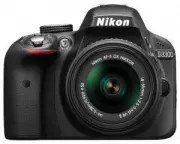 Nikon D3300
Manual
Nikon D3300
Manual
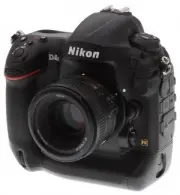 Nikon D4S
Manual
Nikon D4S
Manual
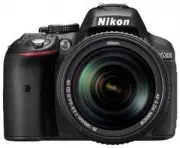 Nikon D5300
Manual
Nikon D5300
Manual
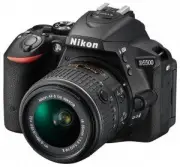 Nikon D5500
Manual
Nikon D5500
Manual
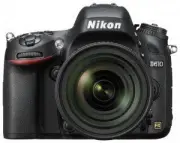 Nikon D610
Manual
Nikon D610
Manual
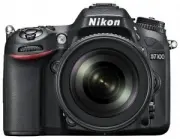 Nikon D7100
Manual
Nikon D7100
Manual
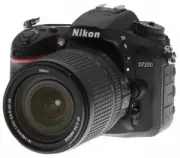 Nikon D7200
Manual
Nikon D7200
Manual
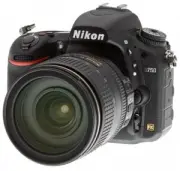 Nikon D750
Manual
Nikon D750
Manual
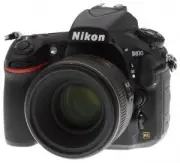 Nikon D810
Manual
Nikon D810
Manual
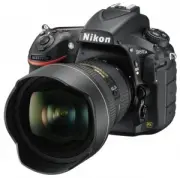 Nikon D810A
Manual
Nikon D810A
Manual
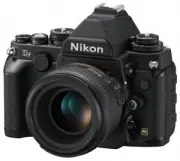 Nikon Df
Manual
Nikon Df
Manual
 Nikon 1 AW1
Manual
Nikon 1 AW1
Manual
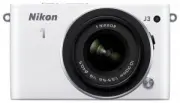 Nikon 1 J3
Manual
Nikon 1 J3
Manual
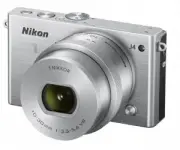 Nikon 1 J4
Manual
Nikon 1 J4
Manual
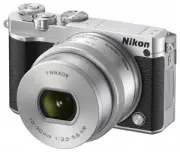 Nikon 1 J5
Manual
Nikon 1 J5
Manual
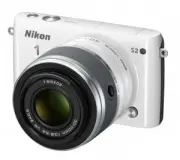 Nikon 1 S2
Manual
Nikon 1 S2
Manual
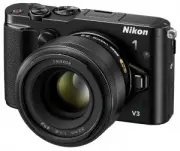 Nikon 1 V3
Manual
Nikon 1 V3
Manual
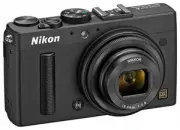 Nikon Coolpix A
Manual
Nikon Coolpix A
Manual
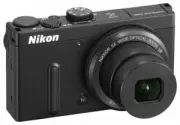 Nikon Coolpix P330
Manual
Nikon Coolpix P330
Manual
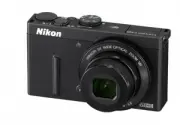 Nikon Coolpix P340
Manual
Nikon Coolpix P340
Manual