Page 2 - For your safety; WARNING
i For your safety Before using your product, please read the following safety precautionscarefully and thoroughly to ensure correct and safe use and to helpprevent damage to your Nikon product or injury to yourself or others.For quick reference by those who use the product, please keep thesesafety i...
Page 3 - ii; WARNINGS for Speedlights; Never attempt to disassemble or repair the flash unit by yourself,; Do not use the unit in the presence of flammable or explosive gas.
ii WARNINGS for Speedlights 1 If corrosive liquids seep from the batteries and get in your eyes,immediately wash your eyes with running water and consult with adoctor. Your eyes could be seriously damaged if they are not treated quickly. 2 If corrosive liquids seep from the batteries and come in con...
Page 4 - iii; Keep small accessories out of the reach of children; CAUTIONS for Speedlights; Do not touch the flash unit with wet hands,
iii For your safety 10 Do not fire the unit while the flash head is touching a person or object. Such use can result in the person being burned, and/or their clothes ignitingfrom the heat of the flash’s firing. 11 Keep small accessories out of the reach of children to avoid the possibility of the ac...
Page 5 - iv; WARNINGS for Batteries; Never heat or throw batteries into a fire,
iv 5 Remove any batteries from the unit before storing the unit for a longtime to prevent the unit from catching on fire or leaking corrosive liquids. WARNINGS for Batteries 1 Never heat or throw batteries into a fire, as this could cause the batteries to leak corrosive liquids, generate heat or exp...
Page 6 - Keep batteries out of the reach of children; CAUTION for Batteries; Do not throw or apply strong physical shocks to the batteries
v For your safety 11 Never open the casing surrounding batteries or use batteries whosecasing has been breached as such batteries could leak corrosive liquids, generate heat or explode. 12 Keep batteries out of the reach of children to help avoid the possibility of them being swallowed. If a battery...
Page 7 - Contents; Preparation
1 Contents Preparation · For your safety.....................................................................i-v· Foreword ............................................................................4-6· Tips on using the Speedlight ................................................7· Camera groups an...
Page 10 - Foreword; Main features and functions of the SB-800
4 Foreword Thank you for purchasing the Nikon Speedlight SB-800. To get themost out of your Speedlight, please read this instruction manualthoroughly before use. Also, read the separate booklet, “A collection ofexample photos,” which provides an overview of the SB-800’s flash-shooting capabilities w...
Page 11 - CLS; Nikon Creative Lighting System
5 The SB-800 features the Nikon Creative Lighting System ( CLS ). This system offers additional flash shooting possibilities with digital cameras by takingadvantage of camera’s digital communication capabilities. CLS is availableonly when the SB-800 is used with compatible Nikon cameras. The SB-800o...
Page 12 - Notes; Marks used in this manual; Supplied accessories
6 Foreword ■ ■ ■ Notes • Default: Functions and flash modes preset when shipped from the factoryare referred to as “Default” settings in this manual. • CLS: Hereafter, Nikon’s new Speedlight system “Nikon C reative L ighting S ystem” is abbreviated “ CLS .” ■ ■ ■ Marks used in this manual • v : Deno...
Page 13 - Tips on using the Speedlight; Take trial shots
7 Tips on using the Speedlight Take trial shots Make trial shots before photographing important occasions like weddings orgraduations. Have Nikon spot-check your Speedlight regularly Nikon recommends that you have your Speedlight serviced by an authorizeddealer or service center at least once every ...
Page 14 - Camera groups and available flash modes; D D o
In this manual, Nikon cameras are divided into 10 groups, including camerascompatible with CLS * , digital SLRs not compatible with CLS * and cameras in Groups I to VII, unless otherwise noted. First, consult the camera group table tosee which group your camera belongs to. Then as you read the manua...
Page 15 - Non-TTL auto flash mode
9 * 4 Distance-priority manual flash p is not possible with D1 X and D1 H digital cameras. * 5 While performing Balanced Fill-Flash, no o icon appears. * 6 Repeating flash is not possible with the F3-Series (using the AS-17). Non-TTL auto flash mode (p. 38) Manual mode ( p. 42) Wireless multiple fla...
Page 16 - Speedlight parts and their functions
10 Speedlight parts and their functions 1 Control button quick reference (p. 12) 2 Flash head (p. 100) Can be tilted up to 90° or down to –7°, androtated horizontally 180° to the left and 90° tothe right. 3 Flash head tilting/rotating lock release button (p. 22) 4 Light sensor window for wireless re...
Page 18 - Control buttons; Resetting the settings; Control button quick reference
12 Control buttons Recalling the underexposure value in the TTL autoflash mode Press the a and g buttons simultaneously to recall the underexposure value (p. 33). Resetting the settings Press the a and b buttons simultaneously for approx. 2 sec. to reset all settings, including the customsettings (e...
Page 19 - Icons on the LCD panel; Icons with a single flash unit
13 Icons on the LCD panel Auto Aperture flash In addition to Non-TTL auto A flash (see below), the SB-800’s built-in sensorcorrectly controls the flashoutput in combination with dataautomatically transmitted fromthe camera and lens to the SB-800, including the ISOsensitivity, aperture, focallength, ...
Page 22 - Lenses
16 Lenses In this manual, Nikkor lenses are divided into two types: CPU Nikkor lensesand non-CPU Nikkor lenses. CPU Nikkor lenses G-type Nikkor, D-type Nikkor, Non-G/D-type AF Nikkor(except for AF Nikkor for the F3AF), AI-P Nikkor Non-CPU Nikkor lenses AI-S Nikkor, AI Nikkor, Series E, etc. CPU lens...
Page 23 - Basic operation
Basic operation In this section, basic procedures areillustrated so that you can easily perform flash photography in the TTL auto flash mode.You can easily perform flash photography byfollowing Steps 1–8 on the left-hand pages. In this section, basic procedures are described when aCPU lens is mounte...
Page 24 - Usable batteries; Obtaining faster recycling times using 5 batteries; Installing the batteries
18 1 Slide open the battery chamber lid in thedirection of the arrow. 2 Install the batteries following the i and j marks as shown. Align the battery chamber lid attachment indexes, thenclose the battery chamber lid by sliding itinto place while pressing down. v Usable batteries Install four AA-type...
Page 25 - External power sources
19 ■ ■ ■ Minimum number of flashes and recycling times When using four (or five) fresh batteries of the same type and the Speedlightfires at M1/1 output. Batteries Number of Min. recycling time Min. number of flashes/ batteries (approx.) recycling time Alkaline- x4 6.0 sec. 130 / 6-30 sec. manganese...
Page 26 - Test firing; FLASH; button
20 1 Press the b button for approx. 0.3 sec. to turn on the SB-800. Make sure theready-light comes on. 2 Press the FLASH button to test fire the flash. ■ ■ ■ Test firing CAUTION! When test firing the Speedlight, never position your eyes close to the flash head. • The SB-800 fires at specified output...
Page 27 - Standby function to conserve battery power; Adjusting the time before the SB-800 goes into the standby mode
21 t Standby function to conserve battery power If the SB-800 and the camera are not used for more than a specified time, thestandby function activates and automatically turns the SB-800 off to conservebattery power (it goes into the standby mode). • In the standby mode, the R indicator appears on t...
Page 28 - Turn the mounting foot lock lever securely until it stops; Attach the SB-800 to the camera and
22 1 Make sure the SB-800 and the camerabody are turned off. 2 Rotate the mounting foot lock lever to theleft, slide the SB-800’s mounting foot intothe camera’s accessory shoe and turn thelock lever to the right. 3 Hold down the flash head tilting/rotatinglock release button to adjust the flashhead ...
Page 29 - adjust the flash head; Warning indication
23 adjust the flash head t Warning indication If the flash head is not adjusted to the horizontal/front position, when the poweris turned on, this warning appears on the LCD panel. See page 100 for theflash head’s rotating angle. • A dotted line below the underbar appears when the flash head is tilt...
Page 30 - Available ISO sensitivity in TTL auto flash operation; Digital data communication with the SB-800; Setting the ISO sensitivity
24 In this manual, the sensitivity for digital SLRs and the film speed for film-basedcameras are generally referred to as ISO sensitivity. For cameras compatible with CLS, digital SLRs not compatible with CLS,cameras in Groups I to II, and COOLPIX cameras compatible with i-TTL, theISO sensitivity is...
Page 31 - Setting the ISO sensitivity for cameras in Groups III to VII
25 ■ ■ ■ Setting the ISO sensitivity for cameras in Groups III to VII For cameras in Groups III to VII, set the ISO sensitivity in the Custom settingsmode (p. 67). 1 Turn the SB-800 off once, then turn it backon. After that, turn on the camera body. 2 Press the g button for approx. 2 sec. to display...
Page 32 - The power zoom function; Adjust the zoom-head position
1 The zoom-head position is indicated onthe LCD panel. • The zoom-head position is automatically adjusted by the power zoom function or it canbe manually adjusted. • The guide number indicating flash output level varies according to the zoom-headposition (p. 43). ■ ■ ■ The power zoom function When t...
Page 33 - Setting the zoom-head position manually; Canceling the power zoom function using Custom settings
27 ■ ■ ■ Setting the zoom-head position manually When the SB-800 is used with cameras in Groups III to VII in combination witha non-CPU lens, or you want to change the zoom-head position to one thatdoes not match the focal length, you should adjust the zoom-head positionmanually. • Press the c butto...
Page 34 - Exposure mode and metering system; Setting the camera’s exposure mode and
28 1 Set the camera’s exposure mode toProgrammed Auto (P). • If Programmed Auto (P) cannot be set, select another exposure mode. See the oppositepage. 2 Set the camera’s metering system toMatrix Metering Y . • If Matrix Metering Y cannot be set, select Center-Weighted Metering W . t Exposure mode an...
Page 35 - metering system; Exposure modes other than Programmed Auto exposure (P)
29 metering system u Exposure modes other than Programmed Auto exposure (P) In Shutter-Priority Auto exposure (S) mode By selecting a slower shutter speed, the proper exposure for the backgroundcan be achieved. • The camera selects the correct aperture. For details, see your camera’s instruction man...
Page 36 - Setting the SB-800’s flash mode; Selecting the flash mode
30 7 Setting the SB-800’s flash mode 1 Press the a button to set the flash mode. • Display Do on the LCD panel. 2 Confirm that the main subject is within theflash shooting distance range. ■ ■ ■ Selecting the flash mode Every time you press the a button, the available flash mode icon changes. Refer t...
Page 37 - About the flash shooting distance range; Flash shooting distance range in the TTL auto flash mode
31 ■ ■ ■ About the flash shooting distance range The SB-800’s flash shooting distance range is 0.6m to 20m (2 to 66 ft.) andvaries, depending on the ISO sensitivity, zoom-head position, and lens aperture in use. Flash shooting distance range in the TTL auto flash mode * 1 With the Nikon Diffusion Do...
Page 38 - Set the camera’s flash sync mode to Front-curtain sync.; Compose the picture and shoot with flash
32 1 Confirm the camera’s sync mode. • For normal flash photography, use the camera’s Front-curtain sync mode. 2 Compose the picture, confirm that theready-light on the SB-800 or in thecamera’s viewfinder is on, then shoot. v Set the camera’s flash sync mode to Front-curtain sync. With cameras featu...
Page 39 - Display of the amount of underexposure
33 v If the ready-light blinks after shooting, the light might beinsufficient for correct exposure. In the TTL auto and Non-TTL auto flash modes, when the flash has fired at itsmaximum output and underexposure may have occurred, the ready-lights onthe SB-800 and in the camera’s viewfinder blink for ...
Page 40 - multiple flash terminal:; Using the SB-800 with the COOLPIX
34 For COOLPIX cameras, such as the COOLPIX 8800 and4500, having an accessory shoe (hot-shoe) or TTL multiple flash terminal: When more powerful illumination is required or when performing multiple flash, it isrecommended to connect the SB-800 or another NikonSpeedlight compatible with TTL auto flas...
Page 41 - Detailed operation
Detailed operation This section provides a variety of flashmodes available with the SB-800.Be sure to refer to your camera’s instructionmanual for specific information on camerasettings and functions.
Page 42 - SB-800’s available flash modes; Available flash modes; TTL auto flash mode; Monitor Preflashes
36 SB-800’s available flash modes The SB-800’s available flash modes vary, depending on the cameras andlenses in use or the camera’s exposure mode. Using the TTL auto flash modeis recommended for normal flash photography. ■ ■ ■ Available flash modes (Indicators, usable cameras) TTL auto flash mode •...
Page 43 - Notes on TTL mode indicators
Detailed oper ation 37 TTL auto flash mode ■ ■ ■ TTL auto flash: D In this mode, the flash illumination that is reflected back from the subject isdetected by the camera’s TTL auto flash sensor and the camera automaticallycontrols the flash output level to give the correct exposure. Automatic Balance...
Page 44 - Auto Aperture
38 Non-TTL auto flash mode Auto Aperture B flash The SB-800’s built-in sensor measures the flash illumination reflected from thesubject and controls the flash output in combination with data automaticallytransmitted from the camera and lens to the SB-800, including the ISOsensitivity value and expos...
Page 45 - Setting the aperture in Auto Aperture; Notes on using a telephoto lens in the Non-TTL auto flash mode
Detailed oper ation 39 5 Compose the picture, confirm that the ready-lightis on, then shoot. • When the flash has fired at its maximum output and underexposure may have occurred, the ready-light onthe SB-800 blinks for approx. 3 sec. To compensate,use a wider aperture or move closer to the subjectan...
Page 47 - Setting the aperture in Non-TTL auto
Detailed oper ation 41 5 Set the camera to its highest flash sync shutterspeed. • For details, see your camera’s instruction manual. 6 Compose the picture, make sure the ready-light ison, then shoot. • When the flash has fired at its maximum output and underexposure may have occurred, the ready-ligh...
Page 48 - Manual mode; the Manual mode
42 Manual mode Manual mode The SB-800 features three manual modes. • Distance-priority manual flash p • Manual flash G • Repeating flash q You can calculate the correct aperture by using the guide number table andthe shooting distance. Then set the same aperture manually on the lens.In this case, se...
Page 49 - To obtain the correct flash output level; To calculate the shooting distance
43 ISO sensitivity factors For sensitivities other than ISO 100, multiply the guide number by the factors shown in thetable below. To calculate the correct aperture Calculate the correct aperture by using this equation and the guide number table,according to the ISO sensitivity, shooting distance, f...
Page 50 - Distance-priority manual
44 Manual mode Distance-priority manual p flash In this flash operation, the SB-800 automatically controls the light outputaccording to the distance value and aperture set. Enter the distance value andyou can take pictures having the same exposure even when shooting atdifferent apertures. • Distance...
Page 51 - flash operation; Beyond the flash-shooting distance range warning
45 5 Set the aperture that appears on the SB-800’sLCD panel on the lens or camera. • With cameras in Groups III to VII. 6 Confirm that the ready-light is on, then shoot. ■ ■ ■ Distance values that can be entered when performingDistance-priority manual p flash operation (m/ft.) 0.3/1 0.4/1.3 0.5/1.6 ...
Page 52 - Manual
46 Manual mode Manual G flash In Manual flash photography, you select the aperture and flash output level. In this way, you can control the exposure and flash shooting distance whenshooting subjects where the correct exposure is difficult to obtain in the TTL orNon-TTL auto flash mode. The flash out...
Page 53 - Setting the flash output level
47 Detailed oper ation 6 Set the same aperture on your camera or lensthat is set on the SB-800. • With cameras in Groups III to VII. 7 Confirm that the ready-light comes on, then shoot. ■ ■ ■ Setting the flash output level Press the g button to highlight the flash output level display. The flash out...
Page 54 - Repeating; Maximum number of repeating flashes per frame
48 Manual mode Repeating q flash In Repeating flash operation, the SB-800 fires repeatedly during a singleexposure, creating stroboscopic multiple-exposure effects. This operation isuseful when shooting fast-moving subjects. • In this operation, q appears on the LCD panel. • Be sure to use fresh or ...
Page 56 - Making sure the flash fires correctly before shooting; Exposure compensation in Repeating flash operation
50 Manual mode 7 Set the same aperture on the camera or lens thatis set on the SB-800. • With cameras in Groups III to VII. 8 Set the shutter speed. • Use the equation to determine the shutter speed and use that shutter speed or one slower. Shutter speed = Number of flashes per frame ÷ Frequency of ...
Page 57 - Notes on continuous flash shooting; Do not exceed the maximum number of continuous firings; Synchronization during continuous flash shooting
51 Notes on continuous flash shooting Do not exceed the maximum number of continuous firings You should allow the SB-800 to cool off for at least 10 minutes after themaximum number of continuous firings are performed as shown in thetable below: Max. number of continuous firings Flash mode Max. numbe...
Page 58 - Checking the correct exposure before shooting; Auto Aperture flash
52 Checking the correct exposure before shooting You can determine whether the subject will receive the correct exposure by test firing the SB-800 before actually taking the picture in TTL auto flash, AutoAperture, and Non-TTL auto flash operations. • In manual flash mode, checking the correct expos...
Page 59 - Other functions
Other functions Detailed information on each function of theSB-800 is provided.
Page 60 - Exposure compensation and flash output level; In TTL auto flash mode and Auto Aperture flash operation
54 Exposure compensation and flash output level Exposure compensation allows you to take well-balanced pictures byintentionally modifying the flash exposure. This is useful when a subject ofextremely high or low reflectivity is included in the scene or when you want tocreate flash photographs to mat...
Page 61 - compensation; Making exposure compensation for the main subject only; Making exposure compensation for the background only
55 compensation Making exposure compensation in Non-TTL auto flash and Manual flashoperations Exposure compensation is performed by intentionally modifying the correctaperture. • In the Non-TTL auto flash mode, the correct exposure can be obtained when the same aperture is set on the camera as that ...
Page 62 - Exposure compensation and flash output level compensation; Flash output level compensation; Canceling flash output level compensation
56 Exposure compensation and flash output level compensation ■ ■ ■ Flash output level compensation You can make exposure compensation for the flash illuminated subject withoutaffecting the background exposure by modifying the SB-800’s flash output level. • Available in TTL auto flash mode, Auto Aper...
Page 63 - Lenses having a variable aperture; Setting the aperture on the camera’s LCD panel or in the viewfinder
57 Flash shooting distance range with zoom lenses having a variable aperture With zoom lenses having a variable aperture, take note of the following beforesetting the aperture on the SB-800 and confirming the flash shooting distancerange. • For details, read the instruction manuals of your camera an...
Page 64 - Red-eye reduction with slow-sync flash mode
58 Slow-sync flash mode, Red-eye reduction control, ■ ■ ■ Slow-sync flash The flash is controlled at a slow shutter speed to obtain the correct exposurefor both the main subject and background in low-light situations or at night. • Available with cameras providing slow-sync. You cannot set the slow-...
Page 65 - and Rear-curtain sync; Shooting data
59 and Rear-curtain sync ■ ■ ■ Rear-curtain sync In normal flash photography, when shooting fast-moving subjects at slow shutterspeeds, unnatural-looking pictures can occur, because the subject frozen by theflash appears behind or within the blurred movement (see photo below right).Rear-curtain flas...
Page 66 - Auto FP High-Speed Sync mode
60 Auto FP High-Speed Sync mode (for compatible cameras) High-Speed flash synchronization at your camera’s highest shutter speed isnow possible. In this mode, the Auto FP High-Speed Sync mode isautomatically set when the shutter speed exceeds the camera’s sync shutterspeed. This is useful when you w...
Page 68 - Autofocus flash operation in dim light; For cameras compatible with CLS
62 Autofocus flash operation in dim light When the light is too dim for normal autofocus operation, the SB-800’s Wide-Area AF-Assist Illuminator enables you to perform autofocus flash photography. • In dim light, the Wide-Area AF-Assist Illuminator turns on automatically when the camera’s shutter re...
Page 69 - Notes on using the Wide-Area AF-Assist Illuminator; Activating and canceling the Wide-Area AF-Assist Illuminator
63 v Notes on using the Wide-Area AF-Assist Illuminator • If the focus indicator does not appear in the camera’s viewfinder even through the Wide- Area AF-Assist Illuminator turns on, focus manually. • The Wide-Area AF-Assist Illuminator will not light up, if the camera’s autofocus is locked or the ...
Page 70 - Using the Quick Recycling Battery Pack SD-800; Notes on using the Quick Recycling Battery Pack SD-800; Attaching the Quick Recycling Battery Pack SD-800
64 Using the Quick Recycling Battery Pack SD-800 Use the provided quick recycling battery pack to install five batteries to shortenthe recycling time (p. 19). Notes on using the Quick Recycling Battery Pack SD-800 • With the SD-800 attached, be sure to use five batteries.• Be sure to replace all fiv...
Page 72 - Checking the illumination before actually taking the picture; Modeling illuminator with cameras attached; Modeling illuminator in the Advanced Wireless Lighting
66 Checking the illumination before actually taking the picture (Modeling illuminator) Press the Modeling illuminator button and the flash fires repeatedly at areduced flash output level. This is useful for checking the illumination and theshadows cast on the subject before actually taking the pictu...
Page 73 - Custom functions; Available Custom functions and the icons
67 Custom functions The SB-800 can easily set, activate, or cancel various operations using theCustom settings as shown below. Icons appearing on the LCD panel varydepending on the settings and the camera/lens combinations. No icon appears when the settings are not available. For details on setting ...
Page 74 - Custom settings; Setting Custom functions
68 Custom settings ■ ■ ■ Setting Custom functions 1 Press the g button for approx. 2 sec. to display the Custom settings mode. 2 Press the e or f button and c or d button on the Multi Selector to choose the desired customfunctions to be set, then press the g button. 3 Press the e or f button to high...
Page 75 - Details on Custom settings
69 ■ ■ ■ Details on Custom settings (Bold: default setting) ISO sensitivity (p. 24) The available ISO sensitivity range is ISO 3 to 8000. Pressing the e or f button increases or decrease the value in increments of 1/3 step. Pressingthe e or f button continuously increases or decreases the value quic...
Page 77 - Advanced operations
Advanced operations Information on advanced flash shootingtechniques using the SB-800 is described inthis section.
Page 78 - Overview of multiple flash operation; Master flash unit and remote flash unit(s); Usable cameras; Usable Speedlights
72 Overview of multiple flash operation Multiple flash photography allows you to create more natural-looking picturesby using several flash units to emphasize the subject’s shape or eliminateshadows. The following wireless multiple flash operations are available: Multiple flashoperation Advanced Wir...
Page 79 - Be sure to cancel Monitor Preflashes
73 ■ ■ ■ Be sure to cancel Monitor Preflashes (in TTL multiple flash operation) In SU-4 type wireless multiple flash and multiple flash using cords, cancel theMonitor Preflashes of the master flash unit following one of the methodsdescribed below, since Monitor Preflashes cause incorrect exposure. S...
Page 80 - Wireless multiple flash shooting; Flash set-up in the Advanced Wireless Lighting; Setting up the master and remote flash units
74 Wireless multiple flash shooting Read the following when setting up the SB-800 as a remote flash unit in theAdvanced Wireless Lighting and SU-4 type wireless multiple flash modes. ■ ■ ■ Flash set-up in the Advanced Wireless Lighting Set up the camera, master flash unit, and remote flash units as ...
Page 81 - Using the Speedlight Stand; Attachment to the Speedlight Stand; Effective for the SU-4 type wireless multiple flash only
75 ■ ■ ■ Using the Speedlight Stand Use the provided Speedlight Stand AS-19 for stable placement of the remoteflash units. • You can also use the stand for setting up your Nikon Speedlight when using it as a remote flash unit in multiple flash shooting using cords (p. 90). Attachment to the Speedlig...
Page 82 - Setting the SB-800 to Advanced Wireless Lighting; Flash shooting in Advanced Wireless Lighting
76 When the SB-800 is used with Nikon cameras compatible with CLS,Advanced Wireless Lighting is possible. In this mode, you can divide the remote flash units into a maximum of threegroups (A, B, C) and set the flash mode and flash output level compensationvalues separately for each group as well as ...
Page 83 - Settings in Advanced Wireless Lighting; Commander function
77 Adv anced oper ations ■ ■ ■ Settings in Advanced Wireless Lighting In this mode, set the following items on either the master flash unit or theremote flash units. Item Speedlight to be set Remarks Flash mode Master flash unit The following five flash modes are available: D : i-TTL mode B ( A ) : ...
Page 85 - Setting a group and channel number on the remote flash units; Notes on using camera’s built-in flash in Commander mode; Setting in the Repeating flash mode
79 ■ ■ ■ Setting a group and channel number on the remote flash units 1 Press the g button on the remote flash unit to highlight the channel number, then press the e or f button to set the channel number. • Be sure to choose the same channel number as set on the master flash unit. 2 Press the g butt...
Page 86 - Examples of flash shooting in Advanced Wireless Lighting
80 Flash shooting in Advanced Wireless Lighting ■ ■ ■ Examples of flash shooting in Advanced Wireless Lighting Wireless multiple flash (three flash units) On-camera single flash The master flash unit M illuminates the subject while the light from the remoteflash unit A is bounced off the ceiling to ...
Page 90 - SU-4 type wireless multiple flash shooting; Setting the SB-800 to SU-4 type wireless multiple flash; Master flash and remote flash units; Notes on the master flash unit
84 SU-4 type wireless multiple flash shooting SU-4 type wireless multiple flash can be performed in two ways: (1) In the A(auto) mode, in which the wireless remote flash units start and stop firing insync with the master Speedlight, and (2) in the M (manual) mode, in which thewireless remote flash u...
Page 91 - Setting the flash mode on the remote flash units
85 Adv anced oper ations Setting the flash mode on the remote flash units 1 Detach the SB-800, which is already set to theSU-4 type wireless multiple flash mode, from thecamera body. 2 The flash mode on the remote flash unit togglesbetween P A (auto) and P M (manual) every time you press the a butto...
Page 92 - Wireless multiple flash shooting in the
■ ■ ■ Wireless multiple flash shooting in the A (auto) mode 1 Set the camera’s exposure mode to Aperture-Priority Auto (A) or Manual (M). 2 Set up all Speedlights as the master and remoteflash units. 3 Set the wireless flash mode of all SB-800’s usedas master and remote flash units to “SU-4.” 4 Pres...
Page 93 - Wireless multiple flash shooting in the M (manual) mode
87 Adv anced oper ations ■ ■ ■ Wireless multiple flash shooting in the M (manual) mode 1 Set the camera’s exposure mode to Aperture-Priority Auto (A) or Manual (M). 2 Set up all Speedlights as the master and remoteflash units. 3 Set the wireless flash mode of all SB-800’s usedas the master and remot...
Page 94 - Adjusting the flash output level of the remote flash units in the; Adjusting the flash output level manually
88 t Adjusting the flash output level of the remote flash units in the w (manual) mode Adjusting the flash output level manually Use the following equation to determine the proper manual flash output level ofthe remote flash unit, depending on your creative preferences. GN = F x D where GN is the gu...
Page 95 - Using the SB-800’s beeping sound in the wireless flash mode
89 Confirming wireless multiple flash operation using the ready-light or the beeping sound Adv anced oper ations You can confirm wireless multiple flash operation by checking the ready-lighton the SB-800 or the beeping sound during and after shooting. ■ ■ ■ Using the SB-800’s beeping sound in the wi...
Page 96 - The maximum number of flash units to be connected using cords; Multiple flash shooting using cords
90 The SB-800 can be used with Speedlights compatible with the TTL auto flash mode to perform multiple flash shooting using cords. • Use of the SB-50DX and SB-23 as remote flash units is not recommended, because the standby function cannot be canceled. • Speedlights SB-11, SB-14, SB-140, and SB-21B ...
Page 97 - Notes on multiple flash shooting using cords
91 ■ ■ ■ Notes on multiple flash shooting using cords • Be sure to see the instruction manuals of your cameras, Speedlights, and accessories.• Refer to “System chart for TTL multiple flash shooting using cords” (p. 94) and your cameras and Speedlights instruction manuals for proper connection. • Use...
Page 98 - TTL multiple flash
92 Multiple flash shooting using cords ■ ■ ■ TTL multiple flash (not possible with digital SLRs and COOLPIXcameras compatible with i-TTL) 1 Set the camera’s exposure mode to Aperture-Priority Auto (A) or Manual (M). 2 Attach the master flash unit to the camera, turnthe power on, and set the flash mo...
Page 99 - Manual multiple flash
93 ■ ■ ■ Manual multiple flash 1 Set the camera’s exposure mode to Aperture-Priority Auto (A) or Manual (M). 2 Turn off the power and attach the master flashunit to the camera. 3 Connect the sync terminal on the master flashunit to the remote flash unit using the optionalSync Cord SC-11 or SC-15. 4 ...
Page 100 - System chart for TTL multiple flash shooting using cords
94 System chart for TTL multiple flash shooting using cords SC-24 SB-21B SB-21A SB-16A SB-17 SC-14 SB-11 SC-23 SB-14SB-140 SB-16B SB-15 SB-25 SB-26 SB-24 SC-17/ 28 SB-27 AS-17 SB-29/29s SB-28/ 28DX SB-22 SB-22s SB-20 SB-23 SB-30 SB-50DX SB-800 SB-80DX Master flash unit V-type Sync Cord Items marked ...
Page 102 - Flash shooting with digital SLRs cameras using; Using colored gel filters with digital cameras; Balancing light from the flash; Notes on using colored gel filters
96 Flash shooting with digital SLRs cameras using Supplied with the SB-800, the Colored Gel Filter Set SJ-800 includes two filters:the FL-G1 for taking flash pictures under fluorescent light and the TN-A1 foruse with incandescent/tungsten light. • Colored Gel Filter Set SJ-1 is also available as an ...
Page 103 - colored gel filters; How to use colored gels; Optional Colored Gel Filter Set SJ-1
97 colored gel filters ■ ■ ■ How to use colored gels 1 Fold the colored gel filter securely on the line. 2 Insert the colored gel filter between the wide-flashadapter and the flash head. 3 Adjust the white balance setting on your digitalcamera, then shoot. u Optional Colored Gel Filter Set SJ-1 The ...
Page 104 - Bounce flash operation; Tilting the flash head
98 Bounce flash operation With the SB-800 mounted on your camera’s hot shoe, you can tilt or rotate theflash head to bounce the light off the ceiling or walls. This is a good techniqueto use when shooting indoors, because you get more natural-looking picturesof people with softer shadows. Also, you ...
Page 106 - Setting the aperture; Flash head tilting and rotating angles
100 Bounce flash operation ■ ■ ■ Setting the aperture In bounce flash, there is a light loss of 2–3 stops when compared with normalflash photography. Therefore, you should use a wider aperture. When the flashhead is adjusted to other than the horizontal/front position, the flash shootingdistance ran...
Page 107 - Using the built-in bounce card; Shooting with the Nikon Diffusion Dome
101 u Using the built-in bounce card In bounce flash photography, use the SB-800’s built-in bounce card to create ahighlight in the subject’s eyes, making the eyes look more vibrant. • As shown in the illustrations, pull out the wide-flash adapter and while holding the bounce card, slide the wide-fl...
Page 108 - Close-up flash operation
102 Close-up flash operation When the built-in wide-flash adapter is used, close-up flash shooting can beperformed. The built-in wide-flash adapter diffuses the light from the flash tosoften shadows. When the SB-800 is used off-camera, you can take morenatural-looking close-up pictures. • Be sure to...
Page 113 - Reference information
Reference information Optional accessories, Troubleshooting,Speedlight care, Specifications, etc. arepresented here.
Page 114 - TTL auto flash modes available with the SB-800; Cameras compatible with the TTL/D-TTL auto flash mode
108 TTL auto flash modes available with the SB-800 The available types of TTL auto flash vary, depending on the camera/lens/exposure mode/metering system in use. The following tables show theSB-800’s TTL mode indicators and the corresponding ones used in theinstruction manuals of Speedlights featuri...
Page 115 - II
109 Ref erence inf or mation Camera TTL mode with no CLS TTL mode Exposure Metering Lens mode system F4-Series D F P/S/A/M Y CPU lens ∗ 1 D F A/M Y Non-CPU lens ∗ 2 D F ∗ 3 P/S/A/M W CPU lens ∗ 1 D F ∗ 3 A/M W Non-CPU lens D P/S/A/M YWX CPU lens ∗ 1 D A/M YWX Non-CPU lens ∗ 1: The A and M exposure m...
Page 116 - IV; III
110 TTL auto flash modes available with the SB-800 Camera TTL mode with no CLS TTL mode Exposure Metering Lens mode system F-601 M / D P/S Y CPU lens ∗ 1 N6000 D P/S W CPU lens ∗ 1 D A/M W Non-CPU lens ∗ 1 D P/S YW CPU lens D A/M W Non-CPU lens ∗ 1: Only D appears on the SB-800’s LCD panel. Matrix B...
Page 117 - Optional accessories; Accessories for multiple flash
111 Optional accessories Ref erence inf or mation ■ ■ ■ Accessories for multiple flash TTL Remote Cord SC-29/28/17 (approx. 1.5m or 4.9 ft) TTL Remote Cord SC-24 (approx. 1.5m or 4.9 ft) TTL Remote Cords SC-29/SC-28/SC-17/SC-24 provide TTLauto flash operation when the SB-800 is used off-camera.Their...
Page 118 - Other accessories
TTL Flash Unit Coupler AS-17 for F3-Series cameras Dedicated adapter for F3-Series cameras providing TTL flashoperation with Nikon Speedlights such as the SB-800featuring an ISO-type mounting foot (not designed for the F3). Bracket SK-7 A metal plate with attachment screws allowing the cameraand Spe...
Page 119 - Using external power sources; Connecting to an external power source; Specifications
113 Ref erence inf or mation ■ ■ ■ Using external power sources Connecting to an external power source To use an external power source, remove the coverand connect its power cord to the SB-800’s externalpower source terminal. • Do not use the power cord SC-16 when connecting the SB-800 to the Nikon ...
Page 120 - Cleaning; Tips on Speedlight care
WARNING Never use thinner, benzene, or other active agents for cleaning theSpeedlight, as this may damage the Speedlight or cause it to catchon fire. Using these agents may also impair your health. ■ ■ ■ Cleaning • Use a blower brush to remove dirt and dust from the SB-800 and clean it with a soft, ...
Page 121 - Notes on batteries; NiCd batteries; Notes on handling batteries
115 Notes on batteries Ref erence inf or mation ■ ■ ■ Usable batteries Use four (or five) AA-type batteries (1.5V or lower) of any of the following types. • High-power manganese batteries are not recommended.• Using the Quick Recycling Battery Pack SD-800 (p. 64) or an external power source (p. 113)...
Page 122 - Troubleshooting; Problems with the SB-800
116 Troubleshooting If a warning indication appears on the SB-800’s LCD panel or inside thecamera’s viewfinder, use the following chart to determine the cause of theproblem before you take your Speedlight to a Nikon service center for repair. ■ ■ ■ Problems with the SB-800 Problem The power cannot b...
Page 123 - If the built-in wide-flash adapter is broken off accidentally
117 Ref erence inf or mation ■ ■ ■ If the built-in wide-flash adapter is broken off accidentally If the wide-flash adapter is subjected to a strong impact while set on the flashhead, it may be broken off. In this case, visit your nearest authorized Nikonservice center for repair. • When the wide-fla...
Page 124 - Ready-light warning inside the camera’s viewfinder; Note; Warning
118 Troubleshooting ■ ■ ■ Ready-light warning inside the camera’s viewfinder Note The SB-800 incorporates a microcomputer to control flash operations. In rare cases, theSB-800 may not work properly even after fresh batteries are properly installed. If thishappens, replace the batteries while the SB-...
Page 125 - About the LCD panel; Characteristics of the LCD panel; Adjusting the LCD panel brightness
119 About the LCD panel Ref erence inf or mation ■ ■ ■ Characteristics of the LCD panel • Due to the directional characteristics of LCDs, the LCD display is difficult to read when viewed from above. However, the display can be seen clearly from a somewhat lowerangle. • The LCD display becomes darker...
Page 126 - Flash exposure control; Other available functions
120 Specifications Electronic construction Automatic Insulated Gate Bipolar Transistor (IGBT) and series circuitry Guide number (at 35mm zoom-head position, 20 ° C/68 ° F) 38/125 (ISO 100, m/ft), 53/174 (ISO 200, m/ft) Flash exposure control set on the camera Slow-sync, Red-eye reduction, Red-eye re...
Page 129 - Weight
123 Ref erence inf or mation Weight Approx. 350g (12.3 oz.) (without batteries) Accessories Quick Recycling Battery Pack SD-800, Speedlight Stand AS-19, Colored Gel Filter Set SJ-800, Nikon Diffusion Dome SW-10H, External power source terminal cap, Soft Case SS-800 supplied These performance specifi...
Page 130 - Symbol
124 Symbol e / f button .............................................12 i-TTL mode ...............................................36 A AF-ILL .......................................................62AF-ILL ONLY.............................................62Accessories...................................


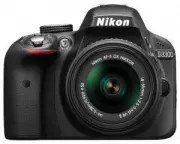 Nikon D3300
Manual
Nikon D3300
Manual
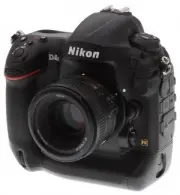 Nikon D4S
Manual
Nikon D4S
Manual
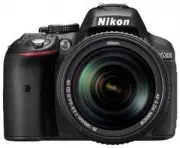 Nikon D5300
Manual
Nikon D5300
Manual
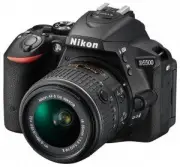 Nikon D5500
Manual
Nikon D5500
Manual
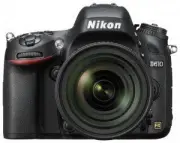 Nikon D610
Manual
Nikon D610
Manual
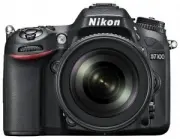 Nikon D7100
Manual
Nikon D7100
Manual
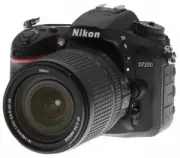 Nikon D7200
Manual
Nikon D7200
Manual
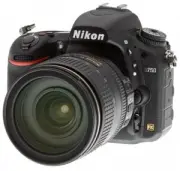 Nikon D750
Manual
Nikon D750
Manual
 Nikon D810
Manual
Nikon D810
Manual
 Nikon D810A
Manual
Nikon D810A
Manual
 Nikon Df
Manual
Nikon Df
Manual
 Nikon 1 AW1
Manual
Nikon 1 AW1
Manual
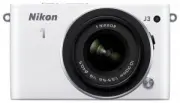 Nikon 1 J3
Manual
Nikon 1 J3
Manual
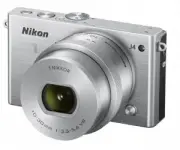 Nikon 1 J4
Manual
Nikon 1 J4
Manual
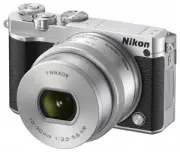 Nikon 1 J5
Manual
Nikon 1 J5
Manual
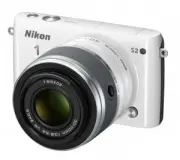 Nikon 1 S2
Manual
Nikon 1 S2
Manual
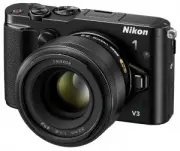 Nikon 1 V3
Manual
Nikon 1 V3
Manual
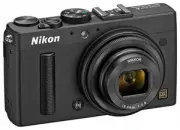 Nikon Coolpix A
Manual
Nikon Coolpix A
Manual
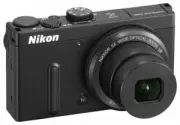 Nikon Coolpix P330
Manual
Nikon Coolpix P330
Manual
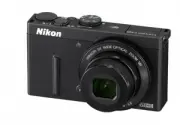 Nikon Coolpix P340
Manual
Nikon Coolpix P340
Manual