Page 2 - WARNING—To avoid injury; • Do not fire the flash directly into a person’s eyes at close; Determine which group your camera belongs to.; Please open the front fold-out page for easy reference.; Foreword
Congratulations. You are now the proud owner of the NikonAutofocus Speedlight SB-28, a flash unit offering sleek new stylingand simple push-button operation. When used with Nikon SLRcameras, the SB-28’s extensive capabilities range from 3D Multi-Sensor Balanced Fill-Flash, today’s most advanced flas...
Page 3 - Camera groups and available flash modes; I II
3 1 Sold exclusively in the USA. 2 F80-Series/N80-Series, F70-Series/N70 cannot perform FP High-Speed Flash Sync. 3 Center-Weighted Fill-Flash is not possible. 4 Sold exclusively in the USA and Canada. 5 An optional sync cord for land use is required. * For cameras such as the Nikon F or Nikon F2, r...
Page 4 - Speedlight parts
4 * Because the European version of the SB-28 comes with a different shaped connector, Nikon DC Units SD-7, SD-8 and the Power Bracket Unit SK-6 are not compatible. Speedlight parts Built-in bounce card (P.61) Built-in wide flash adapter (P.21) Mounting foot locking wheel (P.14) Mount pin (P.14) For...
Page 5 - Notes on LCDs; NOTE; Using the SB-28 in dim light; LCD panel indications
All LCD (liquid crystal display) figures and marks do not appear atthe same time. They are shown together here for ease of explanation. 1 Flash mode indicator (P.22) t Ø Automatic Balanced Fill-Flash with TTL Multi-Sensor tø Matrix Balanced Fill-Flash,Center-Weighted/Spot Fill-Flash t Standard TTL F...
Page 6 - Take some test shots.; Tips on using this manual
6 Take some test shots. Before taking important flash photographs, take some test shots toascertain the SB-28 is working as desired in the mode(s) you haveselected. Use only Nikon-approved equipment. The SB-28 is designed for use with Nikon cameras, lenses, andaccessories. —Using cameras or accessor...
Page 7 - Notices used in this manual; Denotes important points where caution is required.; Determine what type of Nikkor lenses you are using.; Nikkor lenses are divided into two groups unless otherwise noted.; About this manual
7 • This instruction manual consists of the main manual plus a separate Quick Reference sheet. The Quick Reference sheetprovides an overview of the SB-28’s capabilities and features,while the main manual supplies detailed information on allaspects of the SB-28. • Because explanations in this manual ...
Page 8 - Contents
Foreword ········································································································2 Camera groups and available flash modes ··················································3 Speedlight parts ············································································...
Page 10 - One-button operations; Two-button operations; Using control buttons
10 By pressing a single button, you can activate frequently usedfunctions. When two buttons are pressed simultaneously, youcan activate functions which are not necessary to set each time.For easy reference, refer to the chart on the back of the built-inbounce card. One-button operations ' To adjust ...
Page 11 - Getting started; Becoming familiar with the SB-28; Before starting to take flash pictures, you should familiarize
11 Getting started Becoming familiar with the SB-28 Before starting to take flash pictures, you should familiarize yourself with various settings and adjustments of the SB-28, regardless of which Nikon SLR camera you are using.
Page 12 - Open the battery chamber lid.; Loading batteries
Four penlight batteries (1.5V or lower) of any of the following typesmay be used: • AA-type alkaline-manganese (1.5V) • AA-type lithium (1.5V) • AA-type NiCd (rechargeable) (1.2V) • AA-type Ni-MH (Nickel Metal Hydride) (rechargeable) (1.2V) NOTE : AA-type high-power manganese batteries are not recom...
Page 13 - Adjusting the flash head; Adjusting the flash head / Selecting the distance scale
Adjusting the flash head Hold down the flash head tilting/rotating lock release button whileadjusting the flash head to the horizontal/front position. • The flash head tilts/rotates from the horizontal/front position to: 90° (up)–7° (down)180° (left)90° (right) • The flash head has click stops at 30...
Page 14 - Attaching the SB-28 to the camera
14 When attaching the SB-28 to your camera, make sure both units areturned off to avoid accidentally firing the flash. 1 Loosen the SB-28's mounting foot locking wheel and slide the SB-28 into the camera’s accessory shoe. 2 Tighten the locking wheel. With cameras equipped with a safety lock system, ...
Page 15 - Turning power on and off; Standby function; Canceling and setting the standby function; Turning the SB-28 on and off / Standby function
Turning power on and off To turn the SB-28 on and off, depress and hold the = button for approx. 0.5 sec. Standby function If both the SB-28 and camera are not used for after approx. 80 seconds,the SB-28 shuts off automatically to conserve battery power. This is calledthe standby function. Canceling...
Page 16 - The ready-light blinks when the flash fires at maximum output.
After the SB-28 is turned on, the ready-light lights up as soonas the SB-28 is recycled and ready to fire. —Make sure the ready-light lights up before taking the picture. The ready-light blinks when the flash fires at maximum output. In TTL Auto Flash t or Non-TTL Auto Flash ˙ mode, if the ready-lig...
Page 17 - Test firing
You can perform simple test firing by pressing the ~ button to ensure that the SB-28 is working properly. 1 Press the = button to turn the SB-28 on. 2 After the ready-light comes on, press the ~ button to fire the SB-28. NOTE If the SB-28 enters the standby mode, press the ~ button once to turn the ...
Page 18 - Turn it on again. The film speed starts blinking.; Setting the ISO film speed
Cameras in Groups I and II The ISO film speed is automatically set and indicated on the SB-28’sLCD panel. • The usable film speed in TTL Auto Flash t mode is ISO 25 to 1000. Cameras in Groups III through VII Set the ISO film speed manually in this manner: 1 Turn the SB-28 off. 2 Turn it on again. Th...
Page 19 - The zoom head is automatically adjusted.; After automatic adjustment, make sure the zoom-head position; Adjusting the zoom-head position
The SB-28 has six zoom-head position settings: 24mm, 28mm,35mm, 50mm, 70mm and 85mm. (The zoom head is set to either18mm or 20mm when the built-in wide flash adapter is used.) Cameras in Groups I and II with Nikkor lenses with abuilt-in CPU 1 The zoom head is automatically adjusted. • Automatic zoom...
Page 20 - Other camera/lens combinations
Adjusting the zoom-head position 20 NOTE To cancel automatic zoom-head positioning and set the positionmanually: 1 Press the ' and { buttons simultaneously for approx. 2 sec. until the small M above ZOOM starts blinking.Then press the ' button and set the desired zoom-head position manually. 2 The z...
Page 21 - Setting the built-in wide flash adapter
The SB-28 comes with a wide flash adapter to increase the angle ofcoverage to match an 18mm or 20mm lens. 1 Slide out the wide flash adapter 1 and gently push it down into place in front of the flash head 2 . • Because the bounce card comes out at the same time, return it 3 to its original position ...
Page 22 - Selecting a flash mode
When the µ button on the back of the SB-28 is pressed, the flash mode indicator sequences through these modes: Note that the LCD indications and available flash modes differ dependingon which Nikon camera and lens you are using. The table below shows the auto flash mode recommended for use witheach ...
Page 23 - Basic operation; Shooting in the auto flash mode; The SB-28 provides a variety of flash modes to cover virtually all
Basic operation Shooting in the auto flash mode The SB-28 provides a variety of flash modes to cover virtually all shooting situations. These modes range from TTL Auto Flash t to Non-TTL Auto Flash ˙ and Manual Flash ƒ . In this section, TTL and Non-TTL Auto Flash modes are explained. TTL Auto Flash...
Page 24 - Six flash operations are possible in the TTL Auto Flash mode:; flash modes
Six flash operations are possible in the TTL Auto Flash mode: 3D Multi-Sensor Balanced Fill-Flash (Applicable to F5, F100, F90X/N90s, F90-Series/N90, F80-Series/N80-Series, F70-Series/N70) This mode automatically controls flash output to keep both subject andbackground correctly exposed. The SB-28 f...
Page 26 - Monitor Preflash will not operate:; Set the flash sync mode.; Camera settings
* 1 All of the above flash modes can be changed to Standard TTL Flash t . * 2 Only Standard TTL Flash is possible when the F5 ’ s, F100 ’ s or F80-Series/N80-Series ’ Metering System is set to Spot Metering. * 3 With a G-type Nikkor lens attached to F90X/N90s, F90-Series/N90, F70-Series/N70 cameras,...
Page 27 - Select the flash mode.; Check the shooting distance.; Flash settings
3 Select the flash mode. —Press the µ button until the desired auto flash mode appears on the LCD panel. tØ Automatic Balanced Fill- Flash with TTL MultiSensor t ø Center-Weighted/Spot Fill-Flash t Standard TTL Flash 4 Check the shooting distance. A flash shooting distance range of 0.8 to 6m (2.6 to...
Page 29 - Mode; Applicable to cameras in Groups I and II; Nikkor lenses with a built-in CPU; Nikkor lenses without a built-in CPU
Confirming the flash shooting distance range in TTLAuto Flash t Mode Applicable to cameras in Groups I and II The method for confirming the shooting distance differs, depending on thelens in use and the selected exposure mode. Check the flash shootingdistance range as described below. Flash shooting...
Page 31 - Available flash operation in TTL Auto Flash
* 1 Matrix Balanced Fill-Flash operation is possible with F4-Series camera when AI-S or AI-type Nikkor lenses, Nikon Series E lenses, and lenses for the F3AF are used. * 2 The above flash modes can be changed to Standard TTL Flash t . * 3 Only Standard TTL Flash can be performed when the F4’s Meteri...
Page 33 - Select the flash mode on the camera.
Use the camera’s MODE button to select the flash mode. * 1 G-type Nikkor lenses cannot be used with an F-601/N6006 camera. With a G-type Nikkor lens attached to an F-601 M /N6000 camera, the A and M exposure modes cannot be used. * 2 Spot Metering is not possible with the F-601 M /N6000. 1 Set the a...
Page 34 - Wait for the ready-light to come on and make sure the subject
4 Select the flash mode. —Press the µ button until t appears on the LCD panel. • Set your camera to the Matrix Balanced Fill Flash or Center-Weighted Fill-Flash/Spot Fill-Flashmode. 5 Check the shooting distance. A flash shooting distance range of 0.8 to 6m (2.6 to 20 ft) is shown. Nikkor lenses wit...
Page 36 - With Nikkor lenses with a built-in CPU
36 2 Check the shooting distance according to the lens in use and the exposure mode selected on the camera. Flash shooting distance range With Nikkor lenses with a built-in CPU For F60-Series/N60 and F50-Series/N50 (In Programmed Auto (P) orShutter-Priority Auto (S) exposure mode) With an F60-Series...
Page 37 - Wait for the ready-light to come on and make sure the subject is
For F60-Series/N60, F50-Series/N50 and F-401x/N5005 (in Aperture-Priority Auto (A) or Manual (M) mode) Note the aperture set on the lens and set the same aperture on theSB-28’s LCD panel by pressing the { or } button. Then confirm the flash shooting distance range. With Nikkor lenses without a built...
Page 40 - For cameras in Group VI: FM3
40 *G-type Nikkor lenses cannot be used. • In aperture-priority auto (A) mode, the shutter speed is automatically set to 1/250 sec. for the FM3 A , FA, FE2, and 1/90 sec. for the FG, Nikonos V. When setting a shutter speed at a much slower speed, set the camera’sexposure mode to Manual (M). • Standa...
Page 42 - For cameras in all groups
In Non-TTL Auto Flash shooting, the SB-28’s light outputautomatically changes to match the flash-to-subject distance. Thelight, however, is not measured through the lens, but is measuredby the light sensor on the front of the SB-28. —The SB-28 can be used in Non-TTL Auto Flash mode with any Nikon ca...
Page 43 - Select the exposure mode.; Set the aperture on the lens.
3 Select the exposure mode. —Set the camera’s exposure mode to Aperture-priority auto (A) or Manual (M). 4 Set the aperture on the lens. —Set the aperture that appears on the SB-28’s LCD panel on the lens.• The subject will be overexposed if you set a larger aperture (smaller f-number) on the camera...
Page 45 - Advanced operation; For handling difficult lighting situations or; In addition to convenient Auto Flash,
Advanced operation For handling difficult lighting situations or expressing your ideas In addition to convenient Auto Flash, the SB-28 offers a host of other advanced operations to match your creative ideas or when unusual lighting situations are encountered.
Page 48 - Synchronization in continuous shooting in Manual; Number of continuous flashes at six frames per sec.
Synchronization in continuous shooting in Manual ƒ mode. The SB-28 is able to recycle fast enough to synchronize with a motor-drivencamera firing continuously up to six frames per sec. at a 1/64 flash outputlevel. It is possible to take up to 40 flash pictures in rapid succession. *Available in the ...
Page 49 - Set the shutter speed.
FP High-Speed Flash sync % in Manual Flash ƒ mode For F5, F100, F90X/N90s, F90-Series/N90 The SB-28 allows you to use faster shutter speeds for flashsynchronization. With FP High-Speed Flash sync % , the flash emits light at an extremely rapid rate, while the shutter curtains travel to expose thefil...
Page 51 - Notes on flash photography in FP High-Speed Flash sync; • Do not use the built-in wide flash adapter.; • Detaching the SB-28; Adjustment factors for other ISO film speeds
% guide numbers vary with the ISO film speed, shutter speed, and zoom- head position. • For film speeds other than ISO 100, multiply the guide numbers by the factors shown in the above chart. For example, for a film speed of ISO 400, with the zoom-head adjusted to 35mm,and a shutter speed of 1/500 s...
Page 52 - Repeating Flash
In the " mode, the SB-28 fires repeatedly during a single exposure, creating stroboscopic multiple-exposure effects. Thismode is useful when shooting fast-moving subjects. 1 Select the flash mode. —Press the µ button until ƒ " appear on the LCD panel. 2 Set the flash output level, the freque...
Page 53 - Maximum number of repeating flashes per frame
Frequency (Hz) Flash output level Number of repeating flashesper frame —In the example, at 1/8 flash output level, the flash will fire three times per frame at a frequency of 4 flashes per second. *Frequency (Hz) represents the number of flashes per second. The higher the number, the shorter the fla...
Page 56 - To calculate the correct aperture:; Guide Numbers for determining correct aperture in
56 Guide numbers help you determine a correct exposure or proper aperture(f/stop) when using the SB-28 in the Manual ƒ or Repeating Flash " mode. • See page 51 for % guide numbers. The guide number represents the amount of light (ISO 100: for m/ft) generated bythe flash. With the SB-28, you can ...
Page 58 - Bounce flash operation; Applicable to all camera groups
When taking pictures indoors, direct flash often causes harsh,unattractive shadows on the subject or background. By bouncingthe light off the ceiling or walls, you can soften the shadows andproduce more natural-looking portraits. With the SB-28's built-in bounce card, you can create a highlight in t...
Page 60 - Flash head tilting and rotating angle
Flash head tilting and rotating angle For bouncing light off the walls or when the camera is held vertically, theSB-28’s flash head tilts up to 90° and rotates horizontally 180° (to the left) and90° (to the right). Always set the flash head at a click stop. • When the flash head is tilted up or rota...
Page 61 - Using the built-in bounce card; Pull out the wide flash adapter.; Set the flash head as shown and take pictures.
Using the built-in bounce card In bounce flash photography, you can create a highlight in the subject’seyes by using the SB-28's built-in bounce card. This white card reflects asmall amount of light directly back to the subject, opening up the shadowsand making the eyes look more vibrant. 1 Pull out...
Page 62 - Connect the SB-28 to your camera using the optional TTL; Close-up flash operation in TTL Auto Flash
When shooting subjects closer than 0.6m (2 ft), use your SB-28 offcamera and utilize its built-in wide flash adapter. 1 Connect the SB-28 to your camera using the optional TTL Remote Cord SC-17. • For F5 cameras with a High-Magnification Finder DW-30 or DW-31, use the optional TTL Remote Cord SC-24....
Page 63 - Position the built-in wide flash adapter over the flash head.
4 Set the flash mode. —Press the µ button until t appears on the LCD panel. 5 Position the built-in wide flash adapter over the flash head. • Refer to page 21, Setting the built-in wide flash adapter. 6 Adjust the zoom-head position to 18mm or 20mm regardless of the lens focal length in use. 63 Flas...
Page 64 - Move the SB-28 off axis, making sure the subject will
64 Close-up flash operation in TTL Auto Flash t Mode 7 Move the SB-28 off axis, making sure the subject will receive sufficient illumination. • In 3D Multi-Sensor Balanced Fill-Flash mode with cameras in Group I, you may not be able to obtain correct exposure because distance informationfrom the len...
Page 65 - Notes on multiple flash operation; Speedlight coefficients; Multiple flash operation in
To eliminate harsh, directional shadows produced by a single flashunit or to add additional illumination to the background, you canattach additional Nikon Speedlights in series. Flash shooting with more than one unit Flash shooting with one flash unit For multiple flash operation with the SB-28, bot...
Page 66 - TTL multiple flash operation; Attach the main flash unit to the camera’s accessory shoe.
Multiple flash operation in t and ƒ flash modes 66 TTL multiple flash operation Cameras in Groups I through VI and F3-Series 1 Attach the main flash unit to the camera’s accessory shoe. • To use the SB-28 off-camera, refer to pages 68-69, System chart for TTL multiple flash, for the correct type of ...
Page 68 - System chart for TTL multiple flash
System chart for TTL multiple flash (For cameras in Groups I through VI, plus F3-Series cameras) • SB-11, SB-14, SB-140, and SB-21B Speedlights cannot be used with the F-401/N4004 or F-401s/N4004s as either main or secondary units. Multiple flash operation in t and ƒ flash modes 68 Group I Group V F...
Page 70 - Manual multiple flash operation; Connect the SB-28 to the sync terminal of the secondary flash; Usable optional remote cords:; Set the flash mode of all the flash units to Manual
Manual multiple flash operation (For cameras in all groups) • For speedlights which can serve as secondary flash units, see the System chart for TTL multiple flash on pages 68–69. 1 Connect the SB-28 to the sync terminal of the secondary flash unit(s) using a cord. Usable optional remote cords: Use ...
Page 71 - Exposure compensation in flash photography
For cameras in all groups In the TTL Auto Flash t or non-TTL Auto Flash ˙ mode, some plus compensation may be necessary when the background includes a mirror,white wall or other highly reflective surface. Likewise, some minuscompensation may be required when the background is dark or includessubject...
Page 73 - Canceling exposure compensation
73 3 Set the desired exposure compensation. —Press the { or } button to increase or decrease the compensation. • Exposure compensation is possible in 1/3 steps from –3.0 to +1.0 EV. • The shooting range indicator bars _ automatically change according to the amount of exposure compensation. 4 Press t...
Page 74 - Exposure compensation values possible with various film speeds
Flash exposure compensation in TTL Auto Flash t mode For cameras in Groups I through VI (when making exposurecompensation to the SB-28’s flash output and the background) Use your camera's EV compensation control to make exposurecompensation. In this mode, flash output is automatically controlled to ...
Page 76 - Setting your camera to red-eye reduction; Red-eye reduction control
When photographing people or animals in dim light using flash, thesubject's eyes may come out bright red in color pictures or white inblack and white pictures. This phenomenon is known as red-eye.To prevent this, cameras in Group I (except the F5) as well as thePronea 600i/6i feature red-eye reducti...
Page 77 - Rear-curtain flash sync
In normal flash synchronization, the SB-28 fires at the beginning of theexposure just after the front shutter curtain opens. When shooting fast-moving subjects at slower shutter speeds, this usually results inunnatural-looking pictures where the subject frozen by the flashappears behind or within th...
Page 79 - Additional information; Reference section; In this section, information on
Additional information Reference section In this section, information on troubleshooting and optional accessories is presented. Following that are tips on Speedlight care, notes on batteries, with the SB-28’s specifications coming at the end of the manual.
Page 80 - Checking the correct exposure
In Non-TTL Auto Flash ˙ mode, you can determine whether the subject will receive the correct exposure by test firing the SB-28before actually taking pictures. 1 Set the camera’s exposure mode to Aperture-priority auto (A) or Manual (M). 2 Press the SB-28’s µ button until ˙ appears on the LCD panel. ...
Page 81 - Autofocus flash operation in dim light; For autofocus cameras only
When the light is too dim for normal autofocus operation, theSB-28’s AF assist illuminator LED automatically turns on when set toilluminate dark subjects when the shutter release button ispressed halfway. • Take care not to block the AF assist illuminator LED while shooting.• The AF assist illuminat...
Page 82 - Hold down the
Conditions necessary to activate the AF assistilluminator LED: 1 The subject must be sufficiently dark and within the range of 1m (3.3 ft) to 8m (16.4 ft) at 20°C (68°F). 2 AF Nikkor lenses must be used. Lenses from 24mm (35mm for F-501/N2020) to 105mm are recommended.Other AF Nikkor lenses can be u...
Page 83 - Accessories for multiple flash; Sync Terminal Adapter AS-15; Optional accessories
83 Accessories for multiple flash Sync Cord SC-11 and SC-15 Sync Cords SC-11 and SC-15 are handy when you want to use the SB-28off-camera or for use with cameras without accessory shoes. These cordsalso allow you to perform Multiple Flash photography in the Manual ƒ mode. The SC-11 is approx. 25 cm ...
Page 84 - Connecting the SB-28 to your camera using a sync cord; Usable sync cords
84 Connecting the SB-28 to your camera using a sync cord You can connect the SB-28 to your camera by attaching a synccord to the SB-28’s sync terminal. • You cannot use a sync cord when the SB-28 is set to the t mode. Usable sync cords SC-11 (approx. 25 cm)SC-15 (approx. 1m) NOTE • To connect the SB...
Page 85 - Available external power sources; Use only Nikon-approved external power sources; Using an external power source
85 Available external power sources External power source SD-7External power source SD-8/8A*Power Bracket SK-6/6A* Use only Nikon-approved external power sources Using external power sources other than those specified by Nikonmay cause damage to the SB-28. * Available in the European market only. Us...
Page 86 - Tips on Speedlight care
86 Avoid physical shocks Do not drop the SB-28 or hit it against a hard surface as this may damageits precision mechanisms. Never disassemble the SB-28 Never attempt to disassemble or repair the SB-28 yourself. The SB-28contains high-voltage circuitry which can cause electric shock. Keep the SB-28 a...
Page 87 - WARNING; Notes on handling batteries; Notes on batteries
87 WARNING • Keep batteries out of the reach of children. If a battery is accidentally swallowed, call a doctor immediately. Notes on handling batteries • Do not expose batteries to excessive heat. Never store them in the truck or glove compartment of a vehicle during the summer or place them neara ...
Page 88 - Notes on using alkaline-manganese and lithium batteries
88 • Lithium batteries have approx. 1.1 to 1.2 times the power capacity of alkaline-manganese batteries. • Lithium batteries feature greater efficiency at low temperatures when compared with alkaline-manganese batteries. Lithium batteries boastconsistent performance in terms of recycling times and n...
Page 89 - Troubleshooting
89 NOTE The SB-28 incorporates a microcomputer to control flash operations.In rare cases, the SB-28 may not work properly even after fresh batteriesare properly installed. If this happens, replace the batteries with theSB-28's power turned on. Troubleshooting Warning indicator Cause CameraGroup Ref....
Page 90 - Warning indications
90 The flash ready-light in the camera's viewfinder will blink: F90X/N90s viewfinder display is shown. Cameras in Groups I (except F70-Series/N70), II, III, V and VI. —in the t mode, when you press the shutter release button halfway, to warn that the SB-28 has not been securely mounted on the camera...
Page 91 - Specifications
91 Automatic Insulated Gate Bipolar Transistor (IGBT) andseries circuitry. • See page 51 for details on guide numbers in FP High- Speed Sync Flash and see also page 30 for details onguide numbers in 1/300 TTL High-Speed Sync Flash. (Variable in 6 steps, plus 2-steps with built-in wide flashadapter) ...


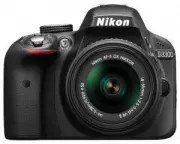 Nikon D3300
Manual
Nikon D3300
Manual
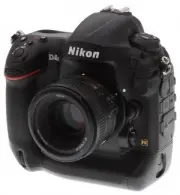 Nikon D4S
Manual
Nikon D4S
Manual
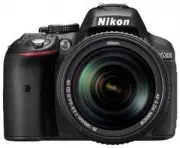 Nikon D5300
Manual
Nikon D5300
Manual
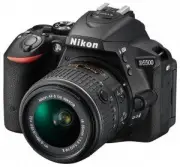 Nikon D5500
Manual
Nikon D5500
Manual
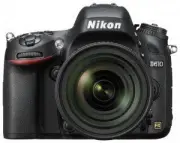 Nikon D610
Manual
Nikon D610
Manual
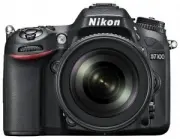 Nikon D7100
Manual
Nikon D7100
Manual
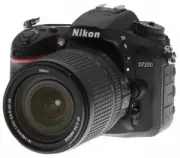 Nikon D7200
Manual
Nikon D7200
Manual
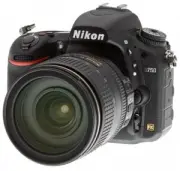 Nikon D750
Manual
Nikon D750
Manual
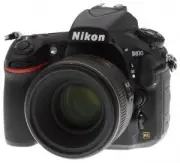 Nikon D810
Manual
Nikon D810
Manual
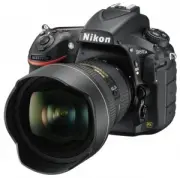 Nikon D810A
Manual
Nikon D810A
Manual
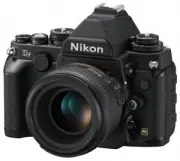 Nikon Df
Manual
Nikon Df
Manual
 Nikon 1 AW1
Manual
Nikon 1 AW1
Manual
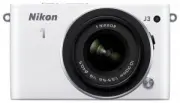 Nikon 1 J3
Manual
Nikon 1 J3
Manual
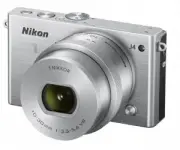 Nikon 1 J4
Manual
Nikon 1 J4
Manual
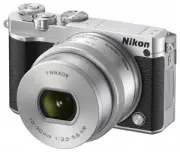 Nikon 1 J5
Manual
Nikon 1 J5
Manual
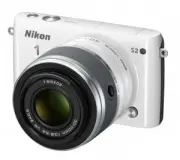 Nikon 1 S2
Manual
Nikon 1 S2
Manual
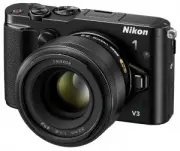 Nikon 1 V3
Manual
Nikon 1 V3
Manual
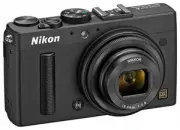 Nikon Coolpix A
Manual
Nikon Coolpix A
Manual
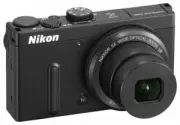 Nikon Coolpix P330
Manual
Nikon Coolpix P330
Manual
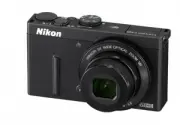 Nikon Coolpix P340
Manual
Nikon Coolpix P340
Manual