Page 2 - Where to Find It; The Table of Contents; The Index
Where to Find It Find what you’re looking for from: A For Your Safety Before using the camera for the first time, read the safety instructions in “For Your Safety” ( 0 xi–xvi). Help Use the camera’s on-board help feature for help on menu items and other topics. See page 11 for details. Digitutor “Di...
Page 3 - ii
i Q&A Index 0 ii Table of Contents 0 vi X Introduction 0 1 s Basic Photography and Playback 0 25 ! Guide Mode 0 35 z More on Photography (All Modes) 0 41 t P, S, A, and M Modes 0 67 I More on Playback 0 91 Q Connections 0 105 o The Playback Menu 0 117 i The Shooting Menu 0 119 g The Setup Menu 0...
Page 4 - Camera Displays
ii Find what you’re looking for using this “question and answer” index. Q&A Index ❚❚ Camera Displays Question Key phrase 0 What do these icons mean? The information display 6 The viewfinder 5 How many more shots can I take with this card? Number of exposures remaining 26 How much charge does the...
Page 5 - iii; Taking Photographs
iii ❚❚ Taking Photographs Question Key phrase 0 Is there a quick and easy way to take snapshots? Auto modes 25–29 How do I use the GUIDE position on the mode dial? Guide mode 35–40 How do I quickly adjust settings for different scenes? Scene modes 30–31 How do I take pictures for printing at large s...
Page 6 - iv; Viewing, Retouching, and Printing Photographs
iv ❚❚ Viewing, Retouching, and Printing Photographs Question Key phrase 0 How do I view photographs on the camera? Playback 32, 91 How do I delete unwanted photos? Deleting photos 33, 101–103 Can I zoom in on photos during playback? Playback zoom 99 Can I protect photos from accidental deletion? Pro...
Page 7 - Menus and Settings; Miscellaneous
v ❚❚ Menus and Settings Question Key phrase 0 How do I use the menus? Using the menus 11–13 How do I get help for a menu or message? Help 11 Error messages 183 How do I adjust settings? The information display 6, 7 The command dial 8–10 Menus 117–155 How do I restore default settings? Reset shooting...
Page 8 - Table of Contents
vi Q&A Index .................................................................................................................................... iiFor Your Safety .......................................................................................................................... xiNotices...
Page 9 - vii; Guide Mode
vii Guide Mode 35 The Guide Menu.......................................................................................................................35Shoot: Taking Pictures in Guide Mode ...............................................................................................37 View/Delete:...
Page 10 - viii; More on Playback
viii Picture Controls........................................................................................................................ 87 Selecting a Picture Control.................................................................................................. 87Modifying Picture Controls ...
Page 11 - ix; Technical Notes
ix B The Setup Menu: Camera Setup .......................................................................................... 124 Reset Setup Options ....................................................................................................... 125LCD Brightness ................................
Page 13 - xi; For Your Safety; WARNINGS
xi For Your Safety To prevent damage to your Nikon product or injury to yourself or to others, read the following safety precautions in their entirety before using this equipment. Keep these safety instructions where all those who use the product will read them. The consequences that could result fr...
Page 14 - xii
xii A Observe proper precautions when handling batteries Batteries may leak or explode if improperly handled. Observe the following precautions when handling batteries for use in this product: • Use only batteries approved for use in this equipment. • Do not short or disassemble the battery. • Be su...
Page 15 - xiii; Notices
xiii Notices • No part of the manuals included with this product may be reproduced, transmitted, transcribed, stored in a retrieval system, or translated into any language in any form, by any means, without Nikon’s prior written permission. • Nikon reserves the right to change the specifications of ...
Page 16 - xiv
xiv Notices for Customers in CanadaCAUTION This Class B digital apparatus complies with Canadian ICES-003. ATTENTION Cet appareil numérique de la classe B est conforme à la norme NMB-003 du Canada. Notice for Customers in Europe This symbol indicates that this product is to be collected separately. ...
Page 17 - xv
xv Notice Concerning Prohibition of Copying or Reproduction Note that simply being in possession of material that has been digitally copied or reproduced by means of a scanner, digital camera, or other device may be punishable by law. • Items prohibited by law from being copied or reproduced Do not ...
Page 18 - xvi
xvi A Before Taking Important Pictures Before taking pictures on important occasions (such as at weddings or before taking the camera on a trip), take a test shot to ensure that the camera is functioning normally. Nikon will not be held liable for damages or lost profits that may result from product...
Page 19 - Introduction; Symbols and Conventions; Overview
1 X X Introduction Thank you for your purchase of a Nikon single-lens reflex (SLR) digital camera. To get the most from your camera, please be sure to read all instructions thoroughly and keep them where they will be read by all who use the product. ❚❚ Symbols and Conventions To make it easier to fi...
Page 20 - Getting to Know the Camera; The Camera Body
2 X Getting to Know the Camera Take a few moments to familiarize yourself with camera controls and displays. You may find it helpful to bookmark this section and refer to it as you read through the rest of the manual. The Camera Body 11 12 13 1 14 17 15 16 18 19 34 6 9 7 2 5 8 10 20 21 23 22 24 1 Mo...
Page 22 - The Mode Dial; GUIDE Mode; Scene Modes
X 4 The Mode Dial The camera offers a choice of the following modes: ❚❚ P, S, A, and M Modes Select these modes for full control over camera settings. P — Programmed auto ( 0 68): Camera chooses shutter speed and aperture, user controls other settings. S — Shutter-priority auto ( 0 69): Choose fast ...
Page 23 - The Viewfinder
5 X The Viewfinder 1 5 234 6 7 16 14 17 19 18 10 12 8 15 9 13 11 1 Framing grid (displayed when On is selected for Viewfinder options > Viewfinder grid in the setup menu) ..................... 132 2 Reference circle for center- weighted metering ............74 3 Card warning indicator...... 183 4...
Page 24 - The Information Display
X 6 The Information Display Shooting information, including shutter speed, aperture, and the number of exposures remaining, is displayed in the monitor when the R button is pressed. Camera in normal orientation Camera rotated 90 ° to shoot in tall (portrait) orientation R button 12 29 28 27 26 25 24...
Page 25 - Changing Settings in the Information Display
7 X ❚❚ Changing Settings in the Information Display To change settings for the items listed in the information display, press the P button. Highlight items using the multi selector and press J to view options for the highlighted item. Some items can also be adjusted using the command dial and camera...
Page 26 - The Command Dial
X 8 The Command Dial The command dial can be used with other controls to adjust a variety of settings when shooting information is displayed in the monitor. Choose a combination of aperture and shutter speed (mode P ; 0 68). Mode P Command dial Information display Choose a shutter speed (mode S or M...
Page 28 - The Power Switch
X 10 The Power Switch Rotate the power switch as shown to turn the camera on. Rotate the power switch as shown to turn the camera off. The role of the Fn ( E ) button can be selected using the Buttons > E /Fn button option in the setup menu ( 0 134), allowing the following settings to be adjusted...
Page 29 - Camera Menus
11 X Camera Menus Most shooting, playback, and setup options can be accessed from the camera menus. To view the menus, press the G button. Tabs Choose from the following menus: • D : Playback ( 0 117) • N : Retouch ( 0 140) • C : Shooting ( 0 119) • m : Recent settings ( 0 155) • B : Setup ( 0 124) ...
Page 30 - Using Camera Menus; Highlight the icon for the current menu.
X 12 Using Camera Menus The multi selector and J button are used to navigate the camera menus. Follow the steps below to navigate the menus. 1 Display the menus. Press the G button to display the menus. 2 Highlight the icon for the current menu. Press 4 to highlight the icon for the current menu. 3 ...
Page 32 - First Steps; Charge the Battery; Remove the terminal cover.; CHARGE
14 X First Steps Charge the Battery The camera is powered by an EN-EL9a rechargeable Li-ion battery (supplied). To maximize shooting time, charge the battery in the supplied MH-23 quick charger before use. About one hour and forty minutes are required to fully recharge the battery when no charge rem...
Page 33 - Insert the Battery
15 X Insert the Battery 1 Turn the camera off. 2 Open the battery-chamber cover. Unlatch ( q ) and open ( w ) the battery-chamber cover. 3 Insert the battery. Insert the battery as shown at right. 4 Close the battery-chamber cover. A Inserting and Removing Batteries Always turn the camera off before...
Page 34 - Attach a Lens
X 16 Attach a Lens Care should be taken to prevent dust from entering the camera when the lens is removed. The lens generally used in this manual for illustrative purposes is an AF-S DX NIKKOR 18–55 mm f/3.5–5.6G VR. 1 Turn the camera off. 2 Remove the rear lens cap and the camera body cap. 3 Attach...
Page 35 - Detaching the Lens; ON; OFF
17 X ❚❚ Detaching the Lens Be sure the camera is off when removing or exchanging lenses. To remove the lens, press and hold the lens release button ( q ) while turning the lens clockwise ( w ). After removing the lens, replace the lens caps and camera body cap. ❚❚ Vibration Reduction (VR) AF-S DX NI...
Page 36 - Basic Setup; UTC; Choose a date format.
X 18 Basic Setup A language-selection dialog will be displayed the first time the camera is turned on. Choose a language and set the time and date. Photographs can not be taken until you have set the time and date. 1 Turn the camera on. A language-selection dialog will be displayed. 2 Select a langu...
Page 37 - Set the date and time.
19 X 6 Set the date and time. The dialog shown at right will be displayed. Press 4 or 2 to select an item, 1 or 3 to change. Press J to set the clock and exit to shooting mode. A The Setup Menu Language and date/time settings can be changed at any time using the Language ( 0 127) and Time zone and d...
Page 38 - Insert a Memory Card; Open the card slot cover.; Insert the memory card.; Removing Memory Cards
X 20 Insert a Memory Card The camera stores pictures on S ecure D igital (SD) memory cards (available separately). 1 Turn the camera off. 2 Open the card slot cover. Slide the card slot cover out ( q ) and open the card slot ( w ). 3 Insert the memory card. Holding the memory card as shown at right,...
Page 39 - Format the Memory Card; Display format options.; Format memory card; Highlight
21 X Format the Memory Card Memory cards must be formatted before first use or after being formatted in other devices. Format the card as described below. 1 Turn the camera on. 2 Display format options. Press the G button to display the menus. Highlight Format memory card in the setup menu and press...
Page 40 - GB
X 22 D Memory Cards • Memory cards may be hot after use. Observe due caution when removing memory cards from the camera. • Turn the power off before inserting or removing memory cards. Do not remove memory cards from the camera, turn the camera off, or remove or disconnect the power source during fo...
Page 41 - Adjust Viewfinder Focus; Focus the viewfinder.
23 X Adjust Viewfinder Focus The camera is equipped with diopter adjustment to accommodate individual differences in vision. Check that the display in the viewfinder is in focus before framing pictures in the viewfinder. 1 Remove the lens cap and turn the camera on. 2 Focus the viewfinder. Slide the...
Page 43 - Basic Photography and Playback; Step 1: Turn the Camera On; Check the battery level.
25 s s Basic Photography and Playback This section describes how to take photographs in i (auto) mode, an automatic “point-and-shoot” mode in which the majority of settings are controlled by the camera in response to shooting conditions, and in which the flash will fire automatically if the subject ...
Page 45 - Step 3: Frame the Photograph; Frame the photograph.
27 s Step 2: Select i or j Mode To shoot where use of a flash is prohibited, photograph infants, or capture natural lighting under low light conditions, rotate the mode dial to j . Otherwise, rotate the mode dial to i . Step 3: Frame the Photograph 1 Ready the camera. When framing photographs in the...
Page 50 - Basic Playback; Press the
32 s Basic Playback At default settings, photographs are automatically displayed for about 4 s after shooting. If no photograph is displayed in the monitor, the most recent picture can be viewed by pressing the K button. 1 Press the K button. A photograph will be displayed in the monitor. 2 View add...
Page 51 - Deleting Unwanted Photographs; Display the photograph.
33 s Deleting Unwanted Photographs To delete the photograph currently displayed in the monitor, press the O button. Note that photographs can not be recovered once deleted. 1 Display the photograph. Display the photograph you wish to delete as described on the preceding page. 2 Delete the photograph...
Page 53 - The Guide Menu
35 ! ! Guide Mode The guide menu gives access to a variety of frequently-used and useful functions. The top level of the guide menu is displayed when the mode dial is rotated to g . The Guide Menu Choose from the following menus: Shoot View/delete Set up Take pictures. View and/or delete pictures. C...
Page 56 - More Settings; More settings
38 ! To select a scene ( Easy operation > Auto in this example): ❚❚ More Settings Select More settings to adjust the following: Press 2 Highlight an option Highlight a scene Press 2 Highlight Start shooting (to adjust the settings listed below, select More settings ) Press J to view camera settin...
Page 57 - View single photos
39 ! View/Delete: Viewing and Deleting Pictures in Guide Mode Select View/delete to view and delete pictures. Highlight View/delete in the top level of the guide menu and press J to display the following options: To select an option ( View single photos in this example): Press G to display guide men...
Page 58 - Changing Camera Settings in Guide Mode
40 ! Set up: Changing Camera Settings in Guide Mode Select Set up to format memory cards or adjust camera settings. Highlight Set up in the top level of the guide menu and press J to display the following options: Changes to settings other than Playback folder , Print set (DPOF) , Format memory card...
Page 59 - Focus Mode; Place the cursor in the information display.; Focus
41 z z More on Photography (All Modes) Focus can be adjusted automatically or manually (see “Focus Mode,” below). The user can also select the focus point for automatic or manual focus ( 0 46) or use focus lock to focus to recompose photographs after focusing ( 0 46). Focus Mode Choose from automati...
Page 64 - Focus Point Selection; Choose an AF-area mode other than; Focus Lock
46 z Focus Point Selection In manual focus mode or when autofocus is combined with AF-area modes other than e Auto-area , you can choose from 11 focus points, making it possible to compose photographs with the main subject almost anywhere in the frame. 1 Choose an AF-area mode other than e Auto-area...
Page 65 - Recompose the photograph and shoot.
47 z 2 Lock focus. AF-A and AF-C focus modes : With the shutter-release button pressed halfway ( q ), press the AE-L/AF-L button ( w ) to lock both focus and exposure (an AE-L icon will be displayed in the viewfinder). Focus will remain locked while the AE-L/AF-L button is pressed, even if you later...
Page 66 - Manual Focus
48 z Manual Focus Manual focus can be used when you are not using an AF-S or AF-I lens or when autofocus does not produce the desired results ( 0 42). 1 Set the lens focus-mode switch. If the lens is equipped with an A-M or M/A-M switch, slide the switch to M . 2 Focus. To focus manually, adjust the...
Page 67 - The Electronic Rangefinder
49 z ❚❚ The Electronic Rangefinder If the lens has a maximum aperture of f/5.6 or faster, the viewfinder focus indicator can be used to confirm whether the subject in the selected focus point is in focus (the focus point can be selected from any of the 11 focus points). After positioning the subject...
Page 68 - Image Quality and Size; Image Quality; Display image quality options.
50 z Image Quality and Size Together, image quality and size determine how much space each photograph occupies on the memory card. Larger, higher quality images can be printed at larger sizes but also require more memory, meaning that fewer such images can be stored on the memory card ( 0 177). Imag...
Page 70 - Image Size; Display image size options.
52 z Image Size Image size is measured in pixels. 1 Place the cursor in the information display. If shooting information is not displayed in the monitor, press the R button. Press the P button to place the cursor in the information display. 2 Display image size options. Highlight the current image s...
Page 71 - Release Mode; Display release mode options.
53 z Release Mode Release mode determines how the camera takes photographs: one at a time, in a continuous sequence, or with a timed shutter-release delay or remote control. 1 Place the cursor in the information display. If shooting information is not displayed in the monitor, press the R button. Pr...
Page 73 - Self-Timer and Remote Modes; Mount the camera on a tripod.
55 z Self-Timer and Remote Modes The self-timer and optional ML-L3 wireless remote control ( 0 167) can be used to reduce camera shake or for self-portraits. 1 Mount the camera on a tripod. Mount the camera on a tripod or place the camera on a stable, level surface. 2 Select a release mode ( 0 53). ...
Page 76 - Using the Built-in Flash; Modes; Choose a flash mode (; Lowering the Built-in Flash
58 z Using the Built-in Flash The camera supports a variety of flash modes for photographing poorly lit or backlit subjects. ❚❚ Using the Built-in Flash: i , k , p , n , and o Modes 1 Choose a flash mode ( 0 59). 2 Take pictures. The flash will pop up as required when the shutter-release button is p...
Page 77 - Flash Mode
59 z Flash Mode To choose a flash mode: 1 Place the cursor in the information display. If shooting information is not displayed in the monitor, press the R button. Press the P button to place the cursor in the information display. 2 Display flash mode options. Highlight the current flash mode in the...
Page 80 - ISO Sensitivity; Display ISO sensitivity options.; AUTO
62 z ISO Sensitivity “ISO sensitivity” is the digital equivalent of film speed. The higher the ISO sensitivity, the less light needed to make an exposure, allowing higher shutter speeds or smaller apertures. 1 Place the cursor in the information display. If shooting information is not displayed in t...
Page 86 - Rotate the mode dial to
68 t Mode P (Programmed Auto) In this mode, the camera automatically adjusts shutter speed and aperture for optimal exposure in most situations. This mode is recommended for snapshots and other situations in which you want to leave the camera in charge of shutter speed and aperture. To take photogra...
Page 90 - Noise reduction
72 t ❚❚ Long Time-Exposures (M Mode Only) Shutter speeds of “bulb” and “time“ can be used for long time-exposure photographs of moving lights, the stars, night scenery, or fireworks. To prevent blurring caused by camera shake, use a tripod and an optional remote control ( 0 167). 1 Ready the camera....
Page 92 - Exposure; Metering
74 t Exposure Metering Choose how the camera sets exposure in P , S , A , and M modes (in other modes, the camera selects the metering method automatically). 1 Place the cursor in the information display. If shooting information is not displayed in the monitor, press the R button. Press the P button...
Page 93 - Autoexposure Lock; Matrix; Recompose the photograph.
75 t Autoexposure Lock Use autoexposure lock to recompose photographs after metering exposure: 1 Select M Center-weighted or N Spot metering ( 0 74). L Matrix metering will not produce the desired results. 2 Lock exposure. Position the subject in the selected focus point and press the shutter-releas...
Page 94 - Exposure Compensation; Display exposure compensation options.
76 t Exposure Compensation Exposure compensation is used to alter exposure from the value suggested by the camera, making pictures brighter or darker. It is most effective when used with center-weighted or spot metering ( 0 74). 1 Place the cursor in the information display. If shooting information ...
Page 96 - Flash Compensation; Display flash compensation options.
78 t Flash Compensation Flash compensation is used to alter flash output from the level suggested by the camera, changing the brightness of the main subject relative to the background. Flash output can be increased to make the main subject appear brighter, or reduced to prevent unwanted highlights o...
Page 98 - White Balance; Display white balance options.
80 t White Balance White balance ensures that colors are unaffected by the color of the light source. Auto white balance is recommended for most light sources; in P , S , A , and M modes, other values can be selected if necessary according to the type of source: 1 Place the cursor in the information...
Page 100 - Fine-Tuning White Balance
82 t Fine-Tuning White Balance White balance can be “fine tuned” to compensate for variations in the color of the light source or to introduce a deliberate color cast into an image. White balance is fine tuned using the White balance option in the shooting menu. 1 Display white balance options. To d...
Page 101 - Preset Manual; Measuring a Value for Preset White Balance; Light a reference object.; White balance; Preset manual; Measure
83 t Preset Manual Preset manual is used to record and recall custom white balance settings for shooting under mixed lighting or to compensate for light sources with a strong color cast. Two methods are available for setting preset white balance: ❚❚ Measuring a Value for Preset White Balance 1 Light...
Page 102 - Measure white balance.
84 t When the camera is ready to measure white balance, a flashing D ( L ) will appear in the viewfinder and information display. 5 Measure white balance. Before the indicators stop flashing, frame the reference object so that it fills the viewfinder and press the shutter-release button all the way ...
Page 104 - Copying White Balance from a Photograph
86 t ❚❚ Copying White Balance from a Photograph Follow the steps below to copy a value for white balance from a photograph on the memory card. 1 Select Preset manual . To display the menus, press the G button. Highlight White balance in the shooting menu and press 2 to display white balance options....
Page 105 - Picture Controls; Selecting a Picture Control; Display Picture Controls.; Set Picture Control; Choose a Picture Control.
87 t Picture Controls Nikon’s unique Picture Control system makes it possible to share image processing settings, including sharpening, contrast, saturation, and hue, among compatible devices and software. Selecting a Picture Control The camera offers six Picture Controls. In P , S , A , and M modes...
Page 106 - Modifying Picture Controls; Display the Picture Control menu.; Select a Picture Control.; Quick adjust
88 t Modifying Picture Controls Picture Controls can be modified to suit the scene or the user’s creative intent. Choose a balanced combination of settings using Quick adjust , or make manual adjustments to individual settings. 1 Display the Picture Control menu. To display the menus, press the G bu...
Page 107 - Picture Control Settings
89 t ❚❚ Picture Control Settings Option Description Quick adjust Choose from options between –2 and +2 to reduce or exaggerate the effect of the selected Picture Control (note that this resets all manual adjustments). For example, choosing positive values for Vivid makes pictures more vivid. Not ava...
Page 110 - Photo Information; Display mode; File Information
92 I Photo Information Photo information is superimposed on images displayed in full-frame playback. Press 1 or 3 to cycle through photo information as shown below. Note that shooting data, RGB histograms, and highlights are only displayed if corresponding option is selected for Display mode ( 0 118...
Page 111 - RGB Histogram
93 I ❚❚ RGB Histogram * * Displayed only if RGB histogram is selected for Display mode ( 0 118). 1 Protect status ............................................... 100 2 Retouch indicator....................................... 141 3 White balance................................................. 80 Whi...
Page 112 - Shooting Data Page 1
94 I ❚❚ Highlights * * Displayed only if Highlights is selected for Display mode ( 0 118). Blinking areas indicate highlights. ❚❚ Shooting Data Page 1 1 1 Displayed only if Data is selected for Display mode ( 0 118). 2 Displayed in red if photo was taken with ISO sensitivity auto control on.3 Displa...
Page 114 - Overview Data
96 I ❚❚ Overview Data * Displayed in red if photo was taken with ISO sensitivity auto control on. * AUTO is displayed if photo was taken with Active D-Lighting on. 1 Frame number/total number of images 2 Protect status ............................................... 100 3 Camera name 4 Retouch indic...
Page 115 - Thumbnail Playback
97 I Thumbnail Playback To display images in “contact sheets” of four, nine, or 72 images, press the W button. Full-frame playback Calendar playback Thumbnail playback To Use Description Display more images W Press W button to increase the number of images displayed. Display fewer images X Press X b...
Page 116 - Calendar Playback
98 I Calendar Playback To view images taken on a selected date, press the W button when 72 images are displayed. Press the W button to toggle between the date list and the list of thumbnails for the selected date. Use the multi selector to highlight dates in the date list or to highlight pictures in...
Page 117 - Taking a Closer Look: Playback Zoom
99 I Taking a Closer Look: Playback Zoom Press the X button to zoom in on the image displayed in full-frame playback or on the image currently highlighted in thumbnail or calendar playback. The following operations can be performed while zoom is in effect: To Use Description Zoom in or out X / W Pre...
Page 118 - Protecting Photographs from Deletion
100 I Protecting Photographs from Deletion In full-frame, zoom, thumbnail, and calendar playback, the L button can be used to protect photographs from accidental deletion. Protected files can not be deleted using the O button or the Delete option in the playback menu. Note that protected images will...
Page 119 - Deleting Photographs
101 I Deleting Photographs To delete the photograph displayed in full-frame playback or the photograph highlighted in the thumbnail list, press the O button. To delete multiple selected photographs, all photographs taken on a selected date, or all photographs in the current playback folder, use the ...
Page 120 - The Playback Menu; Selected: Deleting Selected Photographs; Choose; Selected; Select the highlighted picture.; Yes
102 I The Playback Menu The Delete option in the playback menu contains the following options. Note that depending on the number of images, some time may be required for deletion. ❚❚ Selected: Deleting Selected Photographs 1 Select Delete . To display the menus, press the G button. Highlight Delete ...
Page 121 - Select Date: Deleting Photographs Taken on a Selected Date; Select the highlighted date.
103 I ❚❚ Select Date: Deleting Photographs Taken on a Selected Date 1 Choose Select Date . In the delete menu, highlight Select date and press 2 . 2 Highlight a date. Press 1 or 3 to highlight a date. To view the pictures taken on the highlighted date, press W . Use the multi selector to scroll thro...
Page 122 - Slide Shows; Slide show; Start
104 I Slide Shows The Slide show option in the playback menu is used to display a slide show of the pictures in the current playback folder ( 0 117). 1 Select Slide show . To display the slide show menu, press the G button and select Slide show in the playback menu. 2 Select Start . To start the sli...
Page 123 - Connections; Before Connecting the Camera; Supplied Software; Windows; Connecting to a Computer
105 Q Q Connections This section describes how to use the supplied UC-E4 USB cable to connect the camera to a computer. Before Connecting the Camera Before connecting the camera, install the software on the supplied Software Suite CD. To ensure that data transfer is not interrupted, be sure the came...
Page 124 - Connecting the Camera; Turn the computer on.; Connect the USB cable.; Nikon Transfer help; Help
106 Q Connecting the Camera Connect the camera using the supplied USB cable. 1 Turn the camera off. 2 Turn the computer on. Turn the computer on and wait for it to start up. 3 Connect the USB cable. Connect the USB cable as shown. Do not use force or attempt to insert the connectors at an angle. 4 T...
Page 125 - Printing Photographs; Connecting the Printer
107 Q Printing Photographs To print selected JPEG pictures on a PictBridge printer via a direct USB connection, follow the steps below. Connecting the Printer Connect the camera using the supplied USB cable. 1 Turn the camera off. 2 Connect the USB cable. Turn the printer on and connect the USB cabl...
Page 126 - Printing Pictures One at a Time; Display printing options.
108 Q 3 Turn the camera on. A welcome screen will be displayed in the monitor, followed by a PictBridge playback display. Printing Pictures One at a Time 1 Select a picture. Press 4 or 2 to view additional pictures, or press 1 or 3 to view photo information ( 0 92). Press the X button to zoom in on ...
Page 127 - Start printing
109 Q 4 Start printing. Select Start printing and press J to start printing. To cancel before all copies have been printed, press J . Border This option is available only if supported by current printer. Menu shown at right will be displayed. Press 1 or 3 to choose print style from Printer default (...
Page 128 - Printing Multiple Pictures; Display the PictBridge menu.; Print select
110 Q Printing Multiple Pictures 1 Display the PictBridge menu. Press the G button in the PictBridge playback display (see Step 3 on page 108). 2 Choose an option. Highlight one of the following options and press 2 . • Print select : Select pictures for printing. • Select date : Print one copy of al...
Page 129 - Select pictures or choose a date.; If you chose
111 Q 3 Select pictures or choose a date. If you chose Print select or Print (DPOF) in Step 2 , use the multi selector to scroll through the pictures on the memory card. To display the current picture full screen, press and hold the X button. To select the current picture for printing, press the W b...
Page 131 - Creating Index Prints; Index print
113 Q Creating Index Prints To create an index print of all JPEG pictures on the memory card, select Index print in Step 2 of “Printing Multiple Pictures” ( 0 110). Note that if the memory card contains more than 256 pictures, only the first 256 images will be printed. 1 Select Index print . Selecti...
Page 132 - Creating a DPOF Print Order: Print Set
114 Q Creating a DPOF Print Order: Print Set The Print set (DPOF) option in the playback menu is used to create digital “print orders” for PictBridge-compatible printers and devices that support DPOF. Selecting Print set (DPOF) from the playback menu displays the menu shown in Step 1. 1 Choose Selec...
Page 133 - Select imprint options.; Data imprint; Complete the print order.; Done
115 Q 4 Select imprint options. Highlight the following options and press 2 to toggle the highlighted option on or off (to complete the print order without including this information, proceed to Step 5). • Data imprint : Print shutter speed and aperture on all pictures in print order. • Imprint date...
Page 134 - Viewing Photographs on TV; Connect the video cable as shown.
116 Q Viewing Photographs on TV An EG-D100 video cable (available separately) can be used to connect the camera to a television or VCR for playback or recording. Before connecting the camera, confirm that the camera video standard ( 0 127) matches that used in the TV. 1 Turn the camera off. Always t...
Page 135 - Menu Guide; Playback Folder
117 M o Menu Guide To display the playback menu, press G and select the D (playback menu) tab. The playback menu contains the following options: Choose a folder for playback: D The Playback Menu: Managing Images G button Option Default 0 Option Default 0 Delete — 102 Slide show — 104 Playback folder...
Page 136 - Display Mode
118 o Choose the information available in the playback photo information display ( 0 92). Press 1 or 3 to highlight an option, then press 2 to select the option for the photo information display. A M appears next to selected items; to deselect, highlight and press 2 . To return to the playback menu,...
Page 137 - Shooting Options
119 i C The Shooting Menu: Shooting Options To display the shooting menu, press G and select the C (shooting menu) tab. The shooting menu contains the following options: Select Yes to reset shooting menu settings. G button Option Default 0 Reset shooting options — 119 Set Picture Control Standard 87...
Page 138 - Auto ISO Sensitivity; ISO Sensitivity Settings
120 i Adjust ISO sensitivity ( 0 62). ❚❚ Auto ISO Sensitivity If Off is chosen for Auto ISO sensitivity in P , S , A , and M modes, ISO sensitivity will remain fixed at the value selected by the user ( 0 62). When On is chosen, ISO sensitivity will automatically be adjusted if optimal exposure can n...
Page 139 - Adobe RGB
121 i The color space determines the gamut of colors available for color reproduction. Choose sRGB for photographs that will be printed or used “as is,” with no further modification. Adobe RGB has a wider color gamut and is recommended for images that will be extensively processed or retouched after...
Page 140 - Noise Reduction
122 i If On is selected, photographs taken at shutter speeds slower than 8 s or at ISO sensitivities over ISO 400 will be processed to reduce noise. The time required for processing is roughly equal to the current shutter speed; during processing, “ l m ” will blink in the viewfinder and photographs...
Page 143 - Reset Setup Options
125 g Select Yes to reset setup menu all settings except Video mode , Time zone and date , Language , and Active folder to the defaults listed on page 124. The LCD brightness menu contains the following options: • LCD brightness : The menu at right will be displayed; press 1 or 3 to choose monitor b...
Page 144 - Select a background color.
126 g 3 Select a background color. Highlight a background color and press J . Choose from blue, black, or orange (Classic) or green, black, or brown (Graphic). The “Classic” display is shown below. Camera in normal orientation Camera rotated 90 ° to shoot in tall (portrait) orientation 12 13 11 10 9...
Page 145 - Auto Info Display; Language
127 g This option can be set separately for auto and scene modes and for P , S , A , and M modes. If On is selected, the information display will appear after the shutter-release button is pressed halfway; if image review ( 0 118) is off, it will also be displayed immediately after shooting. Choose ...
Page 146 - Image Comment
128 g Add a comment to new photographs as they are taken. Comments can be viewed as metadata in ViewNX (supplied) or Capture NX 2 (available separately; 0 167). The comment is also visible on the third shooting data page in the photo information display ( 0 95). • Done : Save changes and return to t...
Page 147 - Dust off ref photo; Choose a start option.; Clean sensor, then start; Frame a featureless white object in the viewfinder.; Dust off Ref Photo
129 g Acquire reference data for the Image Dust Off option in Capture NX 2 (available separately; for more information, see the Capture NX 2 manual). Dust off ref photo is available only when a CPU lens is mounted on the camera. A lens with a focal length of at least 50 mm is recommended. When using...
Page 148 - Acquire dust off reference data.; Auto off Timers
130 g 3 Acquire dust off reference data. Press the shutter-release button the rest of the way down to acquire Image Dust Off reference data. The monitor turns off when the shutter-release button is pressed. Note that noise reduction will be performed if the subject is poorly lit, increasing recordin...
Page 149 - Remote on Duration
131 g Choose the length of the shutter release delay in self-timer mode ( 0 55). Choose how long the camera will wait for a signal from the remote before cancelling delayed or quick-response remote mode and restoring single-frame or continuous mode ( 0 56). Choose shorter times for longer battery li...
Page 150 - Viewfinder Grid; Rangefinder; Viewfinder Options
132 g Display a framing grid in the viewfinder or choose whether the exposure indicator in the viewfinder can be used as a focusing aid in manual focus mode. ❚❚ Viewfinder Grid Choose On to display on-demand grid lines in the viewfinder for reference when composing photographs. ❚❚ Rangefinder Choose...
Page 151 - File Number Sequence
133 g When a photograph is taken, the camera names the file by adding one to the last file number used. This option controls whether file numbering continues from the last number used when a new folder is created, the memory card is formatted, or a new memory card is inserted in the camera. File Num...
Page 153 - AE Lock
135 g ❚❚ AE-L/AF-L Choose the role played by the AE-L/AF-L button. . ❚❚ AE Lock At the default setting of Off , exposure only locks when the AE-L/ AF-L button is pressed. If On is selected, exposure will also lock when the shutter-release button is pressed halfway. Option Description B AE/AF lock Fo...
Page 154 - Date Imprint
136 g If Release locked is selected, the shutter-release button is only enabled when a memory card is inserted in the camera. Selecting Enable release allows the shutter to be released when no memory card is inserted, although no pictures will be recorded (they will however be displayed in the monit...
Page 155 - Date Counter; Display options
137 g ❚❚ Date Counter Up to three separate dates can be stored in slots 1, 2, and 3. The first time you use the date counter, you will be prompted to select a date for slot 1; enter a date using the multi selector and press J . To change the date or store additional dates, highlight a slot, press 2 ...
Page 156 - Naming and Renaming Folders; Active Folder
138 g Create, rename, or delete folders, or choose the folder in which subsequent photographs will be stored. • Select folder : Choose the folder in which subsequent photographs will be stored. • New : Create a new folder and name it as described below. • Rename : Select a folder from the list and r...
Page 157 - Firmware Version
139 g This option is displayed only when an Eye-Fi memory card (available separately from third-party suppliers) is inserted in the camera. Choose Enable to upload photographs to a preselected destination. Note that pictures will not be uploaded if signal strength is insufficient. Observe all local ...
Page 158 - Creating Retouched Copies
140 u N The Retouch Menu: Creating Retouched Copies To display the retouch menu, press G and select the N (retouch menu) tab. The retouch menu is used to create trimmed or retouched copies of the photographs on the memory card, and is only available when a memory card containing photographs is inser...
Page 161 - Trim; Monochrome
143 u Create a cropped copy of the selected photograph. The selected photograph is displayed with the selected crop shown in yellow; create a cropped copy as described in the following table. Copy photographs in Black-and-white , Sepia , or Cyanotype (blue and white monochrome). Selecting Sepia or C...
Page 162 - Filter Effects
144 u Choose from the following filter effects. After adjusting filter effects as described below, press J to copy the photograph. Filter Effects G button ➜ N retouch menu Option Description Skylight Creates the effect of a skylight filter, making the picture less blue. The effect can be previewed i...
Page 163 - Choose size; Choose the desired size.; Color Balance
145 u Use the multi selector to create a copy with modified color balance as shown below. The effect is displayed in the monitor together with red, green, and blue histograms ( 0 93) giving the distribution of tones in the copy. Create a small copy of the selected picture. The following sizes are av...
Page 164 - Select image
146 u 3 Choose Select image . Highlight Select image and press 2 . 4 Select pictures. Highlight pictures using the multi selector and press the W button to select or deselect. Selected pictures are marked by an icon. To view the highlighted photograph full frame, press and hold the X button. 5 Press...
Page 165 - Image overlay; Highlight a photograph.; Image 1; Select the second photograph.; Image 2; Image Overlay
147 u Image overlay combines two existing NEF (RAW ) photographs to create a single picture that is saved separately from the originals; the results, which make use of RAW data from the camera image sensor, are noticeably better than overlays created in an imaging application. The new picture is sav...
Page 167 - EXE
149 u Create JPEG copies of NEF (RAW ) photographs. 1 Select NEF (RAW) processing . Highlight NEF (RAW) processing in the retouch menu and press 2 to display a picture selection dialog listing only NEF (RAW ) images created with this camera. 2 Select a photograph. Use the multi selector to highlight...
Page 169 - Choose the frame size.; Frame size; Choose the frame rate.; Frame rate; Create movie; Select the first frame.
151 u Selecting Stop-motion movie from the retouch menu displays the menu shown in Step 1. Follow the steps below to create a stop-motion movie from photographs taken with the camera. 1 Choose the frame size. Highlight Frame size and press 2 to display a menu of frame size options. Highlight the des...
Page 170 - Starting image
152 u 6 Select Save . The menu shown at right will be displayed; if no further edits are necessary, highlight Save and press J to proceed to Step 7. To edit the movie, highlight Edit and press J . The following options will be displayed: • Starting image : Choose a new starting frame. • Middle image...
Page 171 - Viewing Stop-Motion Movies; movie
153 u ❚❚ Viewing Stop-Motion Movies To view stop-motion movies, select the Stop-motion movie option in the playback menu ( 0 117). A list of existing stop-motion movies will be displayed; press 4 and 2 to highlight a movie and press J to begin playback. The following operations can be performed whil...
Page 172 - Before and after; Compare the copy with the original.; Before and After
154 u Compare retouched copies to the original photographs. This option is only available if the J button is pressed to display the retouch menu when a copy or original is played back full frame. 1 Select a picture. Select a retouched copy (shown by a N icon) or a photograph that has been retouched ...
Page 173 - Recent Settings
155 w m Recent Settings To display the recent settings menu, press G and select the m (recent settings) tab. The recent settings menu lists the twenty most recently used settings. Press 1 or 3 to highlight an option and press 2 to select. G button A Removing Items from the Recent Settings Menu To re...
Page 175 - Compatible CPU Lenses; Compatible Lenses
157 n n Technical Notes Compatible CPU Lenses Autofocus is available with AF-S and AF-I CPU lenses only; autofocus is not supported with other autofocus (AF) lenses. IX NIKKOR lenses can not be used. The features available with compatible CPU lenses are listed below: Compatible Lenses Camera setting...
Page 177 - Compatible Non-CPU Lenses
159 n Compatible Non-CPU Lenses Non-CPU lenses may only be used when the camera is in mode M . Selecting another mode disables the shutter release. Aperture must be adjusted manually via the lens aperture ring and the camera metering system, i-TTL flash control, and other features requiring a CPU le...
Page 181 - CLS-Compatible Flash Units; The SU-800 wireless speedlight commander
163 n ❚❚ CLS-Compatible Flash Units The camera can be used with the following CLS-compatible flash units: • The SB-900, SB-800, SB-600, SB-400, and SB-R200 : • The SU-800 wireless speedlight commander : When mounted on a CLS-compatible camera, the SU-800 can be used as a commander for remote SB-900,...
Page 182 - Other Flash Units
164 n ❚❚ Other Flash Units The following flash units can be used in non-TTL auto and manual modes. Flash unit SB-80DX, SB-28DX, SB-28, SB-26, SB-25, SB-24 SB-50DX 1 SB-30, SB-27 2 , SB-22S, SB-22, SB-20, SB-16B, SB-15 SB-23, SB-29 3 , SB-21B 3 , SB-29S 3 Flash mode A Non-TTL auto ✔ — ✔ — M Manual ✔ ...
Page 184 - Other Accessories
166 n Other Accessories At the time of writing, the following accessories were available for the D3000. Power sources • Rechargeable Li-ion Battery EN-EL9a ( 0 14–15): Additional EN-EL9a batteries are available from local retailers and Nikon service representatives. The EN-EL9a can be recharged usin...
Page 185 - Approved Memory Cards
167 n Approved Memory Cards The following SD memory cards have been tested and approved for use in the D3000. All cards of the designated make and capacity can be used, regardless of speed. Other cards have not been tested. For more details on the above cards, please contact the manufacturer. Softwa...
Page 186 - Attaching a Power Connector and AC Adapter; Connect the AC adapter.
168 n Attaching a Power Connector and AC Adapter Turn the camera off before attaching an optional power connector and AC adapter. 1 Ready the camera. Open the battery-chamber ( q ) and power connector ( w ) covers. 2 Insert the EP-5 power connector. Be sure to insert the connector in the correct ori...
Page 187 - Caring for the Camera; Storage; Cleaning
169 n Caring for the Camera Storage When the camera will not be used for an extended period, remove the battery and store it in a cool, dry area with the terminal cover in place. To prevent mold or mildew, store the camera in a dry, well-ventilated area. Do not store your camera with naphtha or camp...
Page 188 - “Clean Now”; Place the camera base down.; Clean image sensor; Clean now
170 n The Low-Pass Filter The image sensor that acts as the camera’s picture element is fitted with a low-pass filter to prevent moiré. If you suspect that dirt or dust on the filter is appearing in photographs, you can clean the filter using the Clean image sensor option in the setup menu. The filt...
Page 189 - “Clean At”; Clean at
171 n ❚❚ “Clean At” 1 Select Clean at . Display the Clean image sensor menu as described in Step 2 on the previous page. Highlight Clean at and press 2 . 2 Select an option. Highlight one of the following options and press J . Option Description 5 Startup The image sensor is automatically cleaned ea...
Page 190 - Manual Cleaning; Clean image; Charge the battery or connect an AC adapter.
172 n ❚❚ Manual Cleaning If foreign matter can not be removed from the low-pass filter using the Clean image sensor option in the setup menu ( 0 170), the filter can be cleaned manually as described below. Note, however, that the filter is extremely delicate and easily damaged. Nikon recommends that...
Page 194 - Available Settings; Reset shooting options
176 n Available Settings The following table lists the settings that can be adjusted in each mode. Defaults can be restored with Reset shooting options ( 0 119). i j k l p m n o P S A M Shoo ti ng m enu Set Picture Control — — — — — — — — ✔ ✔ ✔ ✔ Image quality ✔ ✔ ✔ ✔ ✔ ✔ ✔ ✔ ✔ ✔ ✔ ✔ Image size ✔ ✔ ...
Page 195 - Memory Card Capacity
177 n Memory Card Capacity The following table shows the approximate number of pictures that can be stored on a 4 GB Lexar Media Professional 133 × card at different image quality and size settings. Image quality Image size File size 1 No. of images 1 Buffer capacity 2 NEF (RAW )+ JPEG basic 3 L 9.8...
Page 196 - Exposure Program
178 n Exposure Program The exposure program for programmed auto is shown in the following graph: The maximum and minimum values for EV vary with ISO sensitivity; the above graph assumes an ISO sensitivity of ISO 100 equivalent. When matrix metering is used, values over 16 1 / 3 EV are reduced to 16 ...
Page 197 - Troubleshooting; Display
179 n Troubleshooting If the camera fails to function as expected, check the list of common problems below before consulting your retailer or Nikon representative. Display Viewfinder is out of focus : Adjust viewfinder focus or use optional eyepiece correction lenses ( 0 23, 166). Viewfinder is dark...
Page 201 - Error Messages
183 n Error Messages This section lists the indicators and error messages that appear in the viewfinder and monitor. A Warning Icons A flashing d in the monitor or s in the viewfinder indicates that a warning or error message can be displayed in the monitor by pressing the Q ( W ) button. Indicator ...
Page 204 - Specifications
186 n Specifications ❚❚ Nikon D3000 Digital Camera Type Type Single-lens reflex digital camera Lens mount Nikon F mount (with AF contacts) Effective picture angle Approx. 1.5 × lens focal length (Nikon DX format) Effective pixels Effective pixels 10.2 million Image sensor Image sensor 23.6 × 15.8 mm...
Page 210 - Supported Standards; DPOF; PictBridge
192 n ❚❚ Supported Standards • DCF Version 2.0 : The Design Rule for Camera File Systems (DCF) is a standard widely used in the digital camera industry to ensure compatibility among different makes of camera. • DPOF : Digital Print Order Format (DPOF) is an industry-wide standard that allows picture...
Page 211 - Battery Life; Continuous release mode (Nikon standard
193 n Battery Life The number of shots that can be taken with fully-charged batteries varies with the condition of the battery, temperature, and how the camera is used. Sample figures for EN-EL9a (1080 mAh) batteries are given below. • Single-frame release mode (CIPA standard 1 ) : Approximately 550...
Page 212 - Index
194 n Index Symbols i (Auto mode)................................ 25 j (Auto (flash off ) mode) ........... 25 k (Portrait) ....................................... 30 l (Landscape) ................................. 30 p (Child)............................................ 31 m (Sports)..................


 Nikon D3300
Manual
Nikon D3300
Manual
 Nikon D4S
Manual
Nikon D4S
Manual
 Nikon D5300
Manual
Nikon D5300
Manual
 Nikon D5500
Manual
Nikon D5500
Manual
 Nikon D610
Manual
Nikon D610
Manual
 Nikon D7100
Manual
Nikon D7100
Manual
 Nikon D7200
Manual
Nikon D7200
Manual
 Nikon D750
Manual
Nikon D750
Manual
 Nikon D810
Manual
Nikon D810
Manual
 Nikon D810A
Manual
Nikon D810A
Manual
 Nikon Df
Manual
Nikon Df
Manual
 Nikon 1 AW1
Manual
Nikon 1 AW1
Manual
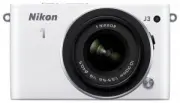 Nikon 1 J3
Manual
Nikon 1 J3
Manual
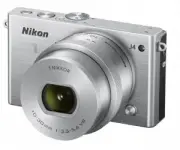 Nikon 1 J4
Manual
Nikon 1 J4
Manual
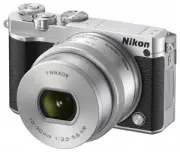 Nikon 1 J5
Manual
Nikon 1 J5
Manual
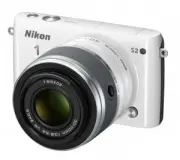 Nikon 1 S2
Manual
Nikon 1 S2
Manual
 Nikon 1 V3
Manual
Nikon 1 V3
Manual
 Nikon Coolpix A
Manual
Nikon Coolpix A
Manual
 Nikon Coolpix P330
Manual
Nikon Coolpix P330
Manual
 Nikon Coolpix P340
Manual
Nikon Coolpix P340
Manual