Page 2 - Contents
- 2 - Contents The Camera Menus The A-REC Menu Using Folders (A-REC, M-REC)LCD BrightnessAuto OffFormatting Memory Cards The M-REC Menu VGALens Converter Settings (LENS)Black-and-White PhotographyMaking a Panorama—Tips (AE-LOCK)User SettingsRestoring Default SettingsLCD On/OffThe Controls MenuSEQ.XF...
Page 3 - Overview; Reference Manual
- 3 - Notes on illustrations The illustrations in this manual are composites. Photographs taken with theCOOLPIX 700 may differ from those shown here. The illustrations in this manual show the LCD monitor used in the NTSC-compatible model of the COOLPIX 700. Owing to differences in videostandards, th...
Page 4 - First Steps: Putting Batteries in Your Camera; First Steps; • attach the camera strap (see; Putting Batteries in Your Camera; Turn the camera off
- 4 - Important! Before inserting batteries or handling memory cards, be sure to read the warnings andcautions in For Your Safety . Notes on batteries The camera’s clock-calendar is powered by a separate rechargable capaci-tor. When you put batteries in your camera for the first time or after a long...
Page 5 - First Steps: Choosing a Language for the Menus; Inserting and Removing Memory Cards; Turn the mode dial to OFF.; Open the card slot; Choosing a Language for the Menus; Turn the mode dial to PLAY.
- 5 - About memory cards Memory cards can be removed from the camera without loss of data whenthe camera is off. Once removed from the camera, cards can be read bya computer equipped with a CompactFlash card reader and photographsprinted on suitably-equipped printers. Cards can also be inserted in a...
Page 6 - First Steps: Setting the Time and Date; Setting the Time and Date
- 6 - The clock battery The clock-calendar is powered by a separate, rechargeable capacitor,which is charged as necessary when the batteries are installed. If the camerahas been stored with the main batteries removed for a long period of time,the clock may need to be reset. Once the batteries have b...
Page 7 - First Steps: Taking Your First Photograph; Taking Your First Photograph; Step 1—Turn the mode dial to A-REC
- 7 - Sleep mode The LCD monitor turns off automatically if no operations are performedfor a certain period of time (the length of time before the camera enterssleep mode can be set using the AUTO OFF item in the setup menu; see“The Camera Menus: The A-REC Menu,” below). To turn the monitor onagain,...
Page 8 - Step 3—Adjust camera settings; Pocket Guide
- 8 - First Steps: Taking Your First Photograph AUTO NORMAL Image quality (normal) Flash (auto) Step 3—Adjust camera settings In automatic mode, the user can adjust flash, focus, exposurecompensation, and image quality. The default settings, whichproduce the best results in most circumstances, are a...
Page 9 - Step 5—Half-press the shutter-release button; Fast Track Guide; Step 6—Take a photograph
- 9 - Note If the LCD monitor is off, you will not be able to take photographs whenthe AF/Flash indicator blinks green. When the monitor is on, however,photographs can be taken even if the camera is not properly focused.Check focus in the LCD monitor before pressing the shutter-releasebutton all the...
Page 10 - Step 7—Check the results; button to pause the display for ten seconds shooting; Step 8—Turn the camera off
- 10 - ▲ ▲ First Steps: Taking Your First Photograph AUTO D E L E T E 1 I M A G E D E L E T E Y E S N O S E T ➔ S H U T T E R B K Notes Do not remove the batteries while photos are being recorded to, ordeleted from, memory. The pause and delete functions described above are only available whenphotos...
Page 11 - Flash Settings; Before using the flash, be sure to read the; How it works
- 11 - Using the Buttons (A-REC, M-REC) This chapter details some of the camera settings that can beaccessed without using the camera menus: flash, focus, and imagequality. Exposure compensation is covered in the Fast Track Guide . Flash Settings The following flash settings are available: Important...
Page 12 - button next to the control
- 12 - When the mode dial is set to A-REC or M-REC, the current flashsetting can be changed using the button next to the control panel. The setting changes each time the button is pressed, cyclingthrough the different flash modes in the following order: SLOW AUTO Flash status is indicated by the AF/...
Page 13 - Focus Settings; Autofocus settings; button. The setting changes; Autofocus
- 13 - Focus Settings With the mode dial set to A-REC, a choice of three autofocusmodes is available. In addition, M-REC mode offers a selection ofmanual focus settings. Autofocus settings The following autofocus settings are available in M-REC and A-RECmodes: When the mode dial is set to A-REC or M...
Page 14 - Manual focus; Measure the distance to your subject.; Press the zoom buttons (; Inf; for a focus
- 14 - Manual focus In M-REC mode, focus distance can be se-lected manually from a list of preset distancesranging from 0.1m (4in.) to infinity. To setfocus distance manually: 1 Measure the distance to your subject. 2 Turn the mode dial to M-REC. Focus Distance Focus distance is measured from the co...
Page 16 - Image Quality; To choose an image quality setting, press the; Quality; BASIC
- 16 - Image Quality The image quality setting determines how many photographs canbe stored on a single memory card. The following settings areavailable: At settings of BASIC, NORMAL, and FINE, the camera uses JPEGcompression to reduce the amount of memory required to storephotographs. JPEG compress...
Page 20 - The Camera Menus; This chapter supplements “Other Camera Functions” in the; FOLDERS; Adjust the brightness of the LCD monitor.; AUTO OFF; Format memory cards for use in the COOLPIX 700.; DATE
- 20 - The Camera Menus This chapter supplements “Other Camera Functions” in the Pocket Guide , exploring the options available in the menus for each operating mode. The bulk of the shooting options available in theM-REC menu are described in the Pocket Guide , “Taking Photo- graphs.” The A-REC Menu...
Page 21 - Using the zoom buttons (; Selecting a Folder
- 21 - CONCEPT PRACTICE Using Folders (A-REC, M-REC) By default, photographs taken with the COOLPIX 700 are storedin the memory card in a folder labeled NIKON. To make it easierto locate photographs during playback, you can create additionalfolders and organize your photographs by theme. The FOLDERS...
Page 22 - To create a new folder:; Renaming existing folders; To rename an existing folder:
- 22 - The Folder Options Menu To create a new folder, or to rename ordelete existing folders, choose OPTIONSfrom the FOLDERS menu. The menushown at right will be displayed. Creating new folders To create a new folder: 1 Using the zoom buttons ( ▲▼ ), highlight NEW and press the shutter-release but-...
Page 23 - Deleting folders; LCD Brightness; CONCEPT
- 23 - L C D B R I G H T B K Deleting folders To delete an existing folder: 1 Using the zoom buttons ( ▲▼ ), highlight DELETE in the OPTIONS menu andpress the shutter-release button. Thewindow shown at right will be displayed. 2 Use the zoom buttons ( ▲▼ ) to highlight the folder you want to delete ...
Page 24 - Formatting Memory Cards; Auto Off; Specify a new time limit by following these steps:
- 24 - CONCEPT PRACTICE CONCEPT PRACTICE The Camera Menus: The A-REC Menu Tip When the camera enters sleep mode, all camera functions are deactivatedand the camera itself is effectively off, consuming almost no power. Thecamera can be reactivated using the MONITOR button or by pressing theshutter bu...
Page 25 - The M-REC menu contains the following options:
- 25 - The M-REC Menu To display the M-REC menu, turn the modedial to M-REC and press the MENU button.The M-REC menu has two pages of options;you can move from the first to the secondpage using the MENU button. Press theMENU button when the second page isdisplayed to return to shooting mode. Using t...
Page 26 - LCD BRIGHT; : Determines whether and when the LCD; CONTROLS; : Offers a choice of settings for controlling; : Allows photographs to be assigned unique; : Offers a choice of languages for camera
- 26 - LENS (Lens Converter) Offers a choice of settings for achieving optimum results withthe following lens converters (available separately): the FC-E8 fish-eye lens converter, the WC-E24 wide-angle lensconverter, and the TC-E2 telephoto lens converter. Detailsof these settings are provided below...
Page 31 - User Settings
- 31 - CONCEPT PRACTICE User Settings In M-REC mode, the camera can “memorize” up to threecombinations of settings, including metering, white balance, multi-shot, image adjustment, best-shot selection, lens converter, andautoexposure/white-balance lock. These settings can be restoredby selecting the...
Page 32 - Restoring Default Settings; Setting
- 32 - CONCEPT PRACTICE Restoring Default Settings The RESET ALL item in the M-REC menu allows you to reset usersettings to the default values shown below: Setting Default value White balance automatic Metering matrix Continuous single frame Image adjustment standard Sensitivity default (no adjustme...
Page 34 - The Controls Menu
- 34 - CONCEPT PRACTICE The Controls Menu In M-REC mode, the controls menu offers control over thefollowing settings:• SAVE (Flash Mode Save): When this item is checked, the camera saves the flash setting in effect at the time the modedial is set to OFF. This flash setting is restored when the moded...
Page 36 - The Playback Menu; Protects selected photographs from deletion.; : Formats memory cards
- 36 - The Playback Menu In addition to some of the camera settingsdiscussed above, the playback menu offersoptions for deleting multiple images, creatingslide shows, protecting photographs from dele-tion, and hiding photographs during playback.It also includes options for setting up photosfor print...
Page 37 - Deleting Multiple Photographs; Deleting Selected Photographs; Use the zoom buttons (
- 37 - CONCEPT PRACTICE Deleting Multiple Photographs The DELETE option in the playback menu allows you to:• delete selected photographs• delete all the photographs in the current folder• select a folder for deletion• delete printer information files created with the PRINT SET option (see “Preparing...
Page 38 - The Camera Menus: The Playback Menu
- 38 - Deleting All Photographs in Memory To delete all photographs except those that have been hidden orprotected: 1 Using the zoom buttons ( ▲▼ ), highlight DELETE in the playback menu, then pressthe shutter-release button. The menushown at right will be displayed. 2 Use the zoom buttons ( ▲▼ ) to...
Page 39 - Slideshow; The steps for setting up and starting a slide show are as follows:; To select a folder for playback:
- 39 - CONCEPT PRACTICE Slideshow The slide-show option allows unattended sequential playback ofall images in the current folder that have not been hidden usingHIDE IMAGE. Photographs are displayed one after the other,with a pause between each photograph. The steps for setting up and starting a slid...
Page 40 - Protecting Photographs from Deletion
- 40 - 4 To pause the slide show, press the shut-ter-release button. The slide show willpause and the window shown at right willbe displayed. You can restart the slideshow by selecting RESTART, choose anew frame interval with FRAME INTVL,or select BK to stop the slide show andreturn to playback mode...
Page 43 - Connections; Connecting to a Television or VCR; Tune the television to the video channel.
- 43 - Connections This chapter provides information on connecting your camera toa computer and to a television or video-cassette recorder (VCR). Connecting to a Television or VCR Using the EG-900 video cable provided with your camera, you canconnect your camera to a television or VCR to view photos...
Page 44 - Viewing Photos on a Computer; Nikon View; Reading Memory Cards; Using a PCMCIA Card Slot; Connections: Viewing Photos on a Computer
- 44 - Viewing Photos on a Computer Photographs stored on the memory card can be viewed on acomputer either using Nikon View to transfer data directly from the camera, or by removing the memory card from the camera andreading it using a CompactFlash (CF) card reader or PC cardadapter. The steps invo...
Page 45 - Cleaning; Caring for Your Camera
- 45 - Caring for Your Camera To ensure that you continue to get the most from your camera, youshould observe the following precautions when cleaning andstoring your camera. Cleaning The lens is covered by a clear plastic shield. You should avoidtouching this shield with your fingers. Use a blower t...
Page 46 - Accessories; What’s in the Box; Step-up ring and lens converters
- 46 - Accessories This chapter identifies the items packaged with your camera andthe accessories available for separate purchase. What’s in the Box Purchasers of the COOLPIX 700 should find that the packagecontains the items listed below. Should you notice that any itemis missing or damaged, contac...
Page 47 - Troubleshooting; General Problems; Nothing shows in the control panel; The LCD monitor is too dark or too bright
- 47 - Troubleshooting If you should notice any problems with your COOLPIX 700, checkthe list below before consulting your retailer or Nikon represen-tative. General Problems Nothing shows in the control panel Checklist: • Is the mode dial set to OFF? Turn the mode dial to A-REC, M-REC, or PLAY. • A...
Page 48 - Images are over- or underexposed; Images are not in focus
- 48 - The exposure count shows zero • There is not enough memory to record photographs at current settings. There may still be enough memory to record photo-graphs at a lower image quality or size. You will not howeverbe able make a photograph at current settings until you havedeleted one or more i...
Page 49 - Your television does not mirror the LCD monitor; displays a communications error when you
- 49 - Your television does not mirror the LCD monitor Checklist: • Is the camera correctly connected to the television set or VCR? Connect the camera as described in “Connections: Connect-ing to a Television or VCR.” • Is the television tuned to the video channel? Tune the television to the video c...
Page 50 - Error Messages; Use a Nikon memory card.
- 50 - Error Messages When there is a problem with the flash-memory card or with thecamera’s internal programming and circuitry, an error message willappear superimposed on the image in the LCD monitor. Below isa list of error messages that may be displayed by the COOLPIX 700and the steps that shoul...
Page 51 - Troubleshooting: Error Messages
- 51 - This error appears when all photo-graphs on the memory card have beenhidden using HIDE IMAGE and themode dial is set to PLAY. It will not bepossible to play back or delete imagesuntil HIDE IMAGE has been used toallow at least one image to be displayed(see “The Camera Menus: The Play-back Menu...
Page 52 - LCD monitor; Specifications
- 52 - Specifications Type: digital camera Recording modes: automatic (A-REC), custom (M-REC; offersmonochrome mode and allows manual ad-justments to focus, sensitivity, white balance,metering, brightness, and contrast) Image sensor: high-density 1 / 2 ˝ CCD Pixel count: effective pixel count 1.92 m...


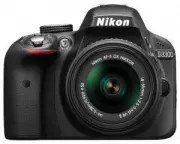 Nikon D3300
Manual
Nikon D3300
Manual
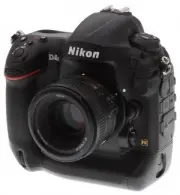 Nikon D4S
Manual
Nikon D4S
Manual
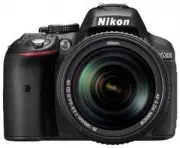 Nikon D5300
Manual
Nikon D5300
Manual
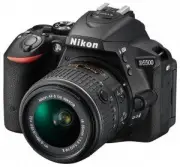 Nikon D5500
Manual
Nikon D5500
Manual
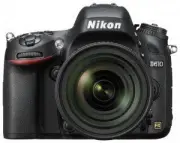 Nikon D610
Manual
Nikon D610
Manual
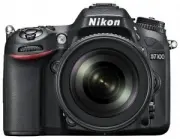 Nikon D7100
Manual
Nikon D7100
Manual
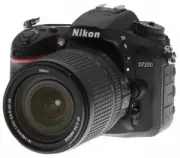 Nikon D7200
Manual
Nikon D7200
Manual
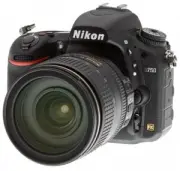 Nikon D750
Manual
Nikon D750
Manual
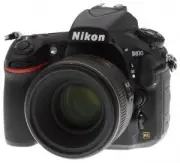 Nikon D810
Manual
Nikon D810
Manual
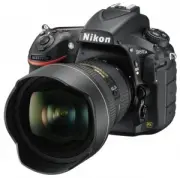 Nikon D810A
Manual
Nikon D810A
Manual
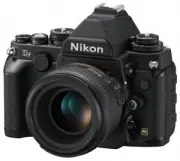 Nikon Df
Manual
Nikon Df
Manual
 Nikon 1 AW1
Manual
Nikon 1 AW1
Manual
 Nikon 1 J3
Manual
Nikon 1 J3
Manual
 Nikon 1 J4
Manual
Nikon 1 J4
Manual
 Nikon 1 J5
Manual
Nikon 1 J5
Manual
 Nikon 1 S2
Manual
Nikon 1 S2
Manual
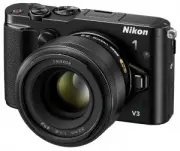 Nikon 1 V3
Manual
Nikon 1 V3
Manual
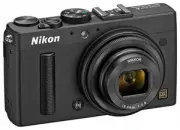 Nikon Coolpix A
Manual
Nikon Coolpix A
Manual
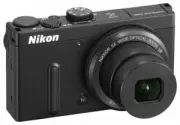 Nikon Coolpix P330
Manual
Nikon Coolpix P330
Manual
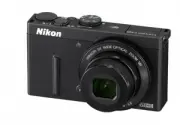 Nikon Coolpix P340
Manual
Nikon Coolpix P340
Manual