Page 2 - NOTES; to result from using the Projector.
1st edition, August 2010 • Macintosh, Mac OS X and PowerBook are trademarks of Apple Inc. registered in the U.S. and other countries.• Microsoft, Windows, Windows Vista, Internet Explorer, .NET Framework and PowerPoint are either a registered trademark or trademark of Microsoft Corporation in the Un...
Page 3 - Important Information; Safety Cautions; Precautions; TO PREVENT FIRE OR SHOCK, DO NOT EXPOSE THIS UNIT TO RAIN OR MOISTURE.; CAUTION; Disposing of your used product
i Important Information Safety Cautions Precautions Please read this manual carefully before using your NEC M350X/M300X/M260X/M230X/M300W/M260W projector and keep the manual handy for future reference. CAUTION To turn off main power, be sure to remove the plug from power outlet.The power outlet sock...
Page 4 - ii; WASH HANDS AFTER HANDLING.; WARNING; Important Safeguards; • Do not place the projector in the following conditions:
ii Important Information WARNING TO CALIFORNIA RESIDENTS: Handling the cables supplied with this product will expose you to lead, a chemical known to the State of California to cause birth defects or other reproductive harm. WASH HANDS AFTER HANDLING. RF Interference (for USA only) WARNING The Feder...
Page 5 - iii; Use caution when picking up the projector.; emitted from the light output.; Place the projector in a horizontal position
iii Important Information Fire and Shock Precautions • Ensure that there is sufficient ventilation and that vents are unobstructed to prevent the build-up of heat inside your projector. Allow at least 4 inches (10cm) of space between your projector and a wall. • Do not try to touch the ventilation o...
Page 6 - iv; ing on the wall can cause damage to the projector.; Remote Control Precautions
iv Important Information • Do not place any objects, which are easily affected by heat, in front of a projector exhaust vent. Doing so could lead to the object melting or getting your hands burned from the heat that is emitted from the ex - haust. • Handle the power cord carefully. A damaged or fray...
Page 7 - Note for US Residents; Lamp Replacement; • Be sure to replace the lamp and filter when the message; [THE LAMP HAS REACHED THE END OF ITS USABLE; appears. If you continue to use the lamp after the lamp has; A Lamp Characteristic; fragments could fall if the lamp has been burned out.; About High Altitude mode; ponents such as the lamp.; About Copyright of original projected pictures:; EEE Yonetmeliğine Uygundur.
v Important Information Note for US Residents The lamp in this product contains mercury. Please dispose according to Local, State or Federal Laws. Lamp Replacement • Use the specified lamp for safety and performance.• To replace the lamp, follow all instructions provided on page 109 . • Be sure to r...
Page 8 - Table of Contents
vi Table of Contents Important Information ............................................................................................i 1. Introduction .......................................................................................................... 1 1 What’s in the Box? ....................
Page 9 - vii
vii Table of Contents Preventing the Unauthorized Use of the Projector [SECURITY] ................................. 28 Using the Computer Cable (VGA) to Operate the Projector (Virtual Remote Tool) ..... 31 Operating Your Computer’s Mouse Functions from the Projector’s Remote Control via th e U...
Page 10 - viii; Installation and Connections
viii Table of Contents Returning to Factory Default [RESET] ................................................................... 9 1 6. Installation and Connections ................................................................... 9 2 1 Setting Up the Screen and the Projector .........................
Page 12 - Introduction to the Projector; Congratulations on Your Purchase of the Projector; . The remote control can be used wirelessly.; Features you’ll enjoy:; • Carbon Meter; This feature will show energy-saving effect in terms of CO; • Lamp life up to 6000 hours*
2 1. Introduction Introduction to the Projector This section introduces you to your new projector and describes the features and controls. Congratulations on Your Purchase of the Projector This projector is one of the very best projectors available today. The projector enables you to project preci...
Page 13 - About this user’s manual
3 1. Introduction • The supplied remote control allows you to assign a CONTROL ID to the projector Multiple projectors can be operated separately and independently with the same single remote control by assigning an ID number to each projector. • Auto vertical keystone correction Auto Keystone featu...
Page 14 - Part Names of the Projector
4 1. Introduction Part Names of the Projector Front/Top Controls( → page 6 ) Lens Remote Sensor( → page 9 ) Ventilation (inlet) / Filter Cover( → page 106 , 112 ) Zoom Lever ( → page 19 ) Lens Cover Focus Ring ( → page 19 ) Adjustable Tilt Foot ( → page 18 ) Adjustable Tilt Foot Lever ( → page 18 ...
Page 15 - Opening and closing the lens cover; Slide the lens cover to the left to uncover the lens.; Rear; * This security slot supports the MicroSaver
5 1. Introduction Opening and closing the lens cover Slide the lens cover to the left to uncover the lens. To cover the lens, slide the lens cover to the right. NOTE: • The lens cover works in conjunction with the AV mute function. Closing the lens cover will turn off the image and sound during norm...
Page 16 - Top Features; STATUS Indicator
6 1. Introduction Top Features 1/2 5 6 4 7 8 11 9 3 10 1. (POWER) Button ( → page 1 4 , 23 ) 2. POWER Indicator ( → page 13 , 1 4 , 23 , 11 4 ) 3. STATUS Indicator ( → page 11 4 ) 4. LAMP Indicator ( → page 10 9 , 11 4 ) 5. ECO Button ( → page 26 ) 6. SOURCE Button ( → page 16 ) 7. AUTO ADJ. Button ...
Page 17 - Terminal Panel Features; COMPUTER 1 IN/ Component Input Connector
7 1. Introduction Terminal Panel Features 1 2 3 5 6 13 12 8 7 11 14 9 10 4 1. COMPUTER 1 IN/ Component Input Connector (Mini D-Sub 15 Pin) ( → page 9 6 , 100 ) 2. COMPUTER 1 AUDIO IN Mini Jack (Stereo Mini) ( → page 9 6 , 99 , 100 ) 3. COMPUTER 2 IN / Component Input Connector (Mini D-Sub 15 Pin) ( ...
Page 18 - Part Names of the Remote Control; Infrared Transmitter
8 1. Introduction Part Names of the Remote Control 3 7 5 6 1 2 1015 16 14 17 9 4 8 13 293031 19 202527 28 24 18 23 22 21 26 32 12 11 1. Infrared Transmitter ( → page 9 ) 2. POWER ON Button ( → page 1 4 ) 3. POWER OFF Button ( → page 23 ) 4, 5, 6. COMPUTER 1/2/3 Button ( → page 16 ) (COMPUTER 3 but...
Page 19 - the remote sensor on the projector cabinet.; Battery Installation; Slip the cover back over the bat
9 1. Introduction Remote Control Precautions • Handle the remote control carefully.• If the remote control gets wet, wipe it dry immediately.• Avoid excessive heat and humidity.• Do not short, heat, or take apart batteries.• Do not throw batteries into fire.• If you will not be using the remote cont...
Page 20 - Operating Environment for Software Included on CD-ROM; Download service
10 1. Introduction Operating Environment for Software Included on CD-ROM Names and Features of Bundled Software Programs Name of software program Features Virtual Remote Tool This is a software program used to control the power ON/OFF and source selec - tion of the projector from your computer by ...
Page 21 - Operating Environment; Processor
11 1. Introduction Operating Environment The following is the operating environment for Image Express Utility Lite. For the operating environment of other soft - ware program, refer to the help function of each software program. Supported OS Windows 7 Home BasicWindows 7 Home PremiumWindows 7 Profes...
Page 22 - Flow of Projecting an Image; Step 2; - Optimizing a computer signal automatically (
12 This section describes how to turn on the projector and to project a picture onto the screen. 1 Flow of Projecting an Image Step 1 • Connecting your computer / Connecting the power cord ( → page 13 ) Step 2 • Turning on the projector ( → page 14 ) Step 3 • Selecting a source ( → page 16 ) Step 4 ...
Page 23 - Connecting Your Computer/Connecting the Power Cord; Connect your computer to the projector.
13 2. Projecting an Image (Basic Operation) Connecting Your Computer/Connecting the Power Cord 1. Connect your computer to the projector. This section will show you a basic connection to a computer. For information about other connections, see “6. Installation and Connections” on page 96 . Connect...
Page 24 - Turning on the Projector; Slide the lens cover to the left to uncover the lens.
14 2. Projecting an Image (Basic Operation) Standby Blinking Power On Steady orange light Blinking blue light Steady blue light Turning on the Projector 1. Slide the lens cover to the left to uncover the lens. 2. Press the (POWER) button on the projector cabinet or the POWER ON button on the remot...
Page 25 - Note on Startup screen (Menu Language Select screen); To select a menu language, follow these steps:; or
15 2. Projecting an Image (Basic Operation) Note on Startup screen (Menu Language Select screen) When you first turn on the projector, you will get the Startup menu. This menu gives you the opportunity to select one of the 27 menu languages. To select a menu language, follow these steps: 1. Use the ...
Page 26 - Selecting a Source; Selecting the computer or video source; TIP: If no input signal is present, the input will be skipped.; Using the Remote Control; The menu will be displayed.
16 2. Projecting an Image (Basic Operation) Selecting a Source Selecting the computer or video source NOTE: Turn on the computer or video source equipment connected to the projector. Detecting the Signal Automatically Press the SOURCE button once. The projector will search for the available input ...
Page 27 - Adjusting the Picture Size and Position; In this chapter drawings and cables are omitted for clarity.
17 2. Projecting an Image (Basic Operation) Adjusting the Picture Size and Position Use the adjustable tilt foot, the zoom function or the focus ring to adjust the picture size and position. In this chapter drawings and cables are omitted for clarity. Adjusting the throw angle (the height of an im...
Page 28 - Adjust the Tilt Foot; Lift the front edge of the projector.; Adjusting the left and right tilt of an image [Rear foot]; • Rotate the rear foot.
18 2. Projecting an Image (Basic Operation) 2 1 3 Adjustable Tilt Foot Adjustable Tilt Foot Lever Adjust the Tilt Foot 1. Lift the front edge of the projector. CAUTION: Do not try to touch the ventilation outlet during Tilt Foot adjustment as it can become heated while the projector is turned on and...
Page 29 - Zoom; Use the ZOOM lever to adjust the image size on the screen.; Focus; Use the FOCUS ring to obtain the best focus.
19 2. Projecting an Image (Basic Operation) Zoom Use the ZOOM lever to adjust the image size on the screen. Zoom Lever Focus Use the FOCUS ring to obtain the best focus. Focus Ring
Page 30 - Correcting Keystone Distortion Manually; Adjusting with buttons on the cabinet
20 2. Projecting an Image (Basic Operation) Correcting Keystone Distortion Manually If the screen is tilted vertically, keystone distortion becomes large. Automatic Keystone Correction function is turned on at the time of shipment. To correct keystone distortion manually, proceed with the followin...
Page 31 - Adjusting with the remote control; The Keystone bar will be displayed.
21 2. Projecting an Image (Basic Operation) Adjusting with the remote control 1. Press the KEYSTONE button. The Keystone bar will be displayed. 2. Use the or button to correct the keystone distortion. Adjust so that the right and left sides are parallel. 3. Press the EXIT button. The Keystone ba...
Page 32 - Optimizing Computer Signal Automatically; Adjusting the Image Using Auto Adjust; Turning Up or Down Volume; Sound level from the speaker can be adjusted.
22 2. Projecting an Image (Basic Operation) Optimizing Computer Signal Automatically Adjusting the Image Using Auto Adjust Optimizing a computer image automatically. (COMPUTER1/COMPUTER2)Press the AUTO ADJ. button to optimize a computer image automatically.This adjustment may be necessary when you...
Page 33 - Turning off the Projector; To turn off the projector:; Secondly, press the ENTER button or press the; the menu. Doing so can cause loss of adjustments and settings.
23 2. Projecting an Image (Basic Operation) Turning off the Projector To turn off the projector: 1. First, press the (POWER) button on the projector cabinet or the POWER OFF button on the remote con-trol. The [POWER OFF / ARE YOU SURE? / CARBON SAV- INGS- SESSION 0.000[g-CO2]] message will appear....
Page 34 - After Use; Preparation: Make sure that the projector is turned off.; • Remove the USB memory if it is inserted into the projector.
24 2. Projecting an Image (Basic Operation) After Use Preparation: Make sure that the projector is turned off. 1. Unplug the power cord. 2. Disconnect any other cables. • Remove the USB memory if it is inserted into the projector. 3. Retract adjustable tilt foot if extended. 4. Slide the lens cove...
Page 35 - Turning off the Image and Sound; • Sound from the AUDIO OUT jack (Stereo mini) can be turned off.; Freezing a Picture; Press the FREEZE button to freeze a picture. Press again to resume; Enlarging a Picture; You can enlarge the picture up to four times.; Convenient Features
25 1 Turning off the Image and Sound Press the AV-MUTE button to turn off the image and sound for a short period of time. Press again to restore the image and sound.The projector's power-saving function will work 10 seconds after the im - age is turned off.As a result, the lamp power will be reduced...
Page 36 - Changing Eco Mode/Checking Energy-Saving Effect; Description
26 3. Convenient Features Changing Eco Mode/Checking Energy-Saving Effect Using Eco Mode [ECO MODE] The ECO MODE (ECO1 and ECO2) increases lamp life, while lowering power consumption and cutting down on CO 2 emissions. Four brightness modes of the lamp can be selected: [OFF], [AUTO ECO], [ECO1] an...
Page 37 - This feature will show energy-saving effect in terms of CO
27 3. Convenient Features NOTE: • The [ECO MODE] can be changed by using the menu. Select [SETUP] → [GENERAL] → [ECO MODE]. • The lamp life remaining and lamp hours used can be checked in [USAGE TIME]. Select [INFO.] → [USAGE TIME]. • The projector is always in [ECO1]* for 90 seconds after the lamp ...
Page 38 - Preventing the Unauthorized Use of the Projector [SECURITY]; To enable the Security function:
28 3. Convenient Features Preventing the Unauthorized Use of the Projector [SECURITY] A keyword can be set for your projector using the Menu to avoid operation by an unauthorized user. When a keyword is set, turning on the projector will display the Keyword input screen. Unless the correct keyword...
Page 39 - Type in the same combination of
29 3. Convenient Features 7. Type in the same combination of buttons and press the ENTER button. The confirmation screen will be displayed. 8. Select [YES] and press the ENTER button. The SECURITY function has been enabled. To turn on the projector when [SECURITY] is enabled: 1. Press the POWER...
Page 40 - To disable the SECURITY function:
30 3. Convenient Features To disable the SECURITY function: 1. Press the MENU button. The menu will be displayed. 2. Select [SETUP] → [INSTALLATION] → [SECURITY] and press the ENTER button. The OFF/ON menu will be displayed. 3. Select [OFF] and press the ENTER button. The SECURITY KEYWORD screen wil...
Page 41 - Virtual Remote screen
31 3. Convenient Features Using the Computer Cable (VGA) to Operate the Pro- jector (Virtual Remote Tool) Using the utility software “Virtual Remote Tool” included on the companion NEC Projector CD-ROM, Virtual Remote screen (or toolbar) can be displayed on your computer screen.This will help you ...
Page 42 - The menu window will be displayed.
32 3. Convenient Features Step 1: Install Virtual Remote Tool on the computer NOTE: • To install Virtual Remote Tool, the Windows user account must have “Administrator” privilege (Windows 7, Windows Vista and Windows XP). • Exit all running programs before installing Virtual Remote Tool. If another ...
Page 43 - “END USER LICENSE AGREEMENT” screen will be displayed.
33 3. Convenient Features 3 Click “Next”. “END USER LICENSE AGREEMENT” screen will be displayed. Read “END USER LICENSE AGREEMENT” carefully. 4 If you agree, click “I accept the terms in the license agreement” and then click “Next”. • Follow the instructions on the installer screens to complete the ...
Page 44 - • For Windows 7/Windows Vista; • For Windows XP; Click “Start” and then “Control Panel”.; Step 2: Connect the projector to the computer; with the monitor output connector of the computer.
34 3. Convenient Features TIP: Uninstalling Virtual Remote Tool Preparation: Exit Virtual Remote Tool before uninstalling. To uninstall Virtual Remote Tool, the Windows user account must have “Administrator” privilege (Windows 7 and Windows Vista) or “Computer Administrator” privilege (Windows XP). ...
Page 45 - • Double-click the shortcut icon; Start from the Start menu; Follow the instructions on the screens
35 3. Convenient Features Step 3: Start Virtual Remote Tool Start using the shortcut icon • Double-click the shortcut icon on the Windows Desktop. Start from the Start menu • Click [Start] → [All Programs] or [Programs] → [NEC Projector User Supportware] → [Virtual Remote Tool] → [Virtual Remote Too...
Page 46 - Viewing the help file of Virtual Remote Tool; • Displaying the help file using the taskbar; Click the Virtual Remote Tool icon; • Displaying the help file using the Start Menu.; then “Virtual Remote Tool Help” in this order.
36 3. Convenient Features Exiting Virtual Remote Tool 1 Click the Virtual Remote Tool icon on the Taskbar. The pop-up menu will be displayed. 2 Click “Exit”. The Virtual Remote Tool will be closed. Viewing the help file of Virtual Remote Tool • Displaying the help file using the taskbar 1 Click the ...
Page 47 - Operating Your Computer’s Mouse Functions from the Projector’s; Operating your computer’s mouse from the remote control; You can operate your computer’s mouse from the remote control.
37 3. Convenient Features Operating Your Computer’s Mouse Functions from the Projector’s Remote Control via the USB Cable (Remote Mouse Function) The built-in remote mouse function enables you to operate your computer’s mouse functions from the supplied remote control when the projector is connect...
Page 48 - Projecting Your Computer’s Screen Image from the Projector; page
38 3. Convenient Features Projecting Your Computer’s Screen Image from the Projector via the USB Cable (USB Display) Using a commercially available USB cable (compatible with USB 2.0 specifications) to connect the computer with the projector allows you to send your computer screen image to the pro...
Page 49 - (Source) ����� Selects an input source of the projector�
39 3. Convenient Features 5. Operate the control window. (1) (Source) ����� Selects an input source of the projector� (2) (Picture) ���� Turns on or off AV-MUTE (Picture mute), and turns on or off FREEZE (Freeze a picture)� (3) (Sound) ����� Turns on or off AV-MUTE (Sound mute), play the sound and t...
Page 50 - Controlling the Projector by Using an HTTP Browser; Overview; Preparation before Use
40 3. Convenient Features Controlling the Projector by Using an HTTP Browser Overview The HTTP Server function provides settings and operations for:1. Setting for wired/wireless network (NETWORK SETTINGS) To use wireless LAN connection, the optional USB Wireless LAN Unit is required. ( → page 103 ...
Page 51 - ��������������������������� Increases the volume adjustment value�
41 3. Convenient Features Handling of the Address for Operation via a Browser Regarding the actual address that is entered for the address or entered to the URL column when operation of the pro - jector is via a browser, the host name can be used as it is when the host name corresponding to the IP a...
Page 52 - PICTURE: Controls the video adjustment of the projector.
42 3. Convenient Features PICTURE: Controls the video adjustment of the projector. BRIGHTNESS ���� Increases the brightness adjustment value� BRIGHTNESS ���� Decreases the brightness adjustment value� CONTRAST �������� Increases the contrast adjustment value� CONTRAST �������� Decreases the ...
Page 53 - WIRED or WIRELESS
43 3. Convenient Features NETWORK SETTINGS • SETTINGS WIRED or WIRELESS SETTING Set for wired LAN or for wireless LAN. APPLY Apply your settings to wired LAN or wireless LAN. DHCP ON Automatically assign IP address, subnet mask, and gateway to the projector from your DHCP server. DHCP OFF Set IP add...
Page 54 - your wireless network.; • NAME; must be 60 characters or less.
44 3. Convenient Features NETWORK TYPE Select communication method when using wireless LAN.INFRASTRUCTURE: Select this option when communicating with one or more equip - ment connected to the wireless LAN network via a wireless access point.AD HOC: Select this option when using the wireless LAN to d...
Page 55 - settings are correct.; • NETWORK SERVICE
45 3. Convenient Features • ALERT MAIL ALERT MAIL (English only) This option will notify your computer of lamp replace time or error messages via e-mail when using wireless or wired LAN. Placing a checkmark will turn on the Alert Mail feature.Clearing a checkmark will turn off the Alert Mail feature...
Page 56 - Controlling the Projector over a LAN (PC Control Utility Pro 4); Control Functions; Screen of PC Control Utility Pro 4; Step 1: Install PC Control Utility Pro 4 on the computer
46 3. Convenient Features Controlling the Projector over a LAN (PC Control Utility Pro 4) Using the utility software “PC Control Utility Pro 4” included on the companion NEC Projector CD-ROM, the projector can be controlled from a computer over a LAN. Control Functions Power On/Off, signal selecti...
Page 57 - “Accessories”
47 3. Convenient Features TIP: If the menu window will not be displayed, try the following procedure. For Windows 7: 1. Click “start” on Windows.2. Click “All Programs” → “Accessories” → “Run”. 3. Type your CD-ROM drive name (example: “Q:\”) and “LAUNCHER.EXE” in “Name”. (example: Q:\ LAUNCHER.EXE) ...
Page 58 - • Displaying the help file using the Start Menu.
48 3. Convenient Features Step 2: Connect the projector to a LAN. Connect the projector to the LAN by following the instructions in “Connecting to a Wired LAN” ( → page 102 ), “Con - necting to a Wireless LAN (Optional: NP02LM series)” ( → page 103 ) and “9. Controlling the Projector by Using an HTT...
Page 59 - What You can Do with Image Express Utility Lite; • Image transmission; will automatically connect to the projector.; Step 1: install Image Express Utility Lite on the computer.
49 3. Convenient Features Projecting Your Computer’s Screen Image from the Projector over a LAN (Image Express Utility Lite) Using Image Express Utility Lite contained on the supplied NEC Projector CD-ROM allows you to send the computer’s screen image to the projector over a USB cable or a wired o...
Page 60 - Step 3: Start Image Express Utility Lite.
50 3. Convenient Features TIP: If the menu window will not be displayed, try the following procedure. For Windows 7: 1. Click “start” on Windows.2. Click “All Programs” → “Accessories” → “Run”. 3. Type your CD-ROM drive name (example: “Q:\”) and “LAUNCHER.EXE” in “Name”. (example: Q:\ LAUNCHER.EXE) ...
Page 61 - Select the projector you wish to connect, and click “Connect”.
51 3. Convenient Features 3. Select the projector you wish to connect, and click “Connect”. The target selection window will be displayed. 4. Place a check mark for projectors to be connected, and then click “Connect”. • When one or more projectors are displayed, from the menu on the projector, sele...
Page 62 - What you can do with the Viewer; The Viewer has the following features.
52 4. Using the Viewer ❶ What you can do with the Viewer The Viewer has the following features. • When a commercially available USB memory that stores image files is inserted into the USB port (Type A) of the projector, the Viewer allows you to view the image files on the USB memory. Even if no comp...
Page 64 - Projecting images stored in a USB memory device; Starting the Viewer
54 4. Using the Viewer ❷ Projecting images stored in a USB memory device This section explains the basic operation of the Viewer. The explanation provides the operational procedure when the Viewer toolbar ( → page 58 ) is set to the factory de - fault. - Starting the Viewer ............................
Page 66 - Exiting the Viewer; Press the MENU button with the slide screen or
56 4. Using the Viewer Removing the USB memory from the pro-jector 1. Select the VIEWER start screen. Press the EXIT button with no menu displayed. 2. Remove the USB memory from the projector. Make sure that the LED on the USB memory is not flashing before removing the USB memory. NOTE: If you remov...
Page 67 - Parts of each screen; Name
57 4. Using the Viewer Parts of each screen The Viewer has four screens. (1) Viewer start screen (3) Thumbnail screen (9) Slide screen/ (11) Slideshow screen Name Description (1) Viewer start screen This screen will be displayed first when you select the Viewer. (2) USB icon This icon indicates that...
Page 68 - Using the toolbar; Thumbnail toolbar; Menu
58 4. Using the Viewer Using the toolbar 1. Press the MENU button. The toolbar will be displayed. The SOURCE screen will be displayed as Viewer connection screen. 2. Use the ◀ or ▶ button to select an item and use the ▲ or ▼ button to select its available option. When the cursor is placed, the selec...
Page 69 - Slide toolbar; Slideshow toolbar
59 4. Using the Viewer Slide toolbar Menu Options Description (1) Display Closes the menu and switches to the slide screen. Closes the menu and displays the thumbnail screen. Closes the menu and starts the slideshow from the highlighted item. (2) Image display Closes the menu and displays the image ...
Page 70 - Converting PowerPoint files to Slides (Viewer PPT Converter; Install Viewer PPT Converter 3.0 on the computer.
60 4. Using the Viewer Converting PowerPoint files to Slides (Viewer PPT Converter 3.0) Using Viewer PPT Converter 3.0 contained on the supplied NEC Projector CD-ROM allows you to convert Power - Point files into JPEG files. Converted JPEG files can be saved to a USB memory. When the USB memory in...
Page 72 - Converting PowerPoint files and saving them to a USB memory; “All programs”
62 4. Using the Viewer Converting PowerPoint files and saving them to a USB memory 1. Insert the USB memory into the USB port of the computer.2. On Windows, click “Start” → “All programs” → “NEC Projector UserSupportware” → “Viewer PPT Converter 3.0” → “Viewer PPT Converter 3.0”. Viewer PPT Converte...
Page 73 - Using the Menus; NOTE: The commands such as
63 5. Using On-Screen Menu 1 Using the Menus NOTE: The on-screen menu may not be displayed correctly while interlaced motion video image is projected. 1. Press the MENU button on the remote control or the projector cabinet to display the menu. NOTE: The commands such as ENTER, EXIT, , in the b...
Page 74 - Menu Elements; high�
64 5. Using On-Screen Menu Menu Elements Slide bar Solid triangle Tab Radio button High Altitude symbol ECO mode symbol Wireless symbol Menu windows or dialog boxes typically have the following elements: Highlight ����������������������������� Indicates the selected menu or item� Solid triangle ��...
Page 75 - List of Menu Items; Some menu items are not available depending on the input source.
65 5. Using On-Screen Menu List of Menu Items Some menu items are not available depending on the input source. Menu Item Default Options SOURCE COMPUTER1 * COMPUTER2 * HDMI * VIDEO * S-VIDEO * VIEWER * NETWORK * USB DISPLAY * ADJUST PICTURE PRESET * 1–7 DETAIL SETTINGS GENERAL REFERENCE * HIGH-BRI...
Page 79 - Selecting Gamma Correction Mode [GAMMA CORRECTION]; Each mode is recommended for:; Selecting Screen Size for DICOM SIM [SCREEN SIZE]
69 5. Using On-Screen Menu [GENERAL]Storing Your Customized Settings [REFERENCE] This function allows you to store your customized settings in [PRESET 1] to [PRESET 7].First, select a base preset mode from [REFERENCE], then set [GAMMA CORRECTION] and [COLOR TEMPERA - TURE]. HIGH-BRIGHT �������� Reco...
Page 81 - This allows you to manually adjust CLOCK and PHASE.
71 5. Using On-Screen Menu [IMAGE OPTIONS] Adjusting Clock and Phase [CLOCK/PHASE] This allows you to manually adjust CLOCK and PHASE. CLOCK ������������������� Use this item to fine tune the computer image or to remove any vertical banding that might appear� This function adjusts the clock frequenc...
Page 82 - Adjusts the image location horizontally and vertically.
72 5. Using On-Screen Menu Adjusting Horizontal/Vertical Position [HORIZONTAL/VERTICAL] Adjusts the image location horizontally and vertically. NOTE: The [HORIZONTAL] and [VERTICAL] items are not available for VIDEO, S-VIDEO, HDMI, VIEWER, NETWORK, and USB DISPLAY. - An image can be distorted during...
Page 83 - next pag
73 5. Using On-Screen Menu Selecting Aspect Ratio [ASPECT RATIO] The term “aspect ratio” refers to the ratio of width to height of a projected image.The projector automatically determines the incoming signal and displays it in its appropriate aspect ratio.• This table shows typical resolutions and a...
Page 84 - ratio for a vide source.
74 5. Using On-Screen Menu Sample image when the appropriate aspect ratio is automatically determined M350X/M300X/M260X/M230X [Computer signal] Aspect ratio of incoming signal 4:3 5:4 16:9 15:9 16:10 Sample image when the appro - priate aspect ratio is automati - cally determined [Video signal] Aspe...
Page 85 - Correcting Vertical Keystone Distortion Manually [KEYSTONE]; You can correct vertical distortion manually. (; Saving Vertical Keystone Correction [KEYSTONE SAVE]; This option enables you to save your current keystone settings.
75 5. Using On-Screen Menu Menu Descriptions & Functions [SETUP] [GENERAL] Enabling Auto Keystone [AUTO KEYSTONE] This feature allows the projector to detect its tilt and correct vertical distortion automatically.To turn on the AUTO KEYSTONE feature, select [ON]. To adjust the KEYSTONE feature...
Page 86 - Using the Wall Color Correction [WALL COLOR]
76 5. Using On-Screen Menu Using the Wall Color Correction [WALL COLOR] This function allows for quick adaptive color correction in applications where the screen material is not white. NOTE: Selecting [WHITEBOARD] reduces lamp brightness. Setting Eco Mode [ECO MODE] The ECO MODE increases lamp life,...
Page 88 - Selecting Menu Display Time [DISPLAY TIME]; be selected regardless of its selection.; Selecting Interval Time for Filter Message [FILTER MESSAGE]
78 5. Using On-Screen Menu Turning ON/OFF Control ID [ID DISPLAY] ID DISPLAY ����������� This option turns on or off the ID number which is displayed when the ID SET button on the remote control is pressed� Turning On / Off Eco Message [ECO MESSAGE] This option turns on or off the following messages...
Page 90 - Selecting Communication Speed [COMMUNICATION SPEED]; ment, a lower baud rate may be recommended for long cable runs).; Assigning or Changing the Control ID; The CONTROL ID screen will be displayed.
80 5. Using On-Screen Menu Selecting Communication Speed [COMMUNICATION SPEED] This feature sets the baud rate of the PC Control port (D-Sub 9P). It supports data rates from 4800 to 38400 bps. The default is 38400 bps. Select the appropriate baud rate for your equipment to be connected (depending on...
Page 92 - This must be done for VIDEO and S-VIDEO respectively.; Enabling or Disabling WXGA Mode [WXGA MODE]; Turns on or off the deinterlace function for a telecine signal.; Enabling Key Sound and Error Sound [BEEP]
82 5. Using On-Screen Menu Selecting Signal Format [SIGNAL SELECT] [COMPUTER1], [COMPUTER2]Allows you to choose [COMPUTER1], or [COMPUTER2] for an RGB source such as a computer, or [COMPONENT] for a component video source such as a DVD player. Normally select [RGB/COMPONENT] and the projector auto -...
Page 94 - Enabling Power Management [AUTO POWER OFF]
84 5. Using On-Screen Menu Turning On the Projector By Applying Computer Signal [AUTO POWER ON(COMP1)] When the projector is in Standby mode, applying a computer signal from a computer connected to the COMPUTER1 IN input will power on the projector and simultaneously project the computer’s image.Thi...
Page 96 - Important
86 5. Using On-Screen Menu Setting up the Projector for a Wireless LAN Connection (with the optional USB Wireless LAN Unit equipped) [WIRLESS LAN] Important • Consult with your network administrator about these settings.• When using a wireless LAN connection, attach the optional USB Wireless LAN to ...
Page 97 - Hints on How to Set Up LAN Connection; To set up the projector for a LAN connection:
87 5. Using On-Screen Menu Hints on How to Set Up LAN Connection To set up the projector for a LAN connection: Access the HTTP server function to display the web browser ( → page 4 0 ) and select [NETWORK SETTINGS] → [SETTINGS] → [WIRELESS LAN] → [PROFILE 1] or [PROFILE 2]. Two settings can be set f...
Page 101 - All items can be reset; EXCEPT; Clearing Lamp Hour Meter [CLEAR LAMP HOURS]
91 5. Using On-Screen Menu Menu Descriptions & Functions [RESET] Returning to Factory Default [RESET] The RESET feature allows you to change adjustments and settings to the factory preset for a (all) source (s) except the following: [CURRENT SIGNAL]Resets the adjustments for the current signal...
Page 102 - NOTE: Ensure that the power cord and any other; Setting Up the Screen and the Projector; Selecting a Location; • For more details on throw distance, see page
92 6. Installation and Connections 3 2 1 This section describes how to set up your projector and how to connect video and audio sources.Your projector is simple to set up and use. But before you get started, you must first: z Set up a screen and the projector. x Connect your computer or video equip ...
Page 104 - B = Vertical distance between lens center and
94 6. Installation and Connections C α B D Throw Distance and Screen Size The following shows the proper relative positions of the projector and screen. Refer to the table to determine the position of installation. Distance Chart B = Vertical distance between lens center and screen center C = Throw ...
Page 106 - able pin adapter (not supplied) to connect to; Making Connections; and before turning on the power to the notebook PC.; Enabling the computer’s external display
96 6. Installation and Connections COMPUTER 1 IN AUDIO IN HDMI IN USB(PC) Computer cable (VGA) (supplied)To mini D-Sub 15-pin connector on the projector. It is recommended that you use a commercially available distribution amplifier if connecting a signal cable longer than the cable supplied. A comm...
Page 107 - cabinet
97 6. Installation and Connections • Select the source name for its appropriate input connector after turning on the projector. Input connector SOURCE button on the projector cabinet Button on the remote control COMPUTER 1 IN COMPUTER 1 (COMPUTER 1) COMPUTER 2 IN COMPUTER 2 (COMPUTER 2) HDMI IN HDMI...
Page 108 - • Daisy chain connection is not possible.
98 6. Installation and Connections Connecting an External Monitor You can connect a separate, external monitor to your projector to simultaneously view on a monitor the computer analog image you’re projecting. NOTE: • Daisy chain connection is not possible. • When audio equipment is connected, the p...
Page 109 - Input connector
99 6. Installation and Connections Connecting Your DVD Player or Other AV Equipment Connecting Video/S-Video Input • Select the source name for its appropriate input connector after turning on the projector. Input connector SOURCE button on the projector cabinet Button on the remote control VIDEO IN...
Page 111 - Connecting HDMI Input
101 6. Installation and Connections AUDIO IN L R AUDIO OUT L R VIDEO OUT HDMI OUT S-VIDEO VIDEO HDMI Output HDMI HD MI HDMI IN Connecting HDMI Input You can connect the HDMI output of your DVD player, hard disk player, Blu-ray player, or notebook type PC to the HDMI IN connector of your projector. N...
Page 112 - Example of LAN connection; Example of wired LAN connection
102 6. Installation and Connections Connecting to a Wired LAN The projector comes standard with a LAN port (RJ-45) which provides a LAN connection using a LAN cable. To use a LAN connection, you are required to set the LAN on the projector menu. Select [SETUP] → [WIRED LAN]. ( → page 85 ). Example o...
Page 113 - prohibited, remove the USB Wireless LAN Unit from the projector.; Flow of Setting Wireless LAN; Attaching the USB Wireless LAN Unit; the static electricity from your body.
103 6. Installation and Connections Connecting to a Wireless LAN (Optional: NP02LM series) The USB Wireless LAN Unit also provides a wireless LAN connection. To use a wireless LAN connection, you are required to assign an IP address to the projector. Important: • If you use the projector with the US...
Page 114 - Prepare a Phillips screw driver beforehand.
104 6. Installation and Connections Prepare a Phillips screw driver beforehand. 1. Press the POWER button to turn off the projector and set it into standby condition, and disconnect the power cord. 2. Remove the USB (LAN) port cover. Loosen the screw securing the port cover. • The screw is not remov...
Page 115 - Use the HTTP server function to make the settings. (
105 6. Installation and Connections Example of wireless LAN connection(Network Type → Infrastructure) PC with wireless LAN card inserted PC with built-in wireless LAN function Wired LAN Wireless access point USB Wireless LAN Unit To enable direct communication (i.e., peer-to-peer) between personal c...
Page 116 - Cleaning the Filters; Failure to do so can result in electric shock or burn injuries.
106 7. Maintenance This section describes the simple maintenance procedures you should follow to clean the filters, the lens, the cabinet, and to replace the lamp and the filters. 1 Cleaning the Filters The air-filter sponge keeps dust and dirt from getting inside the projector and should be frequen...
Page 118 - If heavily soiled, use a mild detergent.
108 7. Maintenance Cleaning the Lens • Turn off the projector before cleaning.• The projector has a plastic lens. Use a commercially available plastic lens cleaner.• Do not scratch or mar the lens surface as a plastic lens is easily scratched.• Never use alcohol or glass lens cleaner as doing so w...
Page 119 - Replacing the Lamp and the Filters; • for one minute after the projector has been powered on; Flow of Replacing the Lamp and the Filters; Replace the lamp
109 7. Maintenance Replacing the Lamp and the Filters When the lamp reaches the end of its life, the LAMP indicator in the cabinet will blink red and the message “THE LAMP HAS REACHED THE END OF ITS USABLE LIFE. PLEASE REPLACE THE LAMP AND FILTER.” will appear (*). Even though the lamp may still b...
Page 120 - To replace the lamp:
110 7. Maintenance 2. Remove the lamp housing. (1) Loosen the two screws securing the lamp housing until the phillips screwdriver goes into a freewheeling condi - tion. • The two screws are not removable. • There is an interlock on this case to prevent the risk of electrical shock. Do not attempt to...
Page 121 - cannot turn on and the menu is not displayed.
111 7. Maintenance This completes the lamp replacement.Go on to the filter replacement. NOTE: When you continue to use the projector for another 100 hours after the lamp has reached the end of its life, the projector cannot turn on and the menu is not displayed. If this happens, press the HELP butto...
Page 122 - To replace the filters:; • Replace all four filters at the same time.; Detach the filter cover from the filter unit.
112 7. Maintenance To replace the filters: Four filters are packaged with the replacement lamp.Honeycomb filter (coarse mesh): Large and small sizes (attached to the filter unit)Accordion filter (fine mesh): Large and small sizes (attached to the filter cover) NOTE: • Replace all four filters at the...
Page 123 - To clear the lamp usage hours and the filter usage hours:
113 7. Maintenance 3. Replace the four (4) filters 1. Remove the filter, and then clean the filter unit and the filter cover.2. Attach new filters. Filter unit: Attach two honeycomb filters (coarse mesh) to the filter unit. Filter cover: Attach two accordion filters (fine mesh) to the filter cover. ...
Page 124 - Troubleshooting; Indicator Messages; Power Indicator; Lamp Indicator; Over-Temperature Protection
114 8. Appendix 1 Troubleshooting This section helps you resolve problems you may encounter while setting up or using the projector. Indicator Messages Power Indicator Indicator Condition Projector Condition Note Off The main power is off – Blinking light Blue 0�5 sec On, 0�5 sec Off The projector i...
Page 125 - Common Problems & Solutions; Problem; For more information contact your dealer.
115 8. Appendix Common Problems & Solutions ( → “Power/Status/Lamp Indicator” on page 11 4 .) Problem Check These Items Does not turn on or shut down • Check that the power cord is plugged in and that the power button on the projector cabinet or the remote control is on� ( → pages 13 , 14 ) • En...
Page 126 - If there is no picture, or the picture is not displayed correctly.; this means there is no signal being output from the computer. (
116 8. Appendix If there is no picture, or the picture is not displayed correctly. • Power on process for the projector and the PC. Be sure to connect the projector and notebook PC while the projector is in standby mode and before turning on the power to the notebook PC. In most cases the output sig...
Page 127 - Specifications; Model Number; Optical
117 8. Appendix Specifications This section provides technical information about projector’s performance. Model Number M350X/M300X/M260X/M230X/M300W/M260W Optical M350X M300X M260X M230X M300W M260W LCD Panel 0.63 inch LCD with Micro Lens Array (Aspect Ratio 4:3) 0.63 inch LCD (Aspect Ratio 4:3) 0...
Page 128 - Mechanical; The specifications are subject to change without notice.
118 8. Appendix Power Consump - tion ECO MODE OFF (NOR - MAL) 311 W (100-130 V)/ 302 W (200-240 V) 248 W (100-130 V)239 W (200-240 V) 311 W (100-130 V)/ 302 W (200-240 V) 248 W (100-130 V)/239 W (200-240 V) ECO1 MODE 239 W (100-130 V)/ 236 W (200-240 V) 198 W (100-130 V)193 W (200-240 V) 239 W (100-...
Page 129 - Cabinet Dimensions
119 8. Appendix 257 (10.1) 99 (3.9) 339 (13.4) 100 (3.9) 108 (4.3) 59.4 (2.34) 175 (6.9) 200 (7.9) 150 (5.9) 130 (5.1) Cabinet Dimensions Lens center Lens center Holes for ceiling mount Unit: mm (inch)
Page 130 - Mini D-Sub 15 Pin Connector; Pin Assignments of D-Sub COMPUTER Input Connector; YCbCr Signal
120 8. Appendix Mini D-Sub 15 Pin Connector Pin Assignments of D-Sub COMPUTER Input Connector Signal LevelVideo signal : 0.7Vp-p (Analog)Sync signal : TTL level 5 1 4 2 3 10 11 12 13 14 15 6 9 7 8 NOTE: Pin Nos. 12 and 15 are required for DDC/CI. Pin No. RGB Signal (Analog) YCbCr Signal 1 Red Cr 2...
Page 131 - Compatible Input Signal List; Analog RGB; Component; • Sync on Green and Composite sync signals are not supported.
121 8. Appendix Compatible Input Signal List Analog RGB Signal Resolution ( dots ) Aspect Ratio Refresh Rate ( Hz ) VGA 640 × 480 4:3 60/72/75/85/ iMac SVGA 800 × 600 4:3 56/60/72/75/85/ iMac XGA 1024 × 768 * 1 4:3 60/70/75/85/ iMac XGA+ 1152 × 864 4:3 60/70/75/85 WXGA 1280 × 768 * 2 15:9 60 1280 ...
Page 132 - Cable Connection; Communication Protocol; PC Control Codes and Cable Connection; PC Control Codes
122 8. Appendix NOTE: Contact your local dealer for a full list of the PC Control Codes if needed. Cable Connection Communication Protocol Baud rate �����������������������������������������38400 bpsData length ��������������������������������������8 bitsParity ��������������������������������������...
Page 133 - Troubleshooting Check List; Frequency of occurrence; always; Power
123 8. Appendix No image is displayed from your PC or video equipment to the projector� Still no image even though you connect the projector to the PC first, then start the PC�Enabling your notebook PC’s signal output to the projector� • A combination of function keys will enable/disable the exter- ...
Page 134 - Installation environment
124 8. Appendix In the space below please describe your problem in detail. Information on application and environment where your projector is used Projector Model number:Serial No�:Date of purchase:Lamp operating time (hours):Eco Mode: OFF AUTO ECO ECO1 ECO2 Information on input signal: Hori...
Page 135 - TravelCare Guide; TravelCare - a service for international travelers
125 8. Appendix TravelCare Guide TravelCare - a service for international travelers This product is eligible for “TravelCare”, NEC’s unique international warranty and repair service.For more information on TravelCare service, visit our website (in English only). http://www.nec-display.com/dl/en/pj...


 NEC L51W
Manual
NEC L51W
Manual
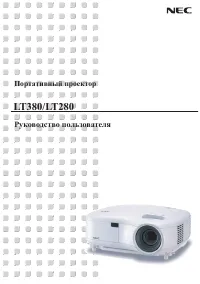 NEC LT280
Manual
NEC LT280
Manual
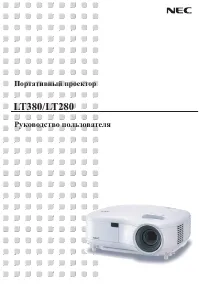 NEC LT380
Manual
NEC LT380
Manual
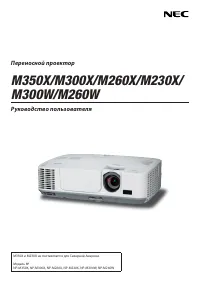 NEC M260W
Manual
NEC M260W
Manual
 NEC M271X
Manual
NEC M271X
Manual
 NEC M282X
Manual
NEC M282X
Manual
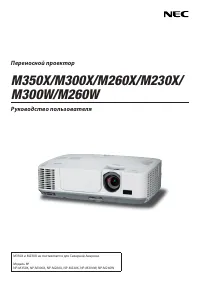 NEC M300X
Manual
NEC M300X
Manual
 NEC M302WS
Manual
NEC M302WS
Manual
 NEC M311W
Manual
NEC M311W
Manual
 NEC M322X
Manual
NEC M322X
Manual
 NEC M332XS
Manual
NEC M332XS
Manual
 NEC M350X
Manual
NEC M350X
Manual
 NEC M352WS
Manual
NEC M352WS
Manual
 NEC M361X
Manual
NEC M361X
Manual
 NEC M362W
Manual
NEC M362W
Manual
 NEC M402X
Manual
NEC M402X
Manual
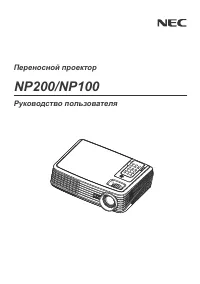 NEC NP100
Manual
NEC NP100
Manual
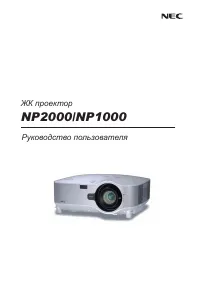 NEC NP1000
Manual
NEC NP1000
Manual
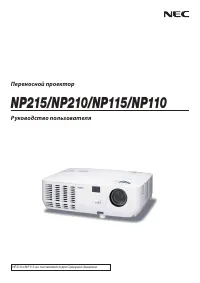 NEC NP110
Manual
NEC NP110
Manual
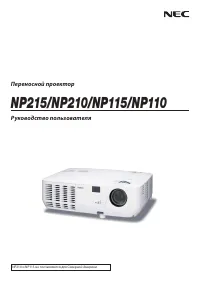 NEC NP115
Manual
NEC NP115
Manual